Requested Permission to Quote From a Periodical
What is this form?
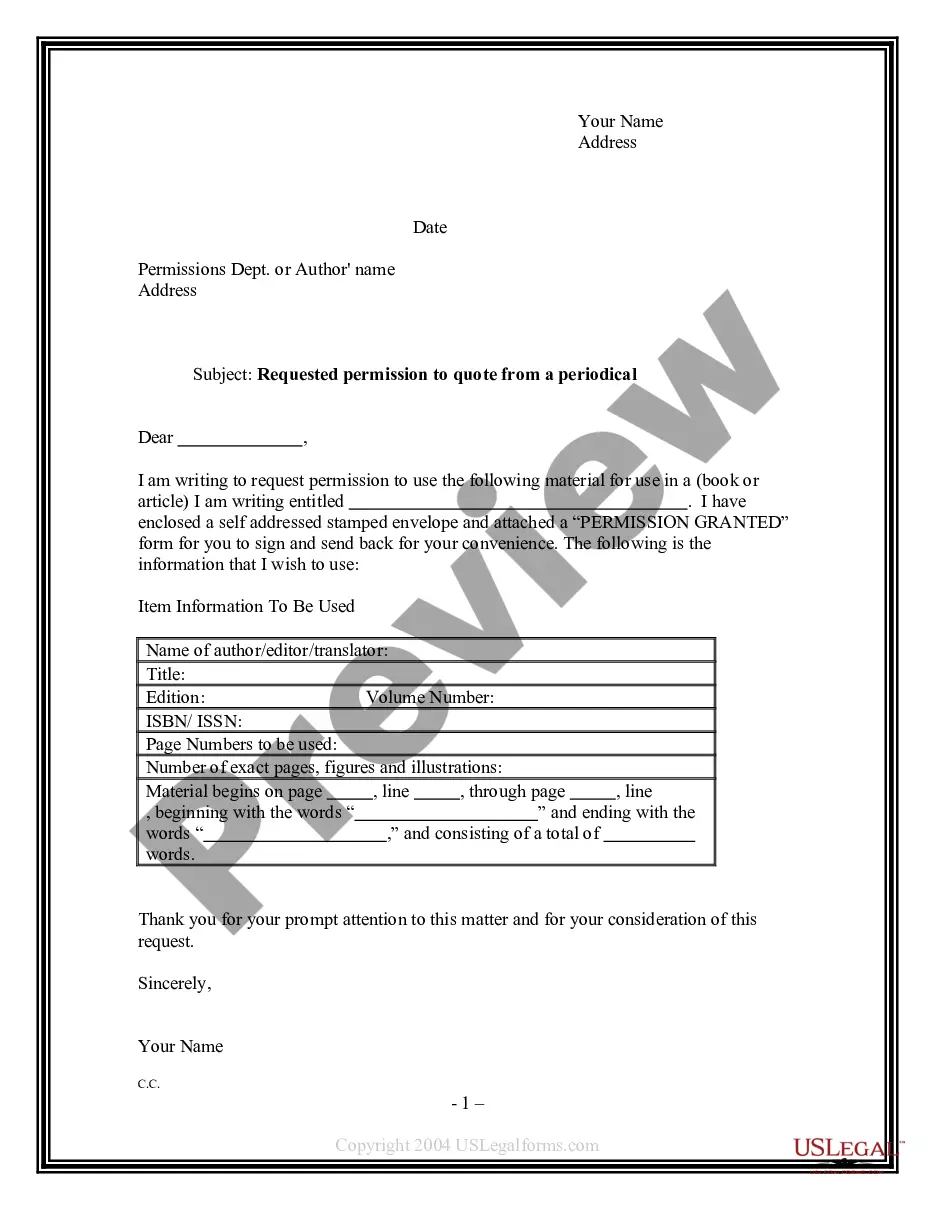
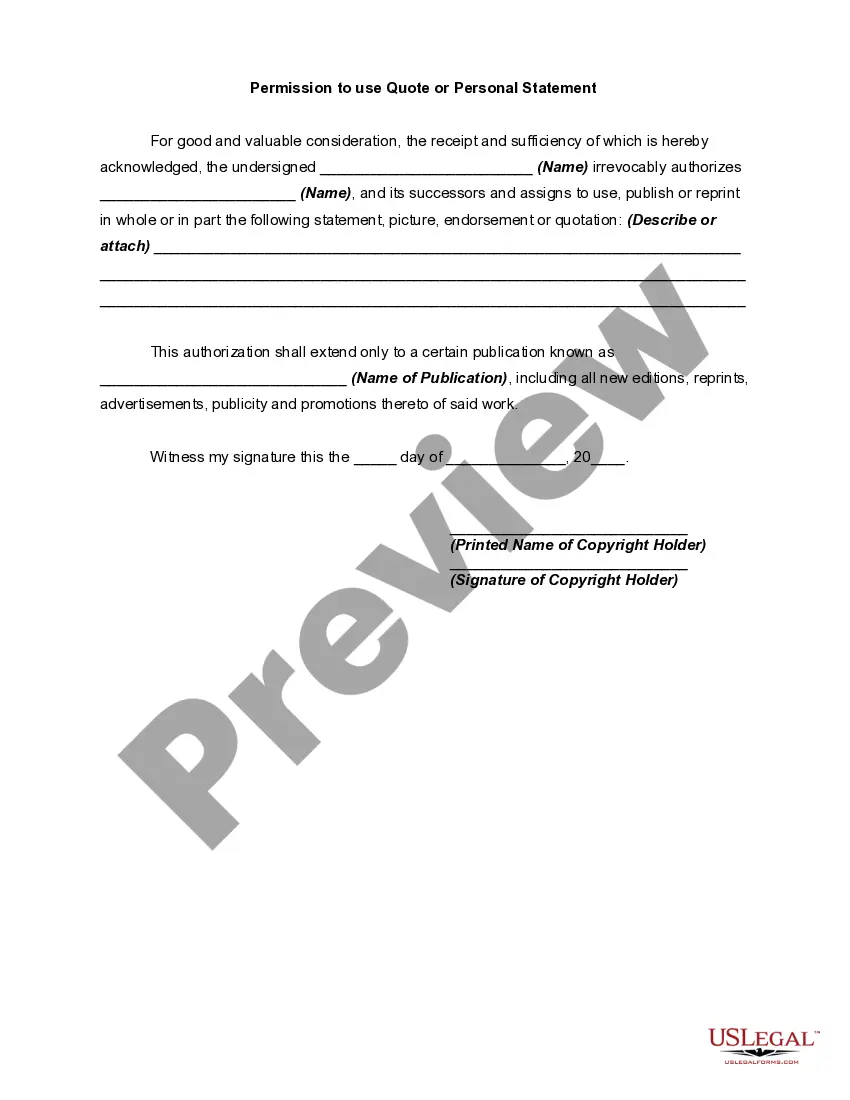
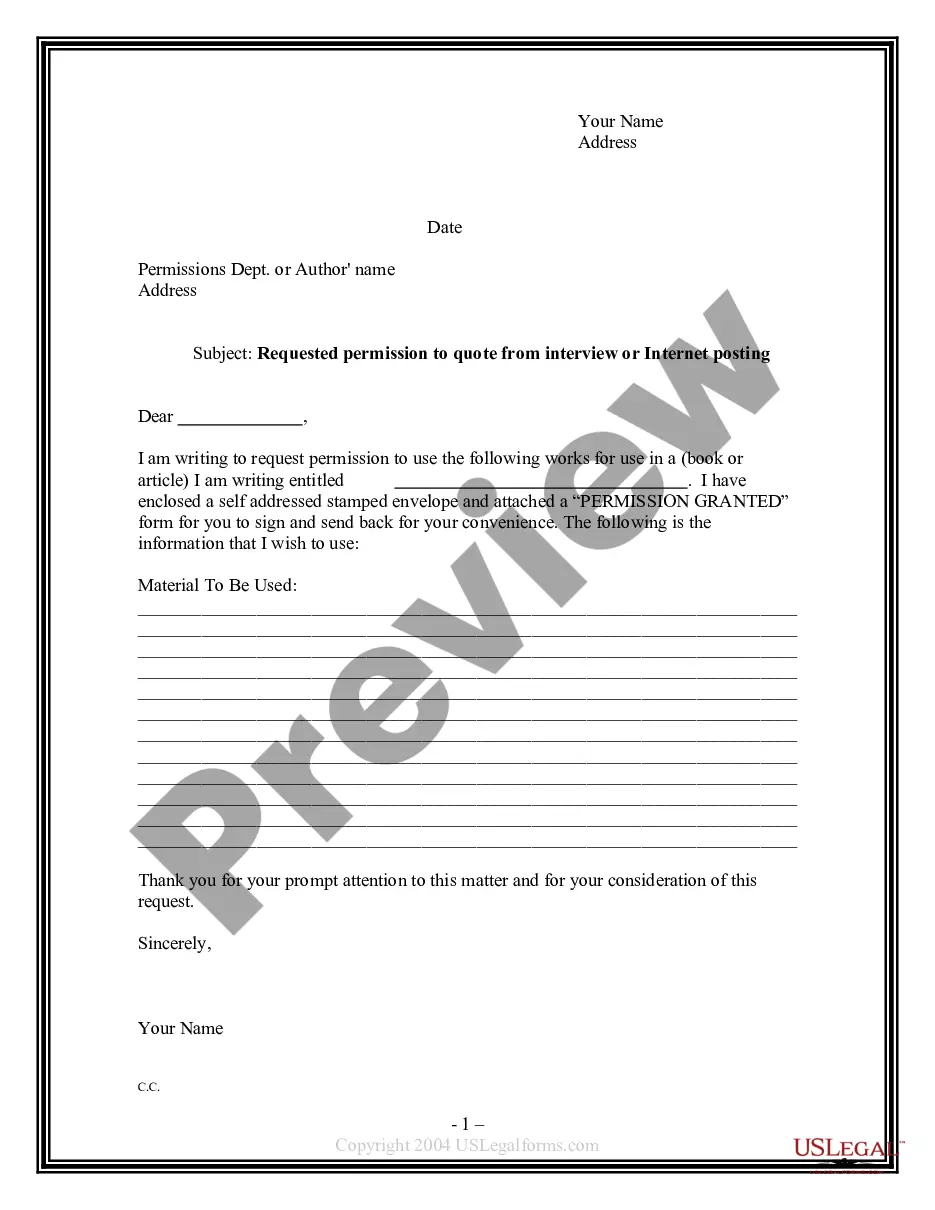
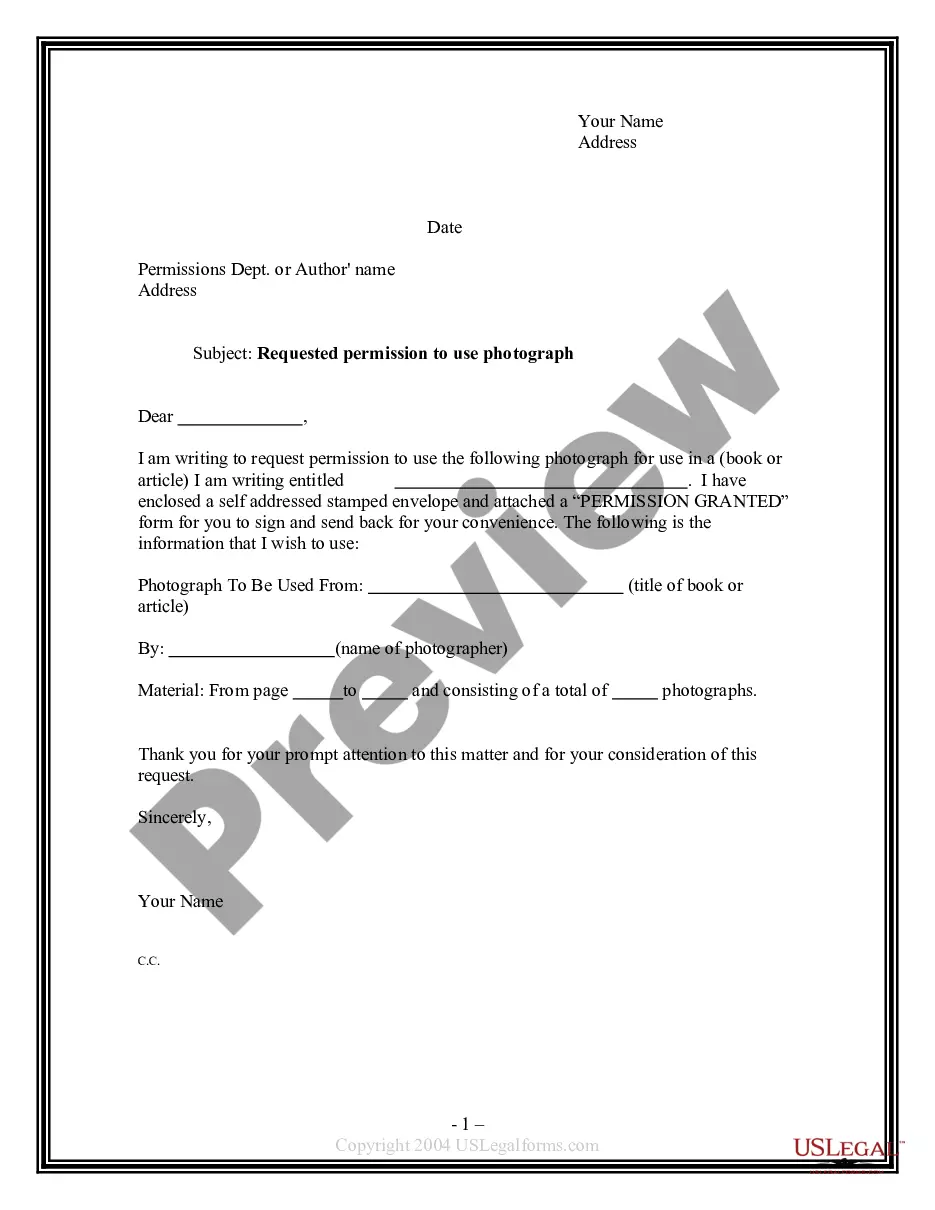
The Requested Permission to Quote From a Periodical form is used to request consent from the copyright holder to quote specific content from a periodical in another book or article. This form is essential for authors, researchers, and journalists to obtain the necessary permissions legally and respectfully, differentiating it from other generic request forms by including a specific addendum for copyright approval.
Key components of this form
- Item Information: Details about the specific content to be quoted.
- Copyright Holder Information: Contact details for the copyright holder from whom permission is sought.
- Time Frame: Option to request permission for a fixed period instead of indefinite use.
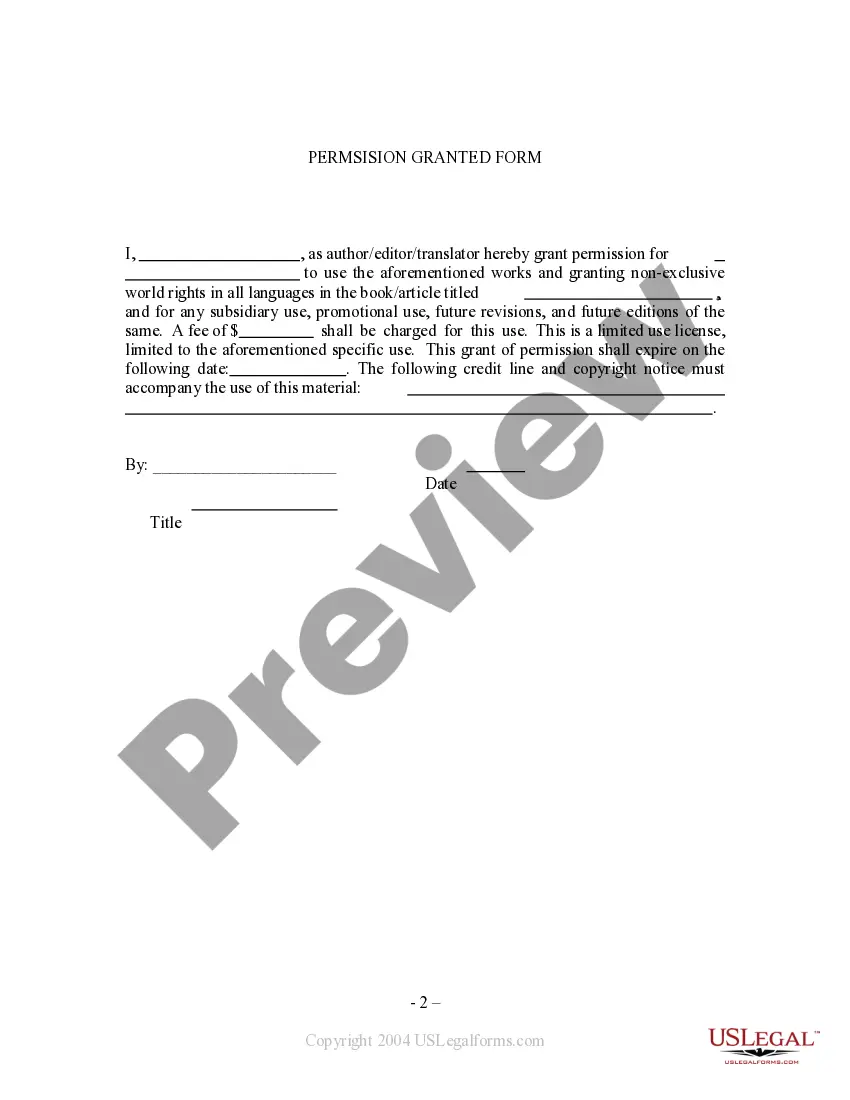
- Signature Section: Area for the copyright holder to sign and grant permission.

When to use this document
This form should be used when you want to quote material from a periodical in your own written work, such as a book, article, or report. It is appropriate in situations where copyright laws apply, and you need to ensure that you have explicit permission to use the content without infringing on the copyright holder's rights.
Who needs this form
This form is suitable for:
- Authors looking to include quotes from periodicals in their books or articles.
- Researchers who are referencing periodical publications in their studies.
- Journalists writing pieces that require citations from periodicals.
- Students working on academic papers involving periodical content.
Completing this form step by step
To complete the Requested Permission to Quote From a Periodical form, follow these steps:
- Identify the parties involved, including your name and contact information as well as the copyright holder's details.
- Specify the item information by providing details about the material you wish to quote.
- Indicate the time frame for which you are requesting permission, if applicable.
- Ensure all information is accurate before submitting the request.
- Have the copyright holder sign the attached addendum to grant permission.
Notarization guidance
This form does not typically require notarization unless specified by local law.
Get your form ready online
Our built-in tools help you complete, sign, share, and store your documents in one place.
Make edits, fill in missing information, and update formatting in US Legal Forms—just like you would in MS Word.
Download a copy, print it, send it by email, or mail it via USPS—whatever works best for your next step.
Sign and collect signatures with our SignNow integration. Send to multiple recipients, set reminders, and more. Go Premium to unlock E-Sign.
If this form requires notarization, complete it online through a secure video call—no need to meet a notary in person or wait for an appointment.
We protect your documents and personal data by following strict security and privacy standards.

Make edits, fill in missing information, and update formatting in US Legal Forms—just like you would in MS Word.

Download a copy, print it, send it by email, or mail it via USPS—whatever works best for your next step.

Sign and collect signatures with our SignNow integration. Send to multiple recipients, set reminders, and more. Go Premium to unlock E-Sign.

If this form requires notarization, complete it online through a secure video call—no need to meet a notary in person or wait for an appointment.

We protect your documents and personal data by following strict security and privacy standards.
Mistakes to watch out for
- Failing to include complete contact information for both parties.
- Not specifying the exact content to be quoted, leading to confusion.
- Assuming verbal agreements suffice without completing the form.
- Neglecting to provide a time frame for quoted material use when necessary.
Why use this form online
- Convenience of accessing and downloading the form online.
- Editable format allows for easy customization to fit specific needs.
- Reliability of forms drafted by licensed attorneys ensures legal soundness.
Looking for another form?

Form popularity
FAQ
Works Cited in Another Source (Indirect Sources) (This may be called a secondary source.) For example, the Kirkey article you are reading includes a quotation by Smith that you would like to include in your essay. The basic rule is that in both your Works Cited list and in-text citation you will still cite Kirkey.
Your in-text citation should include both authors: the author(s) of the original source and the author(s) of the secondary source. For example: (Habermehl, 1985, as cited in Kersten, 1987). In your reference list you should provide the details of the secondary source (the source you read).
A quote must meet some basic requirements to be eligible for copyright protection. It must be made permanent; for example, if you type or write your quote on paper so that another person can read it, your quote is generally copyrightable.You can't copyright short phrases and slogans, but you can trademark them.
If you're seeking permission to quote from a book, look on the copyright page for the rights holder; it's usually the author. However, assuming the book is currently in print and on sale, normally you contact the publisher for permission. You can also try contacting the author or the author's literary agent or estate.
Determine if permission is needed. Identify the owner. Identify the rights needed. Contact the owner and negotiate whether payment is required. Get your permission agreement in writing.
In-text citations include the last name of the author followed by a page number enclosed in parentheses. "Here's a direct quote" (Smith 8). If the author's name is not given, then use the first word or words of the title. Follow the same formatting that was used in the works cited list, such as quotation marks.
One publisher requires permission for using 25 words or more from any one source, aggregate over the entirety of your book. This means if you quote 16 words in one place and 10 words in another, you must get written permission.
Quotes are considered intellectual property, which is protected under the law. This means that if you're not a quote's original author and you want to SELL something with the quote on it, one of two things must be true: 1. You have the author's written permission to use their words on your work.