Student Athlete Permission to Treat and to Release Medical Records
About this form
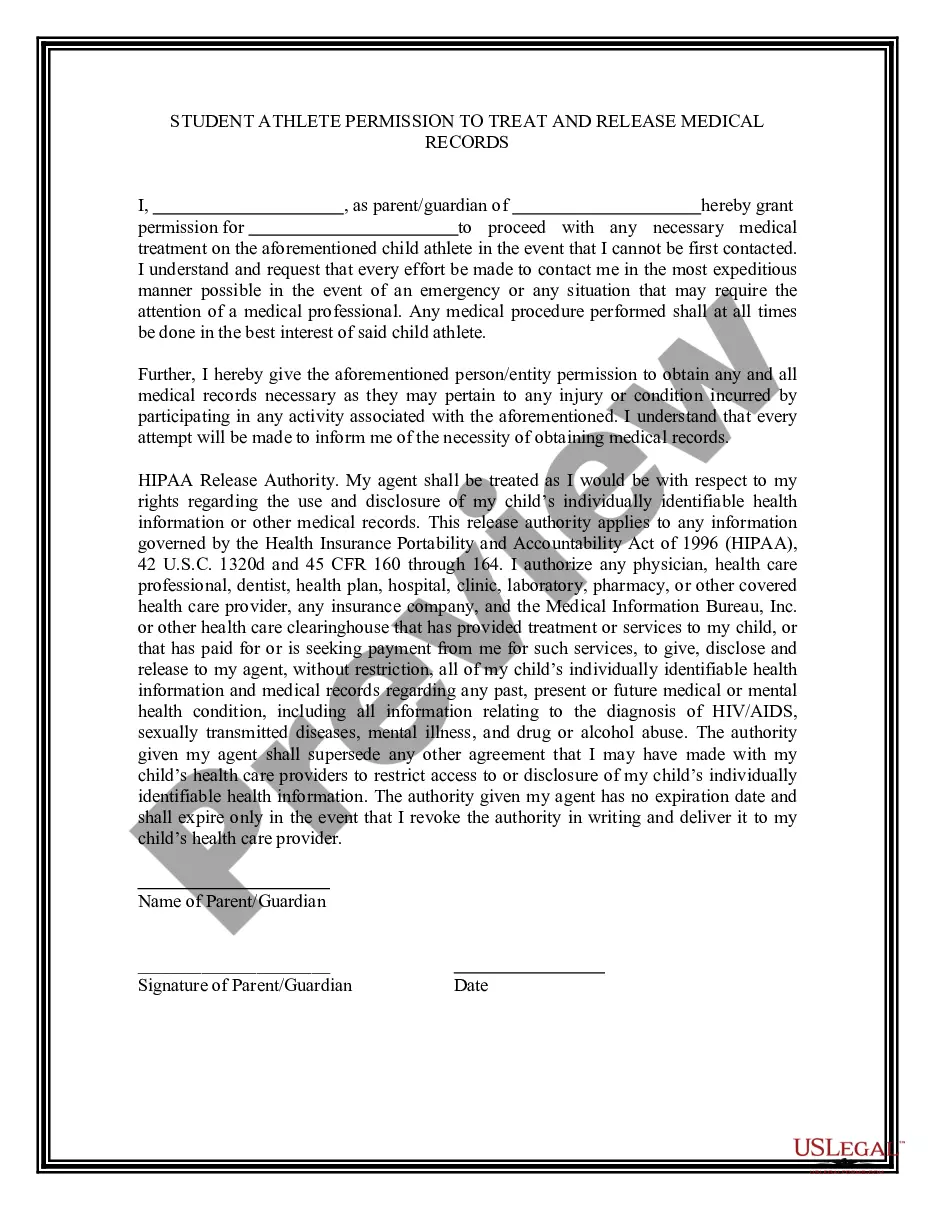
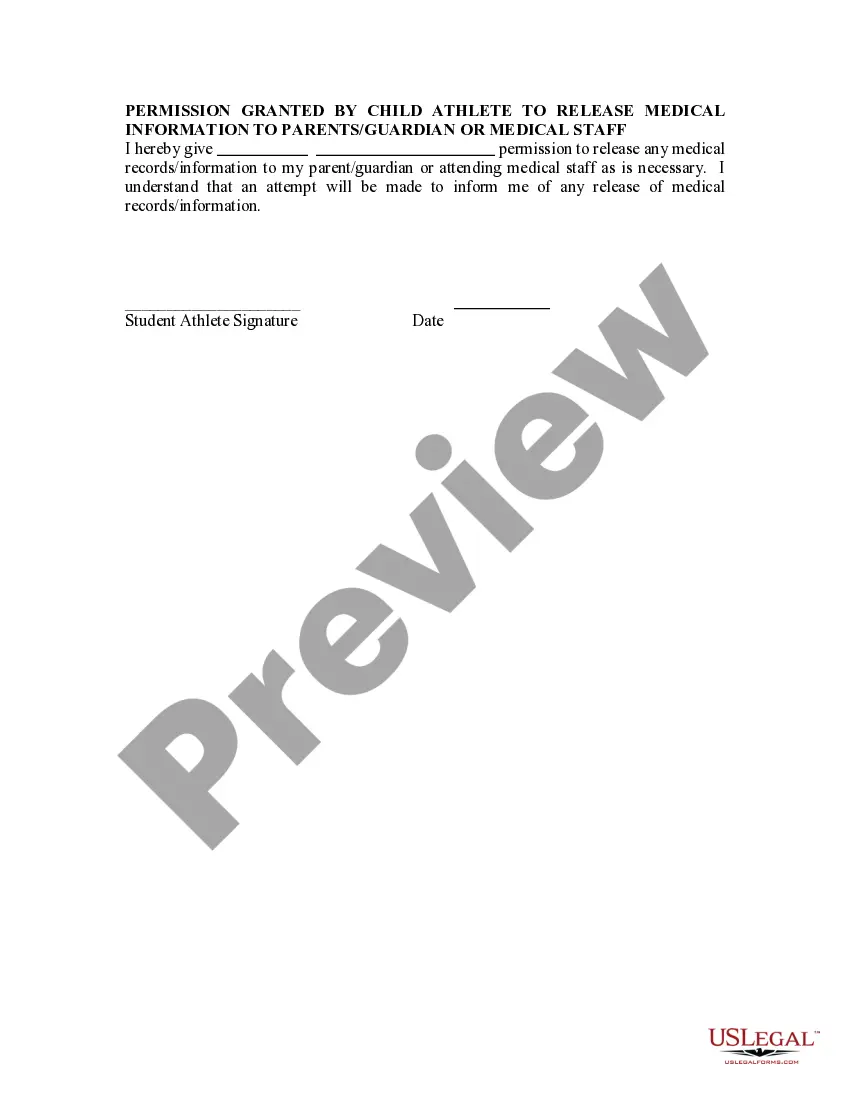
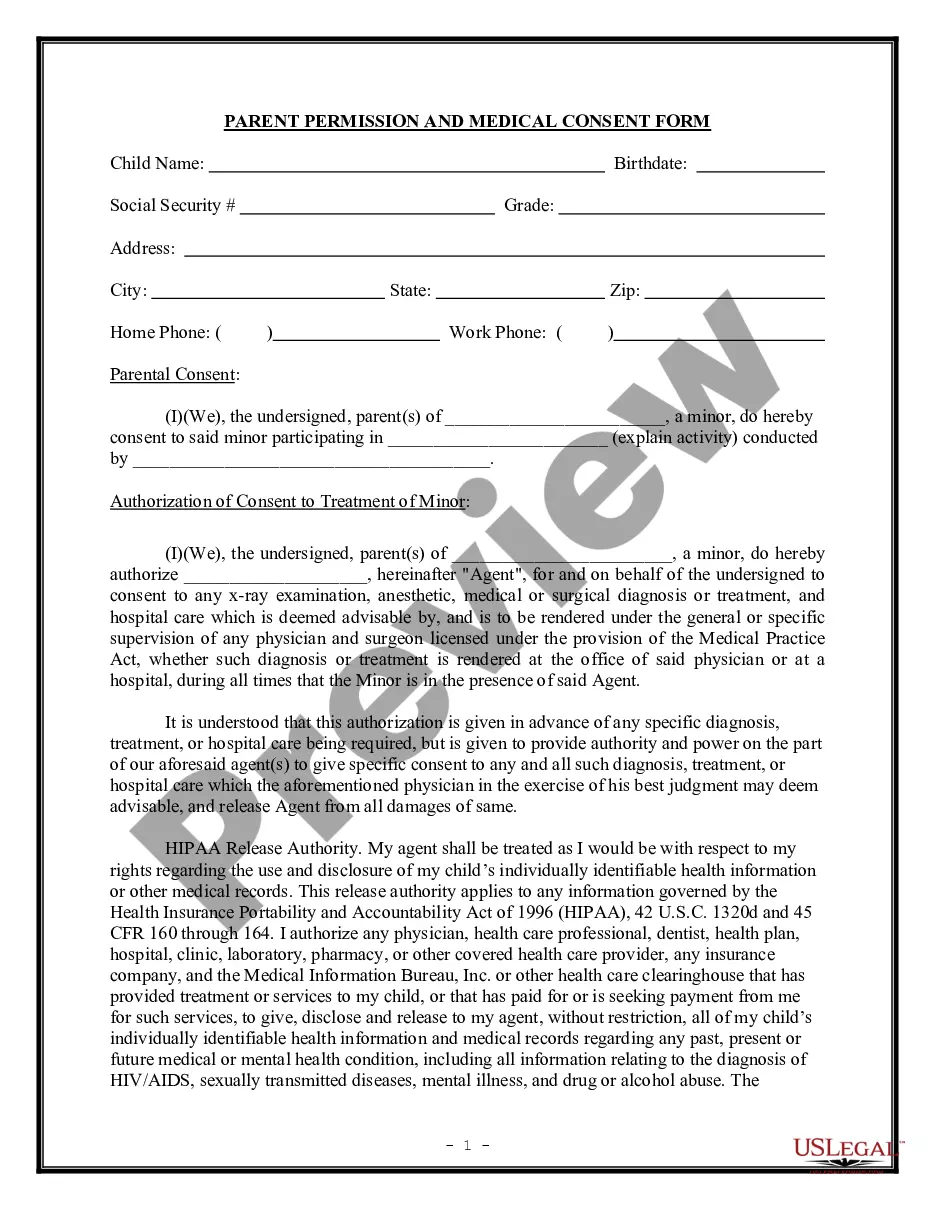
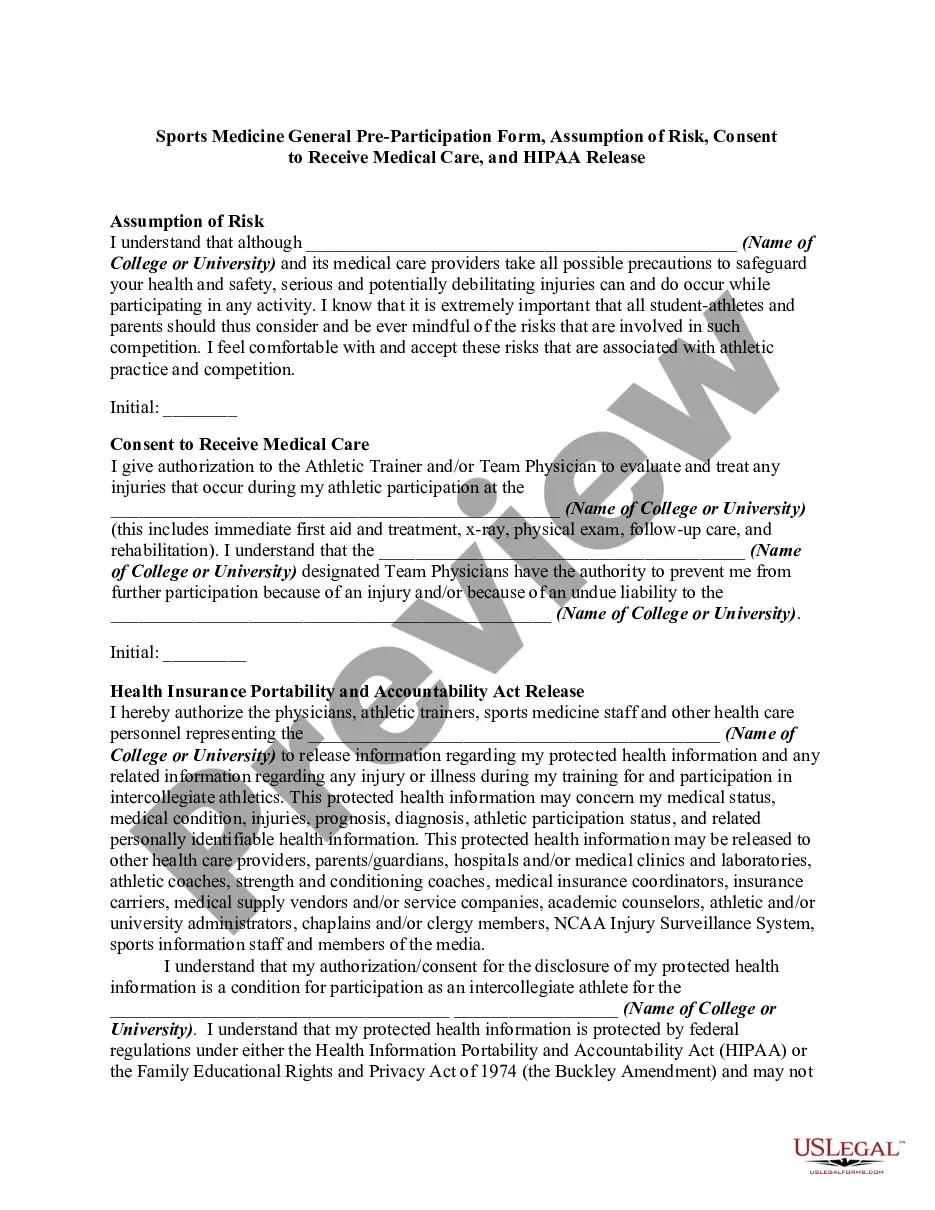
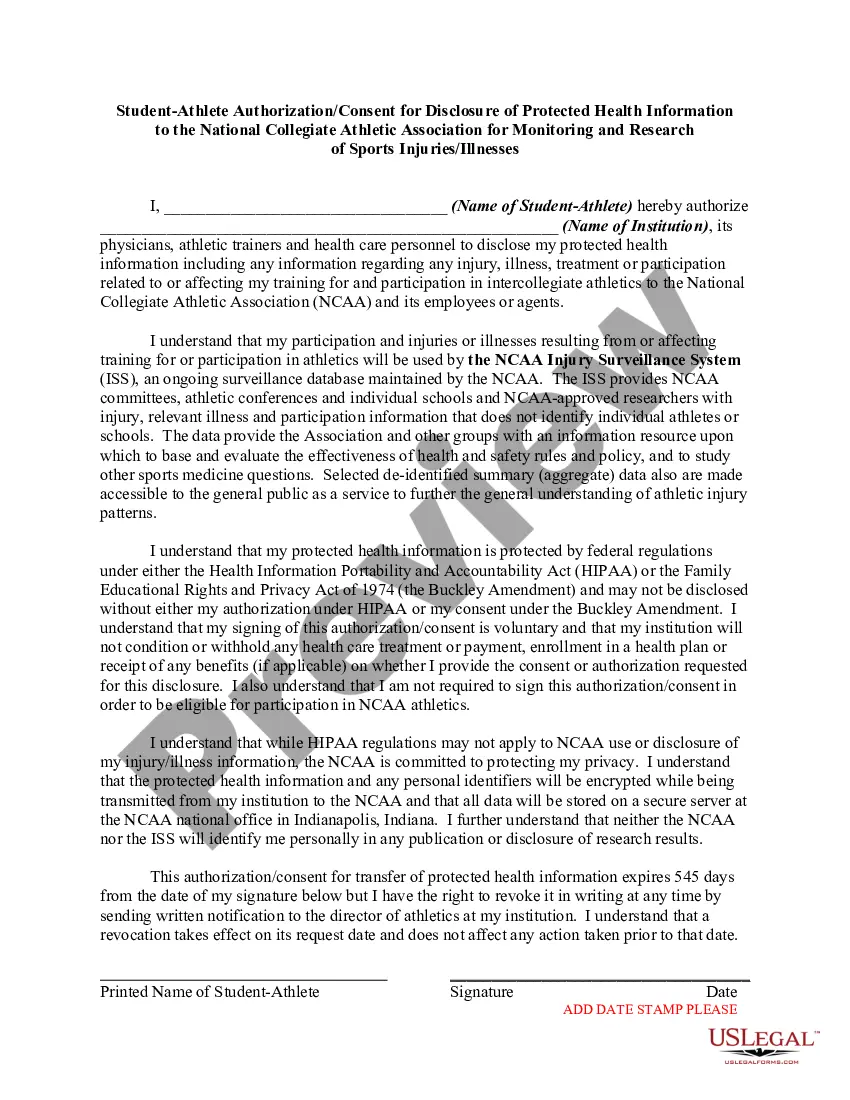
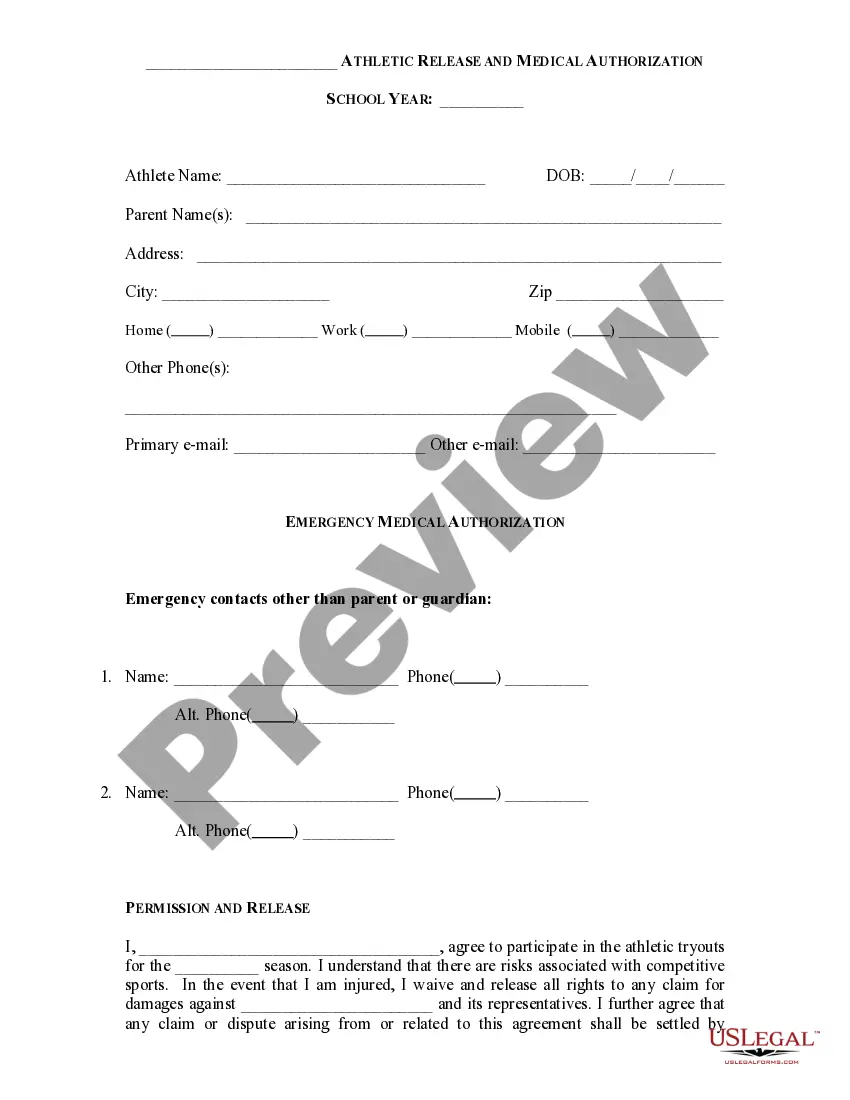
The Student Athlete Permission to Treat and to Release Medical Records form is a legal document that allows parents and their child to grant permission for a school to provide medical treatment in case of injury or emergency. This form also enables the school to share relevant medical information with parents and medical professionals. It is crucial for situations where timely medical care is necessary and ensures that parental involvement is maintained throughout the process.
Form components explained
- Permission for the school to administer medical treatment to the student athlete.
- Authorization for the school to communicate with medical professionals regarding the student's medical condition and treatment.
- Consent for the collection of medical records related to any injuries sustained during school activities.
- Commitment from the school to contact parents as soon as possible in case of a medical emergency.
Situations where this form applies
This form is typically used when a student is participating in school-sponsored athletic activities. It is essential when there is a risk of injury, allowing school officials to act swiftly in medical situations. Parents should complete this form at the beginning of the sports season or before the student engages in new athletic activities.
Who this form is for
- Parents or guardians of student athletes.
- The student athlete who is participating in school sports.
- School officials overseeing athletic activities.
How to complete this form
- Identify the student athlete and their school.
- Fill in the names and contact details of the parents or guardians.
- Provide details of any known medical conditions or allergies the student may have.
- Sign and date the document to indicate consent and understanding of the permissions granted.
- Ensure that all copies of the signed form are distributed to relevant school personnel and the parents.
Does this form need to be notarized?
Notarization is not commonly needed for this form. However, certain documents or local rules may make it necessary. Our notarization service, powered by Notarize, allows you to finalize it securely online anytime, day or night.
Get your form ready online
Our built-in tools help you complete, sign, share, and store your documents in one place.
Make edits, fill in missing information, and update formatting in US Legal Forms—just like you would in MS Word.
Download a copy, print it, send it by email, or mail it via USPS—whatever works best for your next step.
Sign and collect signatures with our SignNow integration. Send to multiple recipients, set reminders, and more. Go Premium to unlock E-Sign.
If this form requires notarization, complete it online through a secure video call—no need to meet a notary in person or wait for an appointment.
We protect your documents and personal data by following strict security and privacy standards.

Make edits, fill in missing information, and update formatting in US Legal Forms—just like you would in MS Word.

Download a copy, print it, send it by email, or mail it via USPS—whatever works best for your next step.

Sign and collect signatures with our SignNow integration. Send to multiple recipients, set reminders, and more. Go Premium to unlock E-Sign.

If this form requires notarization, complete it online through a secure video call—no need to meet a notary in person or wait for an appointment.

We protect your documents and personal data by following strict security and privacy standards.
Common mistakes to avoid
- Not including all necessary signatures from both parents or guardians.
- Failing to update the form with current medical information.
- Not specifying conditions that require special medical attention.
Advantages of online completion
- Convenience of completing the form from anywhere, at any time.
- Easy editing and updates if circumstances change.
- Secure storage of important documents accessible when needed.
Looking for another form?



Form popularity
FAQ
Thus, HIPAA's privacy rule does not apply to records generated by an athletic trainer who provides free treatment to student athletes.
Athletes don't receive any sort of special treatment in the classroom other than being allowed to make up missed work that they missed due to travel for the sport. Being given anything or being treated differently due to the fact that you are a student-athlete is against NCAA rules.
As noted above, for permitted disclosures of health information, HIPAA does not require that a patient give written permission. Instead, clinicians are allowed to use a patient's verbal consent.
You can still follow games even if you can't be there in person. Don't hover. Be a good listener. Let the coaches coach. Encourage self-advocacy. Remind your student-athlete of their strengths. (Gently) remind them to manage their time. Talk up the college's academic resources.
Athletes though, agree to share health information with their employer (even if the athlete visits an independent medical professional) when they sign a contract with a team.Pro sports teams are not covered entities under HIPAA. Rather, they are merely considered employers.
Student-athletes must juggle practice, games, schoolwork and home life all at the same time. Without a doubt, there is no special treatment given to student-athletes at the high school level; athletes are expected to earn those A's the same way a student who is not involved with after school activities would.
In most college health settings, HIPAA applies to care provided to non-students (e.g. faculty/staff or dependents seen at student health services).2013 revisions to HIPAA regulations, it is clear that HIPAA does not apply to college/university education records or treatment records.
Colleges and universities are often independent of privacy laws that affect a patient's records.A student does not necessarily need to give permission for a college or university to access medical records. These situations do not require knowledge that the student could be a danger to others.
Blanket silence is the easiest way to comply with HIPAA, but coaches and nonmedical staff aren't a part of the HIPAA law, and sports medical information isn't covered under Family Educational Rights and Privacy Act, the law that regulates the privacy of school records.