Motion to Dismiss - Personal Injury
Overview of this form
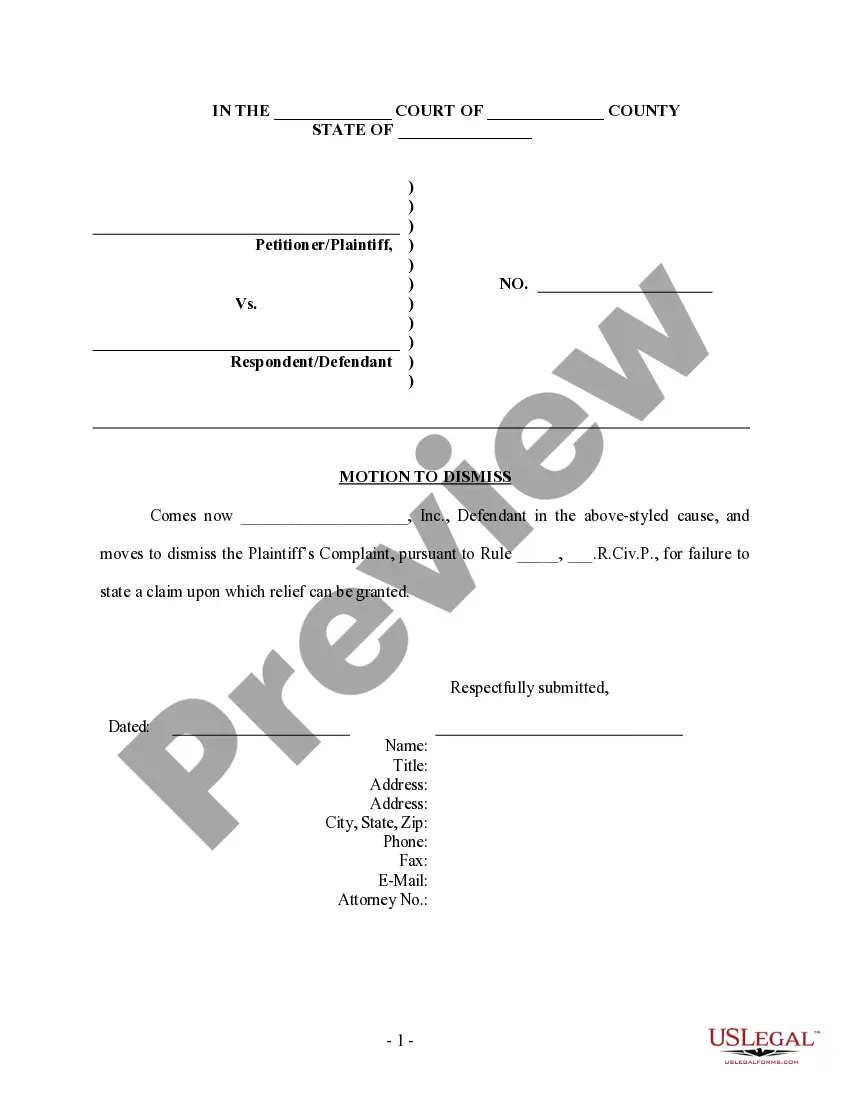
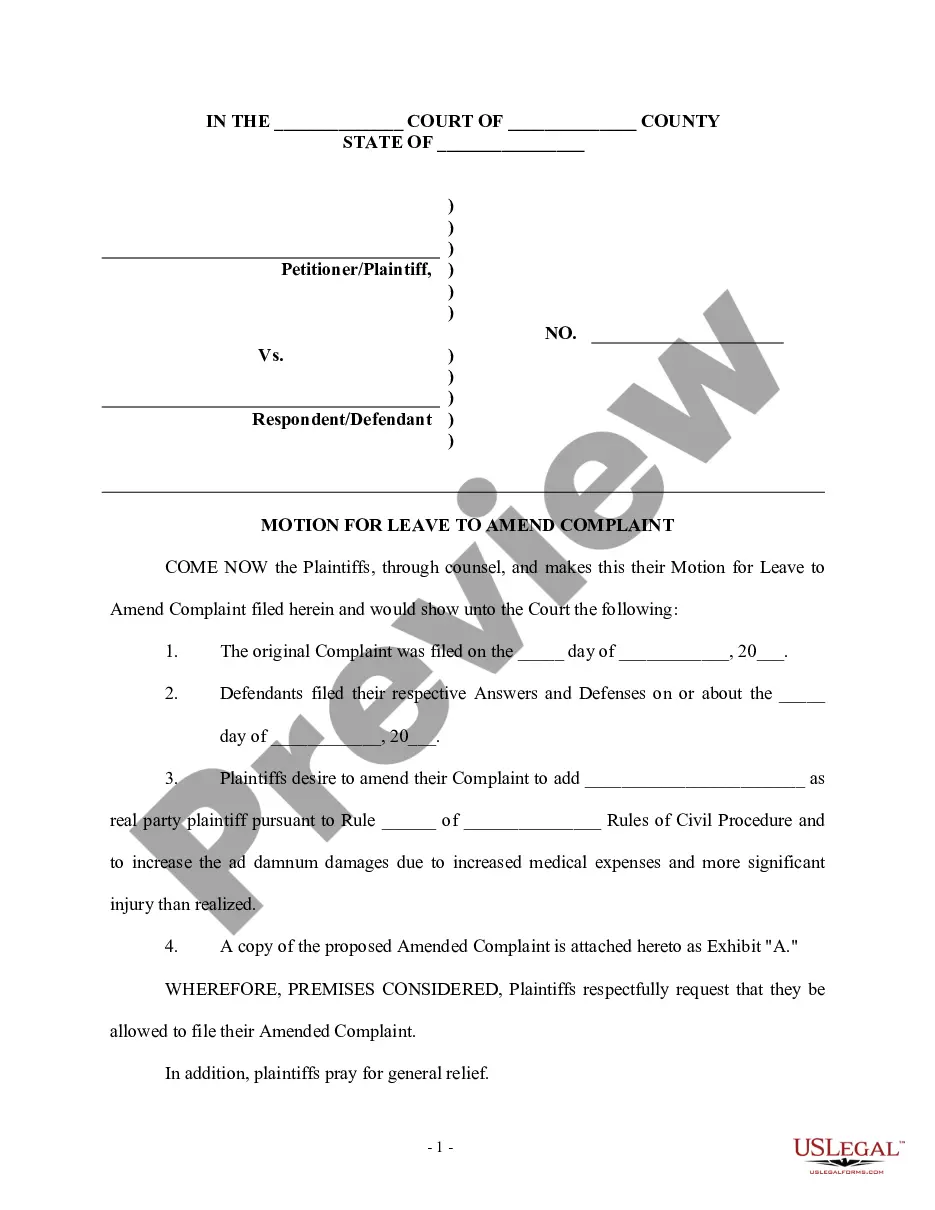
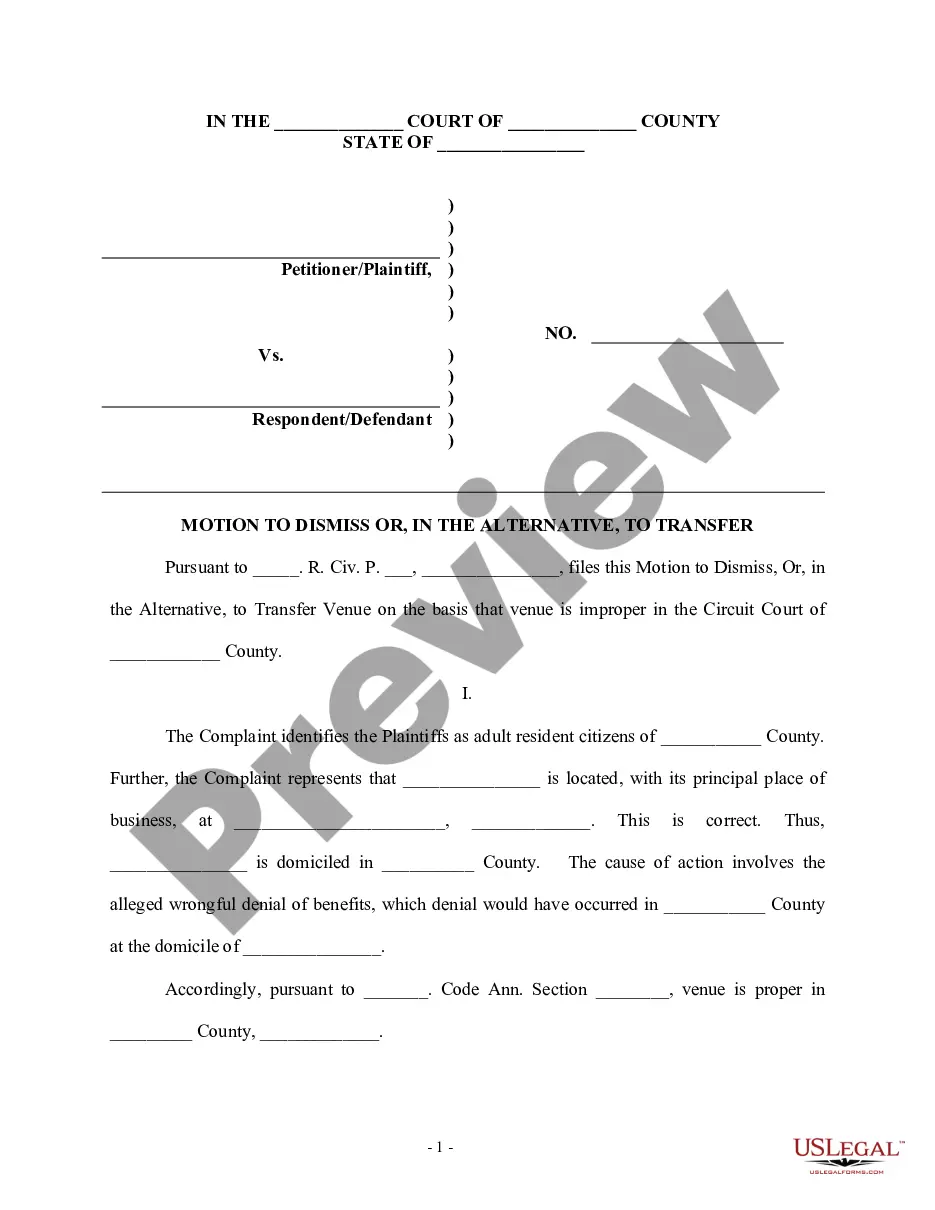
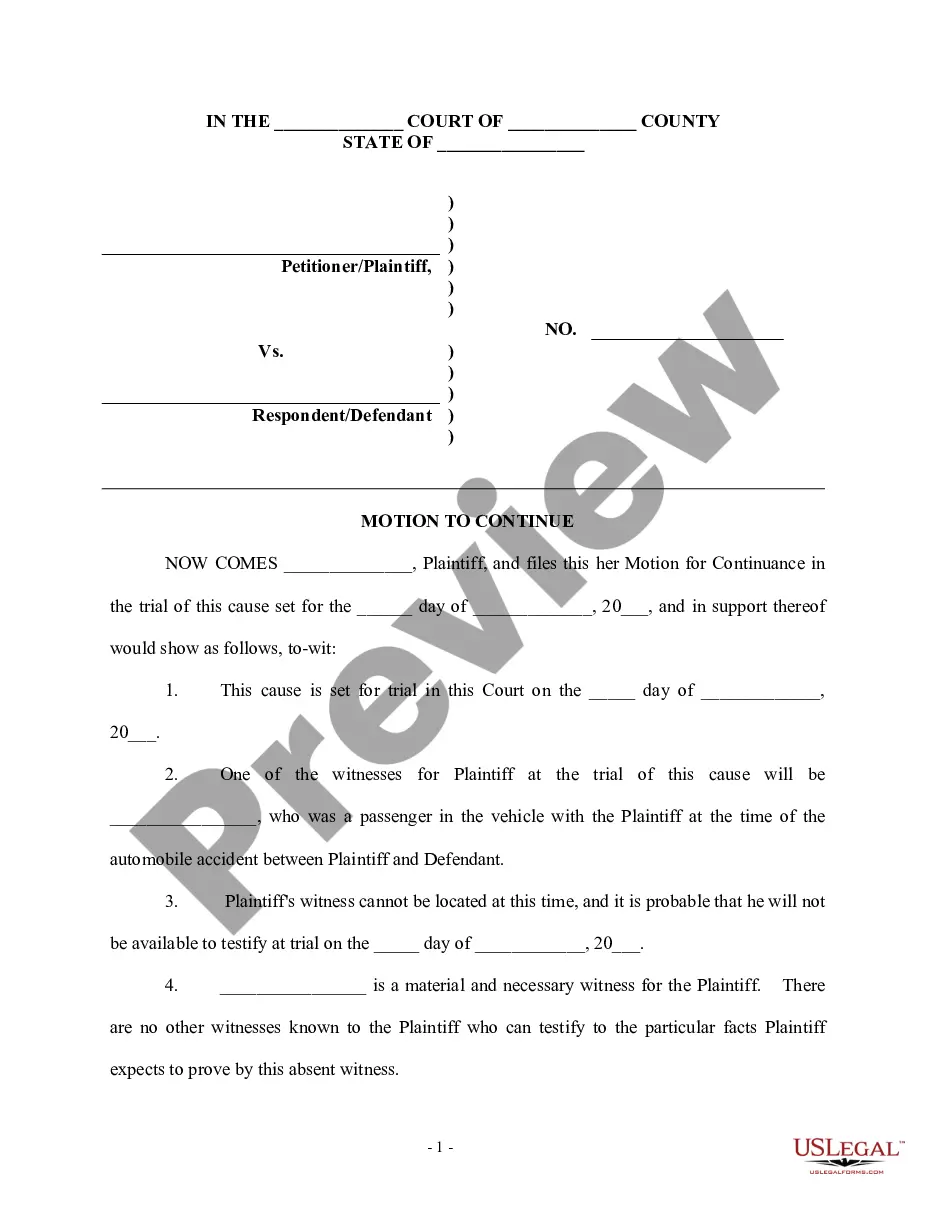
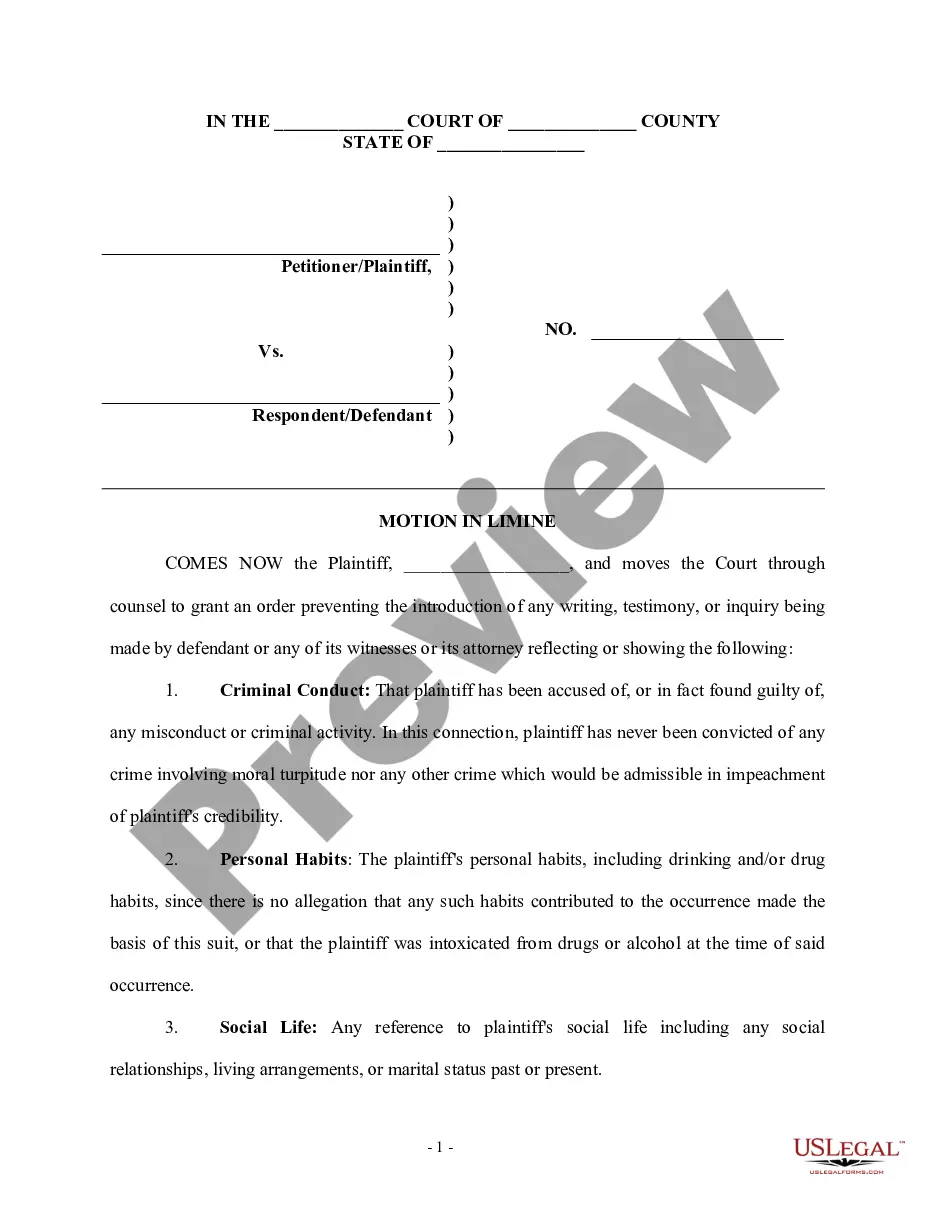
This Motion to Dismiss - Personal Injury is a legal document filed by a defendant intending to have the plaintiff's claim dismissed. The motion asserts that the plaintiff has failed to present a viable legal basis for their claim. This form differs from other legal motions as it specifically addresses personal injury cases and focuses on the sufficiency of the plaintiff's allegations rather than other procedural issues.
Key components of this form
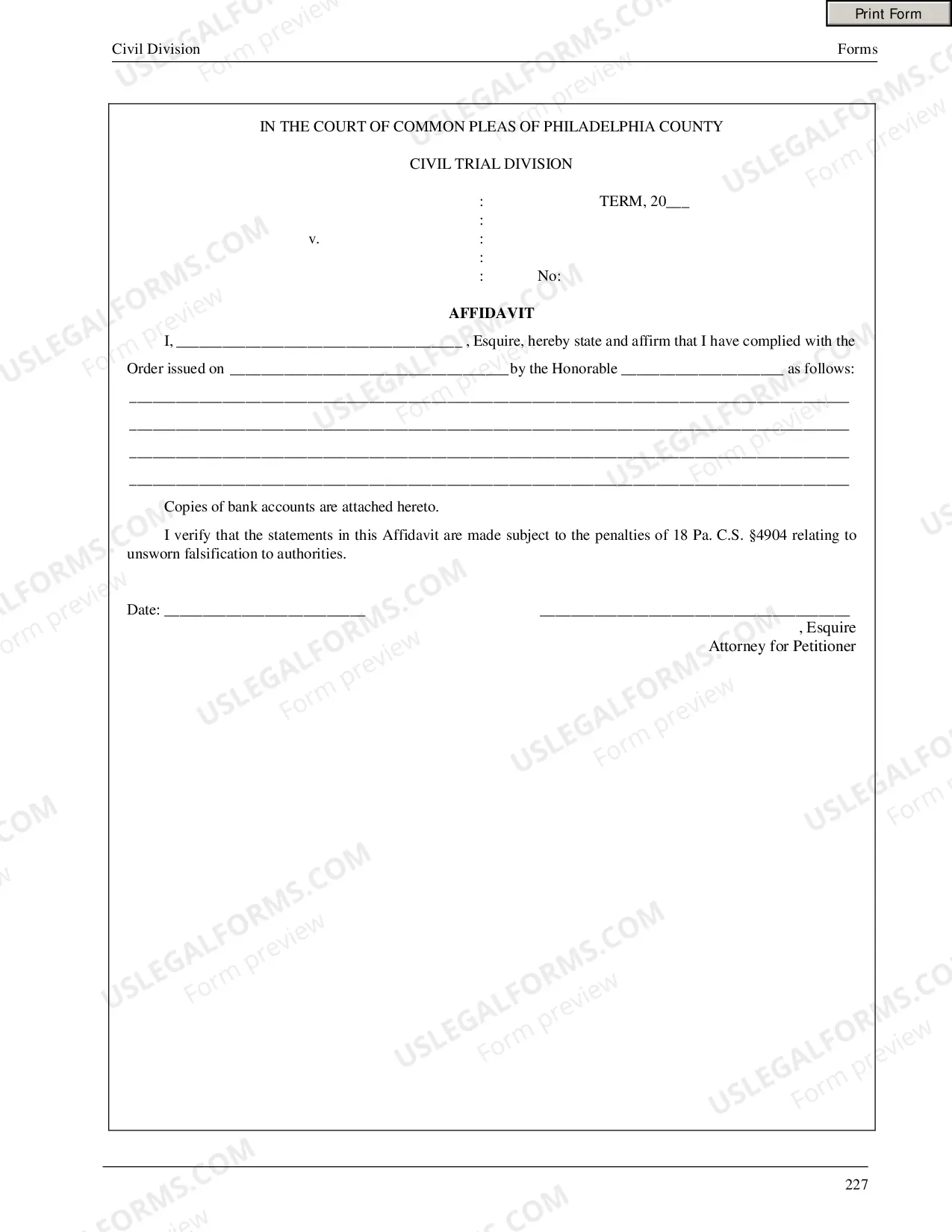
- Case caption: Indicates the court and parties involved in the personal injury case.
- Introduction: States the purpose of the motion and the legal basis for dismissal.
- Arguments: Lists reasons why the plaintiffâs claim should be dismissed for lack of merit.
- Conclusion: Requests that the court grant the motion to dismiss.
- Signature line: Provides space for the attorney representing the defendant to sign the document.
When to use this document
This form should be used when a defendant believes that the plaintiff's claims in a personal injury suit do not establish a legal basis for relief. It is applicable in scenarios such as when the complaint fails to state sufficient facts, the statute of limitations has expired, or the claims lack legal standing.
Who can use this document
- Defendants in personal injury lawsuits who wish to contest the legal sufficiency of the plaintiff's claims.
- Legal representatives seeking to ensure that weak or unfounded claims are dismissed early in the litigation process.
- Insurance companies involved as defendants in claims where they believe a dismissal is warranted.
How to complete this form
- Identify the parties: Fill in the names of the plaintiff and defendant as they are listed in the case caption.
- Outline grounds for dismissal: Clearly state the reasons why the plaintiff's action should be dismissed.
- Enter the date: Include the date on which the motion is filed.
- Provide attorney information: Fill in the required information for the defendant's attorney, including name and contact details.
- Sign the document: Ensure the attorney representing the defendant signs the motion before submission.
Notarization requirements for this form
This form does not typically require notarization unless specified by local law.
Get your form ready online
Our built-in tools help you complete, sign, share, and store your documents in one place.
Make edits, fill in missing information, and update formatting in US Legal Forms—just like you would in MS Word.
Download a copy, print it, send it by email, or mail it via USPS—whatever works best for your next step.
Sign and collect signatures with our SignNow integration. Send to multiple recipients, set reminders, and more. Go Premium to unlock E-Sign.
If this form requires notarization, complete it online through a secure video call—no need to meet a notary in person or wait for an appointment.
We protect your documents and personal data by following strict security and privacy standards.

Make edits, fill in missing information, and update formatting in US Legal Forms—just like you would in MS Word.

Download a copy, print it, send it by email, or mail it via USPS—whatever works best for your next step.

Sign and collect signatures with our SignNow integration. Send to multiple recipients, set reminders, and more. Go Premium to unlock E-Sign.

If this form requires notarization, complete it online through a secure video call—no need to meet a notary in person or wait for an appointment.

We protect your documents and personal data by following strict security and privacy standards.
Typical mistakes to avoid
- Failure to clearly articulate the legal basis for dismissal.
- Not including all required information in the case caption.
- Submitting the motion after the statutory deadline.
Advantages of online completion
- Convenient access to a legally drafted template that adheres to current legal standards.
- Editability allows users to customize the form according to specific case details.
- Reliable source, drafted by licensed attorneys, ensuring accuracy and validity.
Legal use & context
- The motion to dismiss serves as a preliminary challenge to the plaintiff's complaint.
- It is filed in response to a suit and requires a legal basis for the request.
- Dismissing a case can reduce litigation costs and time for the defendant.
- If granted, the plaintiff may need to amend their complaint or could result in the case being closed.
Summary of main points
- The Motion to Dismiss - Personal Injury is crucial for defending against unfounded lawsuits.
- Understanding the legal grounds for filing this motion is essential.
- Proper completion and timely filing can prevent unnecessary litigation.
- Always verify local rules to ensure compliance with filing requirements.
Looking for another form?
Form popularity
FAQ
You do not have to file a response. However, you would be wise to do so as a motion to dsmiss , if granted, could end your suit. Motions to dimiss for failure to state a claim are rarely granted.
In effect, in both kinds of cases, the lawyer asks the judge to direct a verdict for the defendant. The judge will either grant or deny the motion. If it is granted, the case is over and the defendant wins. If the motion is denied, as it usually is, the defense is given the opportunity to present its evidence.
A motion to dismiss or motion for dismissal is a motion made in a civil case, where one party asks the court to dismiss or throw out the case without reviewing all of the facts and legal arguments of the case.
To defend against a motion to dismiss for lack of personal jurisdiction, you should be prepared to show the judge that the other party has had contact with the state where you have filed the case, s/he was served in the state, or there is some other reason why the court has jurisdiction.