Complaint regarding Defective Design of Orthopedic Shoe
About this form
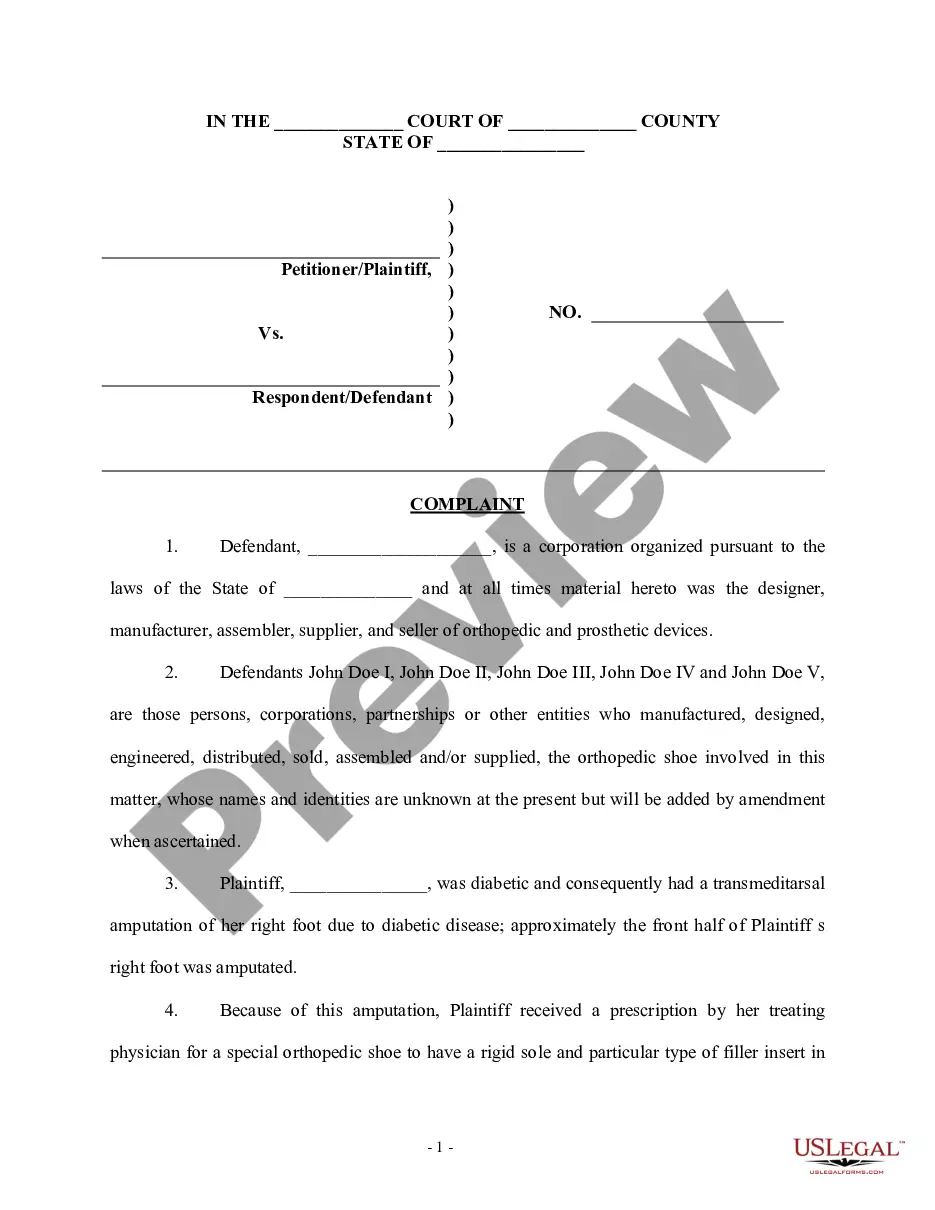
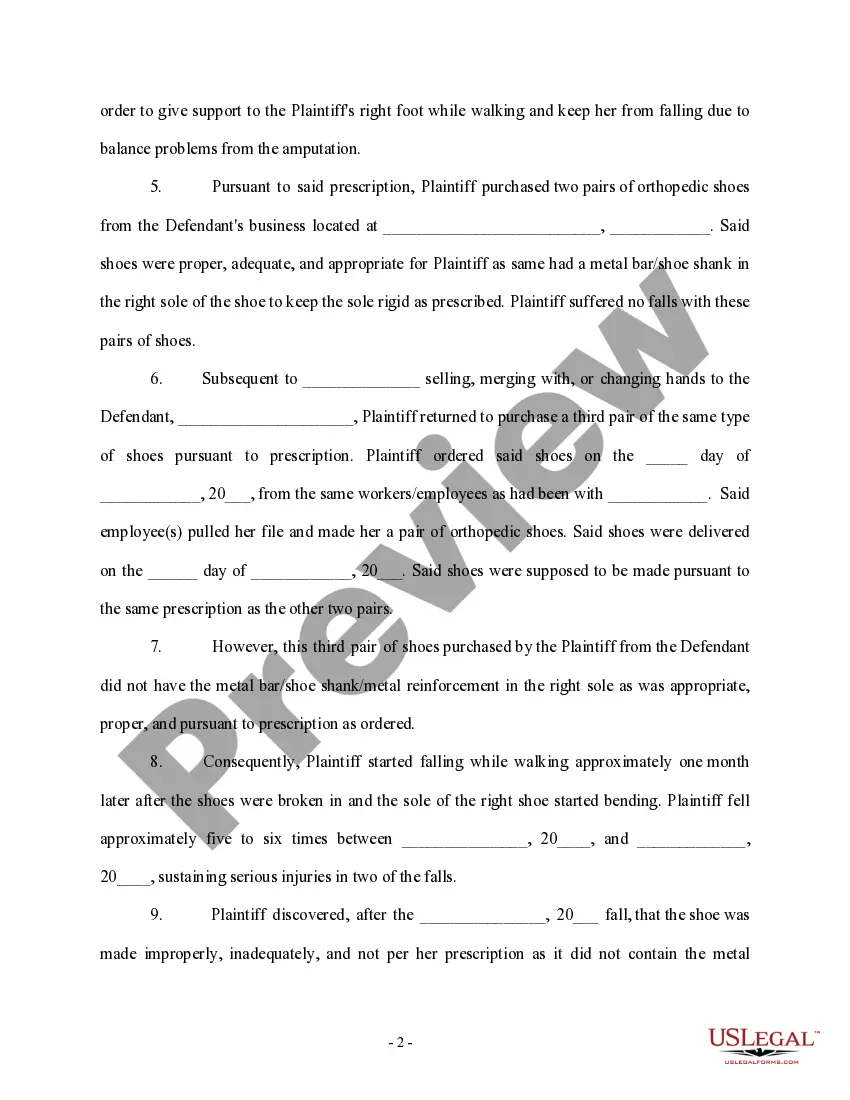
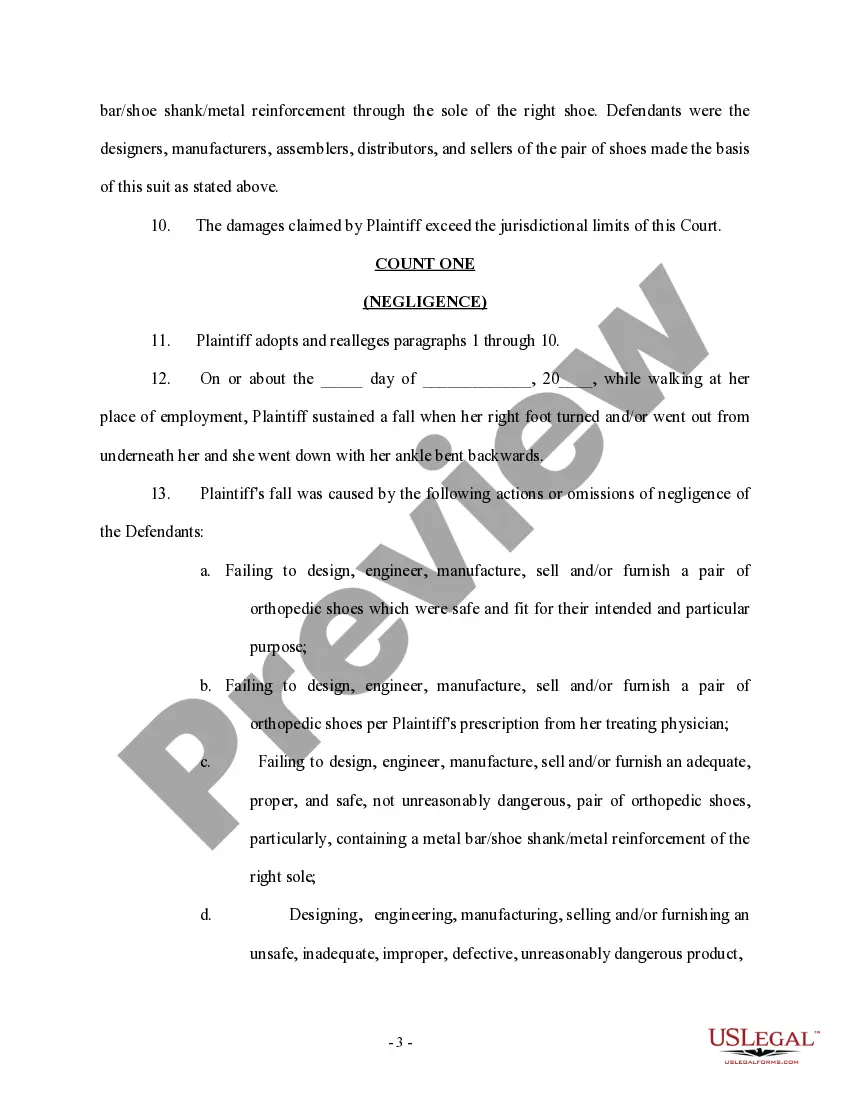
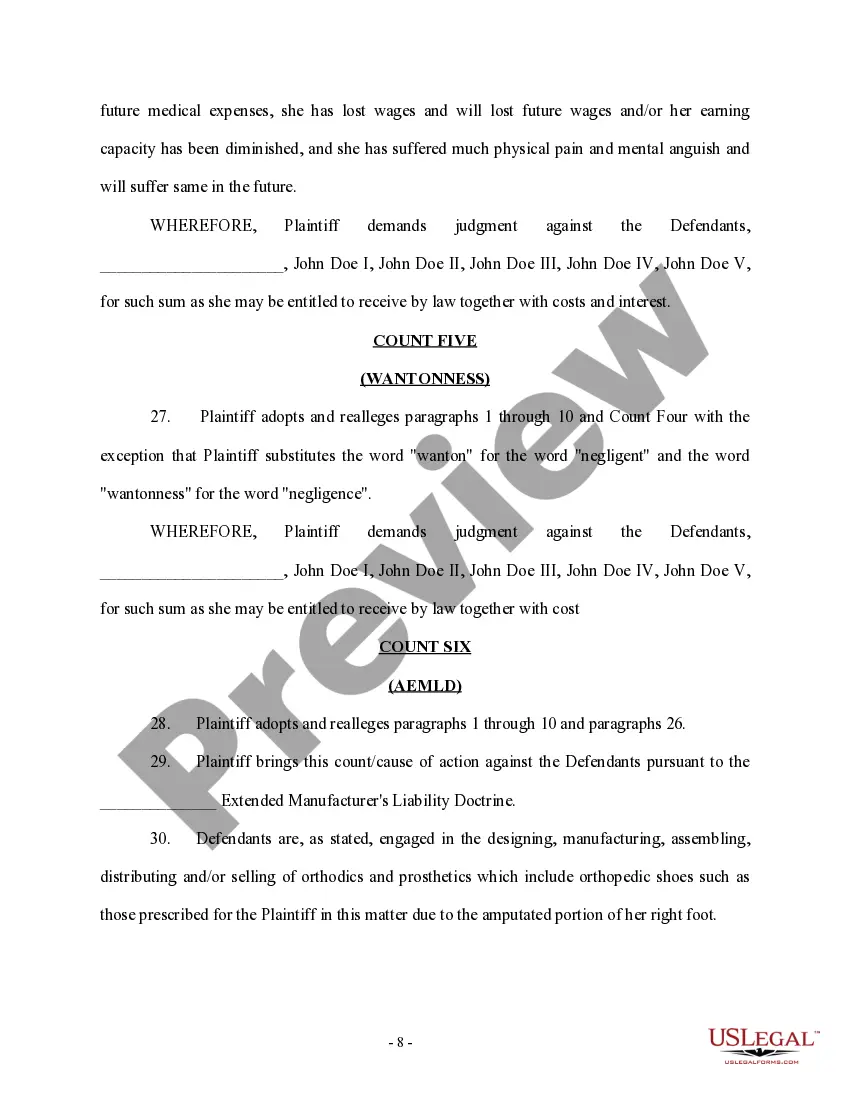
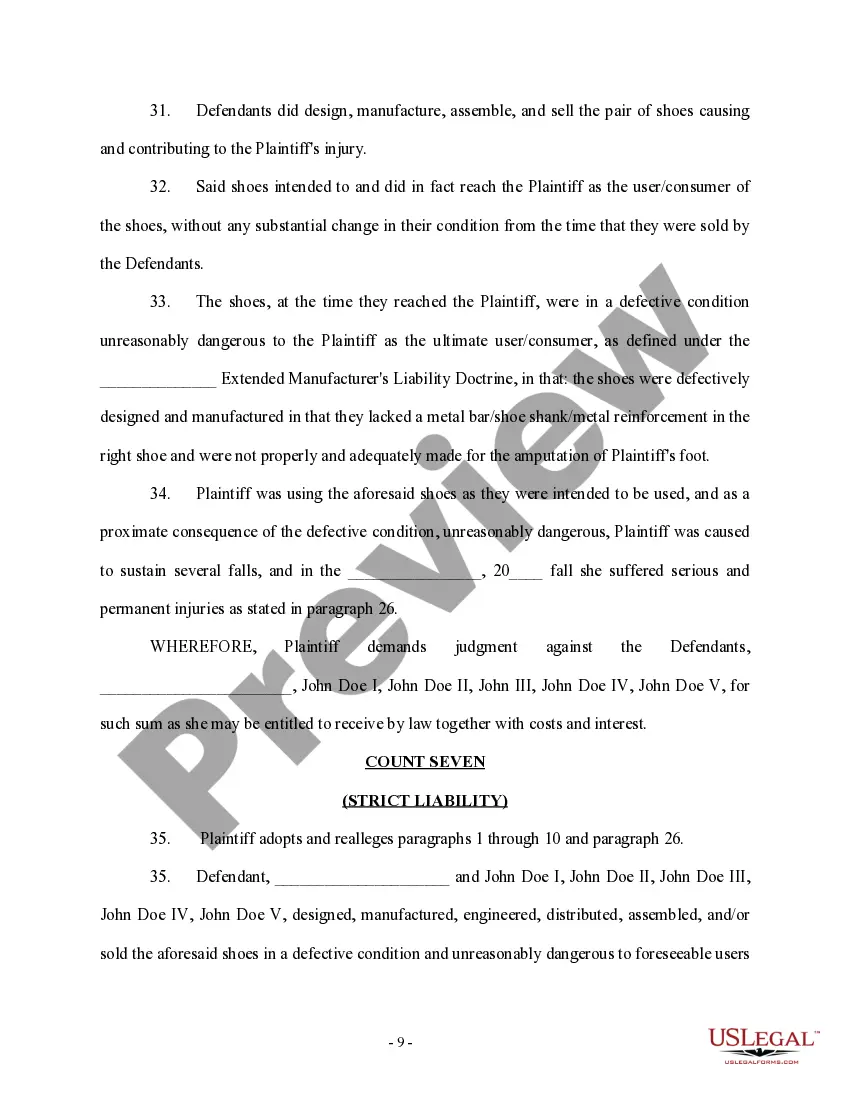
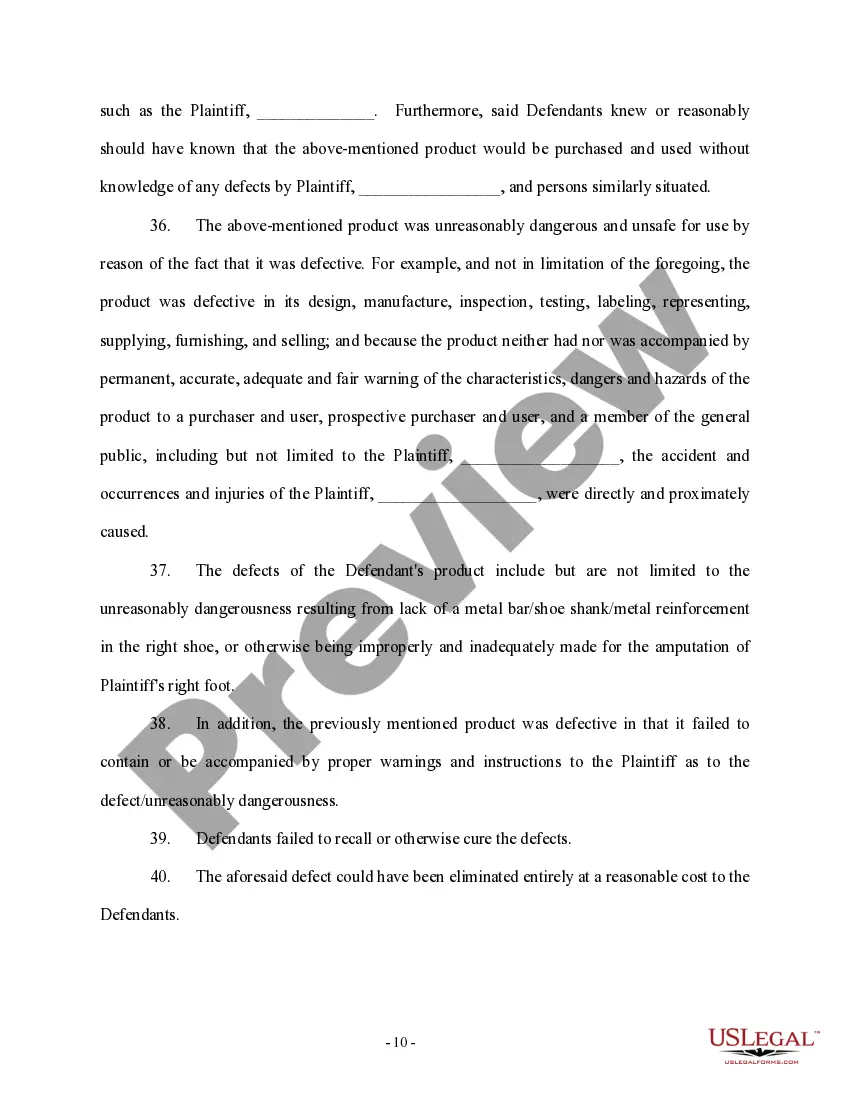
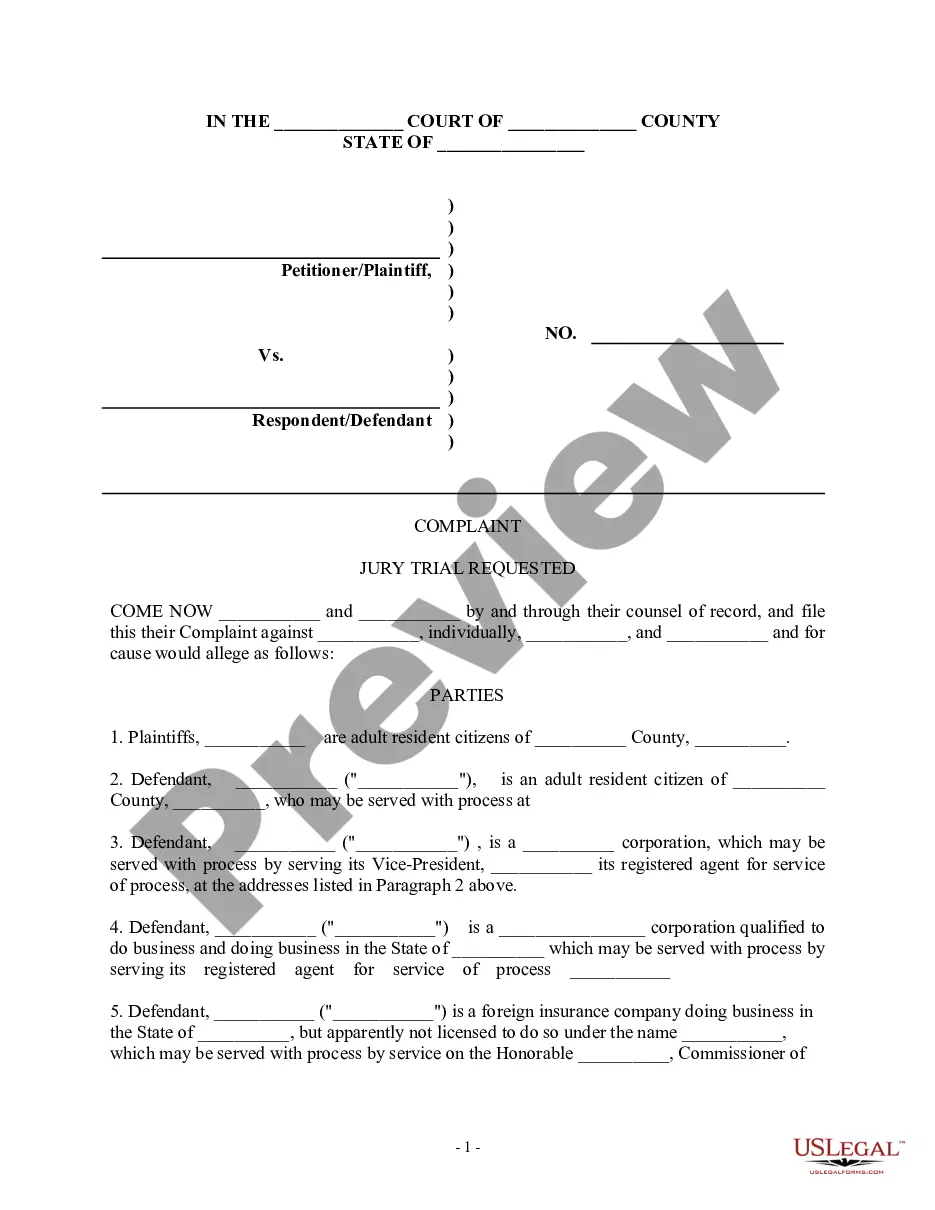
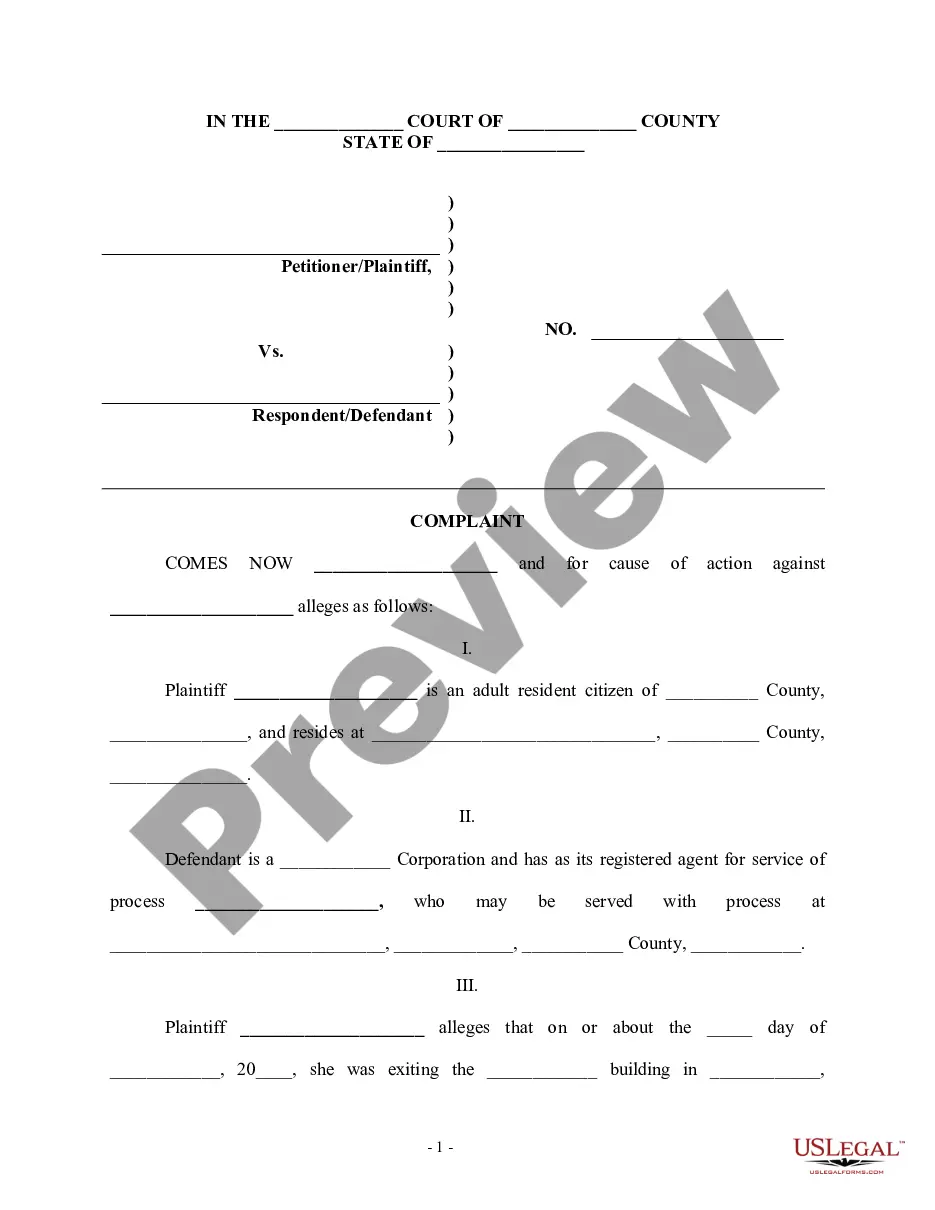
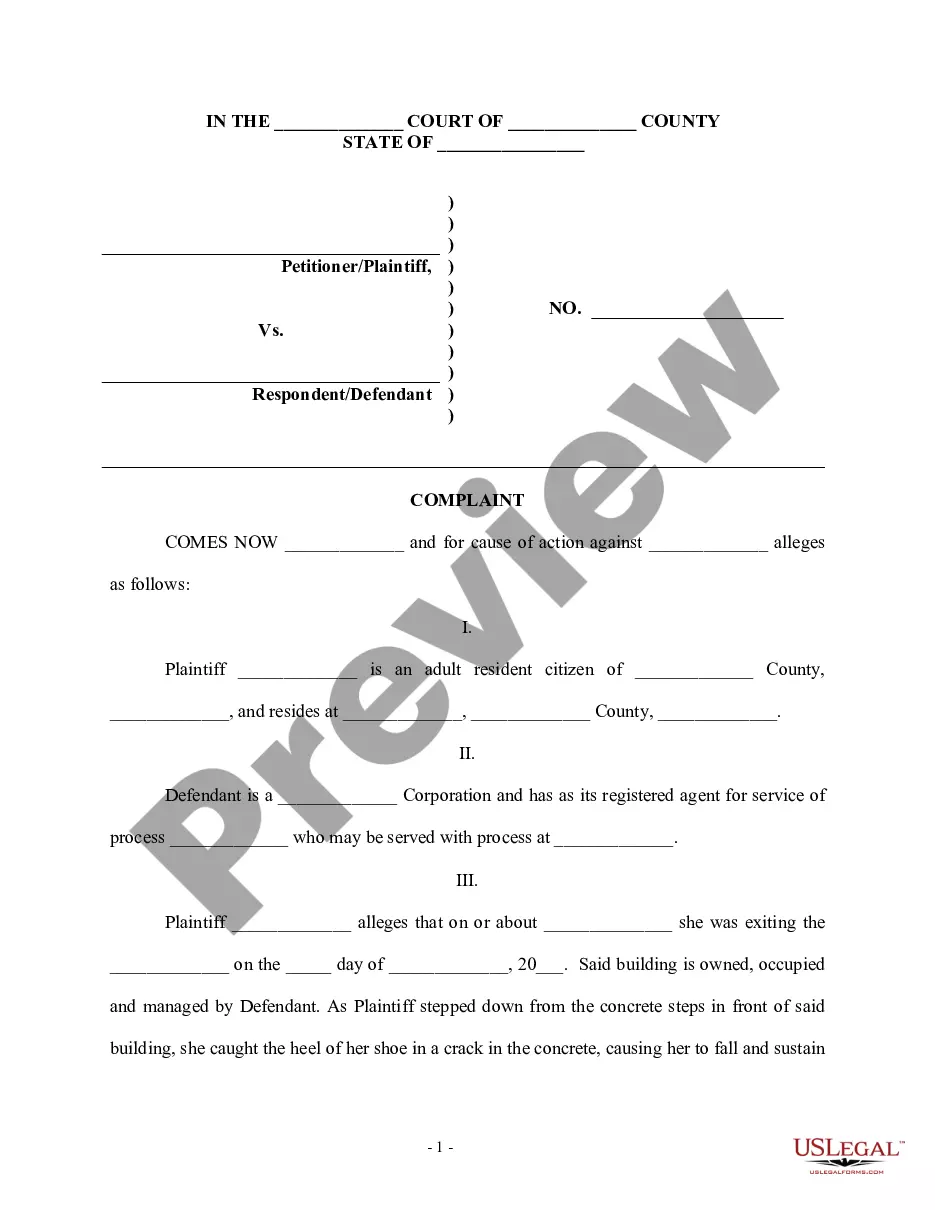
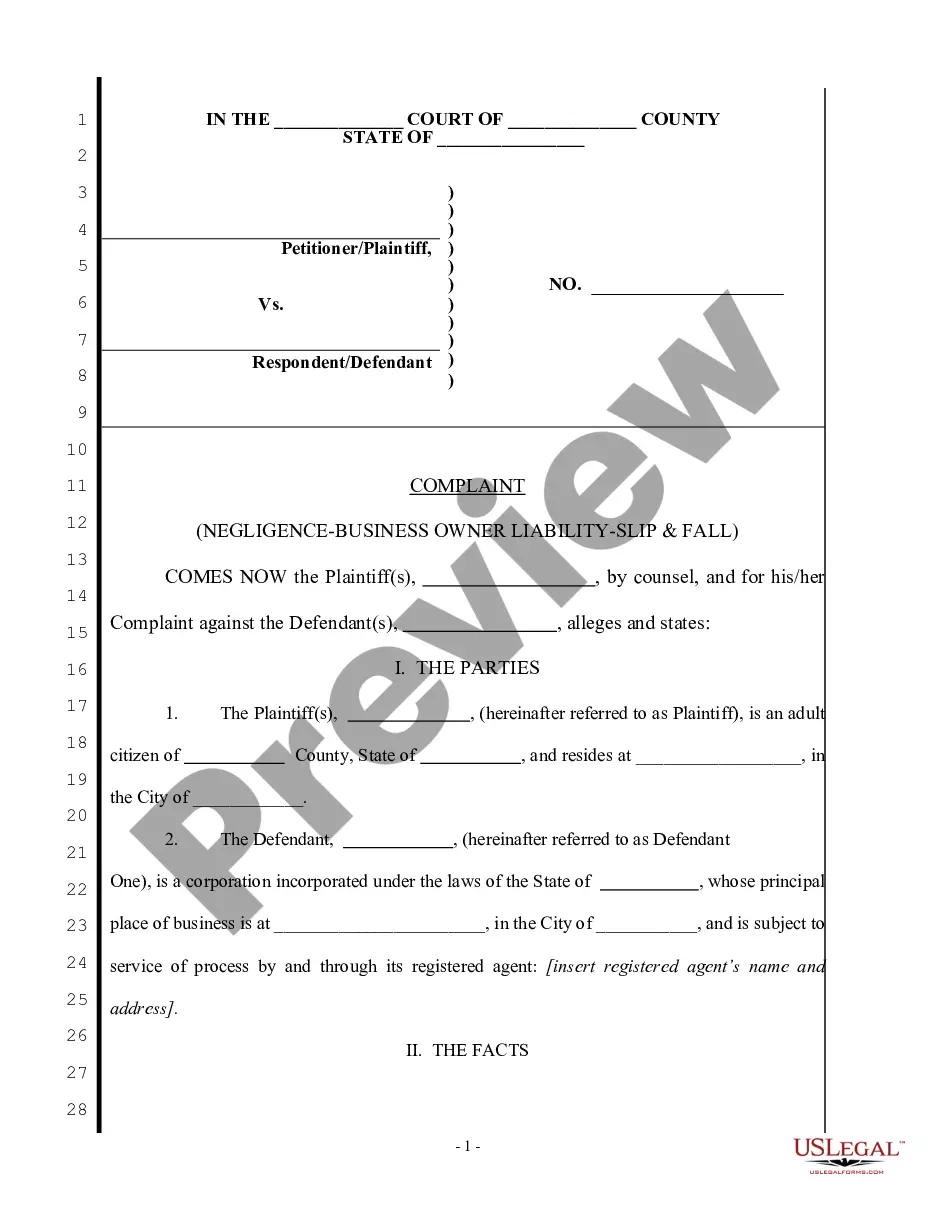
The Complaint regarding Defective Design of Orthopedic Shoe is a legal document used to initiate a personal injury lawsuit when an orthopedic shoe fails to conform to a prescribed design, leading to injuries. This form specifies the allegations against manufacturers, sellers, and designers of the defective product. It is tailored for individuals seeking to claim damages due to negligence and defective design in orthopedic footwear, differentiating it from other personal injury forms which may address generalized accidents or liability claims.
Form components explained
- Parties involved: Identification of the plaintiff and defendants, including unnamed defendants as "John Does".
- Injury details: Description of the plaintiff's medical condition and resulting injuries from the defective orthopedic shoe.
- Prescription specifics: Information about the prescribed orthopedic shoe and its required features.
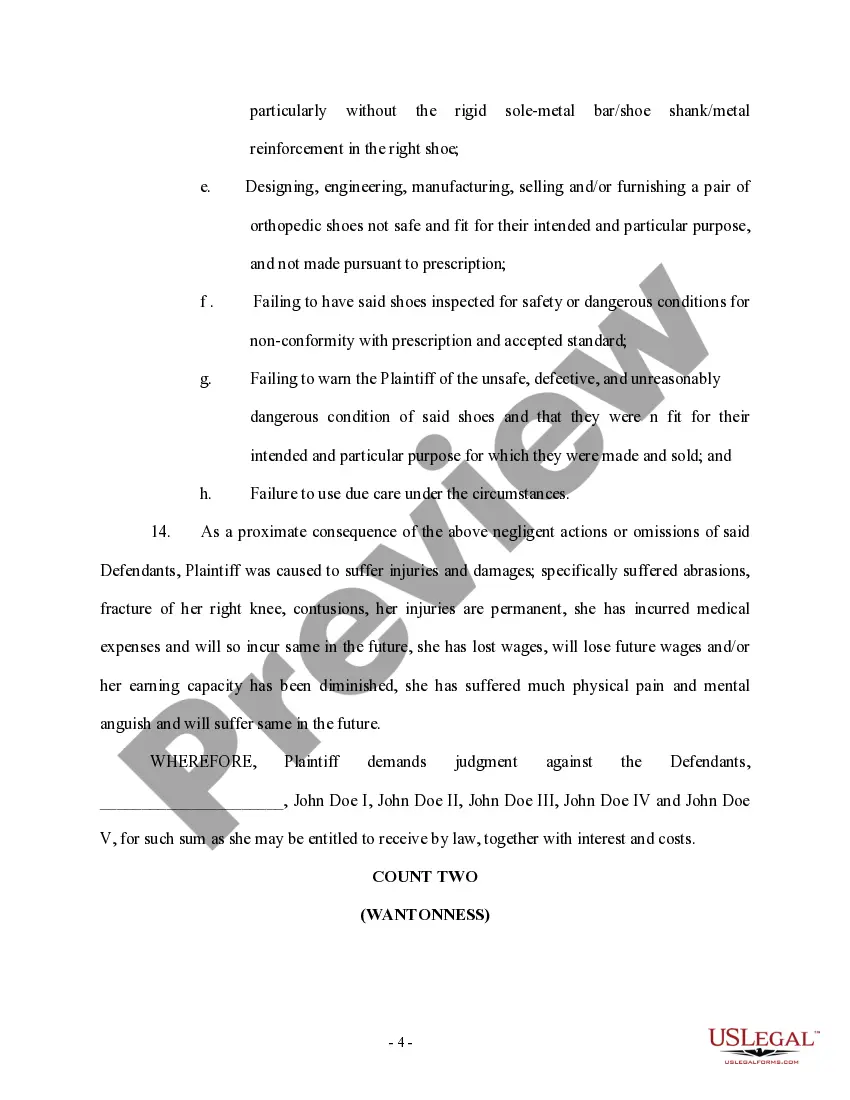
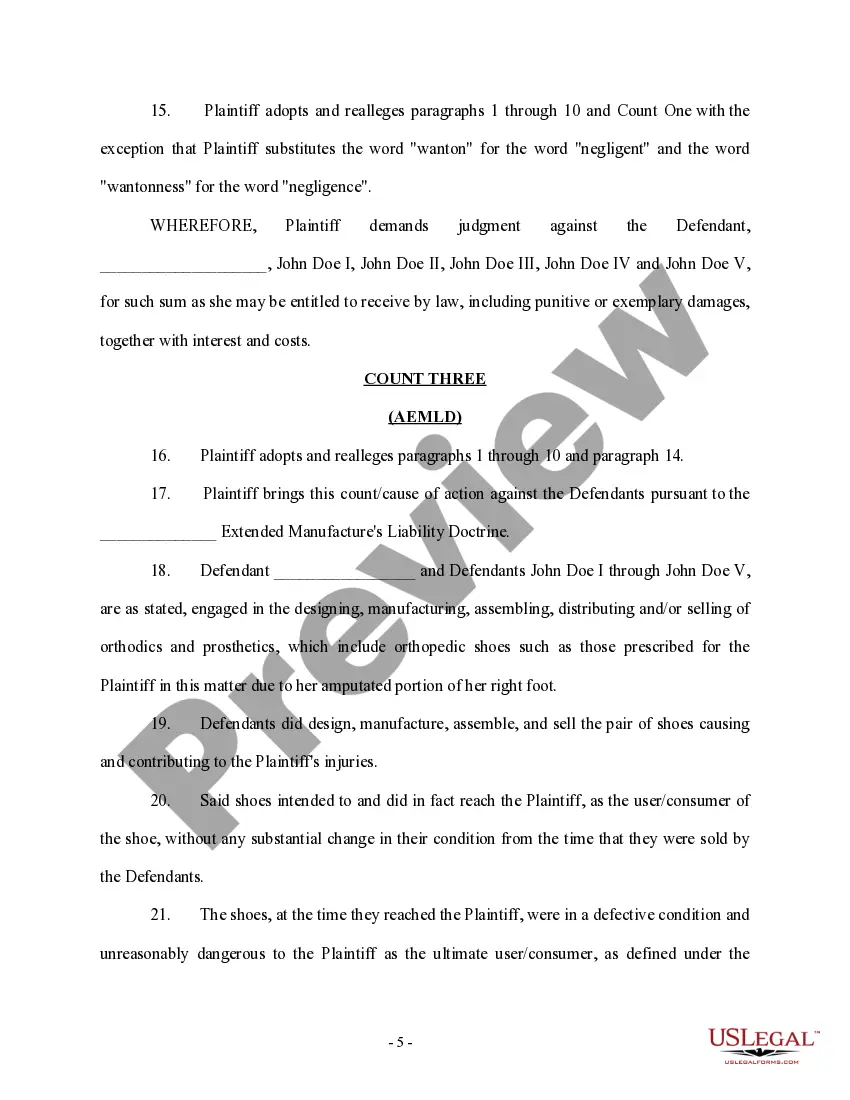
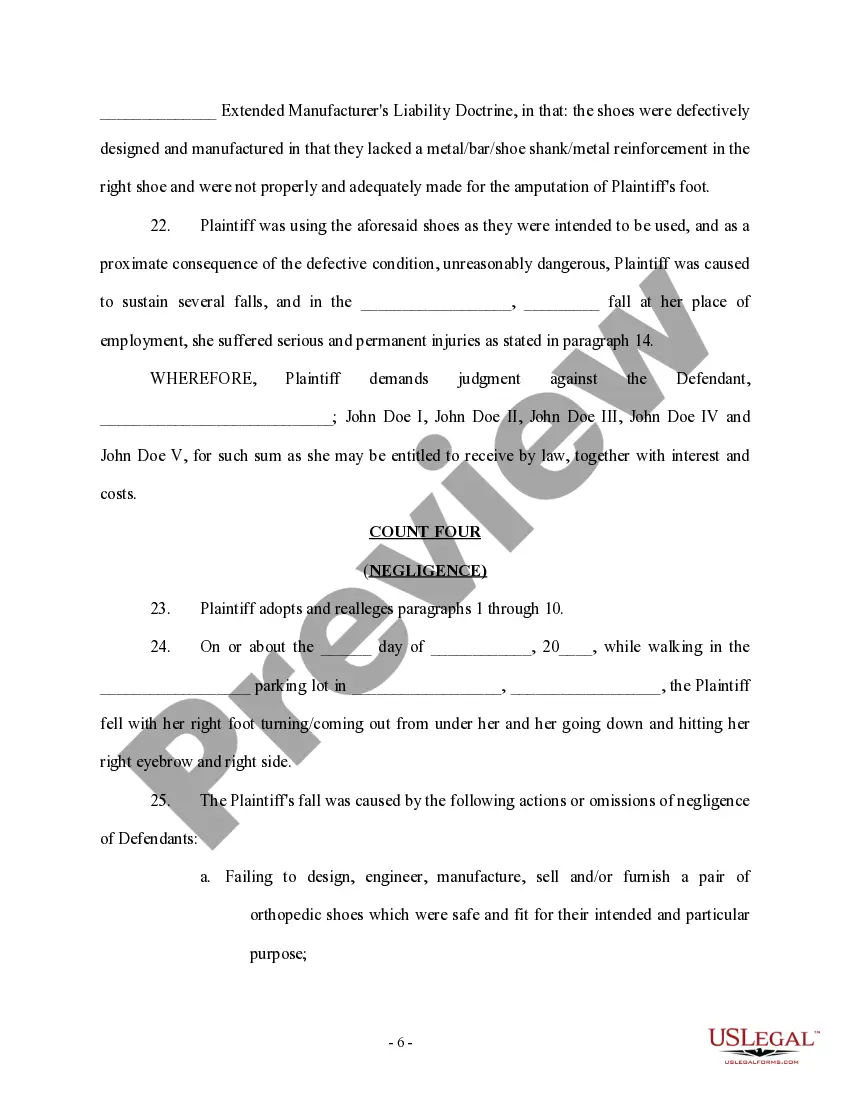
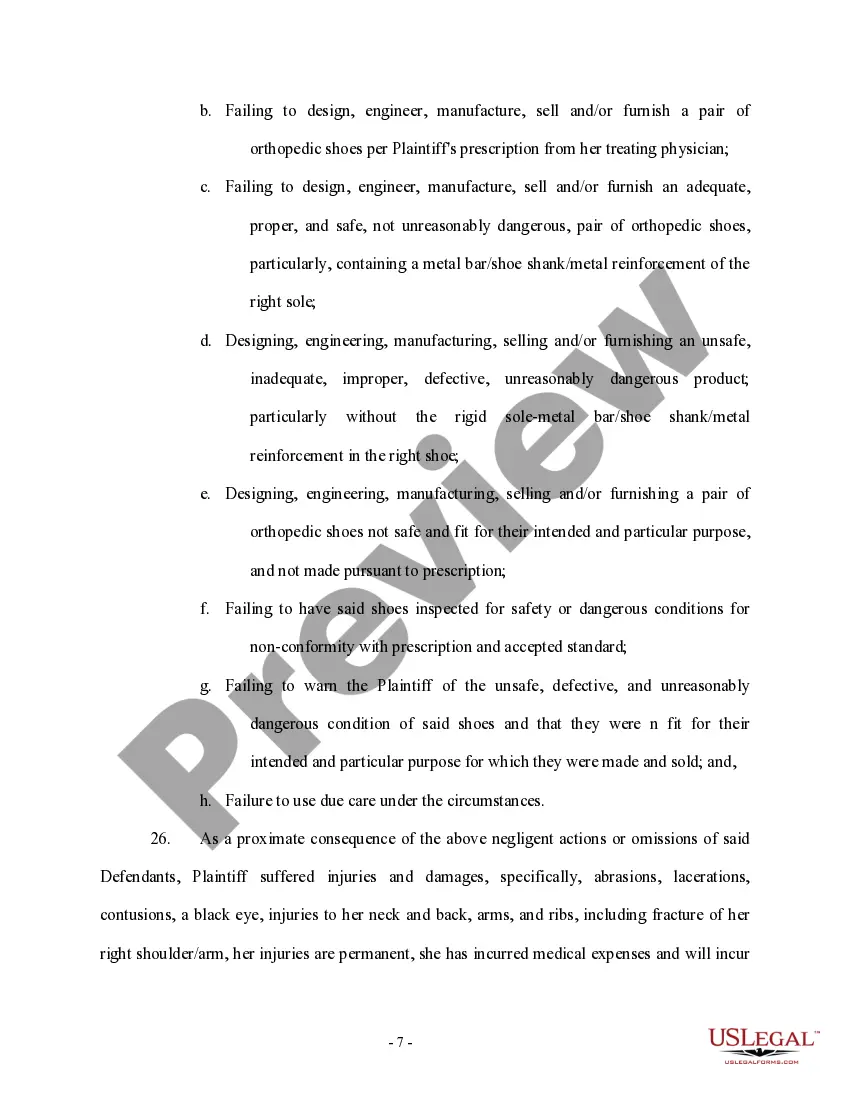
- Negligence allegations: Detailed claims against the defendants regarding failures in design, manufacture, and safety.
- Damages sought: A summary of medical expenses, lost wages, and compensation for pain and suffering due to injuries.


When this form is needed
This form should be used when an individual has suffered injuries as a result of falling while wearing an orthopedic shoe that was not manufactured according to their specific prescription. It is applicable in instances where the shoe's improper design or faulty construction directly leads to the plaintiff's harm, such as falls that could have been prevented with correctly designed footwear.
Who needs this form
- Individuals who sustained injuries due to falling while wearing orthopedic shoes that deviated from their medical prescriptions.
- People seeking to hold manufacturers or distributors accountable for negligence in the design and provision of medical footwear.
- Patients who have experienced complications related to improper orthotic footwear following diabetic conditions or other medical needs.
Instructions for completing this form
- Identify the plaintiff and defendants, filling out their names and contact information.
- Detail the plaintiff's injuries, including the nature and extent of the harm suffered.
- Describe the orthopedic shoe, including the prescription specifications and how the shoe differed.
- Outline the allegations of negligence, specifying each failure leading to the incident.
- Indicate the damages being sought, including medical costs and compensation for pain and suffering.
Does this document require notarization?
Notarization is not commonly needed for this form. However, certain documents or local rules may make it necessary. Our notarization service, powered by Notarize, allows you to finalize it securely online anytime, day or night.
Get your form ready online
Our built-in tools help you complete, sign, share, and store your documents in one place.
Make edits, fill in missing information, and update formatting in US Legal Forms—just like you would in MS Word.
Download a copy, print it, send it by email, or mail it via USPS—whatever works best for your next step.
Sign and collect signatures with our SignNow integration. Send to multiple recipients, set reminders, and more. Go Premium to unlock E-Sign.
If this form requires notarization, complete it online through a secure video call—no need to meet a notary in person or wait for an appointment.
We protect your documents and personal data by following strict security and privacy standards.

Make edits, fill in missing information, and update formatting in US Legal Forms—just like you would in MS Word.

Download a copy, print it, send it by email, or mail it via USPS—whatever works best for your next step.

Sign and collect signatures with our SignNow integration. Send to multiple recipients, set reminders, and more. Go Premium to unlock E-Sign.

If this form requires notarization, complete it online through a secure video call—no need to meet a notary in person or wait for an appointment.

We protect your documents and personal data by following strict security and privacy standards.
Common mistakes to avoid
- Failing to accurately identify all defendants involved in the manufacture or distribution of the shoe.
- Omitting key details about the prescription or the specific design faults in the orthopedic shoe.
- Not clearly articulating the connection between the defective shoe and the injuries sustained.
- Neglecting to specify the total damages being claimed, which can limit potential recovery.
Why use this form online
- Quick access to legally vetted templates, ensuring compliance with legal standards.
- Editability to personalize the document as per individual circumstances.
- Convenience of downloading and printing the form from home, eliminating the need for in-person visits.
- Instant access to updates based on the latest legal standards and best practices.
Legal use & context
- This form serves as a formal complaint to initiate a lawsuit for injury due to defective design.
- It outlines the legal basis for negligence claims against manufacturers and suppliers.
- Filing this form begins legal proceedings, allowing the injured party to seek redress in court.
Quick recap
- The Complaint regarding Defective Design of an orthopedic shoe is essential for seeking redress after an injury caused by defective footwear.
- Accurate completion is critical to effectively present your case and claim damages.
- Understanding the legal context and potential mistakes can enhance the success of your claim.
Looking for another form?
Form popularity
FAQ
How does the concept of defective design/manufacturing apply to this situation?When companies sell defective products to consumers who are injured, liability will result without having to show that the manufacturer breached the duty to warn.
Though there are numerous instances in which a defective product could injure a person, defects that give rise to supplier, seller, or manufacturer liability are categorized by three types of product defects: design defects, manufacturing defects, and marketing defects.
Manufacturing Defects: When an error occurs during the manufacturing process, causing the product to depart from its intended design. Design Defects: When there is a flaw in the original design of the product which makes it unreasonably dangerous for consumer use.
That the product is defective and also that the defect existed when the product left the defendant's control. When an individual product has a defect making it more dangerous than identical products, that individual product is said to have which of the following defects? Manufacturing.
Defects are aspects of the works that are not in accordance with the contract. Defects may occur because of: Design deficiencies. Material deficiencies.
Defective Product is an imperfection in a product that has a manufacturing or design defect, or is faulty because of inadequate instructions or warnings. A product is in a defective condition if it is unreasonably dangerous to the user or to consumer who purchases the product and causes physical harm.
Examples of Design Defects Another product that plugs into the wall may not rotate and chop vegetables correctly but could electrify the user when touching the buttons. The design that creates the whole or parts may have an inherent flaw that leads to damage or injury when using it as the instructions explain.
Design Defects. The first type of defect in construction projects is design defects. Material Defects. The second type of construction contract defect is material defects. Workmanship Defects.
A defective product can be defined as any product that is unreasonably dangerous when being used for its intended purpose, without any alterations or interference.Some of the most common examples of defective products include food items, medical devices, and children's toys.