Waiver and Release of Personal Injury Claim
What this document covers
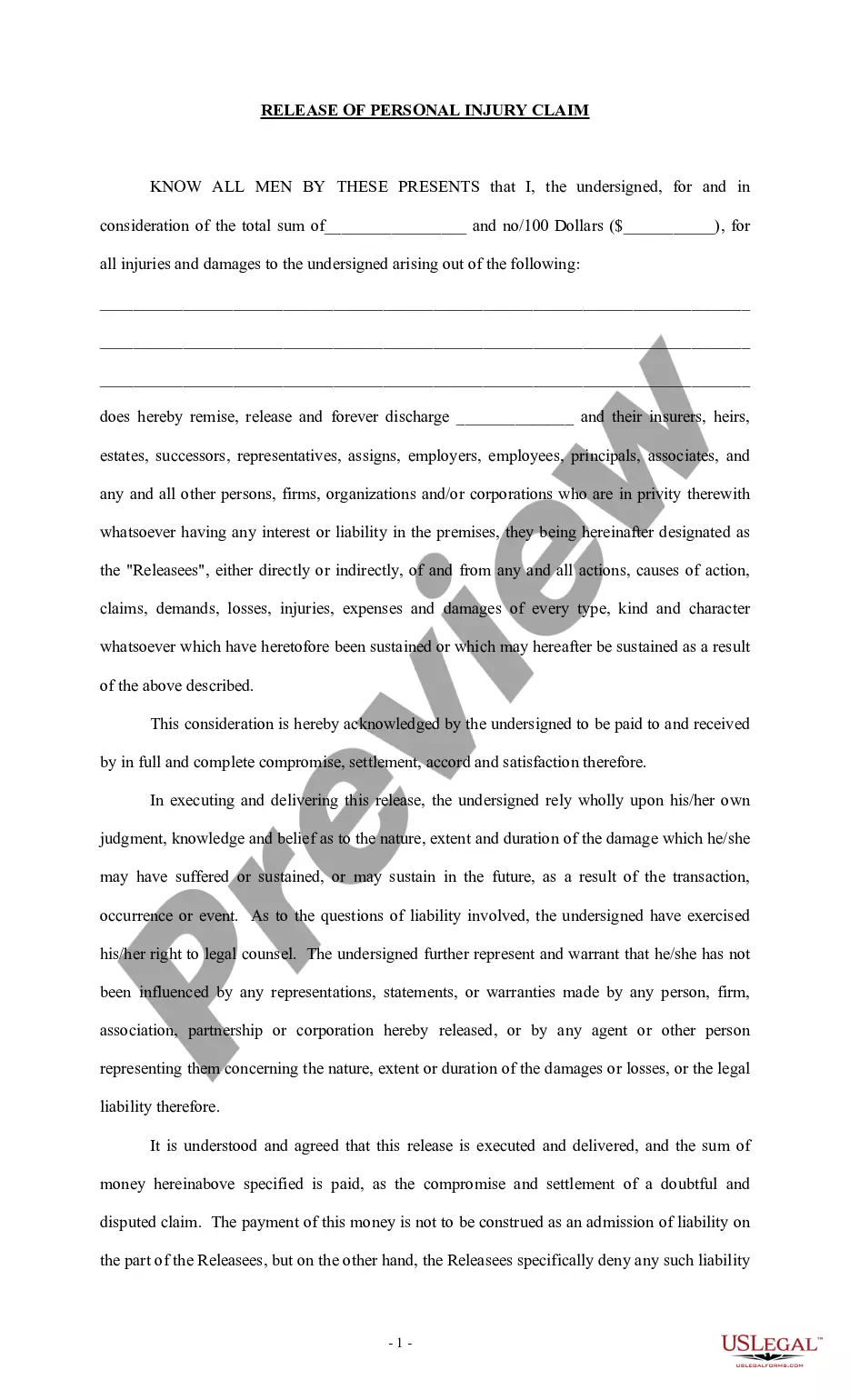
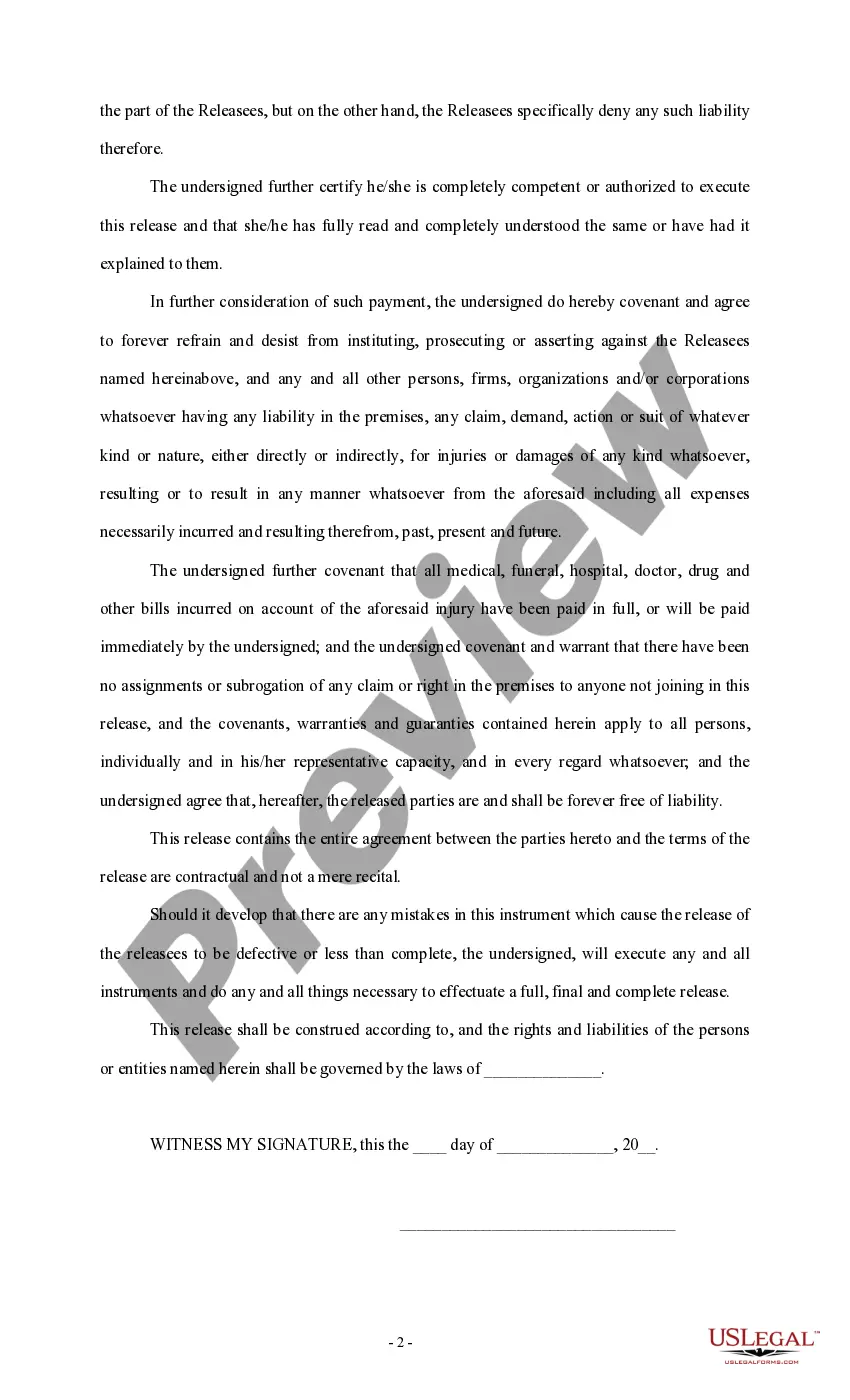
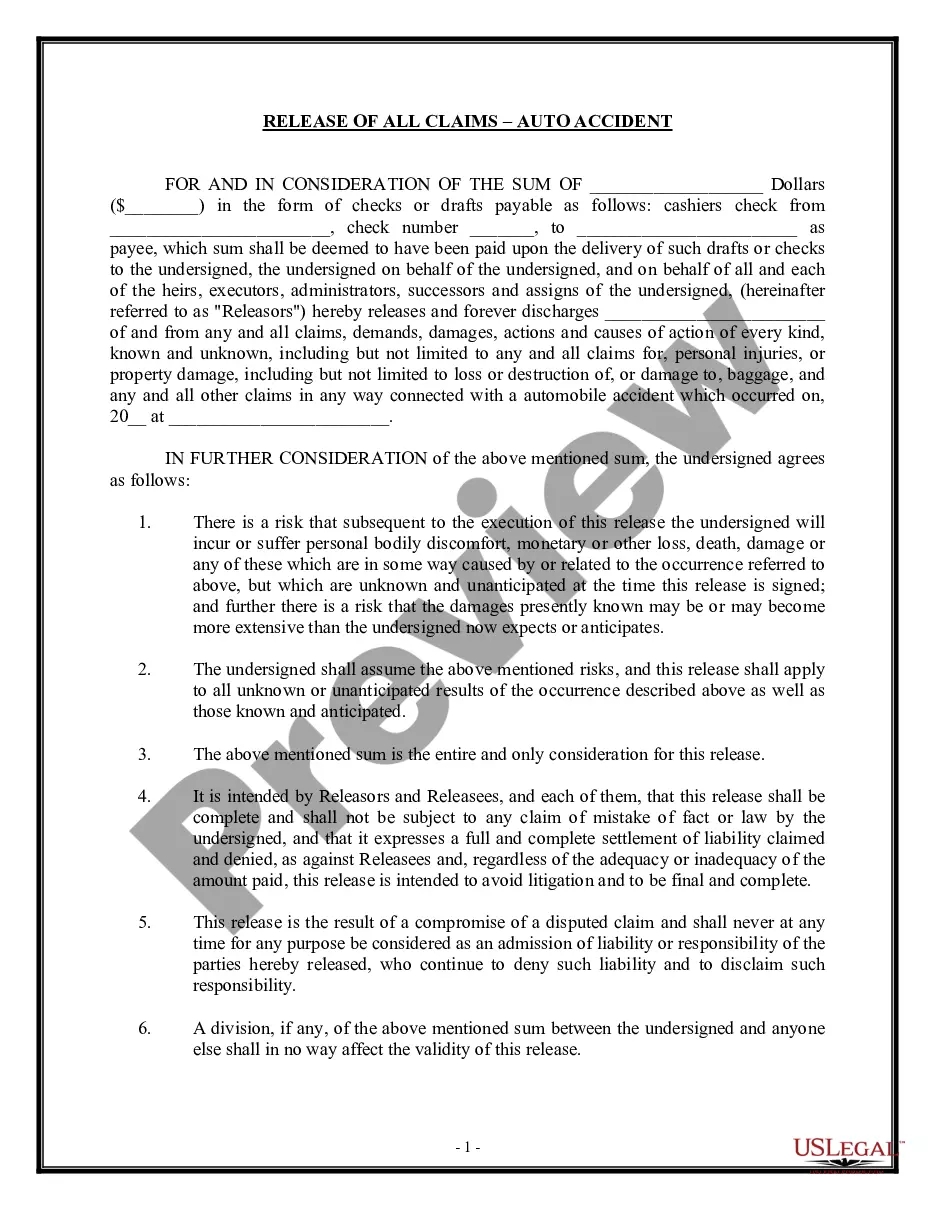
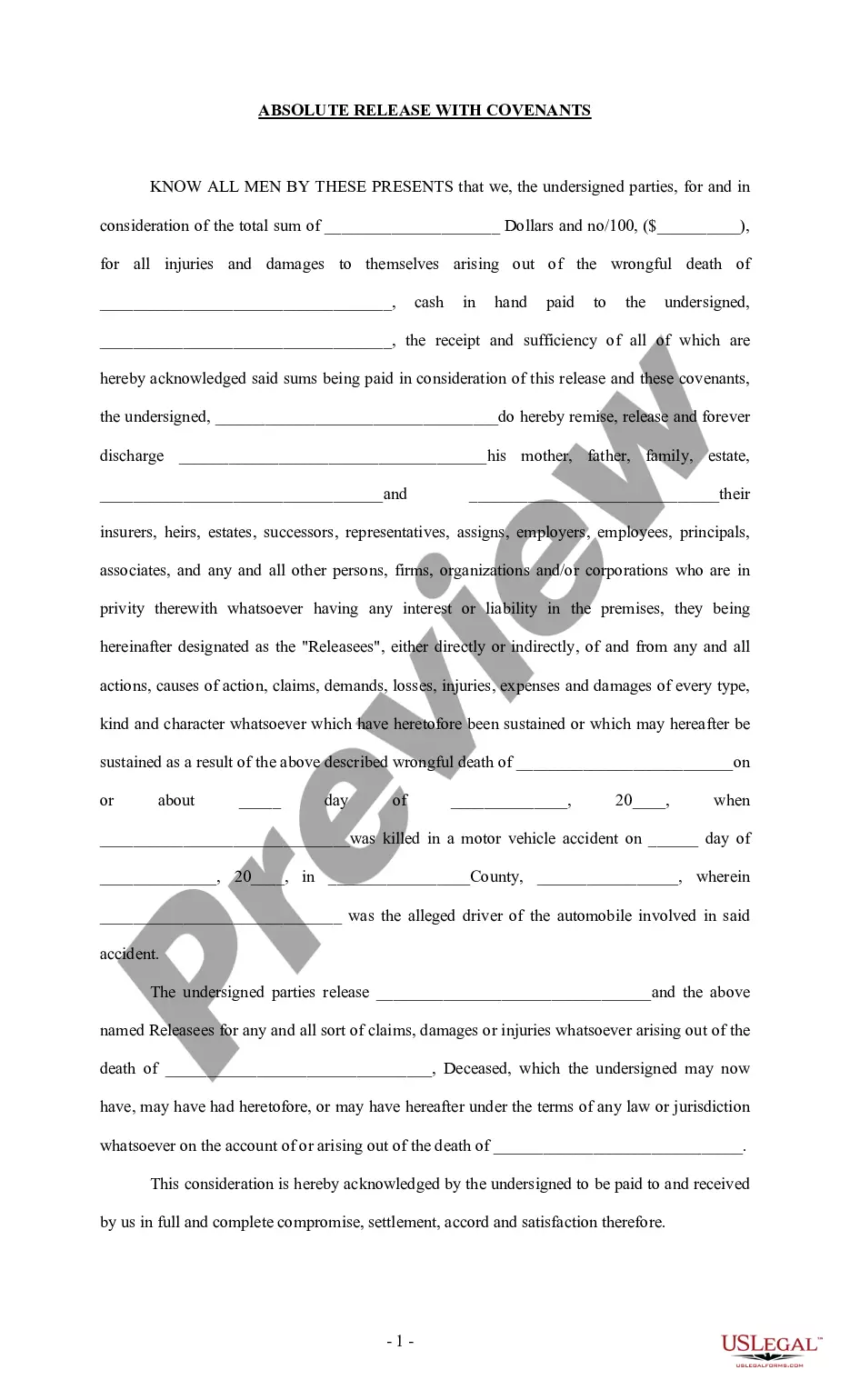
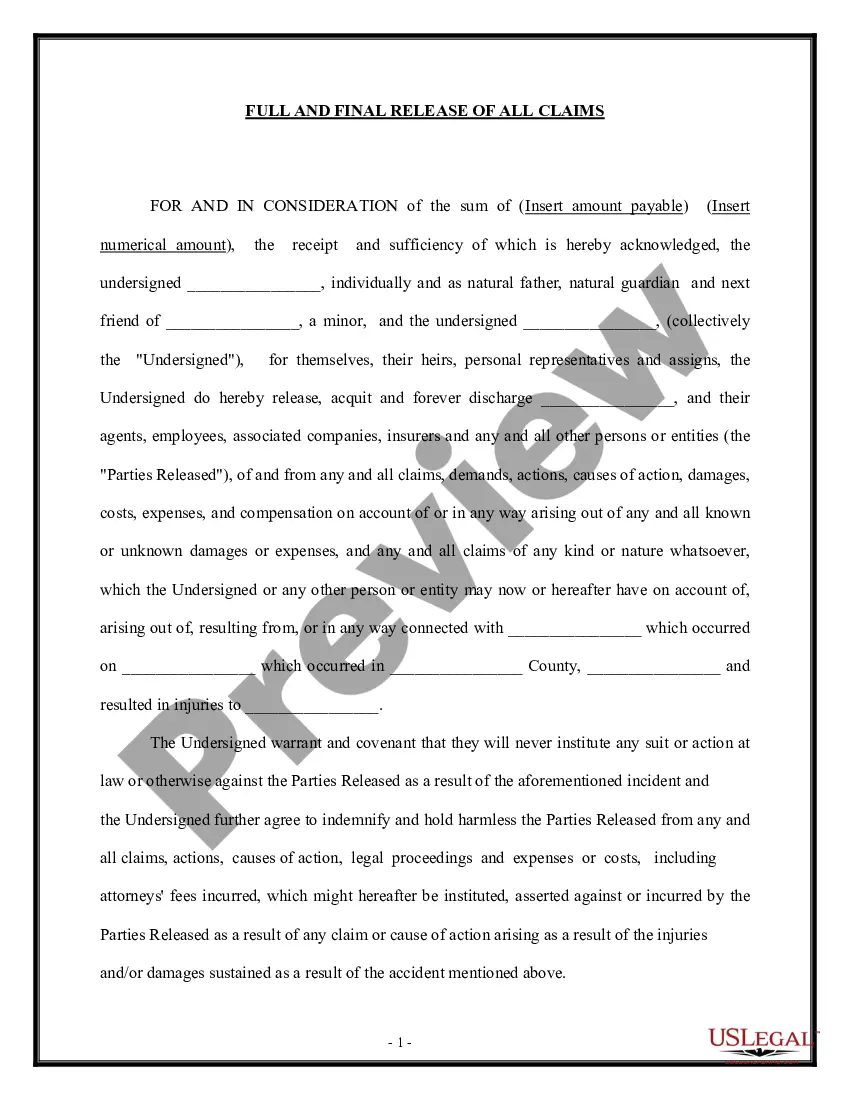
The Waiver and Release of Personal Injury Claim is a legal document in which a plaintiff releases a defendant from any liability for personal injury or damages in exchange for compensation. This form is essential in settling claims pertaining to personal injuries, ensuring that all parties agree to waive future legal claims related to specified incidents. It provides clarity on the terms of settlement, preventing future disputes over the same issues.
What’s included in this form
- Identification of the parties involved, including the plaintiff and defendant.
- Details of the incident or transaction that led to the claim.
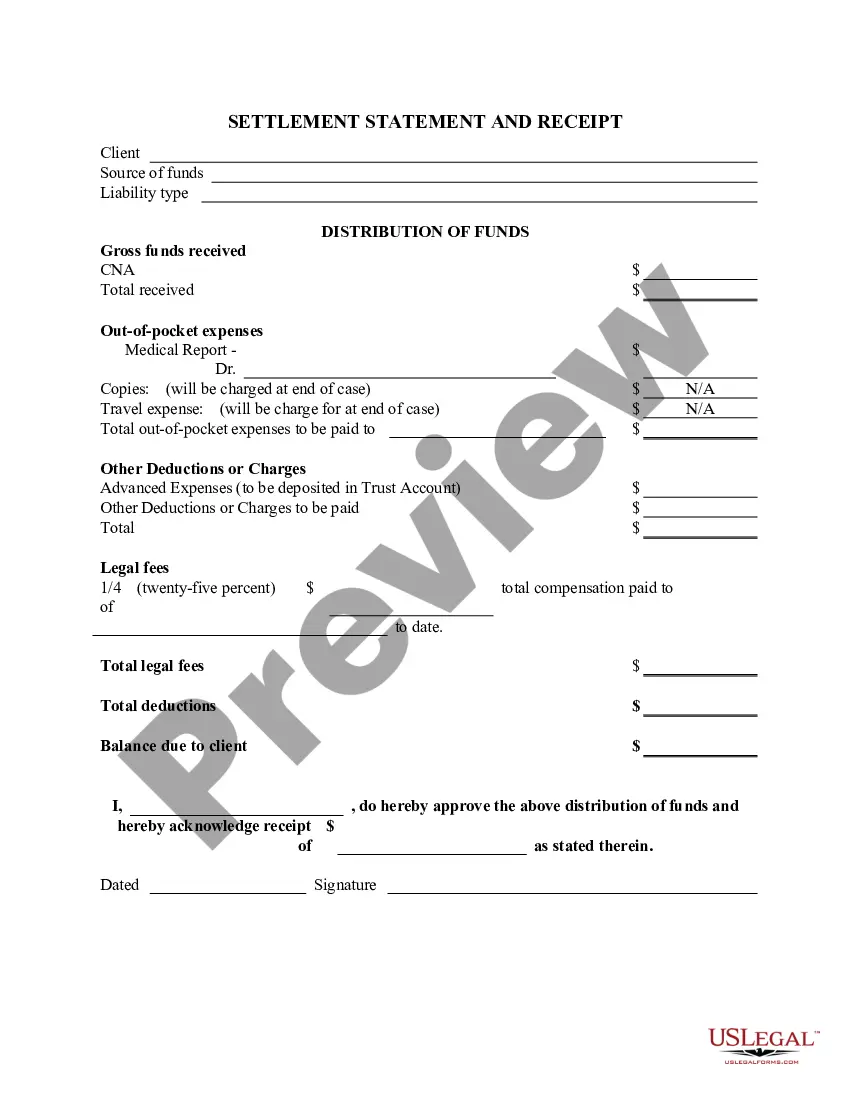
- The consideration amount being paid to the plaintiff for the waiver.
- A clear statement of release from future claims related to the specified injury.
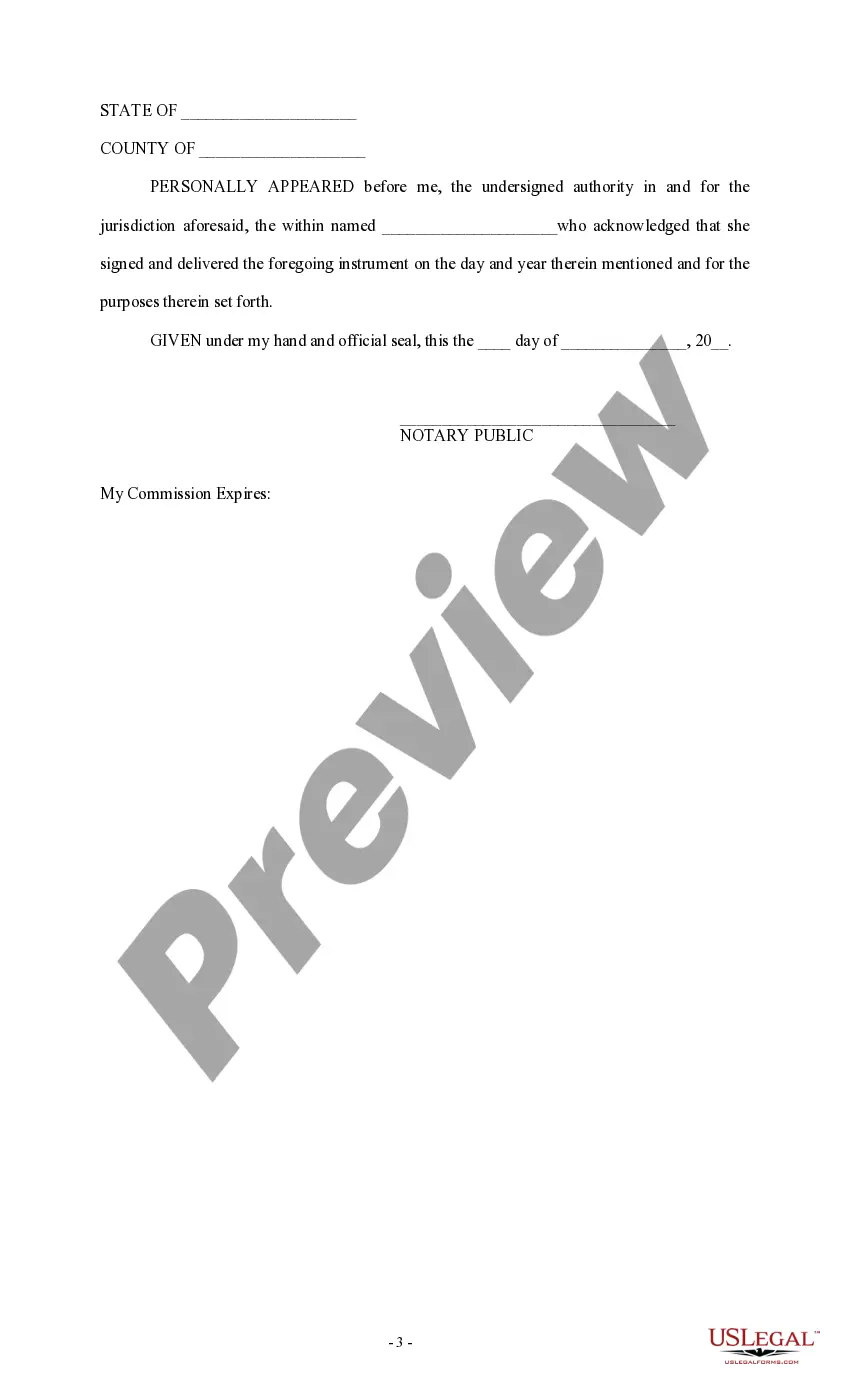
- Signature lines for all parties and a provision for notarization.
When to use this document
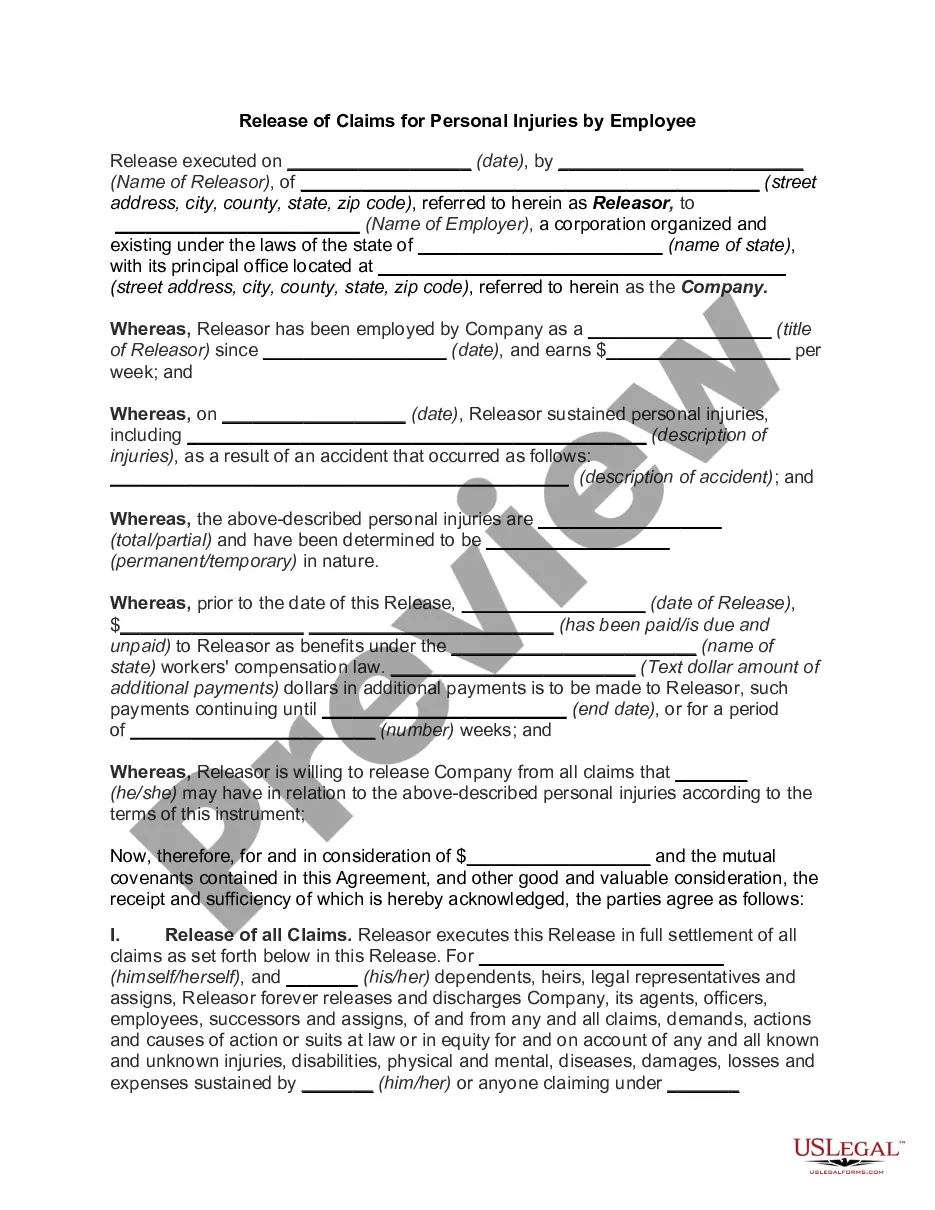
This form is used when an individual (the plaintiff) has sustained an injury or damage and is negotiating a settlement with another party (the defendant). It is appropriate in situations where the plaintiff agrees to receive compensation in exchange for relinquishing the right to pursue further legal action related to that injury. Typically, it is utilized in personal injury cases, workers' compensation settlements, or situations involving general liability claims.
Who needs this form
- Individuals who have suffered personal injuries and wish to settle their claims.
- Parties involved in personal injury lawsuits seeking to avoid future litigation.
- Legal representatives assisting clients with the negotiation of settlement offers.
Steps to complete this form
- Identify and list the names of the plaintiff and defendant in the appropriate fields.
- Describe the incident that caused the injury in detail.
- Enter the total amount agreed upon for the release in the designated section.
- Both parties should sign the document, acknowledging their consent to the terms.
- If required, find a notary public to witness the signatures and provide notarization.
Notarization requirements for this form
This form needs to be notarized to ensure legal validity. US Legal Forms provides secure online notarization powered by Notarize, allowing you to complete the process through a verified video call, available anytime.
Get your form ready online
Our built-in tools help you complete, sign, share, and store your documents in one place.
Make edits, fill in missing information, and update formatting in US Legal Forms—just like you would in MS Word.
Download a copy, print it, send it by email, or mail it via USPS—whatever works best for your next step.
Sign and collect signatures with our SignNow integration. Send to multiple recipients, set reminders, and more. Go Premium to unlock E-Sign.
If this form requires notarization, complete it online through a secure video call—no need to meet a notary in person or wait for an appointment.
We protect your documents and personal data by following strict security and privacy standards.

Make edits, fill in missing information, and update formatting in US Legal Forms—just like you would in MS Word.

Download a copy, print it, send it by email, or mail it via USPS—whatever works best for your next step.

Sign and collect signatures with our SignNow integration. Send to multiple recipients, set reminders, and more. Go Premium to unlock E-Sign.

If this form requires notarization, complete it online through a secure video call—no need to meet a notary in person or wait for an appointment.

We protect your documents and personal data by following strict security and privacy standards.
Avoid these common issues
- Failing to specify the amount of compensation clearly.
- Not including sufficient details about the incident.
- Omitting signatures from all necessary parties.
- Neglecting to have the document notarized if required.
Why complete this form online
- Convenience of filling out the form from anywhere at any time.
- Editability allows adjustments to be made easily before finalizing the document.
- Reliability, as the form is prepared by licensed attorneys to meet legal standards.
What to keep in mind
- The Waiver and Release of Personal Injury Claim releases a defendant from liability in return for a settlement payment.
- Completing the form accurately is essential for protecting your rights and ensuring the legal soundness of the document.
- Notarization is a critical step for the enforceability of this form.
Looking for another form?
Form popularity
FAQ
A liability waiver, or release waiver, is a legal document that a company or organization requires members of the public to sign in order to protect their organization from being sued if you sustain an injury.Depending on the facts of your case, you may still be able to file a lawsuit and recover damages.
Release Versus Waiver The main difference between releases and waivers is the transferring of ownership. When rights are released, they are transferred to another party. When rights are waived, they are gone altogether.In the case of the skydiver, they might be asked to sign a release form rather than a waiver.
Also known as a general release or release. A written contract in which one or more parties agree to give up legal causes of action against the other party in exchange for adequate consideration (that is, something of value to which the party releasing the legal claims is not already entitled).
A release and waiver agreement is an enforceable promise not to pursue legal action in exchange for compensation. The releasee gives money or some other form of compensation to the releasor, who then agrees not to press charges, sue, or take any other legal action against the releasee.
If you've been injured due to negligent actions, you can sue even if you signed a waiver. Winning a lawsuit concerning negligence is not uncommon. Many celebrities have sued for negligence even though they signed documents stating they understood the risks.
The main difference between releases and waivers is the transferring of ownership. When rights are released, they are transferred to another party. When rights are waived, they are gone altogether. If intellectual property rights are waived, the IP can be used by any other party that has access to it.
So, if an accident happens and injury occurs, is a Waiver effective in protecting the institution from liability and preventing a lawsuit from the injured party? The answer is that, if properly worded and signed, the Waiver is likely valid and will preclude legal claims for injuries.
1, 1988) (liability waivers are enforceable in California if the release is clear, unambiguous and explicit in expressing the intent of the parties; the act of negligence that results in injury to the releasee is reasonably related to the object or purpose for which the release is given; and the release does not
A liability waiver, or release of liability, is a legal document that a company or organization has you sign in order to protect them from being sued in the event that you are injured.