Complaint regarding Injury from disposal of hazardous containers
About this form
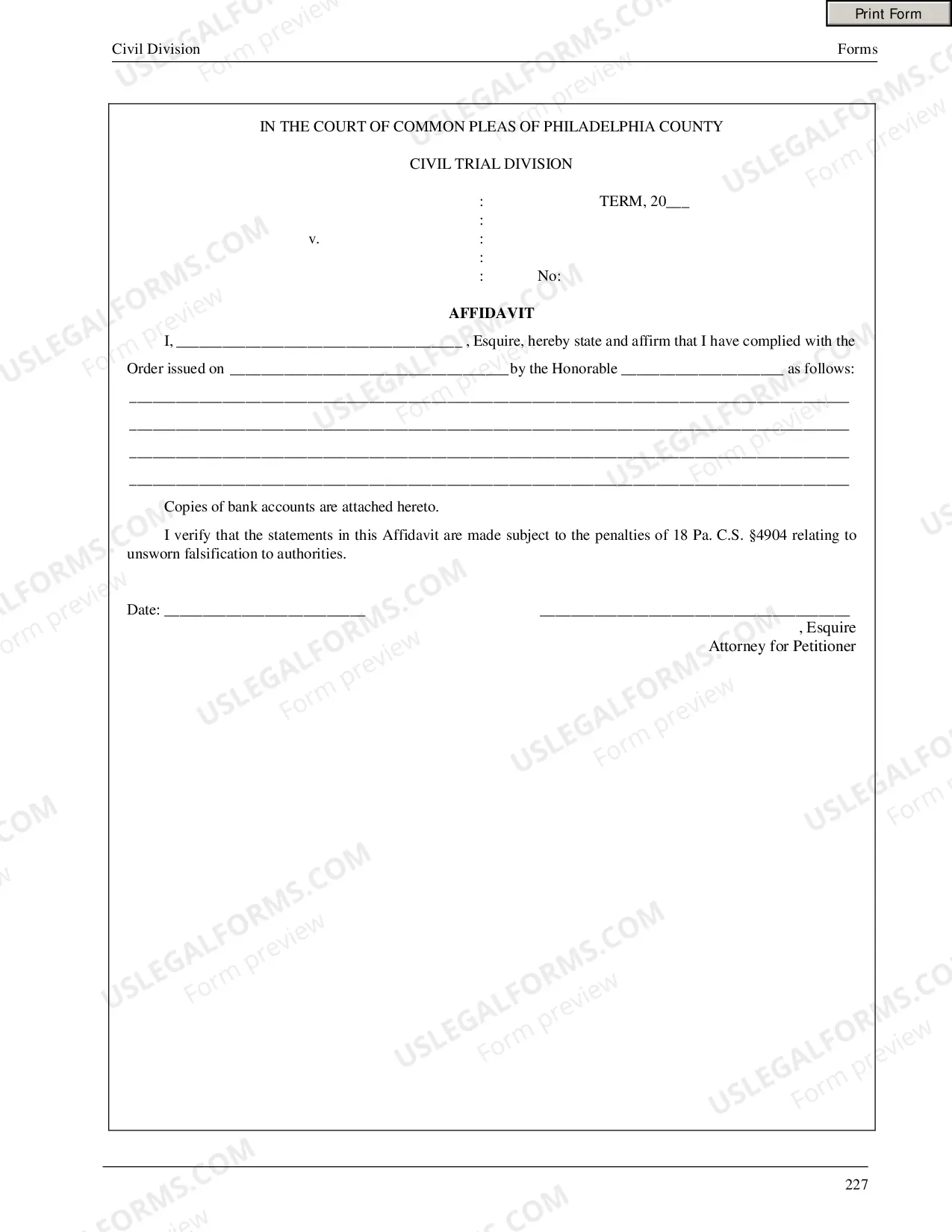
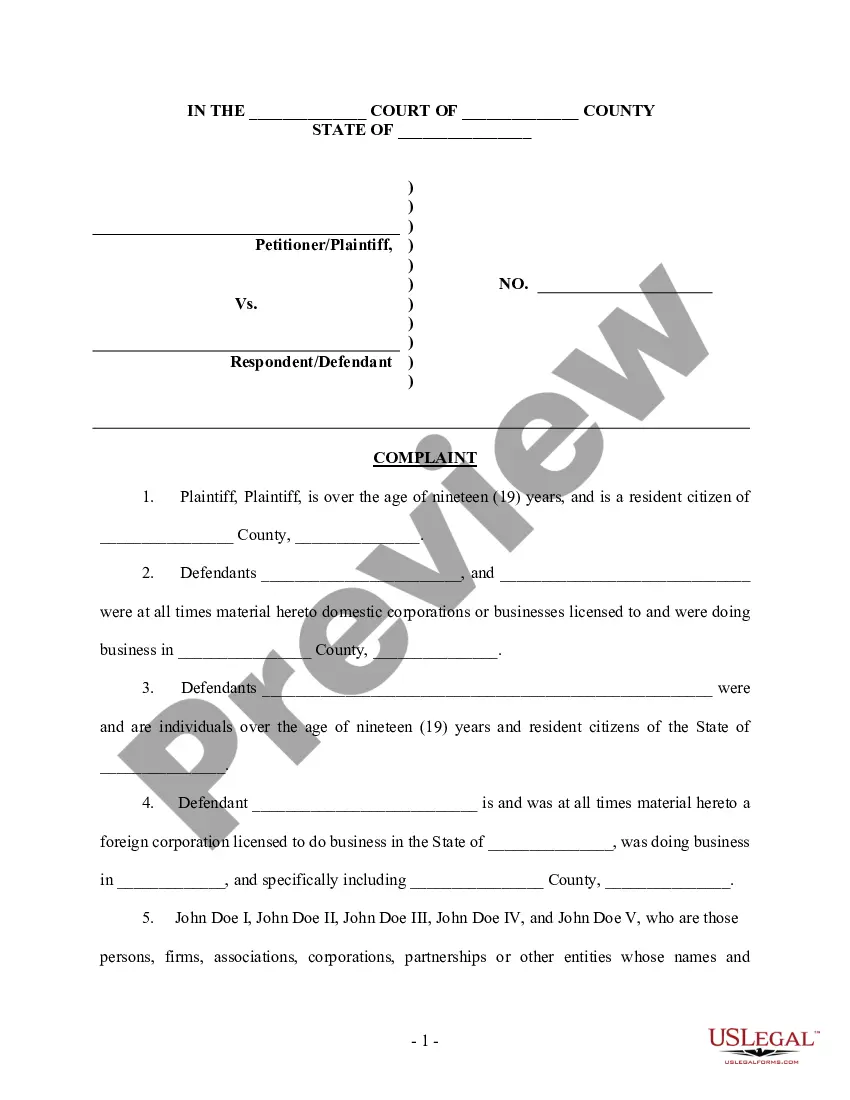
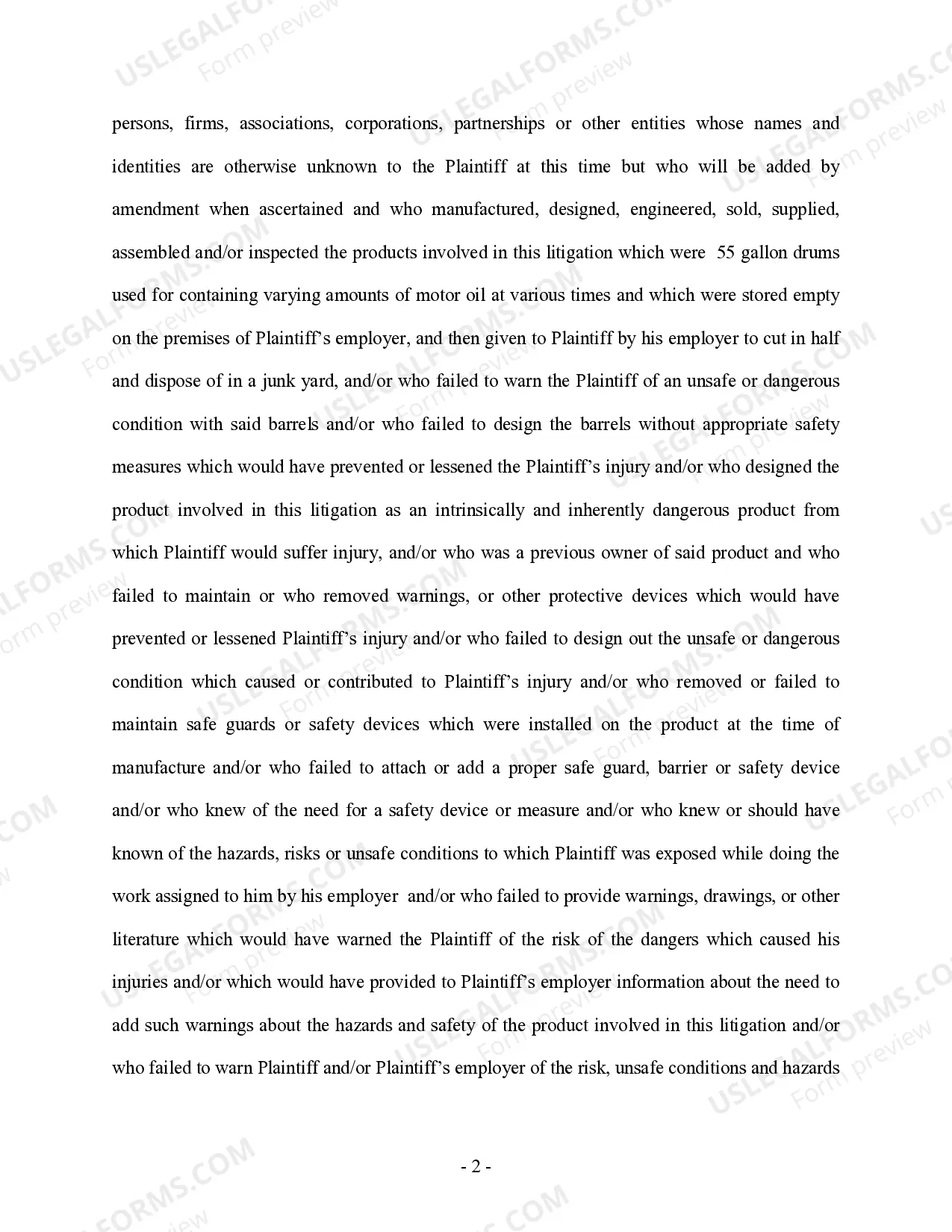
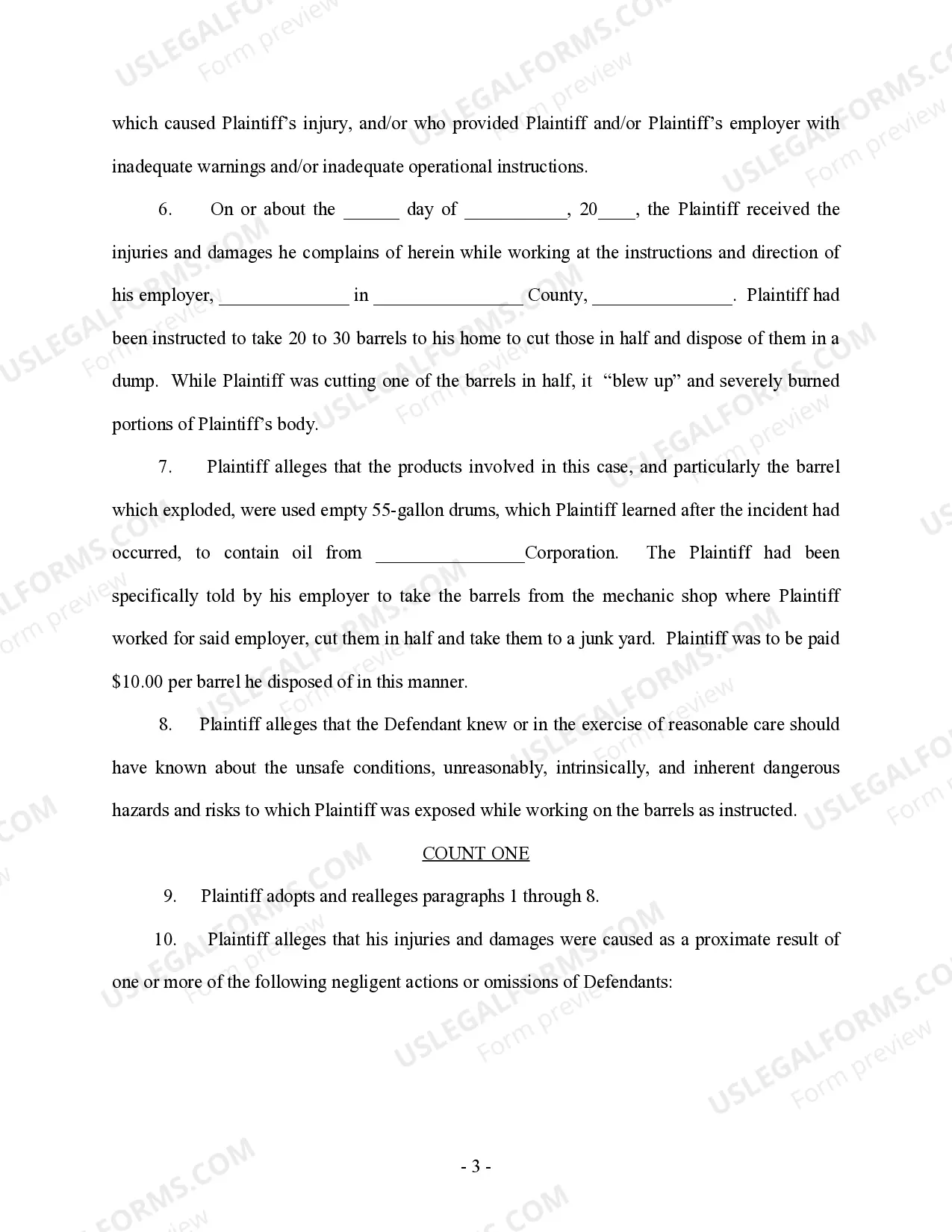
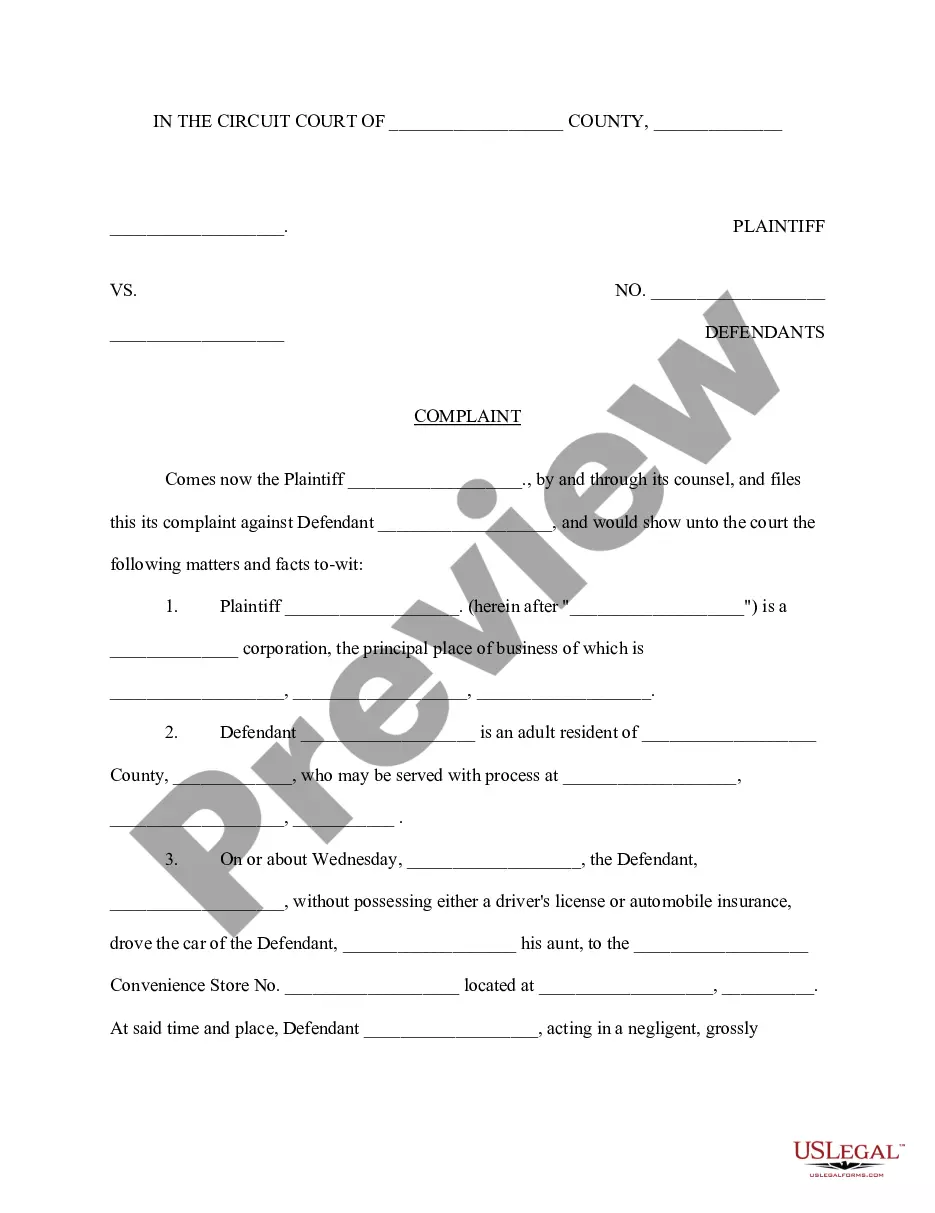
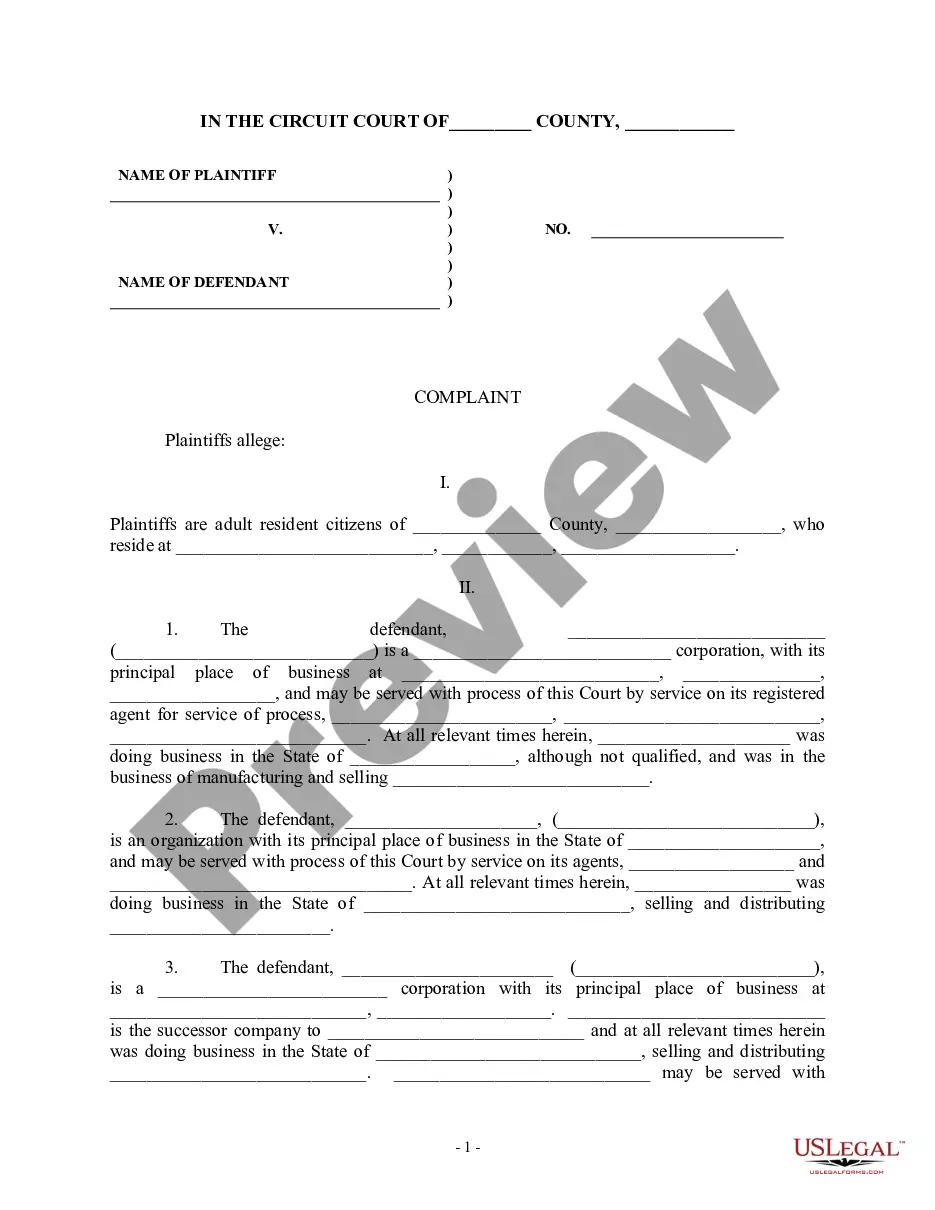
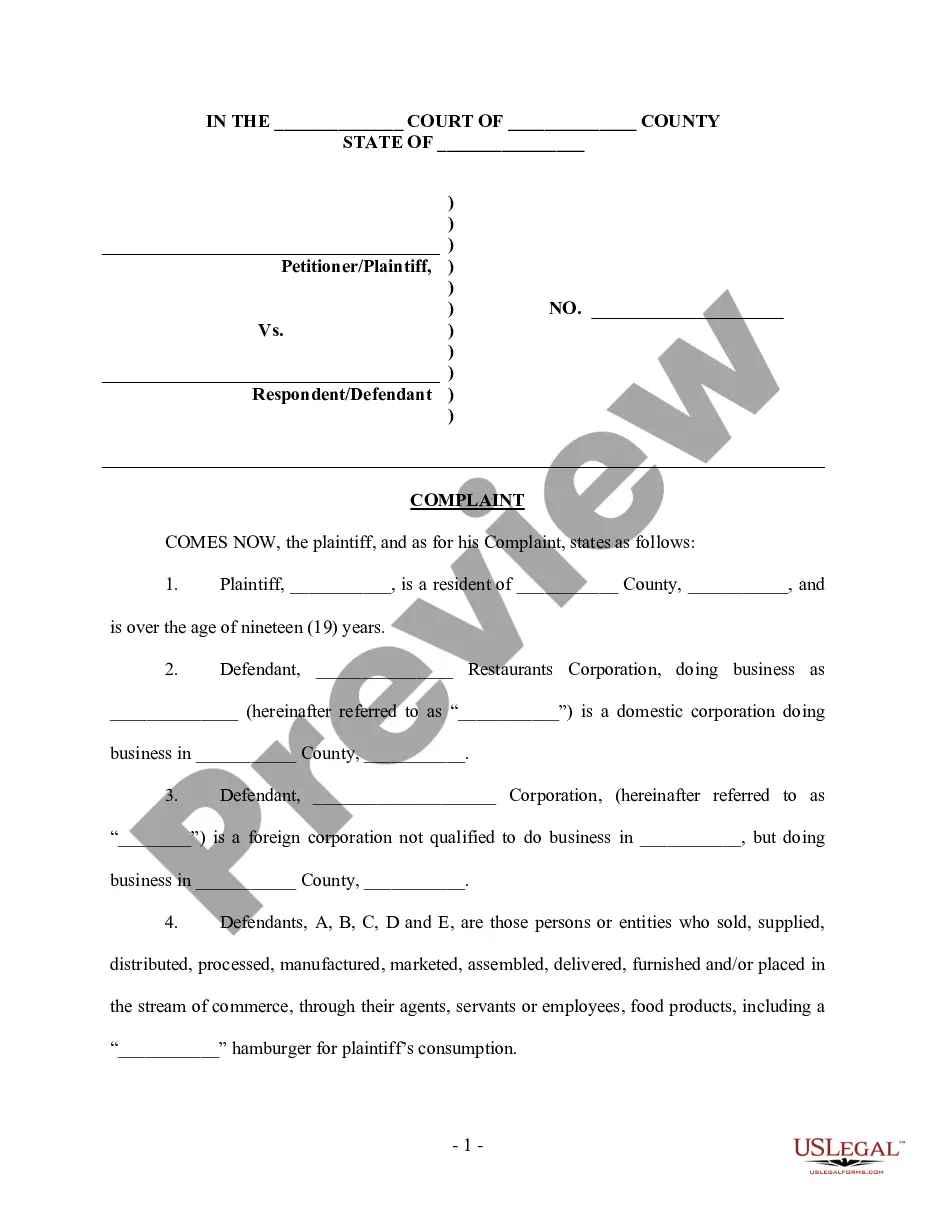
This form is a legal document used to file a complaint in a personal injury case stemming from the disposal of hazardous containers, specifically 55-gallon drums that may contain dangerous substances. It differs from similar forms by focusing on the injuries sustained due to unsafe disposal practices and the parties responsible for the hazardous condition.
Form components explained
- Identification of defendants, including individuals and corporations involved.
- Details of the incident, including the date and events leading to the injury.
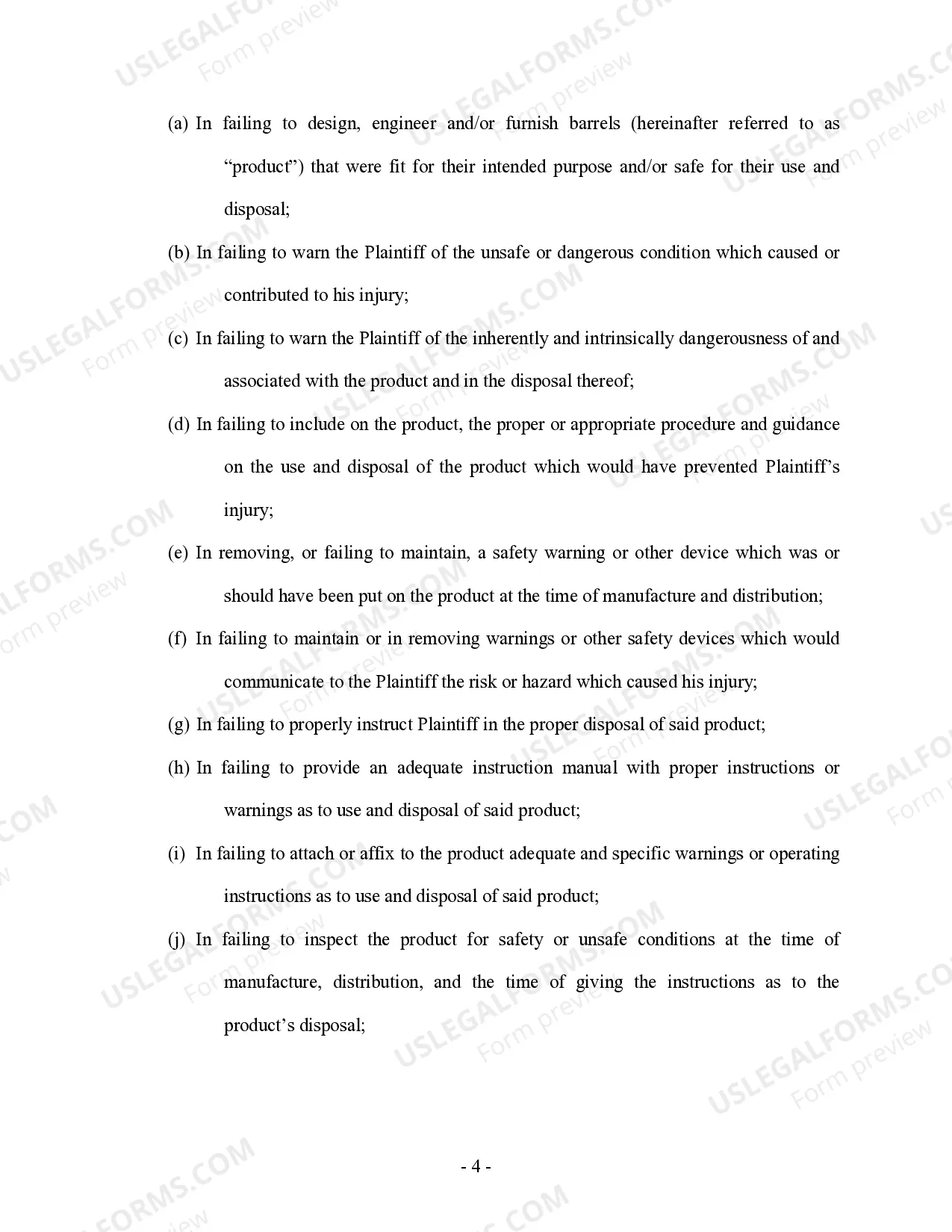
- Allegations of negligence by defendants regarding product safety and warnings.
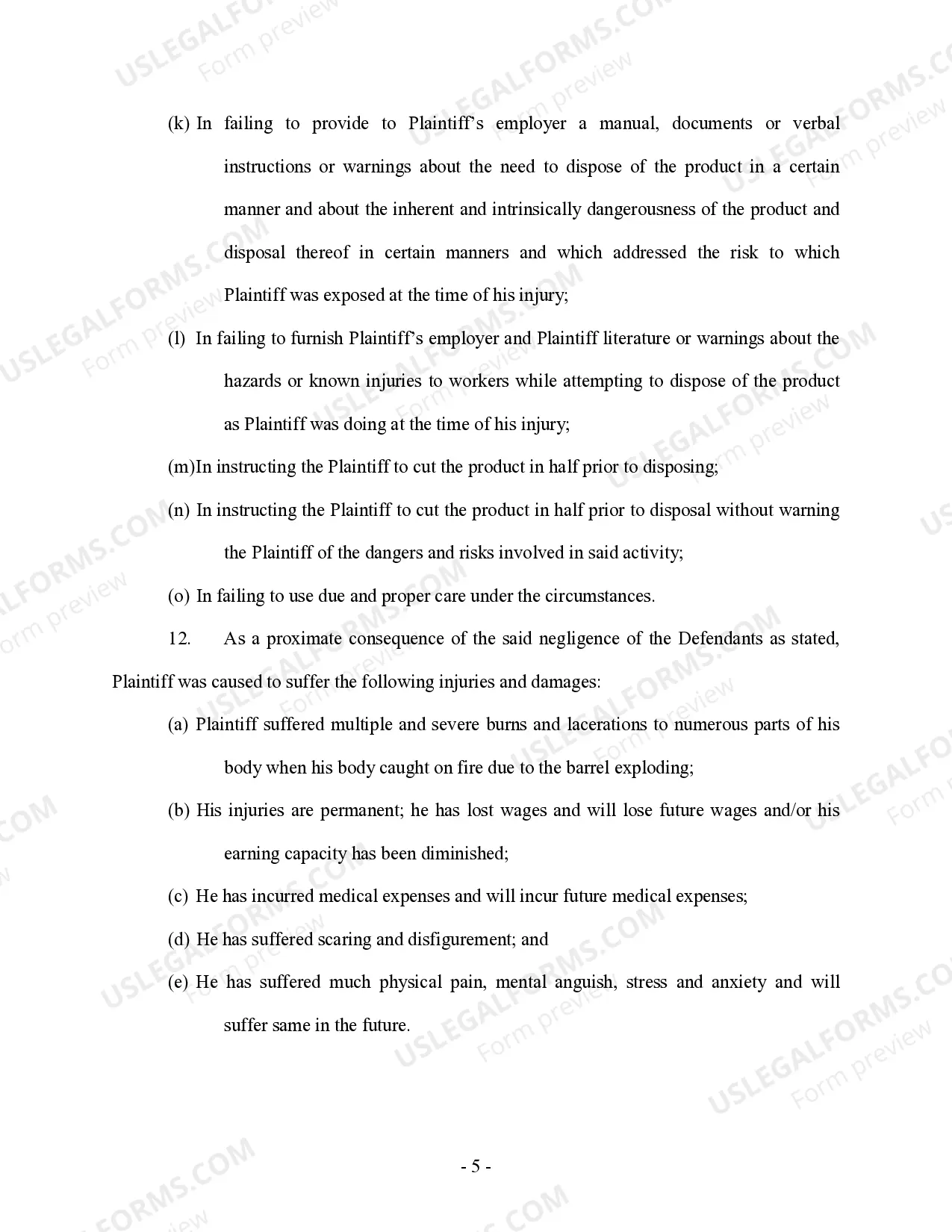
- Explanation of the injuries and damages incurred by the plaintiff.
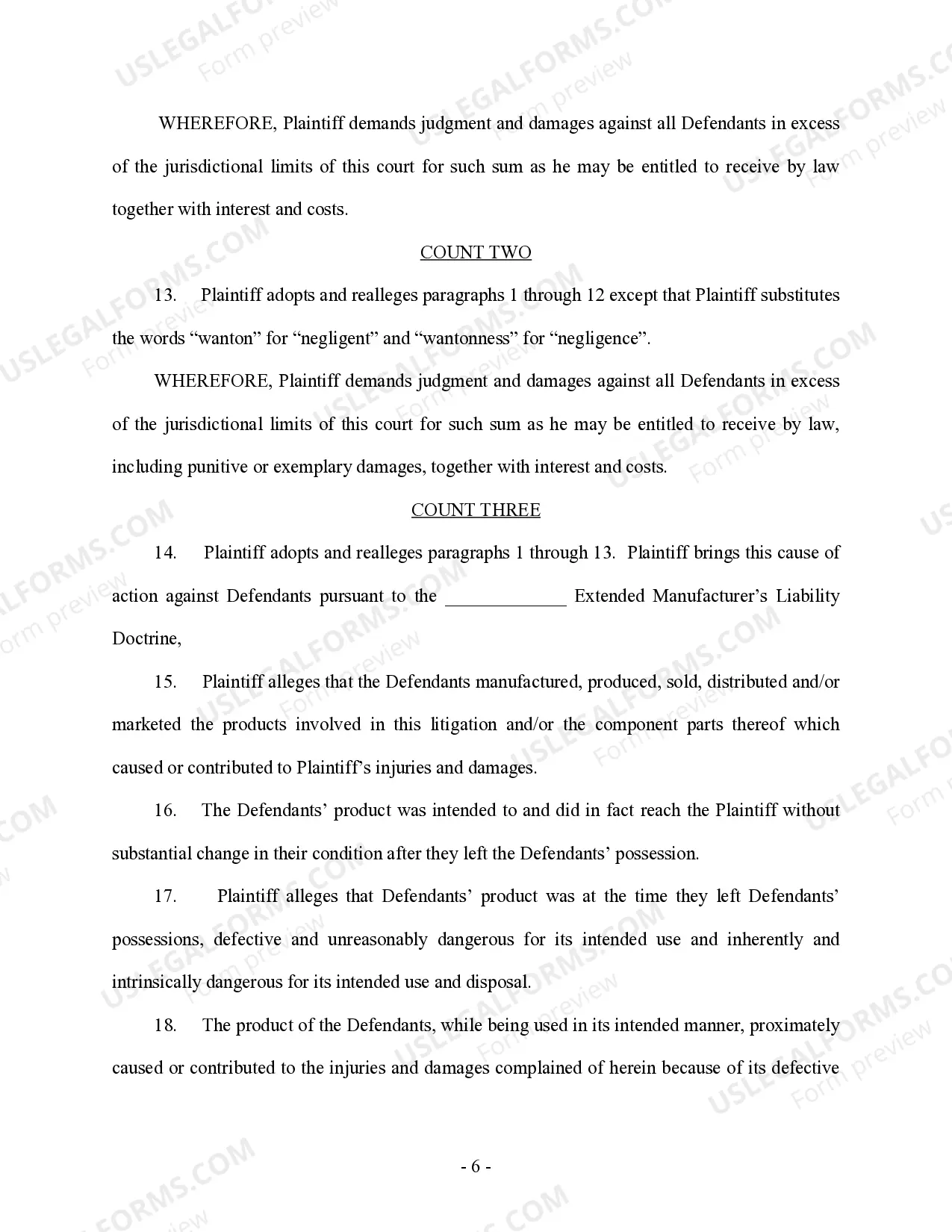
- Counts outlining different legal theories for recovery including negligence and wantonness.
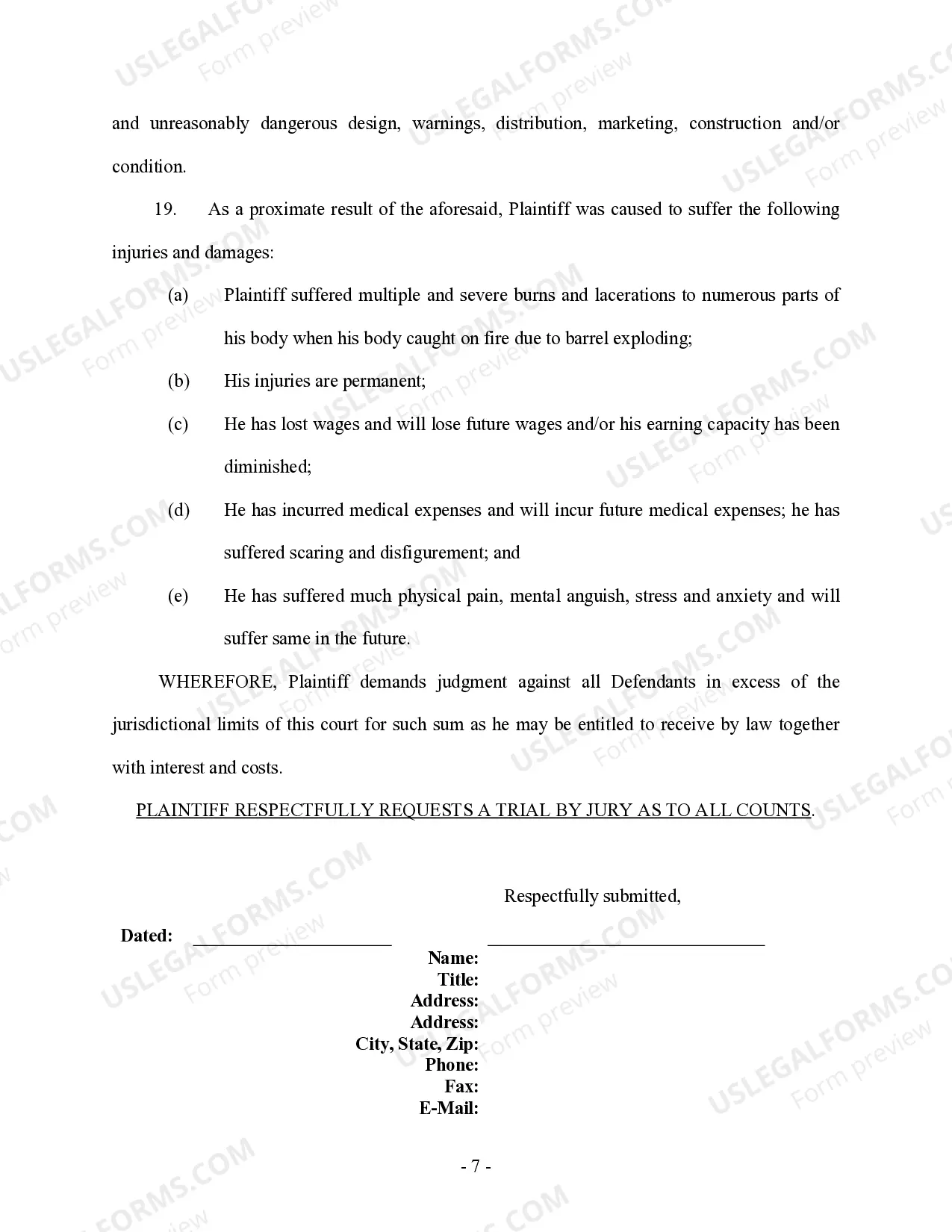
- Request for judgment and damages against all defendants.

When this form is needed
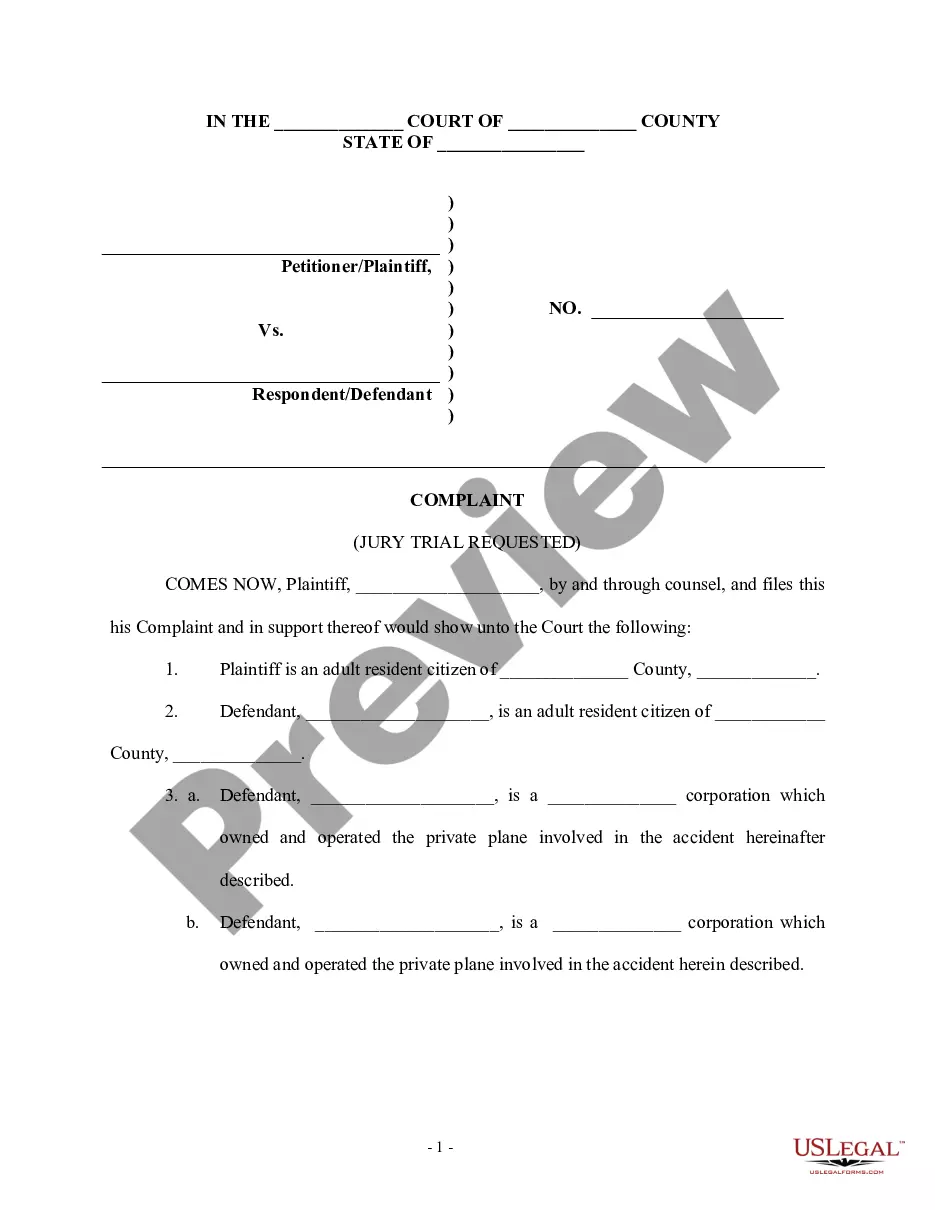
This form should be used when an individual suffers injuries as a result of working with hazardous materials, specifically during the disposal of containers that may have contained dangerous substances. If you have experienced an explosion or injury due to improper handling of such containers at work, this form can help initiate your complaint in court.
Who should use this form
- Individuals who have been injured while handling hazardous materials at their workplace.
- Employees seeking to hold manufacturers or employers accountable for unsafe working conditions.
- Those who intend to file a legal complaint regarding personal injuries related to hazardous waste disposal.
How to complete this form
- Begin by identifying the parties involved, including the plaintiff and defendants.
- Describe the incident in detail, including the date, location, and nature of the injury.
- List the specific negligent actions attributed to each defendant that led to the complaint.
- Detail the extent of the injuries and damages suffered, including medical costs and lost wages.
- Sign and date the form, and ensure that it is filed in the appropriate court.
Does this form need to be notarized?
Notarization is not commonly needed for this form. However, certain documents or local rules may make it necessary. Our notarization service, powered by Notarize, allows you to finalize it securely online anytime, day or night.
Get your form ready online
Our built-in tools help you complete, sign, share, and store your documents in one place.
Make edits, fill in missing information, and update formatting in US Legal Forms—just like you would in MS Word.
Download a copy, print it, send it by email, or mail it via USPS—whatever works best for your next step.
Sign and collect signatures with our SignNow integration. Send to multiple recipients, set reminders, and more. Go Premium to unlock E-Sign.
If this form requires notarization, complete it online through a secure video call—no need to meet a notary in person or wait for an appointment.
We protect your documents and personal data by following strict security and privacy standards.

Make edits, fill in missing information, and update formatting in US Legal Forms—just like you would in MS Word.

Download a copy, print it, send it by email, or mail it via USPS—whatever works best for your next step.

Sign and collect signatures with our SignNow integration. Send to multiple recipients, set reminders, and more. Go Premium to unlock E-Sign.

If this form requires notarization, complete it online through a secure video call—no need to meet a notary in person or wait for an appointment.

We protect your documents and personal data by following strict security and privacy standards.
Common mistakes
- Failing to properly identify all defendants involved in the case.
- Not providing sufficient detail about the incident or injuries sustained.
- Omitting critical information regarding negligence or unsafe conditions.
- Not adhering to the specific filing requirements of the jurisdiction.
Why use this form online
- Convenient access to legal templates drafted by licensed attorneys.
- Easy to download and customize for your specific situation.
- Streamlined filing process that helps ensure all necessary information is included.
Looking for another form?


Form popularity
FAQ
All public hospitals and community health centres in NSW provide disposal bins for the public. Some councils provide community sharps bins in public places. Some pharmacies provide a disposal service.
All sharps disposal containers should be: made of a heavy-duty plastic; able to close with a tight-fitting, puncture-resistant lid, without sharps being able to come out;properly labeled to warn of hazardous waste inside the container.
Once a sharps container is full, it should be removed from the healthcare facility and transported and disposal by a medical waste management expert. Some states allow organizations 30 days to correctly dispose of sharps waste.
Containers for contaminated sharps must be puncture-resistant. The sides and the bottom must be leakproof. They must be appropriately labeled or color-coded red to warn everyone that the contents are hazardous.
2. Who is responsible for safe disposal of the generated hazardous waste? Explanation: The generator is responsible for the safe disposal of waste being produced by them and also is accountable for the clean-up in case of an accident.
Reply 1: The disposal opening on a sharps container should be of a size and design that would permit safe disposal of sharps. OSHA's Bloodborne Pathogens standard at 29 CFR 1910.1030 (d)(4)(iii)(A)(l)(i) requires that sharps containers be closable, but does not specify a set size for the opening on a container to be.
Two of the main Federal laws that address hazardous and toxic materials issues are the Comprehensive Environmental Response Compensation and Liability Act (CERCLA) and the Resource Conservation and Recovery Act (RCRA).
Step 1: Place all needles and other sharps in a sharps disposal container immediately after they have been used. Step 2: Dispose of used sharps disposal containers according to your community guidelines.
Summary. The Resource Conservation and Recovery Act (RCRA) gives EPA the authority to control hazardous waste from the "cradle-to-grave." This includes the generation, transportation, treatment, storage, and disposal of hazardous waste. RCRA also set forth a framework for the management of non-hazardous solid wastes.