Defendant's Response to Plaintiff's First Set of Request for Admissions
About this form
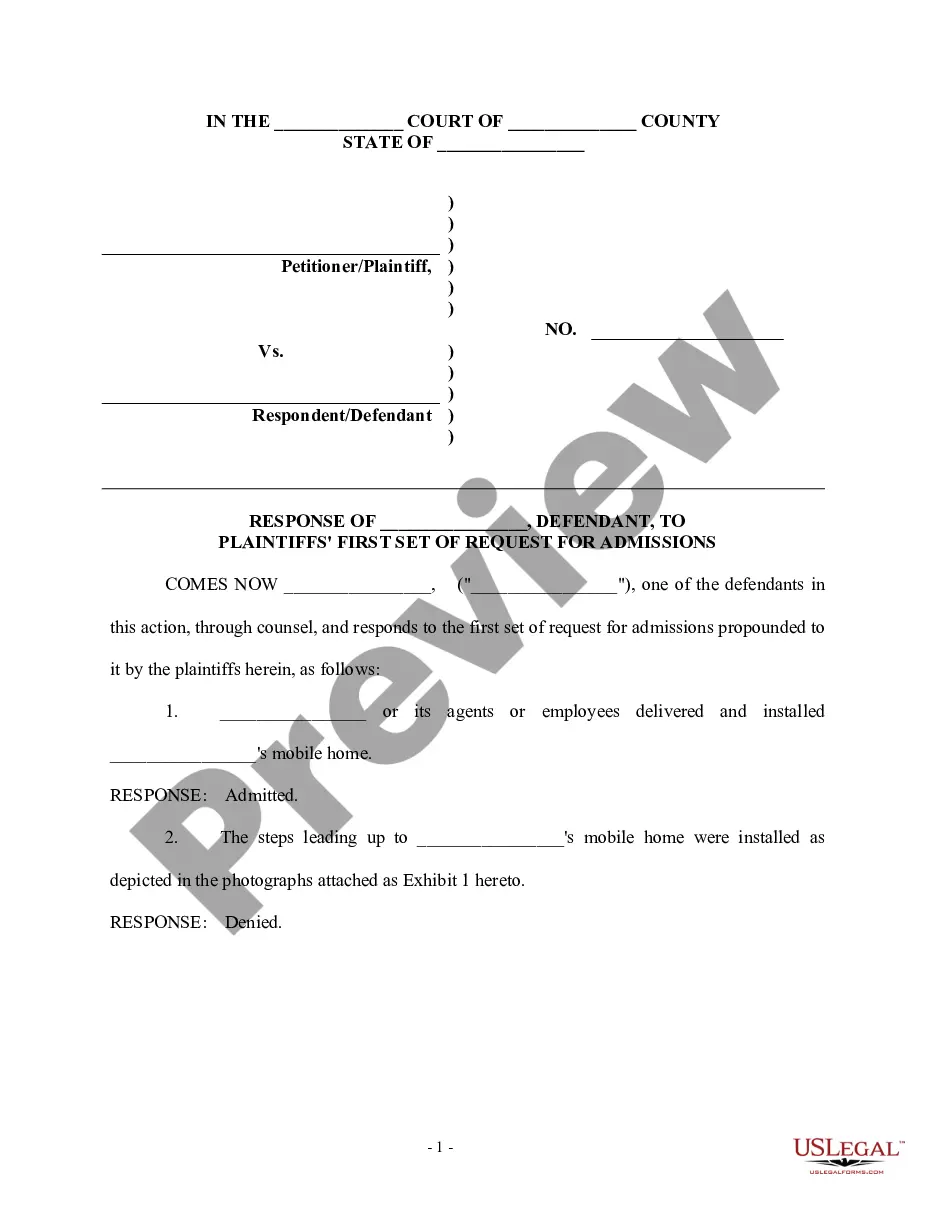
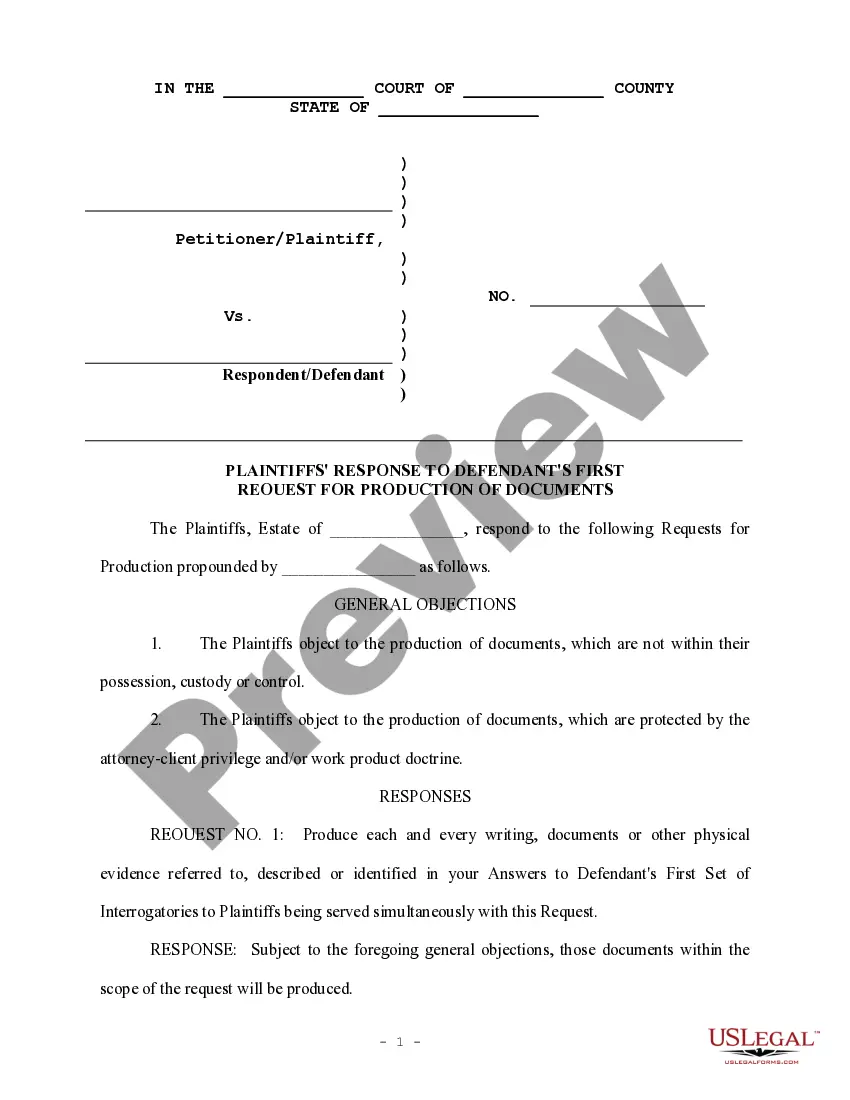
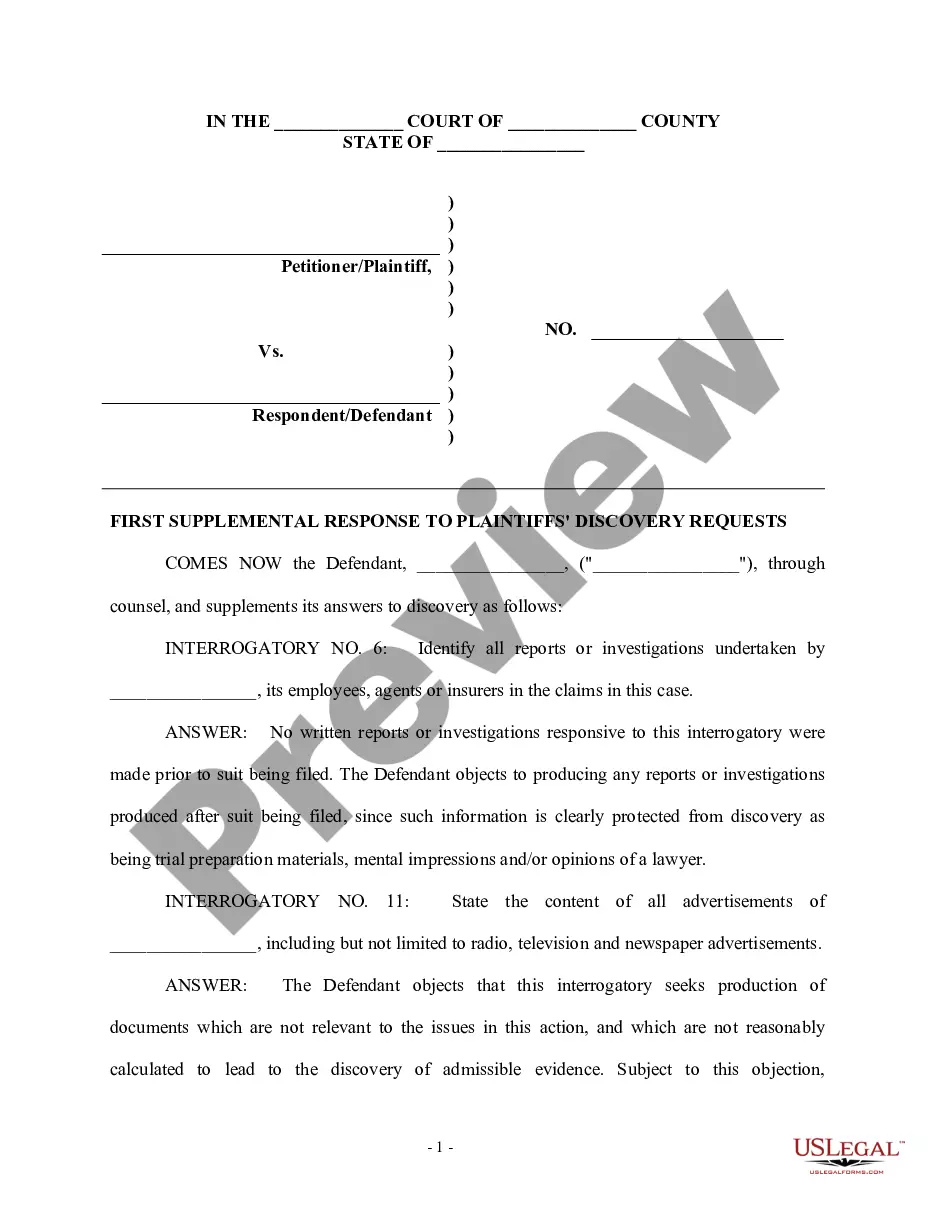
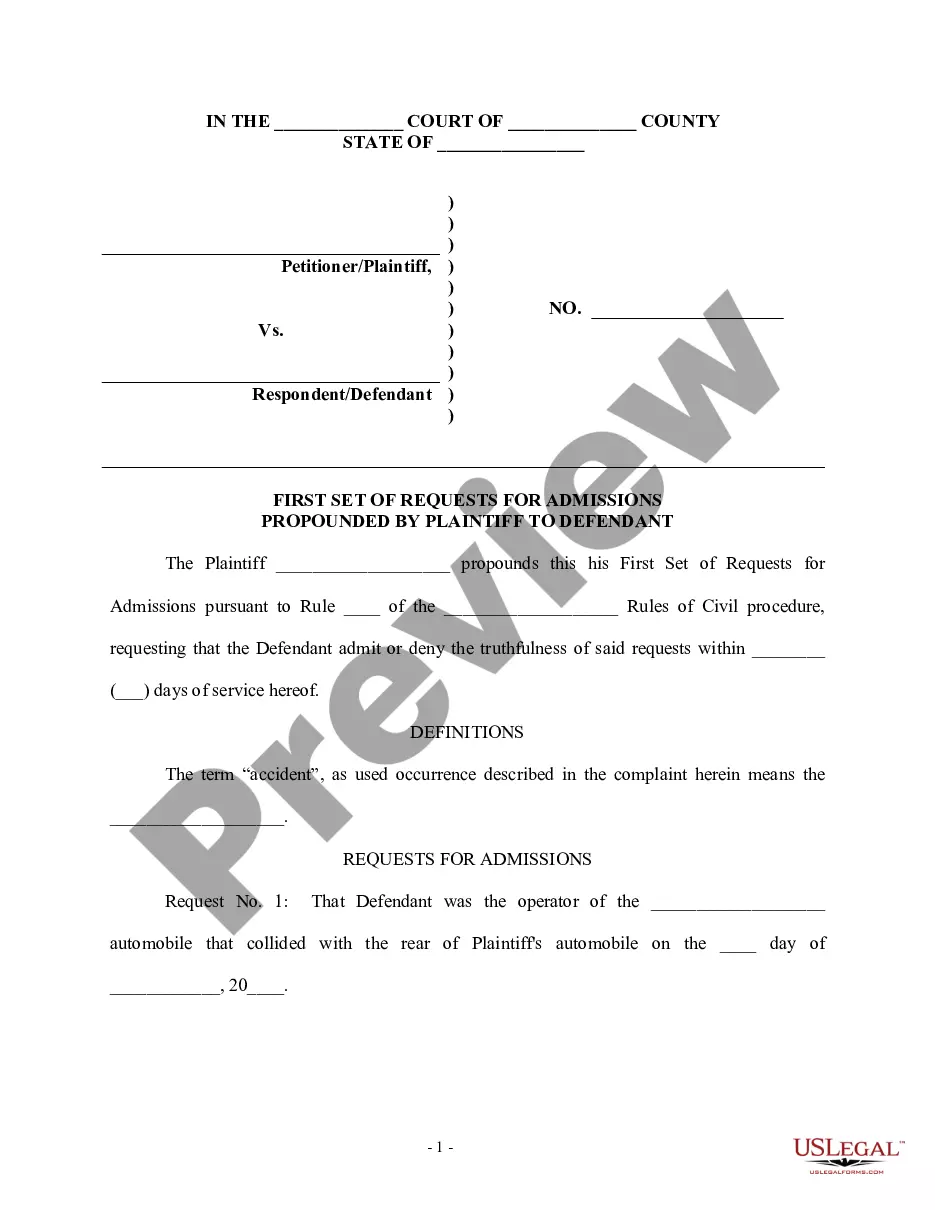
The Defendant's Response to Plaintiff's First Set of Request for Admissions is a legal document used in personal injury actions. This form allows the defendant to admit or deny specific statements made by the plaintiff, which helps clarify the issues in the case. It serves a distinct purpose compared to other forms in the litigation process and plays a key role in the discovery phase of a lawsuit.
What’s included in this form
- Admitted Response: The defendant acknowledges specific facts presented by the plaintiff.
- Denied Response: The defendant refutes certain claims made by the plaintiff.
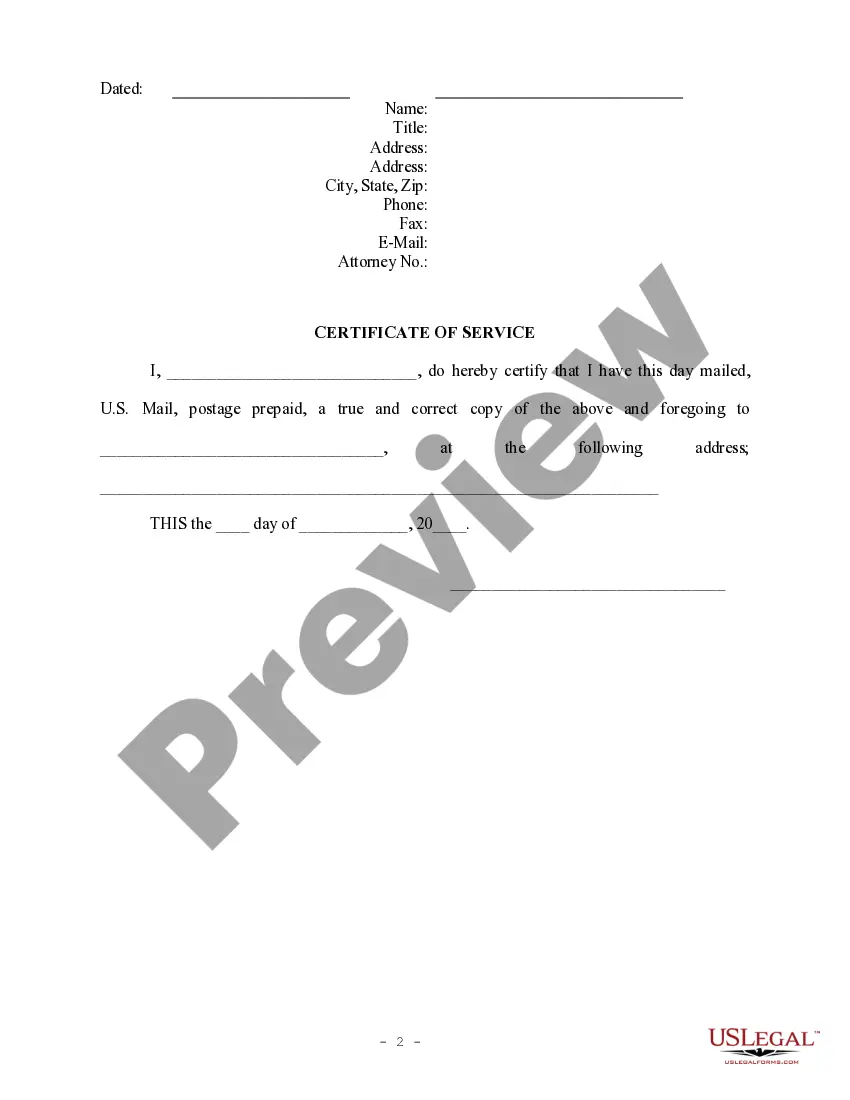
- Certificate of Service: Confirms that the response has been mailed to the opposing party.
- Signature Line: The defendant or their authorized representative must sign to validate the document.
- Date Field: The date on which the response is completed must be entered.
Situations where this form applies
This form is needed when a defendant receives a request for admissions from the plaintiff in a personal injury lawsuit. It is crucial in situations where the defendant must formally resolve factual issues before trial, potentially affecting the course of the litigation or settlement discussions.
Who this form is for
- Individuals or businesses involved in a personal injury lawsuit as defendants.
- Legal representatives or attorneys acting on behalf of a defendant.
- Any party seeking to clarify their position on the plaintiff's claims in a legal matter.
Steps to complete this form
- Fill in your name and contact information as the defendant.
- Review each request for admission carefully and decide if you will admit or deny each statement.
- Fill in the appropriate responses for each admission request, stating "Admitted" or "Denied" as applicable.
- Sign and date the form to authenticate your responses.
- Complete the Certificate of Service by providing details of the mailing to the plaintiff.
Is notarization required?
This form usually doesn’t need to be notarized. However, local laws or specific transactions may require it. Our online notarization service, powered by Notarize, lets you complete it remotely through a secure video session, available 24/7.
Get your form ready online
Our built-in tools help you complete, sign, share, and store your documents in one place.
Make edits, fill in missing information, and update formatting in US Legal Forms—just like you would in MS Word.
Download a copy, print it, send it by email, or mail it via USPS—whatever works best for your next step.
Sign and collect signatures with our SignNow integration. Send to multiple recipients, set reminders, and more. Go Premium to unlock E-Sign.
If this form requires notarization, complete it online through a secure video call—no need to meet a notary in person or wait for an appointment.
We protect your documents and personal data by following strict security and privacy standards.

Make edits, fill in missing information, and update formatting in US Legal Forms—just like you would in MS Word.

Download a copy, print it, send it by email, or mail it via USPS—whatever works best for your next step.

Sign and collect signatures with our SignNow integration. Send to multiple recipients, set reminders, and more. Go Premium to unlock E-Sign.

If this form requires notarization, complete it online through a secure video call—no need to meet a notary in person or wait for an appointment.

We protect your documents and personal data by following strict security and privacy standards.
Mistakes to watch out for
- Failing to respond to all requests, which could result in undisputed admissions.
- Using vague language instead of clear admissions or denials.
- Not signing or dating the form appropriately.
- Ignoring specific state requirements or rules regarding timelines for submission.
Why use this form online
- Convenience of downloading the form securely from any location.
- Editability, allowing you to customize your responses easily.
- Access to reliable and up-to-date templates drafted by licensed attorneys.
Looking for another form?
Form popularity
FAQ
The Defendant's Response to Plaintiff's First Set of Request for Admissions is a discovery document used in personal injury lawsuits to admit or deny each statement in the plaintiff's first set of requests for admissions. The form records admitted and denied statements, includes a certificate of service, and requires the defendant’s signature and date. It helps define disputed facts before trial and can influence settlement discussions.
When responding to a request to admit using this form, fill in an Admitted Response for statements you agree are true and a Denied Response for statements you dispute. Attach a Certificate of Service, and have the defendant or authorized representative sign and date the form before sending it to the plaintiff.
After receiving a Request for Admission, the defendant responds with this form, recording admitted or denied statements for each item. The responses are then served on the plaintiff via the Certificate of Service and dated/signature, which helps narrow issues before trial and can affect settlement talks.
This form uses admitted or denied responses and does not include a separate objections section. If a statement is improper, counsel may raise appropriate objections under the governing rules; otherwise, complete an Admitted Response or Denied Response and ensure it is served with a signature and date.
This form does not provide a dedicated objections section. If a plaintiff's request for admission is improper or beyond the dispute, counsel should raise appropriate objections under applicable rules and then respond with an Admitted or Denied Response on the form when appropriate.
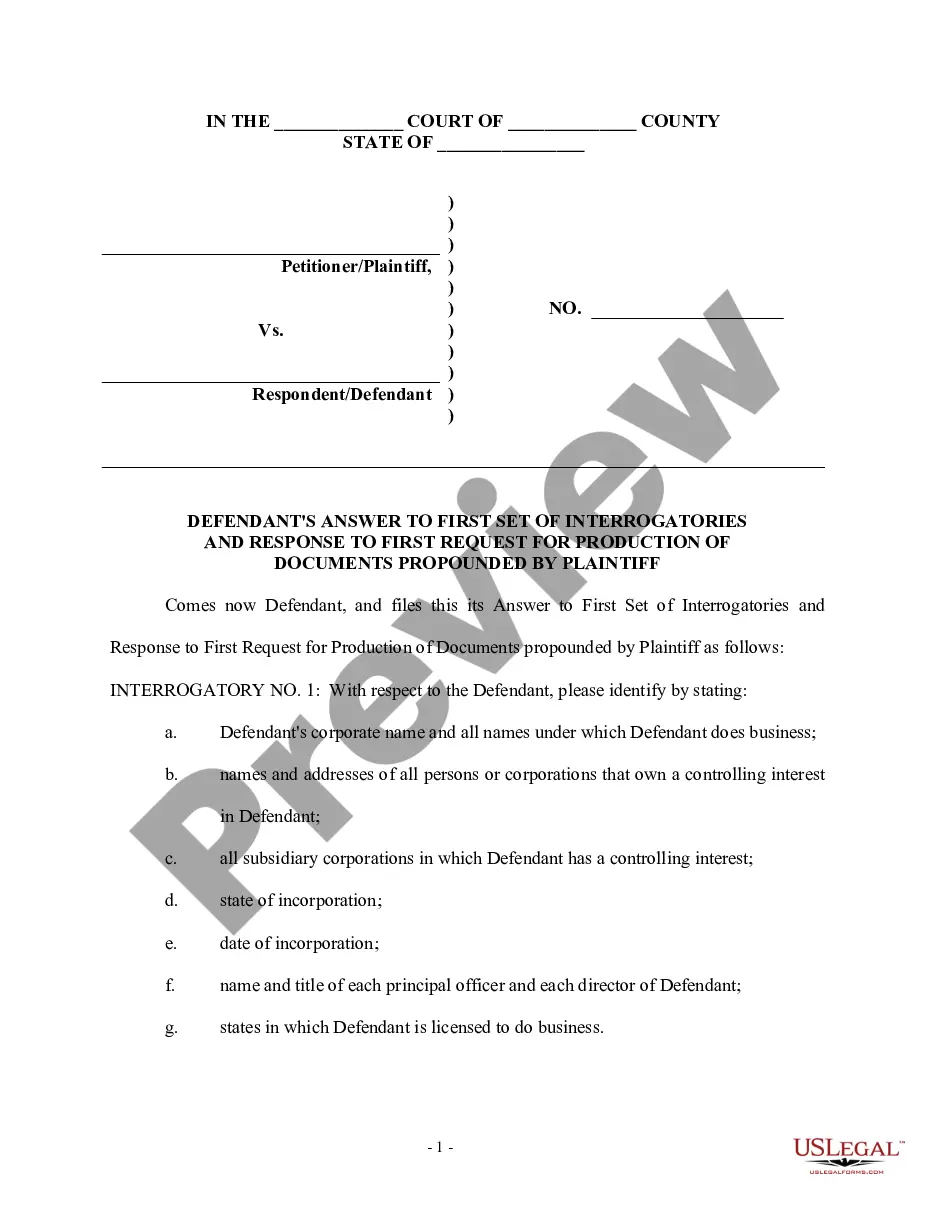
This form records only admitted or denied statements in response to the plaintiff's requests for admissions, rather than narrative answers. It includes a Certificate of Service, signature, and date, emphasizing the procedural discovery step before trial, whereas interrogatories typically require longer written answers and supporting facts.