First Set of Requests for Admissions - Personal Injury - Auto Accident
Understanding this form
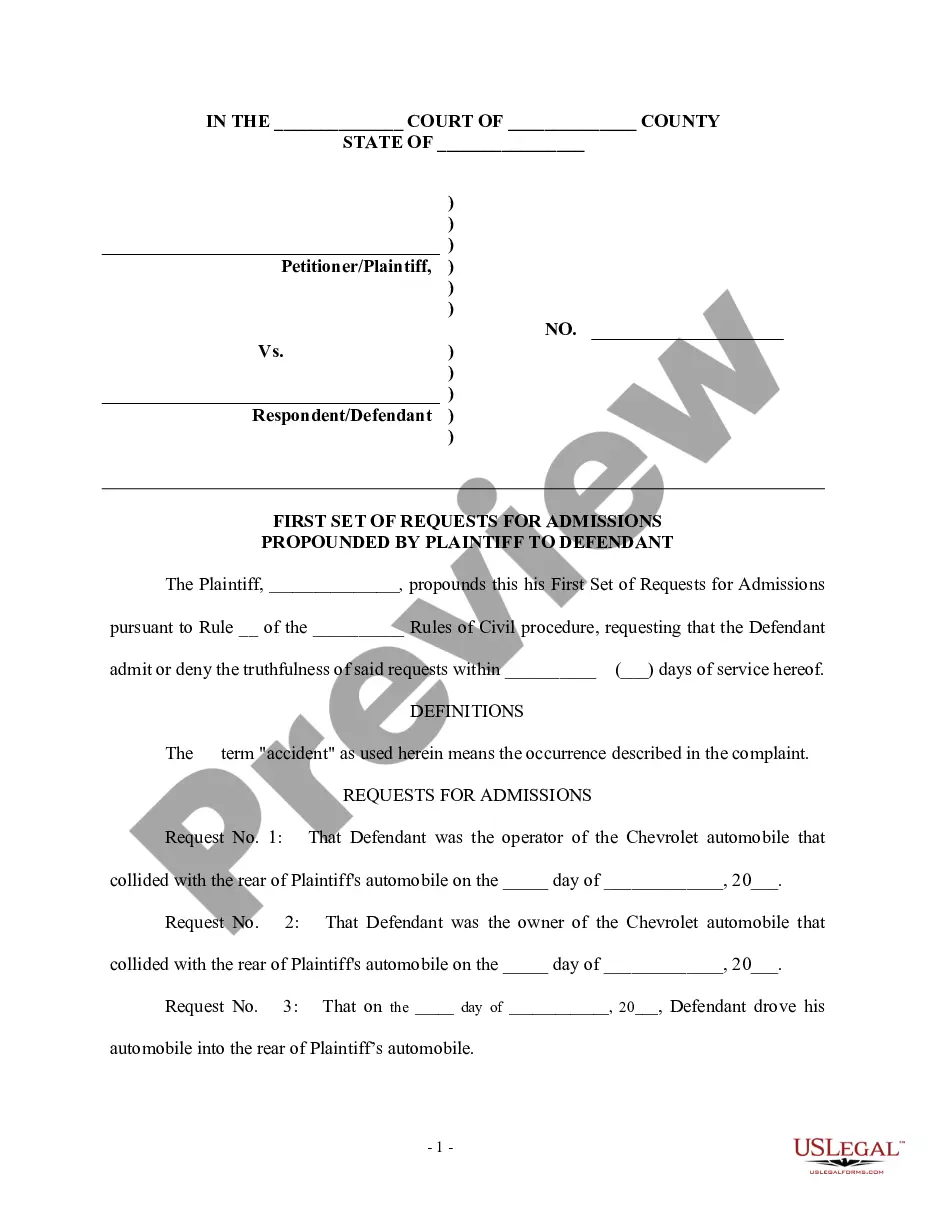
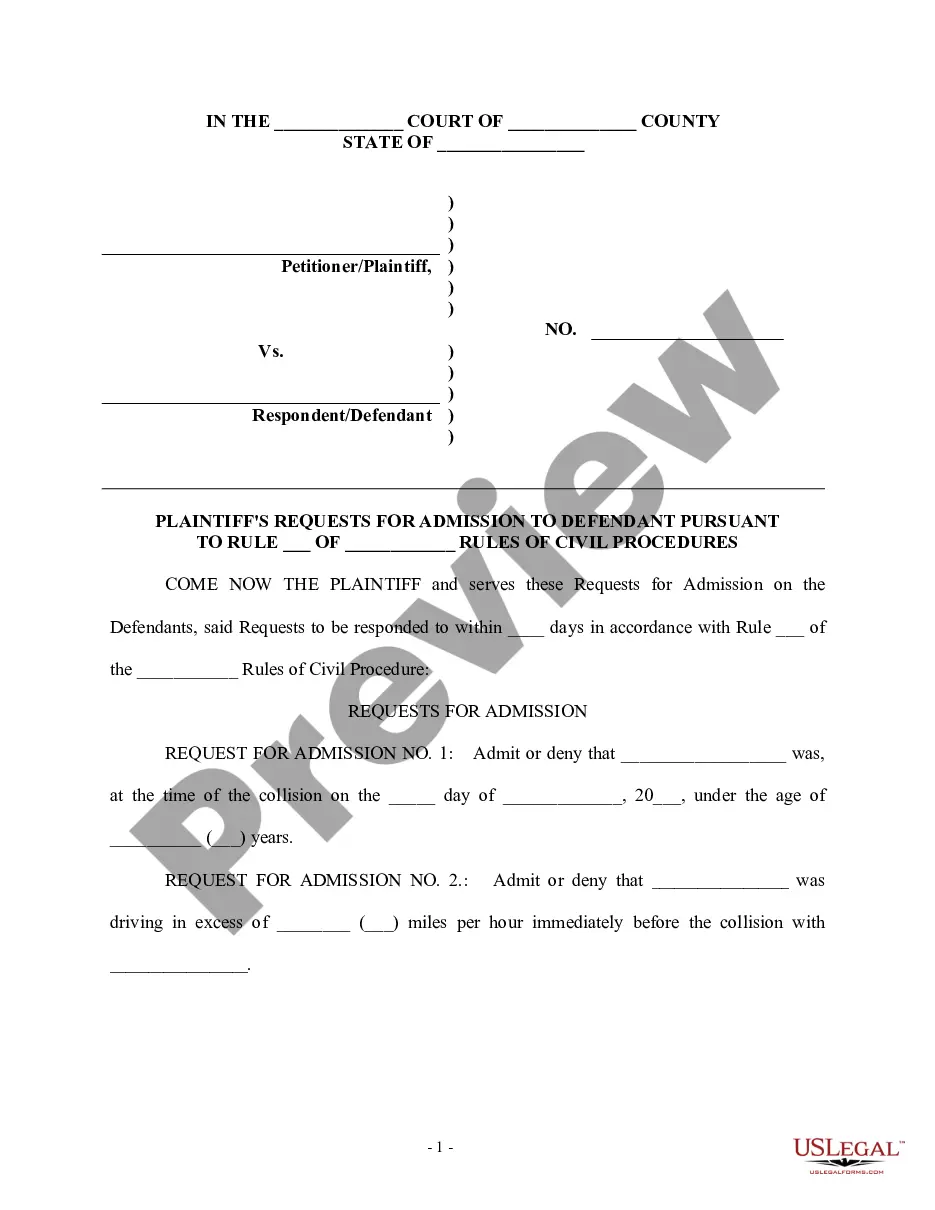
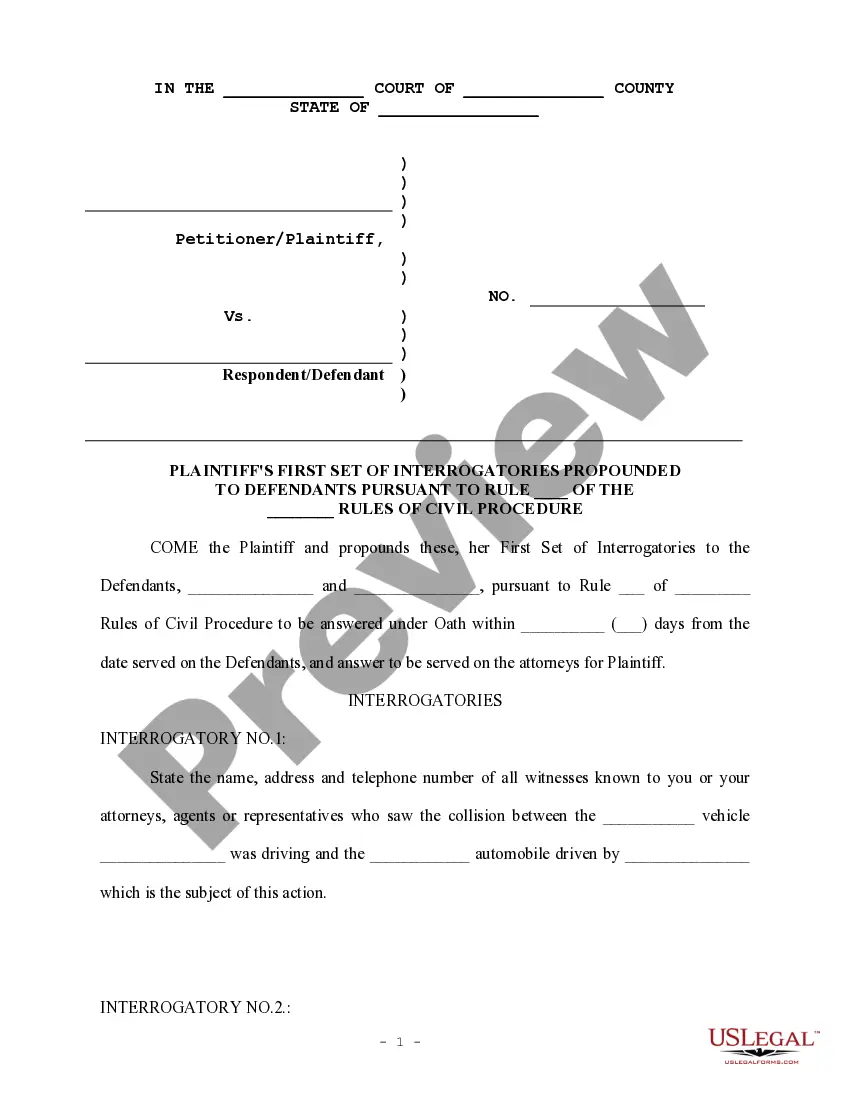
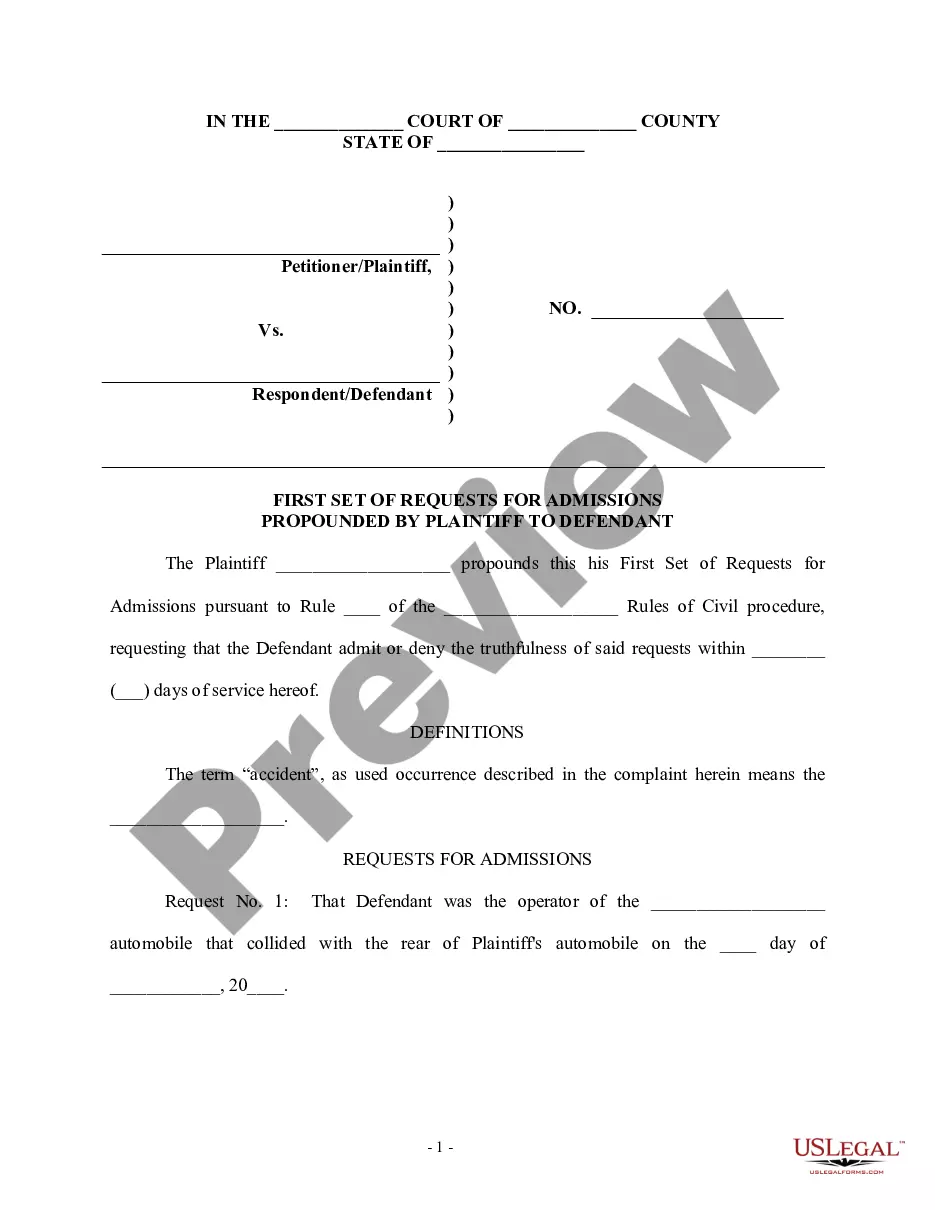
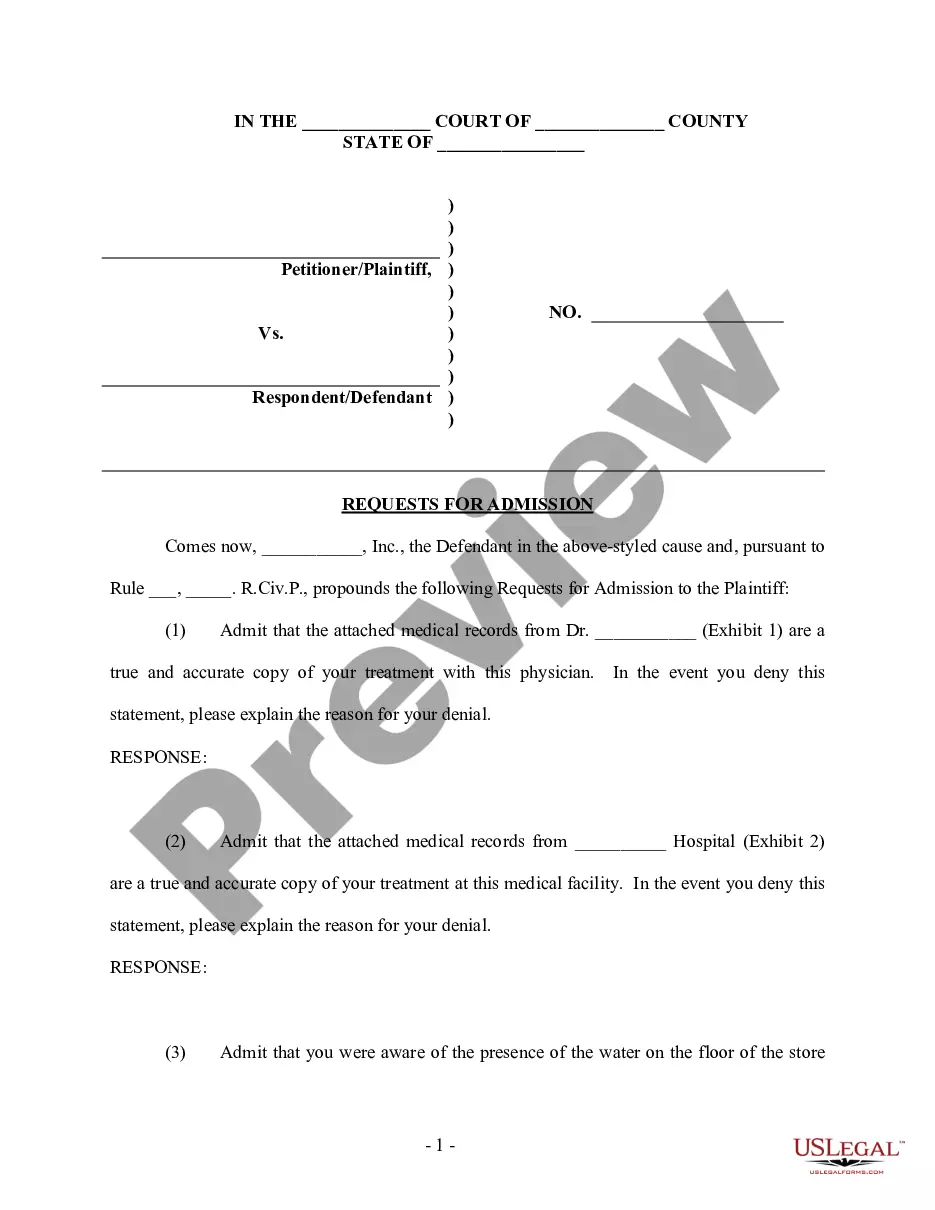
The First Set of Requests for Admissions - Personal Injury - Auto Accident is a legal document used in civil litigation, specifically in automobile accident cases. This form allows the plaintiff to request the defendant to admit or deny specific facts related to the accident. By utilizing this form, plaintiffs can streamline the discovery process and clarify issues before trial, making it distinct from other litigation forms, which may not focus solely on admissions of fact.
What’s included in this form
- Definitions: Clarifies what is meant by "accident" in the context of the case.
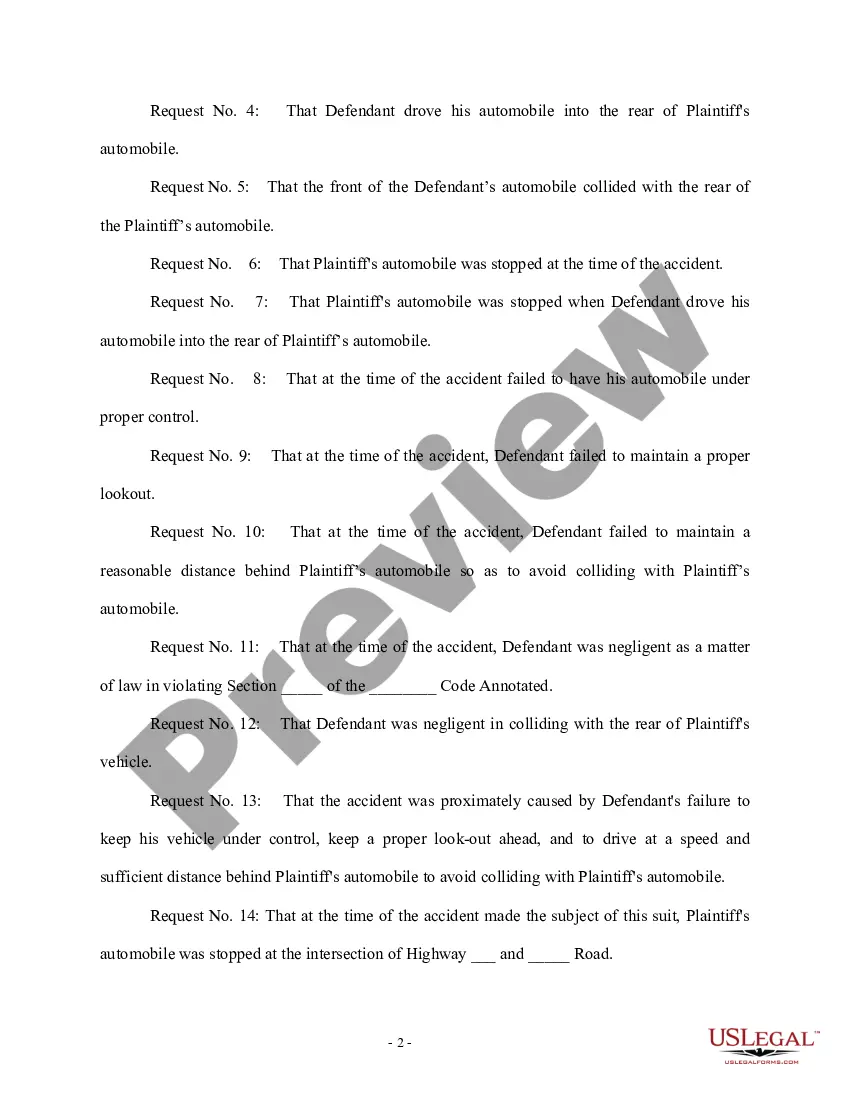
- Requests for Admissions: A series of statements relating to the incident that the defendant must admit or deny.
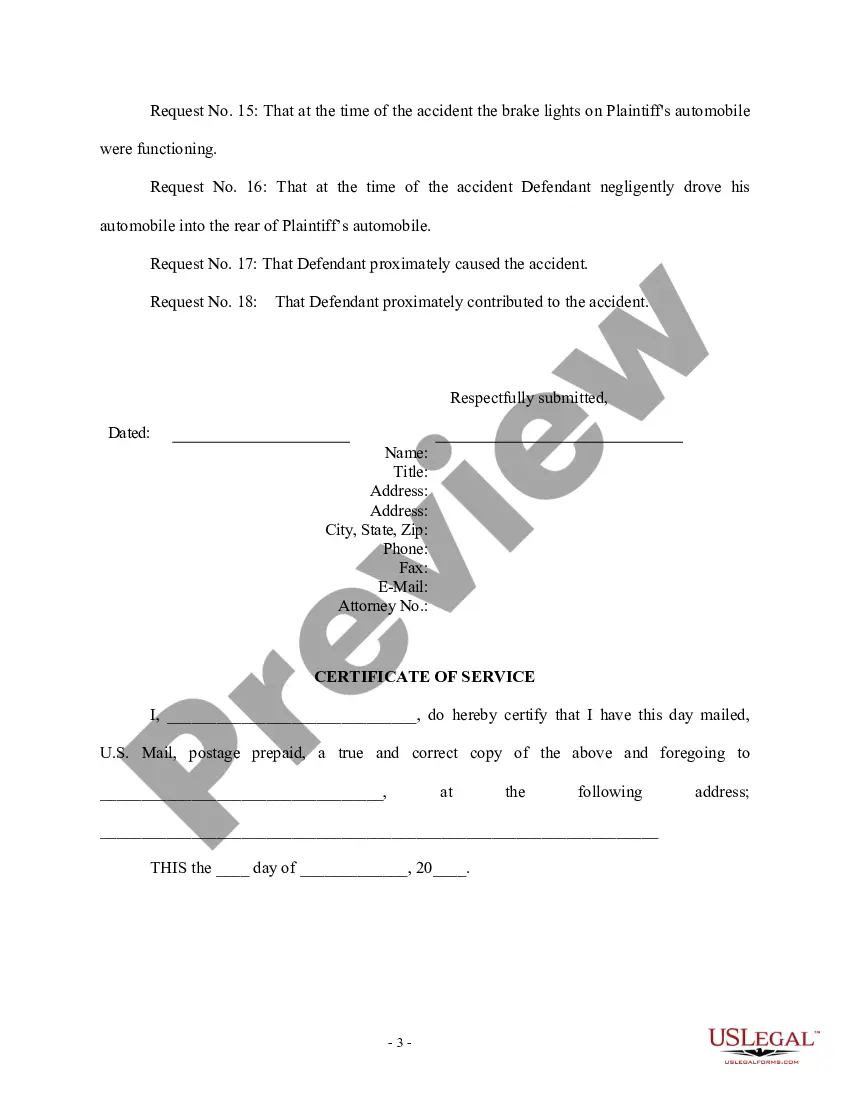
- Certificate of Service: A declaration confirming that the form has been properly sent to the opposing party.
When to use this form
This form is typically used when the plaintiff seeks to establish certain facts of the case before proceeding to trial. It is particularly valuable in personal injury cases following an auto accident, where clarifying the details of the incident can significantly impact the case's outcome.
Who needs this form
- Individuals involved in a personal injury auto accident lawsuit as plaintiffs.
- Lawyers representing plaintiffs in automobile accident cases.
- Anyone seeking to expedite the discovery process by clarifying specific facts through formal admissions.
Instructions for completing this form
- Identify the parties: Clearly state the names of the plaintiff and defendant.
- Fill in the date: Specify the date of the accident in the appropriate fields.
- Complete the requests: Input details regarding the admissions you want the defendant to confirm or deny.
- Sign the certificate of service: Ensure the document is sent to the defendant or their attorney.
Does this document require notarization?
In most cases, this form does not require notarization. However, some jurisdictions or signing circumstances might. US Legal Forms offers online notarization powered by Notarize, accessible 24/7 for a quick, remote process.
Get your form ready online
Our built-in tools help you complete, sign, share, and store your documents in one place.
Make edits, fill in missing information, and update formatting in US Legal Forms—just like you would in MS Word.
Download a copy, print it, send it by email, or mail it via USPS—whatever works best for your next step.
Sign and collect signatures with our SignNow integration. Send to multiple recipients, set reminders, and more. Go Premium to unlock E-Sign.
If this form requires notarization, complete it online through a secure video call—no need to meet a notary in person or wait for an appointment.
We protect your documents and personal data by following strict security and privacy standards.

Make edits, fill in missing information, and update formatting in US Legal Forms—just like you would in MS Word.

Download a copy, print it, send it by email, or mail it via USPS—whatever works best for your next step.

Sign and collect signatures with our SignNow integration. Send to multiple recipients, set reminders, and more. Go Premium to unlock E-Sign.

If this form requires notarization, complete it online through a secure video call—no need to meet a notary in person or wait for an appointment.

We protect your documents and personal data by following strict security and privacy standards.
Avoid these common issues
- Failing to provide clear and concise requests that leave little room for misinterpretation.
- Neglecting to fill in necessary dates and details specific to the accident.
- Not serving the document correctly, which can lead to delays in the litigation process.
Benefits of completing this form online
- Convenience of downloading and completing the form at your own pace.
- Editability, allowing for customization to fit specific case details.
- Access to professionally drafted templates ensures reliability and compliance with legal standards.
Legal use & context
- The First Set of Requests for Admissions is a binding part of the litigation process.
- District and appellate courts will enforce stipulated admissions during trial, affecting the burden of proof.
- Ensure compliance with all local rules to maintain the integrity of the admissions requested.
Quick recap
- This form is essential for outlining clear facts in automobile accident litigation.
- It facilitates the discovery process by requiring the defendant to respond to specified admissions.
- Proper use of this form can streamline legal proceedings and potentially strengthen a plaintiff's case.
Looking for another form?




Form popularity
FAQ
The First Set of Requests for Admissions - Personal Injury - Auto Accident is a discovery tool used by a plaintiff in an automobile injury case. It asks the defendant to admit or deny specific facts about the accident, helping narrow issues before trial. The form includes Definitions to clarify terms like 'accident,' the series of admissions, and a Certificate of Service to prove proper delivery.
To complete it, fill in the Definitions to clarify terms (for example, what 'accident' means), then draft each item under Requests for Admissions as a clear, factual statement for the defendant to admit or deny. Afterward, sign and prepare the Certificate of Service to show proper delivery to the opposing party.
Serve the form on the defendant or their counsel and complete the Certificate of Service to document the delivery method and date. Check your state’s service rules for deadlines and acceptable service methods, then keep copies for your records. Proper service helps ensure timely responses and dispute avoidance.
The form concentrates on key facts about the accident, prompting admissions or denials that clarify disputed issues before trial. This narrows the trial’s scope, aids witness and evidence planning, and can accelerate strategic decisions as you proceed through discovery and toward settlement or trial.
Draft admissions as precise, factual statements using defined terms from the Definitions section. Target specific issues related to the accident, avoid argumentative language, and keep items clear so the defendant can admit or deny with brief explanations if needed. Clear items map to trial issues and evidence needs.
This form is tailored for auto accident personal injury cases. It includes Definitions to define terms like 'accident' and a Certificate of Service to prove proper delivery, and it is specifically labeled as the First Set, guiding pretrial fact admissions for these cases rather than a generic admissions packet.