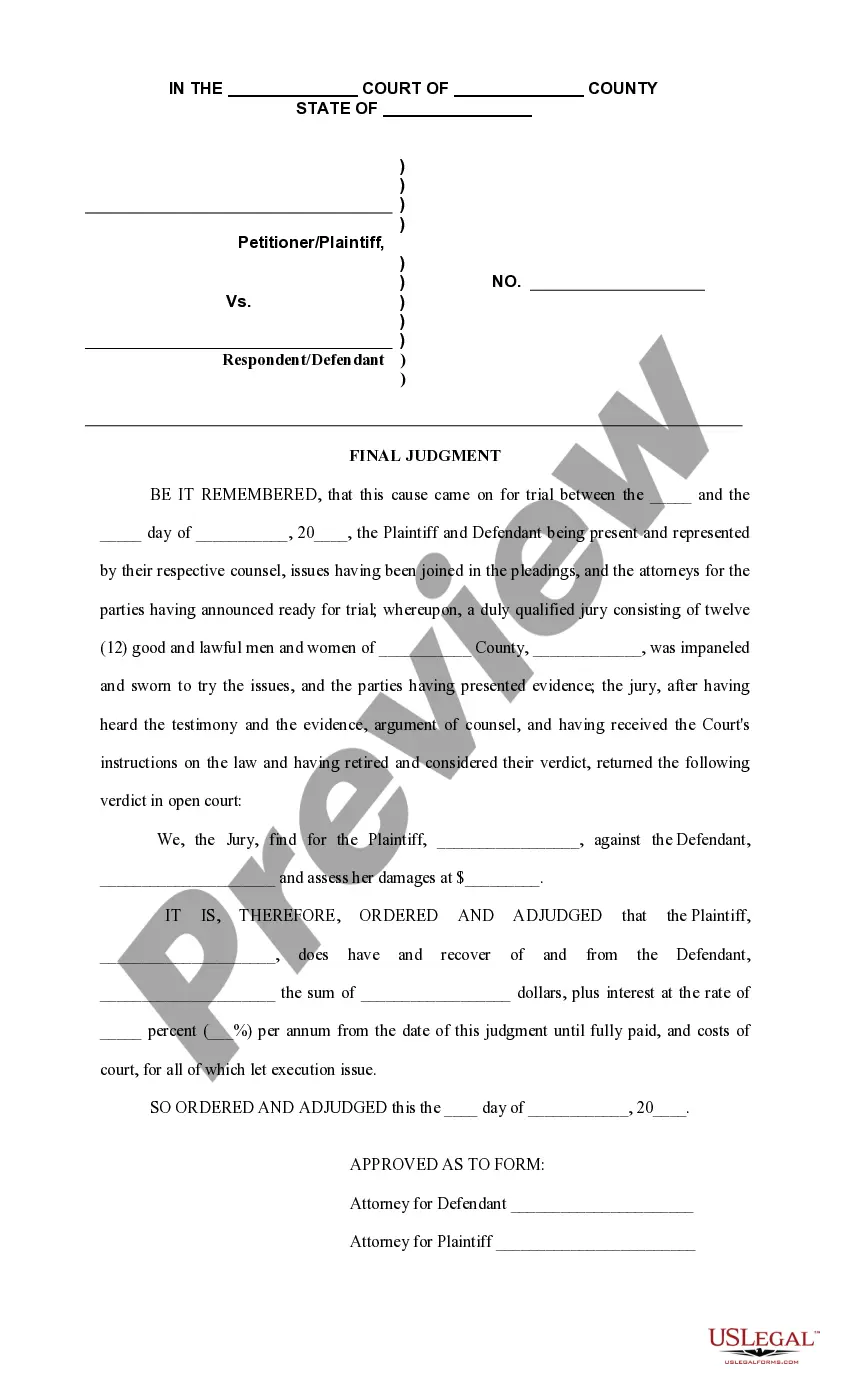
Final Judgment in favor of Plaintiff
What is this form?
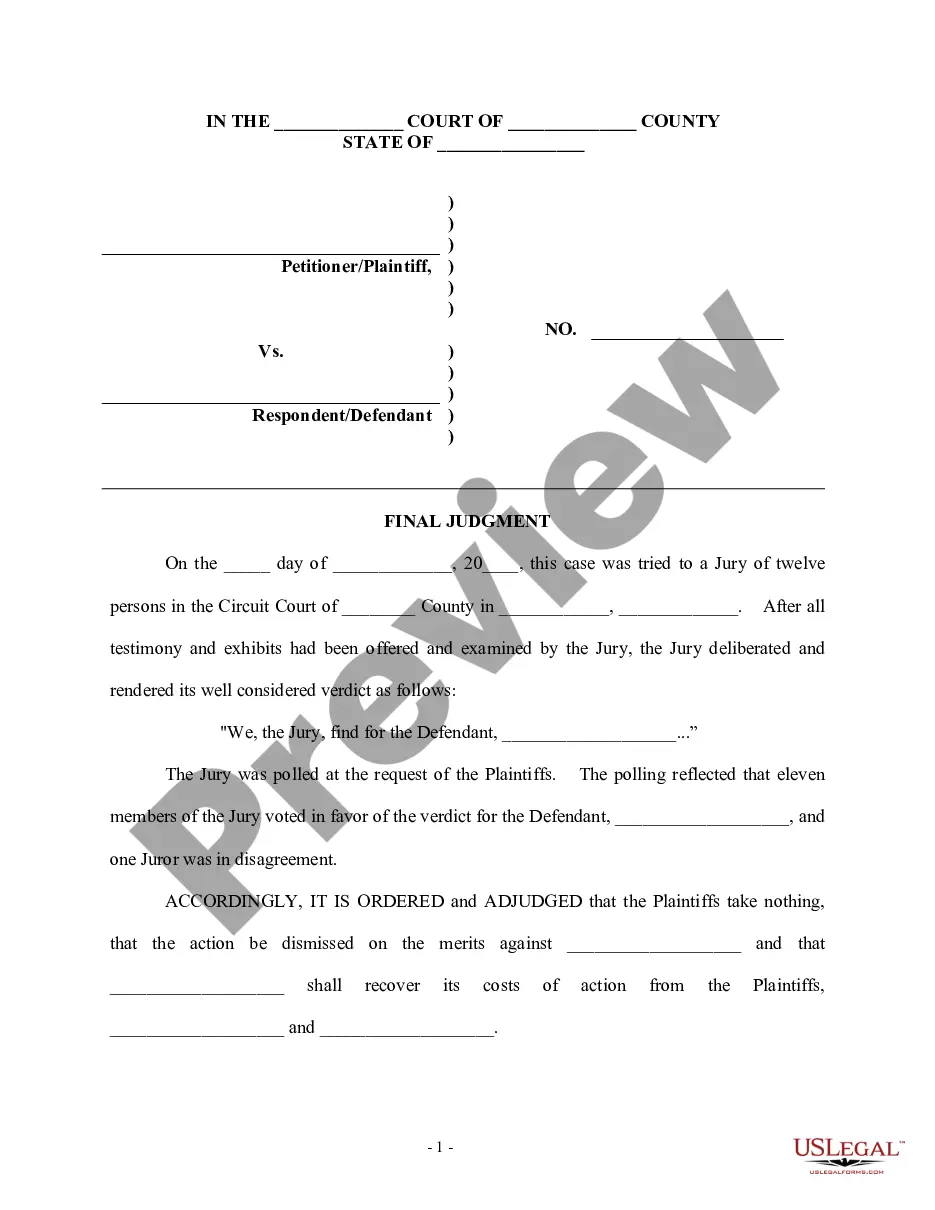
The Final Judgment in favor of Plaintiff is a legal document that records the jury's decision to award damages to the plaintiff in a personal injury case. This form serves as the official judgment stating the amounts owed by the defendant and outlines the terms of the award. It is distinct from other legal forms, as it specifically finalizes the outcome of a trial and sets forth the financial obligations of the losing party.
Key parts of this document
- Identification of the plaintiff and defendant
- Assessment of damages awarded
- Interest rate applicable from the date of judgment
- Cost of court to be recovered
- Dates and signatures for finalization
Common use cases
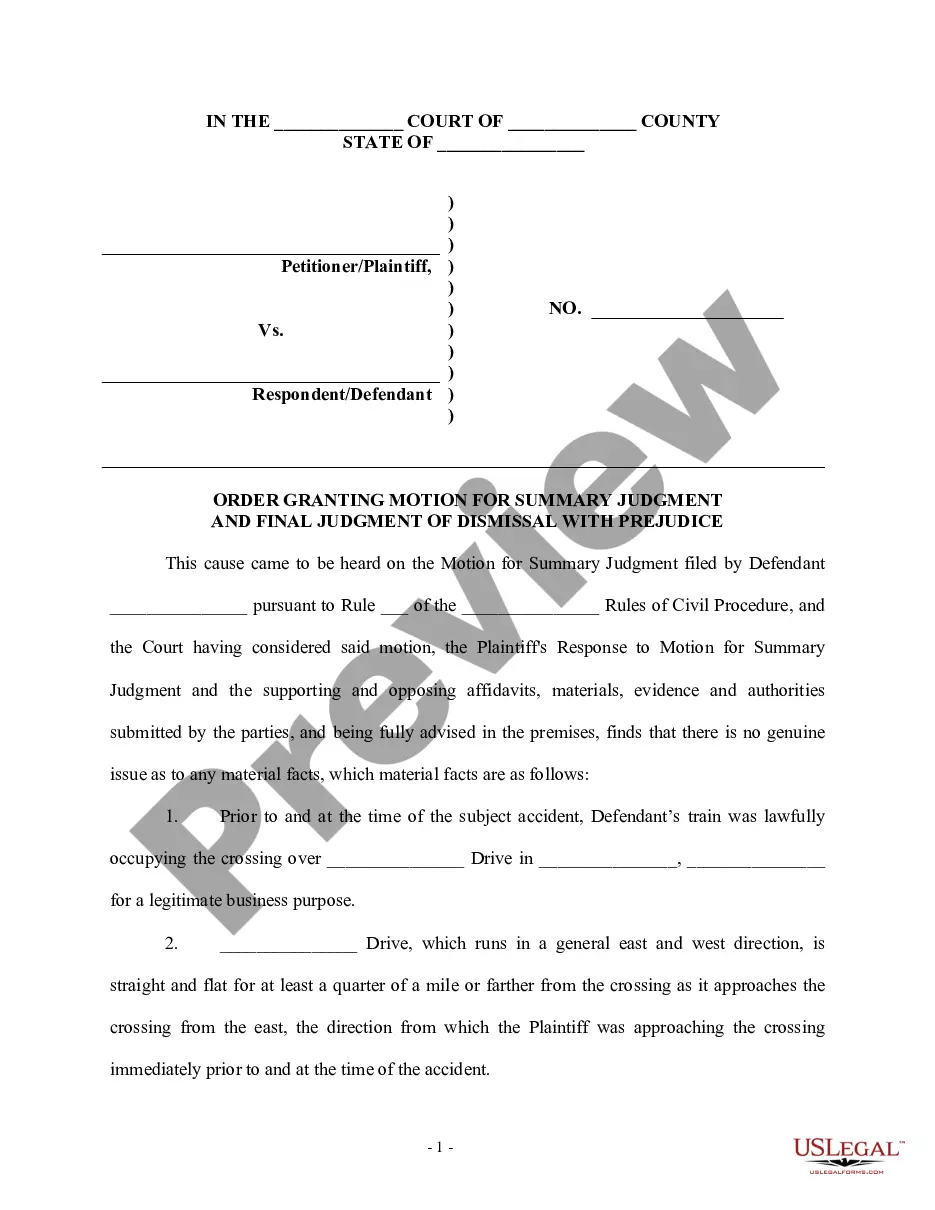
This form is used at the conclusion of a personal injury trial when the jury has reached a decision in favor of the plaintiff. You will typically need this form when the trial has determined the amount of damages to be awarded to the plaintiff, and it serves as the final legal document for enforcement of the judgment.
Who this form is for
This form is intended for:
- Attorneys representing plaintiffs in personal injury cases
- Individuals who have received a verdict in their favor from a jury
- Court officials responsible for documenting case outcomes
Completing this form step by step
- Identify and fill in the names of the plaintiff and defendant accurately.
- Assess and enter the total damages awarded by the jury.
- Specify the interest rate as determined by applicable laws.
- Include the costs of court to be awarded to the plaintiff.
- Sign and date the document to finalize the judgment.
Notarization requirements for this form
In most cases, this form does not require notarization. However, some jurisdictions or signing circumstances might. US Legal Forms offers online notarization powered by Notarize, accessible 24/7 for a quick, remote process.
Get your form ready online
Our built-in tools help you complete, sign, share, and store your documents in one place.
Make edits, fill in missing information, and update formatting in US Legal Forms—just like you would in MS Word.
Download a copy, print it, send it by email, or mail it via USPS—whatever works best for your next step.
Sign and collect signatures with our SignNow integration. Send to multiple recipients, set reminders, and more. Go Premium to unlock E-Sign.
If this form requires notarization, complete it online through a secure video call—no need to meet a notary in person or wait for an appointment.
We protect your documents and personal data by following strict security and privacy standards.

Make edits, fill in missing information, and update formatting in US Legal Forms—just like you would in MS Word.

Download a copy, print it, send it by email, or mail it via USPS—whatever works best for your next step.

Sign and collect signatures with our SignNow integration. Send to multiple recipients, set reminders, and more. Go Premium to unlock E-Sign.

If this form requires notarization, complete it online through a secure video call—no need to meet a notary in person or wait for an appointment.

We protect your documents and personal data by following strict security and privacy standards.
Common mistakes to avoid
- Failing to accurately list the names of the plaintiff and defendant.
- Omitting the amount of damages awarded or incorrectly calculating interest.
- Leaving out necessary signatures or dates before filing.
- Not following the state-specific requirements for formatting.
Advantages of online completion
- Convenient access to a legally vetted template at any time.
- Editability allows for customization to fit individual case specifics.
- Reliable formatting that meets legal standards across jurisdictions.
Legal use & context
- This judgment is enforceable through court, allowing for collection of damages owed.
- The amount awarded can incur interest until fully paid, providing financial incentive for timely payment.
- Understanding the implications of a final judgment is crucial for both plaintiffs and defendants.
Main things to remember
- The Final Judgment in favor of Plaintiff finalizes the jury's decision regarding damages.
- Ensure all sections are accurately completed to uphold legal enforceability.
- Consult state-specific rules to comply with local legal standards.
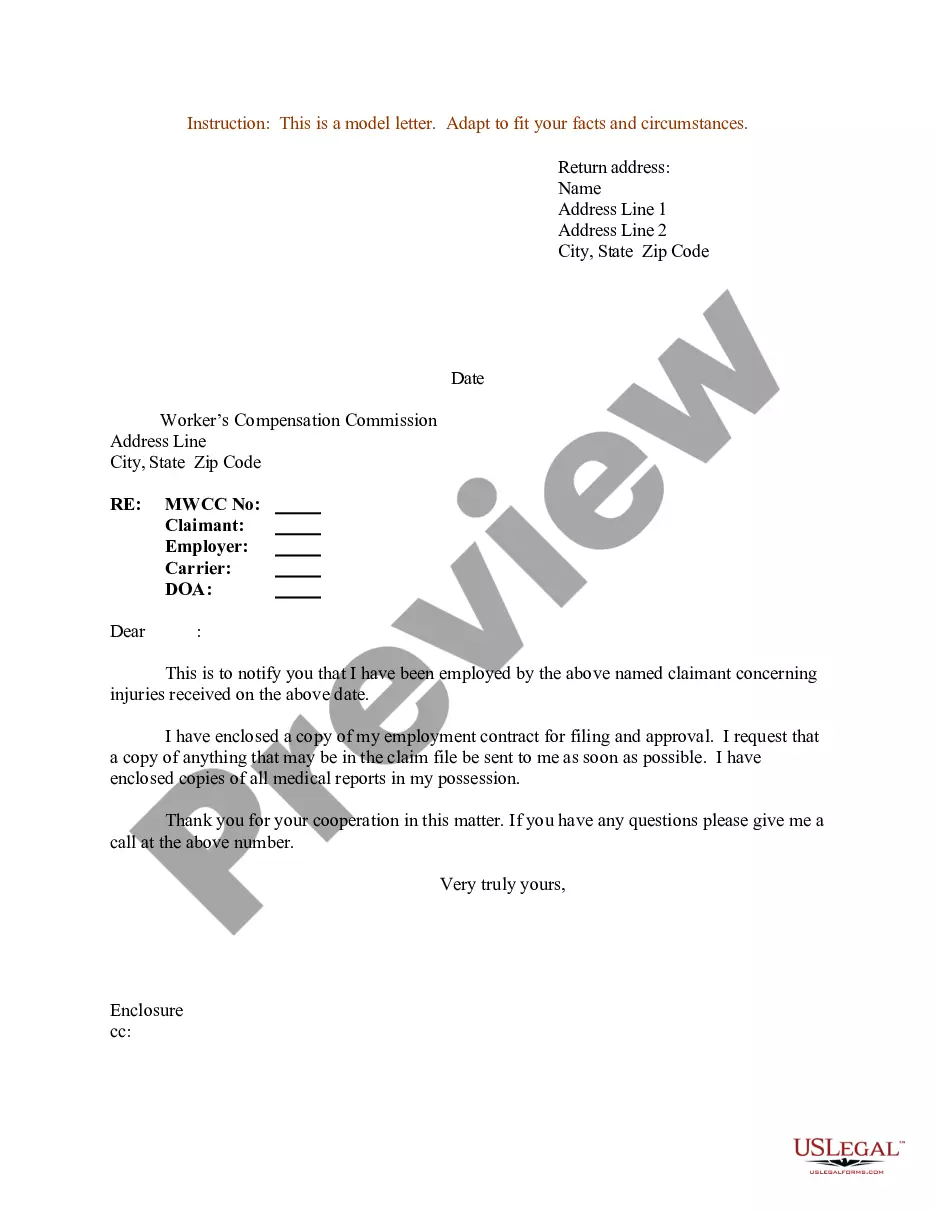
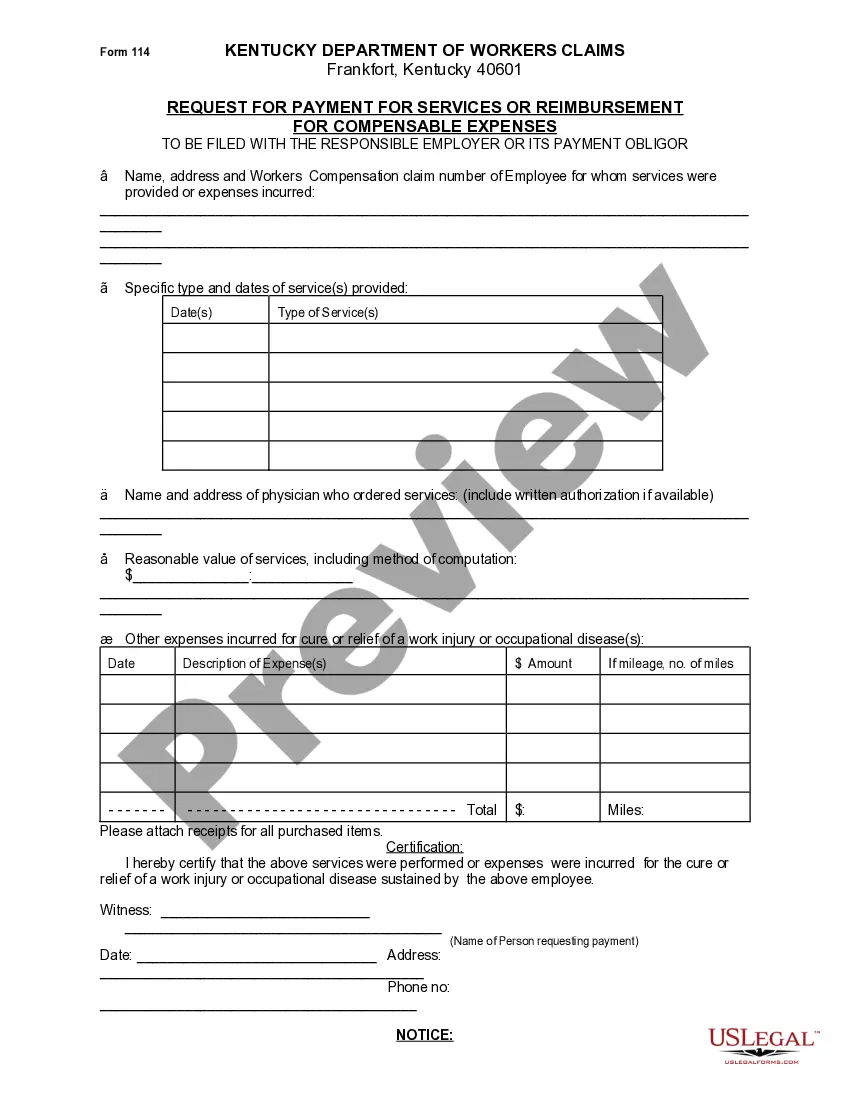
Looking for another form?

Form popularity
FAQ
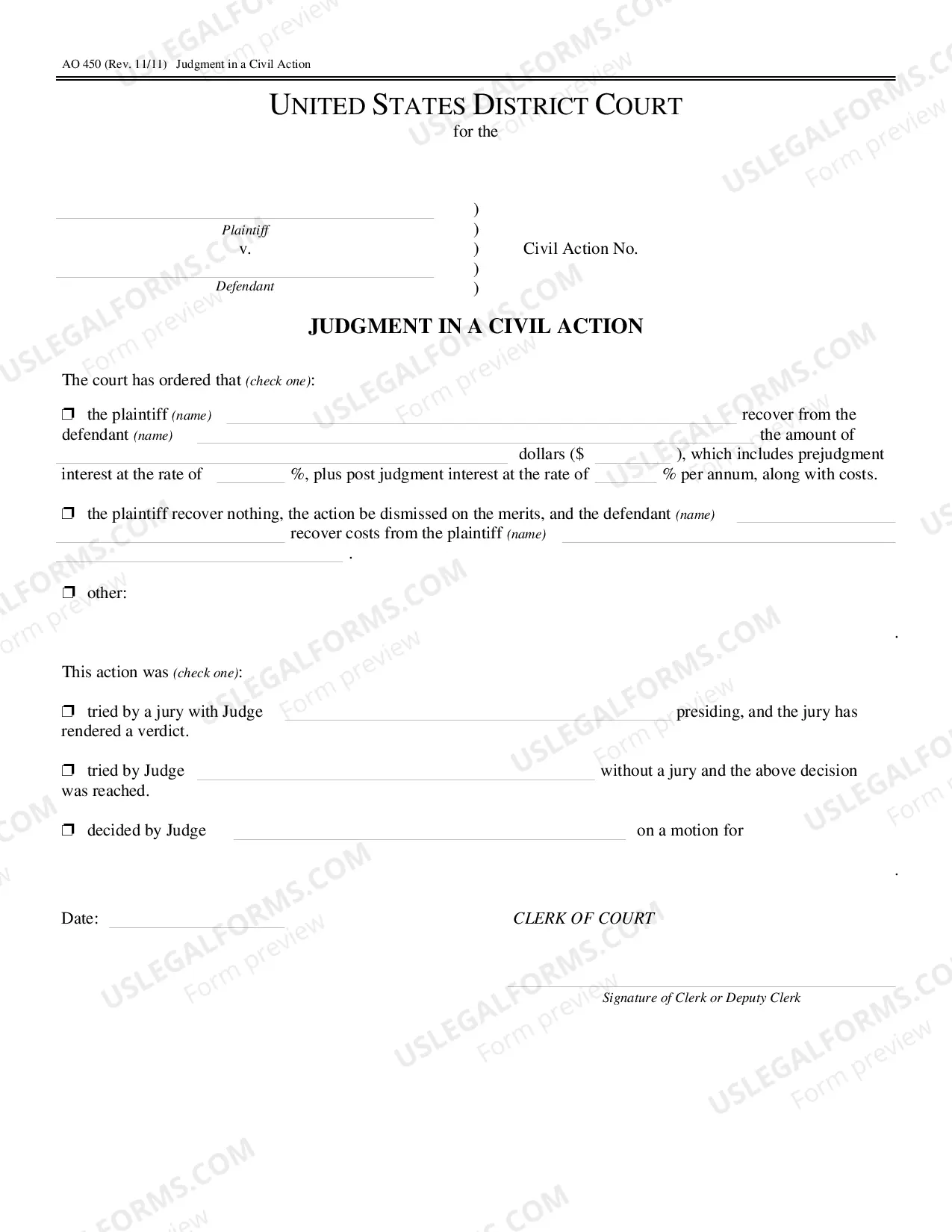
This is the formal written document about the outcome of a lawsuit. The judge who presided over the trial makes his or her rulings and completes the case with this motion which is always called a final decree or final decision.
There are four kinds of judgments in civil cases, namely: 1. When the facts are admitted by the parties, but the law is disputed; as in case of judgment upon demurrer; 2. When the law is admitted, but the facts are disputed; as in, case of judgment upon a verdict; 3.
In law, a judgment, also spelled judgement, is a decision of a court regarding the rights and liabilities of parties in a legal action or proceeding. Judgments also generally provide the court's explanation of why it has chosen to make a particular court order.
PLAINTIFF'S MOTION TO VACATE THE JUDGMENT: If you are the plaintiff and you did not go to court, you can ask the court to "vacate" (cancel) the judgment if the court ordered a judgment in favor of the defendant.
A default judgment is a ruling granted by a court or judge.For example, when a defendant is summoned to appear before the court in a case brought by a plaintiff, but fails to respond to the court's legal order, the judge can rule for default judgment and thereby decide the case in the plaintiff's favor.
In other words, she has ruled in favour of the plaintiff/against the defendant.
A judgment is a court order that is the decision in a lawsuit. If a judgment is entered against you, a debt collector will have stronger tools, like garnishment, to collect the debt. A judgment is an official result of a lawsuit in court.Ignore the lawsuit, or. Don't respond to the lawsuit in a timely manner.
Most often, it is a judgment in favor of a plaintiff when the defendant has not responded to a summons or has failed to appear before a court of law.A party can have a default judgment vacated, or set aside, by filing a motion, after the judgment is entered, by showing of a proper excuse.
Analytic judgements have no descriptive content. Synthetic judgements have just descriptive content. Evaluative judgements go beyond descriptive content.