Detailed Form of Good Guy Guaranty
What this document covers
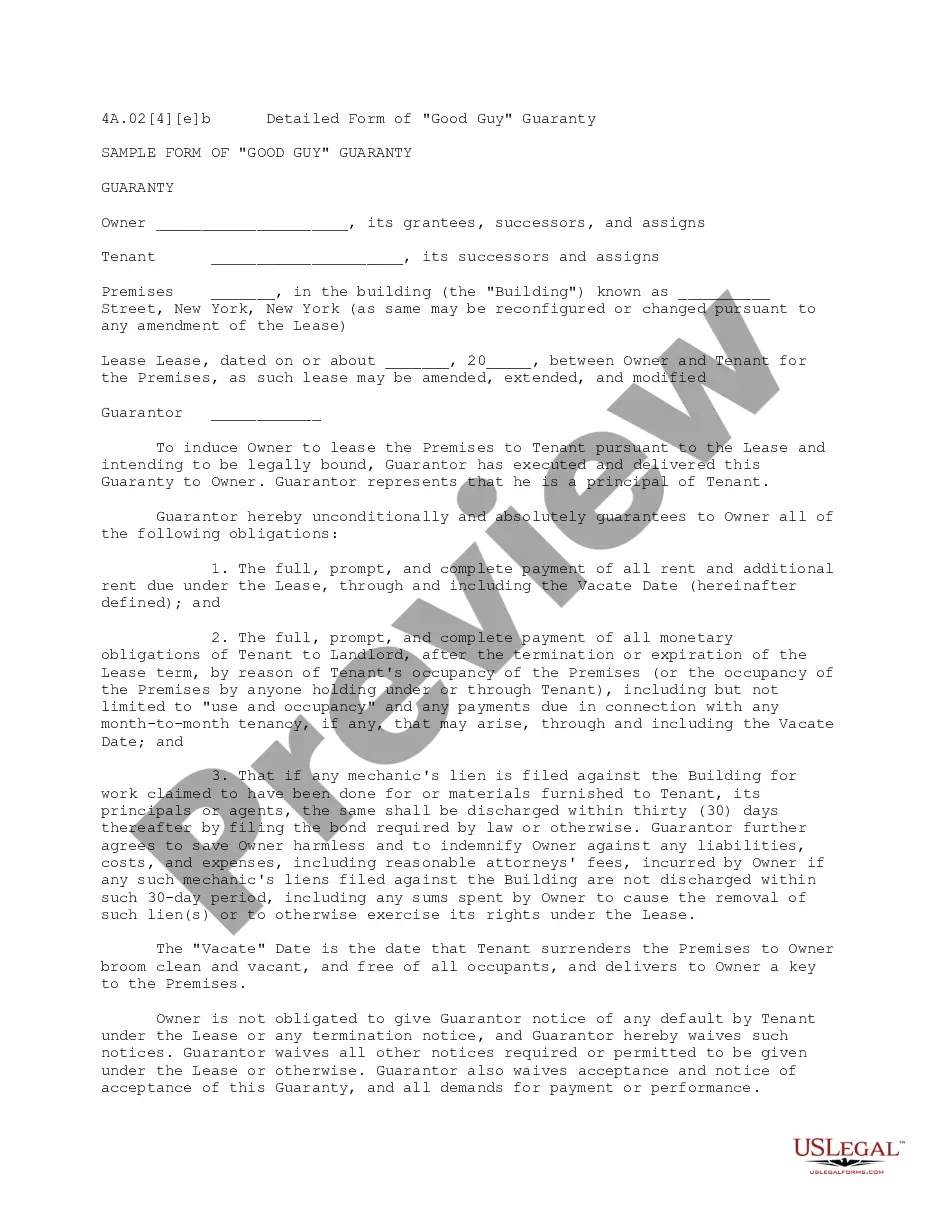
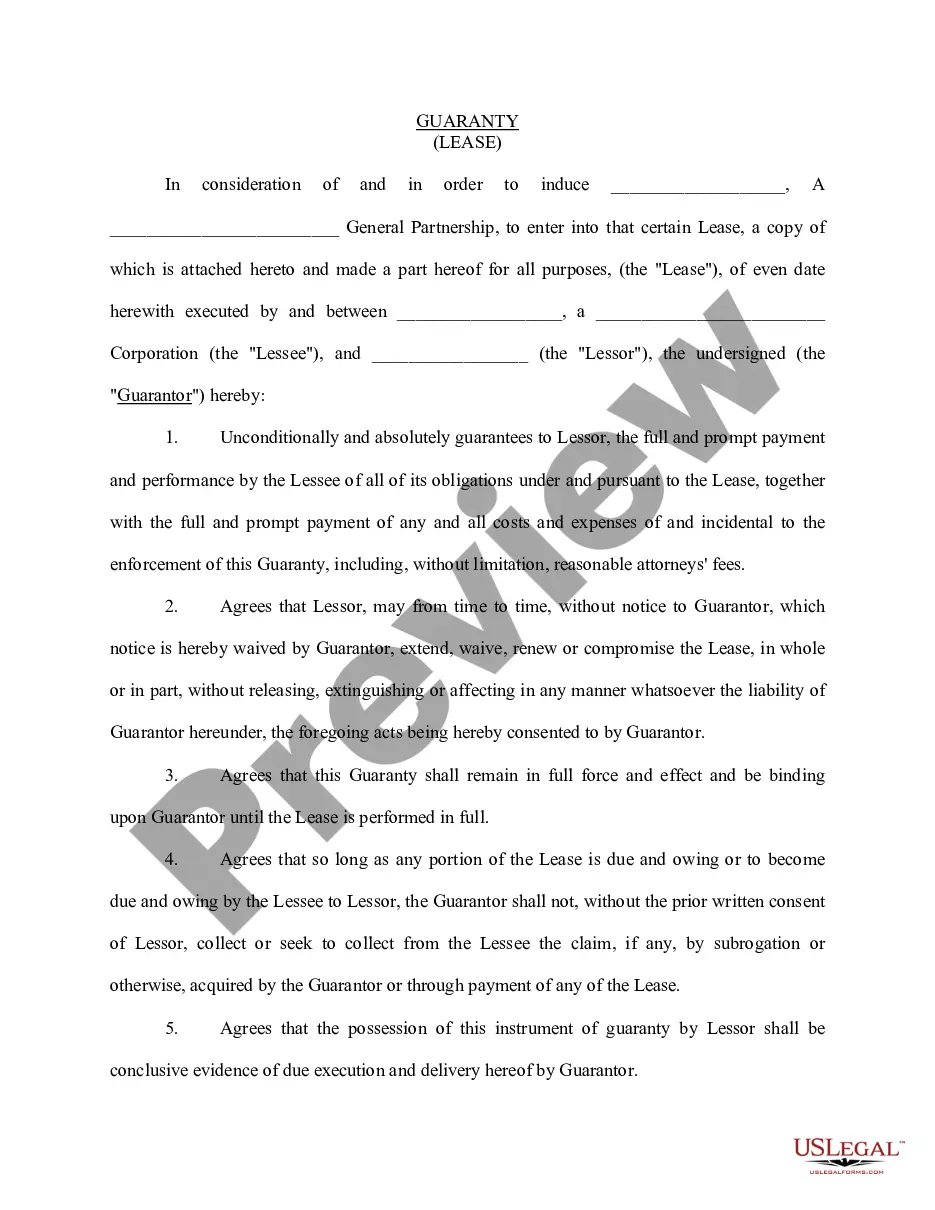
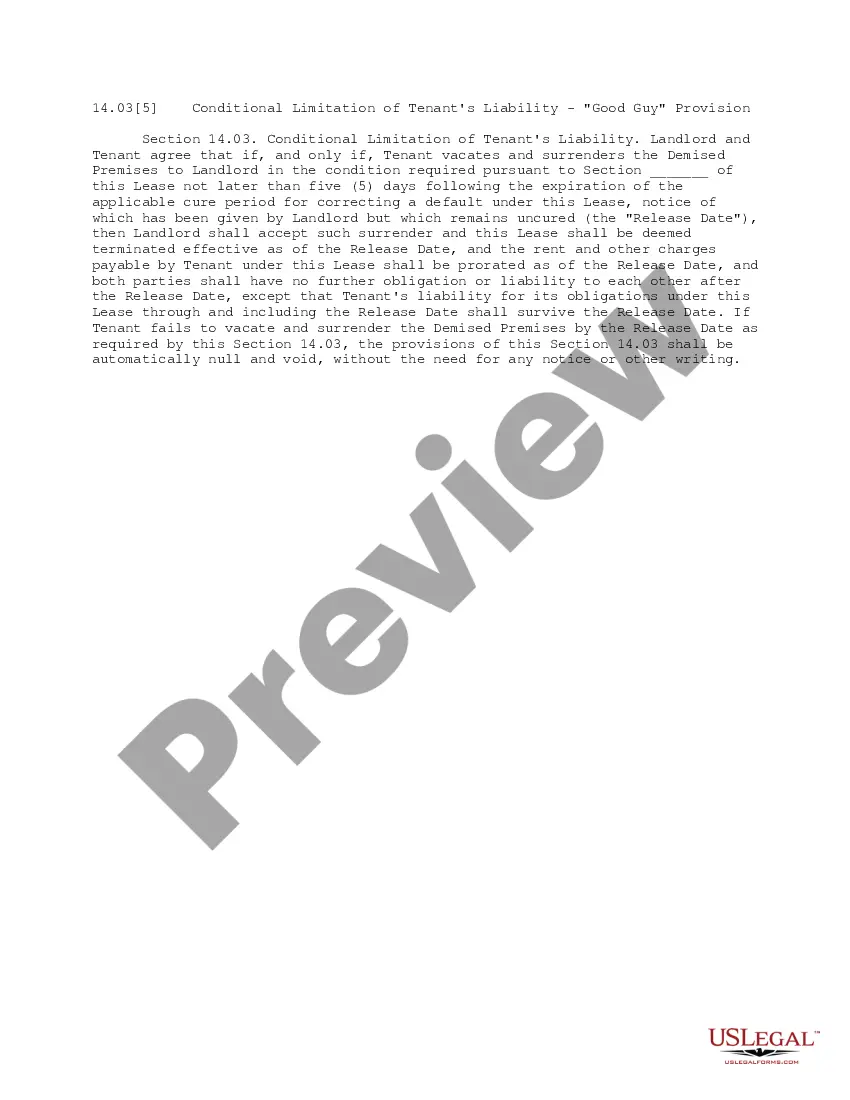
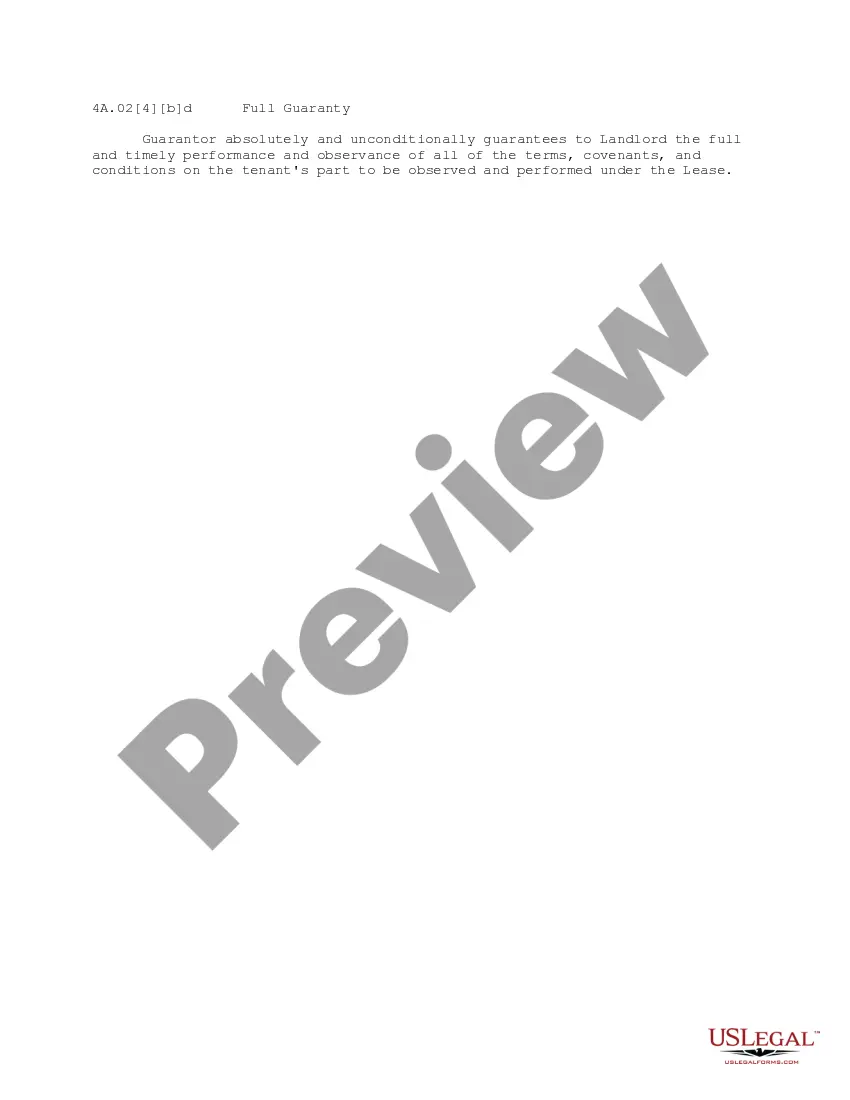
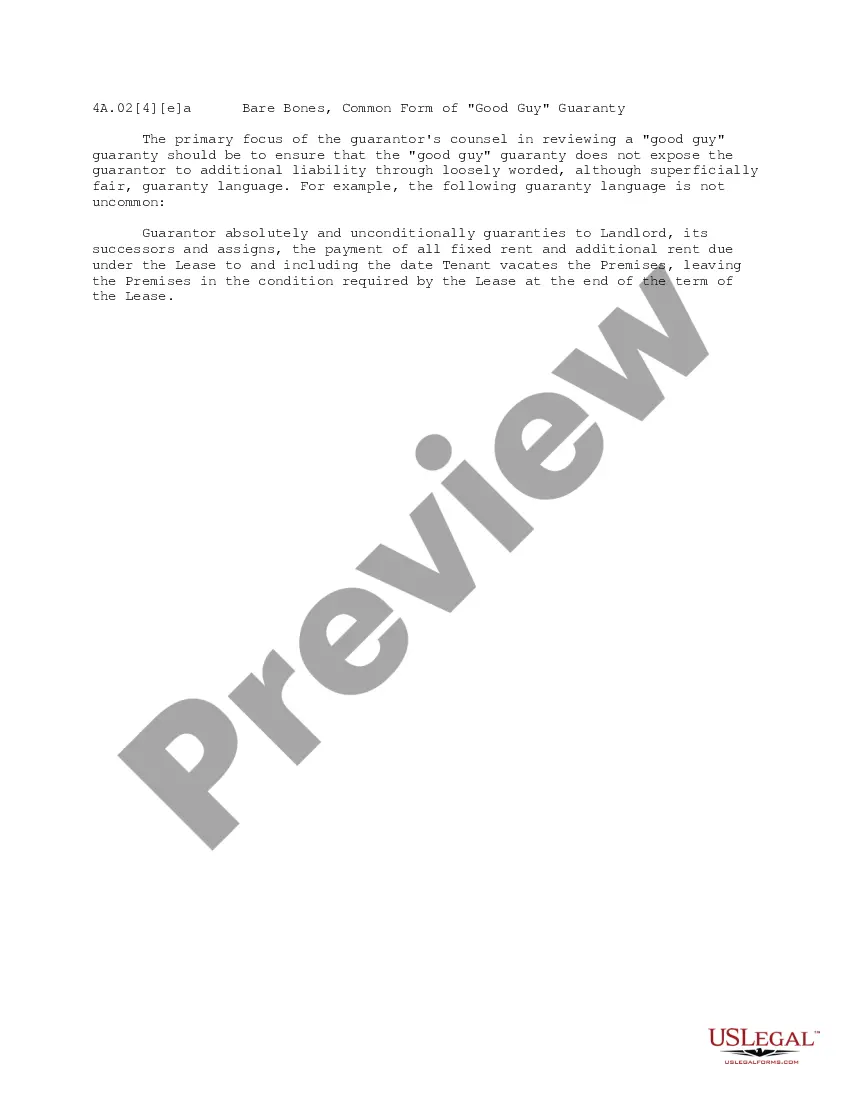
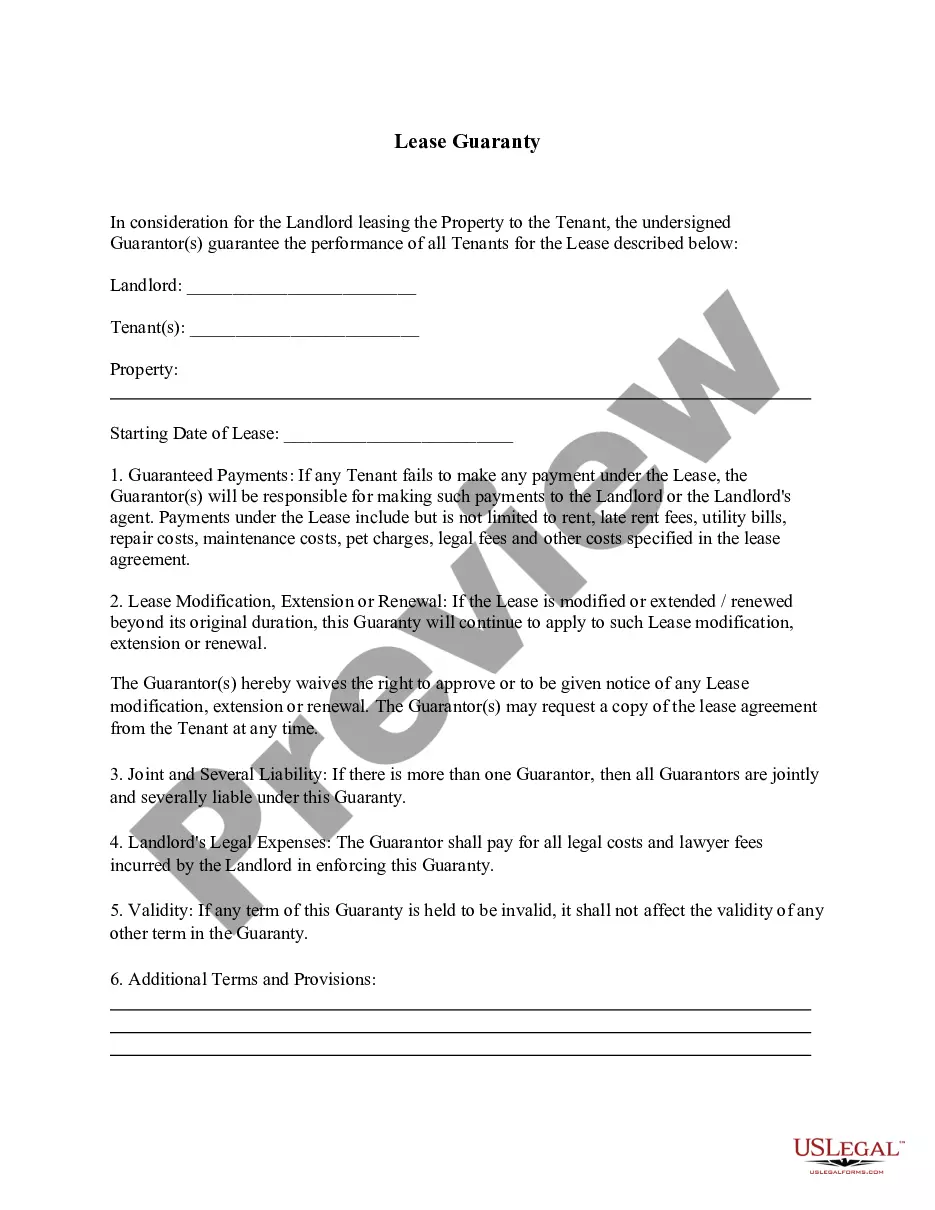
The Detailed Form of Good Guy Guaranty is a legal document used in commercial leasing. It establishes a guarantor's responsibility to ensure that the tenant fulfills their obligations under the lease agreement. This form differs from standard guaranties by outlining specific responsibilities, ensuring landlords can enforce compliance for both rent payments and additional obligations throughout the lease term.
Key components of this form
- Identification of the owner, tenant, and guarantor.
- Details of the premises being leased.
- Specific obligations of the guarantor, including payment guarantees and lien discharge provisions.
- Clarification of the Vacate Date and conditions for surrendering the premises.
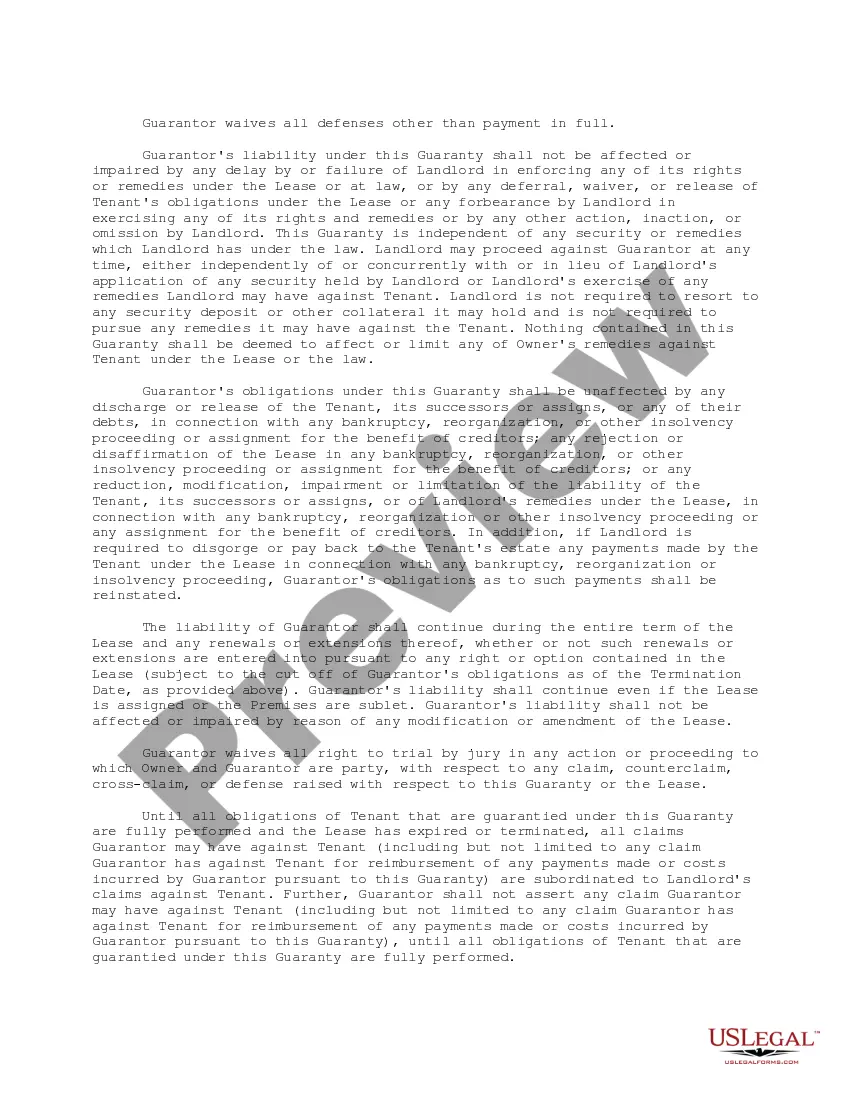
- Waivers by the guarantor regarding notifications and defenses.
When to use this document
This form should be used when a landlord requires additional security to ensure that a tenant meets the terms of a lease. It is especially relevant in commercial rentals where landlords want assurance that they can pursue payment and remedy if the tenant defaults. This form can also be useful in situations where the tenant's credit history is questionable.
Who this form is for
This form is intended for the following parties:
- Landlords seeking additional security for lease agreements.
- Individuals or businesses acting as guarantors for tenants.
- Tenants who are required to provide a guarantor to secure a lease.
How to prepare this document
- Identify the parties: Fill in the names of the owner, tenant, and guarantor.
- Specify the property: Enter the address of the leased premises.
- Detail the obligations: Clearly outline the financial and non-financial obligations of the tenant that the guarantor is guaranteeing.
- Enter relevant dates: Record the lease date and the Vacate Date when the tenant will surrender the property.
- Sign and date the document: Ensure all signatures are collected from the parties involved, including a witness if necessary.
Does this document require notarization?
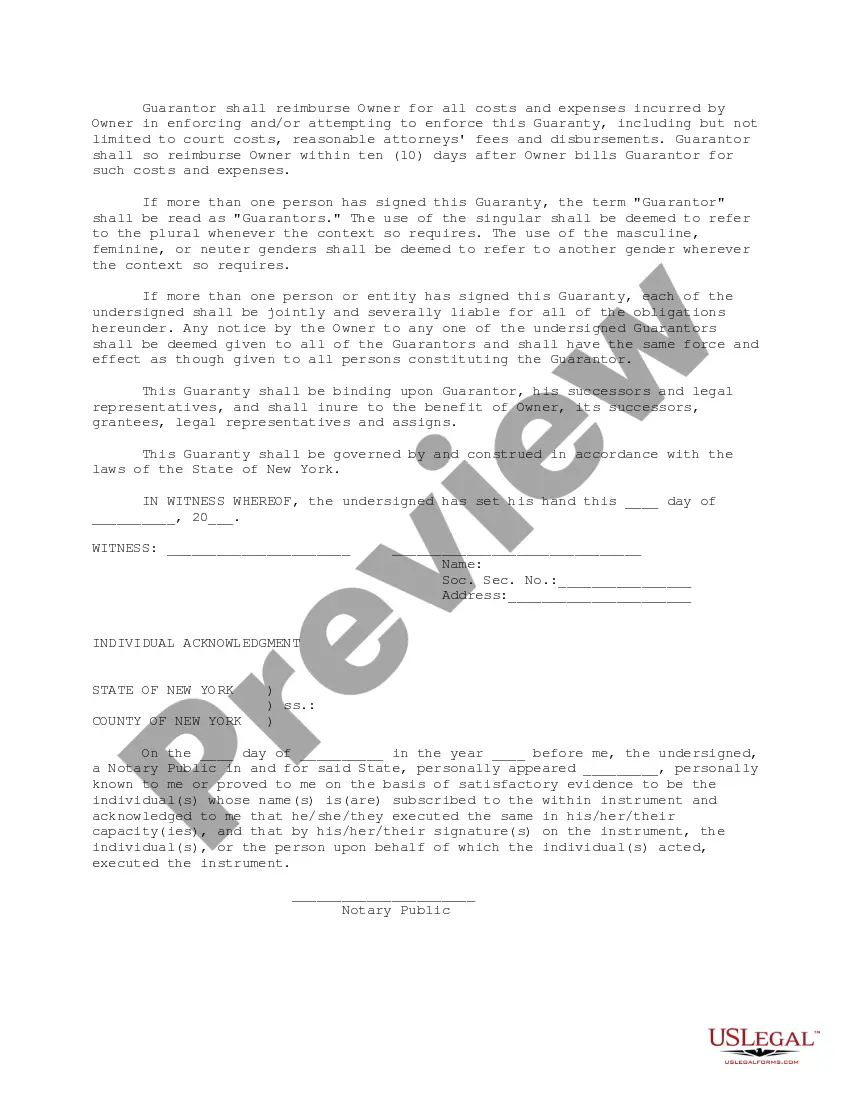
This form does not typically require notarization unless specified by local law. However, it is advisable to have it notarized to enhance its legal standing and verifiability.
Get your form ready online
Our built-in tools help you complete, sign, share, and store your documents in one place.
Make edits, fill in missing information, and update formatting in US Legal Forms—just like you would in MS Word.
Download a copy, print it, send it by email, or mail it via USPS—whatever works best for your next step.
Sign and collect signatures with our SignNow integration. Send to multiple recipients, set reminders, and more. Go Premium to unlock E-Sign.
If this form requires notarization, complete it online through a secure video call—no need to meet a notary in person or wait for an appointment.
We protect your documents and personal data by following strict security and privacy standards.

Make edits, fill in missing information, and update formatting in US Legal Forms—just like you would in MS Word.

Download a copy, print it, send it by email, or mail it via USPS—whatever works best for your next step.

Sign and collect signatures with our SignNow integration. Send to multiple recipients, set reminders, and more. Go Premium to unlock E-Sign.

If this form requires notarization, complete it online through a secure video call—no need to meet a notary in person or wait for an appointment.

We protect your documents and personal data by following strict security and privacy standards.
Mistakes to watch out for
- Failing to accurately identify all parties involved, including the full legal names.
- Not specifying the obligations clearly, leading to potential disputes.
- Omitting the Vacate Date, which can create ambiguity in the lease's conclusion.
Why use this form online
- Quick access to essential legal documents without the need for in-person meetings.
- Edit and customize the form easily to suit specific leasing agreements.
- Reliability from professionally drafted templates by licensed attorneys.
Legal use & context
- The Good Guy Guaranty is enforceable under New York law, providing landlords an additional layer of security.
- This form should be executed before the lease begins to ensure its validity.
What to keep in mind
- The Good Guy Guaranty is vital for protecting landlords from tenant defaults.
- Ensure all parties understand their obligations clearly before signing.
- Consult local laws regarding any necessary modifications to this form.
Looking for another form?
Form popularity
FAQ
The Detailed Form of Good Guy Guaranty is a commercial lease guaranty that makes a guarantor responsible for ensuring the tenant meets lease obligations. It is used when a landlord needs additional security in a commercial lease. The form adds specificity by detailing the guarantor’s duties—such as payment guarantees, lien discharge provisions, a defined Vacate Date, surrender conditions, and waivers of certain defenses or notices—to improve enforceability throughout the term.
It creates a clear liability structure by requiring a guarantor to back the tenant’s lease obligations under the commercial lease. The form specifies the guarantor’s duties, including payment guarantees, and a lien-discharge provision, plus a defined Vacate Date and surrender conditions, with waivers of defenses or notices. This design helps landlords enforce performance if the tenant defaults while the guarantor remains liable.
An example clause would specify the guarantor’s obligation to back the tenant’s rent and other lease obligations, plus a defined Vacate Date and surrender process, and a lien-discharge provision. It also includes waivers by the guarantor regarding notices and defenses, clarifying when liability ends after the premises are vacated.
Red flags include vague or missing guarantor obligations, a lack of a lien-discharge provision, an undefined Vacate Date or surrender process, and broad waivers that limit defenses or notices. Also watch for incomplete party identification or missing details about the premises, which can hinder enforcement.
Landlords seeking additional security for commercial leases, individuals or businesses acting as guarantors for tenants, and tenants who must provide a guarantor to secure the lease.
It is more detailed, outlining specific duties such as payment guarantees, lien discharge provisions, the Vacate Date, surrender conditions, and explicit waivers. A standard guaranty tends to be broader and less prescriptive, whereas this form ties liability to defined events and obligations to enhance enforceability.