Lease Provisions Relating to Brokers
What is this form?
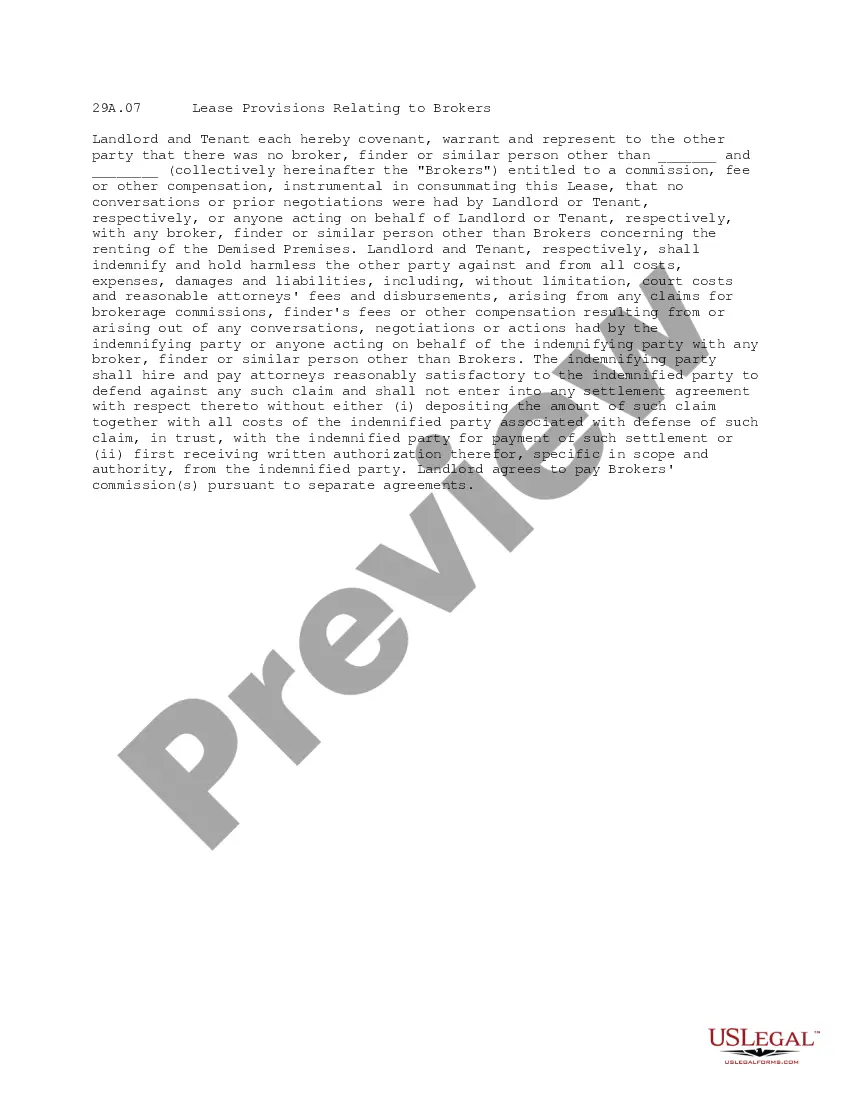
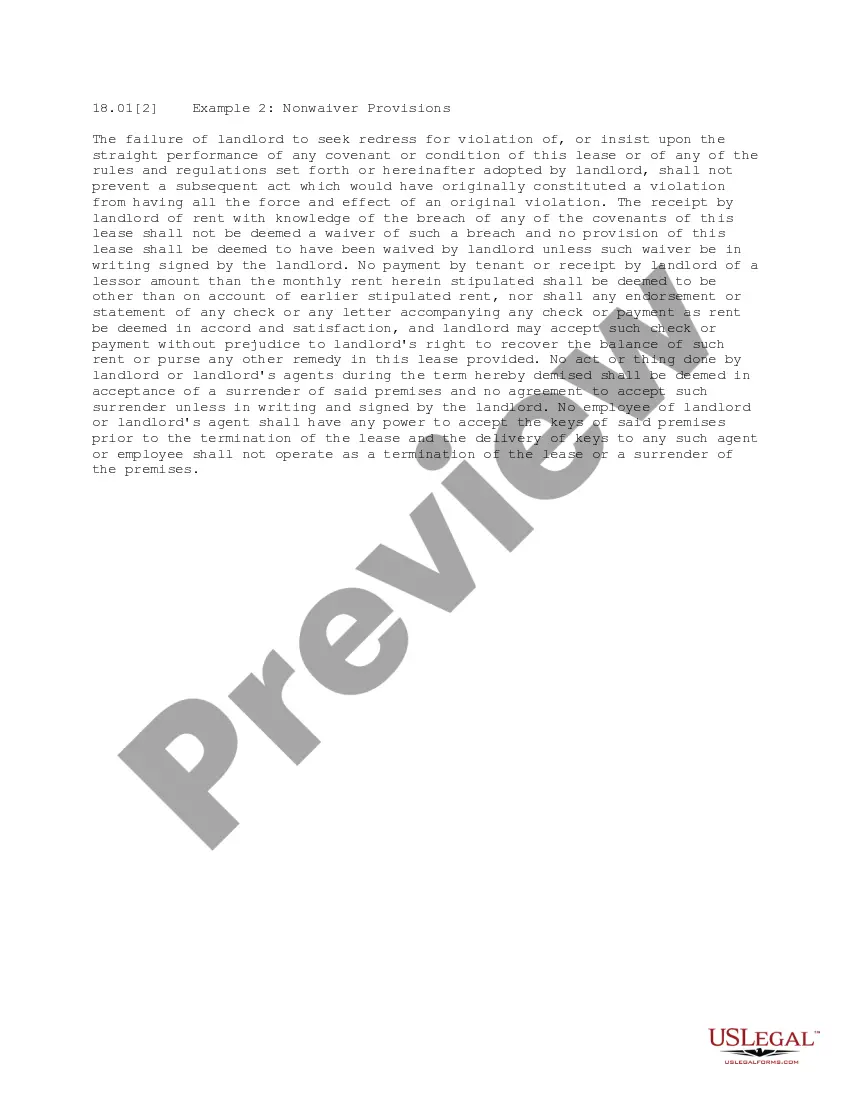
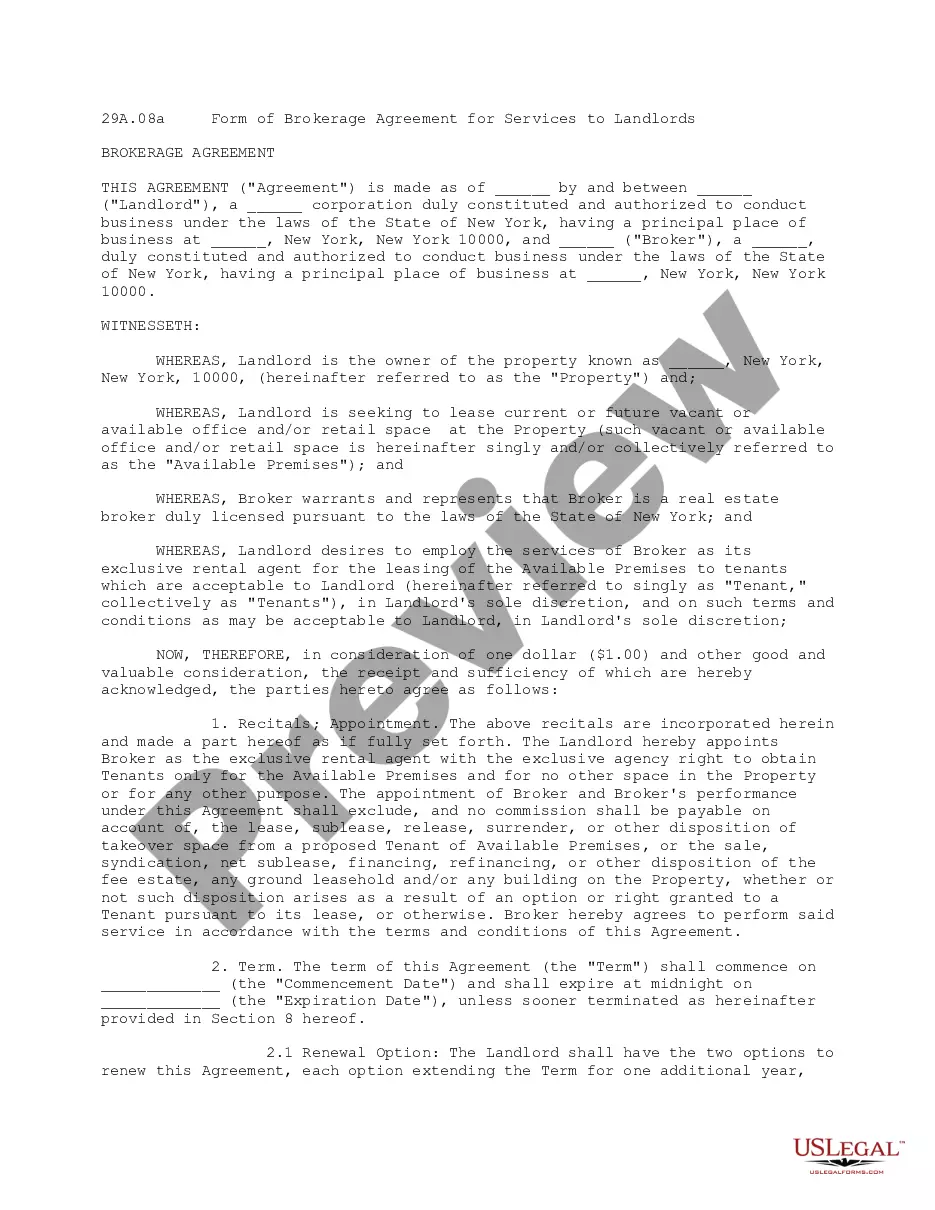
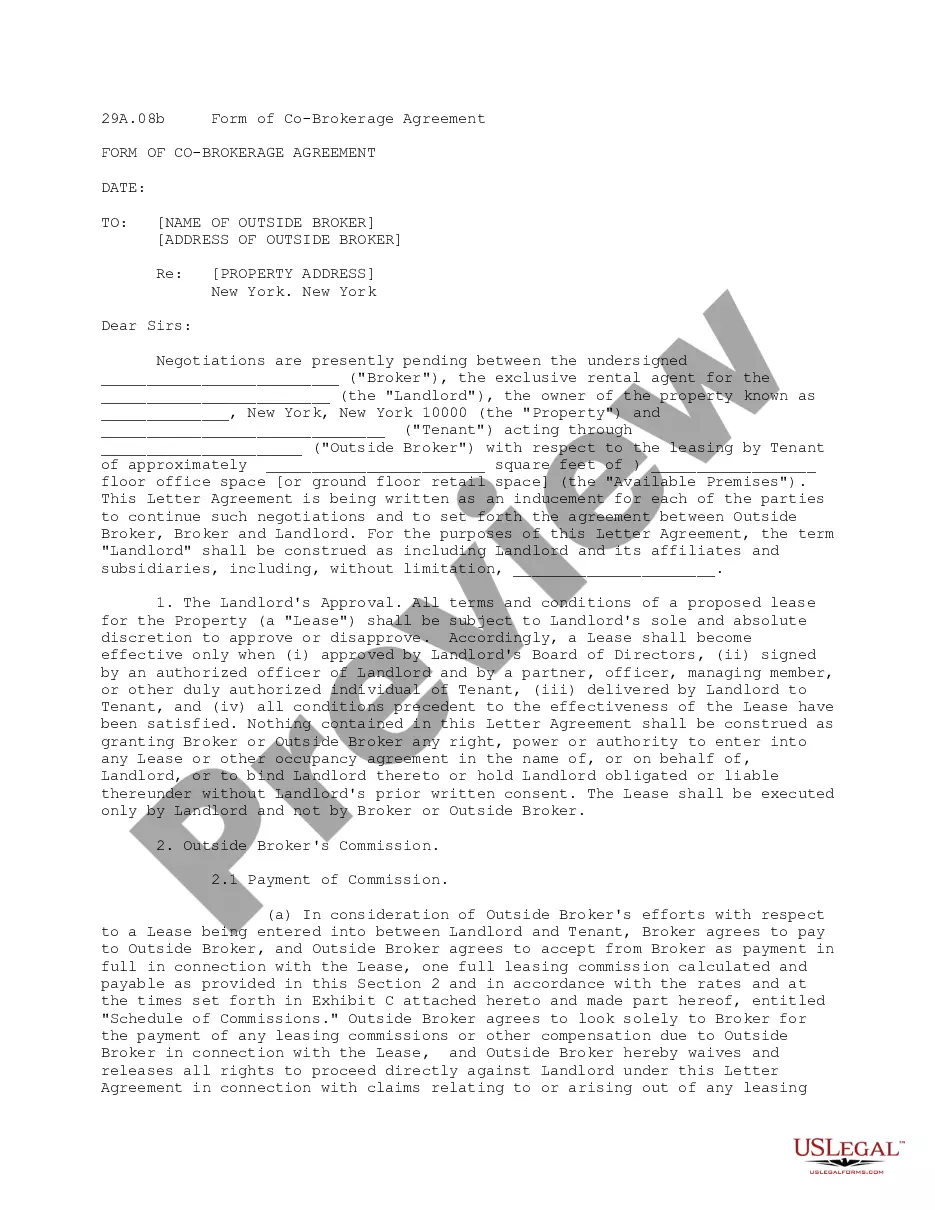
The Lease Provisions Relating to Brokers is a legal document that outlines the agreement between a landlord and tenant regarding any brokers involved in leasing a property. This form specifies that both parties confirm that no brokers, finders, or similar individuals, aside from those explicitly listed, are entitled to any fees or commissions. This distinct provision is crucial for clarifying the roles and responsibilities regarding broker compensation in the lease agreement.
Key parts of this document
- Warranties by both landlord and tenant regarding broker involvement.
- Indemnification clauses protecting each party from broker commission claims.
- Requirements for hiring attorneys to defend against claims related to brokerage fees.
- Specification for payment of commissions to the listed brokers under separate agreements.
Common use cases
This form should be used when a landlord and a tenant are entering into a lease agreement and need to clarify their respective positions regarding any brokers involved in the transaction. It is particularly useful in situations where either party wishes to avoid future disputes about brokerage commissions or when leasing commercial properties.
Who should use this form
- Landlords seeking to establish clear terms regarding broker involvement in lease agreements.
- Tenants who want to confirm their understanding of broker compensations and responsibilities.
- Real estate professionals acting on behalf of landlords or tenants in commercial lease negotiations.
How to prepare this document
- Identify the names and contact details of the landlord and tenant.
- Specify any brokers involved in the leasing process by filling in their names.
- Review the indemnification clauses to ensure mutual agreement between parties.
- Ensure both parties sign the agreement to confirm their understanding and acceptance.
- Store a copy of the completed form for future reference during the lease term.
Notarization guidance
Notarization is generally not required for this form. However, certain states or situations might demand it. You can complete notarization online through US Legal Forms, powered by Notarize, using a verified video call available anytime.
Get your form ready online
Our built-in tools help you complete, sign, share, and store your documents in one place.
Make edits, fill in missing information, and update formatting in US Legal Forms—just like you would in MS Word.
Download a copy, print it, send it by email, or mail it via USPS—whatever works best for your next step.
Sign and collect signatures with our SignNow integration. Send to multiple recipients, set reminders, and more. Go Premium to unlock E-Sign.
If this form requires notarization, complete it online through a secure video call—no need to meet a notary in person or wait for an appointment.
We protect your documents and personal data by following strict security and privacy standards.

Make edits, fill in missing information, and update formatting in US Legal Forms—just like you would in MS Word.

Download a copy, print it, send it by email, or mail it via USPS—whatever works best for your next step.

Sign and collect signatures with our SignNow integration. Send to multiple recipients, set reminders, and more. Go Premium to unlock E-Sign.

If this form requires notarization, complete it online through a secure video call—no need to meet a notary in person or wait for an appointment.

We protect your documents and personal data by following strict security and privacy standards.
Typical mistakes to avoid
- Failing to list all brokers involved in the leasing process.
- Not fully understanding the implications of the indemnification clauses.
- Leaving sections of the form incomplete or unsigned by one of the parties.
Why complete this form online
- Convenient access to downloadable forms at any time.
- Editability allows users to customize the document according to their specific needs.
- Reliable legal templates drafted by licensed attorneys help ensure compliance.
Legal use & context
- The form ensures clarity about broker involvement and potential liabilities.
- Proper completion and signatures help in enforcing the terms of the lease agreement.
- Adherence to local real estate laws enhances the enforceability of the provisions outlined.
Key takeaways
- The Lease Provisions Relating to Brokers protects both landlord and tenant in broker-related discussions.
- Clear communication of broker involvement is essential for preempting disputes.
- Proper use of this form can simplify negotiations and clarify financial responsibilities regarding brokerage fees.
Looking for another form?



Form popularity
FAQ
Lease provisions are usually described as "boilerplate," since many leases use standard language. Boilerplate language in a lease may include the terms of the lease, payment dates, and late fees, among others. But unusual issues sometimes crop up.
There are different kinds of lease arrangements. It makes sense to consider them all to see which is best suited to your business, your particular circumstances and the asset that you are acquiring. The three main types of leasing are finance leasing, operating leasing and contract hire.
Amount of rent, security deposit, other payments. Duration of agreement and renewal criteria. List of fittings, fixtures. Registration of agreement. Restrictions.
The Gross Lease. The gross lease tends to favor the tenant. The Net Lease. The net lease, however, tends to favor the landlord. The Modified Gross Lease.
10 Important Rental Lease Clauses. #1 Rent Liability. #2 Severability Clause. #3 Access to Premises. #4 Use of Premises. #5 Holding Over. #6 Sublet Rules. #7 Disturbance Clause.
The leasing broker will market the property for lease and negotiate lease terms with tenants. The broker is responsible for representing the landlord's interests and achieving the most favorable lease terms for the building owner.
A lease is automatically void when it is against the law, such as a lease for an illegal purpose. In other circumstances, like fraud or duress, a lease can be declared void at the request of one party but not the other.
The use clause in a lease tells you how you can utilize your space. It may restrict your lines of business, stipulate office hours that you must adhere to and place restrictions on advertising signage on the premises.
Financial Lease. Financial leasing is a contract involving payment over a longer period. Operating Lease. Leveraged and non-leveraged leases. Conveyance type lease. Sale and leaseback. Full and non pay-out lease. Specialized service lease. Net and non-net lease.