General Nondisturbance Agreement
What this document covers
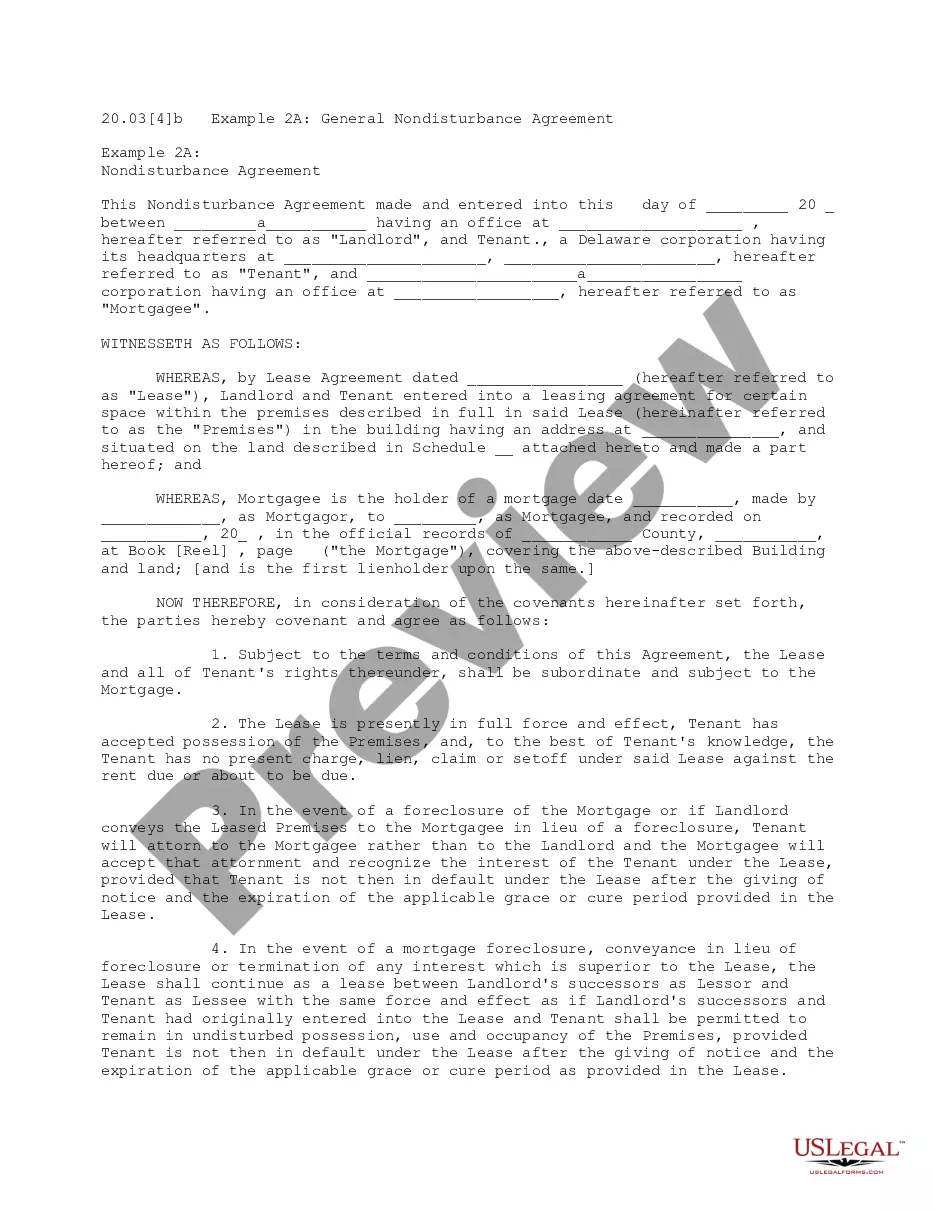
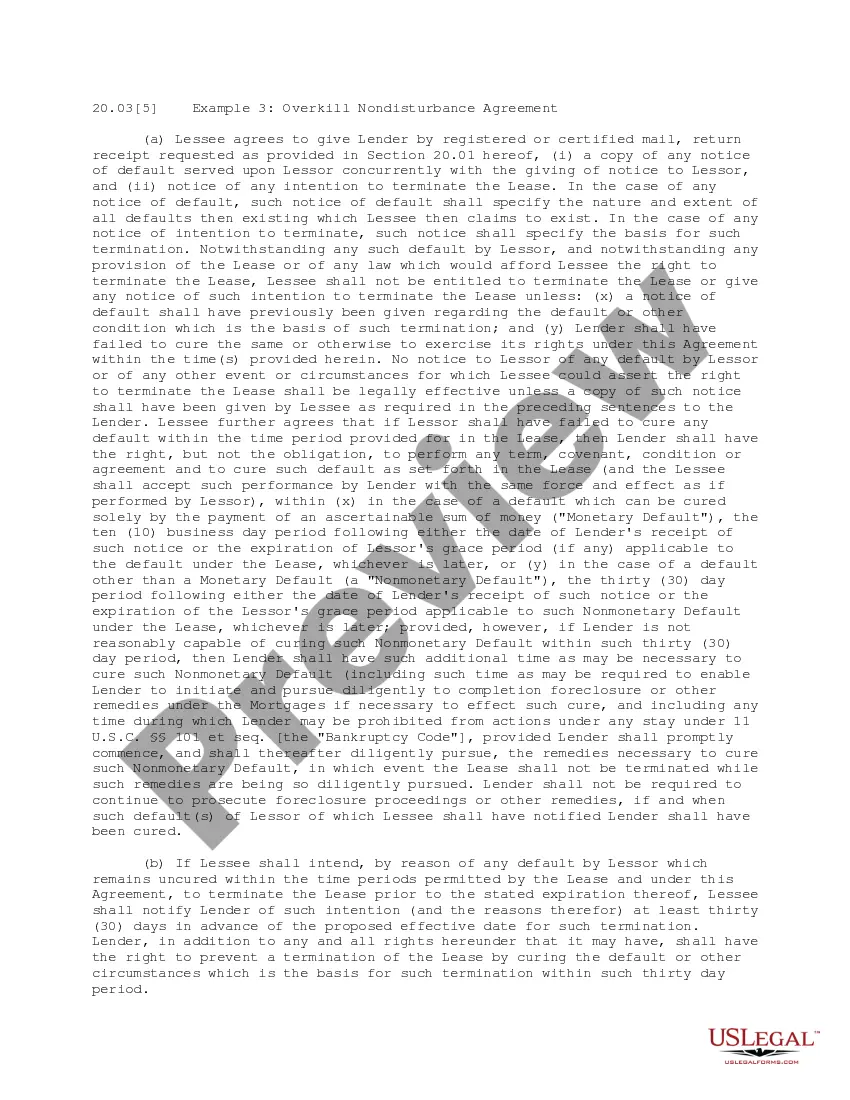
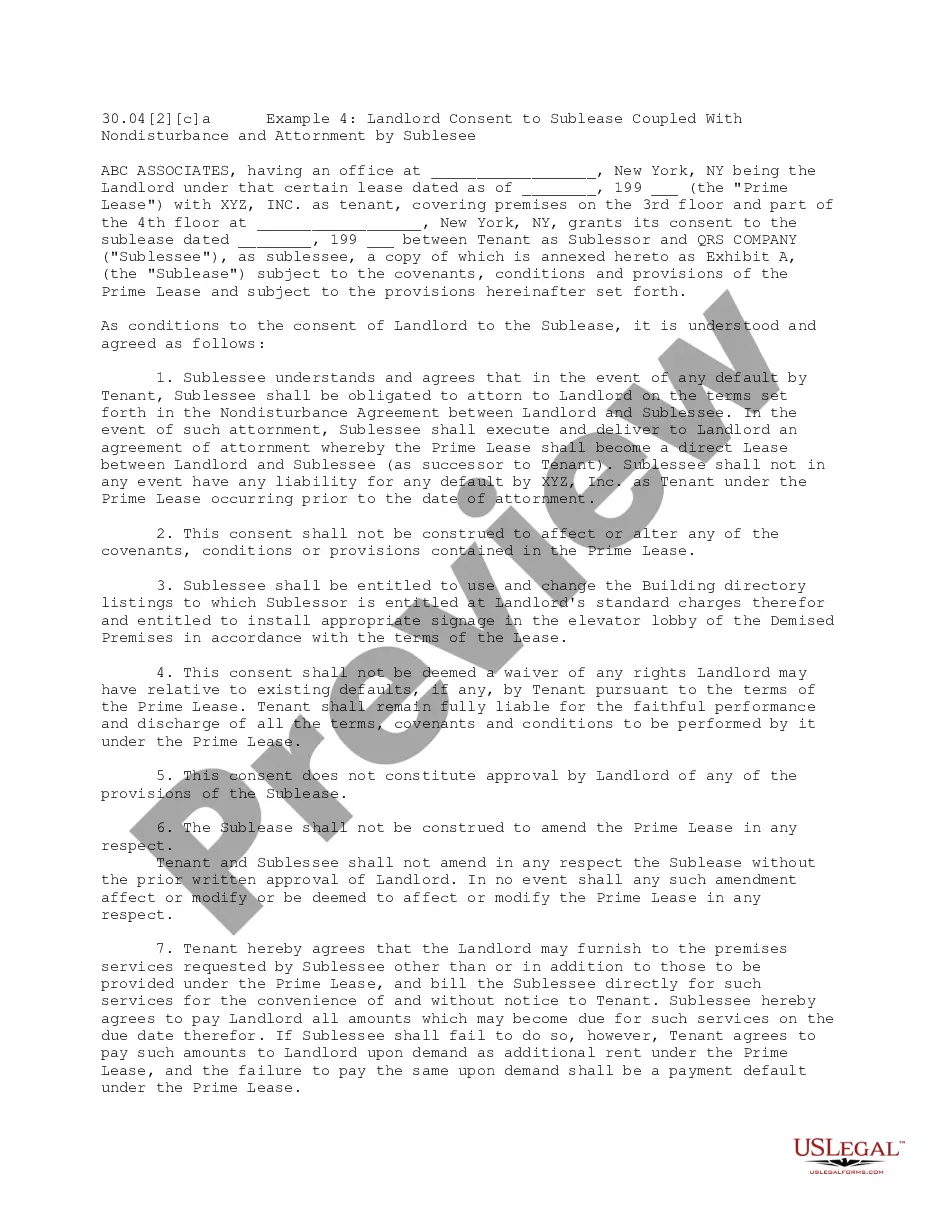
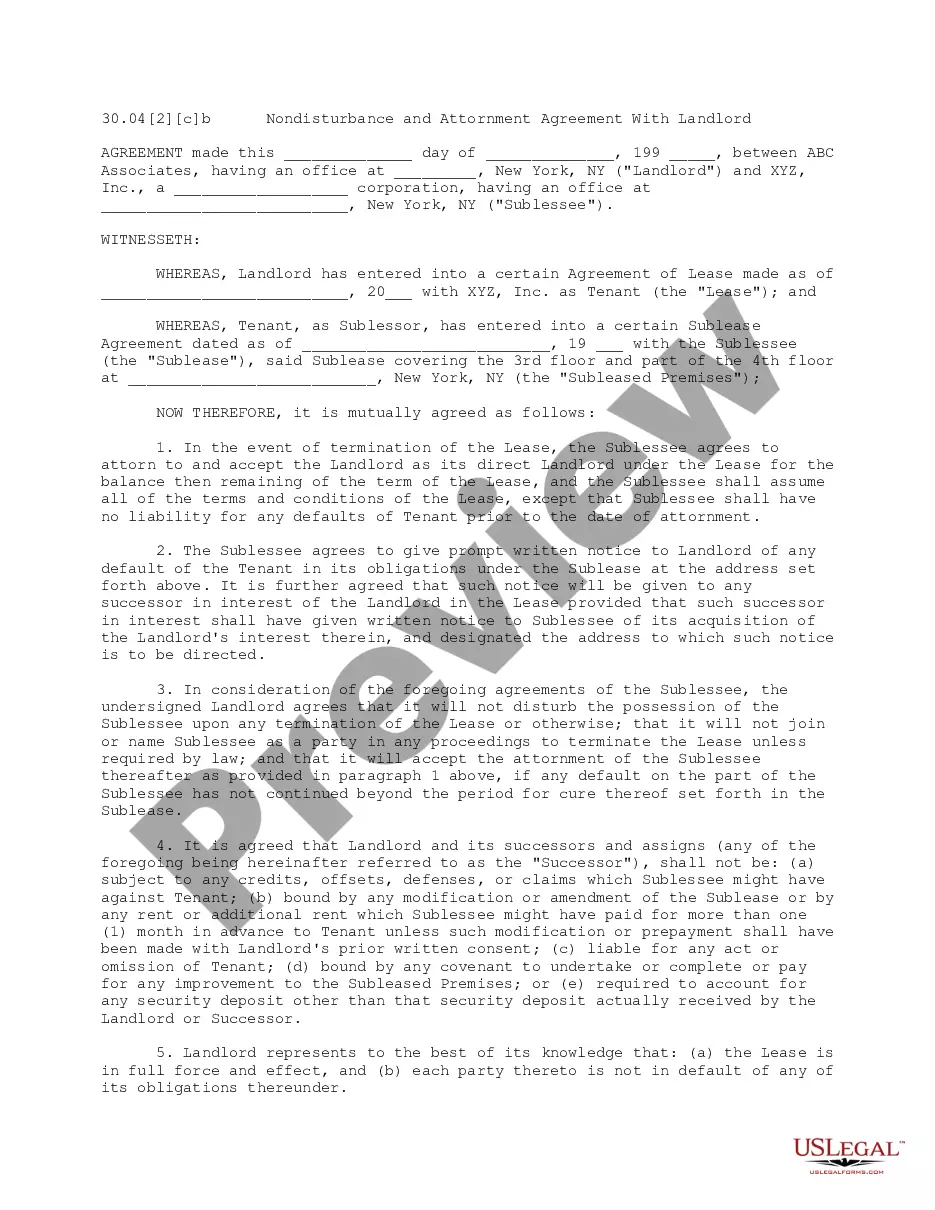
The General Nondisturbance Agreement is a legal document that protects tenants by ensuring their lease remains intact in the event of a mortgage foreclosure or other disruptions to the landlord's ownership. Unlike typical lease agreements, this form secures the tenantâs right to occupy the property without interference from new landlords following these events, provided they are not in default under the lease terms.
Key components of this form
- Identification of parties: Clearly states the names and addresses of the landlord, tenant, and mortgagee.
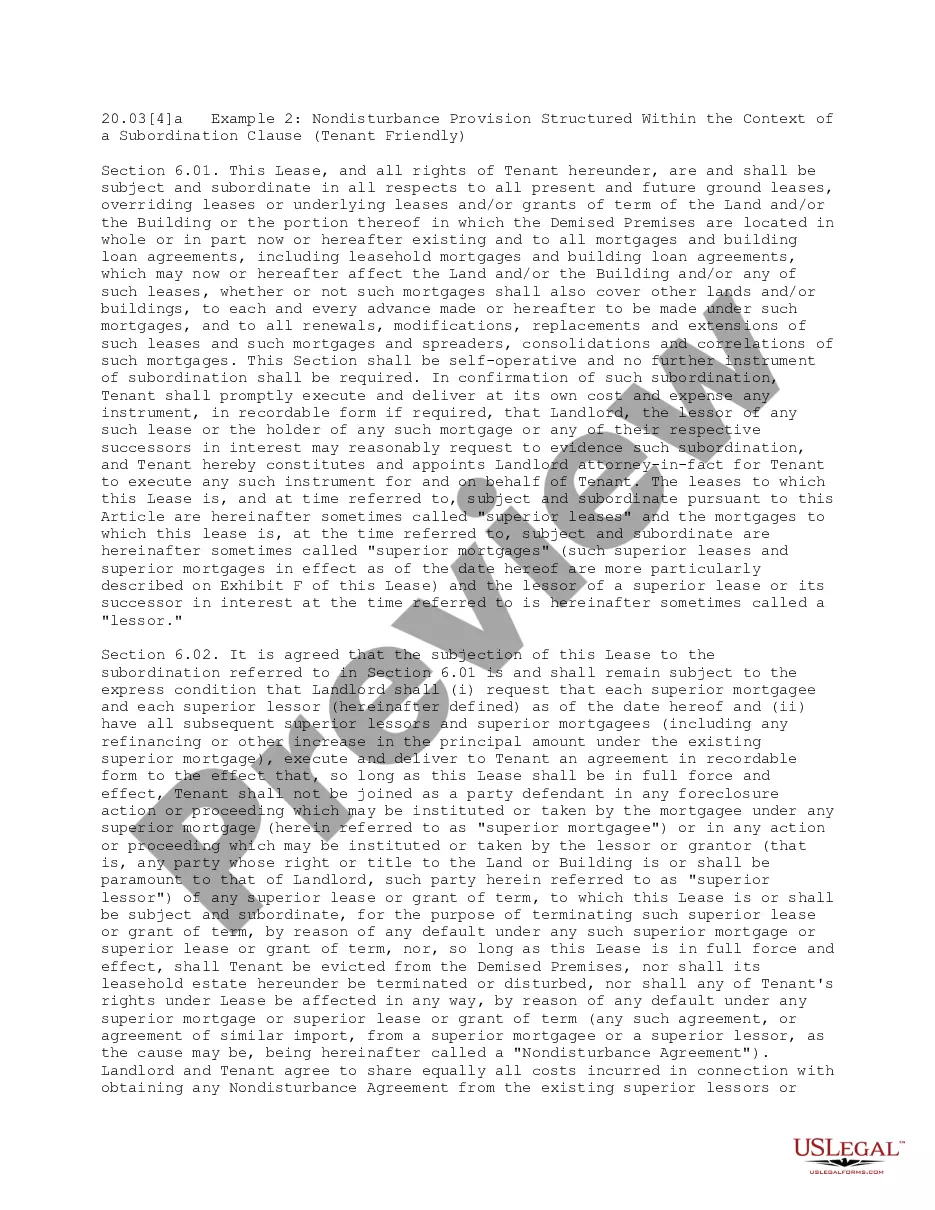
- Subordination clause: Establishes that the lease is subordinate to the mortgage but provides protections for the tenant.
- Attornment clause: Outlines the tenant's agreement to recognize the mortgagee as the new landlord after a foreclosure.
- Rights of the tenant: Ensures tenant's rights to continue occupancy and use of the premises without interference.
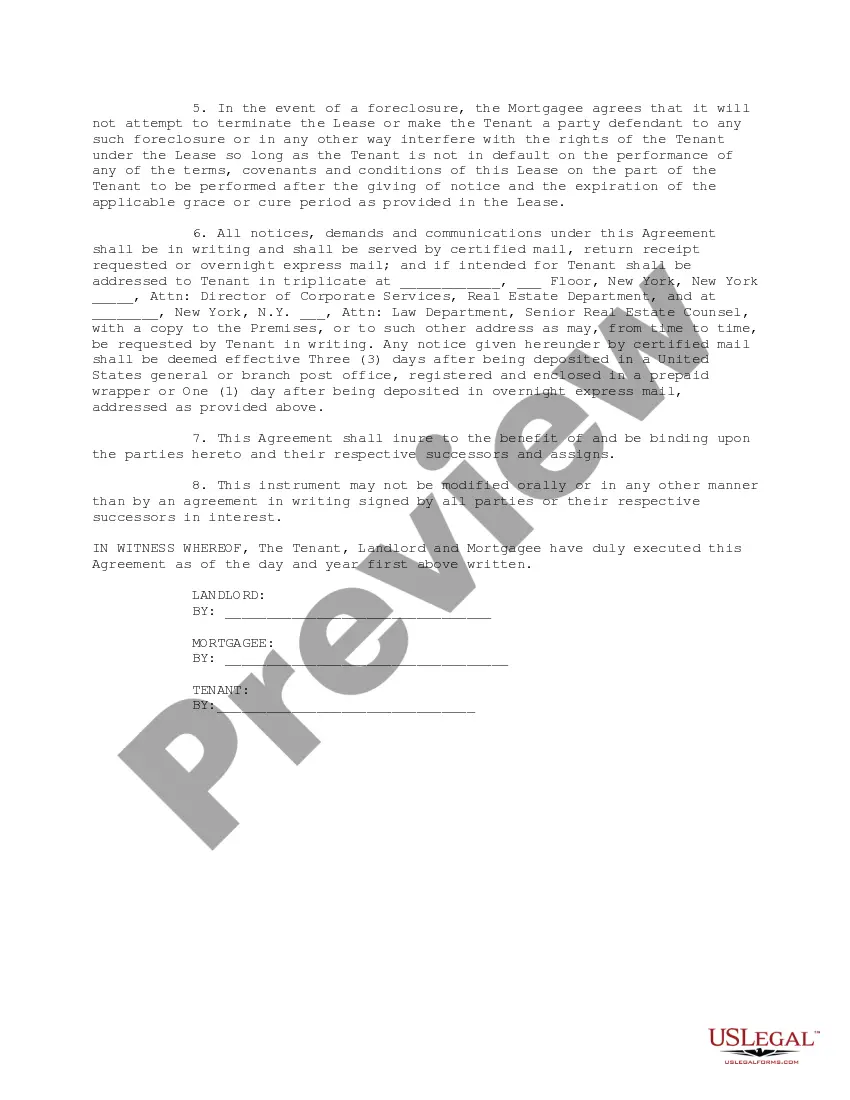
- Notice requirements: Specifies how to serve notices to the tenant, including delivery methods.
Situations where this form applies
This form should be used when a landlord has a mortgage on a leased property, especially if there is a risk of foreclosure. It is crucial for tenants who want assurance that they will be able to remain in the premises, even if the landlord's financial situation changes or ownership transfers. This agreement can also be beneficial in establishing clear communication channels regarding lease enforcement during uncertain circumstances.
Who needs this form
- Tenants leasing commercial or residential properties who want to secure their right to lease.
- Landlords seeking to provide tenants with additional assurances regarding lease stability.
- Mortgagees involved in property financing and who wish to formalize relations with both tenants and landlords.
How to prepare this document
- Identify all parties: Fill in the names and addresses of the landlord, tenant, and mortgagee.
- Reference the lease agreement: Clearly state the date and details of the lease agreement that necessitates this nondisturbance agreement.
- Include mortgage details: Provide the date and recording information of the mortgage affecting the property.
- Sign and date the document: Ensure all parties sign the agreement and date it appropriately to validate the nondisturbance terms.
- Provide notice address details: Include accurate mailing addresses for serving notices to all parties involved.
Notarization guidance
This form does not typically require notarization unless specified by local law. However, having it notarized may add an extra layer of legal validity and can be beneficial in certain situations.
Get your form ready online
Our built-in tools help you complete, sign, share, and store your documents in one place.
Make edits, fill in missing information, and update formatting in US Legal Forms—just like you would in MS Word.
Download a copy, print it, send it by email, or mail it via USPS—whatever works best for your next step.
Sign and collect signatures with our SignNow integration. Send to multiple recipients, set reminders, and more. Go Premium to unlock E-Sign.
If this form requires notarization, complete it online through a secure video call—no need to meet a notary in person or wait for an appointment.
We protect your documents and personal data by following strict security and privacy standards.

Make edits, fill in missing information, and update formatting in US Legal Forms—just like you would in MS Word.

Download a copy, print it, send it by email, or mail it via USPS—whatever works best for your next step.

Sign and collect signatures with our SignNow integration. Send to multiple recipients, set reminders, and more. Go Premium to unlock E-Sign.

If this form requires notarization, complete it online through a secure video call—no need to meet a notary in person or wait for an appointment.

We protect your documents and personal data by following strict security and privacy standards.
Avoid these common issues
- Failing to include all necessary parties: Make sure to list the landlord, tenant, and mortgagee correctly.
- Not providing complete lease details: Ensure the lease agreement is referenced fully, including dates and specific terms.
- Missing signatures: All parties must sign the agreement; otherwise, it may not be enforceable.
Advantages of online completion
- Convenience: Easily download and fill out the form from anywhere.
- Editability: Customize sections of the form to suit specific needs before printing.
- Reliability: Access attorney-drafted forms to ensure legal compliance and accuracy.
Legal use & context
- This agreement helps establish a legally binding framework for tenant rights during foreclosure.
- It facilitates communication between landlords and mortgagees regarding tenant rights.
- Understanding and utilizing this form can prevent potential disputes related to property possession.
Main things to remember
- The General Nondisturbance Agreement protects tenant rights in case of mortgage foreclosure.
- All parties must sign the agreement for it to be binding and effective.
- The form is applicable in multiple states, but local laws should be considered.
Looking for another form?

Form popularity
FAQ
To transfer homage and service from one feudal lord to another. 2. to agree to continue as tenant under a new landlord. Derived forms. attornment (at02c8tornment)
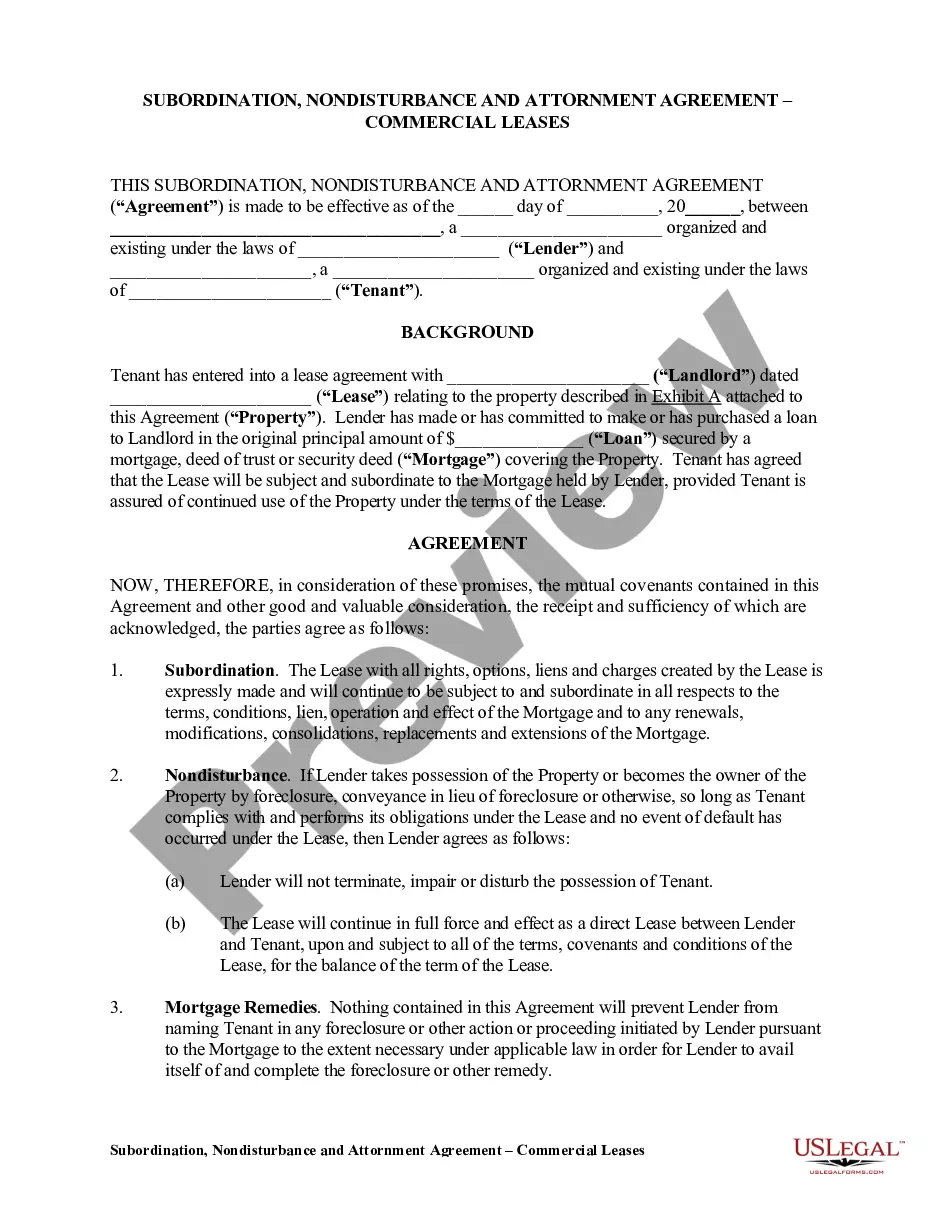
An SNDA is an agreement entered into between a tenant and the lender of the landlord (and, ideally, the landlord) to establish the relationship between the tenant and lender (who would not otherwise have a direct relationship) and provide relative priorities between them.
Subordination clauses in mortgages refer to the portion of your agreement with the mortgage company that says their lien takes precedence over any other liens you may have on your property.The primary lien on a house is usually a mortgage. However, it's also possible to have other liens.
A notice of attornment is a notice that the new owner may give to you, providing notice that the building has been sold to them. It will direct you to pay all future rent to the new landlord.
The attornment clause in an SNDA obligates the tenant to recognize the new owner of the property as its landlord regardless of whether the new owner acquired the property through a normal sale or a foreclosure.The tenant can lease the premises even after the property is sold or foreclosed.
Attornment in a commercial lease is similar. The attornment clause in an SNDA obligates the tenant to recognize the new owner of the property as its landlord regardless of whether the new owner acquired the property through a normal sale or a foreclosure.
A nondisturbance clause is a provision in a mortgage contract that ensures that a rental agreement between the tenant and the landlord will continue under any circumstances.A nondisturbance clause ensures that a tenant will not be evicted in the event that the landlord goes bankrupt.
Term. Main definition. Letter of Attornment. A letter from a grantor to a tenant, stating that a property has been sold, and directing rent to be paid to the grantee (i.e., the new owner).
Attornment is the tenant's agreement to become the tenant of someone other than the original landlord and who has now taken title to the property.