Landlord and Tenant Rights and Responsibilities in the Case of Condemnation
What this document covers
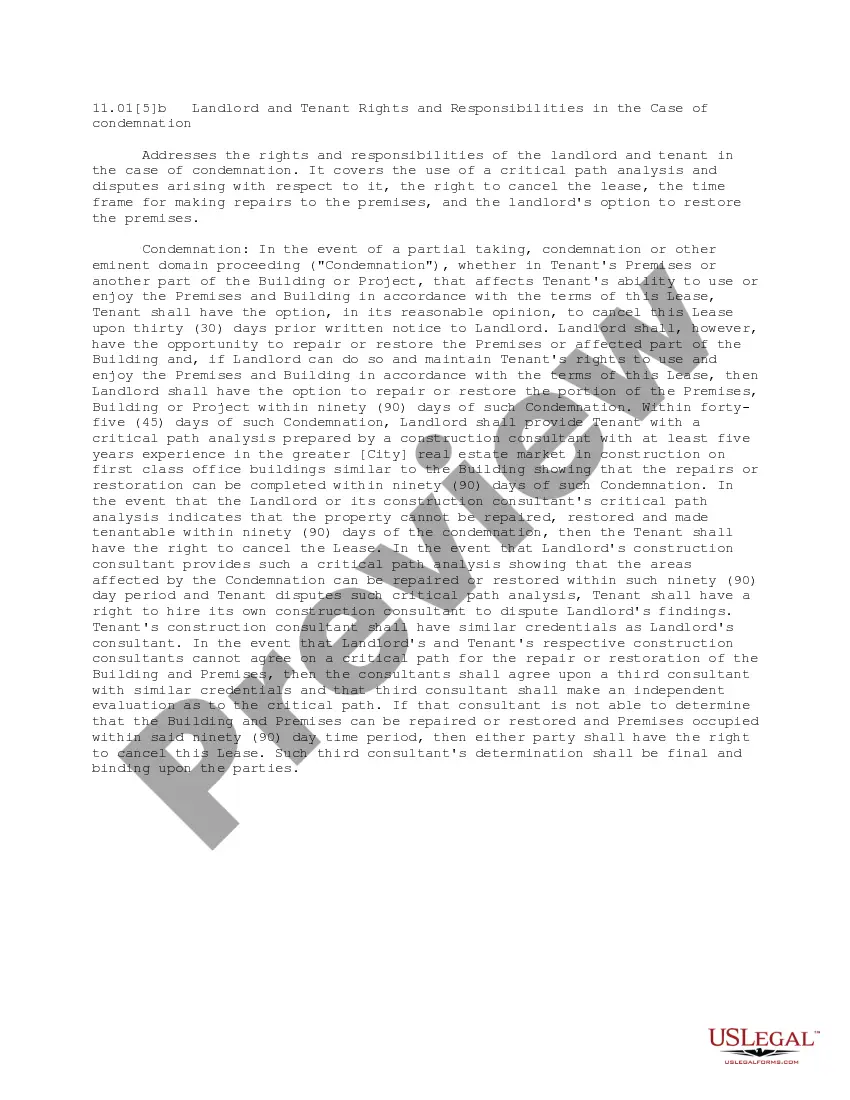
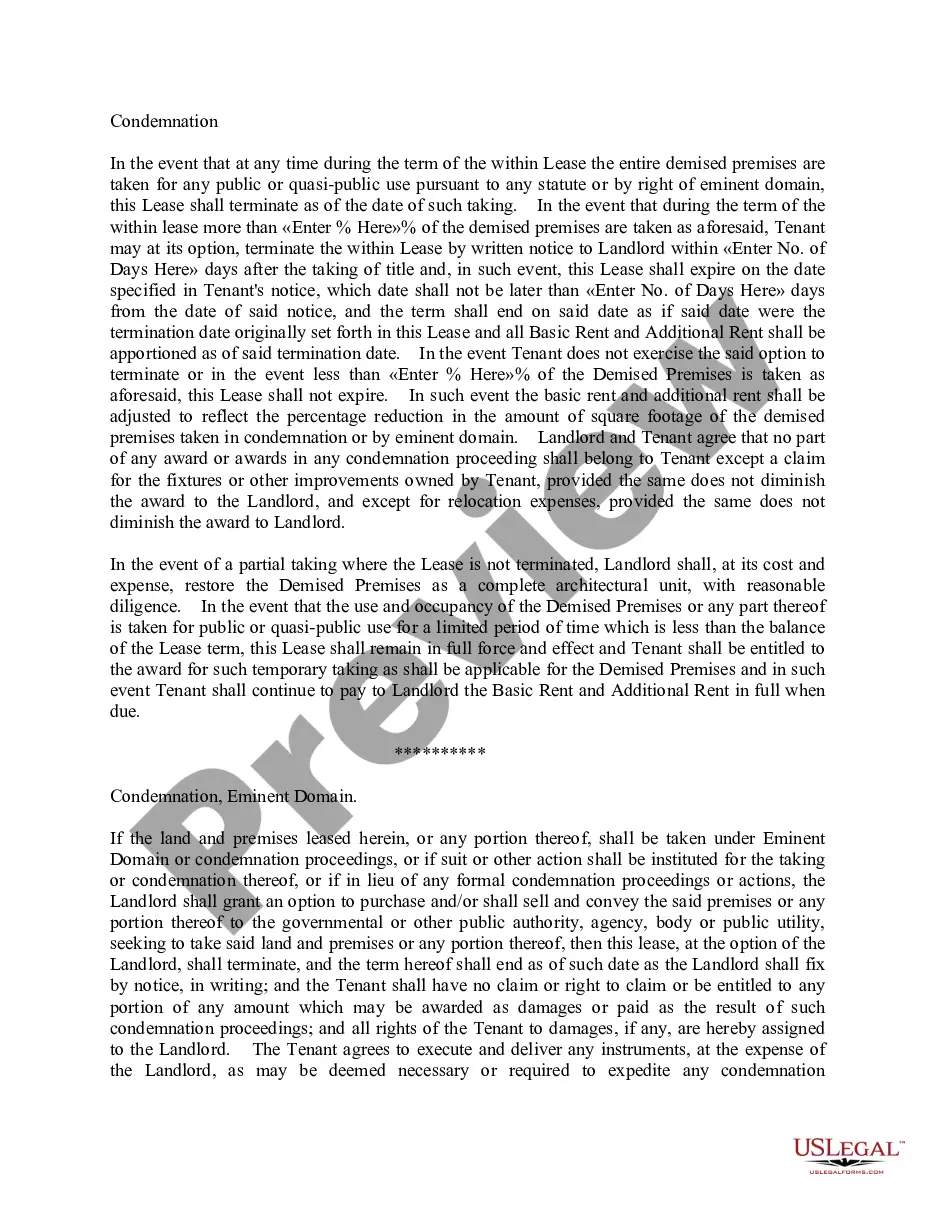
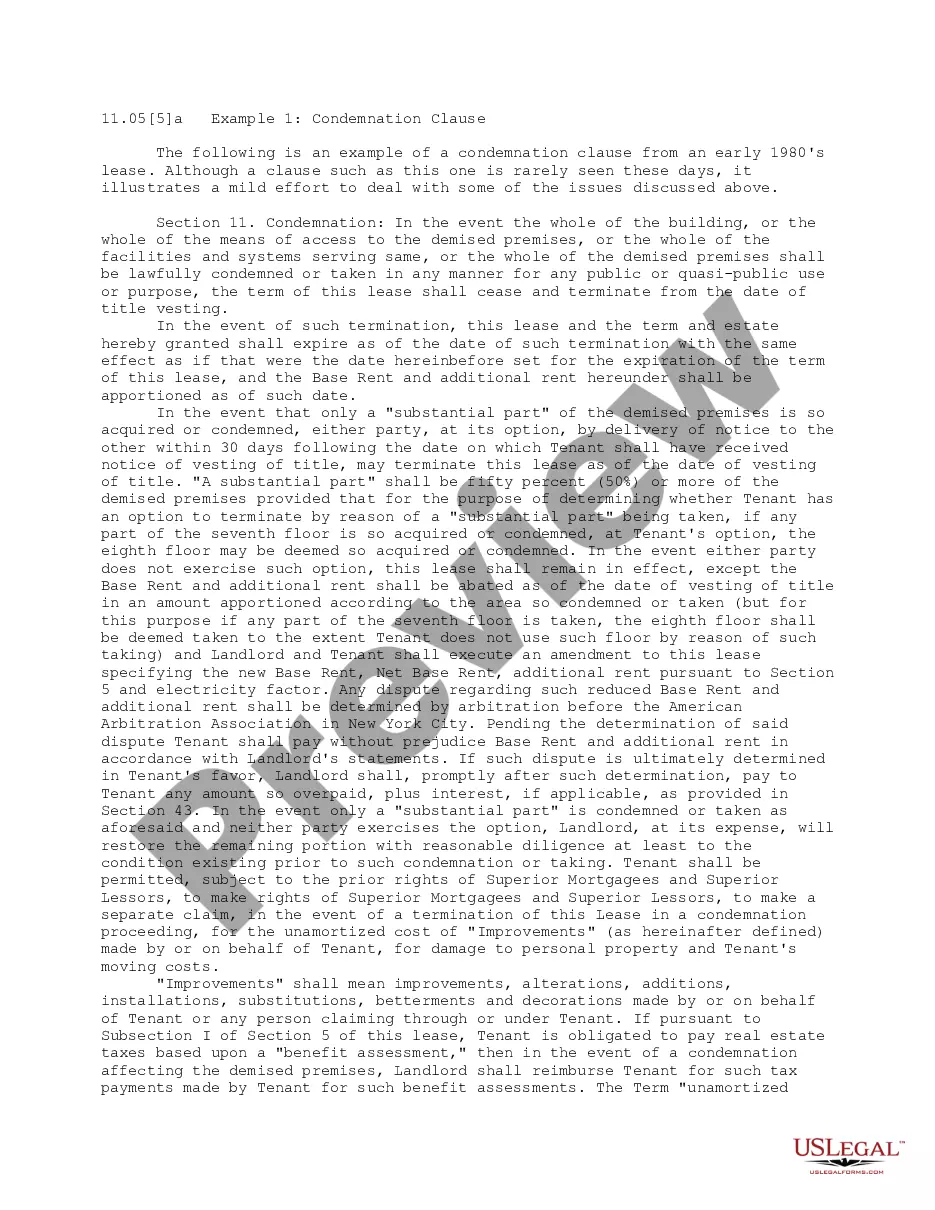
This legal form outlines the rights and responsibilities of landlords and tenants in the event of condemnation. It provides essential guidelines on handling situations where property is taken by eminent domain, ensuring both parties understand their options regarding lease cancellation, repair timelines, and the right to dispute analysis provided by construction consultants. This form is vital for clarifying the relationship between landlords and tenants under such circumstances, distinguishing it from other lease agreements that may not address condemnation specifically.
Main sections of this form
- Definitions of condemnation and implications for tenants.
- Rights of tenants to cancel the lease with proper notice.
- Landlord's responsibilities regarding repairs and restoration of the premises.
- Critical path analysis requirement for assessing repair timelines.
- Process for disputing the landlord's findings with a construction consultant.
When to use this document
This form is essential if a tenant finds themselves in a situation where part of the leased property is subject to condemnation. It should be used to understand the procedures for lease cancellation or repair options. This may occur if the property is partially taken for public use, affecting the tenant's ability to use or enjoy the space as intended, leading to a need for clear guidelines on how to proceed legally.
Intended users of this form
- Landlords who need to outline their obligations in case of property condemnation.
- Tenants facing potential condemnation of their leased space.
- Real estate professionals and property managers seeking to understand landlord-tenant dynamics in such cases.
- Legal professionals advising clients on lease agreements that involve condemnation clauses.
Completing this form step by step
- Identify the parties involved, including the landlord and tenant.
- Specify the property details that are subject to the lease agreement.
- Document any relevant conditions regarding lease cancellation and repair timelines.
- Include critical path analysis information if applicable, outlining timelines for repairs.
- Ensure all parties sign and date the form to validate it.
Notarization guidance
In most cases, this form does not require notarization. However, some jurisdictions or signing circumstances might. US Legal Forms offers online notarization powered by Notarize, accessible 24/7 for a quick, remote process.
Get your form ready online
Our built-in tools help you complete, sign, share, and store your documents in one place.
Make edits, fill in missing information, and update formatting in US Legal Forms—just like you would in MS Word.
Download a copy, print it, send it by email, or mail it via USPS—whatever works best for your next step.
Sign and collect signatures with our SignNow integration. Send to multiple recipients, set reminders, and more. Go Premium to unlock E-Sign.
If this form requires notarization, complete it online through a secure video call—no need to meet a notary in person or wait for an appointment.
We protect your documents and personal data by following strict security and privacy standards.

Make edits, fill in missing information, and update formatting in US Legal Forms—just like you would in MS Word.

Download a copy, print it, send it by email, or mail it via USPS—whatever works best for your next step.

Sign and collect signatures with our SignNow integration. Send to multiple recipients, set reminders, and more. Go Premium to unlock E-Sign.

If this form requires notarization, complete it online through a secure video call—no need to meet a notary in person or wait for an appointment.

We protect your documents and personal data by following strict security and privacy standards.
Avoid these common issues
- Failing to provide timely written notice of lease cancellation.
- Not including necessary details about the property in the form.
- Overlooking the importance of the critical path analysis.
- Neglecting to consult a construction consultant for disputes.
- Not signing and dating the form, which may lead to invalidation.
Benefits of using this form online
- Convenient access to downloadable templates, saving time.
- Editability allows landlords and tenants to customize the form as per specific circumstances.
- Reliability from templates drafted by licensed attorneys, ensuring legal compliance.
- Quick updates to reflect any changes in laws or regulations relevant to condemnation.
Legal use & context
- Condemnation laws may vary by jurisdiction; understanding local legislation is crucial.
- This form may aid in resolving disputes before legal action is required.
- Both parties should maintain clear communication regarding intentions and timelines.
- Enforceability depends on proper completion and adherence to the terms specified.
Looking for another form?




Form popularity
FAQ
Under section 11 of the Landlord and Tenant Act 1985, the landlord is responsible to: keep the structure and exterior of the property in good repair, including drains, gutters and external pipes. keep installations for the supply of water, gas, electricity and sanitation in good repair and proper working order.
Uninhabitable conditions can include dangerous ones, such as holes in the floor, unsafe or exposed wiring, or non-working air conditioning in dangerously hot summer months. Gross infestations of roaches, fleas or other pests are also uninhabitable conditions.
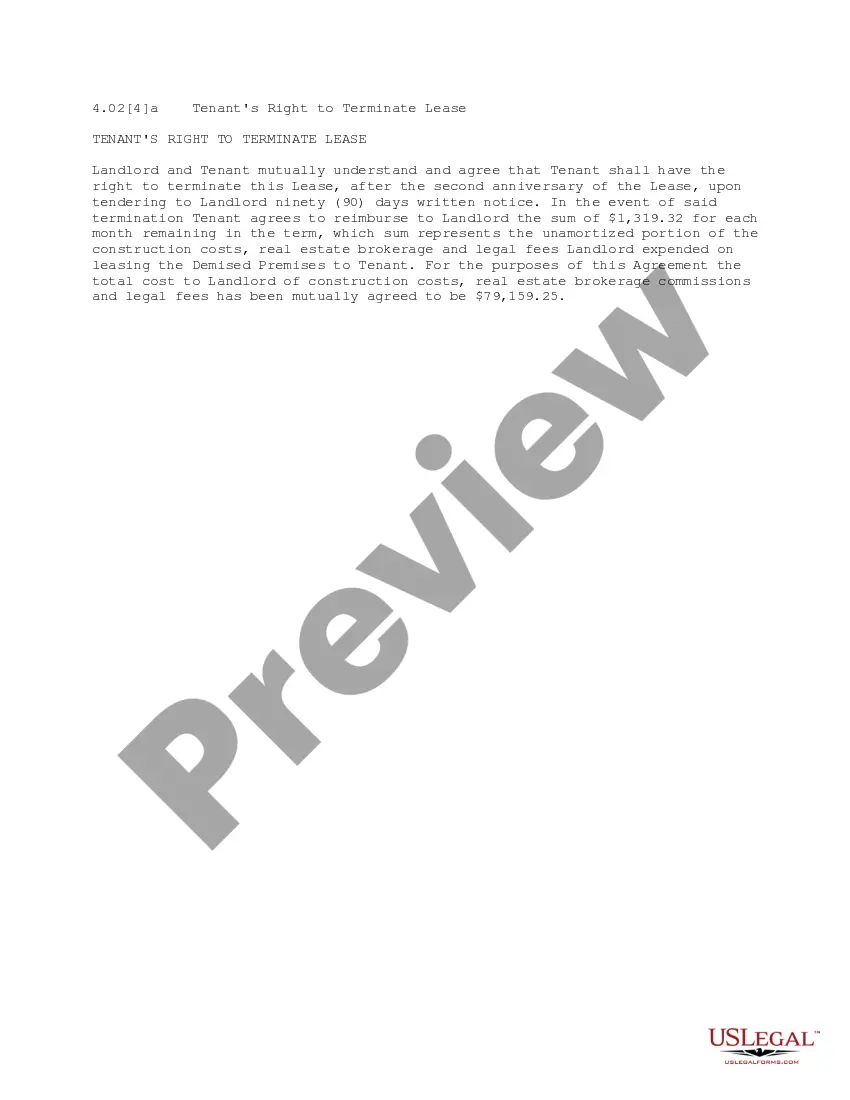
In a total condemnation the lease is terminated as soon as the condemning party takes possession of the property. This occurs because there is no longer any property to lease. In a partial condemnation, typically both the landlord and the tenant have the option to terminate the lease, usually with 30 days notice.
In California, habitability includes the following specific warranties: A dwelling also may be considered uninhabitable (unlivable) if it substantially lacks any of the following: Effective waterproofing and weather protection of roof and exterior walls, including unbroken windows and doors.
Contact us at (888) 700-9995.
Typically, a condemnation clause permits a landlord or a tenant to either terminate the lease or abate the rent in the event of a government "taking" of the leased property.First, the government's action must have a severe economic impact on the premises.
Health Issues When the environment in a unit becomes hazardous to one's health, the rental is considered to be uninhabitable.Other health risks such as mold and asbestos can make a unit uninhabitable, by causing respiratory problems and serious illnesses.
When a home is condemned, the owner (and tenants, if any) are notified in writing that the building must be vacated. A sign is attached to the building stating that the dwelling is not fit for human habitation, and that it cannot be occupied.The owner of the building may be ordered to repair or demolish the building.
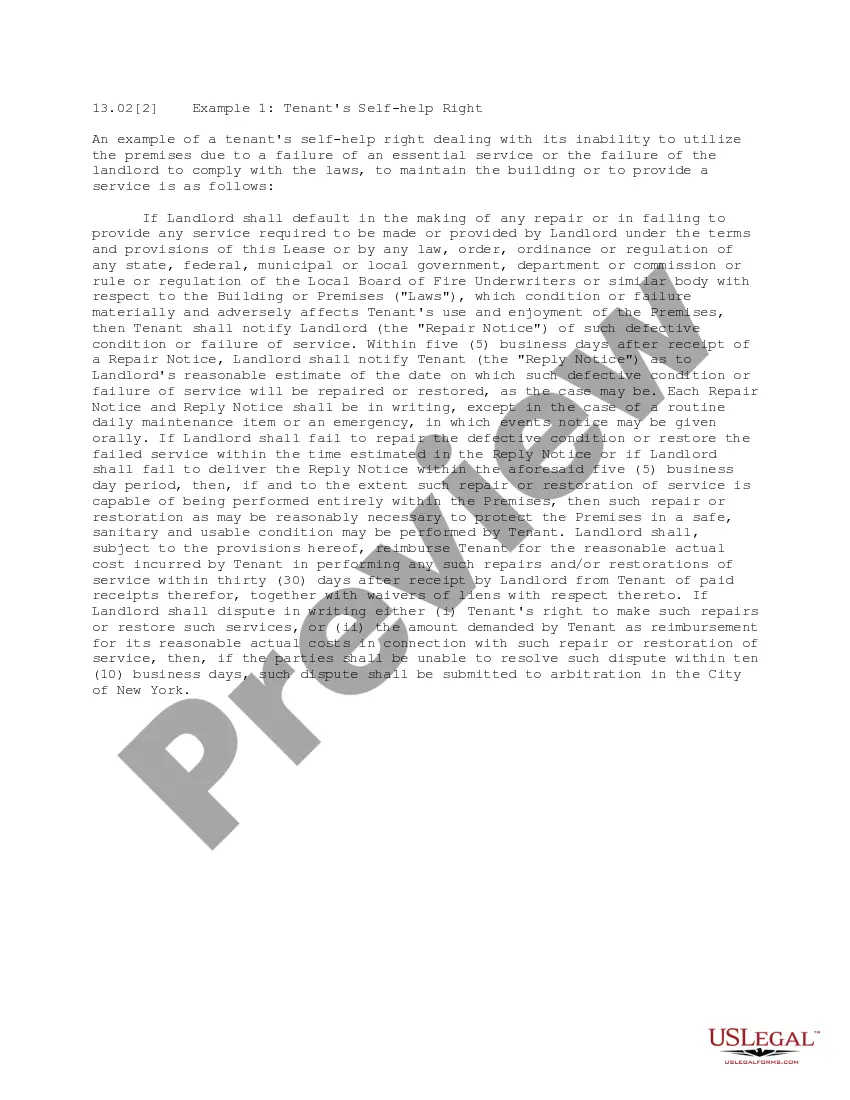
Complying with all state and local health and building codes. Maintaining structural components and a reasonably weather-protected unit. Providing the necessary heat, electric, and hot and cold water facilities. Making any requested repairs promptly.