Affidavit of Marital Status of Single Person Listed on a Deed
What this document covers
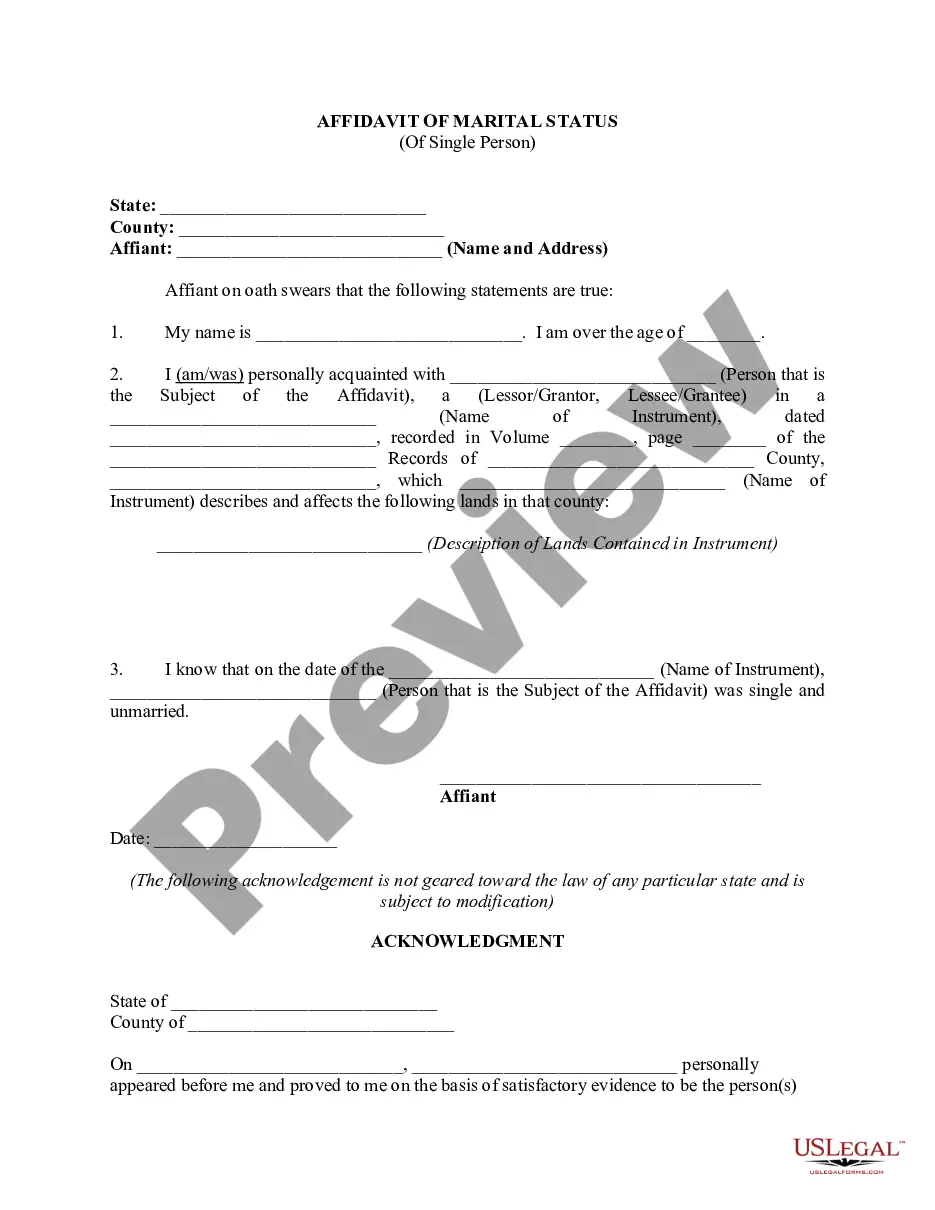
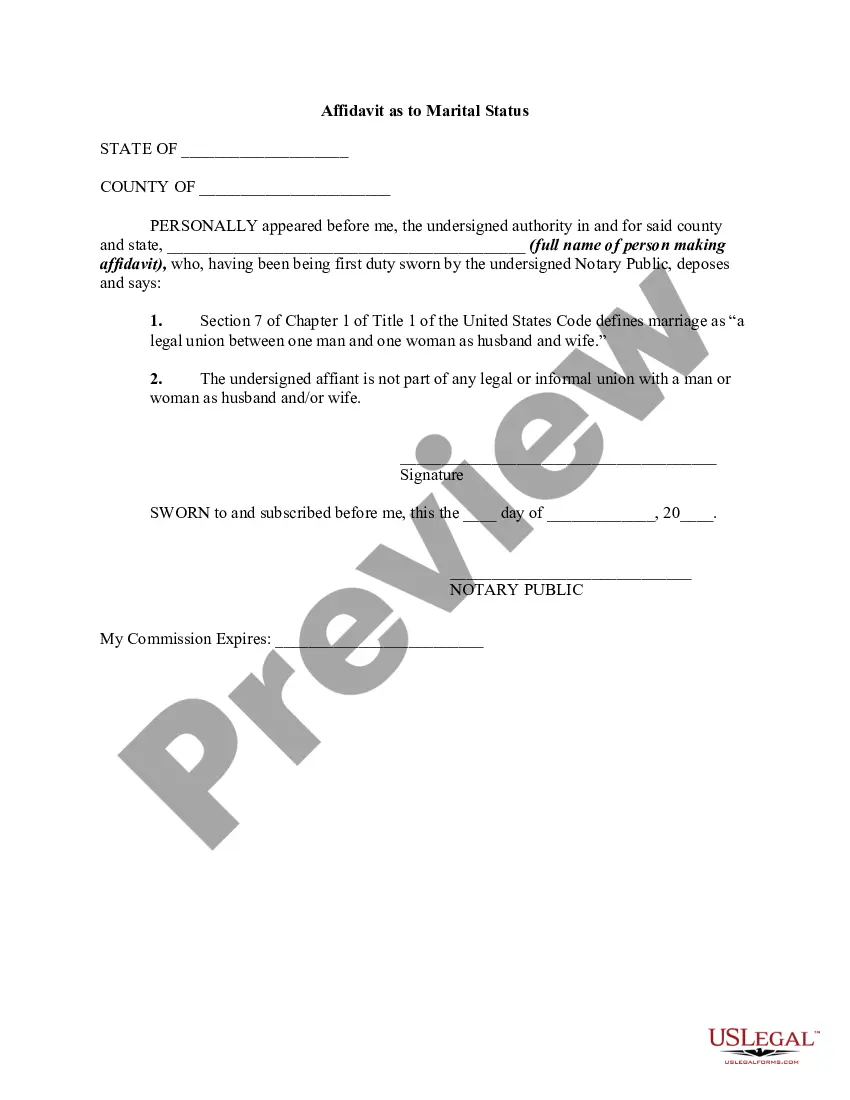
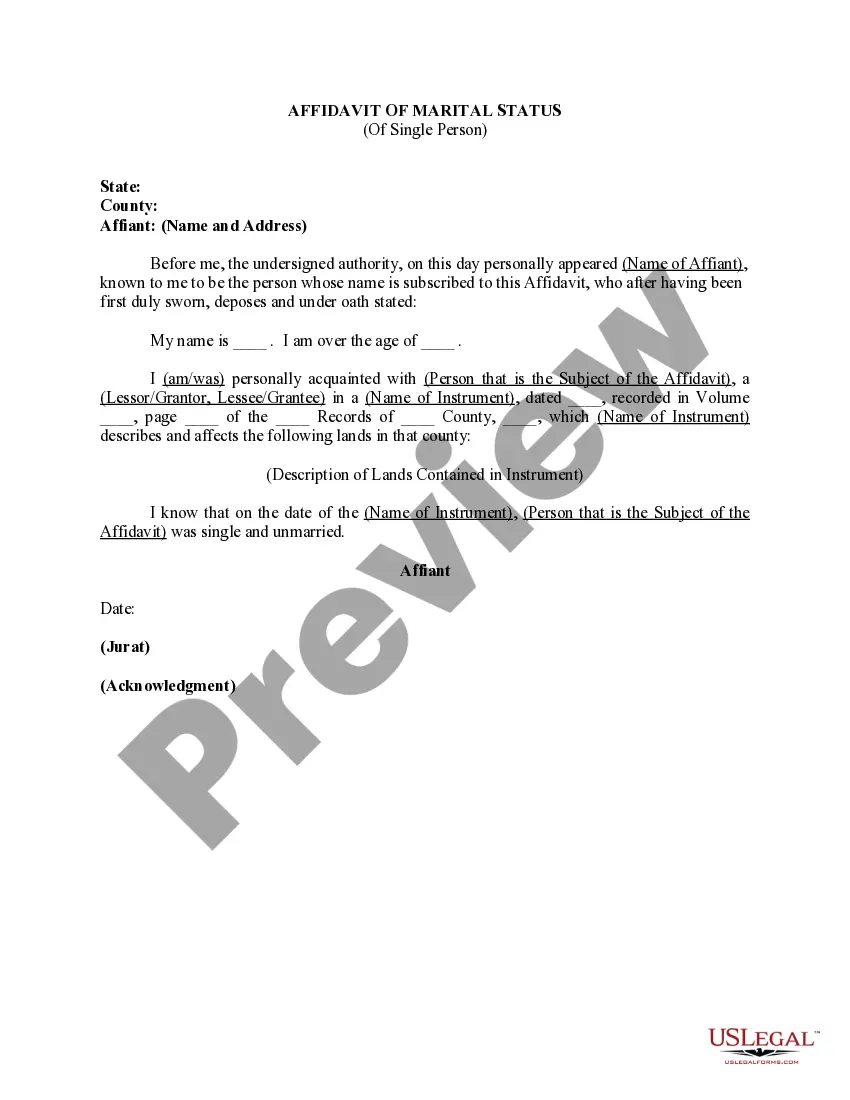
The Affidavit of Marital Status of Single Person Listed on a Deed is a legal document that confirms the marital status of an individual named in a property deed. This affidavit is sworn before a notary public and is typically used to assert that the person in question is single and unmarried, thereby simplifying the property transfer process. It is especially useful in real estate transactions where verifying the marital status can be crucial for legal ownership and title clearances.
Key components of this form
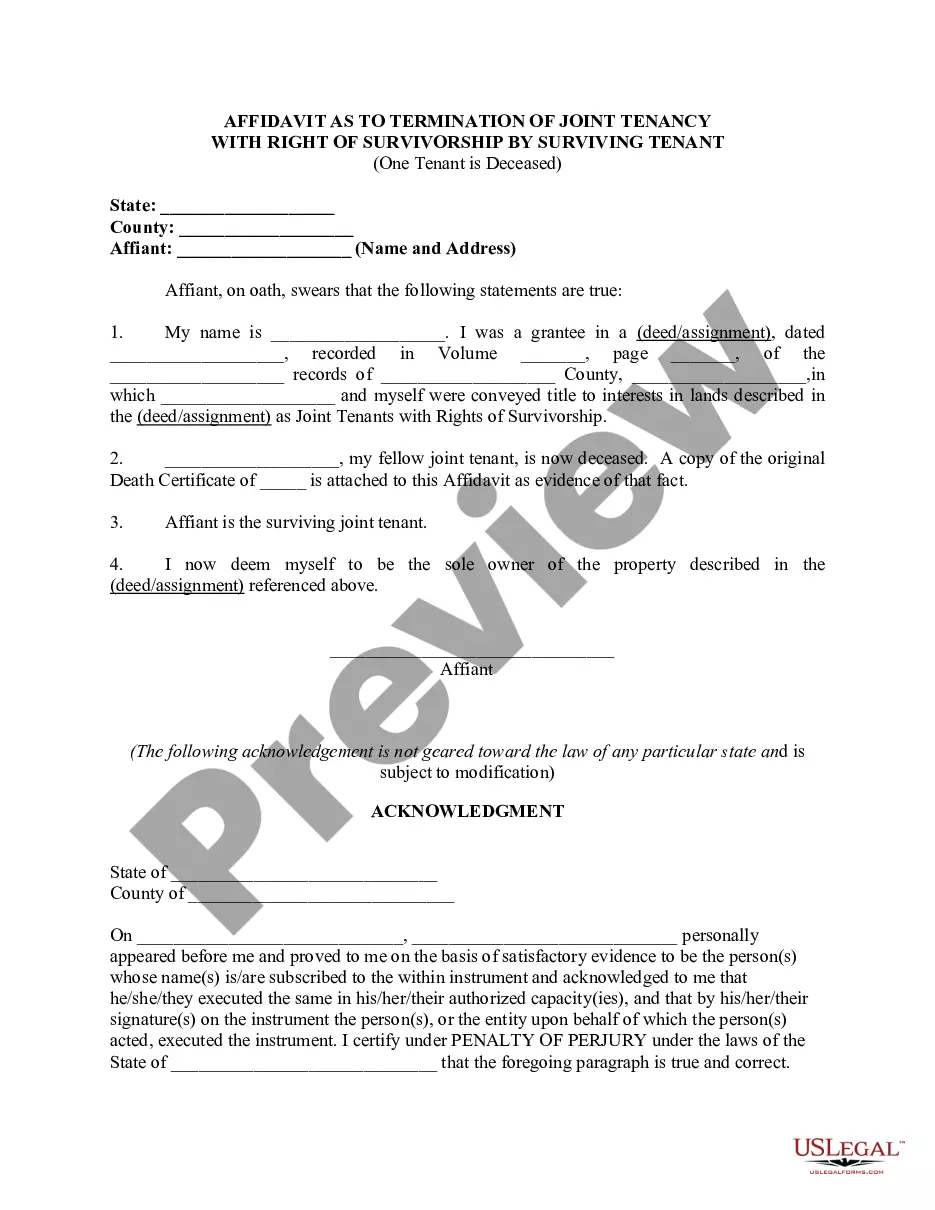
- Identification of the affiant (person making the affidavit) with name and address.
- Statements confirming the affiant's age and relationship to the subject person.
- Details of the deed, including the date, volume, and page number where it is recorded.
- A declaration that the person listed in the deed was single on the specified date.
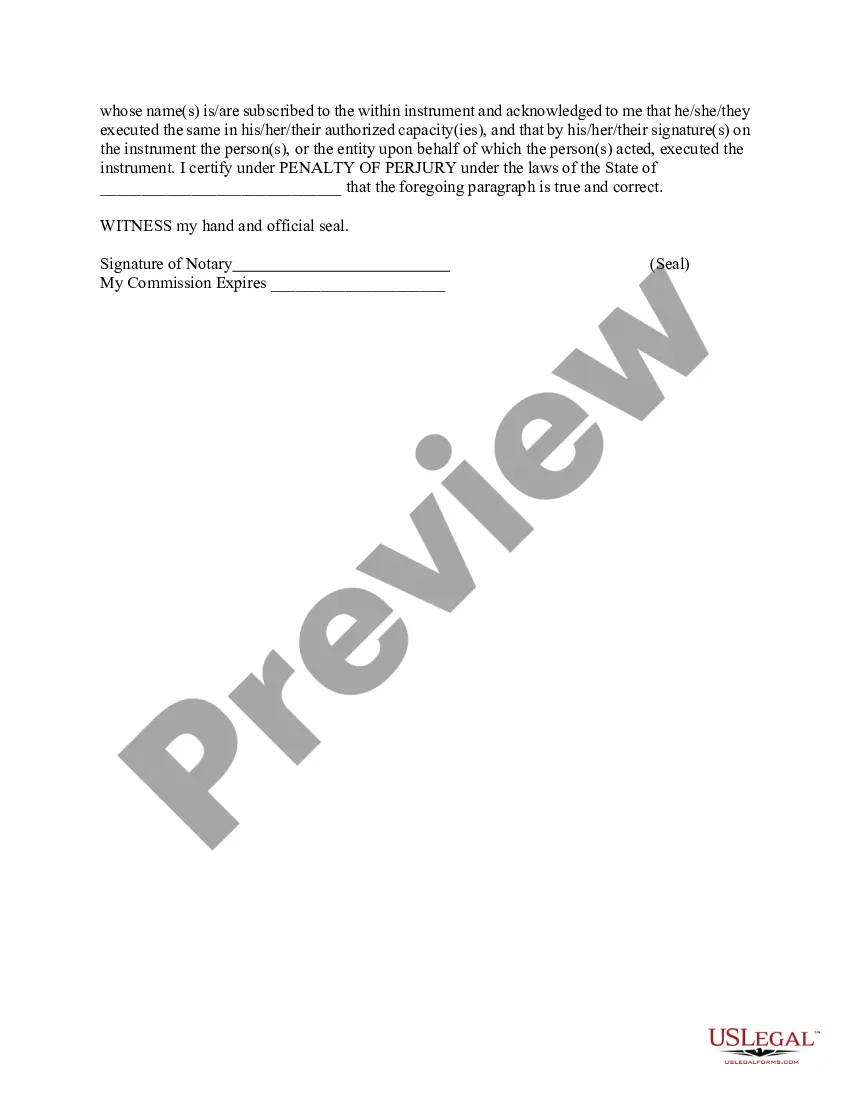
- A notarization section for official acknowledgment by a notary public.
Common use cases
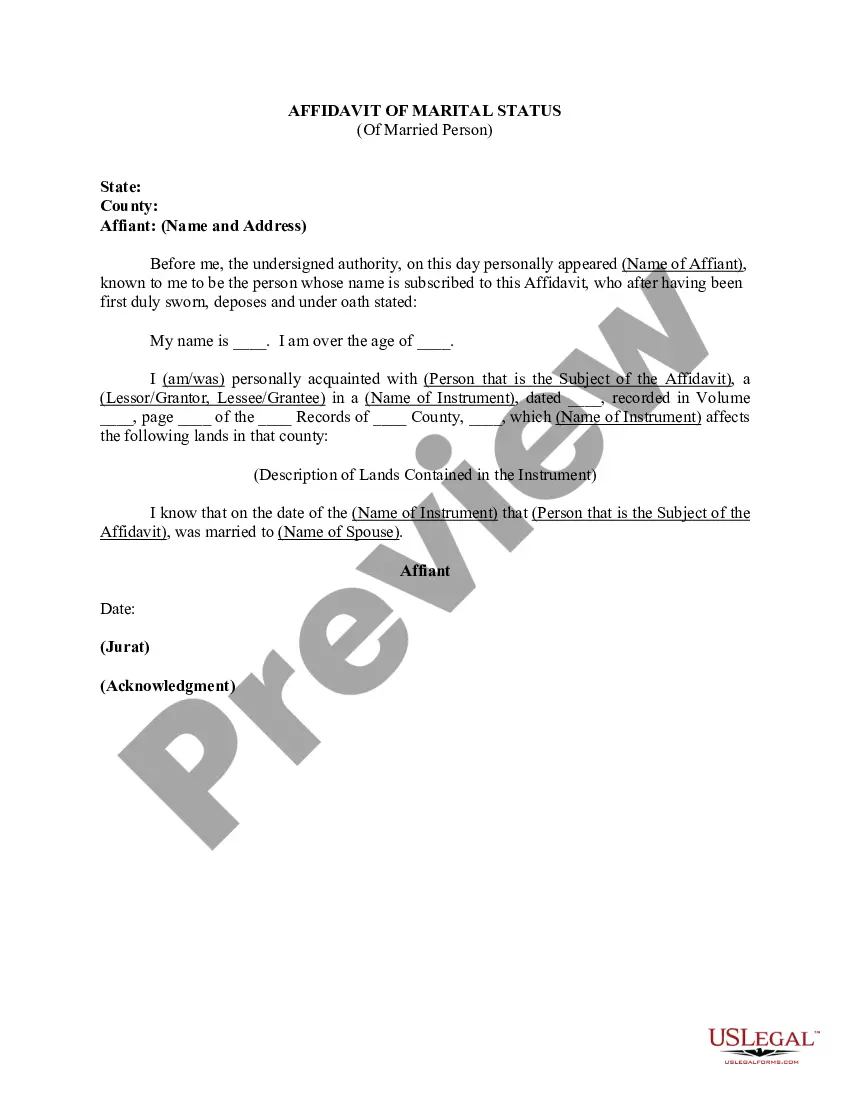
This form is necessary during real estate transactions that require confirmation of the marital status of individuals involved. It is often utilized when a property deed is being transferred or when a seller needs to provide assurance to potential buyers or financial institutions that they are handling the deed without any spousal claims.
Who can use this document
- Individuals who are selling or transferring real estate property.
- Real estate agents or brokers aiding in property transactions.
- Financial institutions or title companies that need verified marital status for title insurance purposes.
Instructions for completing this form
- Identify yourself as the affiant and provide your name and address.
- State your age and describe your understanding of the person whose status you are affirming.
- Fill in the details of the deed including the instrument name, date, and where it is recorded.
- Affirm that the subject of the affidavit was single at the time of the deed.
- Sign the affidavit in the presence of a notary public who will then complete the acknowledgment section.
Is notarization required?
To make this form legally binding, it must be notarized. Our online notarization service, powered by Notarize, lets you verify and sign documents remotely through an encrypted video session.
Get your form ready online
Our built-in tools help you complete, sign, share, and store your documents in one place.
Make edits, fill in missing information, and update formatting in US Legal Forms—just like you would in MS Word.
Download a copy, print it, send it by email, or mail it via USPS—whatever works best for your next step.
Sign and collect signatures with our SignNow integration. Send to multiple recipients, set reminders, and more. Go Premium to unlock E-Sign.
If this form requires notarization, complete it online through a secure video call—no need to meet a notary in person or wait for an appointment.
We protect your documents and personal data by following strict security and privacy standards.

Make edits, fill in missing information, and update formatting in US Legal Forms—just like you would in MS Word.

Download a copy, print it, send it by email, or mail it via USPS—whatever works best for your next step.

Sign and collect signatures with our SignNow integration. Send to multiple recipients, set reminders, and more. Go Premium to unlock E-Sign.

If this form requires notarization, complete it online through a secure video call—no need to meet a notary in person or wait for an appointment.

We protect your documents and personal data by following strict security and privacy standards.
Common mistakes to avoid
- Failing to provide accurate information about the deed or property.
- Not having the affidavit notarized, which is required for legal validity.
- Incorrectly stating your relationship to the subject person.
- Leaving out essential details such as the date of the deed or the county of record.
Benefits of using this form online
- Convenience of downloading and filling out the form from the comfort of your home.
- Accessibility to templates that are reviewed by licensed attorneys ensuring reliability.
- Ability to edit the form before finalizing your declarations, reducing errors.
Quick recap
- The affidavit confirms a single person's marital status for property deeds.
- It is essential in real estate transactions to prevent future disputes.
- Notarization is mandatory for the affidavit to be effective legally.
Looking for another form?

Form popularity
FAQ
Due to the vested interest of the non-titled spouse, your title company needs to figure out if the real estate transaction involves community property, and if it does, buyers and lenders will require the signature of your spouse on legal documents.
It is very important to include the marital status of the purchaser and the seller with your closing package to Investors Title Company. If the marital status of your client changes prior to closing, it is extremely important to notify the title company as quickly as possible to avoid the disruption of closing.
When it comes to reasons why you shouldn't add your new spouse to the Deed, the answer is simple divorce and equitable distribution. If you choose not to put your spouse on the Deed and the two of you divorce, the entire value of the home is not subject to equitable distribution.
There's a lot more involved than you may realize. Your marital status creates specific financial, healthcare, tax, and other shared opportunities and obligations. Here are some of the important ways a change in your marital status can affect your life (and the lives of your family members).
To ensure that homes are properly transferred from one party to another in a sale, the title company will always ask for the marital status of all parties. For home buyers, both spouses are typically listed on the deed even if only one person's name appears on the mortgage.
It could be illegal, however, if that false information is used as sworn evidence or to gain financing. Regardless, any perceived advantage gained from intentionally lying about verifiable facts, such as marital status, is outweighed by the potential for future legal issues. In short, don't lie on a deed.
Affidavits are mainly used in Court proceedings. They are a written alternative to a person attending Court to give oral evidence in the witness box. Affidavits can be used to evidence, or prove, a number of things. For example, they are often used for people to tell their 'story' to the Court.
An affidavit is a sworn statement, made in front of a notary or other officer authorized to administer oaths. An affidavit of deed confirms delivery and acceptance of a deed by the grantee, and thereby its validity.If the grantor is protected by an affidavit of deed, these issues are generally easier to resolve.
It could be illegal, however, if that false information is used as sworn evidence or to gain financing. Regardless, any perceived advantage gained from intentionally lying about verifiable facts, such as marital status, is outweighed by the potential for future legal issues. In short, don't lie on a deed.