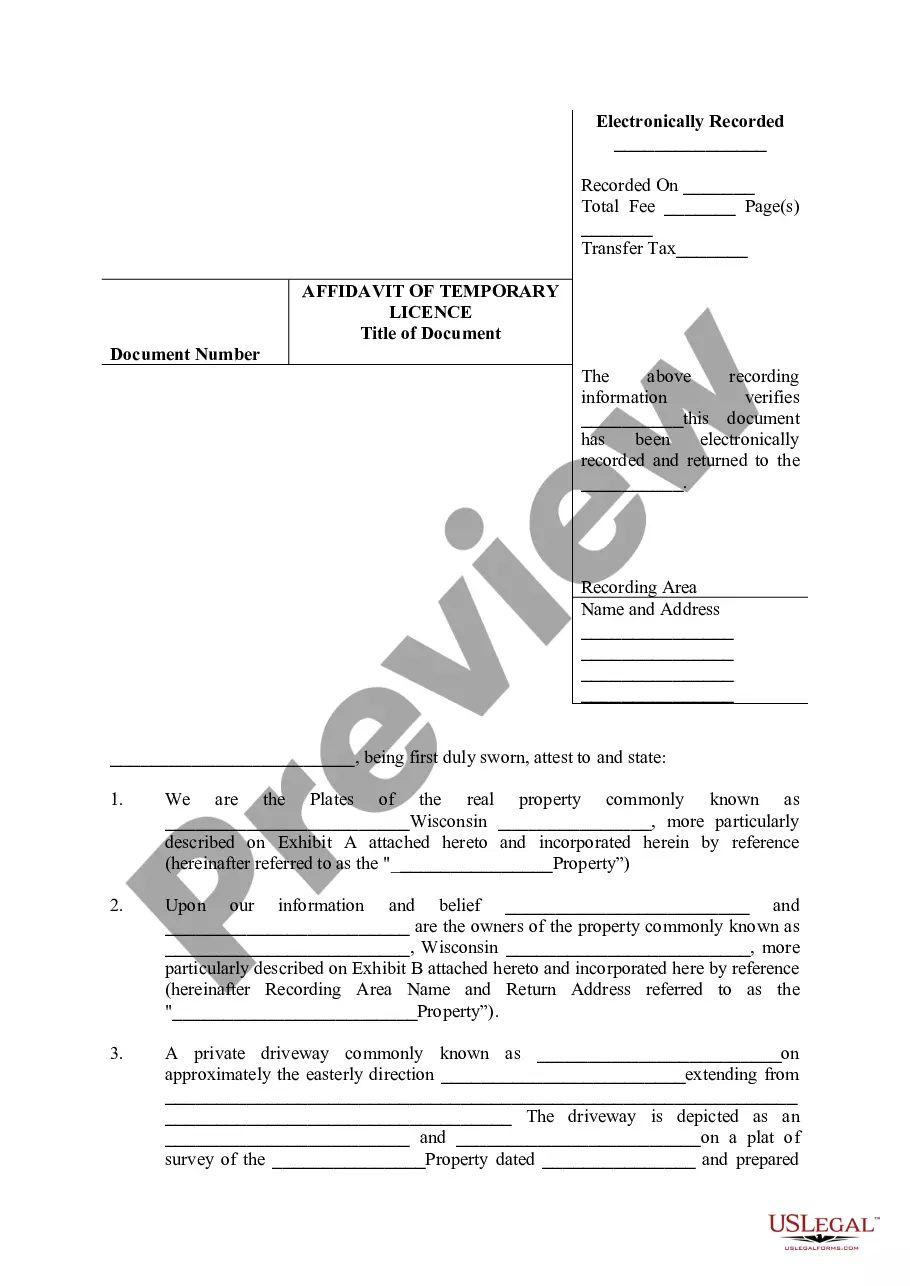
Affidavit of Possession by Tenant to Prevent Adverse Possession
Understanding this form
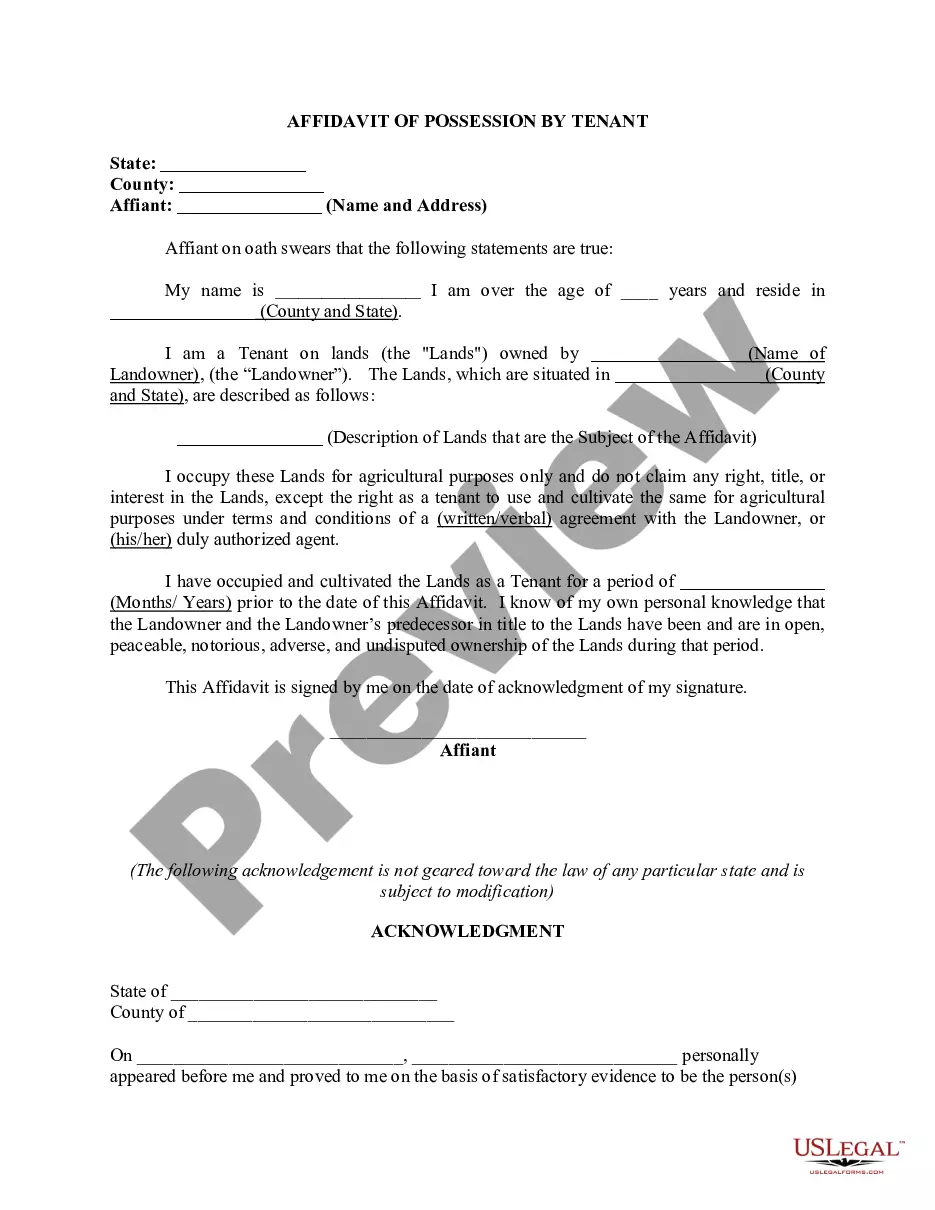
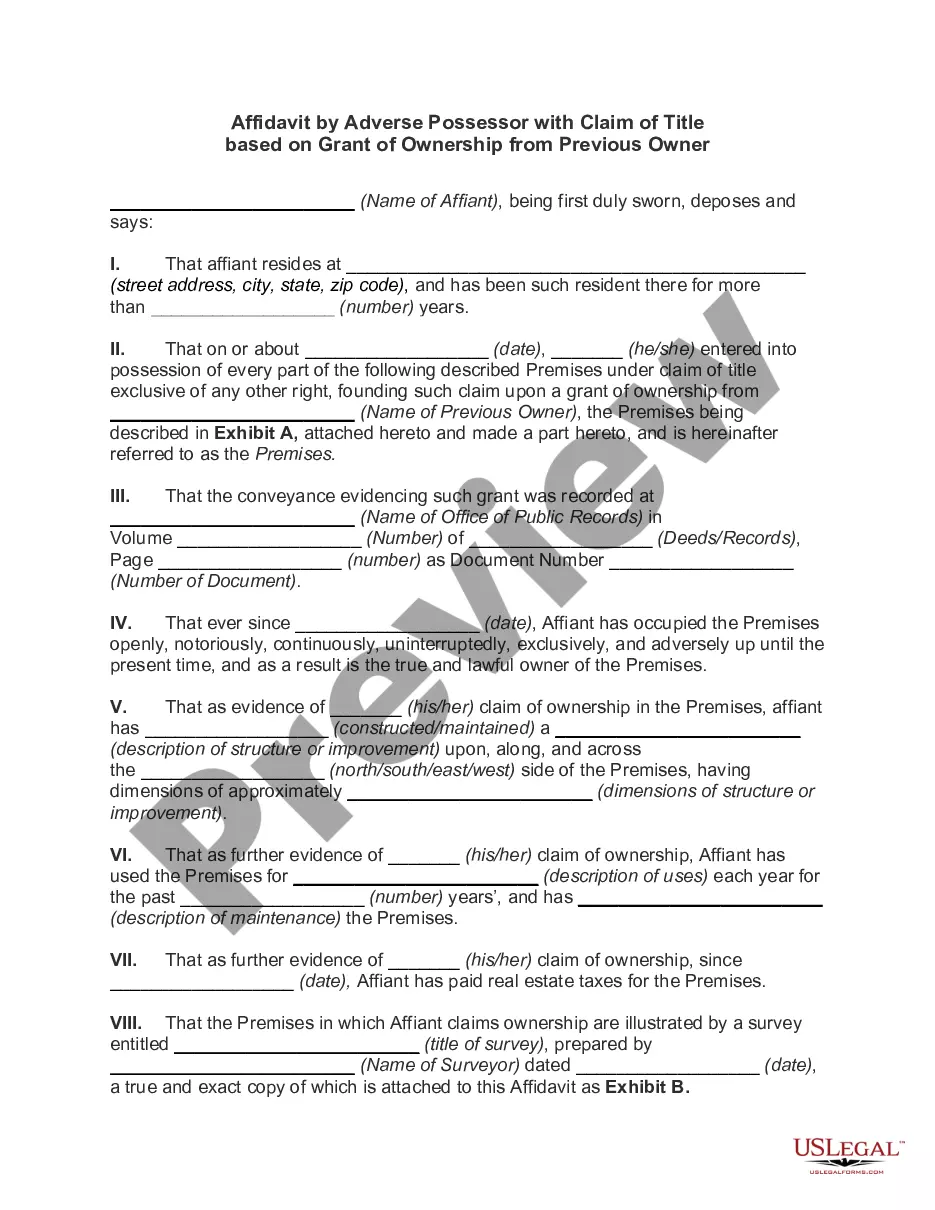
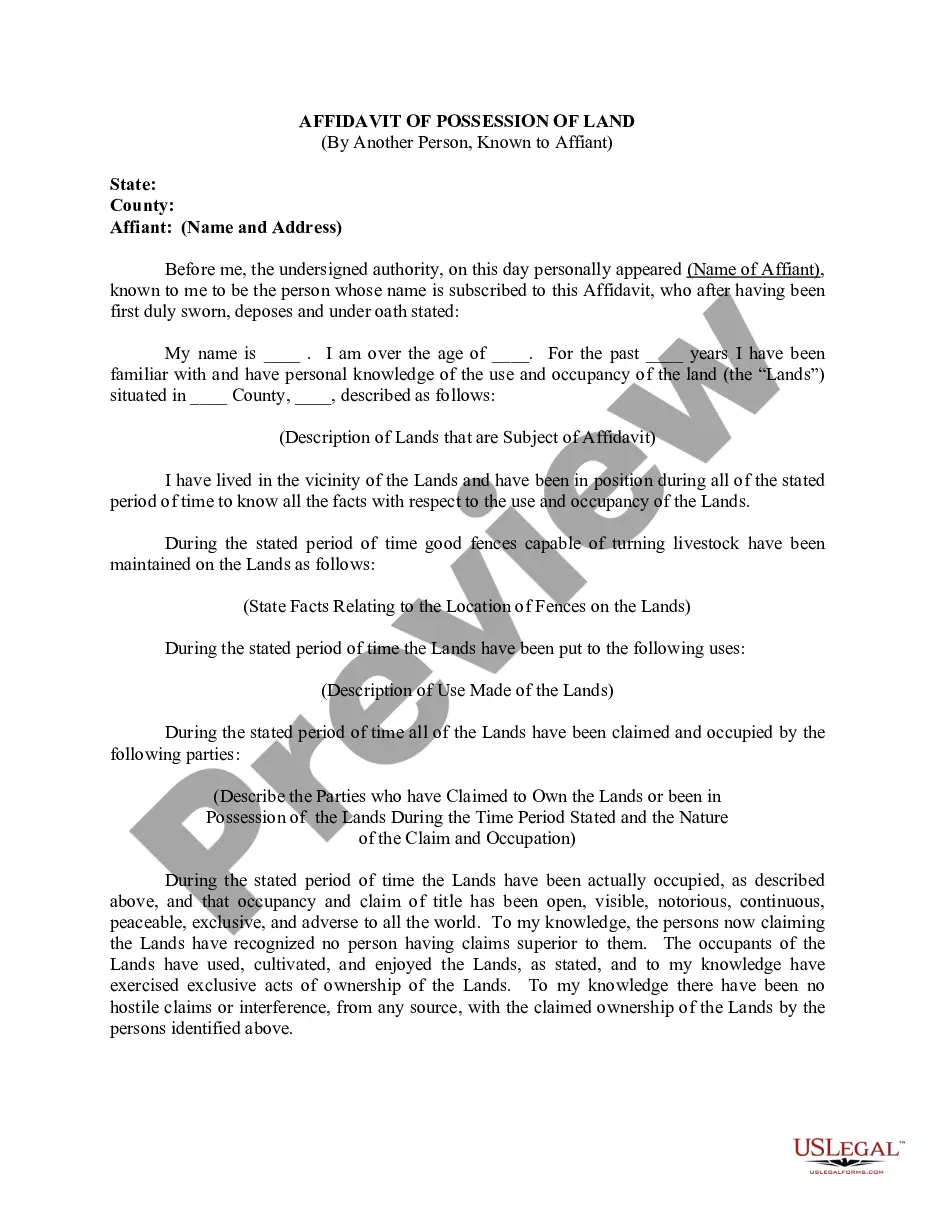
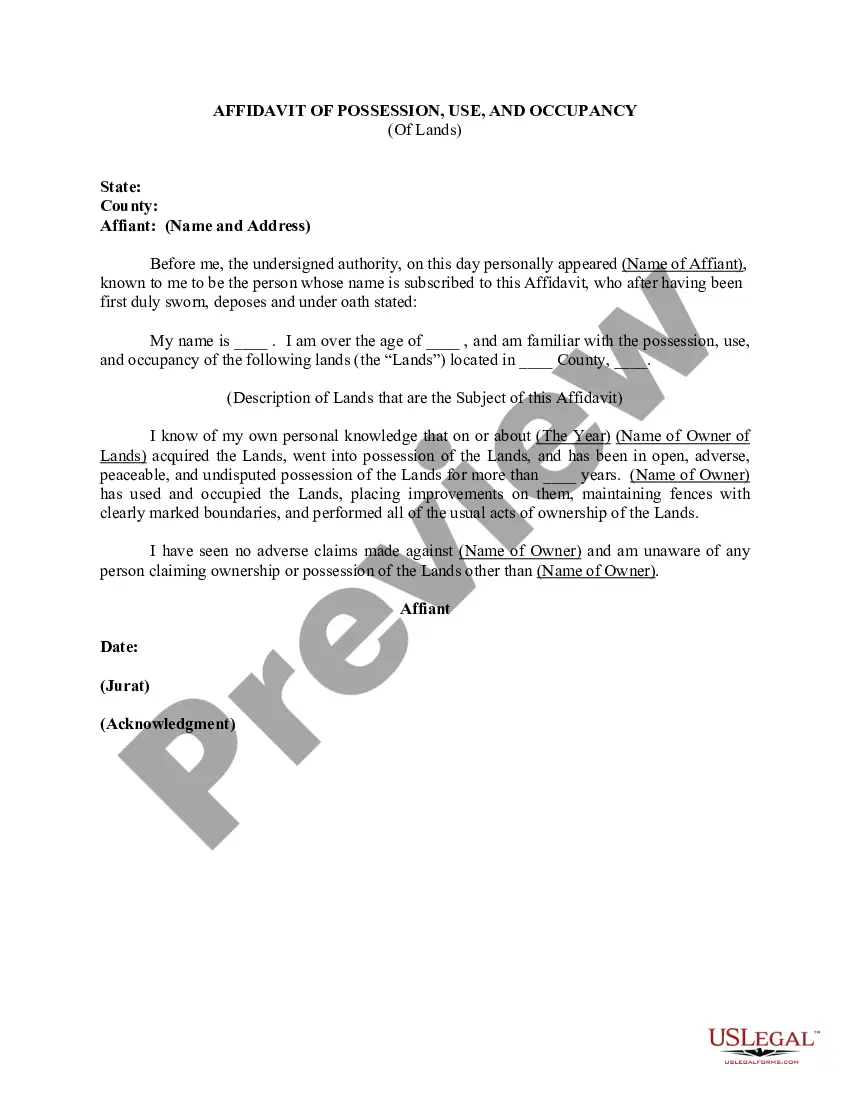
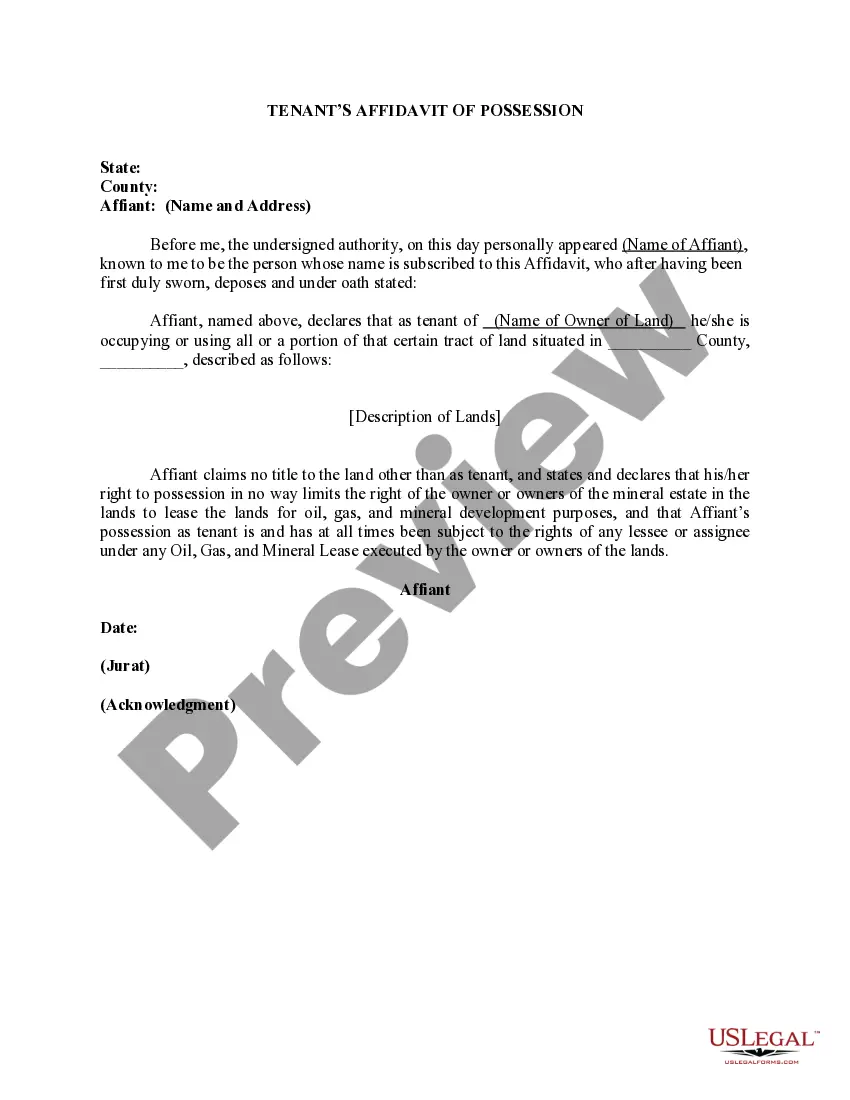
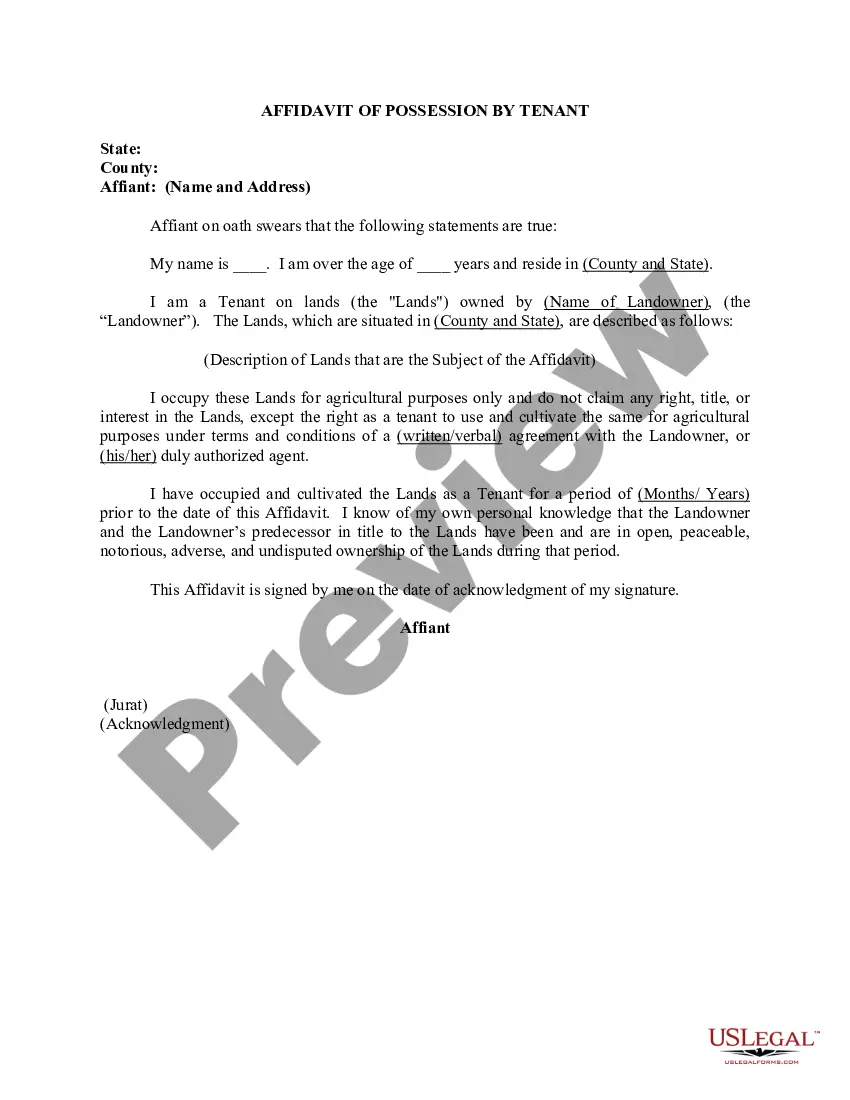
The Affidavit of Possession by Tenant to Prevent Adverse Possession is a legal document in which a tenant affirms their use of a property without claiming ownership. This form is crucial for protecting property owners from potential adverse possession claims by tenants, as it serves as evidence that the tenant recognizes the owner's rights to the property. Unlike other affidavits, this form is specifically tailored to assert a tenant's lack of ownership claims while outlining their rightful use of the land for agricultural purposes.
Form components explained
- Affiant information: The name and address of the tenant signing the affidavit.
- Property details: A description of the lands occupied by the tenant.
- Tenancy acknowledgment: A statement confirming that the tenant does not claim ownership and details their tenancy agreement.
- Duration of occupancy: The length of time the tenant has occupied the land.
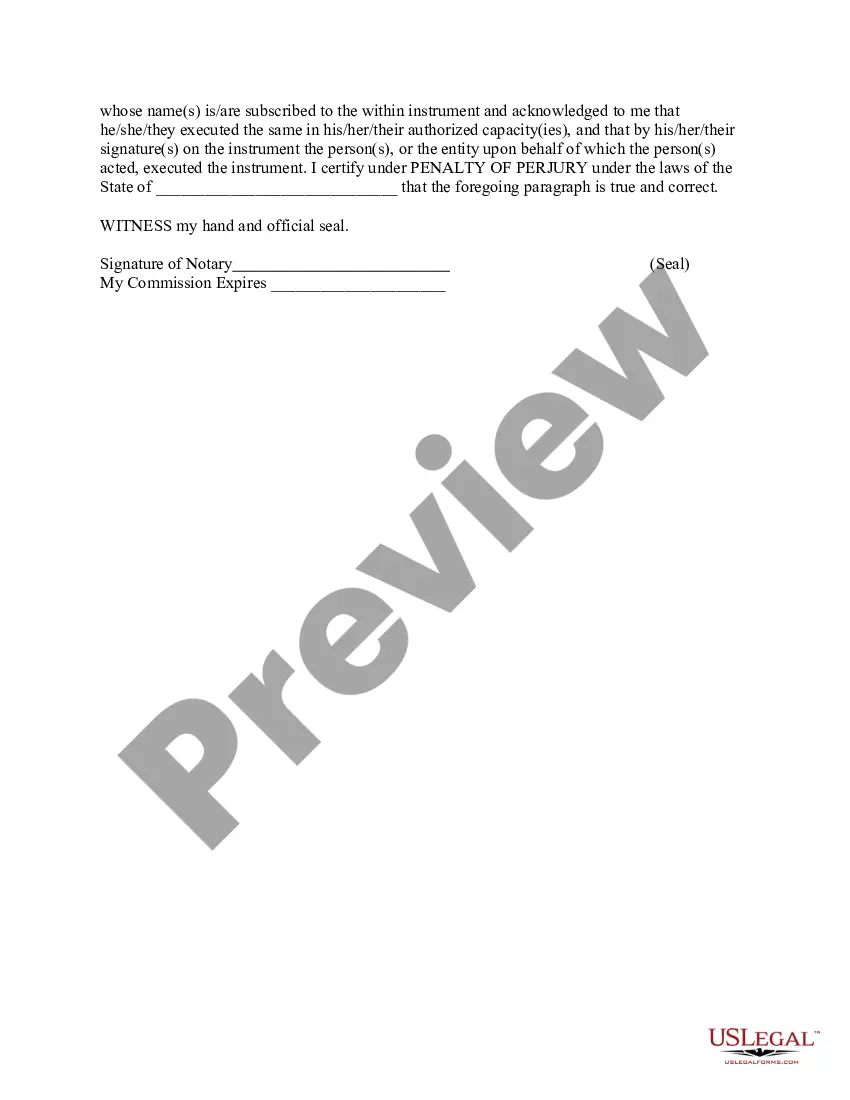
- Notary acknowledgment: A section for a notary public to verify the affiant's identity and the signing of the affidavit.
Situations where this form applies
This affidavit is used when a tenant is occupying a property owned by another individual and wishes to clarify their status as a non-owner. It can help prevent the property owner from losing their rights to the land due to a tenant's prolonged occupancy. This form is particularly important in disputes related to adverse possession claims, which can arise if a tenant occupies land for an extended period without clear permission.
Who can use this document
- Tenants seeking to confirm their non-ownership status regarding rental or leased agricultural land.
- Property owners wanting to document their rights and prevent adverse possession claims from occupants.
- Legal professionals assisting clients in landlord-tenant disputes pertaining to property rights.
Completing this form step by step
- Identify the parties involved, including the tenant (affiant) and property owner.
- Specify the property details, including the complete description of the land.
- Include the duration of occupancy in months or years prior to the date of the affidavit.
- Clearly state the terms under which the tenant occupies the land, including references to any agreements with the landowner.
- Have the form signed in the presence of a notary for validity.
Notarization requirements for this form
Yes, this form must be notarized to be legally valid. It requires a notary public to attest the identity of the affiant and the authenticity of the signature. US Legal Forms offers integrated online notarization services, allowing users to complete this process securely via video call at any time without the need to travel.
Get your form ready online
Our built-in tools help you complete, sign, share, and store your documents in one place.
Make edits, fill in missing information, and update formatting in US Legal Forms—just like you would in MS Word.
Download a copy, print it, send it by email, or mail it via USPS—whatever works best for your next step.
Sign and collect signatures with our SignNow integration. Send to multiple recipients, set reminders, and more. Go Premium to unlock E-Sign.
If this form requires notarization, complete it online through a secure video call—no need to meet a notary in person or wait for an appointment.
We protect your documents and personal data by following strict security and privacy standards.

Make edits, fill in missing information, and update formatting in US Legal Forms—just like you would in MS Word.

Download a copy, print it, send it by email, or mail it via USPS—whatever works best for your next step.

Sign and collect signatures with our SignNow integration. Send to multiple recipients, set reminders, and more. Go Premium to unlock E-Sign.

If this form requires notarization, complete it online through a secure video call—no need to meet a notary in person or wait for an appointment.

We protect your documents and personal data by following strict security and privacy standards.
Common mistakes
- Failing to provide a complete and accurate description of the property.
- Not notarizing the affidavit, which is necessary for its legal enforceability.
- Leaving out details about the tenancy agreement and duration of occupancy.
Advantages of online completion
- Convenient access and immediate downloads to fill out promptly.
- Editable templates that allow personalization to fit specific situations.
- Reliable and professionally drafted to ensure legal accuracy.
Legal use & context
- This affidavit serves as a formal acknowledgment of the tenant's non-ownership status.
- It is a legal safeguard for property owners against claims of adverse possession.
Summary of main points
- The Affidavit of Possession by Tenant helps prevent adverse possession claims.
- Completed affidavits must be notarized to ensure their legal validity.
- Provides clarity on the tenant's rights and the property owner's legal standing.
Looking for another form?

Form popularity
FAQ
Other defenses to a claim of adverse possession may include: The person using the property was granted permission by the owner. The use to which the property has been put is not sufficient to claim an open and notorious act of ownership.
In order to claim adverse possession, there are basic tests you have to meet. You have to prove that your use was open, notorious, hostile, actual, exclusive and continuous.Proving adverse possession is not easy, and you have to go to court to get a judge to rule.
Possession under lease or license agreement is generally not considered as adverse possession, and tenant cannot claim an ownership right over the property.Thus, it does not fulfill the elements of adverse possession. As long as the owner has consented the stay of the tenant, it cannot claim adverse possession.
A person who realizes trespassing or illegal dispossession can file a written complaint with the police against it. A written complaint can be sent to the Superintendent of Police (S.P) of the district where the property is situated by way of registered post or by visiting the concerned police station.
Post "no trespassing" signs and block entrances with gates. Give written permission to someone to use your land, and get their written acknowledgement. Offer to rent the property to the trespasser. Call the police. Hire a lawyer.
Open and Notorious. The person seeking adverse possession must occupy a parcel of land in a manner that is open and obvious. Exclusive. Hostile. Statutory Period. Continuous and Uninterrupted.
Have been in factual possession of the land for the requisite limitation period (see below); have the necessary intention to possess and; been in possession without the paper title owner's consent (and been so for the requisite limitation period)