Limitation of Remedies and Damages Provisions
Overview of this form
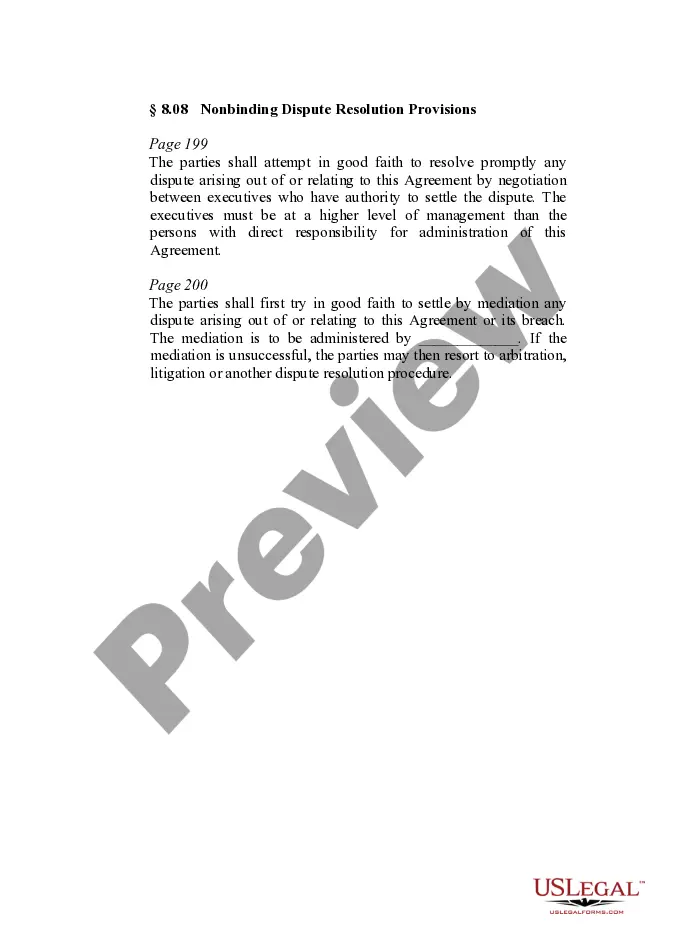
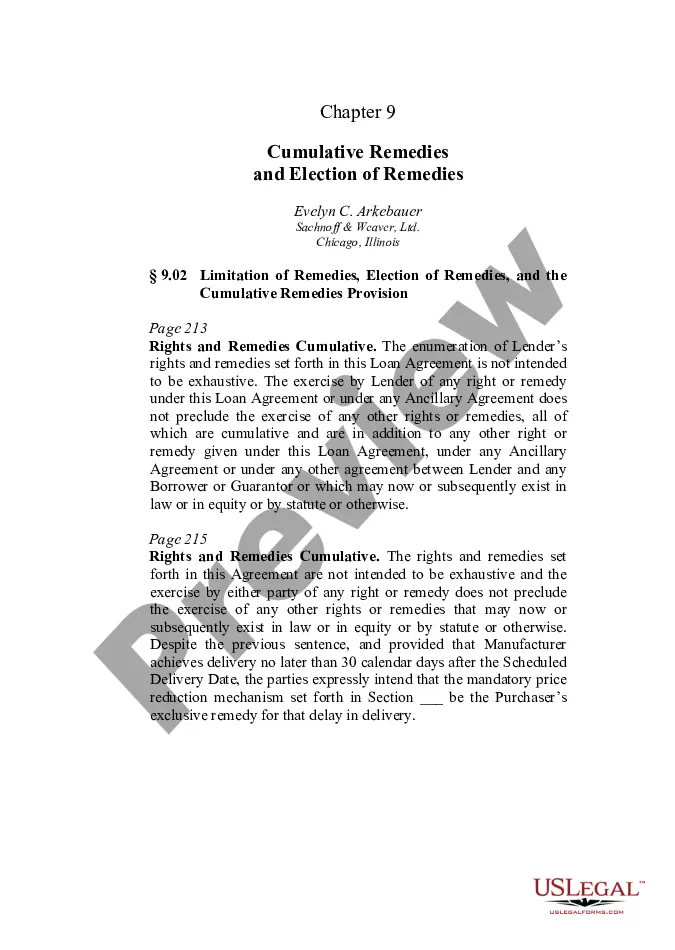
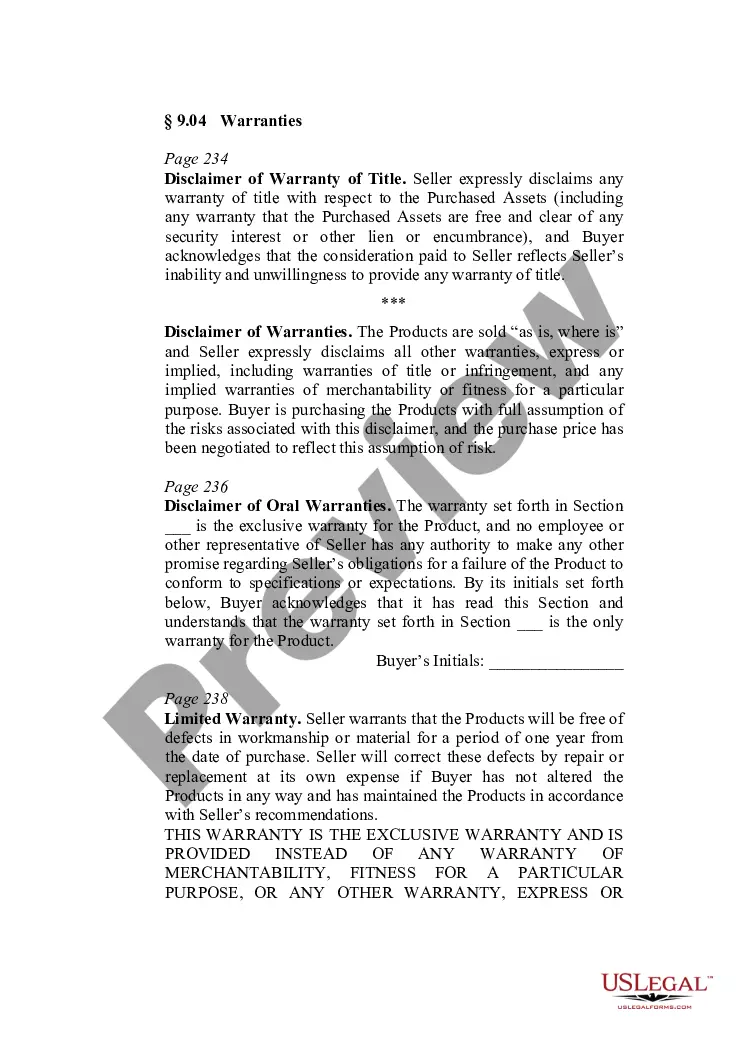
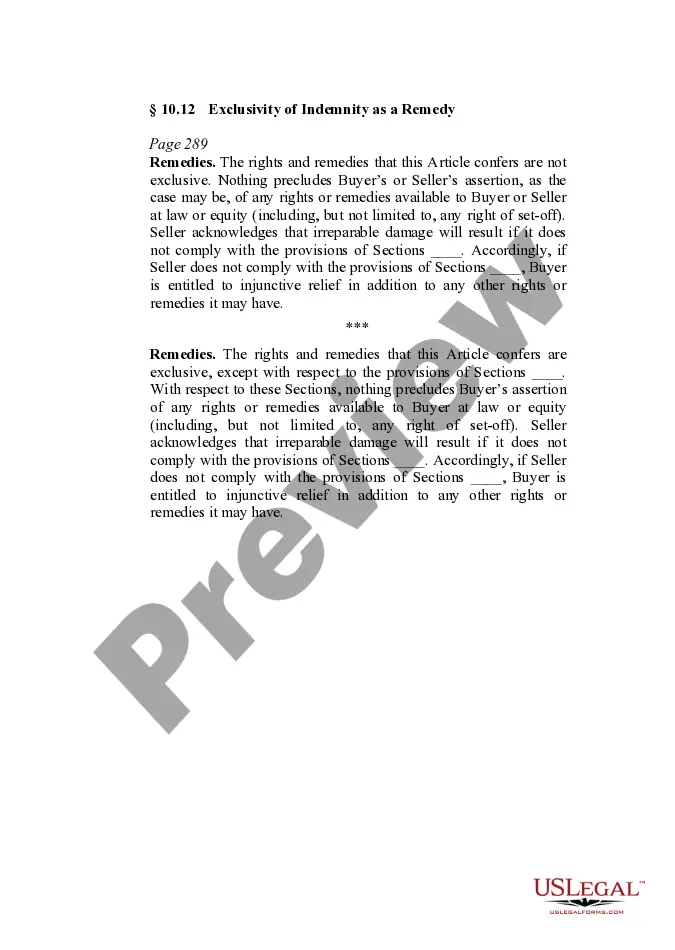
The Limitation of Remedies and Damages Provisions form includes essential contract clauses that establish limitations on the remedies available to the parties involved. This form is designed to clearly outline the scope of liabilities that may arise from breaches of contract and helps to prevent excessive claims for damages. It empowers parties to negotiate specific terms reflective of their individual needs, making it distinct from other contract forms that may not address limitations as thoroughly.
What’s included in this form
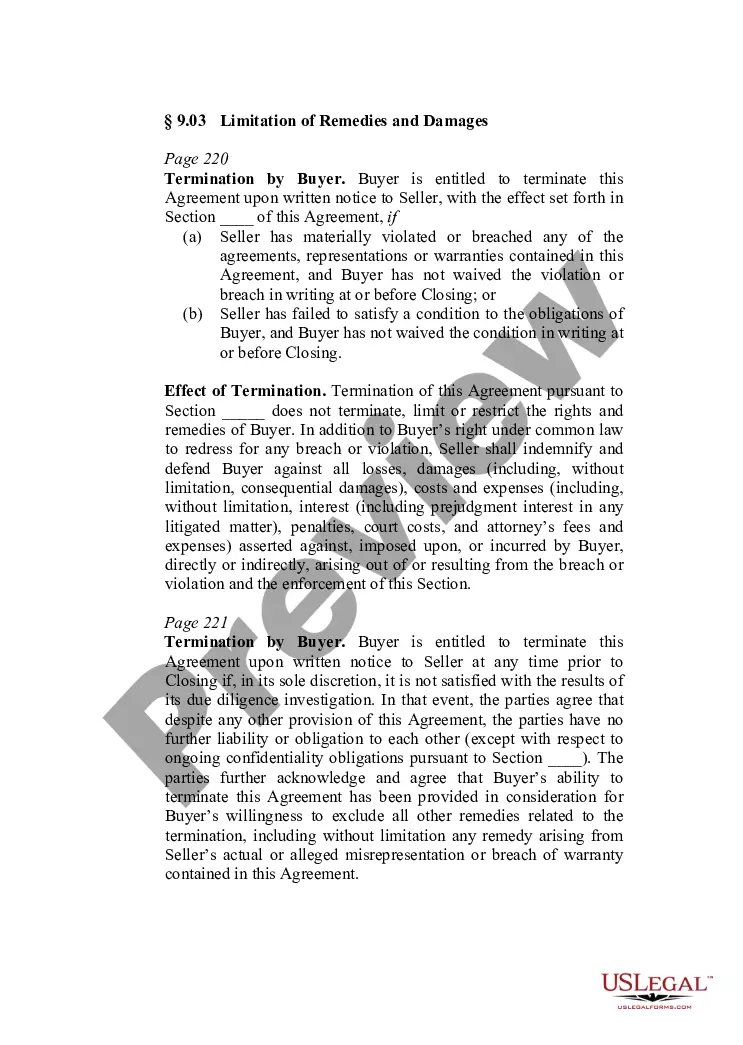
- Clauses for termination by the buyer if the seller breaches the agreement.
- Provisions for the indemnification of the buyer against losses due to breach.
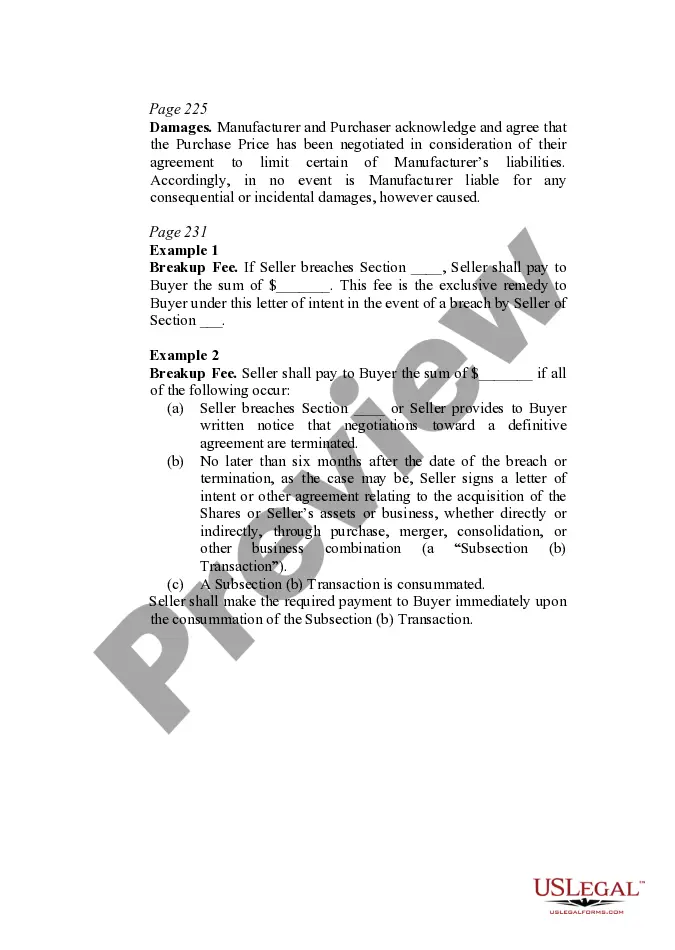
- Language options for limiting consequential and incidental damages.
- Examples of breakup fees for specific breaches and conditions.
Common use cases
This form should be used when drafting contracts where there is a need to limit the damages one party can claim from another in the event of a breach. It is particularly useful in commercial transactions where the parties wish to define their risk exposure and protect themselves from substantial claims. Situations may include agreements in real estate, business acquisitions, and any contracts where potential losses could be substantial.
Intended users of this form
- Business owners looking to limit liability in contracts with clients or vendors.
- Real estate professionals drafting purchase agreements.
- Attorneys creating contracts for their clients that require specific liability terms.
- Individuals engaged in business transactions that necessitate defined remedies for breaches.
How to prepare this document
- Identify the parties involved in the contract and their roles.
- Clearly outline the reasons for termination due to breaches or unsatisfactory conditions.
- Specify any breakup fees or limits on damages, using the provided clauses as examples.
- Review all indemnification language to ensure it meets the intended protection level.
- Have all parties sign and date the document to finalize the agreement.
Is notarization required?
In most cases, this form does not require notarization. However, some jurisdictions or signing circumstances might. US Legal Forms offers online notarization powered by Notarize, accessible 24/7 for a quick, remote process.
Get your form ready online
Our built-in tools help you complete, sign, share, and store your documents in one place.
Make edits, fill in missing information, and update formatting in US Legal Forms—just like you would in MS Word.
Download a copy, print it, send it by email, or mail it via USPS—whatever works best for your next step.
Sign and collect signatures with our SignNow integration. Send to multiple recipients, set reminders, and more. Go Premium to unlock E-Sign.
If this form requires notarization, complete it online through a secure video call—no need to meet a notary in person or wait for an appointment.
We protect your documents and personal data by following strict security and privacy standards.

Make edits, fill in missing information, and update formatting in US Legal Forms—just like you would in MS Word.

Download a copy, print it, send it by email, or mail it via USPS—whatever works best for your next step.

Sign and collect signatures with our SignNow integration. Send to multiple recipients, set reminders, and more. Go Premium to unlock E-Sign.

If this form requires notarization, complete it online through a secure video call—no need to meet a notary in person or wait for an appointment.

We protect your documents and personal data by following strict security and privacy standards.
Typical mistakes to avoid
- Failing to specify the conditions under which limitations apply.
- Using vague language that may lead to disputes over interpretation.
- Neglecting to discuss limitations with all parties prior to finalizing contracts.
Benefits of completing this form online
- Convenience of downloading and customizing the form as needed.
- Easy access to legal language drafted by licensed attorneys.
- Quick turnaround time to finalize contracts without needing in-person appointments.
What to keep in mind
- The form establishes clear limits on remedies and damages to reduce liability risks.
- It is tailored for various scenarios, allowing for flexible options based on individual needs.
- Proper use can protect both parties in a contract from excessive claims and promote fair business practices.
Looking for another form?
Form popularity
FAQ
You can't exclude liability for death or personal injury caused by your negligence.You can only exclude liability for other losses caused by your negligence, if reasonable. 4. When dealing with a consumer, your standard terms can't exclude or restrict liability for breach unless reasonable.
Assumption of Risk Under the assumption of risk defense, a defendant can avoid liability for his negligence by establishing that the plaintiff voluntarily consented to encounter a known danger created by the defendant's negligence. Assumption of risk may be express or implied.
Contract remedies serve to protect three different interests: an expectation interest, a reliance interest, and a restitution interest. A promisee will have one of these and may have two or all three.
To Benefit from a Limit of Liability, You Have to Breach That doesn't mean the limit of liability does the indemnitor no good. It can take advantage of the limit, but only if it breaches the contract. If it refuses its indemnity obligations, the limit of liability restricts the other party's damages for that breach.
The party who is injured by the breach of contract may bring an action of breach of contract either by remedy of specific performance or the damages available such as general or liquidated damages, nominal damage (no loss situation), compensatory, punitive and specific.
Know how these concepts serve to limit contract remedies: foreseeability, mitigation of damages, certainty of damages, loss of power of avoidance, election of remedies, and agreement of the parties.
Fourth Rule: Section 73 It should be noted that when no loss arises from the breach of contract, only nominal damages are awarded. Damages are given by way of restitution and compensation only, and not by way of punishment. The aggrieved party can therefore recover the actual loss caused to him as compensation.
Although the non-breaching party cannot recover both liquidated damages and the actual damages that the parties liquidated, merely agreeing to liquidate one category of damages does not by itself bar the non-breaching party from recovering actual damages for other categories of damages that the parties did not
Monetary awards (called damages), specific performance, and restitution are the three principle remedies.