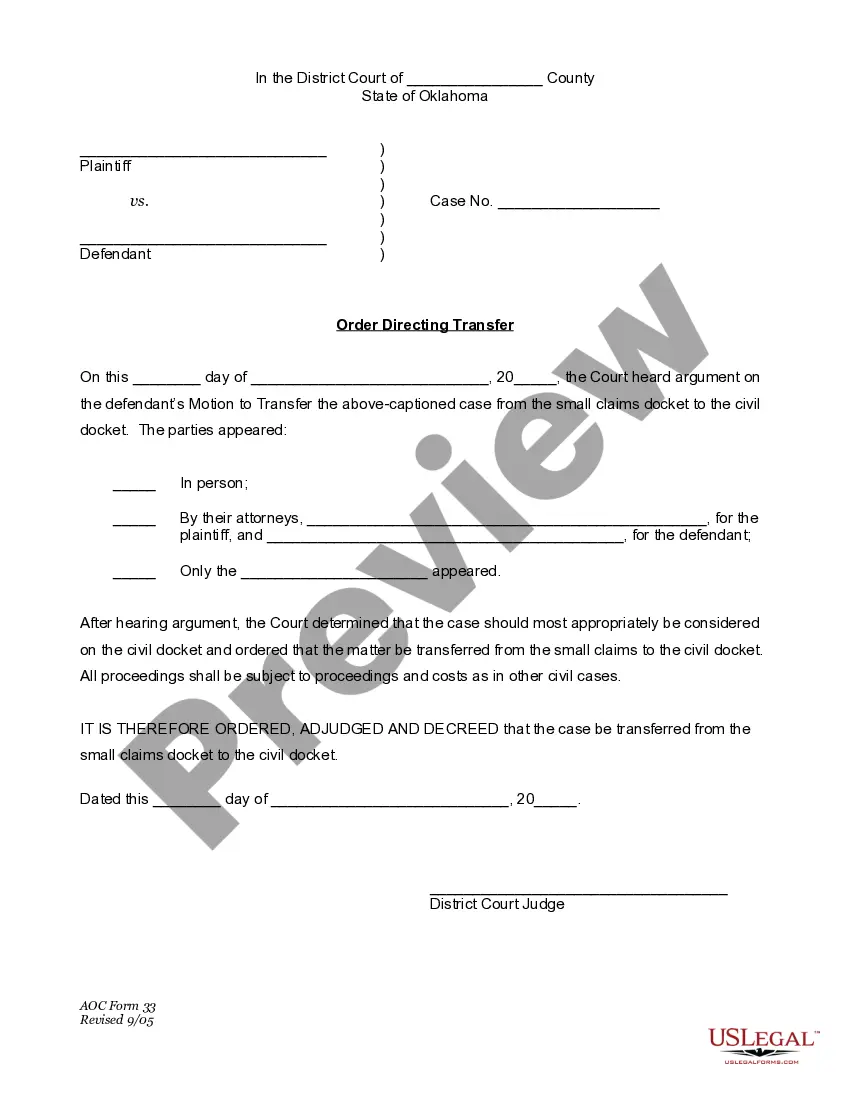
Motion for Leave to File Third Party Complaint
What is this form?
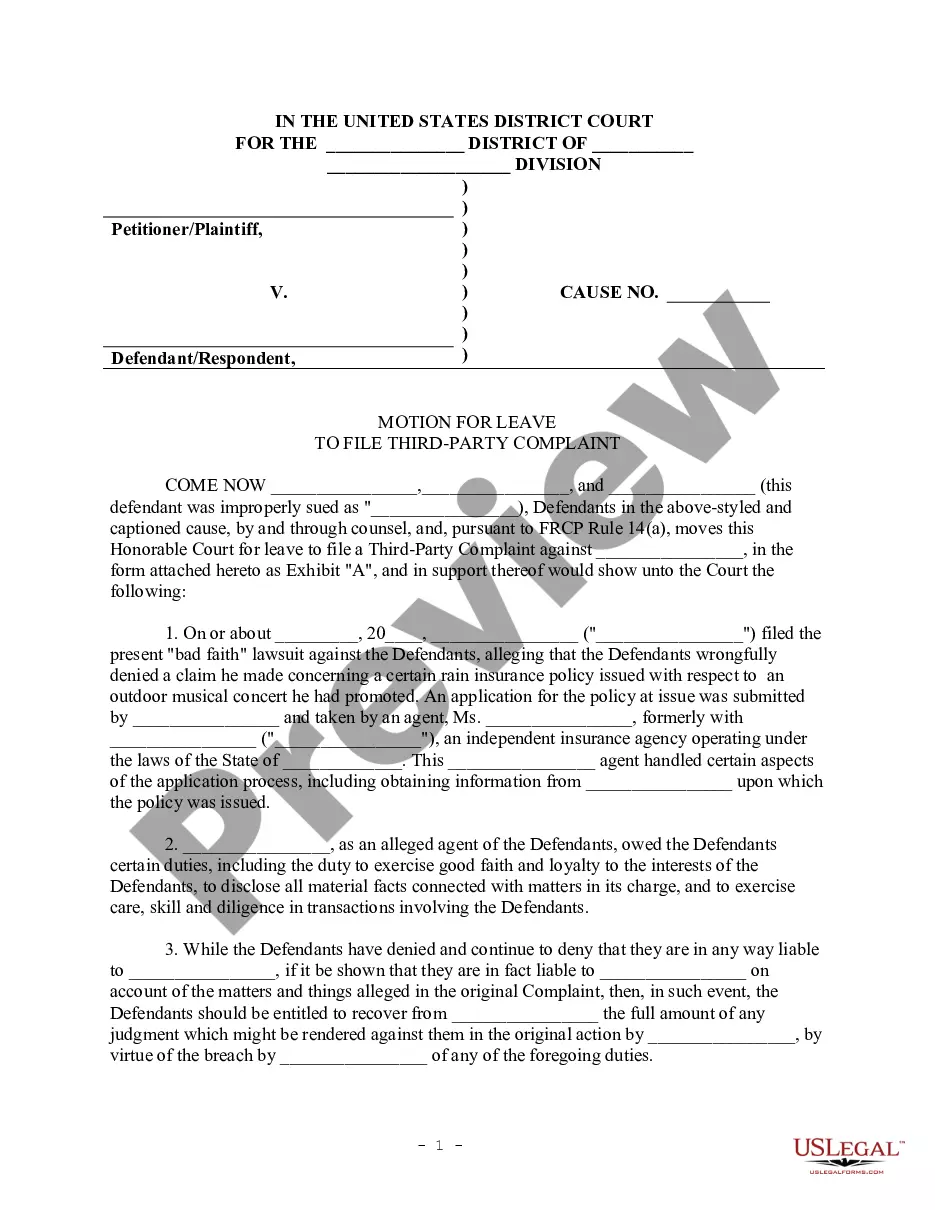
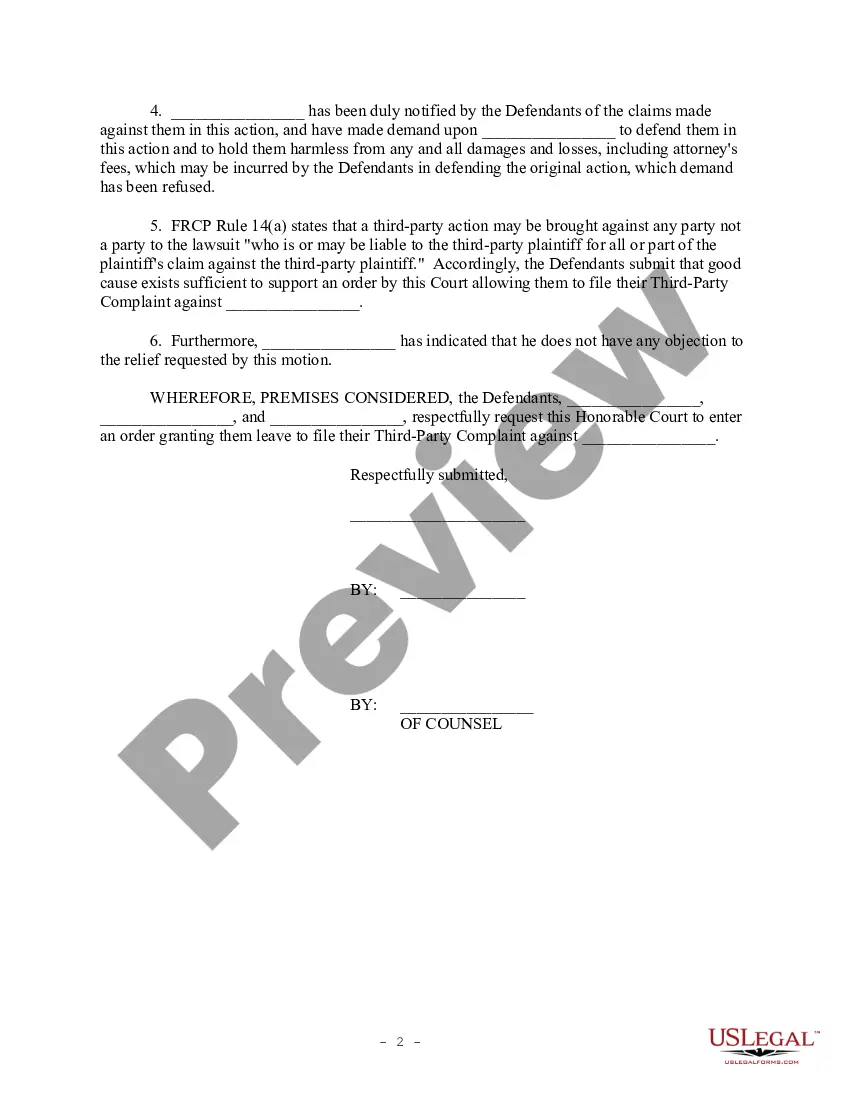
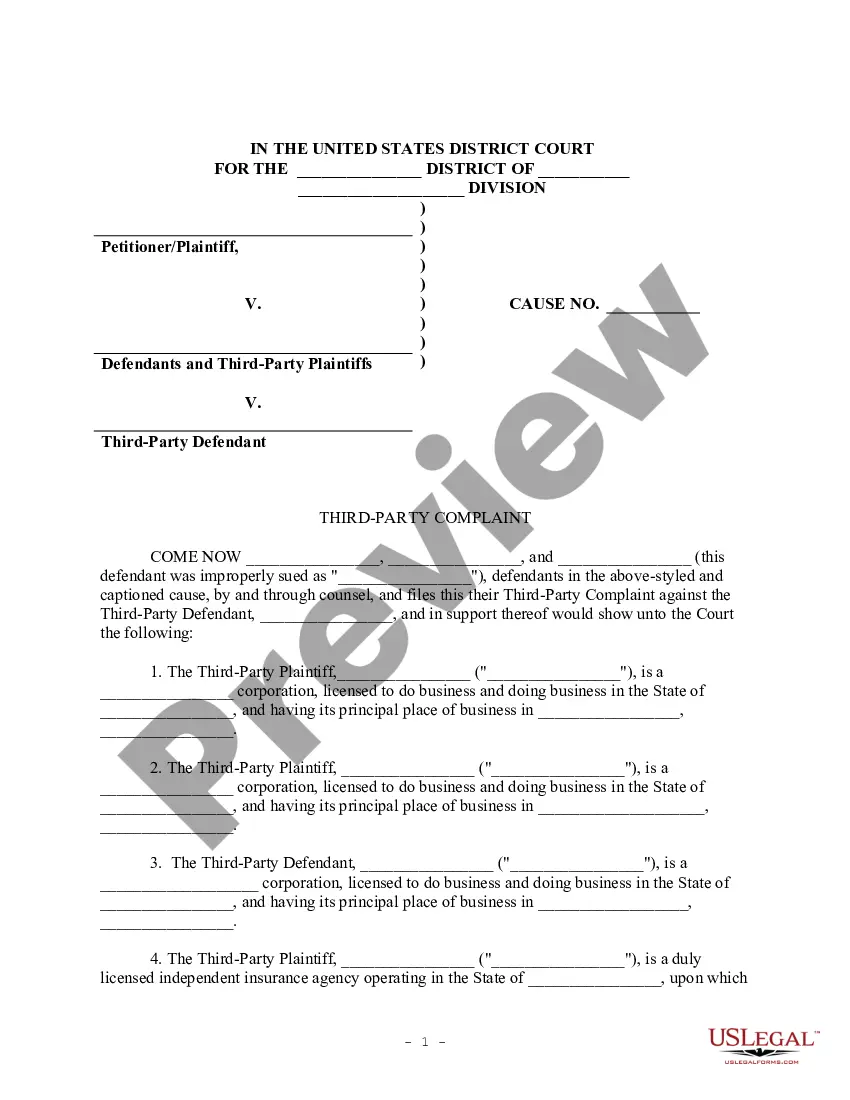
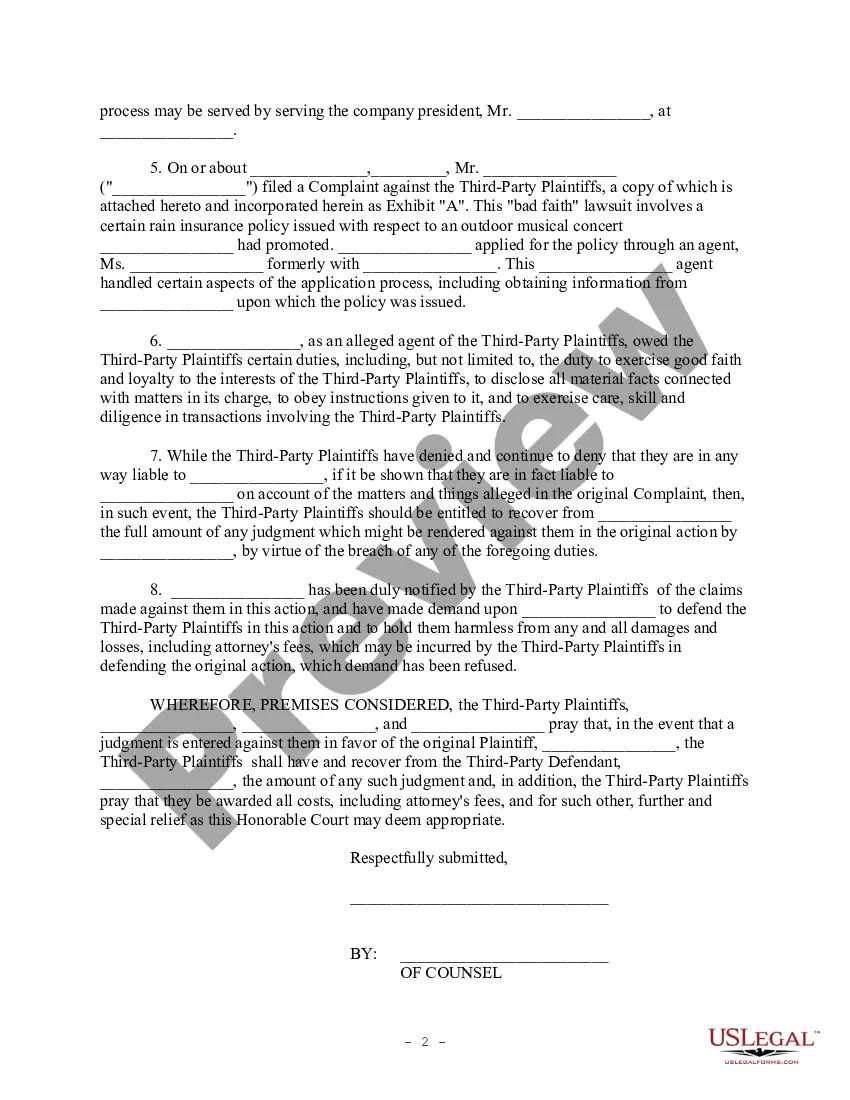
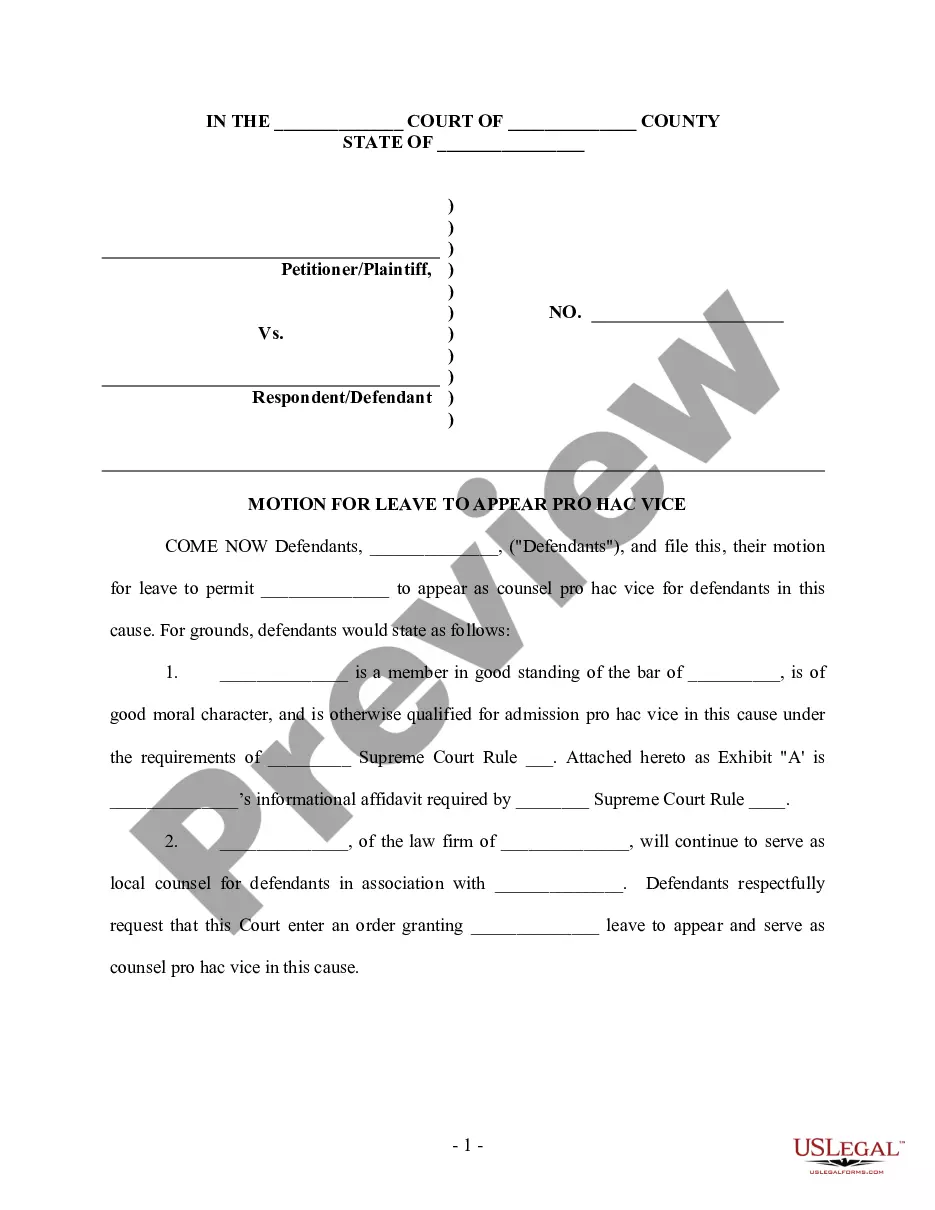
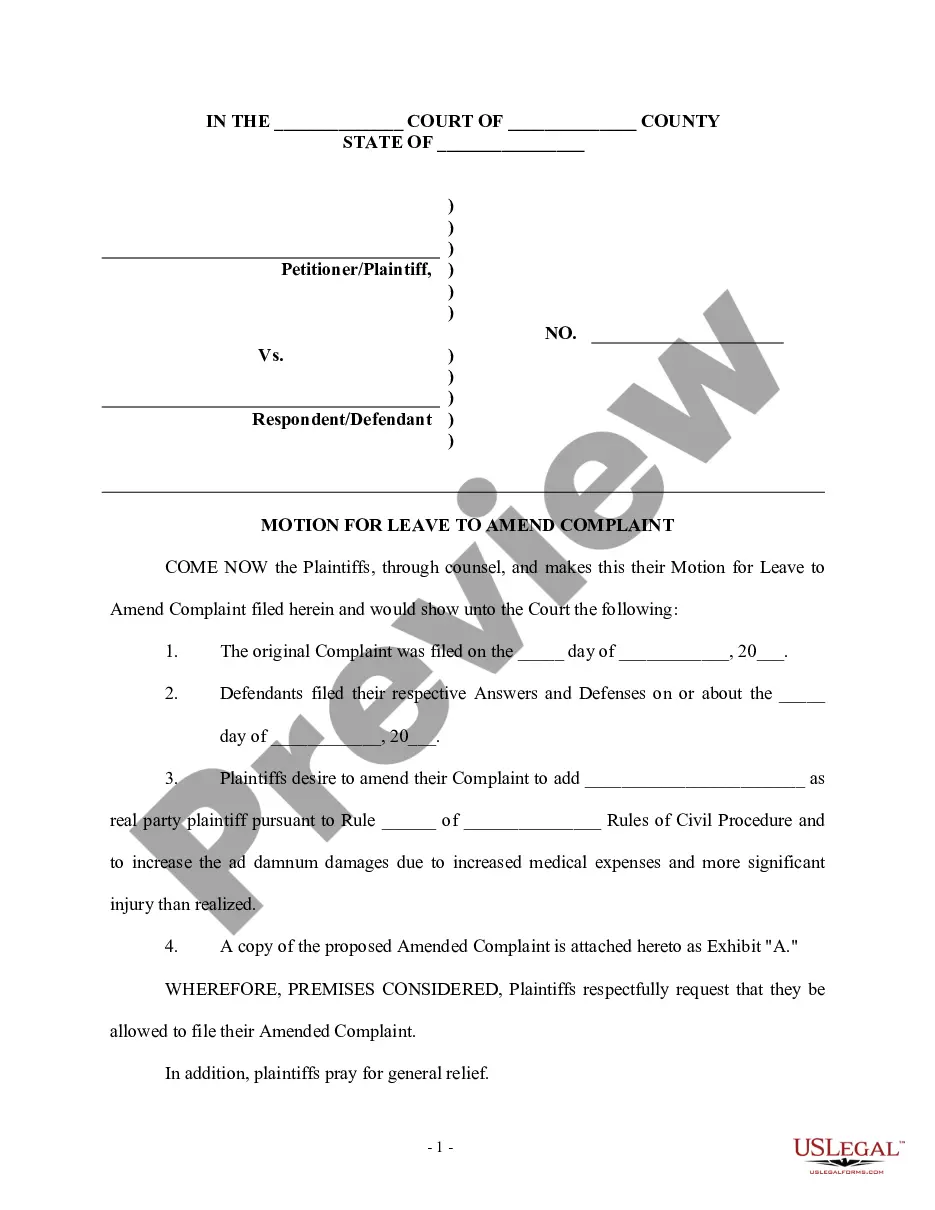
The Motion for Leave to File Third Party Complaint is a legal document used in civil litigation. This form allows a defendant to request permission from the court to bring a third party into an existing lawsuit. Unlike standard complaints, this motion specifically addresses the involvement of additional parties who may hold liability in the case, ensuring that they can be included in the court proceedings. It serves as a protective measure for defendants to seek recourse from third parties related to the allegations presented against them.
Key components of this form
- Title and parties involved: Specify the court, case title, and names of defendants and plaintiffs.
- Statement of facts: Describes the relevant incidents leading to the claim.
- Legal basis: Cites the rule under which the motion is filed, typically referencing the Federal Rules of Civil Procedure.
- Reasons for joining a third party: Details why the third-party defendant should be included in the lawsuit.
- Relief sought: Requests the court's permission to file the third-party complaint.

When to use this document
This form is needed when a defendant believes that a third party may be liable for all or part of the claims made against them in a lawsuit. For example, if a defendant is sued for breach of contract but believes a third party is responsible for the alleged damages, they can use this motion to bring that party into the lawsuit. This helps ensure that all relevant parties are held accountable and can defend their interests during the legal proceedings.
Who needs this form
- Defendants in civil lawsuits who want to include additional parties who might share responsibility for the claims against them.
- Legal counsel representing defendants in need of bringing in third-party claims.
- Individuals or entities that have been accused in a lawsuit and want to seek contribution or indemnity from other parties.
Completing this form step by step
- Identify the parties: Enter the names of the defendants, plaintiffs, and potential third-party defendants.
- Detail relevant facts: Provide a narrative of the events leading to the lawsuit and specify the role of the third party.
- State the legal basis: Cite the specific rule that allows the filing of the third-party complaint.
- Explain the request: Articulate the reasons for seeking to include the third party in the case.
- Sign and date: Ensure that the motion is signed by the counsel and filed with the appropriate court.
Is notarization required?
Notarization is not commonly needed for this form. However, certain documents or local rules may make it necessary. Our notarization service, powered by Notarize, allows you to finalize it securely online anytime, day or night.
Get your form ready online
Our built-in tools help you complete, sign, share, and store your documents in one place.
Make edits, fill in missing information, and update formatting in US Legal Forms—just like you would in MS Word.
Download a copy, print it, send it by email, or mail it via USPS—whatever works best for your next step.
Sign and collect signatures with our SignNow integration. Send to multiple recipients, set reminders, and more. Go Premium to unlock E-Sign.
If this form requires notarization, complete it online through a secure video call—no need to meet a notary in person or wait for an appointment.
We protect your documents and personal data by following strict security and privacy standards.

Make edits, fill in missing information, and update formatting in US Legal Forms—just like you would in MS Word.

Download a copy, print it, send it by email, or mail it via USPS—whatever works best for your next step.

Sign and collect signatures with our SignNow integration. Send to multiple recipients, set reminders, and more. Go Premium to unlock E-Sign.

If this form requires notarization, complete it online through a secure video call—no need to meet a notary in person or wait for an appointment.

We protect your documents and personal data by following strict security and privacy standards.
Common mistakes
- Failing to correctly identify the third-party defendant and their relevance to the case.
- Omitting necessary supporting details or evidence that justify the inclusion of a third party.
- Not adhering to local court rules regarding the format and specific information required in the motion.
Advantages of online completion
- Convenience: Complete the form at your own pace and from anywhere.
- Editability: Easily make changes or updates as needed before finalizing.
- Access to legal expertise: Forms are drafted by licensed attorneys, ensuring they meet legal standards.
Legal use & context
- The motion must be based on credible claims that the third party is liable.
- Proper filing procedures must be followed to ensure the motion is accepted by the court.
- Ensure compliance with relevant procedural rules to avoid dismissal of the motion.
Quick recap
- The Motion for Leave to File Third Party Complaint allows defendants to bring additional parties into lawsuits when they may share liability.
- Filling out the form accurately and comprehensively is crucial for success.
- Stay informed about the local rules and procedures to ensure compliance during the filing process.
Looking for another form?
Form popularity
FAQ
The Motion for Leave to File Third Party Complaint is a legal document filed to ask the court for permission to add a third party to an ongoing civil case. It’s used when a defendant believes another party may be liable for all or part of the claims, enabling that party to be litigated within the same case with the existing parties.
Yes. This motion explicitly seeks the court's permission to add a third party, with the relief sought being leave to file the third-party complaint so the third party can be brought into the action and defended within the same case.
A defendant should file this motion when they believe a third party may be liable for all or part of the claims. The motion asks the court for leave to file the third-party complaint, allowing the third party to be added to the lawsuit.
A third party joins by the defendant filing the Motion for Leave to File Third Party Complaint and the court granting leave to file the third-party complaint. After leave is granted, the third party becomes a party to the suit through the third-party complaint.
Rule 14 governs third-party practice in federal civil cases. This form uses that framework to seek the court’s permission to file a third-party complaint, and it aligns with the idea of impleading a potentially liable party within a multi-party action.
This form is specifically a request for the court’s leave to add a third party to the case. It identifies the reasons to join, the legal basis, and the relief sought (leave to file the third-party complaint), whereas a plain third-party filing might not include a separate motion for leave.