Complaint Against Business owner for Slip and Fall
Overview of this form
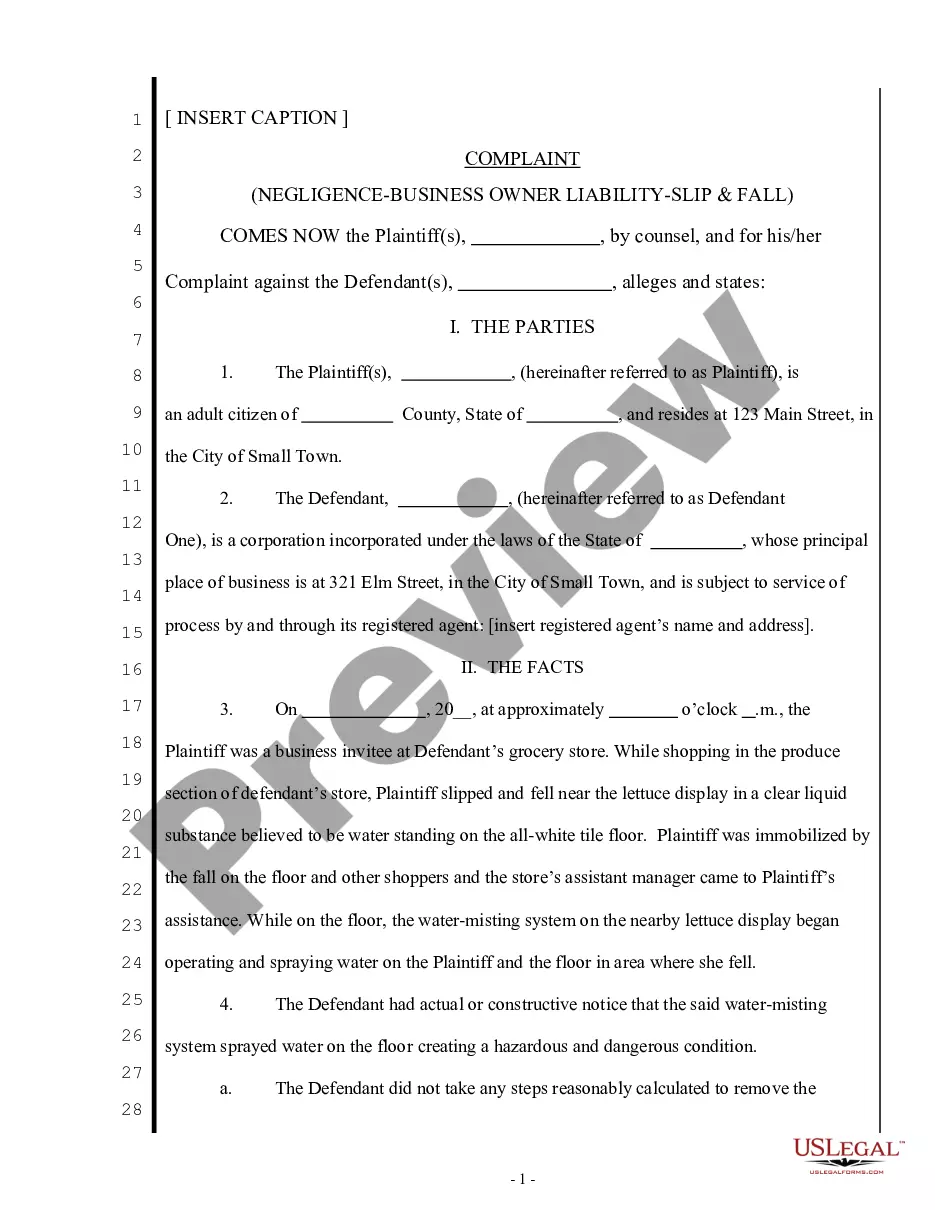
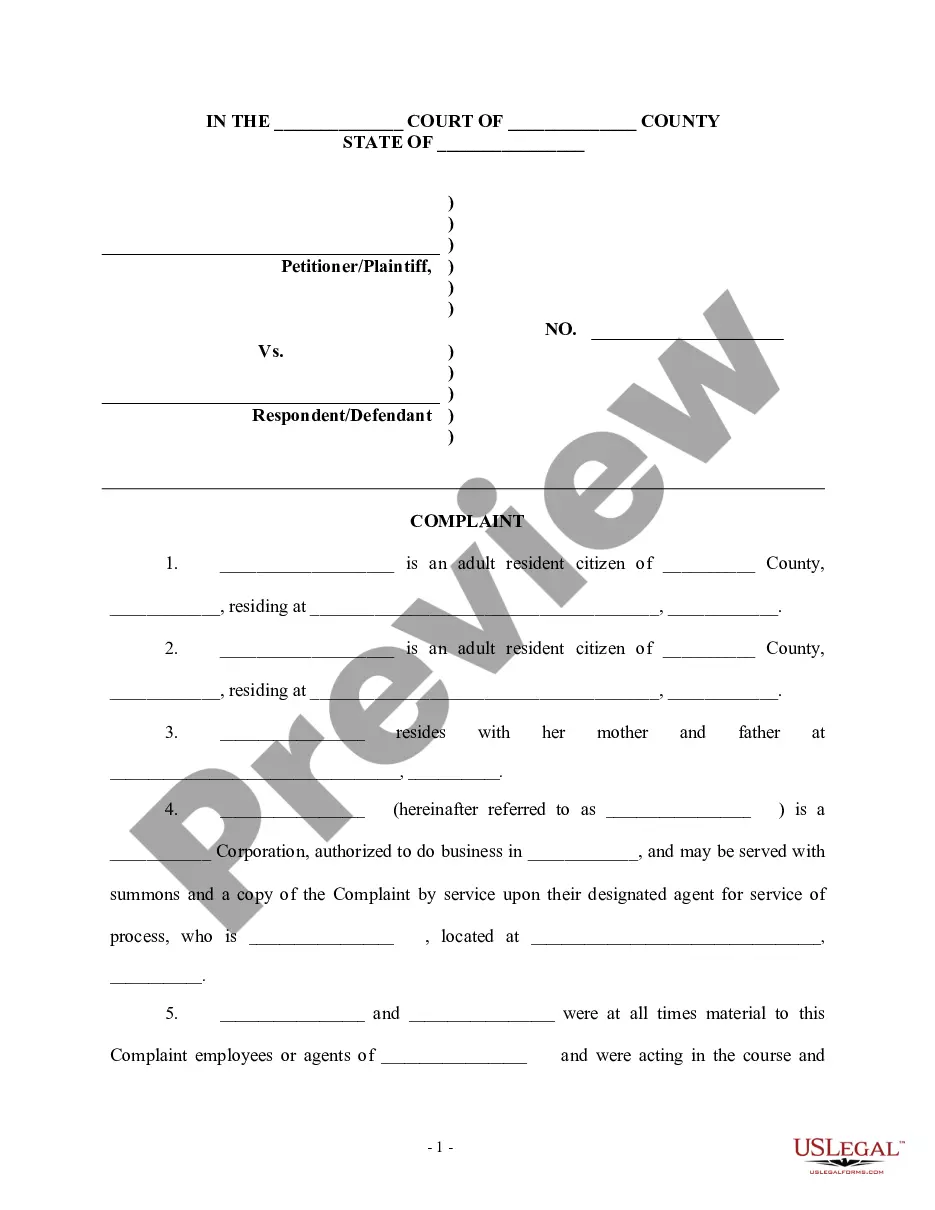
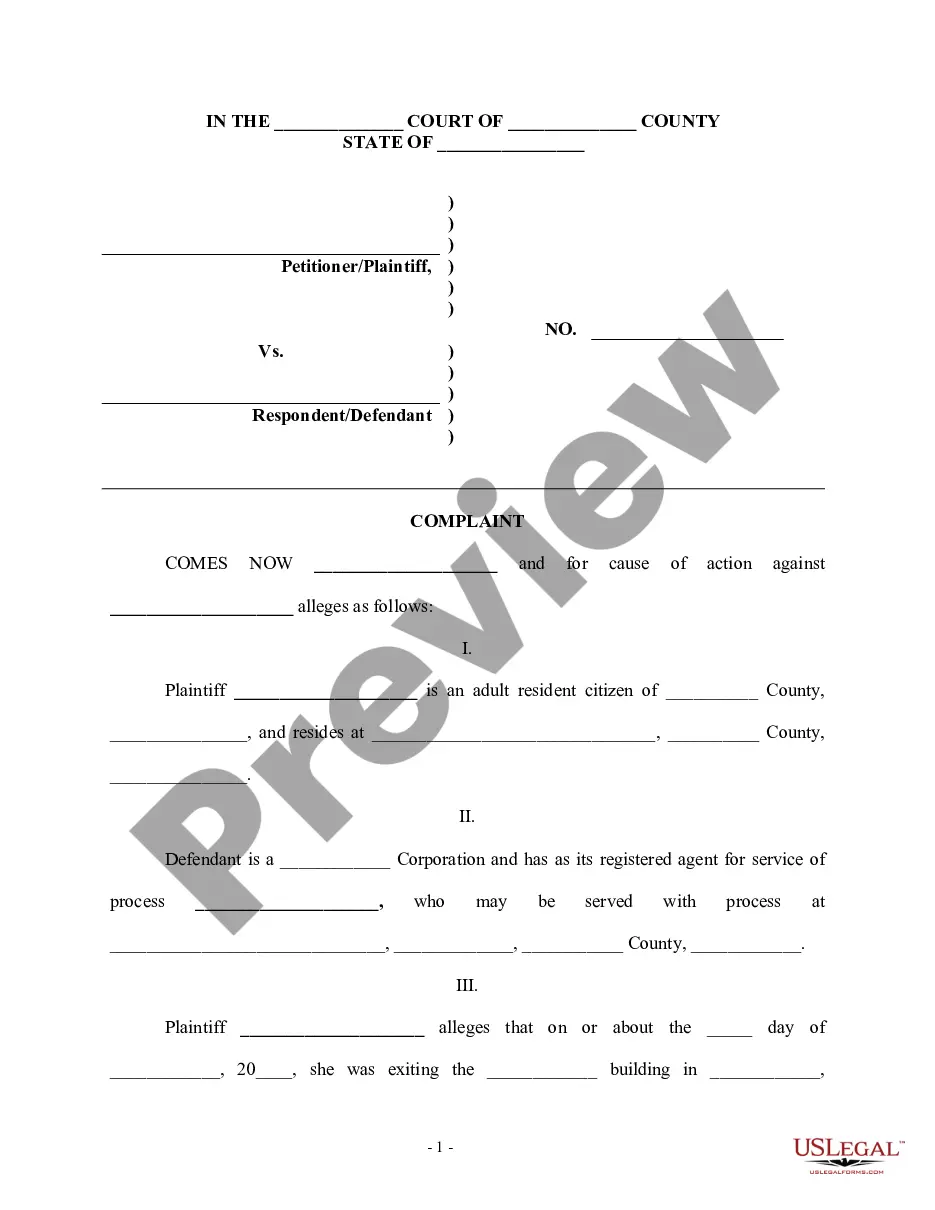
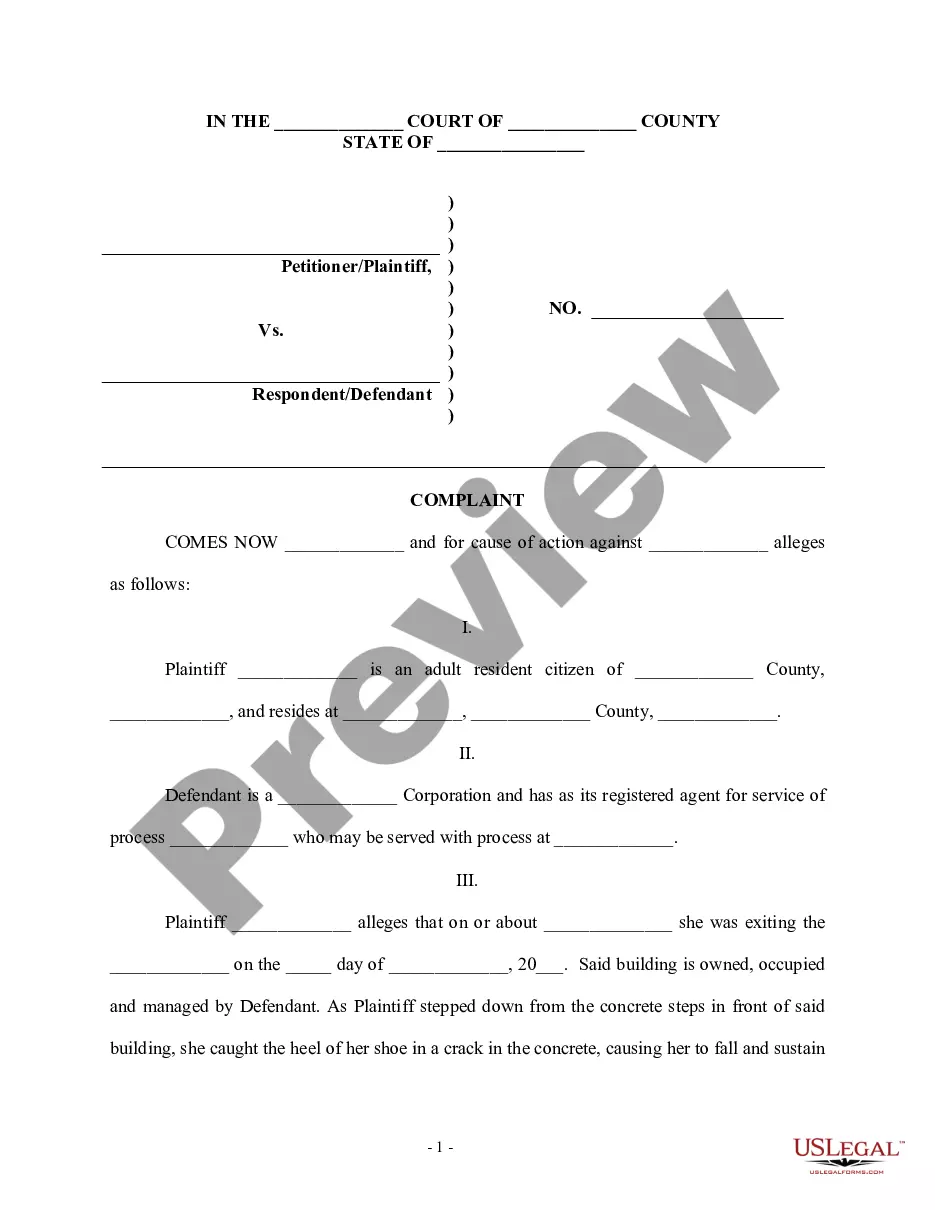
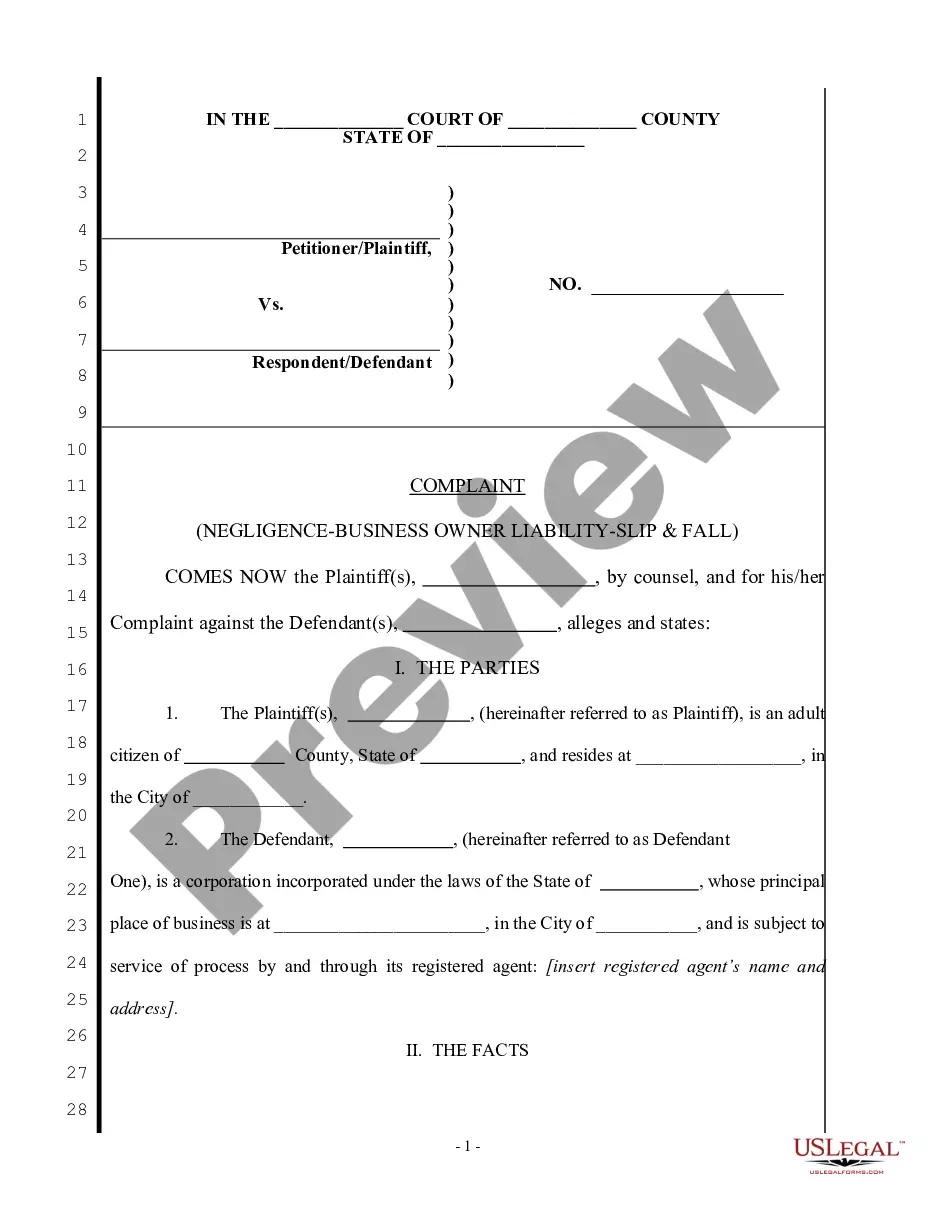
The Complaint Against Business Owner for Slip and Fall is a legal document that allows an individual (the Plaintiff) to formally allege negligence against a business owner following a slip and fall incident on the business premises. This form is essential for outlining the circumstances of the accident, the parties involved, and the damages sustained. It differs from other personal injury forms by specifically targeting situations where a business owner may be liable for injuries caused by unsafe conditions on their property.
Key parts of this document
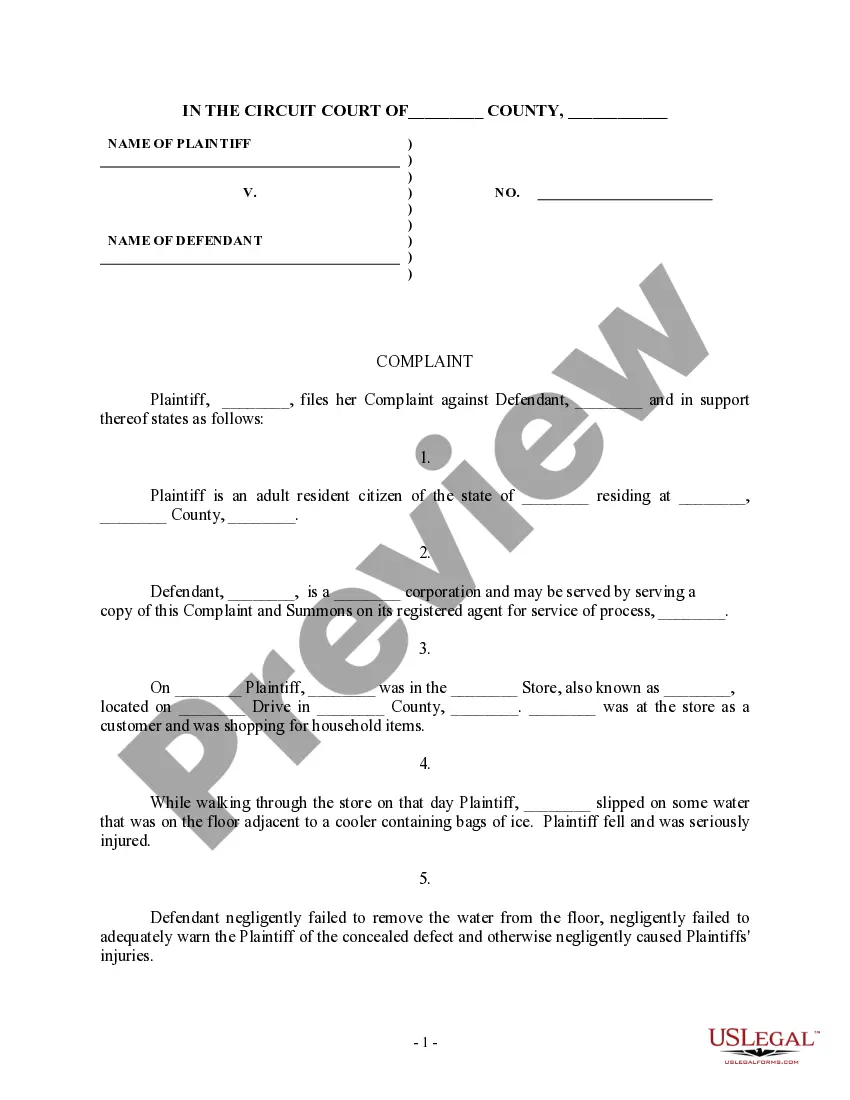
- Identification of the Plaintiff and Defendant, including their legal status and residential addresses.
- Detailed account of the facts surrounding the slip and fall incident.
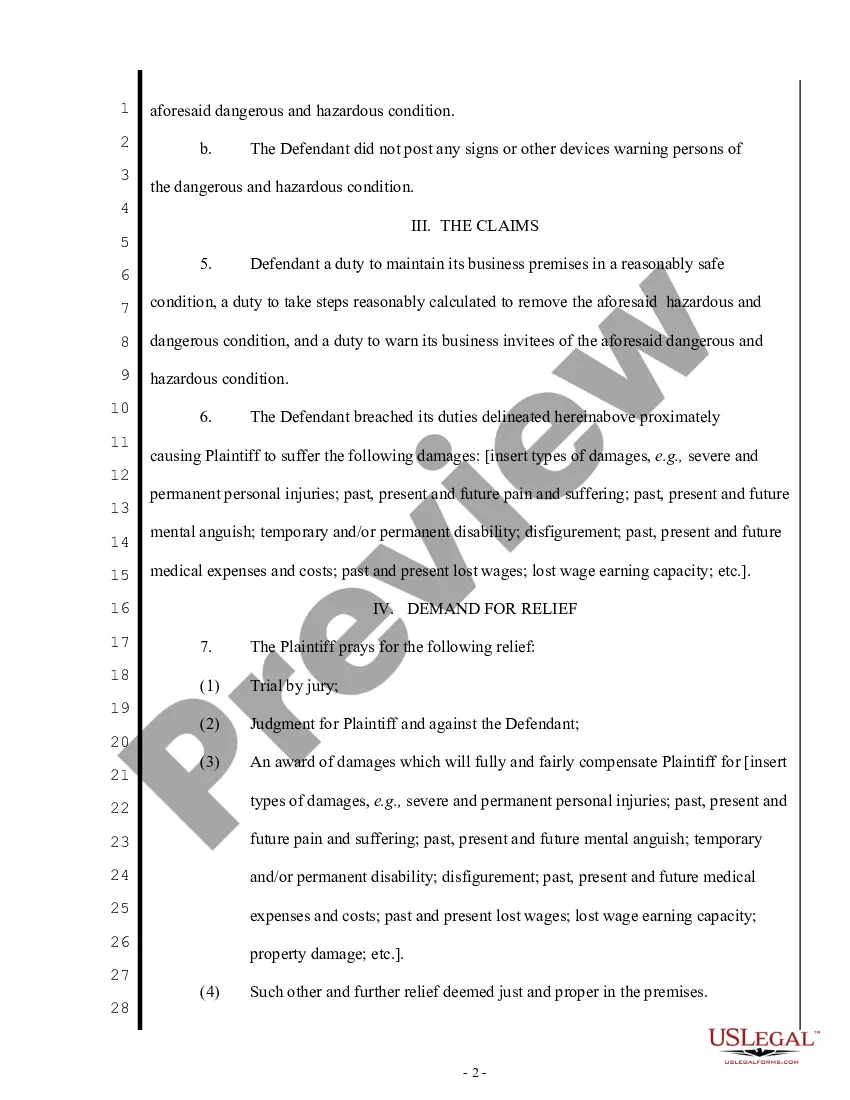
- Claims that outline the Defendantâs duty of care and how it was breached.
- Specification of damages suffered by the Plaintiff as a result of the incident.
- A demand for relief that includes compensation and potential requests for a jury trial.
When to use this form
This form should be used when an individual has sustained injuries from slipping and falling while visiting a business establishment. It is relevant in situations where the business owner may have failed to maintain a safe environment, such as inadequate signage regarding wet floors or improper maintenance of facilities. Filing this complaint initiates the legal process for seeking compensation for medical expenses, lost wages, and other damages related to the incident.
Intended users of this form
This form is intended for:
- Individuals who have experienced a slip and fall injury in a business setting.
- Those seeking to hold a business accountable for negligence related to unsafe conditions.
- Legal representatives acting on behalf of injured clients in such cases.
Completing this form step by step
- Identify the parties involved by filling out the names and addresses of the Plaintiff and Defendant.
- Describe the incident in detail, including the time, location, and nature of the hazardous condition.
- State the specific duties the Defendant breached and how these breaches caused the Plaintiffâs injuries.
- List the damages being claimed, including medical expenses, lost wages, and pain and suffering.
- Complete the demand for relief, specifying the requested compensation and any additional relief sought.
Is notarization required?
This form does not typically require notarization unless specified by local law. It is important to check with local regulations to determine if notarization is necessary for your specific filing.
Get your form ready online
Our built-in tools help you complete, sign, share, and store your documents in one place.
Make edits, fill in missing information, and update formatting in US Legal Forms—just like you would in MS Word.
Download a copy, print it, send it by email, or mail it via USPS—whatever works best for your next step.
Sign and collect signatures with our SignNow integration. Send to multiple recipients, set reminders, and more. Go Premium to unlock E-Sign.
If this form requires notarization, complete it online through a secure video call—no need to meet a notary in person or wait for an appointment.
We protect your documents and personal data by following strict security and privacy standards.

Make edits, fill in missing information, and update formatting in US Legal Forms—just like you would in MS Word.

Download a copy, print it, send it by email, or mail it via USPS—whatever works best for your next step.

Sign and collect signatures with our SignNow integration. Send to multiple recipients, set reminders, and more. Go Premium to unlock E-Sign.

If this form requires notarization, complete it online through a secure video call—no need to meet a notary in person or wait for an appointment.

We protect your documents and personal data by following strict security and privacy standards.
Avoid these common issues
- Failing to accurately identify all parties involved, including businesses and their registered agents.
- Not providing sufficient detail about the incident and the hazardous condition.
- Neglecting to describe the extent of injuries and damages claimed.
- Not signing and dating the complaint before submitting it.
Why complete this form online
- Convenient access and immediate downloading of the legal form.
- Editability allows for customization based on individual circumstances.
- Reliability of attorney-drafted templates ensures compliance with legal standards.
Looking for another form?




Form popularity
FAQ
Slip and fall settlements are determined by negotiating the amount that the responsible party is willing to pay and what the victim is willing to accept. A slip and fall settlement is determined by evaluating the likely result in the case if it were to go to trial in front of a jury.
As in almost any type of personal injury case, a homeowner is only liable for a slip and fall accident on his/her property if the homeowner was negligent and his/her negligence was a cause of your accident. Simply because you fell on someone's property does not mean that the homeowner was negligent.
1Liability. The defendant had a duty of care, and was negligent in performing their duty of care.2Negligence. The defendant breached that duty and the plaintiff was harmed.3Responsibility/Fault. The breach of duty, or negligence on the part of the defendant, was a major factor in causing the plaintiff's injuries.
Jury awards $7.5 million in Walmart slip and fall lawsuit case Isenberg & Hewitt, PC.
Medical Help. If a person falls and gets injured on your property, call for medical assistance right away. Inspect the Fall Site. Incident Report. Legal Assistance.
If your case is relatively straightforward, it should be over in two or three days. More complicated slip and fall lawsuits may end up taking five days.
The average slip and fall settlement is between $15,000 and $45,000. Whether your case falls within the average range depends on several factors. If your injuries are relatively minor, your case may be below average.
You can recover up to $250,000 in pain and suffering, or any non-economic damages.
The property owner owed you a duty of care. They breached the duty of care. The breach caused your accident and injuries. You have damages resulting from the accident.