Ordinance Requiring Connection to Sewage System
What this document covers
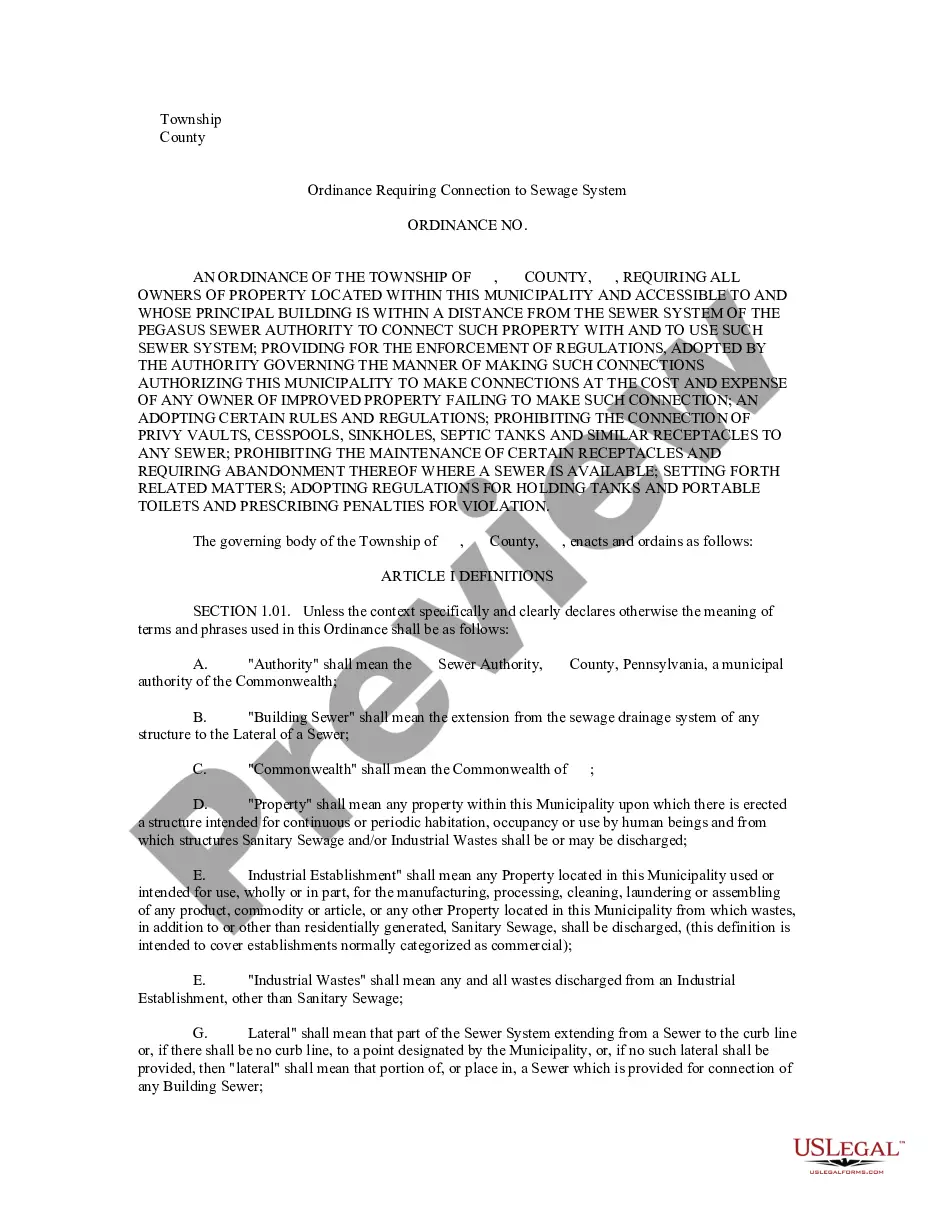
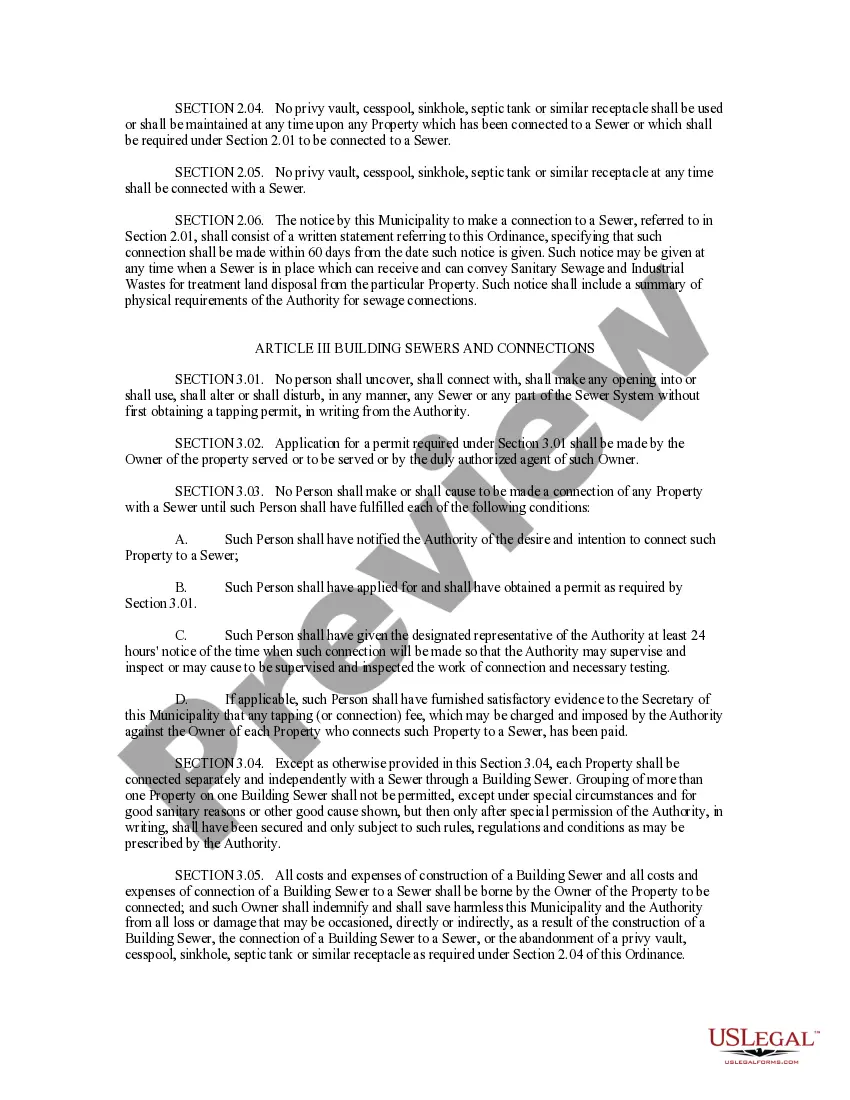
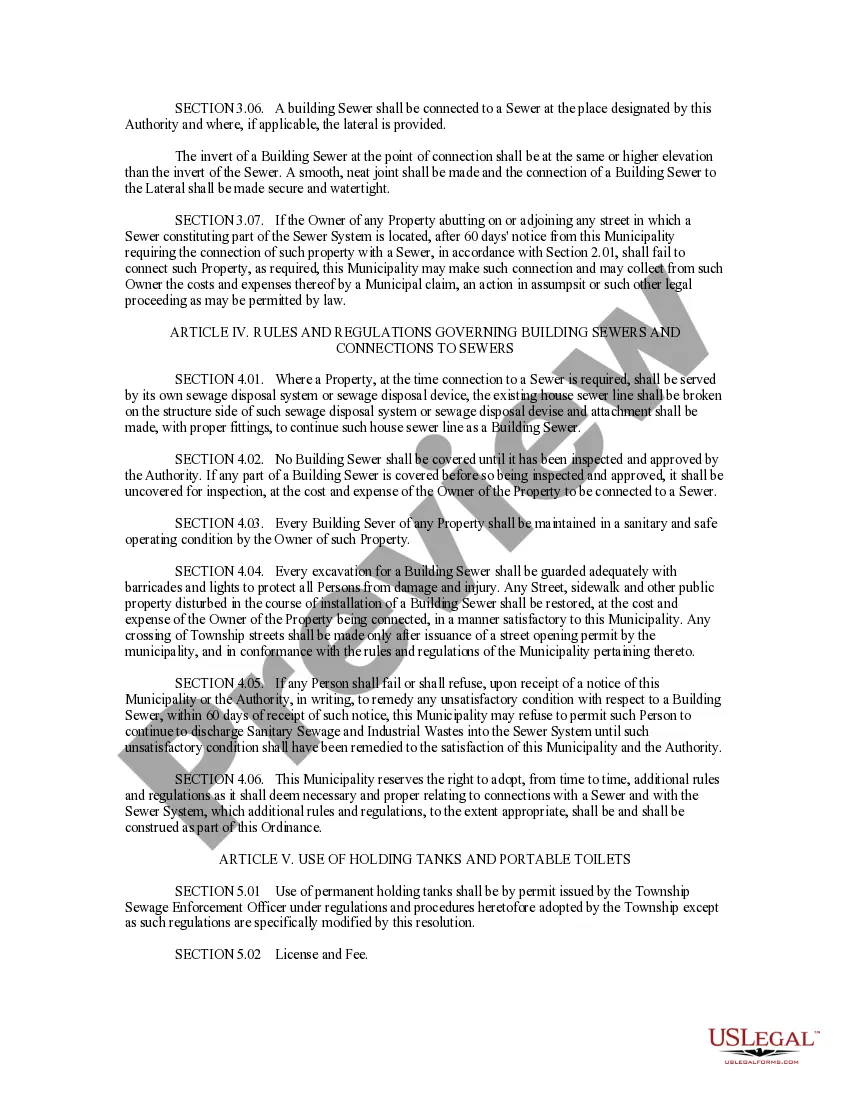
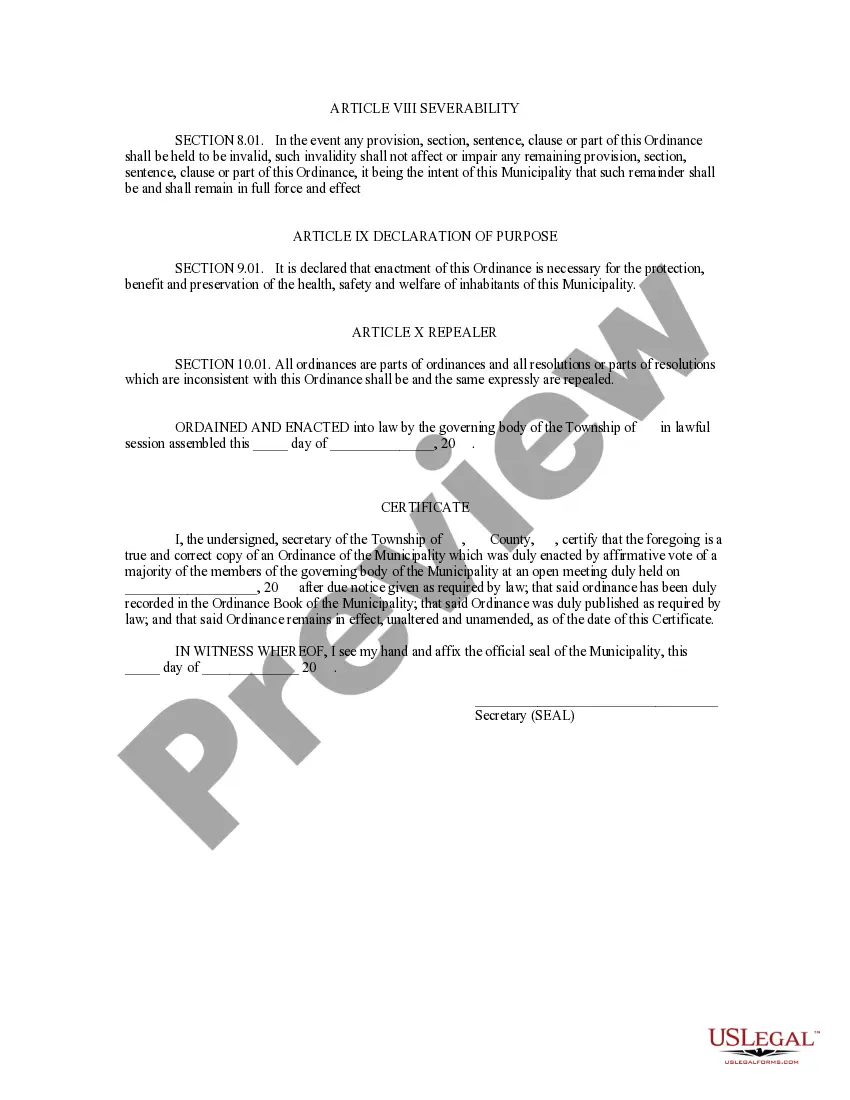
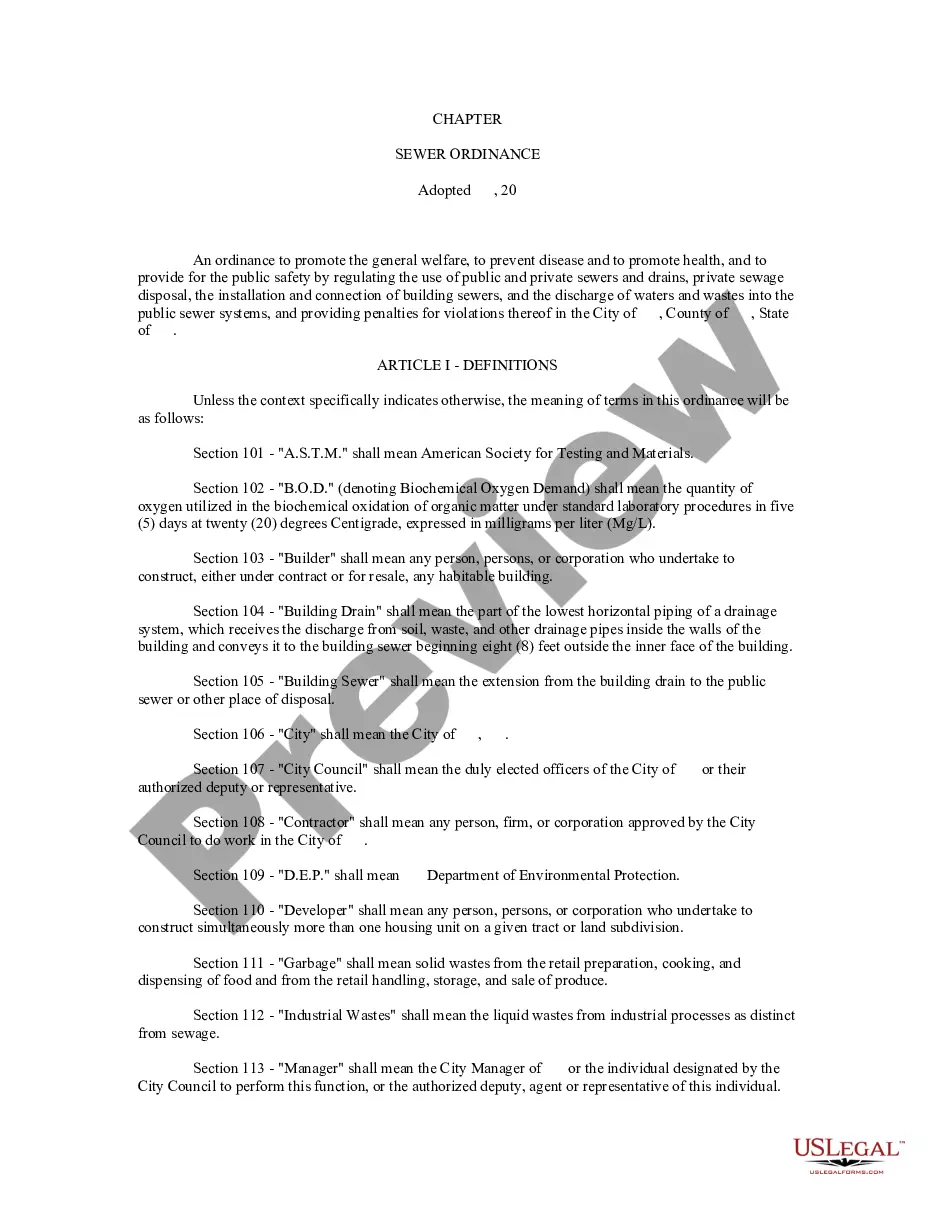
The Ordinance Requiring Connection to Sewage System is a municipal code that mandates property owners to connect their properties to an existing sewage system within a specified distance. This form is designed to ensure proper sanitation and the effective management of sewage and wastewater, differing from other forms that may only address individual property agreements or septic system requirements. It outlines the regulations governing these connections, providing clarity and legal frameworks for municipalities across the United States.
Key parts of this document
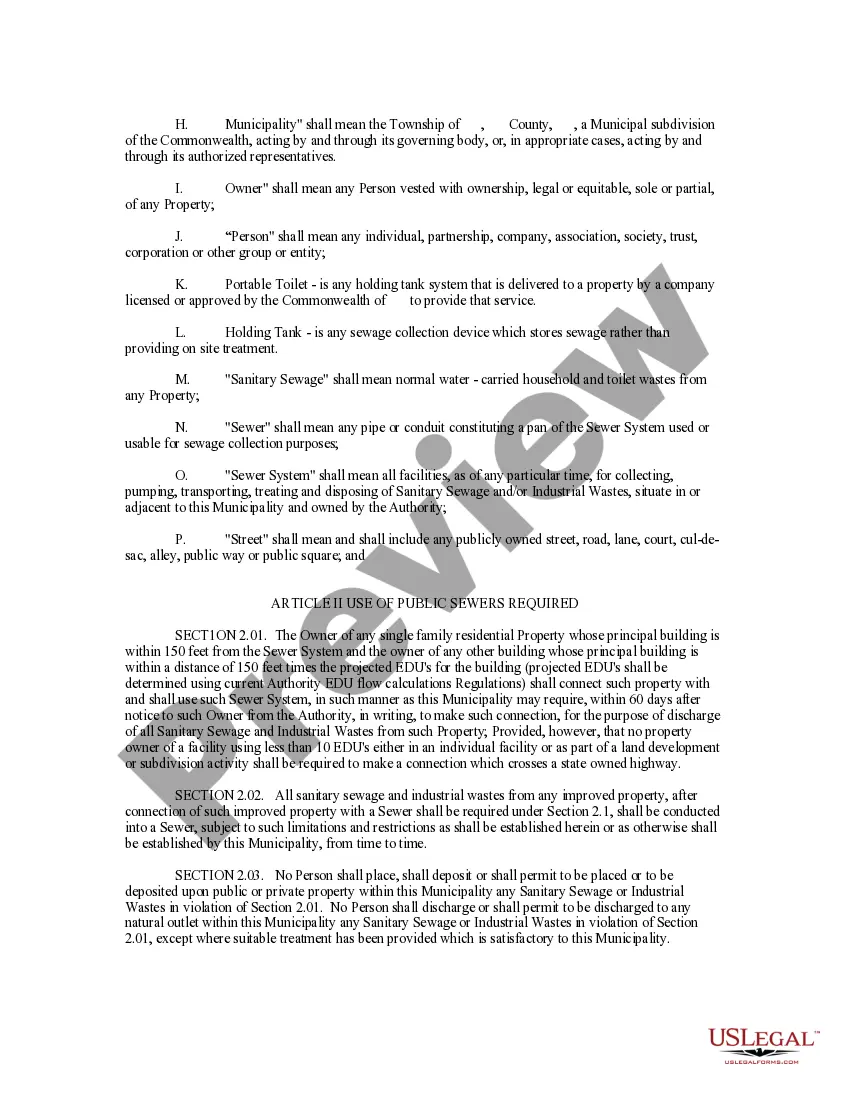
- Definitions of key terms, such as "Owner," "Building Sewer," and "Sewer System."
- Requirements for property owners to connect to the sewage system based on proximity.
- Provisions for enforcement actions if property owners fail to comply with connection requirements.
- Guidelines for obtaining necessary permits and conducting inspections before construction.
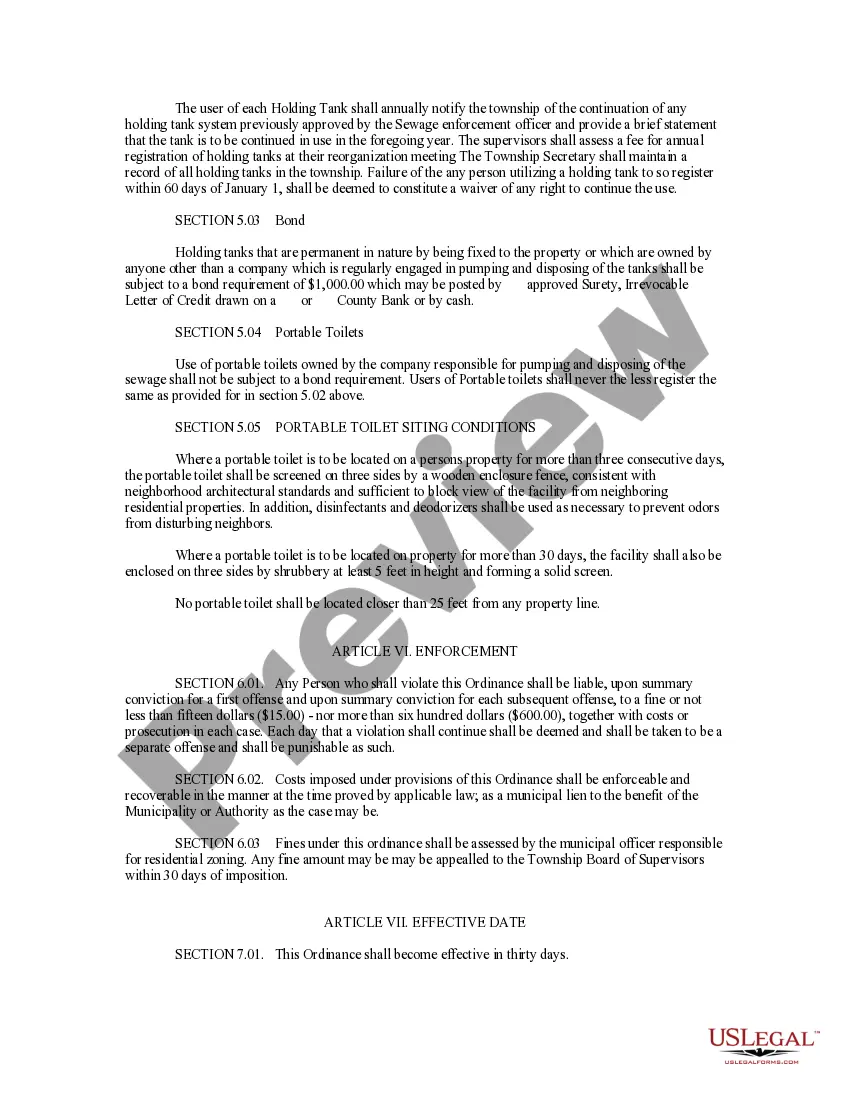
- Rules governing the use of holding tanks and portable toilets.
- Penalties for violations of the ordinance.
When this form is needed
This form should be used when a municipal government decides to enact a requirement for property owners to connect to a public sewage system. It is applicable in scenarios where existing properties are within a designated distance from the sewage system and must comply with health and safety regulations by eliminating outdated or unsanitary waste disposal methods.
Who this form is for
- Municipal governing bodies looking to implement sewage connection requirements.
- Property owners residing within the specified proximity to a sewage system.
- Local government attorneys drafting or reviewing municipal ordinances.
How to prepare this document
- Identify the municipality enacting the ordinance and clearly state the ordinance number.
- Define key terms relevant to the ordinance to ensure clarity and understanding.
- Outline the requirements and timelines for property owners to connect to the sewage system.
- Specify conditions and processes for obtaining necessary permits for connections.
- Include enforcement measures and penalties for failure to comply with the ordinance.
Does this form need to be notarized?
In most cases, this form does not require notarization. However, some jurisdictions or signing circumstances might. US Legal Forms offers online notarization powered by Notarize, accessible 24/7 for a quick, remote process.
Get your form ready online
Our built-in tools help you complete, sign, share, and store your documents in one place.
Make edits, fill in missing information, and update formatting in US Legal Forms—just like you would in MS Word.
Download a copy, print it, send it by email, or mail it via USPS—whatever works best for your next step.
Sign and collect signatures with our SignNow integration. Send to multiple recipients, set reminders, and more. Go Premium to unlock E-Sign.
If this form requires notarization, complete it online through a secure video call—no need to meet a notary in person or wait for an appointment.
We protect your documents and personal data by following strict security and privacy standards.

Make edits, fill in missing information, and update formatting in US Legal Forms—just like you would in MS Word.

Download a copy, print it, send it by email, or mail it via USPS—whatever works best for your next step.

Sign and collect signatures with our SignNow integration. Send to multiple recipients, set reminders, and more. Go Premium to unlock E-Sign.

If this form requires notarization, complete it online through a secure video call—no need to meet a notary in person or wait for an appointment.

We protect your documents and personal data by following strict security and privacy standards.
Avoid these common issues
- Not clearly defining key terms, which may lead to confusion and misinterpretations.
- Failing to specify the consequences for non-compliance, potentially reducing the ordinance's effectiveness.
- Omitting clear instructions for permit application processes, leading to unapproved connections.
Why use this form online
- Accessible anytime, allowing municipalities to act swiftly when conditions change.
- Efficient for modification and customization to fit local needs.
- Reliability in obtaining formal compliance with laws governing sewage management.
Legal use & context
- Enforcement of the ordinance may vary by municipality, impacting its application.
- The form protects public health by ensuring sanitary sewage disposal methods are adopted.
Looking for another form?

Form popularity
FAQ
A direct connection to a public sewer in public highway is £ 455.67. A direct connection to public sewer in private land is A£224.98. An indirect connection (to a private drain which then outfalls to a public sewer) is A£96.41.
Every homeowners insurance policy explicitly states that any damage caused by a sewage back up will not be covered. Whatever the water or raw sewage destroys will not be qualified for replacement from the insurance company.
Sewerage is the infrastructure that conveys sewage or surface runoff (stormwater, meltwater, rainwater) using sewers.Sewerage ends at the entry to a sewage treatment plant or at the point of discharge into the environment. It is the system of pipes, chambers, manholes, etc. that conveys the sewage or storm water.
As we mentioned above, it's certainly possible for a homeowner to perform sewer line replacement or sewer line repair. However, it's definitely not an easy job. When you replace the sewer line yourself you run the risk of causing even more damage.
Strong sewer odor. Toilet that gurgles. Drains that take long to clear. Regular sewage backup in toilet or tub. Mold or mildew growing on your ceilings or walls. Walls beginning to crack. Invasion of pests in the home. Greener-than-usual patches on your lawn.
Sewer Line Repair Cost The average price homeowners pay for sewer line repair is $2,556. You can expect to spend between $1,073 and $4,054, depending on the kind of damage. Homeowners who get a full replacement spend around $3,000-$25,000.
For a residential installation, the sewer pipe typically starts where the home's main drain exits the house foundation. The line then slopes downhill to where it connects to the city branch or main, at a connection called a tap.
Sewers and lateral drains connected to the public network used to be the responsibility of the property owner. However, most are now maintained by local water companies. If you have any problems with your sewer or lateral drain, for example if it's blocked, contact your local water company.
Sewer Line Cost Per Foot The average to install a sewer line ranges from $50 to $250 per linear foot. New pipes cost $3 to $20 per foot, with about $30 to $247 per foot for labor expenses. Trenching may or may not be included in this charge.