Mutual Nondisclosure Agreement with Proprietary Rights Clause
What is this form?
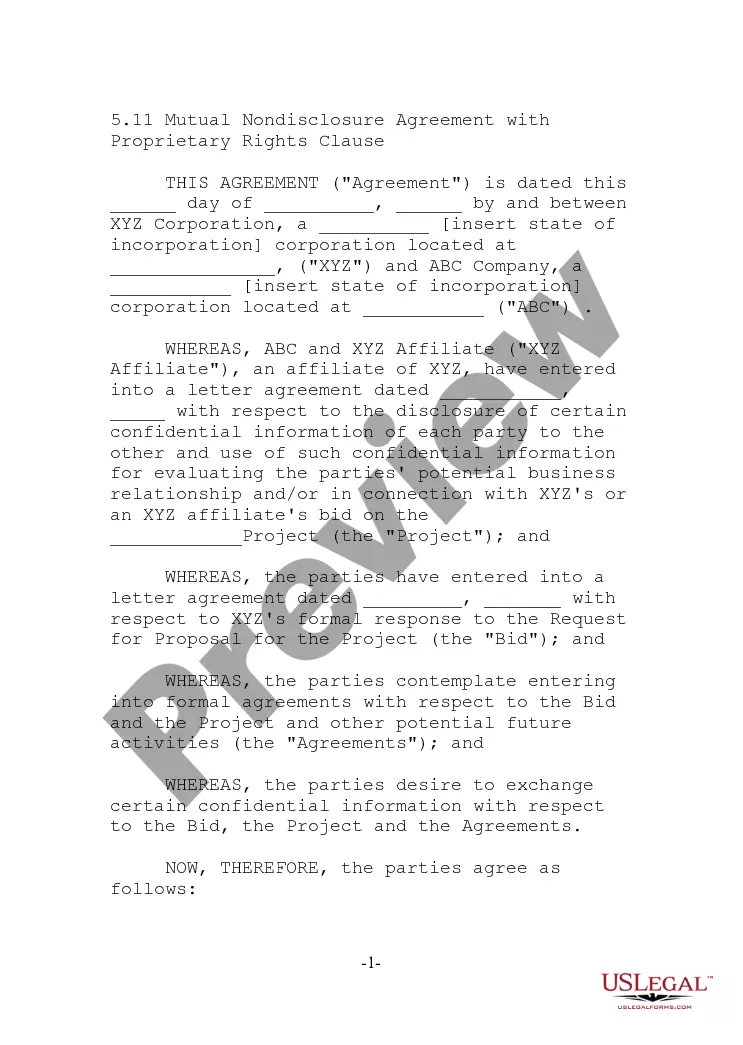
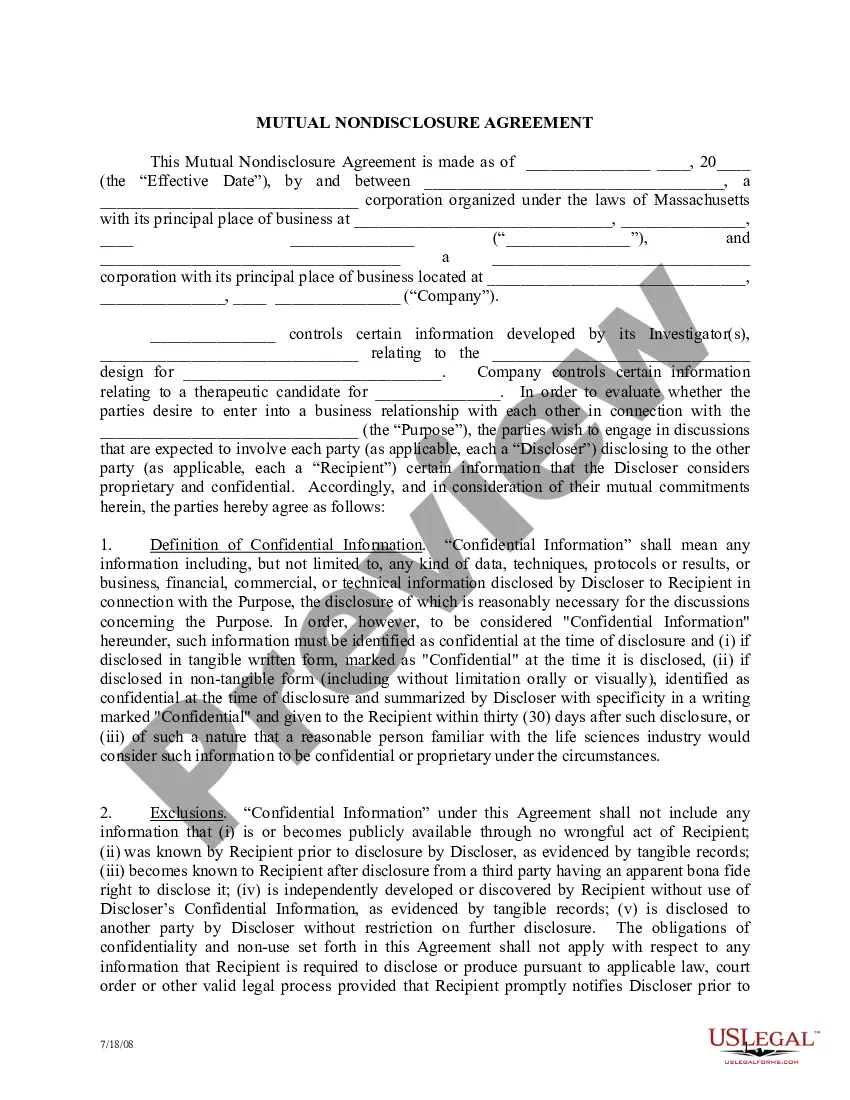
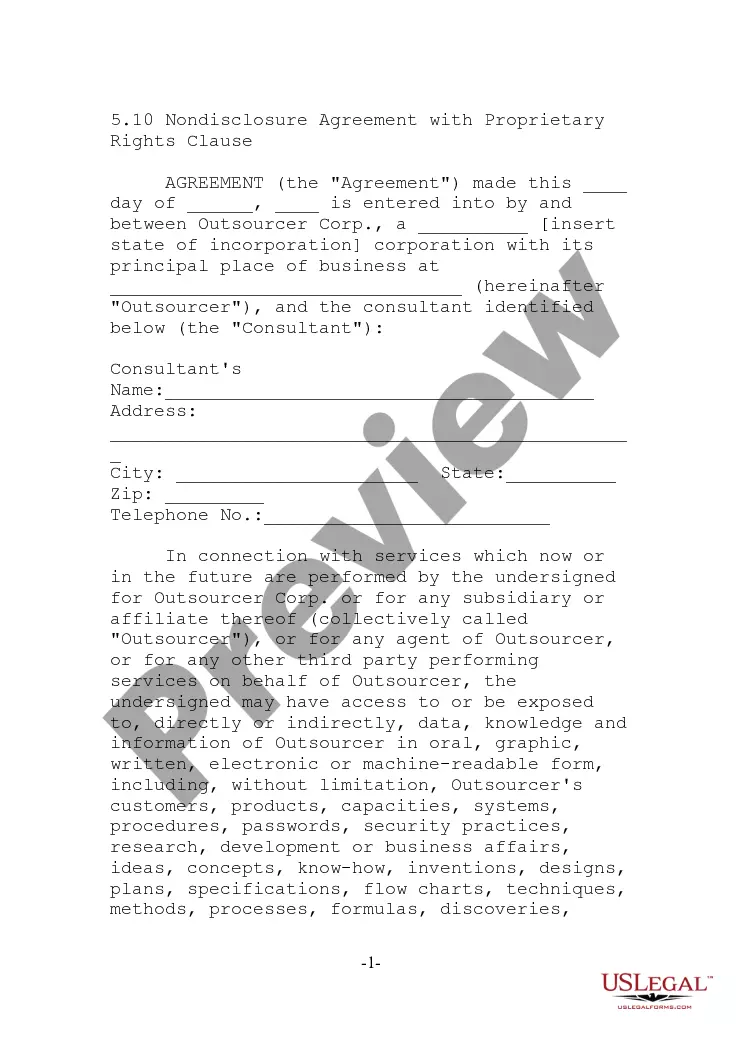
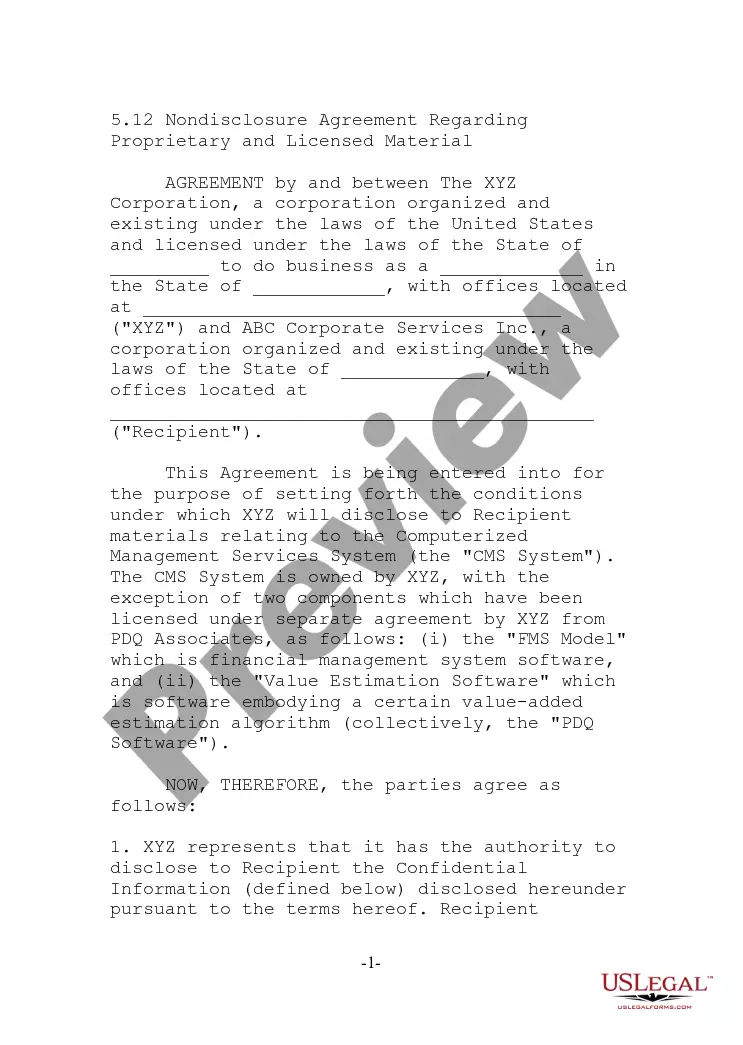
The Mutual Nondisclosure Agreement with Proprietary Rights Clause is a legal document designed to protect confidential information exchanged between two parties during business discussions. This mutual agreement ensures that both parties keep shared information confidential, particularly when discussing sensitive topics such as intellectual property, business strategies, or potential projects. Unlike one-sided nondisclosure agreements, this form emphasizes mutual protection and includes provisions regarding proprietary rights, making it essential for parties who wish to keep their shared information secure while exploring potential collaborations.
What’s included in this form
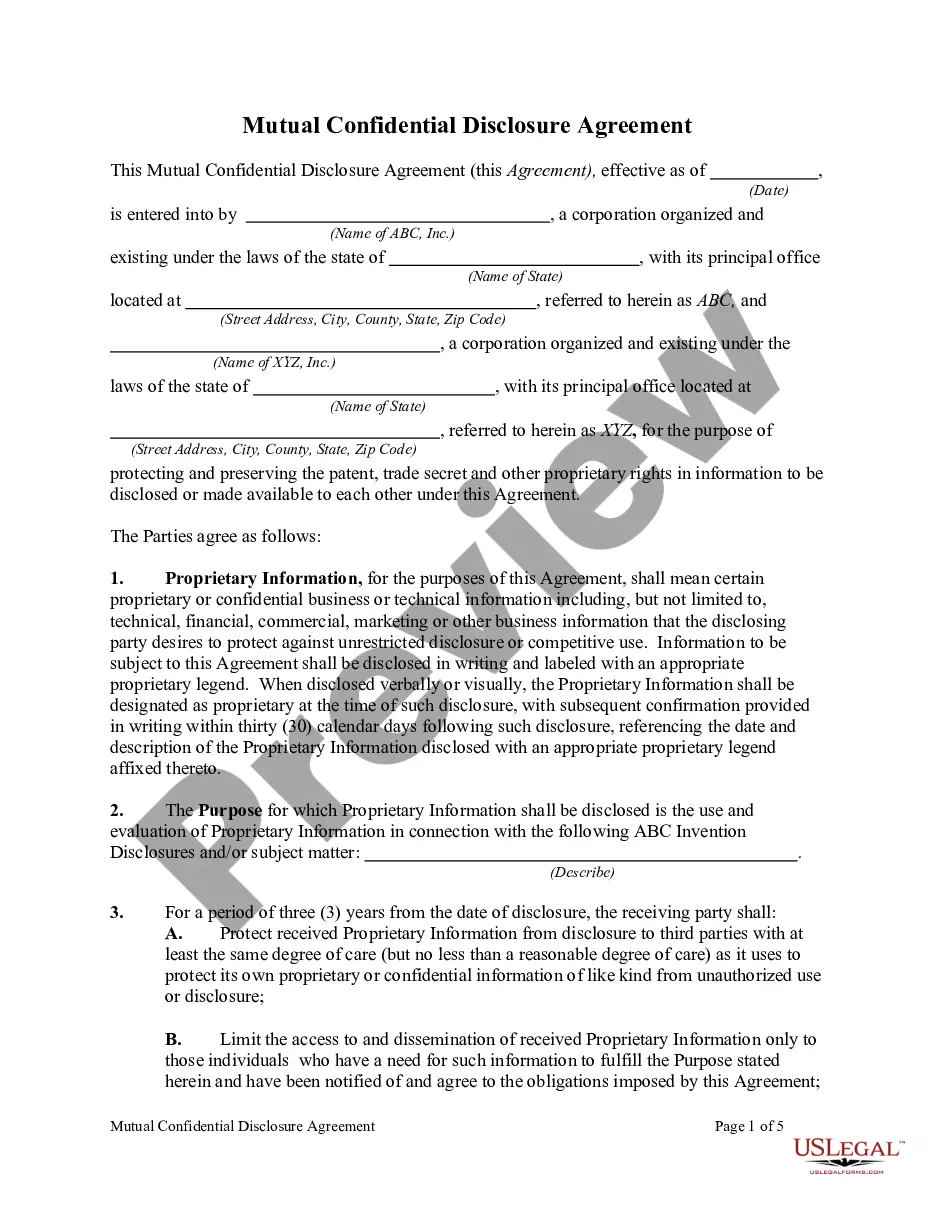
- Identification of the parties involved, including their respective states of incorporation.
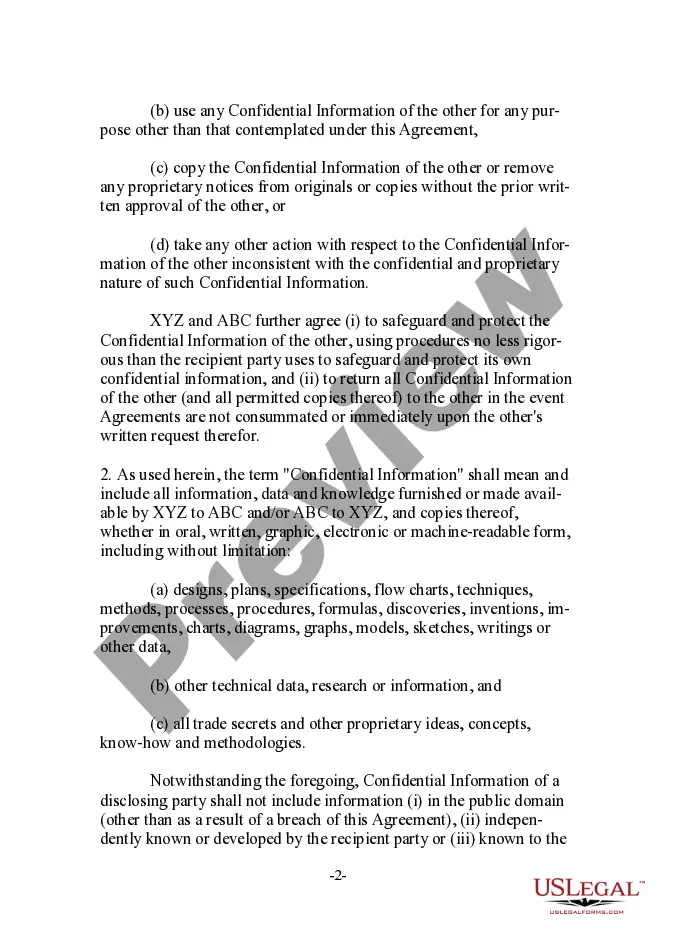
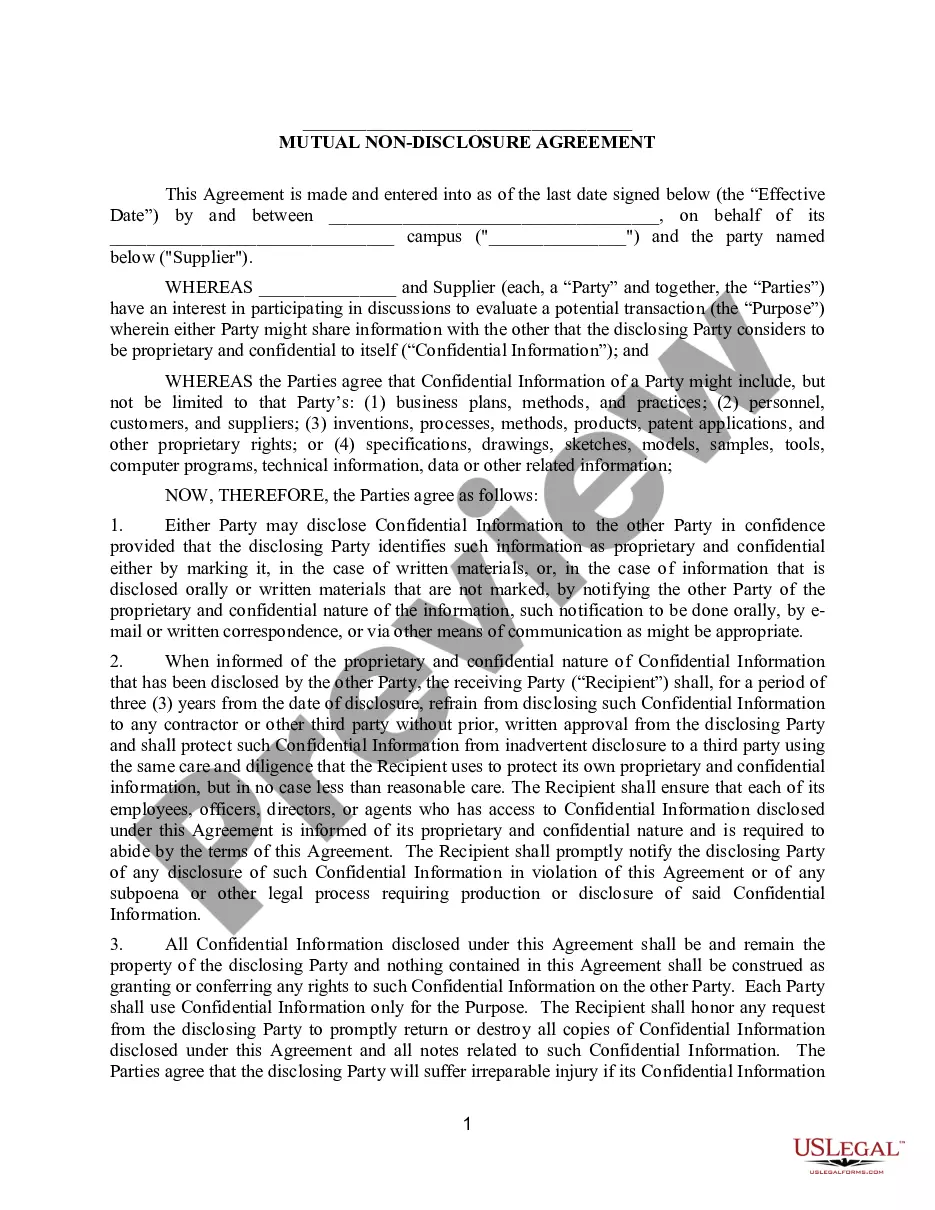
- Definition of "Confidential Information" and the obligations to protect it.
- Permissions regarding the disclosure of confidential information to employees and subcontractors.
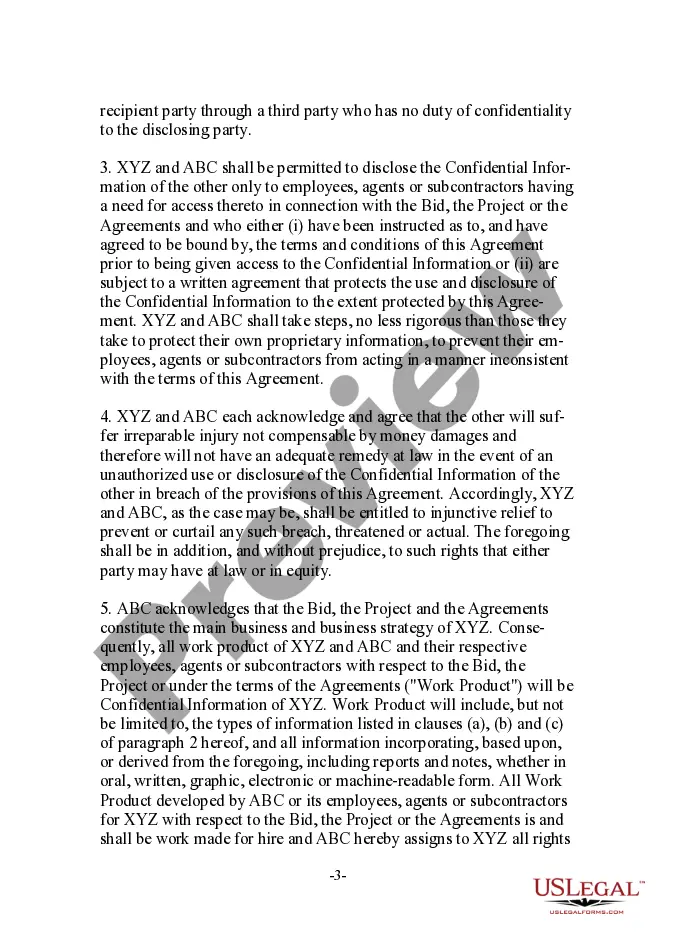
- Provisions for injunctive relief in the event of unauthorized use or disclosure of information.
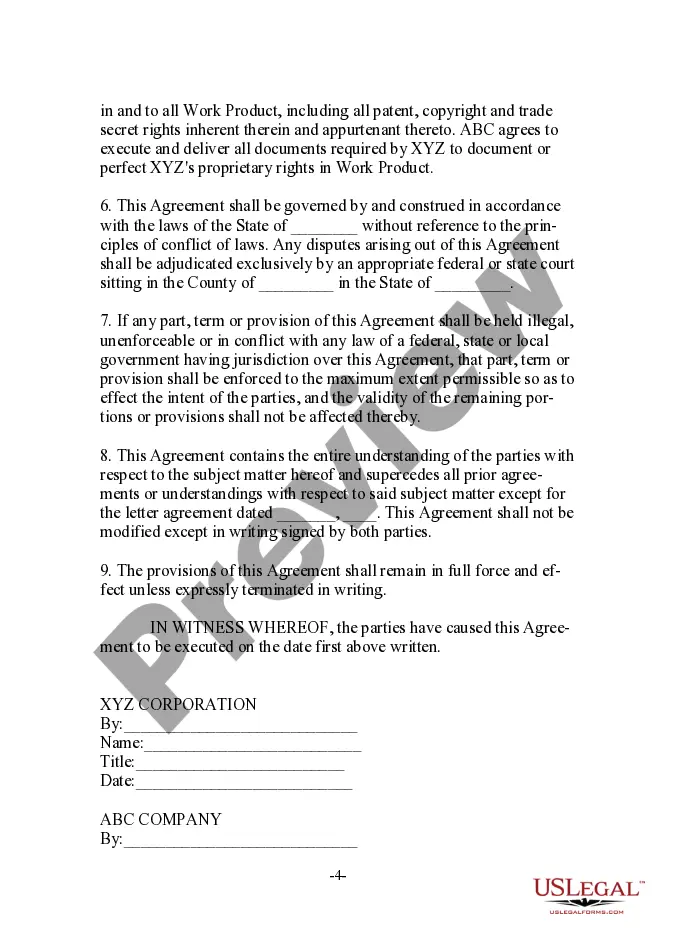
- Clauses specifying the ownership of work product resulting from the agreement.
- Governing law and dispute resolution provisions.
Situations where this form applies
This form is appropriate for businesses or entities entering negotiations where confidential information will be shared. Situations include discussions related to a new product launch, evaluation of partnership opportunities, collaboration on projects, or while submitting proposals that involve proprietary data. It is essential when both parties need to share sensitive information securely and ensure that their proprietary rights are preserved throughout the process.
Who should use this form
- Businesses negotiating contracts or proposals with suppliers, partners, or affiliates.
- Companies disclosing sensitive intellectual property and seeking protection against unauthorized use.
- Entrepreneurs and startups considering collaborations with other firms or investors.
- Legal representatives drafting agreements for clients involving the exchange of confidential business information.
Instructions for completing this form
- Identify the parts involved in the agreement by entering their legal names and states of incorporation.
- Clearly define the "Confidential Information" to ensure both parties understand what is protected.
- Specify any exceptions to confidentiality as necessary, especially regarding publicly available information.
- Enter any required dates and note other relevant details, such as the project name or proposal involved.
- Have both parties sign and date the agreement to make it legally binding.
Does this form need to be notarized?
This form usually doesn’t need to be notarized. However, local laws or specific transactions may require it. Our online notarization service, powered by Notarize, lets you complete it remotely through a secure video session, available 24/7.
Get your form ready online
Our built-in tools help you complete, sign, share, and store your documents in one place.
Make edits, fill in missing information, and update formatting in US Legal Forms—just like you would in MS Word.
Download a copy, print it, send it by email, or mail it via USPS—whatever works best for your next step.
Sign and collect signatures with our SignNow integration. Send to multiple recipients, set reminders, and more. Go Premium to unlock E-Sign.
If this form requires notarization, complete it online through a secure video call—no need to meet a notary in person or wait for an appointment.
We protect your documents and personal data by following strict security and privacy standards.

Make edits, fill in missing information, and update formatting in US Legal Forms—just like you would in MS Word.

Download a copy, print it, send it by email, or mail it via USPS—whatever works best for your next step.

Sign and collect signatures with our SignNow integration. Send to multiple recipients, set reminders, and more. Go Premium to unlock E-Sign.

If this form requires notarization, complete it online through a secure video call—no need to meet a notary in person or wait for an appointment.

We protect your documents and personal data by following strict security and privacy standards.
Mistakes to watch out for
- Failing to clearly define what constitutes "Confidential Information."
- Not including provisions for the return of confidential information upon request.
- Omitting signatures or dates from both parties.
- Neglecting to specify jurisdiction for dispute resolution.
- Using boilerplate language without customization, which can lead to misunderstandings.
Advantages of online completion
- Easy access to a professionally drafted legal form tailored for mutual protection.
- Ability to download and edit the form in Word format to fit specific business needs.
- Efficient process for completing and finalizing agreements without the need for in-person meetings.
- Time-saving option by having ready-to-use templates at your disposal.
Summary of main points
- The Mutual Nondisclosure Agreement protects sensitive information shared between parties.
- It is essential for businesses engaged in projects involving proprietary rights.
- Ensure that all parties fully understand their obligations under the agreement.
- Customization to fit state requirements can enhance legal protection.
Looking for another form?
Form popularity
FAQ
Identification of the parties. Definition of what is deemed to be confidential. The scope of the confidentiality obligation by the receiving party. The exclusions from confidential treatment. The term of the agreement.
A non-disclosure agreement is a legally binding contract that establishes a confidential relationship. The party or parties signing the agreement agree that sensitive information they may obtain will not be made available to any others.In this case, it may be called a mutual non-disclosure agreement.
No, it is not necessary for the nondisclosure agreement to be "notarized", nor is it necessary under California law for the signatures on such an agreement to be "witnessed".
No, it is not necessary for the nondisclosure agreement to be "notarized", nor is it necessary under California law for the signatures on such an agreement to be "witnessed".
Identify each party in the first section of the form. The NDA form will start by declaring it to be an agreement and identifying who the agreement is between. Whoever is disclosing the information to be protected is the "disclosing party"; write his or her name on this space.
The party to be charged must have signed the contract. Since the NDAs benefit you, so long as the other party has signed, that ishould be sufficient.
Identify each party in the first section of the form. The NDA form will start by declaring it to be an agreement and identifying who the agreement is between. Whoever is disclosing the information to be protected is the "disclosing party"; write his or her name on this space.
Set the date of the agreement. Describe the two parties, sometimes called the Disclosing Party and the Receiving Party.7feff Include names and identification, so there can be no misunderstanding about who signed the agreement.
An employee can be required to sign an NDA or NDA-like agreement with an employer, protecting trade secrets. In fact, some employment agreements include a clause restricting employees' use and dissemination of company-owned confidential information.