Copyright Policy
Understanding this form
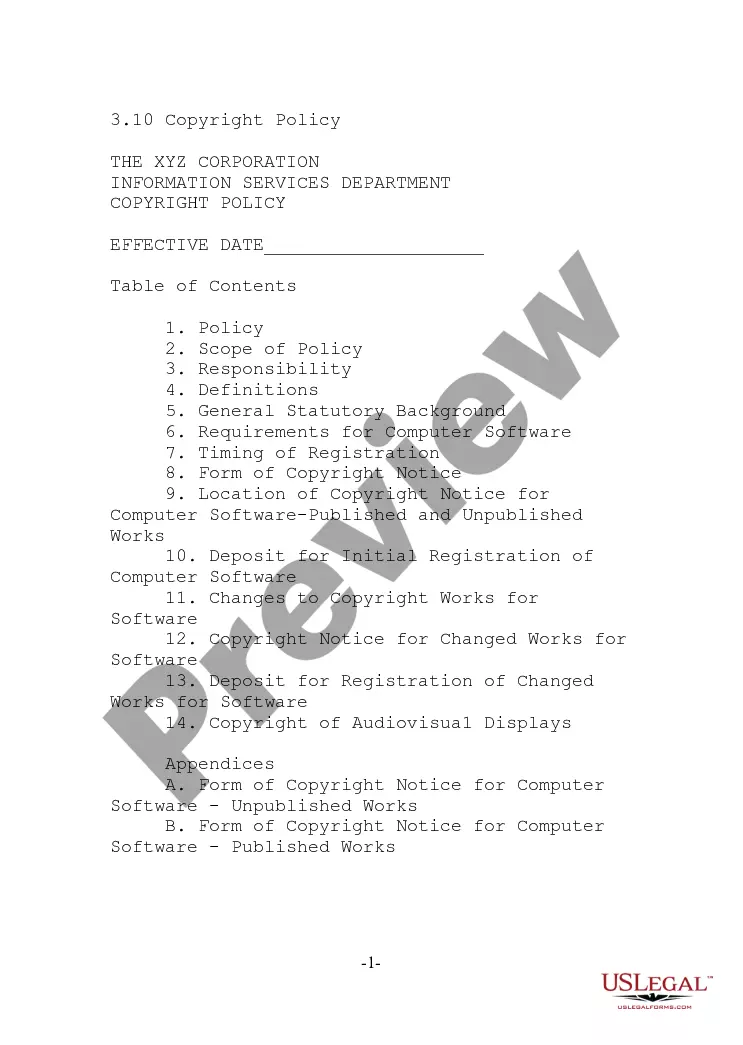
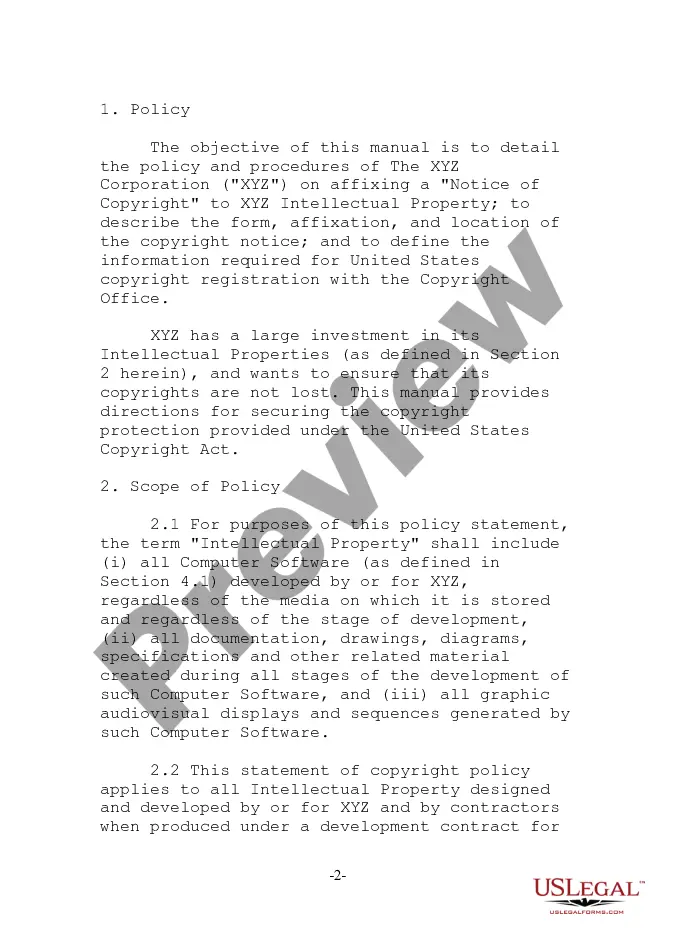
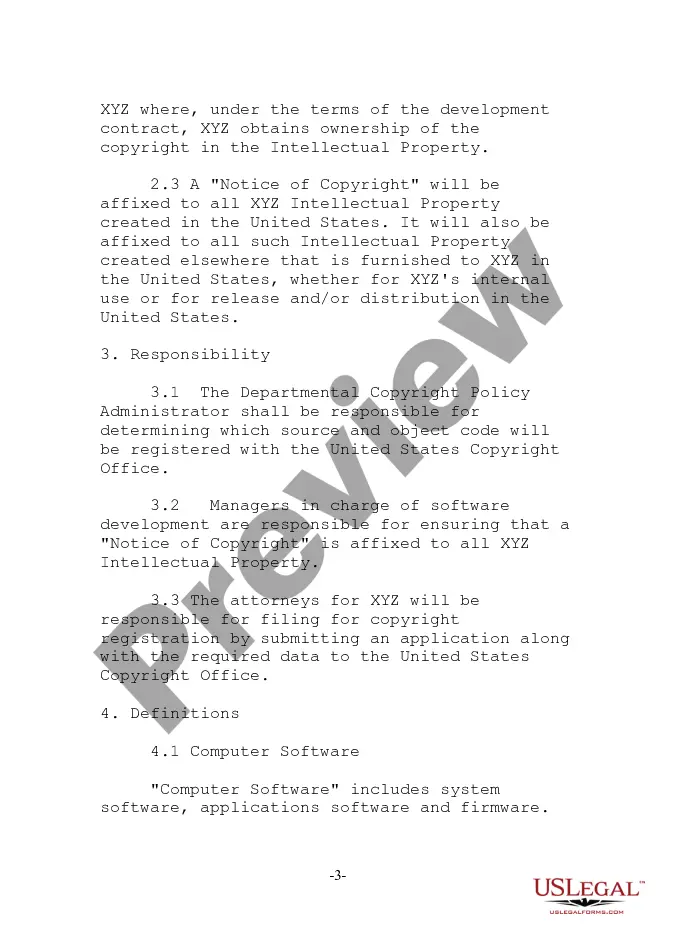
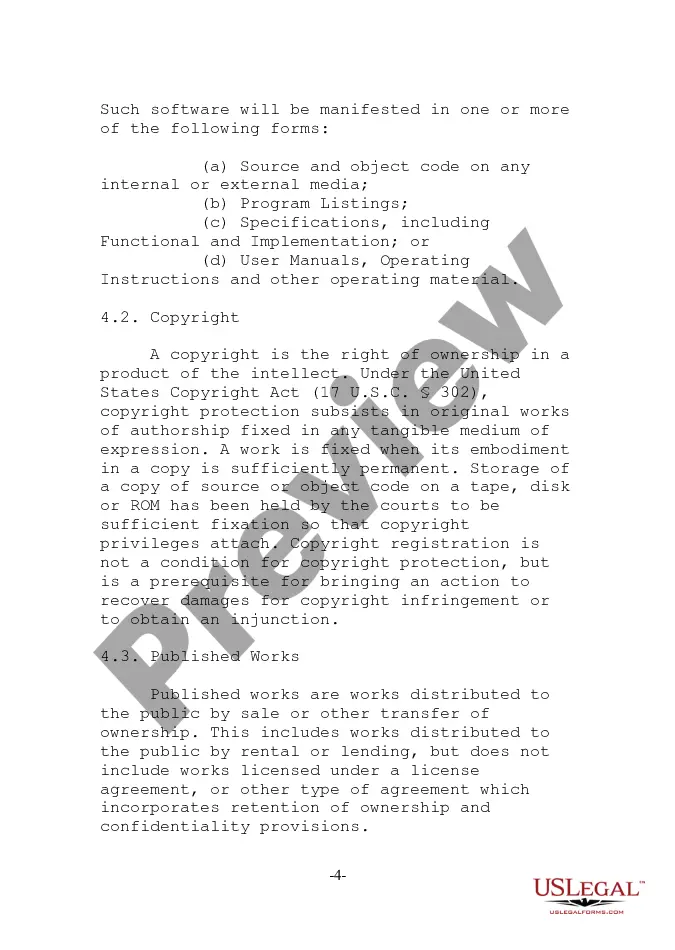
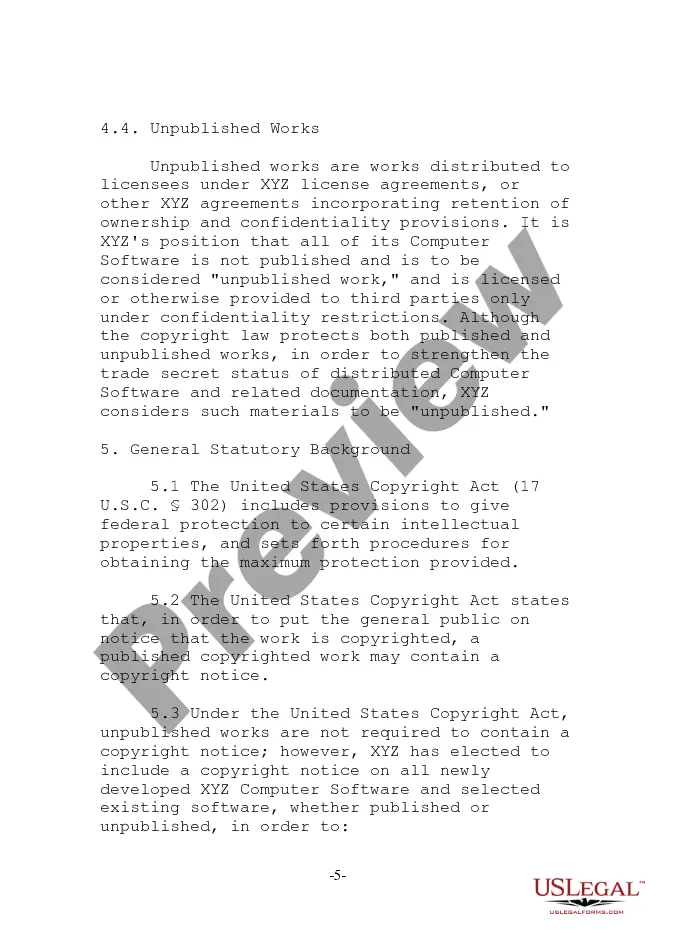
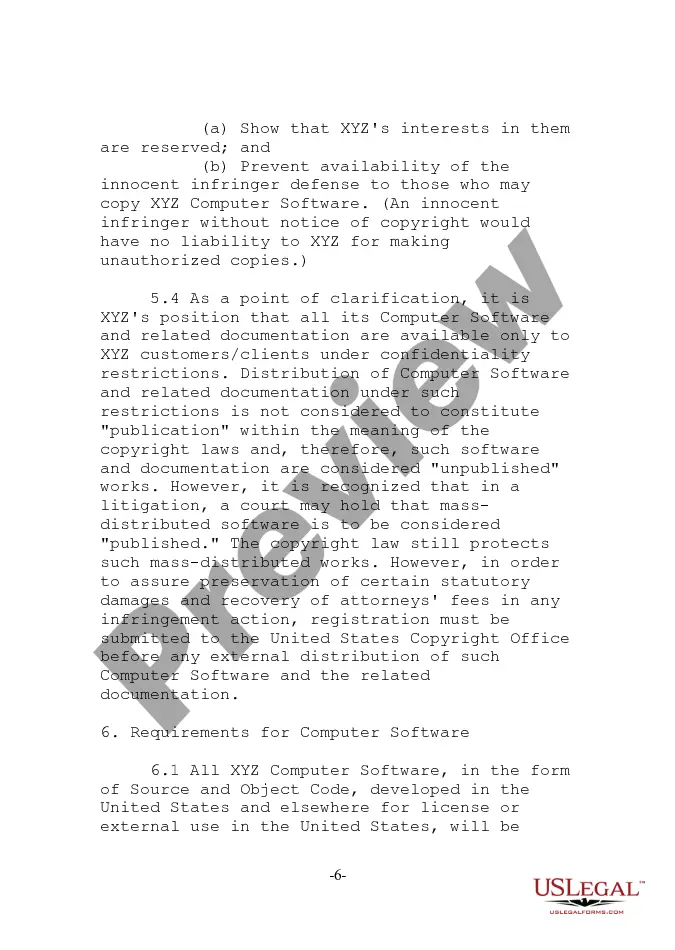
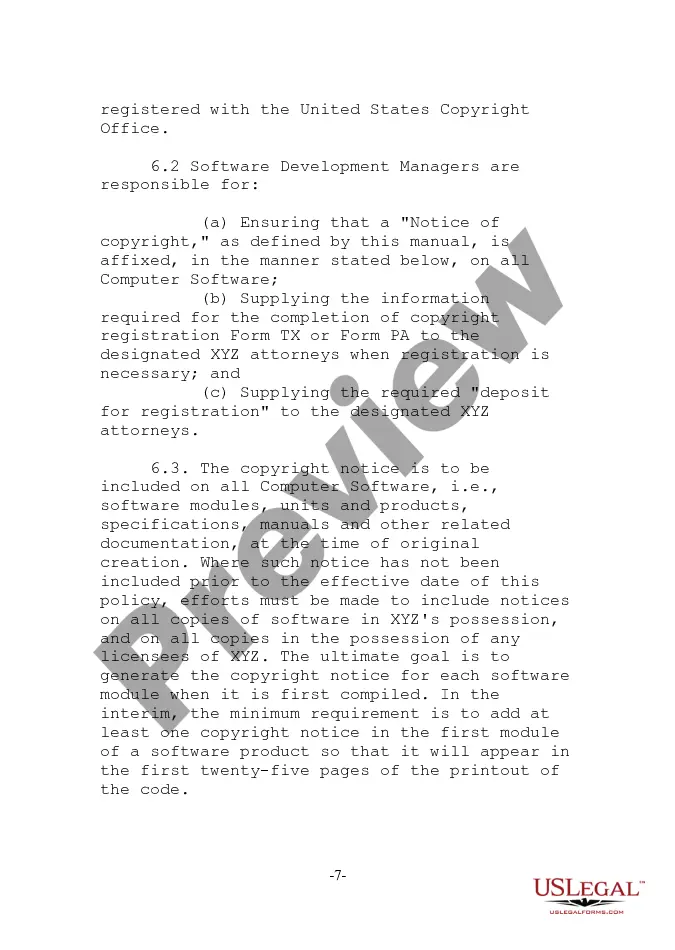
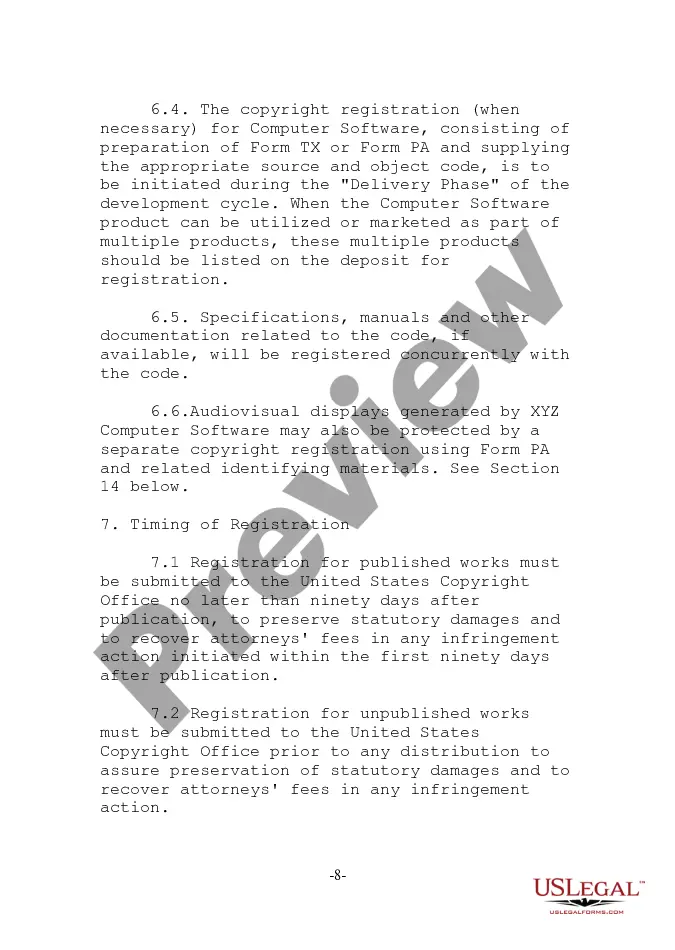
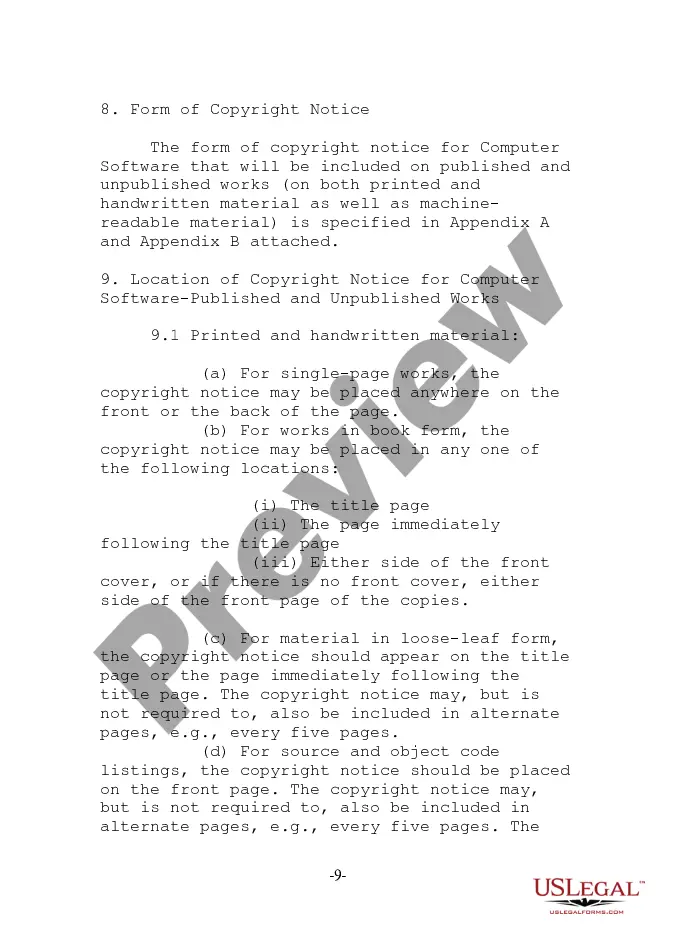
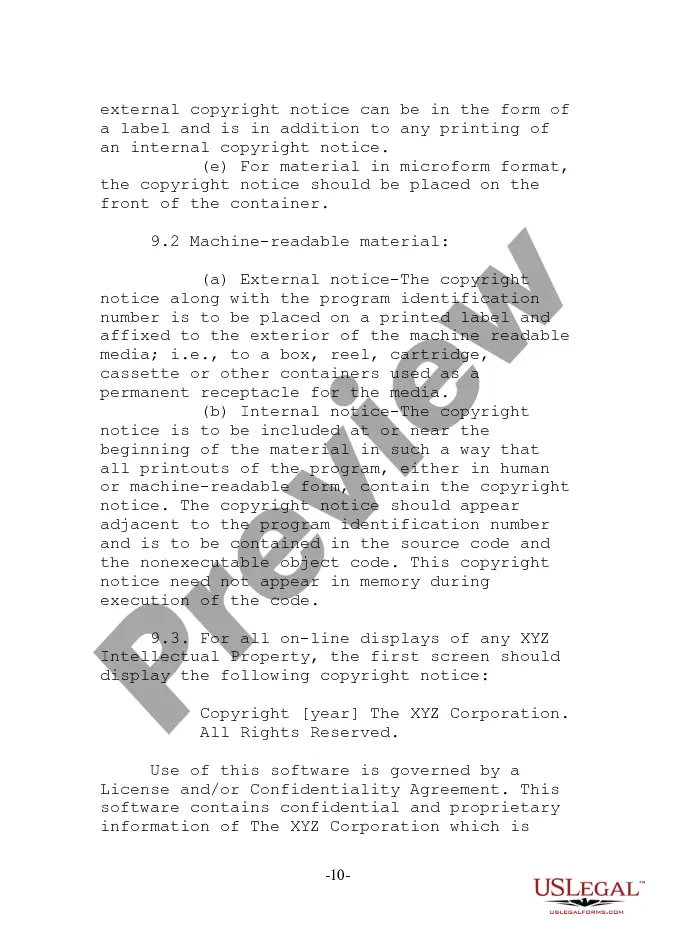
The Copyright Policy form outlines the procedures for securing copyright protections for intellectual property developed by The XYZ Corporation. This form is essential for protecting digital and audiovisual content, ensuring compliance with federal copyright law. Unlike standard copyright registration forms, this policy offers a comprehensive guide on the application of copyright notices, registration timing, and responsibilities within the organization, making it adaptable to a corporation's specific needs.
Key components of this form
- Policy: Defines the objectives and procedures for affixing copyright notices.
- Scope: Outlines what constitutes intellectual property under the policy.
- Responsibility: Sets out the roles of various parties in managing copyrights.
- Requirements: Details necessary steps for copyright registration of computer software.
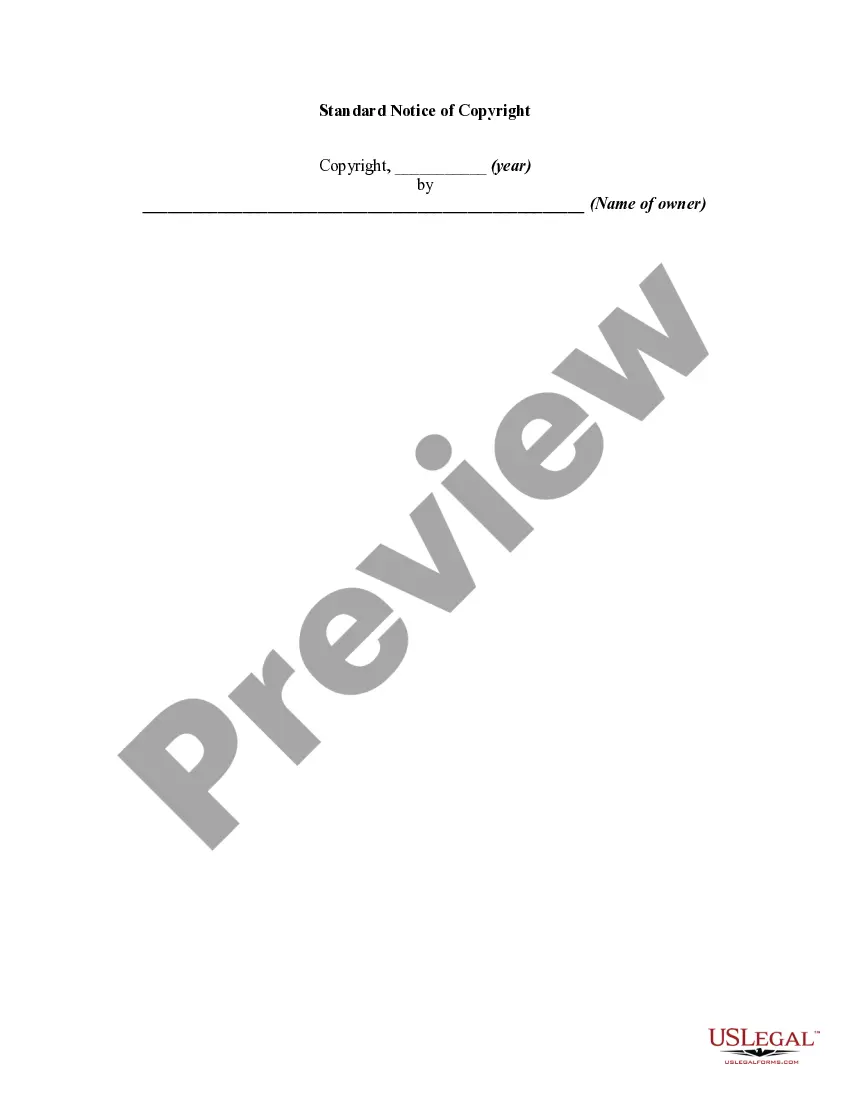
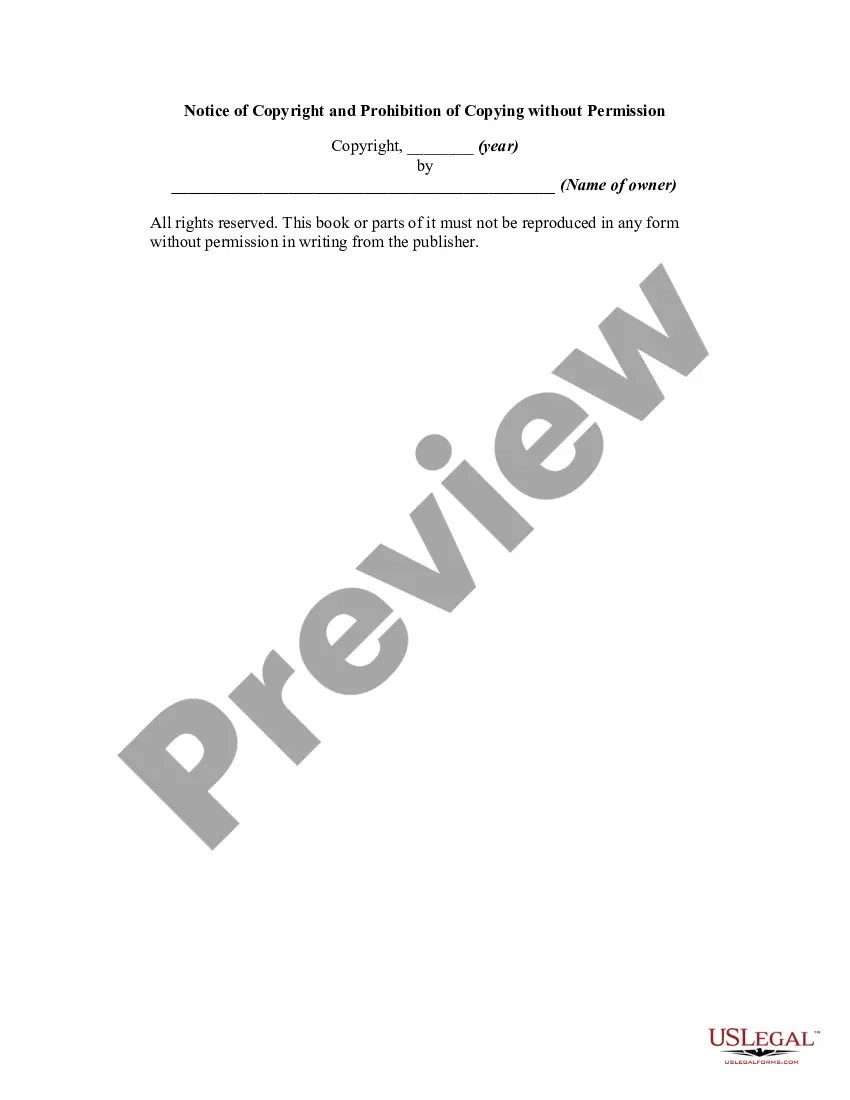
- Copyright Notices: Specifies how and where to place copyright notices on published and unpublished works.
- Registration: Provides guidelines for registering changes to copyrighted works.

Common use cases
This Copyright Policy form should be utilized when The XYZ Corporation needs to establish a clear protocol for protecting its intellectual property rights. This includes instances when developing new software, creating audiovisual displays, or making significant changes to existing works. It ensures that all parties involved understand their responsibilities in securing copyrights, which is critical for legal protection against infringement.
Who needs this form
- Managers of software development who oversee projects involving intellectual property.
- Legal teams responsible for filing copyright registrations and compliance.
- Employees involved in the creation of software and related documentation.
- Contractors developing intellectual property under contract with The XYZ Corporation.
How to prepare this document
- Identify the type of intellectual property being developed (software, audiovisual content, etc.).
- Determine who will be responsible for affixing copyright notices to the content.
- Ensure all necessary information for copyright registration is collected and compiled.
- Place copyright notices in the specified locations within the intellectual property.
- File for copyright registration with the Copyright Office where applicable.
Notarization guidance
This form does not typically require notarization unless specified by local law. However, it is recommended to consult with legal counsel for specific situations regarding intellectual property management.
Get your form ready online
Our built-in tools help you complete, sign, share, and store your documents in one place.
Make edits, fill in missing information, and update formatting in US Legal Forms—just like you would in MS Word.
Download a copy, print it, send it by email, or mail it via USPS—whatever works best for your next step.
Sign and collect signatures with our SignNow integration. Send to multiple recipients, set reminders, and more. Go Premium to unlock E-Sign.
If this form requires notarization, complete it online through a secure video call—no need to meet a notary in person or wait for an appointment.
We protect your documents and personal data by following strict security and privacy standards.

Make edits, fill in missing information, and update formatting in US Legal Forms—just like you would in MS Word.

Download a copy, print it, send it by email, or mail it via USPS—whatever works best for your next step.

Sign and collect signatures with our SignNow integration. Send to multiple recipients, set reminders, and more. Go Premium to unlock E-Sign.

If this form requires notarization, complete it online through a secure video call—no need to meet a notary in person or wait for an appointment.

We protect your documents and personal data by following strict security and privacy standards.
Mistakes to watch out for
- Failing to affix copyright notices to all new works or updated software.
- Missing the registration deadlines for published and unpublished works.
- Not clearly defining the roles and responsibilities of team members.
Why complete this form online
- Convenience: Easy access to a comprehensive copyright policy template.
- Editability: Quickly adapt the form to meet specific company needs.
- Reliability: Developed by legal professionals to ensure compliance with copyright laws.
Legal use & context
- Helps to legally affirm ownership of intellectual property by providing a clear framework for copyright management.
- Ensures compliance with the U.S. Copyright Act for both published and unpublished works.
- Protects the company from legal repercussions associated with copyright infringement.
Looking for another form?
Form popularity
FAQ
Copyright is the legal and exclusive right to copy, or permit to be copied, some specific work of art. If you own the copyright on something, someone else cannot make a copy of it without your permission. Copyright usually originates with the creator of a work, but can be sold, traded, or inherited by others.
Copyright Defined as a legal concept that gives the creator of an original work exclusive rights to exploit the work for a limited time and prevent others from copying the work.Moral rights The three moral rights granted to the creators of copyright in Part IX of the Copyright Act 1968 (Cth).
Copyright requirements There are three basic requirements for copyright protection: that which is to be protected must be a work of authorship; it must be original; and it must be fixed in a tangible medium of expression.
Simply go to the Registration Portal of the Copyright Office's website. It allows you to select the specific type of creative work you seek to register, with such choices as literary works, visual arts, photographs, or performance.
In general, for works created on or after January 1, 1978, the term of copyright is the life of the author plus seventy years after the author's death. If the work is a joint work with multiple authors, the term lasts for seventy years after the last surviving author's death.
Literary, musical and dramatic works. Pantomimes and choreographic works. Pictorial, graphic and sculptural works. Sound recordings. Motion pictures and other AV works. Computer programs. Compilations of works and derivative works. Architectural works.
Works without enough originality (creativity) to merit copyright protection such as titles, names, short phrases and slogans, familiar symbols or designs, font design, ingredients or contents, facts, blank forms, etc. cannot be copyrighted.
Literary Works. Musical Works. Dramatic Works. Pantomimes and Choreographic Works. Pictorial, Graphic, and Sculptural Works. Motion Pictures and Other Audiovisual Works. Sound Recordings. Compilations.
Copyright, a form of intellectual property law, protects original works of authorship including literary, dramatic, musical, and artistic works, such as poetry, novels, movies, songs, computer software, and architecture.See Circular 1, Copyright Basics, section "What Works Are Protected."