Agreement to Acquire Literary Material
What is this form?
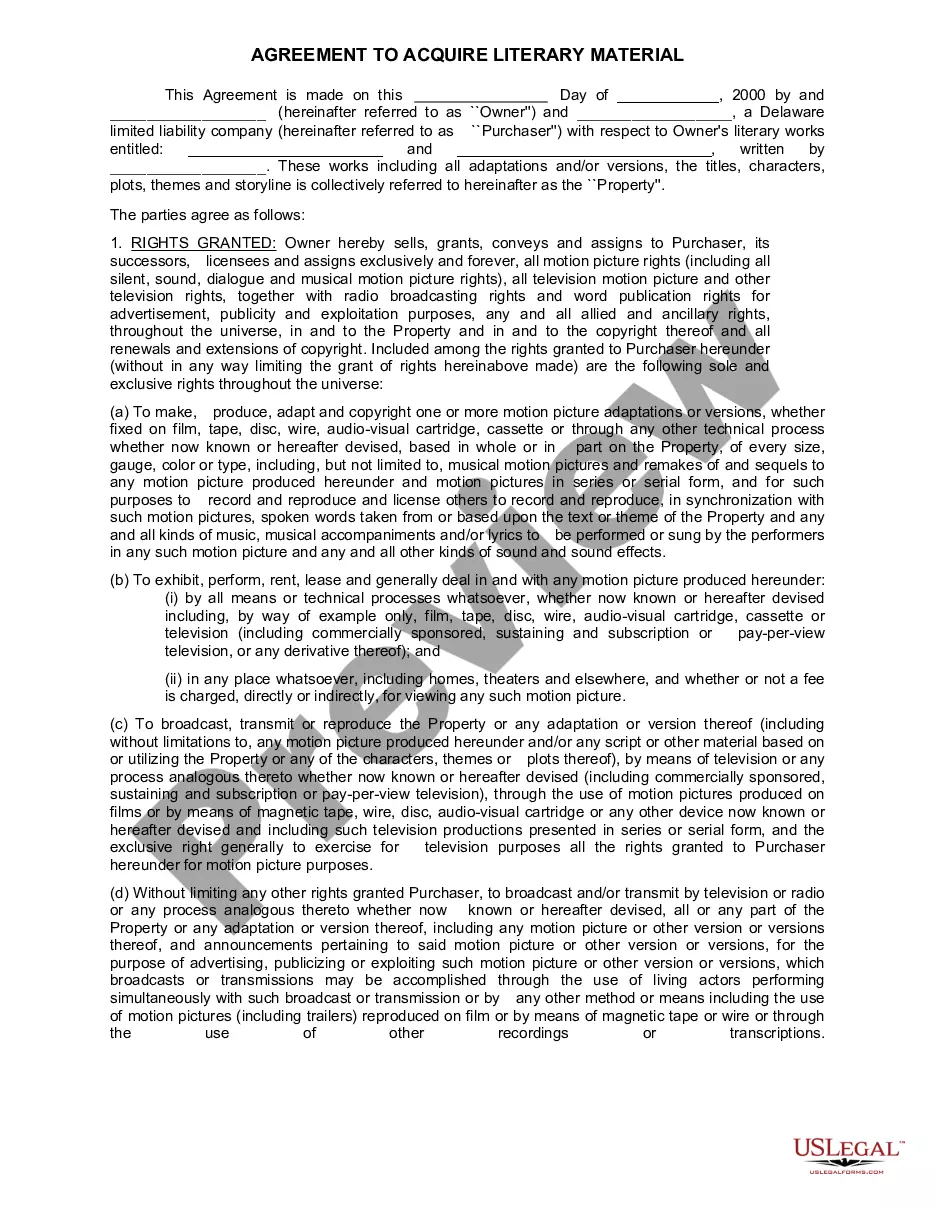
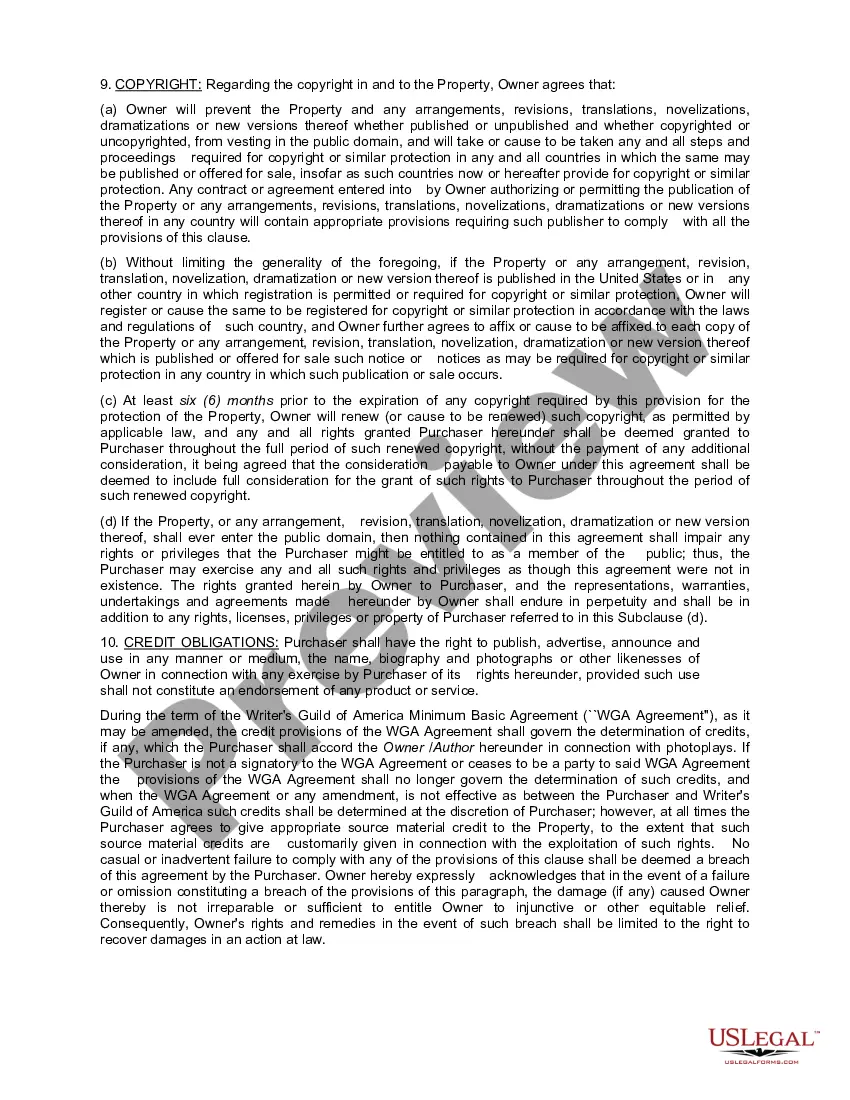
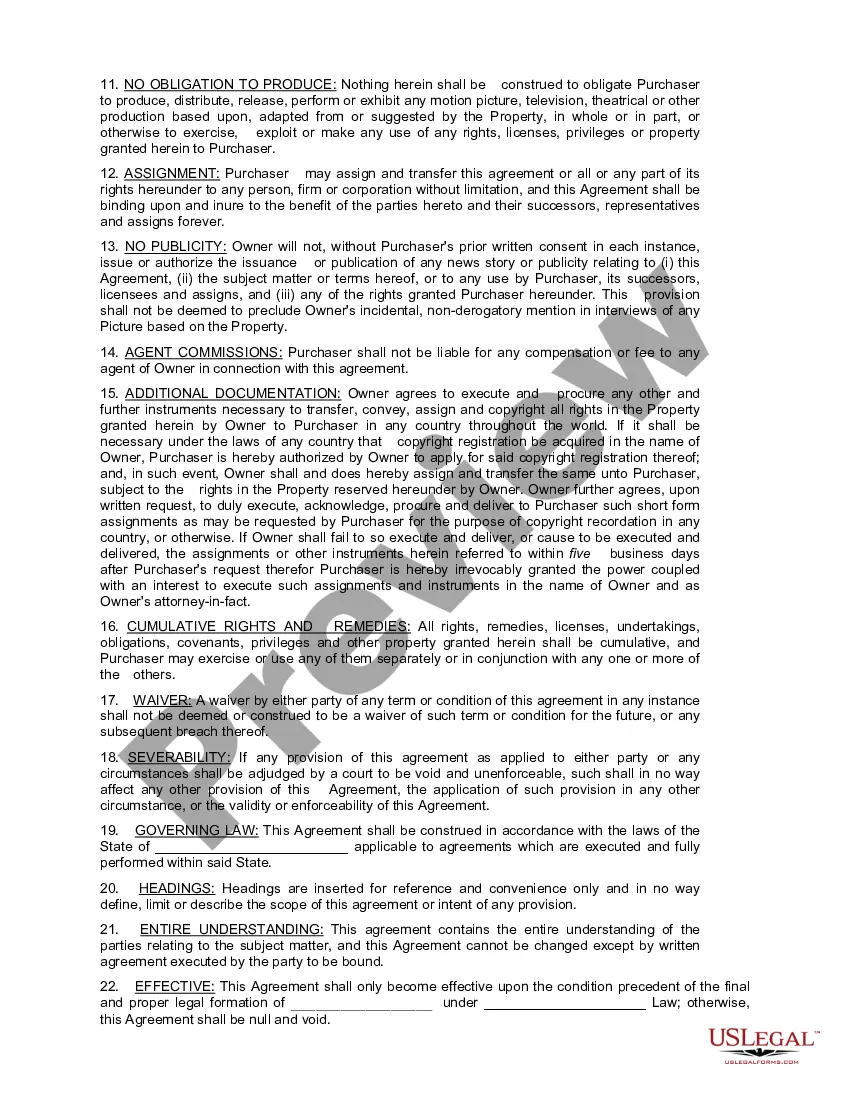
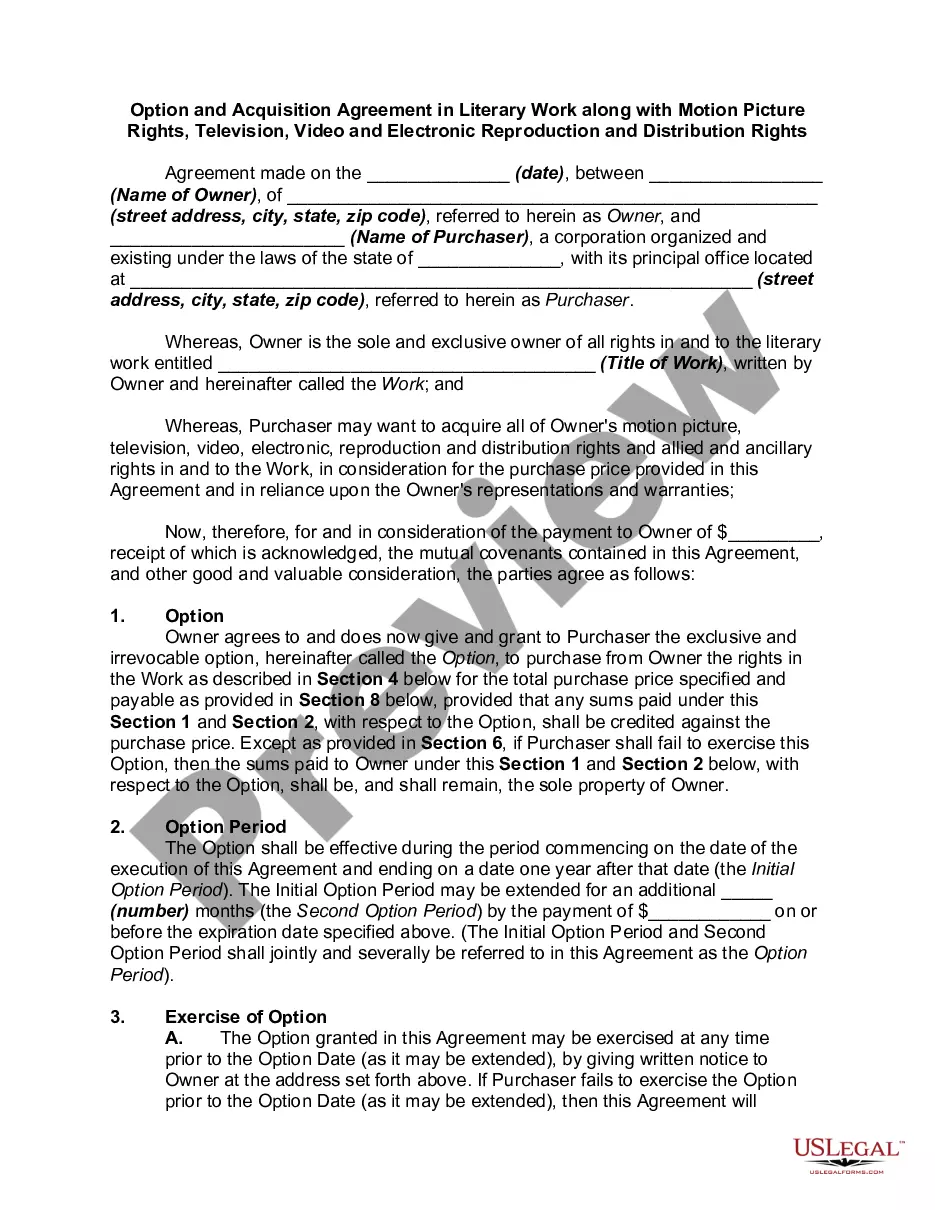
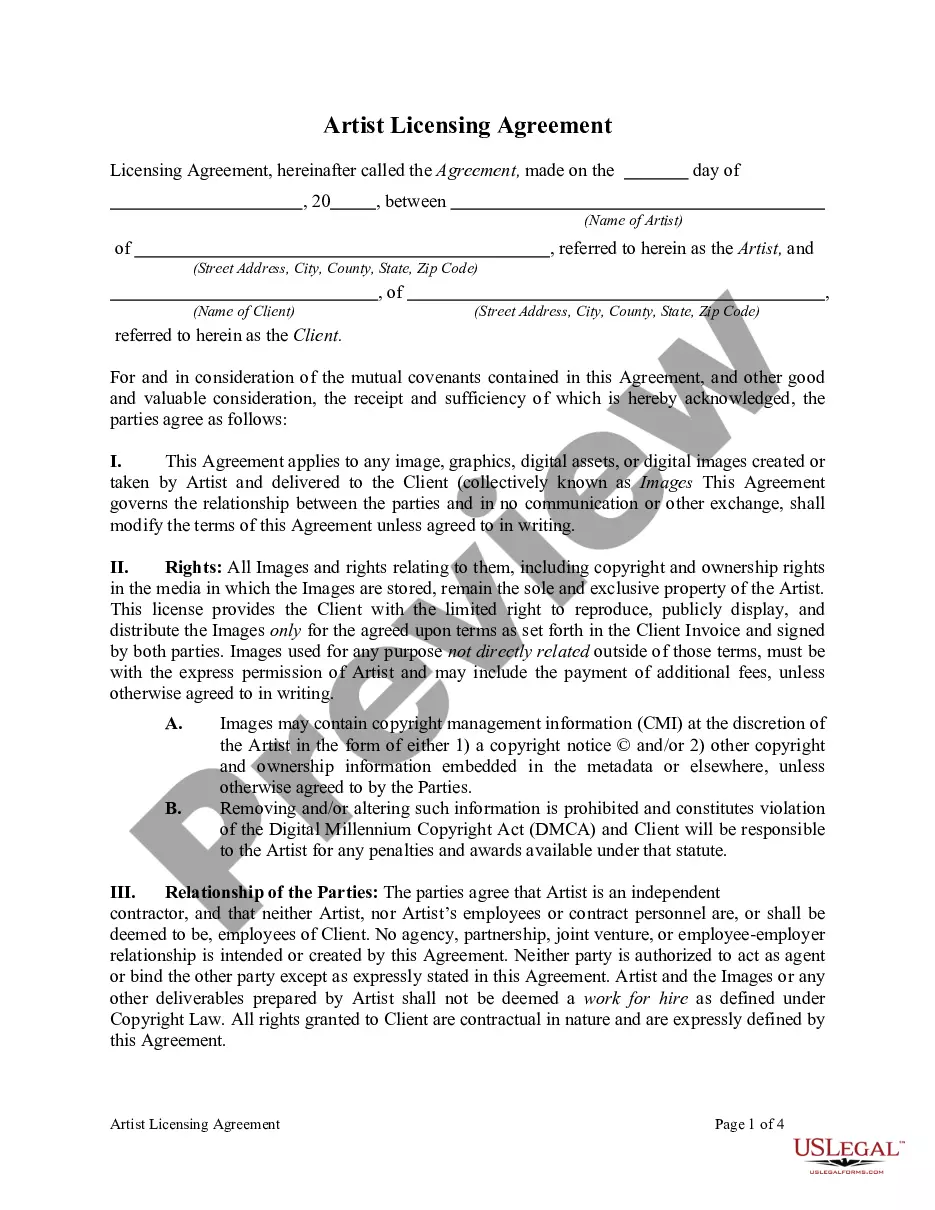
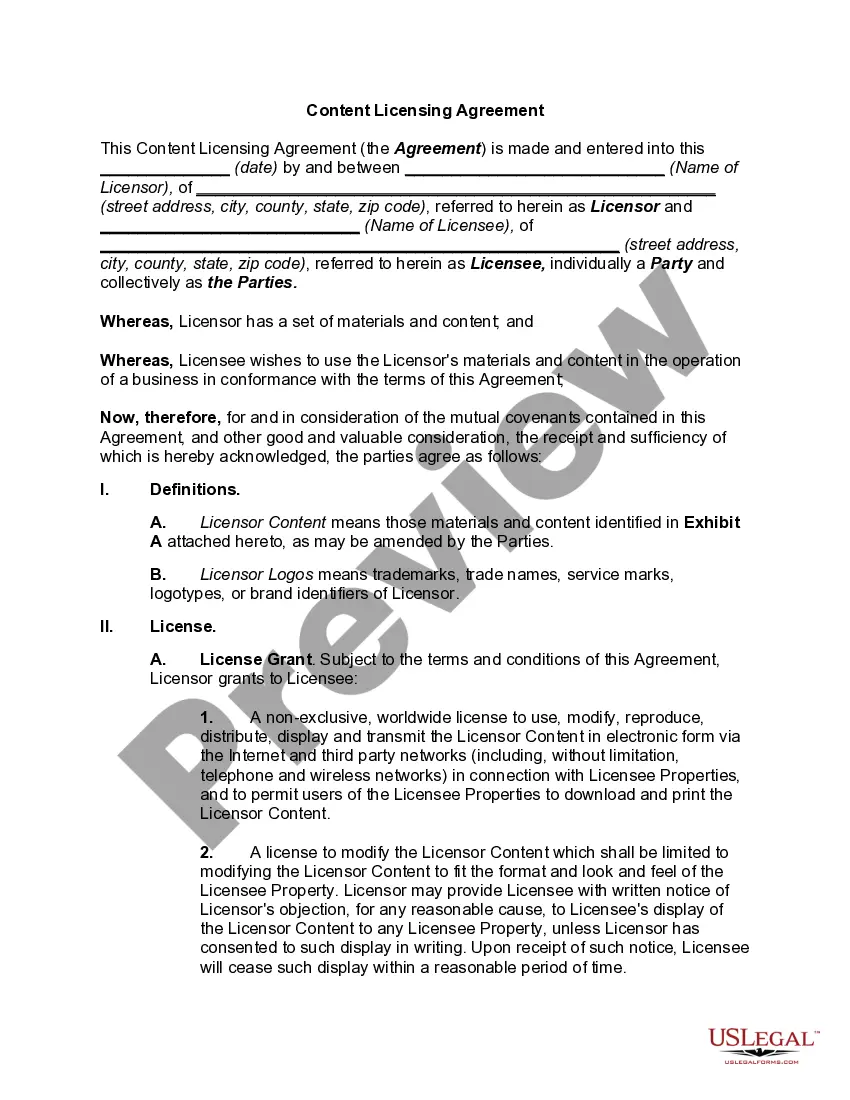
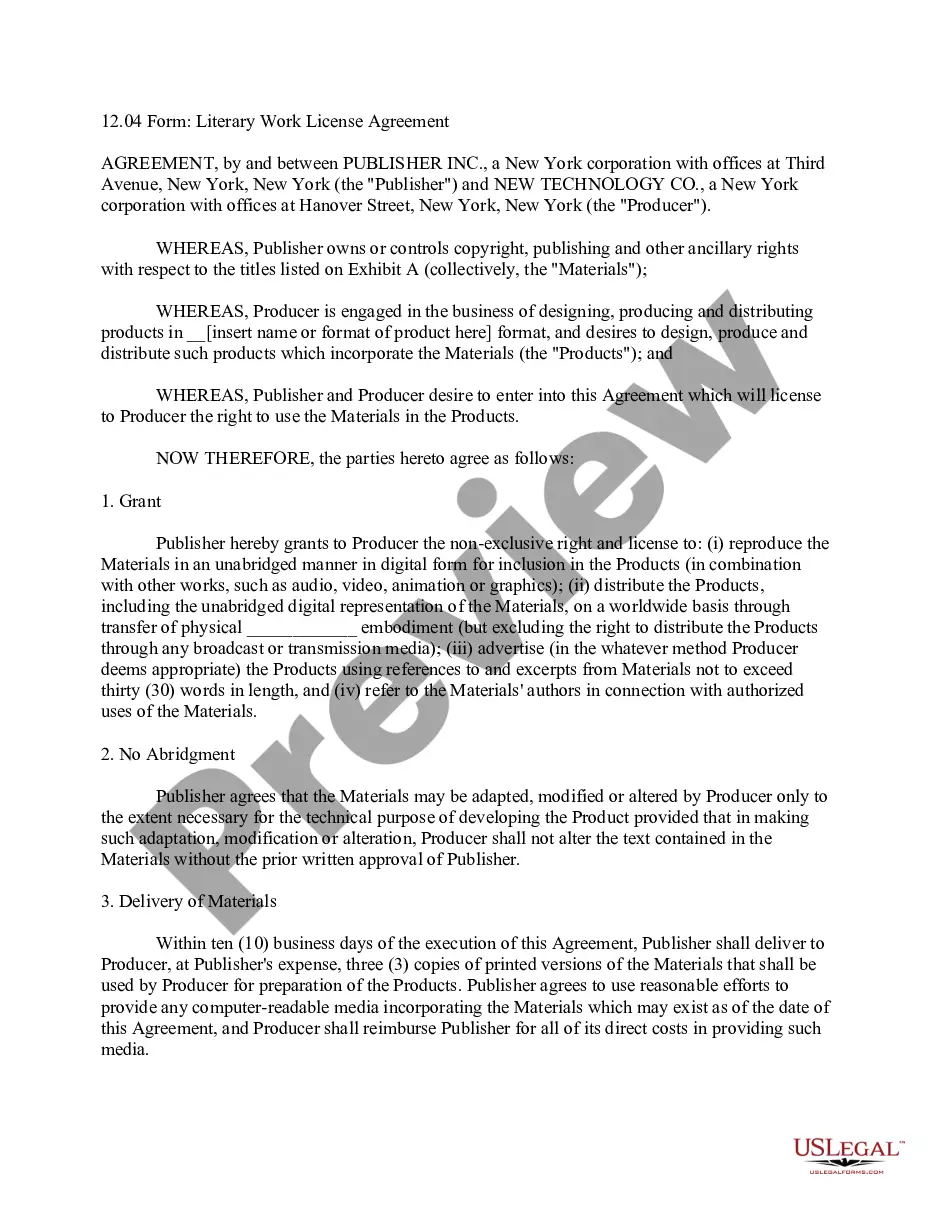
The Agreement to Acquire Literary Material is a legal document used to formalize the sale of literary works from an owner to a purchaser. This agreement grants the purchaser rights to adapt, produce, and exploit the literary material in various media, including film, television, and radio. It differs from other forms by specifically detailing the rights transferred, including adaptations and derivative works, and includes indemnification provisions to protect against legal claims related to ownership and copyright issues.
Key components of this form
- Identification of the owner and purchaser, along with details of the literary works being transferred.
- Clauses granting exclusive rights to the purchaser regarding motion picture, television, and radio adaptations.
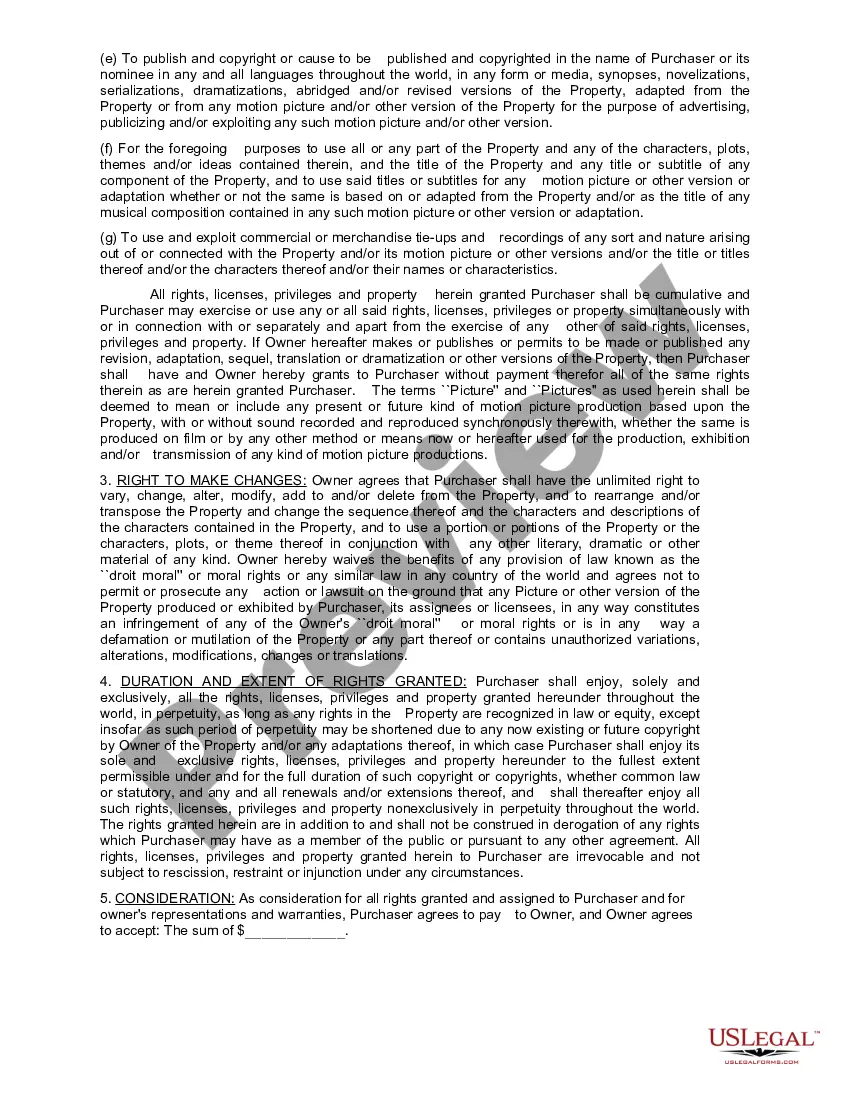
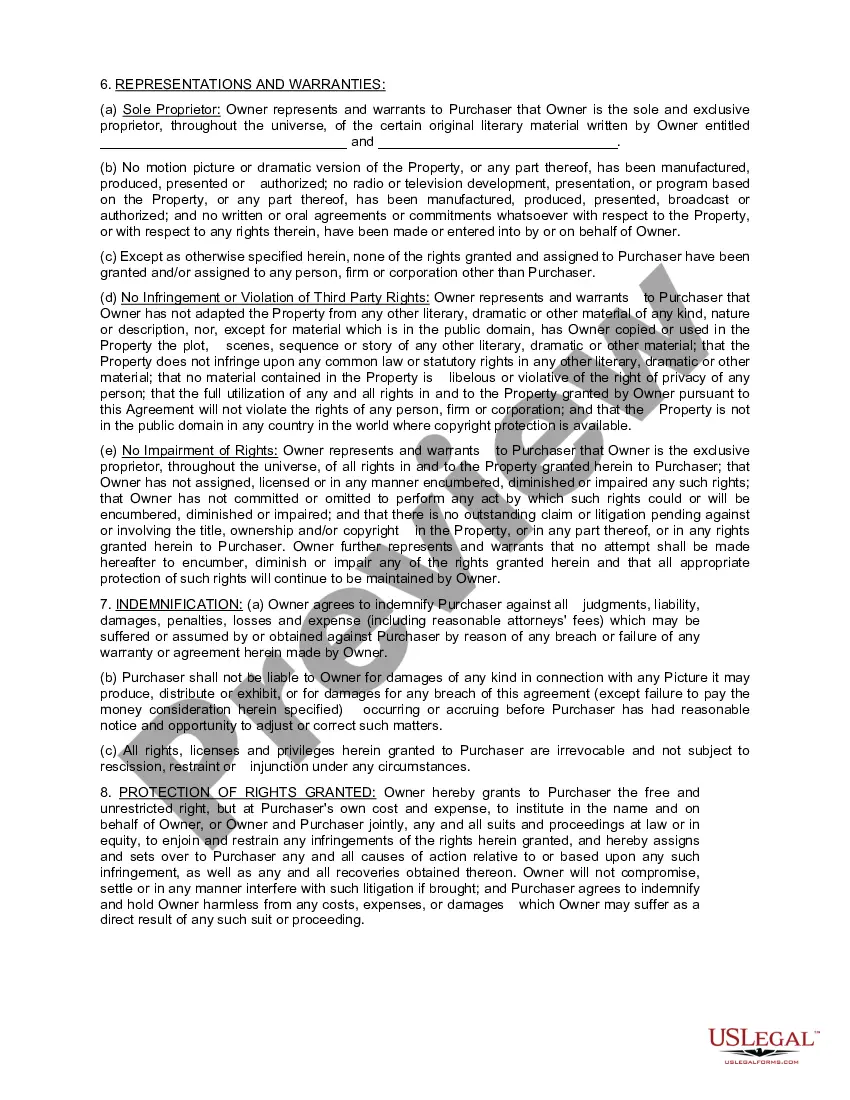
- Indemnification clause protecting the purchaser from potential legal issues due to breach of warranty by the owner.
- Specifications on the duration and extent of rights granted to the purchaser.
- Agreement on the payment to be made by the purchaser to the owner for the rights.

Situations where this form applies
This agreement is essential when an author or creator seeks to sell their literary works, such as novels, scripts, or other written material. It may be used by writers looking to sell their works for adaptation into films or television shows or by production companies acquiring existing literary content to develop into media projects. This form ensures that all rights are clearly defined and transferred, mitigating potential disputes in the future.
Who should use this form
- Authors or literary creators wishing to sell their literary works.
- Producers or production companies looking to acquire literary rights for adaptation.
- Literary agents who assist authors in negotiating the sale of their works.
- Publishing companies planning to adapt literary content into other forms of media.
Instructions for completing this form
- Identify and enter the full names of the owner and purchaser at the beginning of the agreement.
- Clearly describe the literary works being transferred, including titles and authorship.
- Specify the payment amount to be exchanged for the rights in the designated section.
- Review all rights granted to the purchaser and ensure they meet the intended use.
- Obtain signatures from both parties, along with the date of agreement execution.
Notarization guidance
Notarization is generally not required for this form. However, certain states or situations might demand it. You can complete notarization online through US Legal Forms, powered by Notarize, using a verified video call available anytime.
Get your form ready online
Our built-in tools help you complete, sign, share, and store your documents in one place.
Make edits, fill in missing information, and update formatting in US Legal Forms—just like you would in MS Word.
Download a copy, print it, send it by email, or mail it via USPS—whatever works best for your next step.
Sign and collect signatures with our SignNow integration. Send to multiple recipients, set reminders, and more. Go Premium to unlock E-Sign.
If this form requires notarization, complete it online through a secure video call—no need to meet a notary in person or wait for an appointment.
We protect your documents and personal data by following strict security and privacy standards.

Make edits, fill in missing information, and update formatting in US Legal Forms—just like you would in MS Word.

Download a copy, print it, send it by email, or mail it via USPS—whatever works best for your next step.

Sign and collect signatures with our SignNow integration. Send to multiple recipients, set reminders, and more. Go Premium to unlock E-Sign.

If this form requires notarization, complete it online through a secure video call—no need to meet a notary in person or wait for an appointment.

We protect your documents and personal data by following strict security and privacy standards.
Common mistakes to avoid
- Failing to clearly identify the literary works can lead to disputes over what is included in the sale.
- Not specifying the payment amount or terms, which may lead to confusion later on.
- Neglecting to have both parties sign the agreement, making it unenforceable.
- Overlooking the importance of detailing rights granted, which may restrict the purchaser's use of the material.
Advantages of online completion
- Convenient access to the form from anywhere, allowing for easy completion and downloading.
- Editable templates that can be customized to suit specific needs without requiring legal expertise.
- Reliability of professionally drafted content, ensuring the agreement meets legal standards.
Legal use & context
- This agreement is enforceable and provides protection for both the owner and the purchaser.
- It is a legal tool that solidifies the transfer of rights, mitigating potential disputes over ownership in the future.
- Important for maintaining the integrity and potential commercial value of the literary material.
Key takeaways
- Clarifies the ownership and rights related to literary works when transferring to another party.
- Helps prevent future legal conflicts regarding the usage and adaptations of the material.
- Essential for both parties to fully understand their rights and obligations under the agreement.
Looking for another form?

Form popularity
FAQ
Follow your contract guidelines. Your contract may stipulate the method of termination. Send a letter. Ask for a list. Consider making a phone call. Be nice. QUESTION: What would make you fire your literary agent?
While there are a few exceptions, the most common commission for a literary agent is 15%. If an agent places a book with a publisher and negotiates a $25,000 advance, that agent will take out their 15% (or $3,750) and send the rest (or $21,250) to their client.
Literary agents are responsible for managing sales, contracts, publication, production (and reproduction), as well as maintaining good contacts in the writing and publishing industry, and knowledge of the current market and trends. They act as a middle person between authors and publishers to sell the author's work.
How do you plan on positioning my book to publishers? What genre will you promote my book? Do you want me to edit my book before you start pitching? Which publishers will you be pitching? How long will you pitch before you give up?
Make sure the agreement defines specifically what works are covered. An agent may only want to represent one book, or a series of books, or only your new work, or work produced during the term of the agreement, or even all of your work.
Traditionally, agents get paid only when they sell your work, and they receive a 15 percent commission on everything you get paid (your advance and royalties). It is best to avoid agents who charge fees other than the standard 15 percent.
Your contract may stipulate the method of termination. Most literary agents require sixty days written notice. Some will require a letter; for others email is acceptable. Be sure that you follow the terms of your contract so there can be no question later on about the termination.