Production Assistant Contract - Self-Employed Independent Contractor
Overview of this form
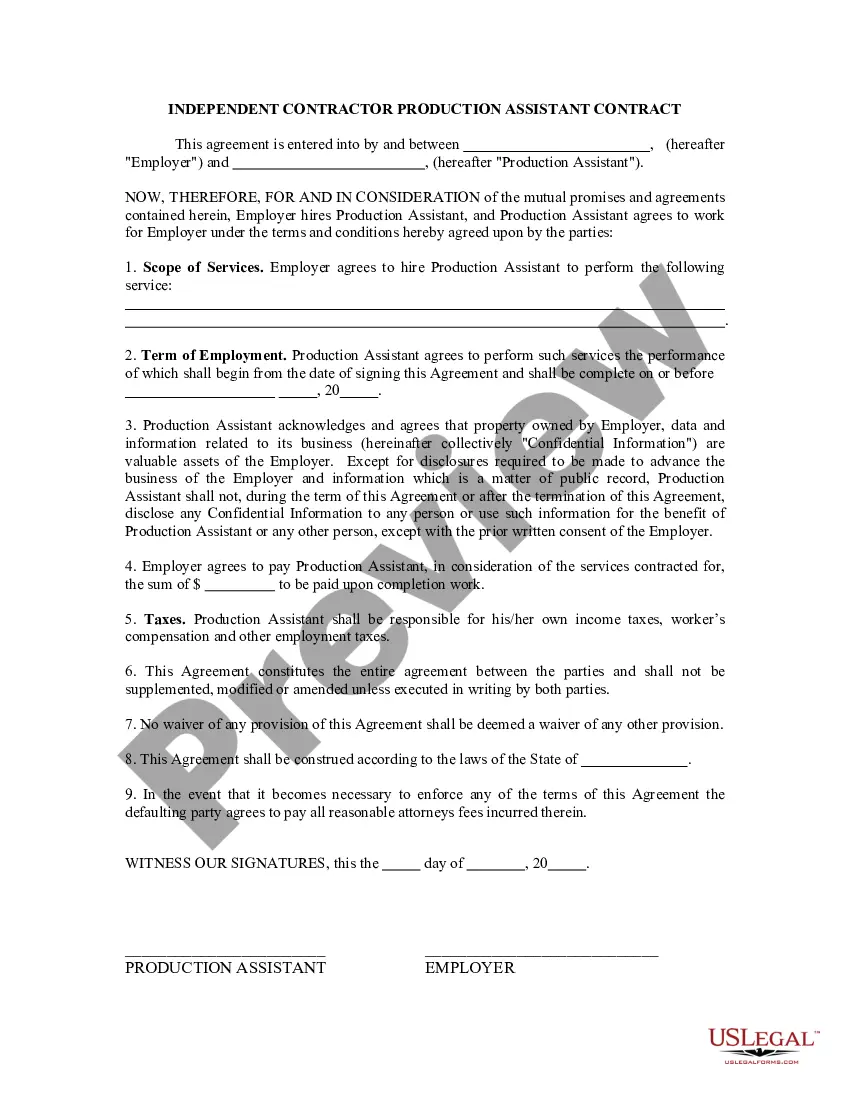
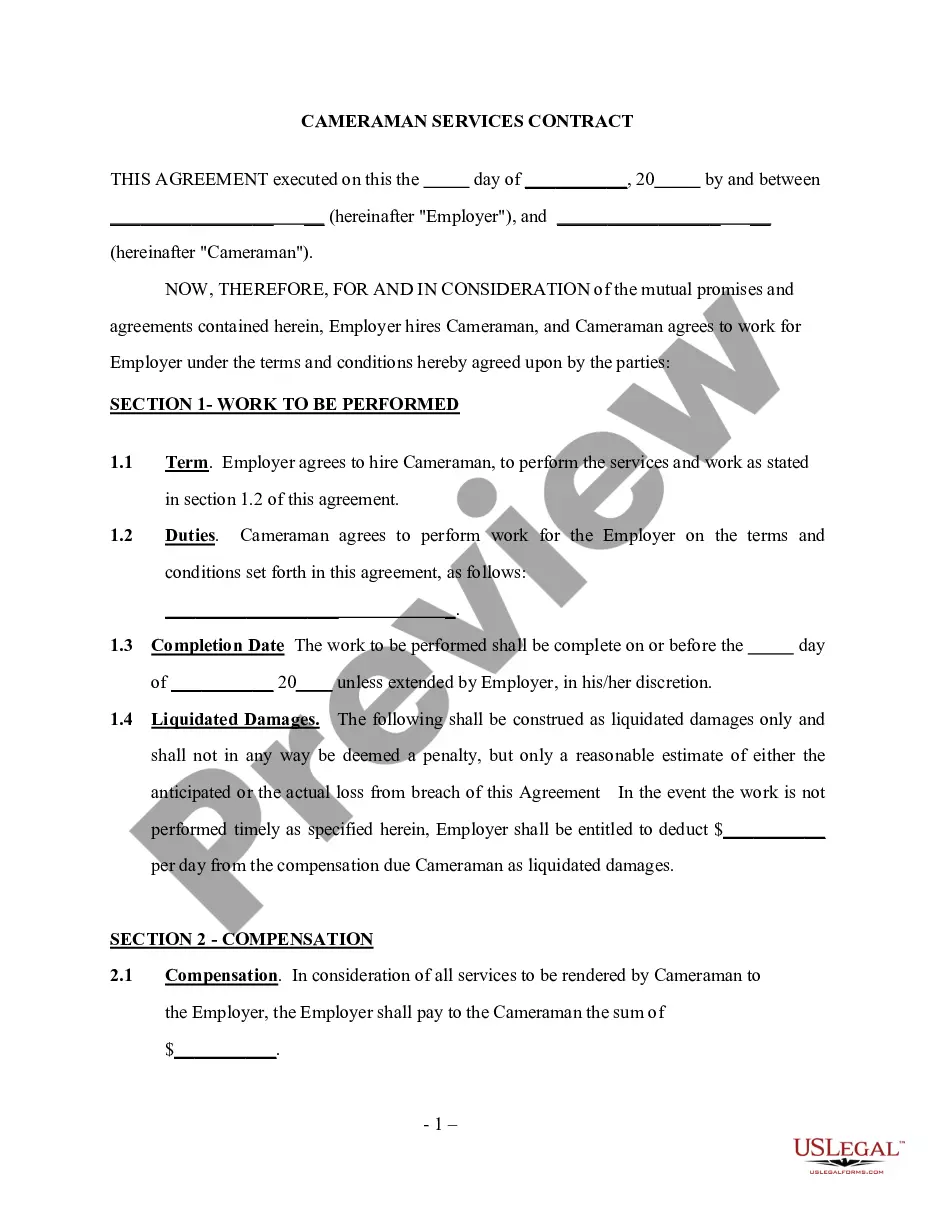
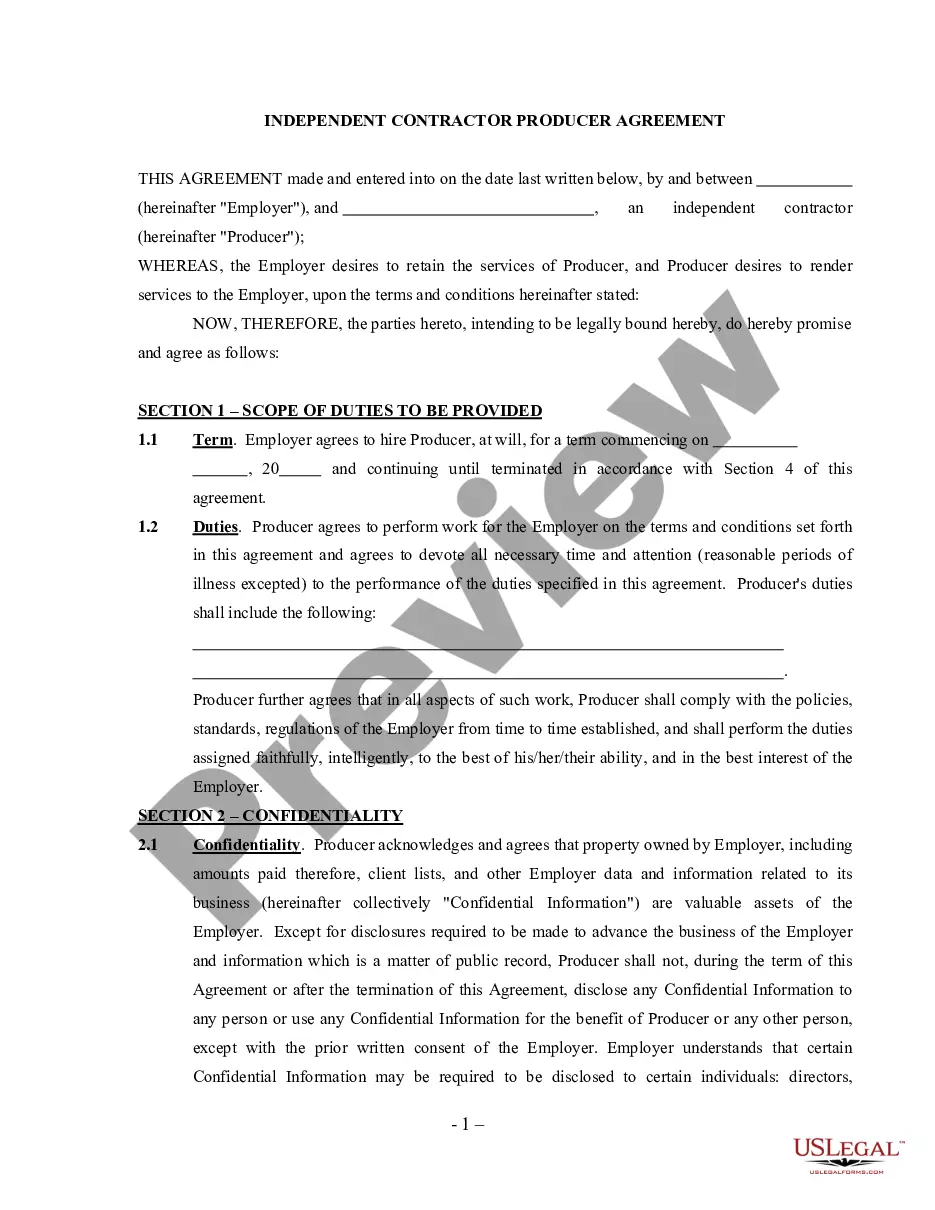
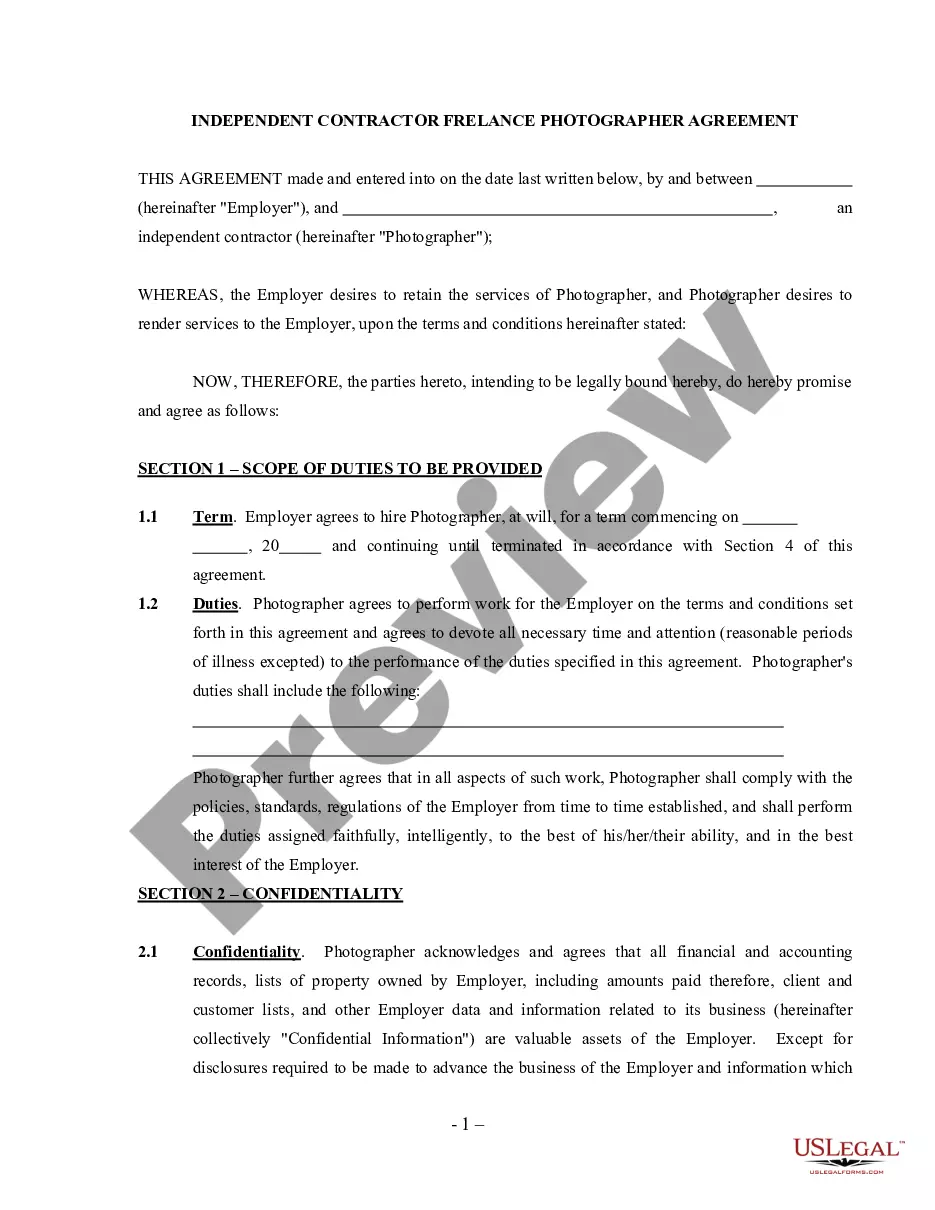
The Production Assistant Contract - Self-Employed Independent Contractor is a legal document used when hiring a production assistant as an independent contractor. This contract outlines the responsibilities and expectations of both the employer and the production assistant, ensuring clarity on the services to be provided. Unlike standard employment agreements, this form specifies the independent nature of the contractor's role, which is crucial for tax and liability purposes.
Main sections of this form
- Scope of Services: Details the specific services the production assistant will provide.
- Duration of Agreement: Specifies the period during which the contract is effective.
- Payment Terms: Outlines how and when the production assistant will be compensated.
- Confidentiality Clause: Establishes expectations for confidentiality related to sensitive information.
- Termination Conditions: Describes the conditions under which either party can terminate the contract.

When this form is needed
This form should be used when a business or individual hires a production assistant on an independent contractor basis. This is common in the film, television, and event planning industries, where specific expertise is needed for a limited duration. It ensures that all parties are aware of their roles and responsibilities, which can help prevent misunderstandings and legal disputes.
Who should use this form
This contract is suitable for:
- Employers in the entertainment industry seeking to hire production assistants.
- Production assistants looking to formalize their contract status as independent contractors.
- Individuals or entities organizing events that require temporary production support.
How to complete this form
- Identify the parties involved: clearly fill in the names and contact information of both the employer and the production assistant.
- Define the scope of services: specify the exact services the production assistant will perform.
- Enter payment terms: detail how much the production assistant will be paid and the schedule for payments.
- Include confidentiality agreements: if necessary, note any specific confidentiality requirements related to the project.
- Sign and date the contract: both parties should sign to acknowledge agreement to the terms outlined.
Notarization guidance
This form does not typically require notarization unless specified by local law.
Get your form ready online
Our built-in tools help you complete, sign, share, and store your documents in one place.
Make edits, fill in missing information, and update formatting in US Legal Forms—just like you would in MS Word.
Download a copy, print it, send it by email, or mail it via USPS—whatever works best for your next step.
Sign and collect signatures with our SignNow integration. Send to multiple recipients, set reminders, and more. Go Premium to unlock E-Sign.
If this form requires notarization, complete it online through a secure video call—no need to meet a notary in person or wait for an appointment.
We protect your documents and personal data by following strict security and privacy standards.

Make edits, fill in missing information, and update formatting in US Legal Forms—just like you would in MS Word.

Download a copy, print it, send it by email, or mail it via USPS—whatever works best for your next step.

Sign and collect signatures with our SignNow integration. Send to multiple recipients, set reminders, and more. Go Premium to unlock E-Sign.

If this form requires notarization, complete it online through a secure video call—no need to meet a notary in person or wait for an appointment.

We protect your documents and personal data by following strict security and privacy standards.
Common mistakes to avoid
- Failing to clearly define the scope of services, leading to misunderstandings.
- Not including payment terms, which can cause disputes over compensation.
- Overlooking the inclusion of termination conditions.
Benefits of completing this form online
- Convenience: Download and complete the form at your own pace.
- Editability: Customize the template to meet your specific needs without hassle.
- Reliability: Access forms drafted by licensed attorneys, ensuring they meet legal standards.
Legal use & context
- This contract serves to legally establish the relationship between the employer and the production assistant, making it enforceable in a court of law.
- Ensure compliance with local labor laws regarding independent contractors to avoid misclassification.
Main things to remember
- A Production Assistant Contract clarifies the relationship and expectations between the employer and the independent contractor.
- It is crucial to define all terms clearly to prevent future disputes.
- This form is versatile and designed for use across multiple states, aiding in clear business practices in the entertainment industry.
Looking for another form?









Form popularity
FAQ
An Independent Contractor Agreement should contain all of these basic terms: Description of the services to be provided.Explanation of what the hiring party will provide or not provide, such as equipment, for the independent contractor to use. Ownership of work product if that is relevant to the work being performed.
For most types of projects you hire an independent contractor (IC) to do, the law does not require you to put anything in writing. You can meet with the IC, agree on the terms of your arrangement, and have an oral contract or agreement that is legally binding. Just because you can doesn't mean you should, however.
Simply put, being an independent contractor is one way to be self-employed. Being self-employed means that you earn money but don't work as an employee for someone else.An independent contractor is someone who provides a service on a contractual basis.
Because physical therapists and physical therapist assistants provide care directly to patients as contractors, under current law, they can no longer be independent contractors and must be employees unless they meet one of two criteria, recently passed into law under AB 2257.
The earnings of a person who is working as an independent contractor are subject to Self-Employment Tax. If you are an independent contractor, you are self-employed. To find out what your tax obligations are, visit the Self-Employed Tax Center.
The law exempts several professions including but not limited to the following: Licensed insurance agents, lawyers, architects, engineers, private investigators, or accountants. Certain licensed health care professionals, such as physicians, surgeons, dentists, podiatrists, psychologists, or veterinarians.
Practically all gig economy workers are independent contractors and not employees. The primary difference between the two is that an employer has more control over how work is done with an employee rather than an independent contractor.
The general rule is that an individual is an independent contractor if the payer has the right to control or direct only the result of the work and not what will be done and how it will be done. The earnings of a person who is working as an independent contractor are subject to Self-Employment Tax.
First and foremost, California film and television producers have lost the option to hire most of their production crew as independent contractors under the new AB5 law. This is because California has tightened the guidelines of what classifies a worker as an employee instead of an independent contractor.