Outdoor Play Equipment Installation And Repair Services Contract - Self-Employed
What is this form?
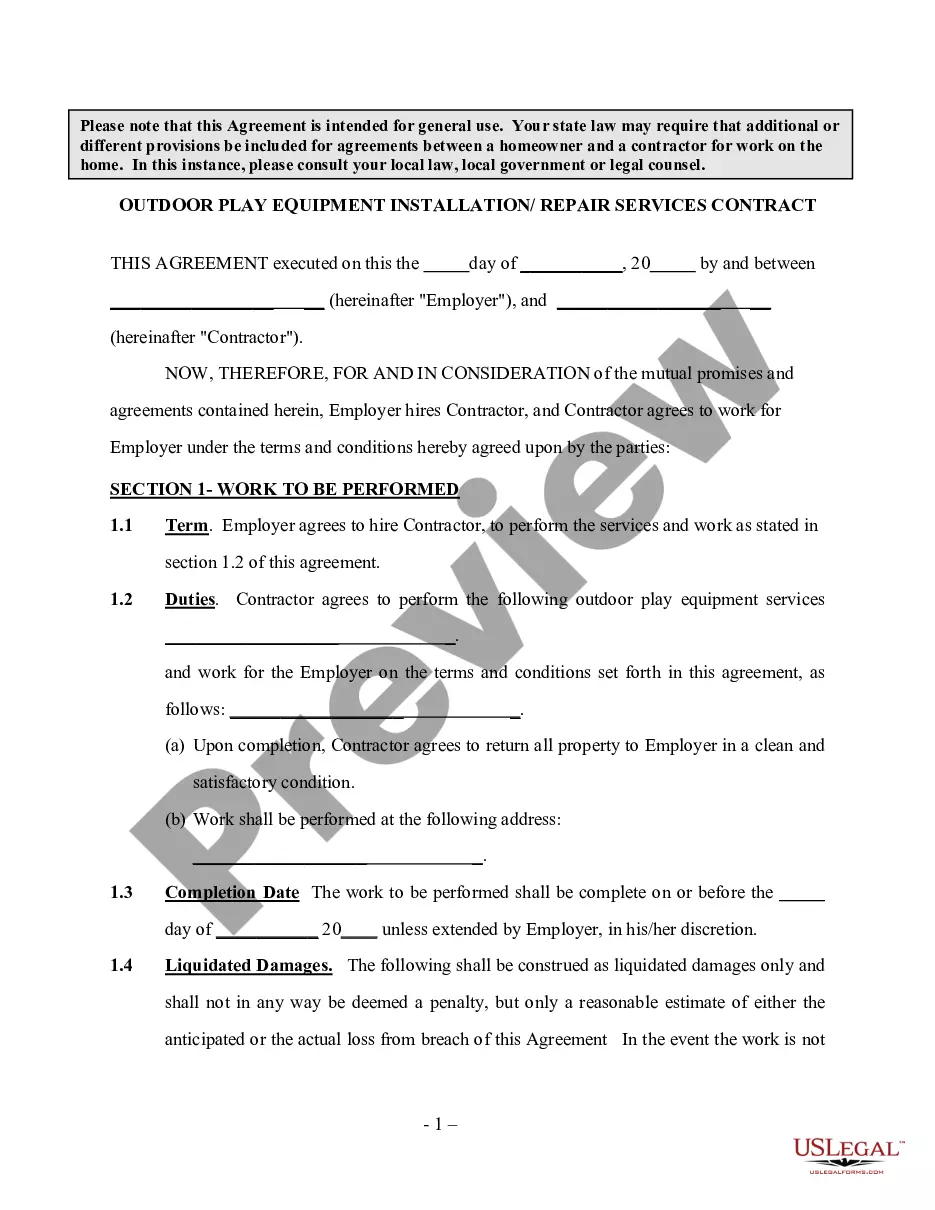
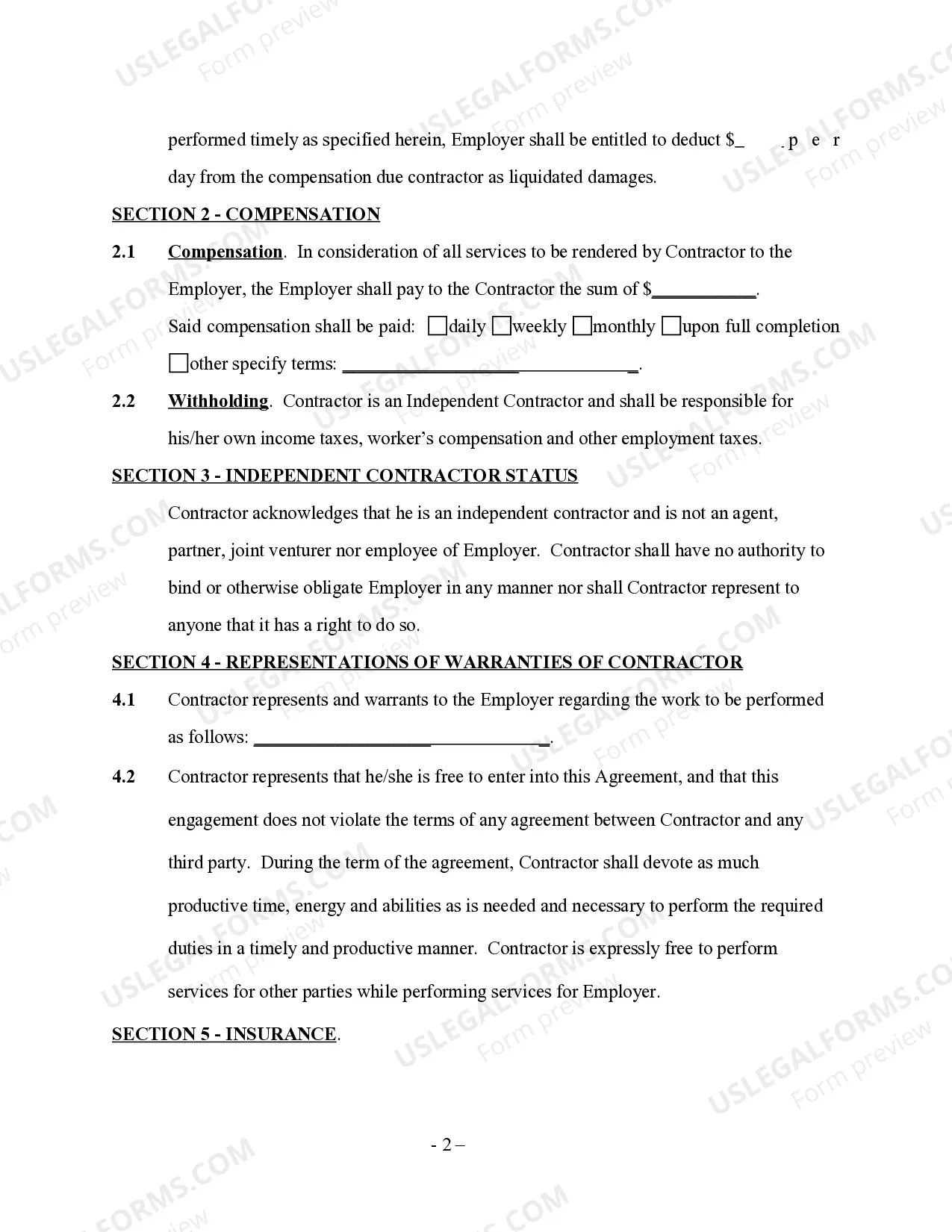
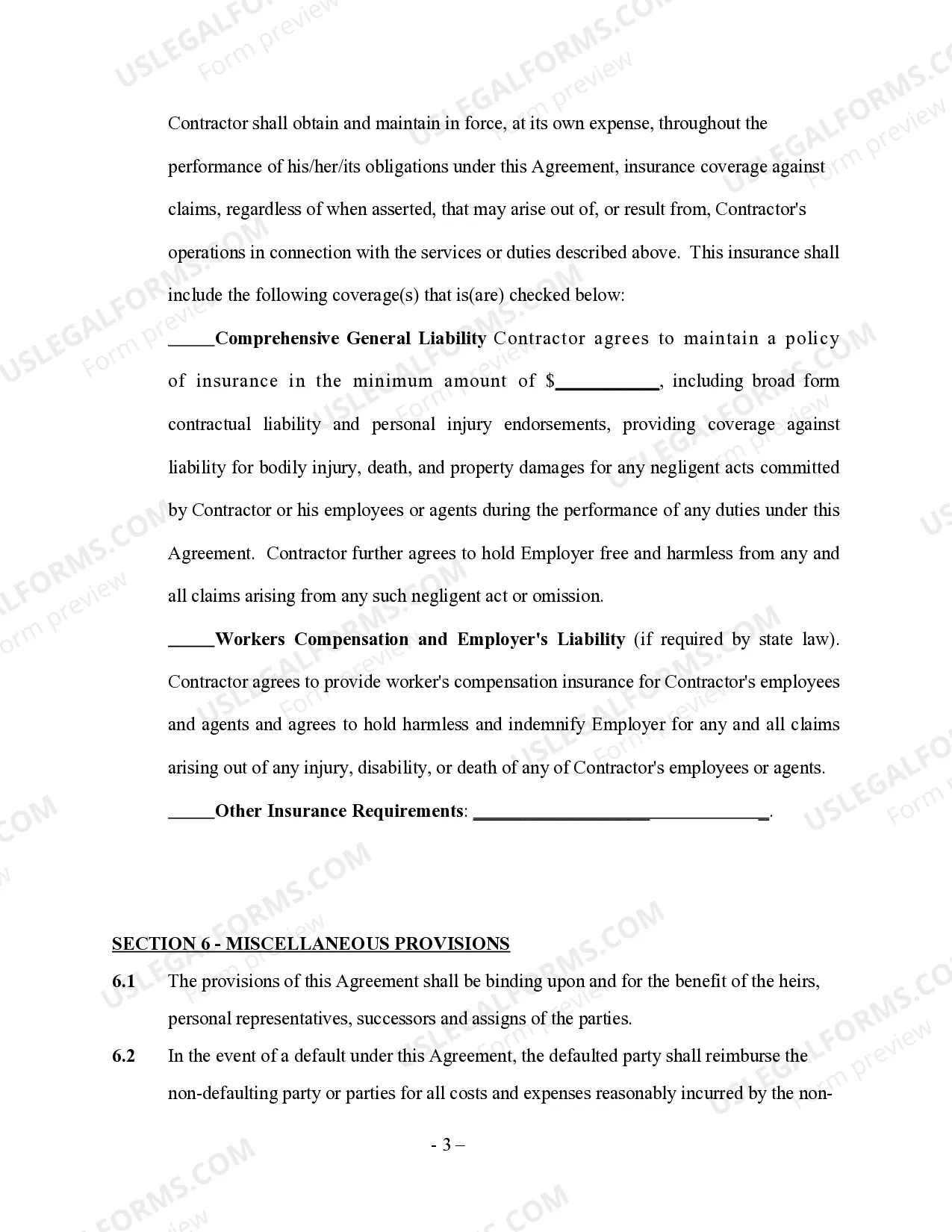
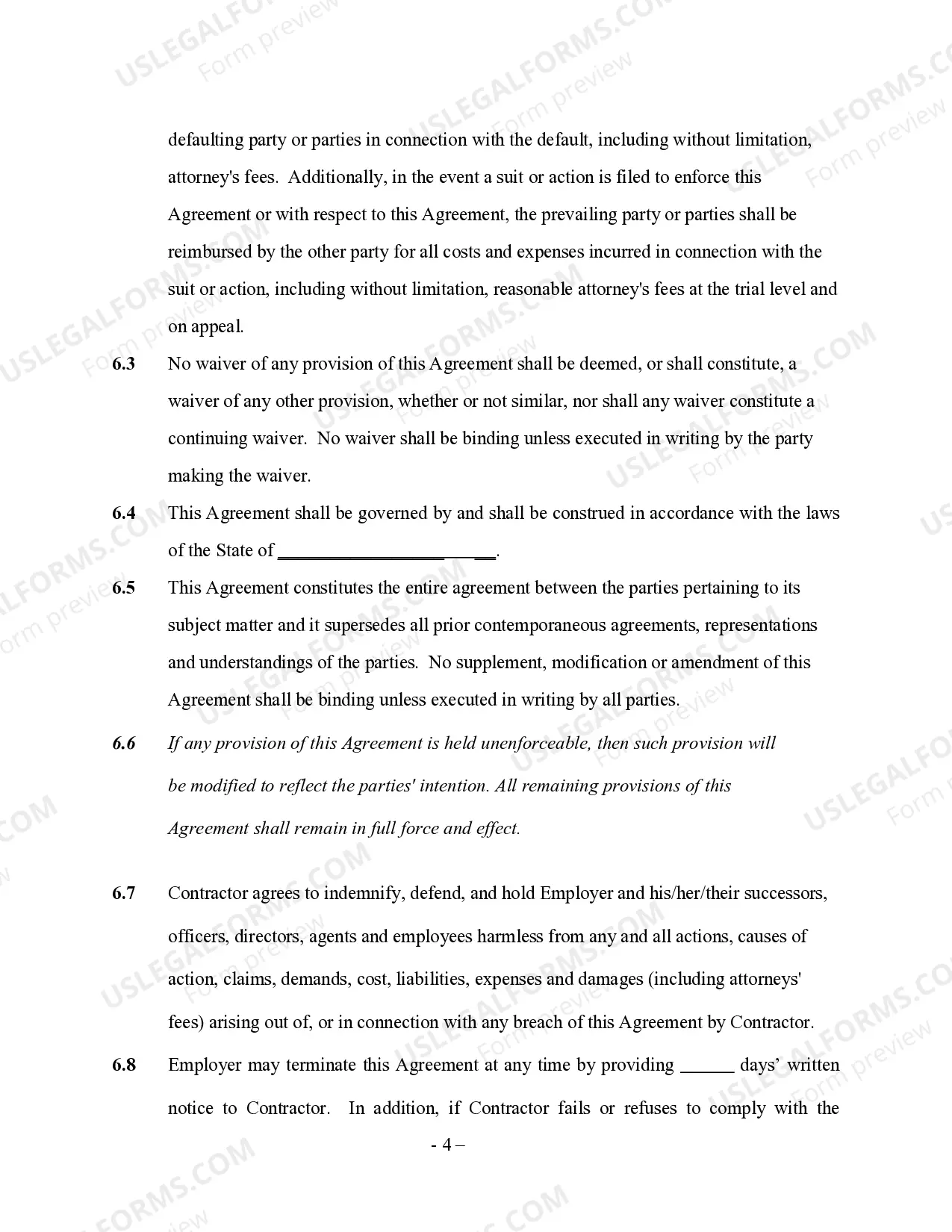
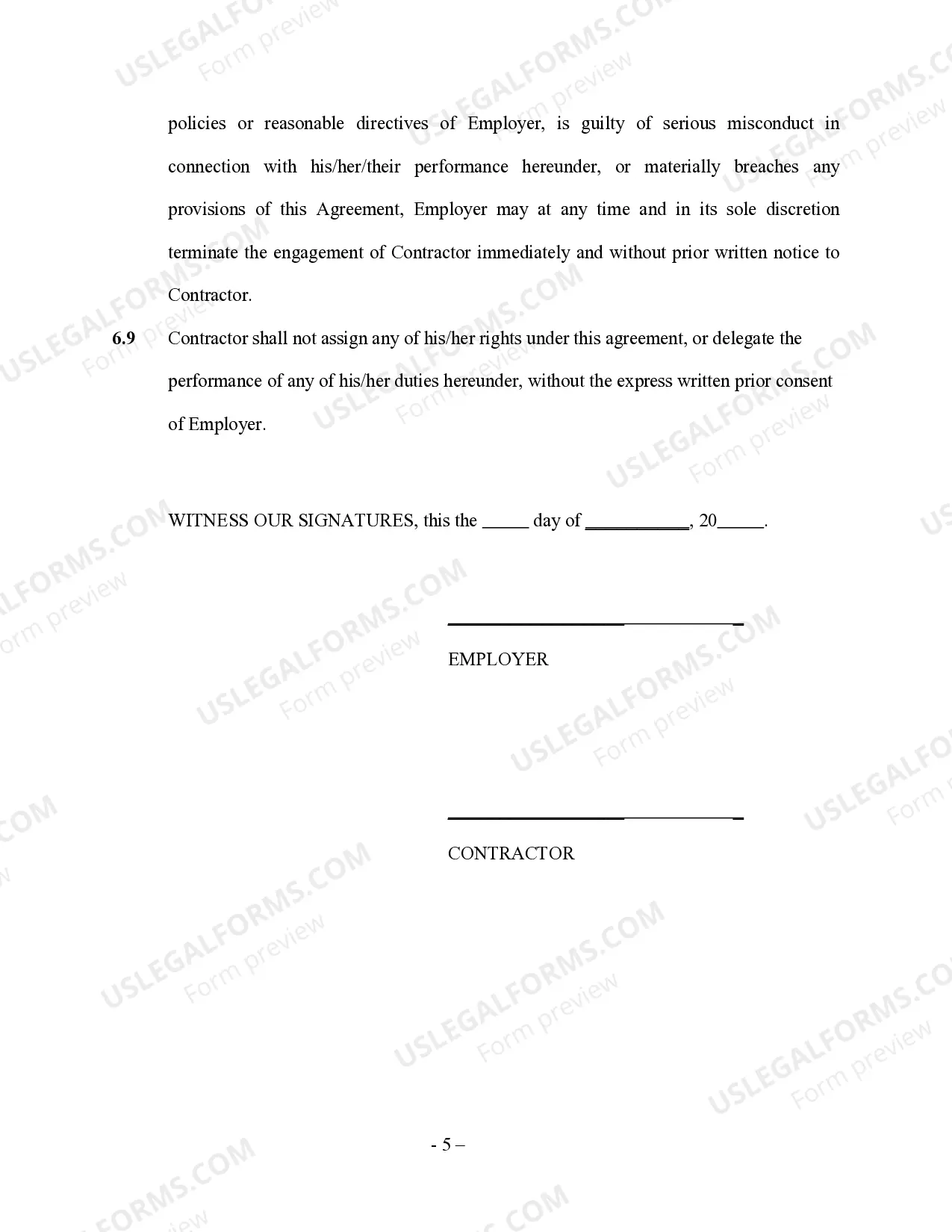
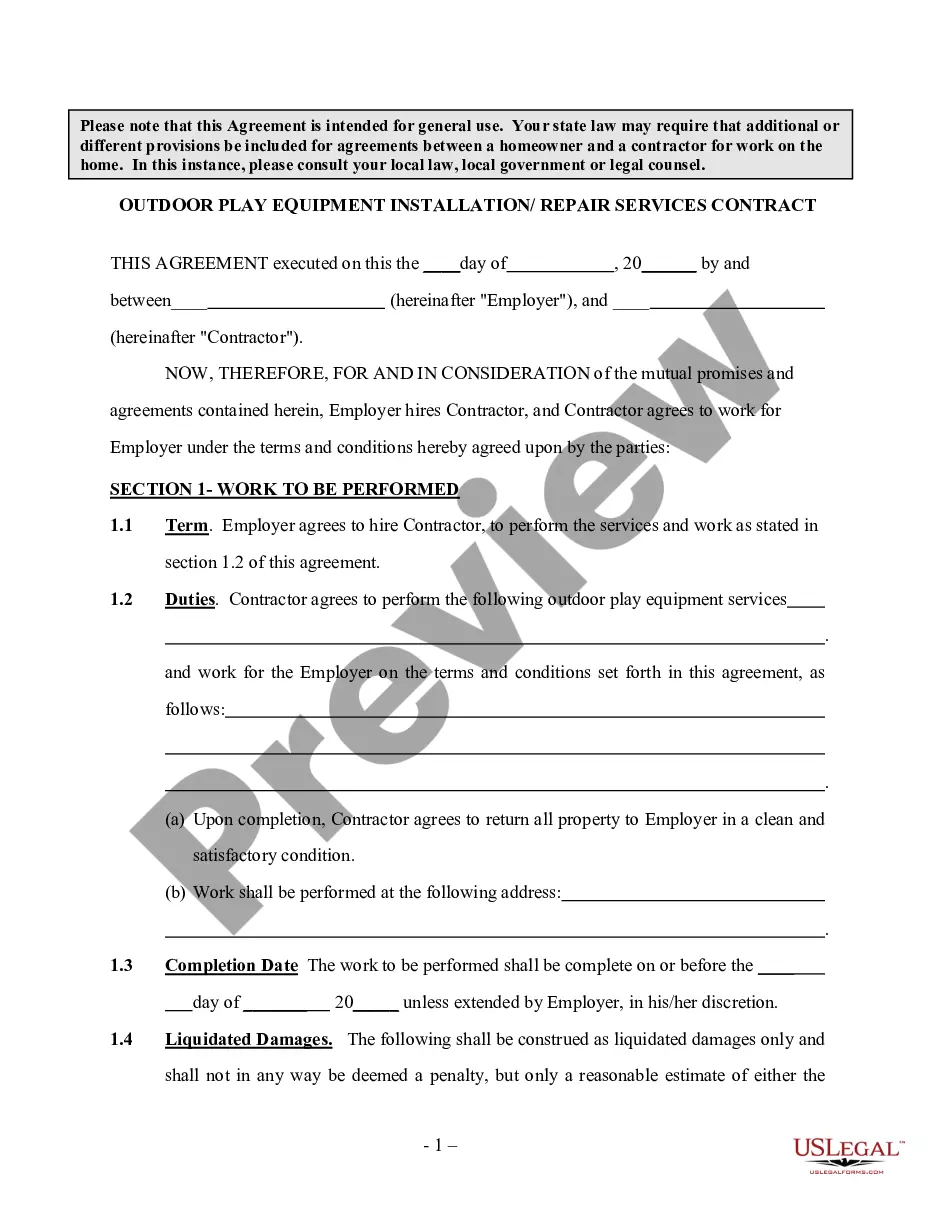
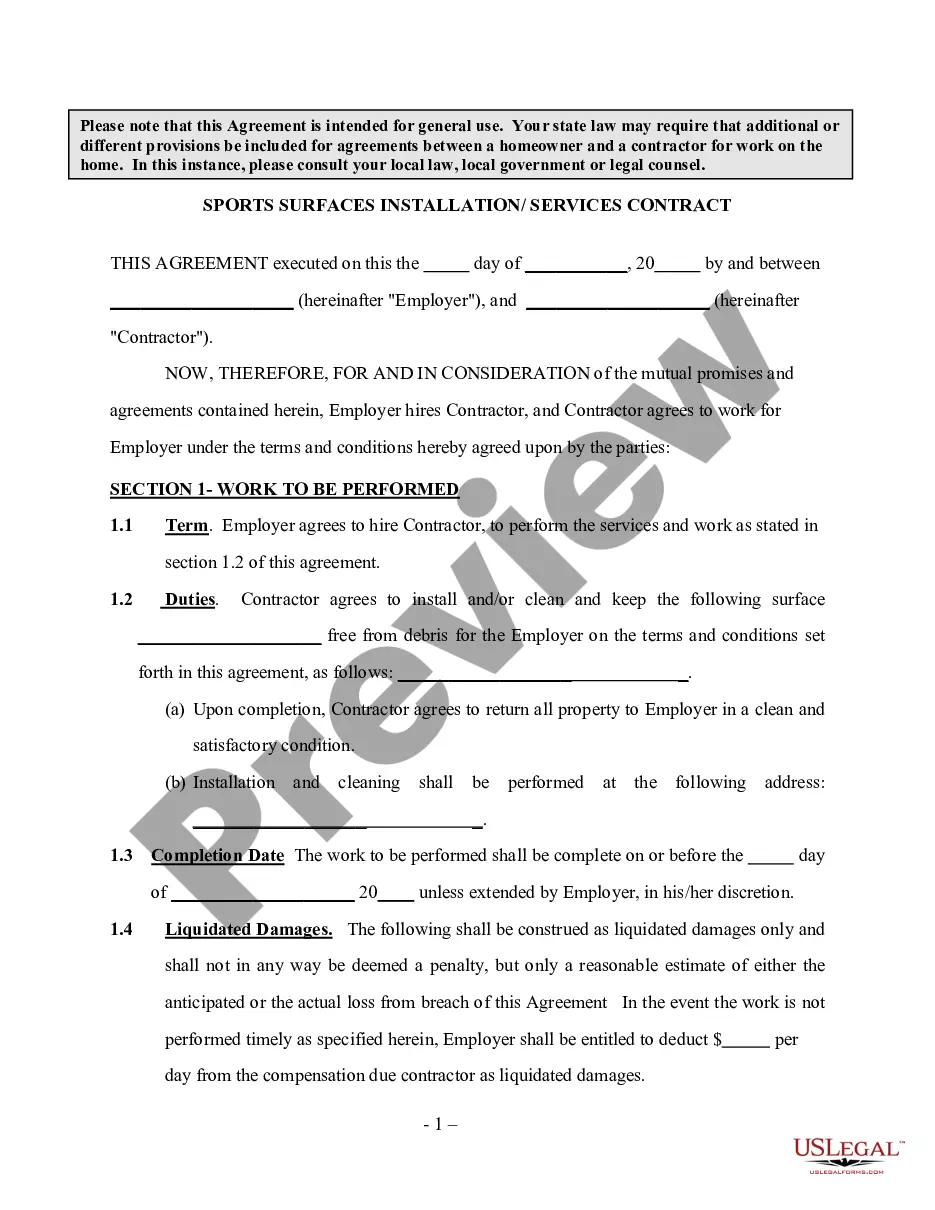
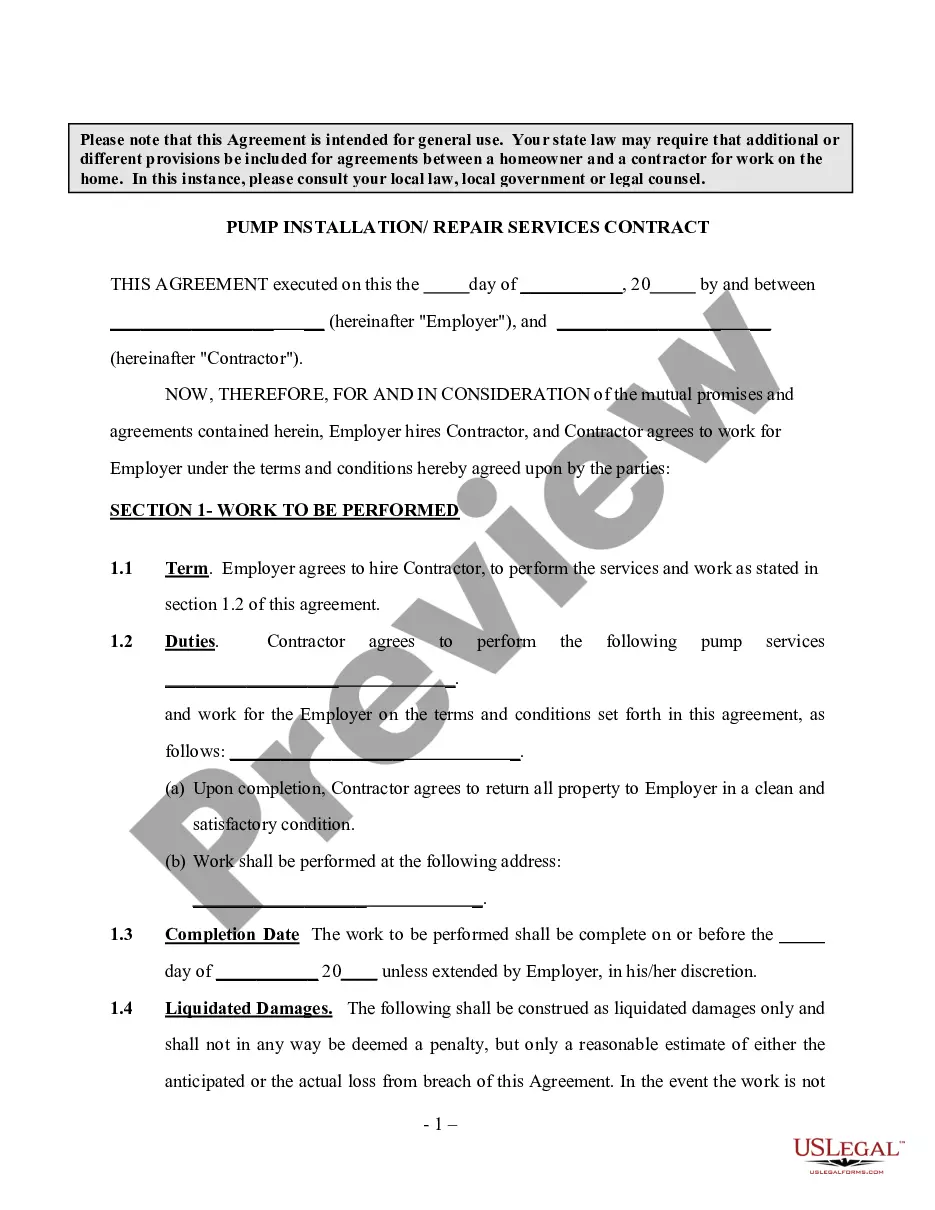
The Outdoor Play Equipment Installation and Repair Services Contract - Self-Employed is a legal document that outlines the agreement between an employer and an independent contractor for the construction, installation, and maintenance of outdoor play equipment. This contract specifies the terms of service, compensation, and responsibilities of both parties, distinguishing it from standard employment contracts by recognizing the contractor as an independent entity. It's essential for ensuring clarity in expectations and reducing potential disputes.
Main sections of this form
- Work to be performed: Details specific services and requirements for outdoor play equipment.
- Term: Outlines the duration of the contractor's engagement.
- Compensation: Specifies payment terms, including frequency and conditions of payment.
- Independent contractor status: Clarifies the relationship between the employer and contractor, emphasizing the contractor's independent status.
- Insurance requirements: Mandates the contractor to carry necessary insurance coverage.
- Indemnification: Protects the employer from potential claims related to the contractor's work.
When to use this form
This form is suitable for scenarios where a homeowner or business needs to hire an independent contractor to install, service, or repair outdoor play equipment such as swings or slides. It is particularly important when clear terms and conditions are required to define the scope of work, payment, and responsibilities to avoid misunderstandings between the parties involved.
Who needs this form
- Homeowners looking to hire a contractor for outdoor play equipment installation or maintenance.
- Independent contractors offering installation and repair services for outdoor play equipment.
- Businesses seeking to formalize contracts with contractors for outdoor play equipment services.
How to prepare this document
- Identify the parties: Clearly state the names and contact information of both the employer and the contractor.
- Specify the scope of work: Describe the services to be performed, including any specifics unique to the equipment involved.
- Fill in compensation terms: Indicate how and when the contractor will be paid.
- Enter the date and duration: Specify the start date and the expected term for the services.
- Include signatures: Have both parties sign and date the contract to validate the agreement.
Does this document require notarization?
In most cases, this form does not require notarization. However, some jurisdictions or signing circumstances might. US Legal Forms offers online notarization powered by Notarize, accessible 24/7 for a quick, remote process.
Get your form ready online
Our built-in tools help you complete, sign, share, and store your documents in one place.
Make edits, fill in missing information, and update formatting in US Legal Forms—just like you would in MS Word.
Download a copy, print it, send it by email, or mail it via USPS—whatever works best for your next step.
Sign and collect signatures with our SignNow integration. Send to multiple recipients, set reminders, and more. Go Premium to unlock E-Sign.
If this form requires notarization, complete it online through a secure video call—no need to meet a notary in person or wait for an appointment.
We protect your documents and personal data by following strict security and privacy standards.

Make edits, fill in missing information, and update formatting in US Legal Forms—just like you would in MS Word.

Download a copy, print it, send it by email, or mail it via USPS—whatever works best for your next step.

Sign and collect signatures with our SignNow integration. Send to multiple recipients, set reminders, and more. Go Premium to unlock E-Sign.

If this form requires notarization, complete it online through a secure video call—no need to meet a notary in person or wait for an appointment.

We protect your documents and personal data by following strict security and privacy standards.
Typical mistakes to avoid
- Not clearly defining the scope of work, leading to potential misunderstandings.
- Failing to specify payment terms, which can cause disputes over compensation.
- Neglecting to include insurance requirements for the contractor.
Benefits of completing this form online
- Easy access to templates drafted by legal professionals ensures compliance with legal standards.
- Convenience of downloading and filling out the form at your own pace.
- Editability allows you to customize the contract to suit specific needs.
Looking for another form?

Form popularity
FAQ
Furniture and other equipment Section 179 is a provision in tax law that enables business owners to deduct the full purchase price of qualified equipment from their gross income.
Tools, office equipment, payroll, travel and office or warehouse space all are tax deductible. Larger tools that you use for more than a year and add to the quality or quantity of services or products you can deliver are considered capital expenses and are treated differently for tax purposes.
Equipment includes machinery, furniture, fixtures, vehicles, computers, electronic devices, and office machines. Equipment does not include land or buildings owned by a business. The purchase of equipment is not accounted for as an expense in one year; rather the expense is spread out over the life of the equipment.
You can fully deduct small tools with a useful life of less than one year. Deduct them the year you buy them.You can deduct the cost of the tools as an unreimbursed employee expense on Schedule A if both of these apply: You work for an employer, rather than being self-employed.
Qualified Business Income. Mileage or Vehicle Expenses. Retirement Savings. Insurance Premiums. Office Supplies. Home Office Expenses. Credit Card and Loan Interest. Phone and Internet Costs.
If you buy a computer, cellular telephone, fax machine, or other such equipment, you cannot deduct the cost. You can deduct CCA and interest you paid on money you borrowed to buy this equipment that reasonably relates to earning your business income.
Any builder or mechanic is eligible, whether you're self-employed and paid via CIS or fully employed and paid through PAYE. Basically if you own and maintain tools, then you're good to go, though what you can claim for does vary.
Include your clothing costs with your other "miscellaneous itemized deductions" on the Schedule A attachment to your tax return. Work clothes are among the miscellaneous deductions that are only deductible to the extent the total exceeds 2 percent of your adjusted gross income.This is the amount you can deduct.
The Section 179 Tax Deduction allows businesses to deduct the full purchase price of qualifying equipment and/or software purchased or financed during the tax year. Meaning, if you buy (or lease) a piece of qualifying equipment, you can deduct 100% of the purchase price from your gross income.