Tax Work Agreement - Self-Employed Independent Contractor
What is this form?
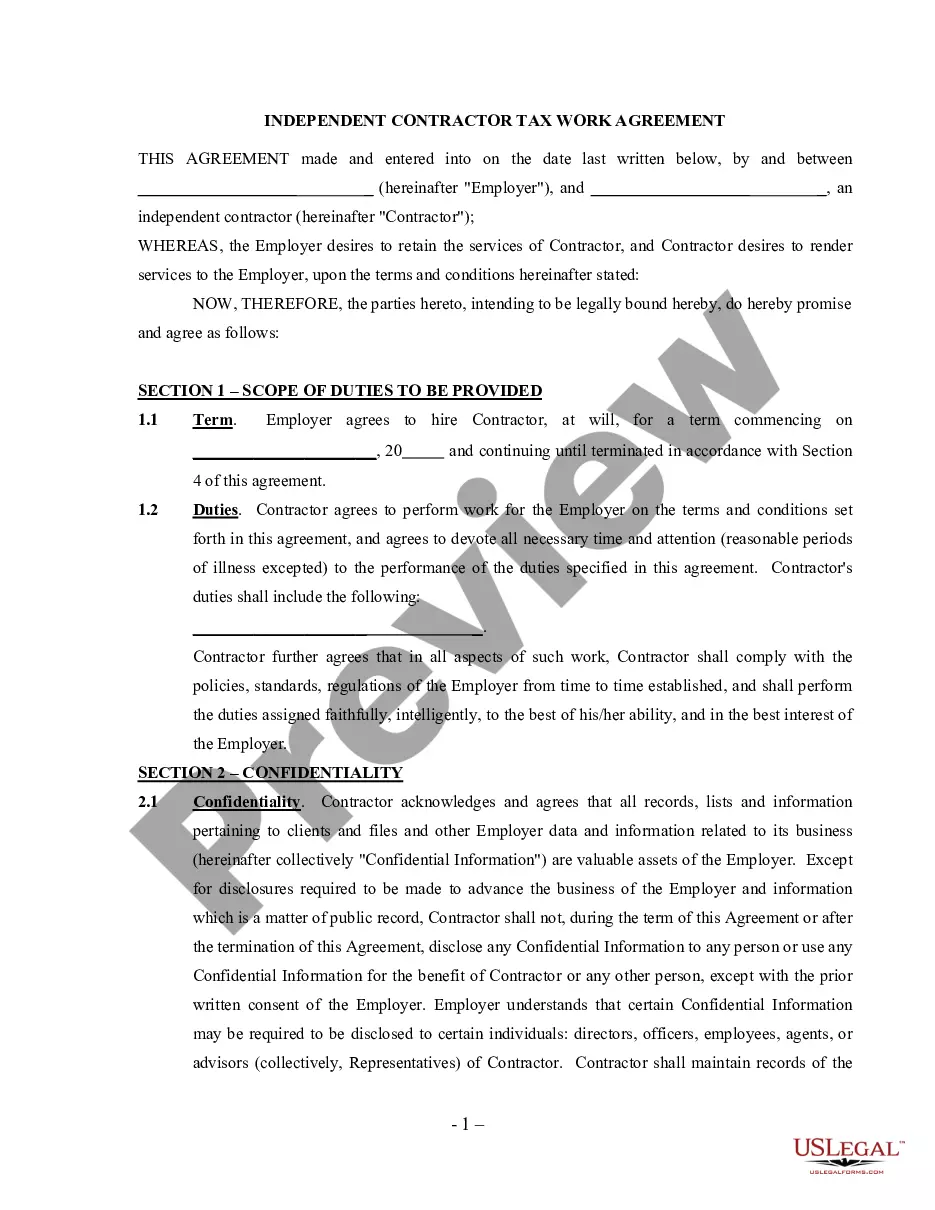
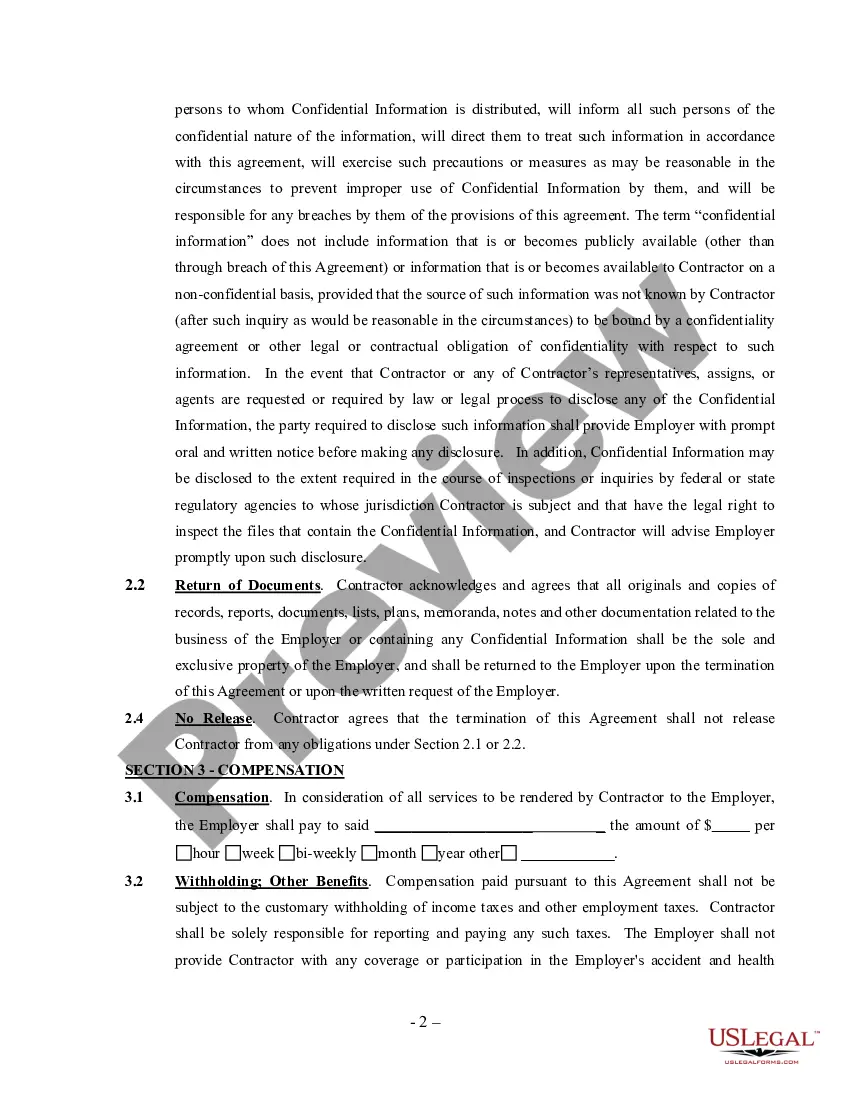
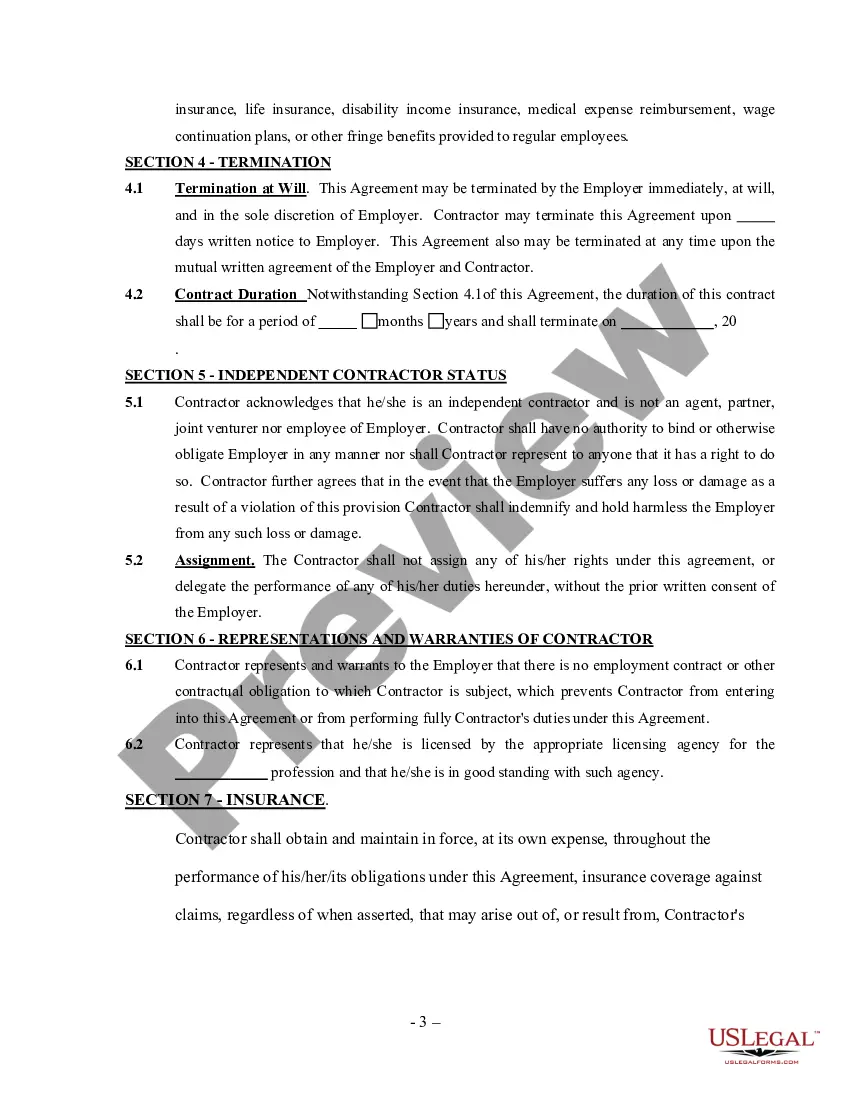
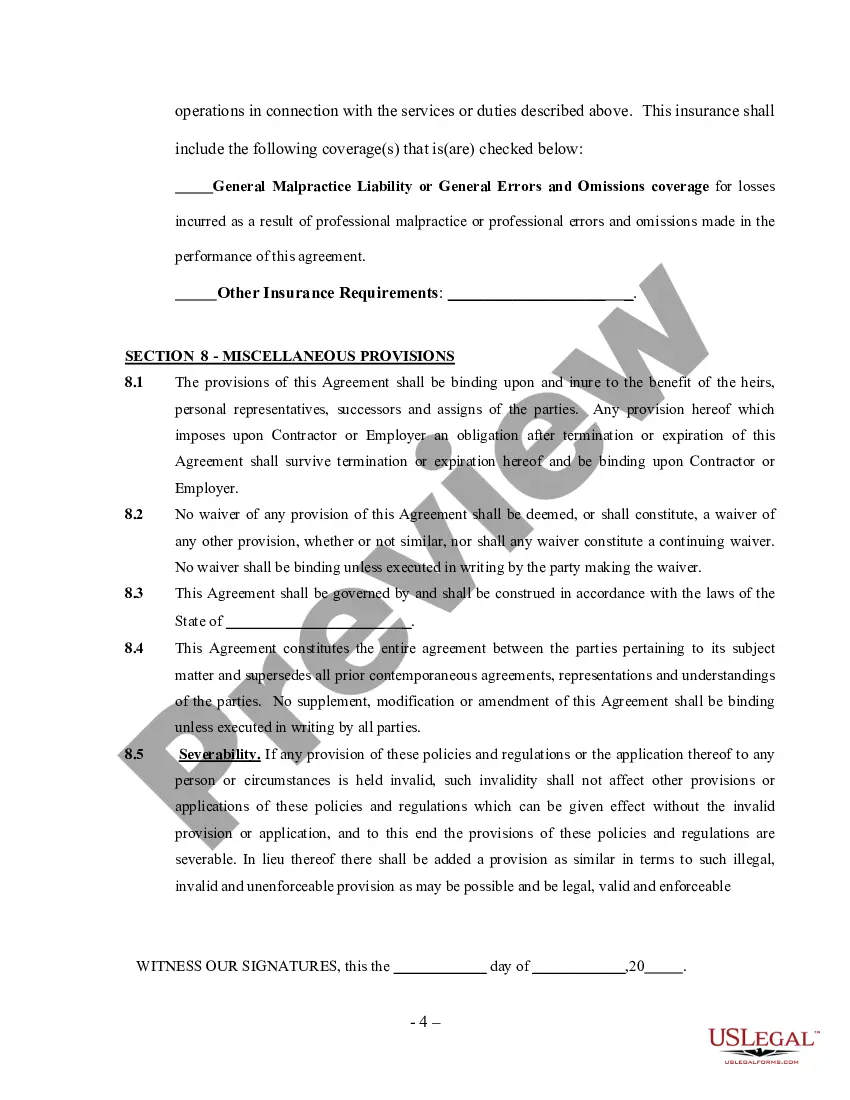
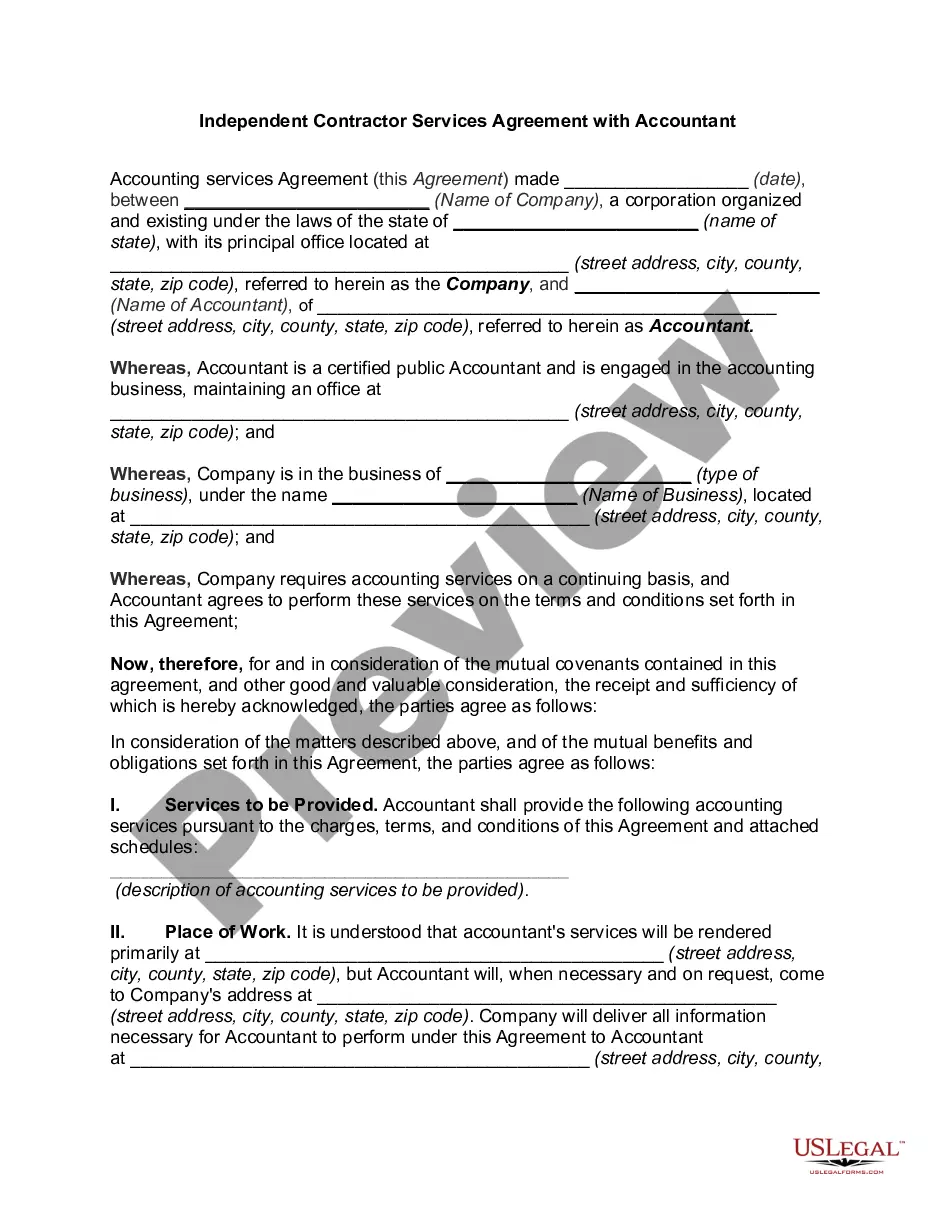
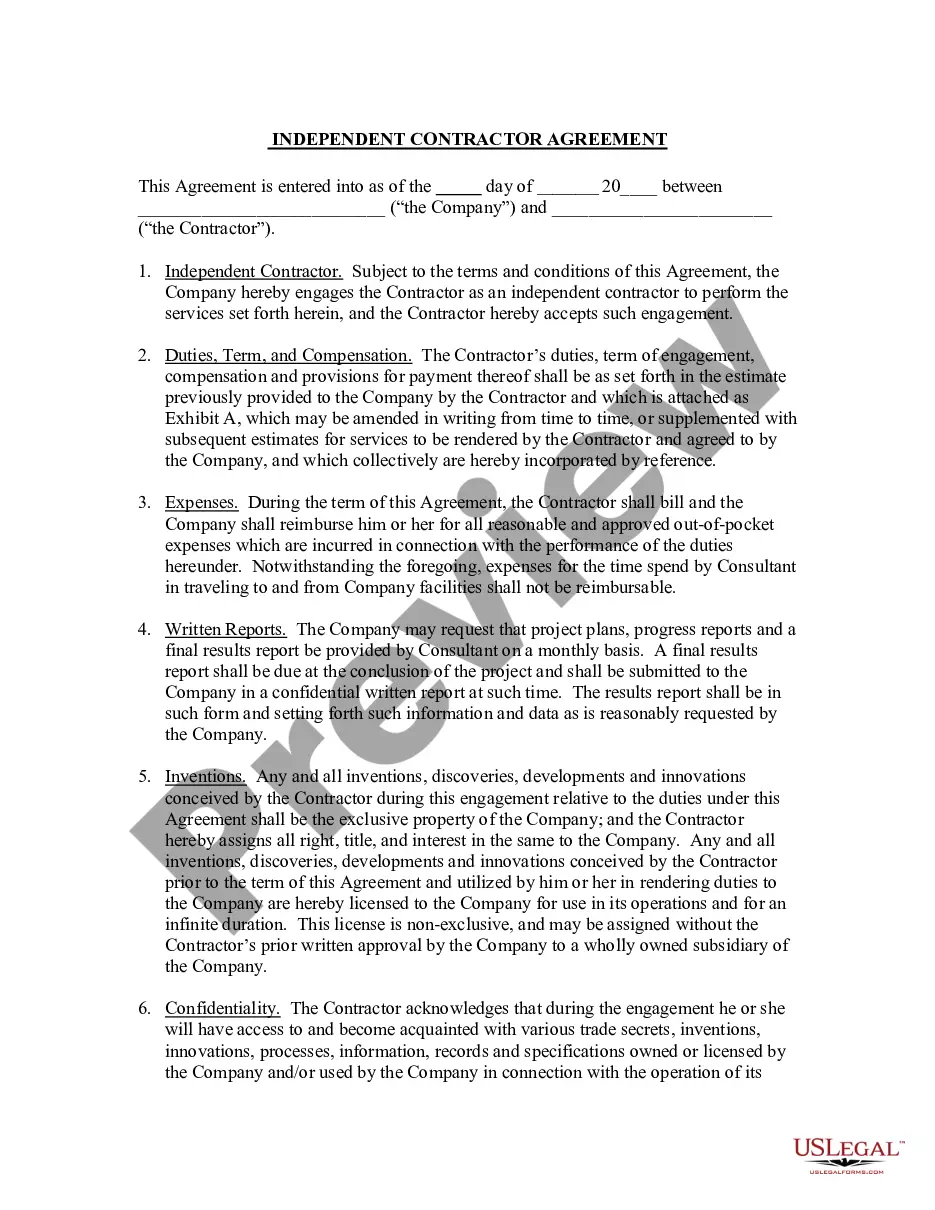
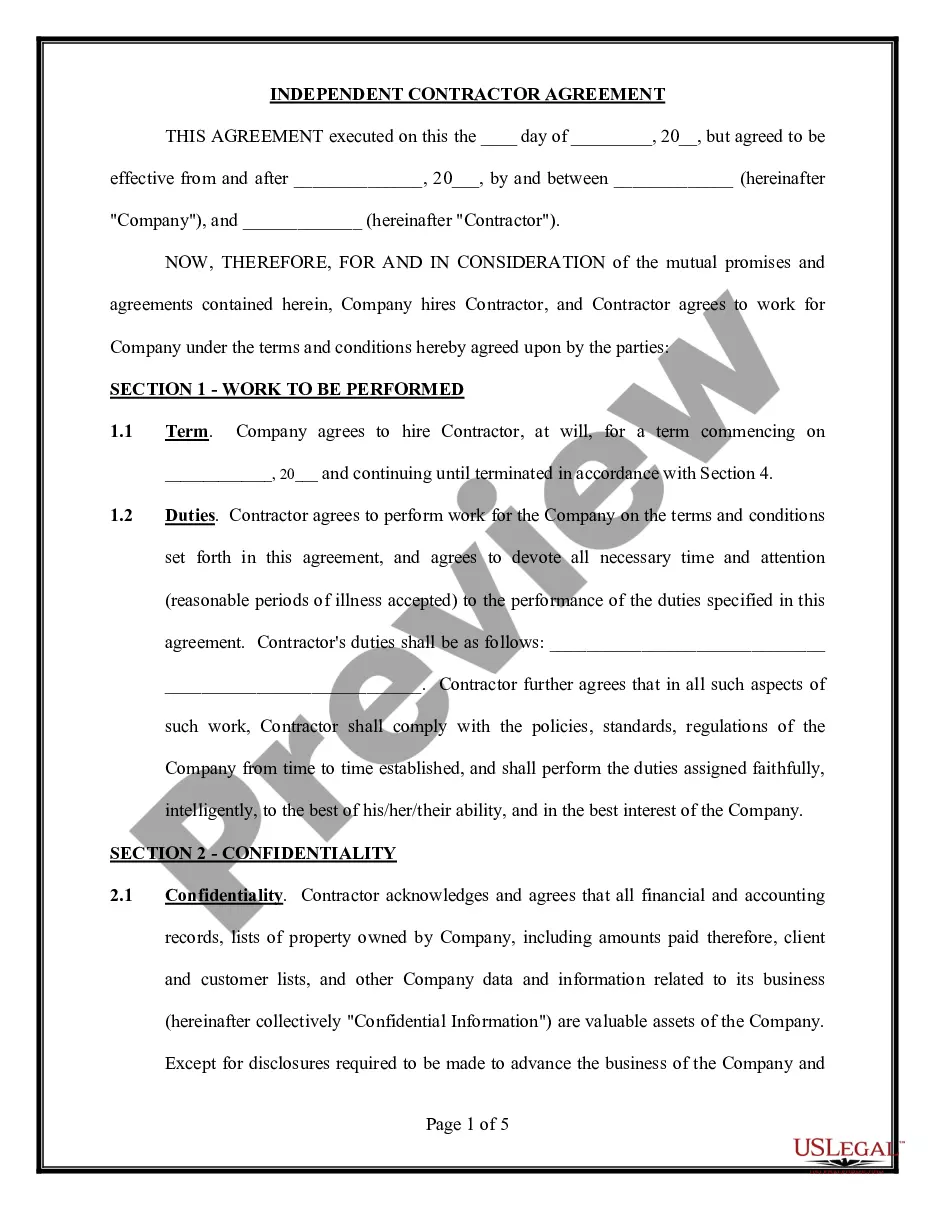
The Tax Work Agreement - Self-Employed Independent Contractor is a legal contract between an employer and an independent contractor who provides tax work services. This agreement outlines the responsibilities of the contractor, including adherence to employer policies and the handling of confidential information. Unlike standard employment contracts, this form clarifies the independent status of the contractor and includes specific clauses to protect sensitive company data.
What’s included in this form
- Identification of the parties involved: Employer and Contractor.
- Confidentiality clause protecting employer-sensitive information.
- Compensation terms for the contractor's services.
- Conditions for termination of the agreement.
- Insurance requirements relevant to the contractor's services.

Common use cases
This form is ideal when an employer needs to engage the services of a self-employed independent contractor for tax-related work. It should be used when the contractor is expected to handle sensitive financial data and when both parties want to clarify their rights and obligations regarding confidentiality and service provision.
Who should use this form
- Employers seeking independent contractors for tax services.
- Self-employed individuals providing tax work without traditional employer-employee relationships.
- Small business owners requiring professional tax services.
Steps to complete this form
- Identify and enter the names of the Employer and Contractor in the specified blanks.
- Specify the services to be provided by the Contractor in detail.
- Include the agreed compensation terms for the Contractor's work.
- Review and ensure all confidentiality and compliance clauses are understood and accepted.
- Sign and date the agreement to make it legally binding.
Does this form need to be notarized?
This form does not typically require notarization unless specified by local law. However, having the agreement notarized may strengthen its enforceability in disputes.
Get your form ready online
Our built-in tools help you complete, sign, share, and store your documents in one place.
Make edits, fill in missing information, and update formatting in US Legal Forms—just like you would in MS Word.
Download a copy, print it, send it by email, or mail it via USPS—whatever works best for your next step.
Sign and collect signatures with our SignNow integration. Send to multiple recipients, set reminders, and more. Go Premium to unlock E-Sign.
If this form requires notarization, complete it online through a secure video call—no need to meet a notary in person or wait for an appointment.
We protect your documents and personal data by following strict security and privacy standards.

Make edits, fill in missing information, and update formatting in US Legal Forms—just like you would in MS Word.

Download a copy, print it, send it by email, or mail it via USPS—whatever works best for your next step.

Sign and collect signatures with our SignNow integration. Send to multiple recipients, set reminders, and more. Go Premium to unlock E-Sign.

If this form requires notarization, complete it online through a secure video call—no need to meet a notary in person or wait for an appointment.

We protect your documents and personal data by following strict security and privacy standards.
Typical mistakes to avoid
- Failing to clearly define the services to be provided by the contractor.
- Not specifying terms for confidentiality adequately.
- Neglecting to assign responsibility for compliance with local and federal laws.
- Omitting signature and date from the agreement to ensure enforceability.
Why complete this form online
- Convenient access to professionally drafted legal forms anytime.
- Edit the document to suit specific needs without legal fees.
- Instant downloadable format allows for quick use in real time.
- Reliability from forms drafted by licensed attorneys to ensure legal compliance.
Looking for another form?
Form popularity
FAQ
The earnings of a person who is working as an independent contractor are subject to Self-Employment Tax. If you are an independent contractor, you are self-employed. To find out what your tax obligations are, visit the Self-Employed Tax Center.
For tax purposes, the IRS treats independent contractors as self-employed individuals.You'll need to file a tax return with the IRS if your net earnings from self-employment are $400 or more. Along with your Form 1040, you'll file a Schedule C to calculate your net income or loss for your business.
For tax purposes, the IRS treats independent contractors as self-employed individuals.You'll need to file a tax return with the IRS if your net earnings from self-employment are $400 or more. Along with your Form 1040, you'll file a Schedule C to calculate your net income or loss for your business.
Here's a simple rule: If you work as an independent contractor, it's up to you to pay income and self-employment taxes (Social Security and Medicare taxes) on the payments you receive.You must also pay a 12.4% Social Security tax and 2.9% Medicare tax on such income.
Because freelancers must budget for both income tax and FICA taxes, you should plan to set aside 25-30% of your taxable freelance income to pay both quarterly taxes and any additional tax that you owe when you file your taxes in April. You can use IRS Form 1040-ES to calculate your estimated tax payments.
IRS Form W-9 is most commonly used by individuals when they are working as a freelancer or independent contractor. If you ever find yourself filling out a Form W-9, it generally means that a business or person who is paying you money needs your Social Security number so it can notify the IRS of the amount.
Self-employment taxes As a self-employed individual, you must pay Social Security and Medicare taxes. However, since your 1099-NEC income is not subject to employment-tax withholding, you're required to pay these taxes yourself. These taxes are calculated on a Schedule SE, which must be attached to your tax return.
Requirements. To file Form 4361 for exemption from paying self-employment tax, an individual must be an ordained, commissioned or licensed minister of a church, Christian Science practitioner or member of a religious order who has not taken a vow of poverty.
Simply put, being an independent contractor is one way to be self-employed. Being self-employed means that you earn money but don't work as an employee for someone else. An independent contractor is someone who provides a service on a contractual basis.