USLegal Guide to How to Relinquish Custody
Understanding this form
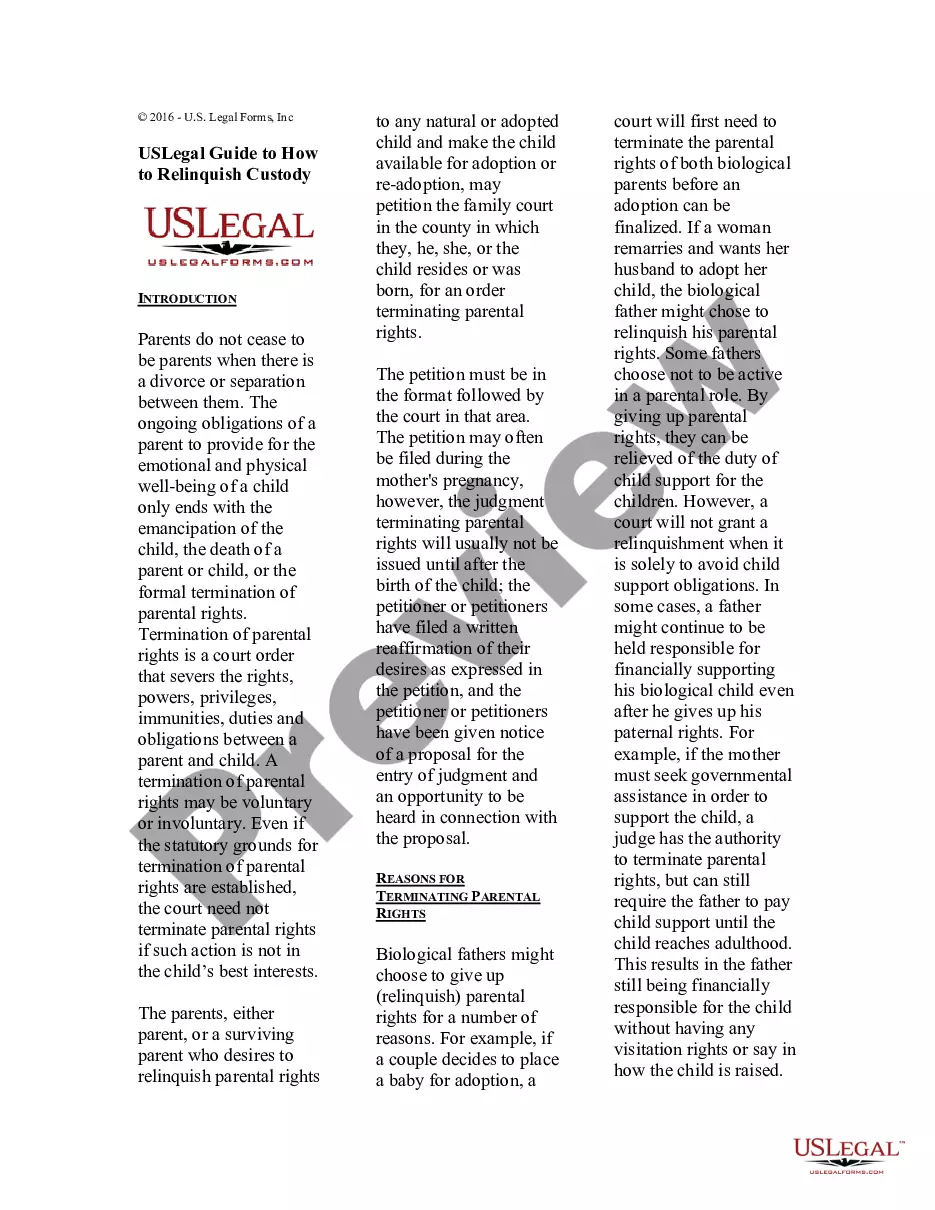
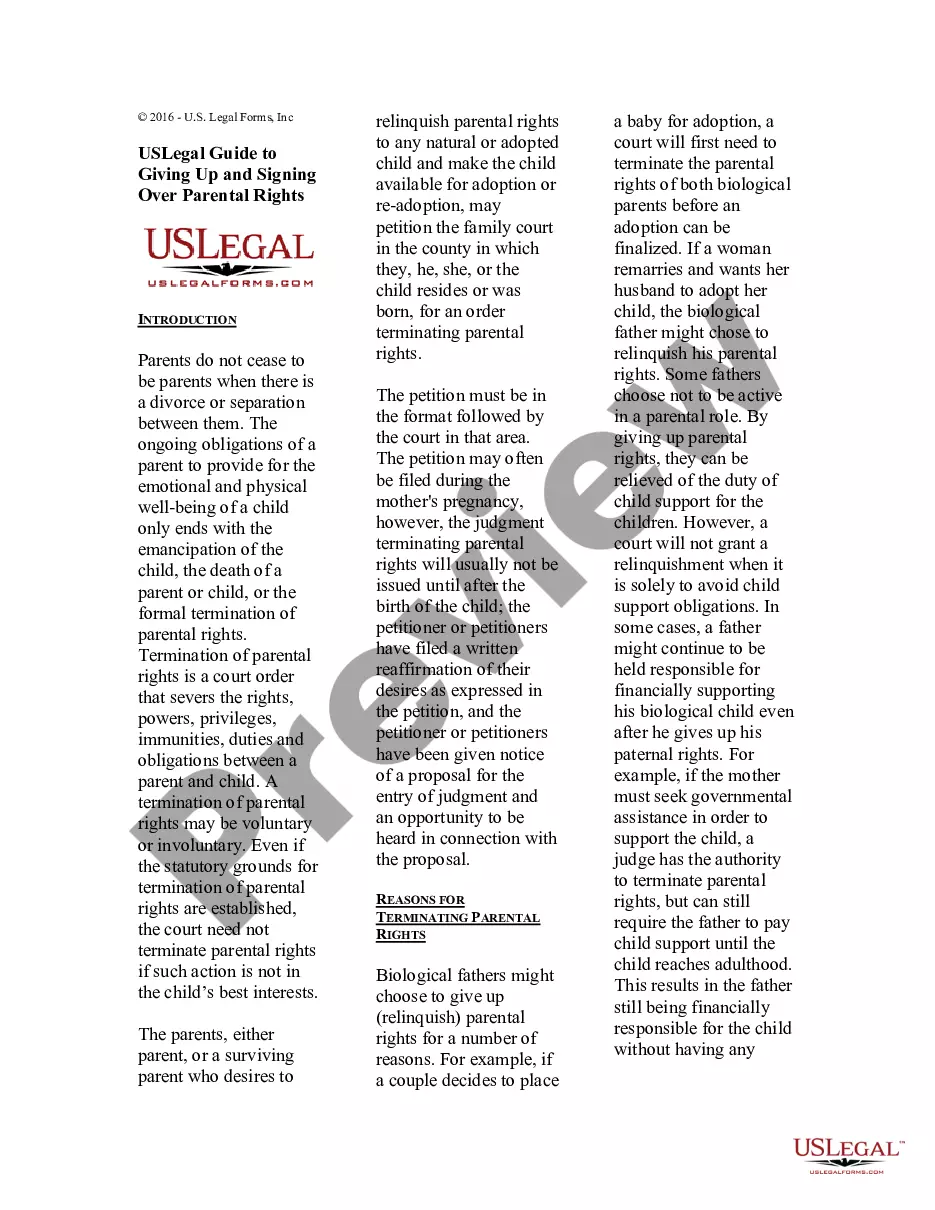
The USLegal Guide to How to Relinquish Custody offers essential information for parents seeking to terminate their parental rights formally. This guide details the legal implications of giving up custody, including how it differs from temporary custody arrangements and adoption processes. By outlining the necessary steps and considerations, the guide aims to support parents during a challenging decision-making process.
Main sections of this form
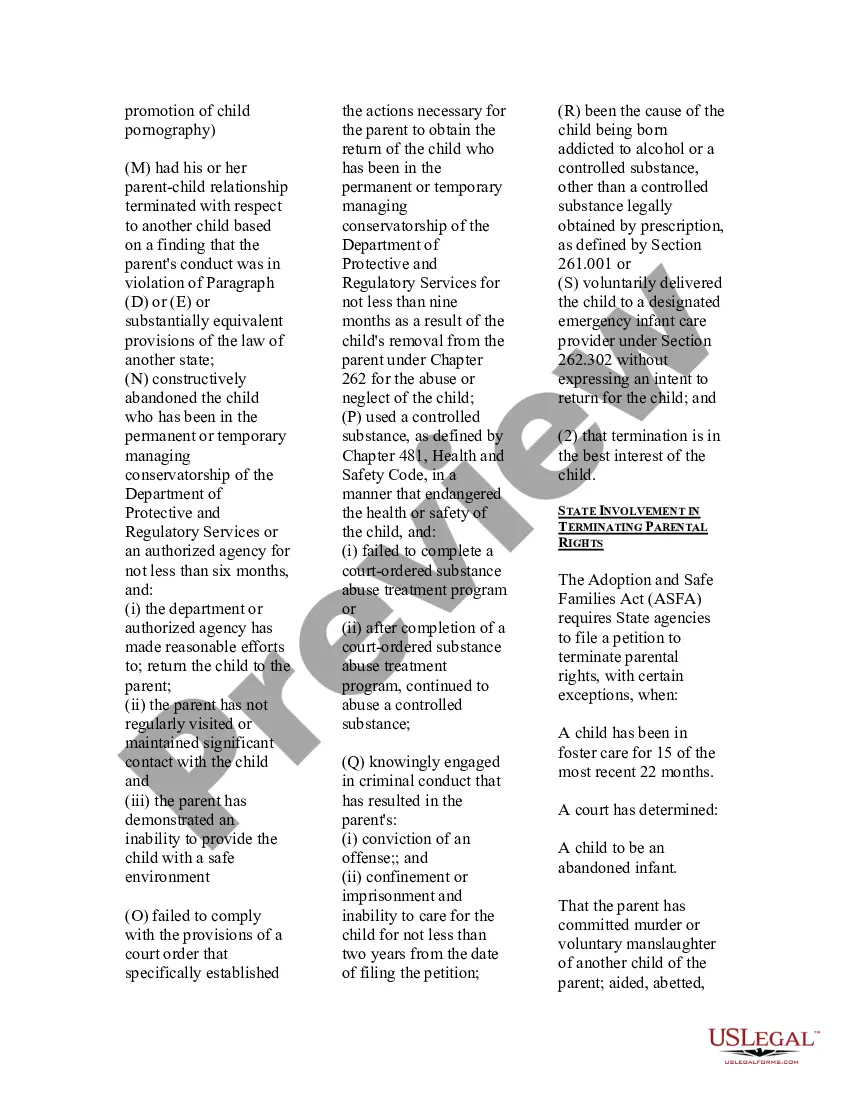
- Reasons for terminating parental rights
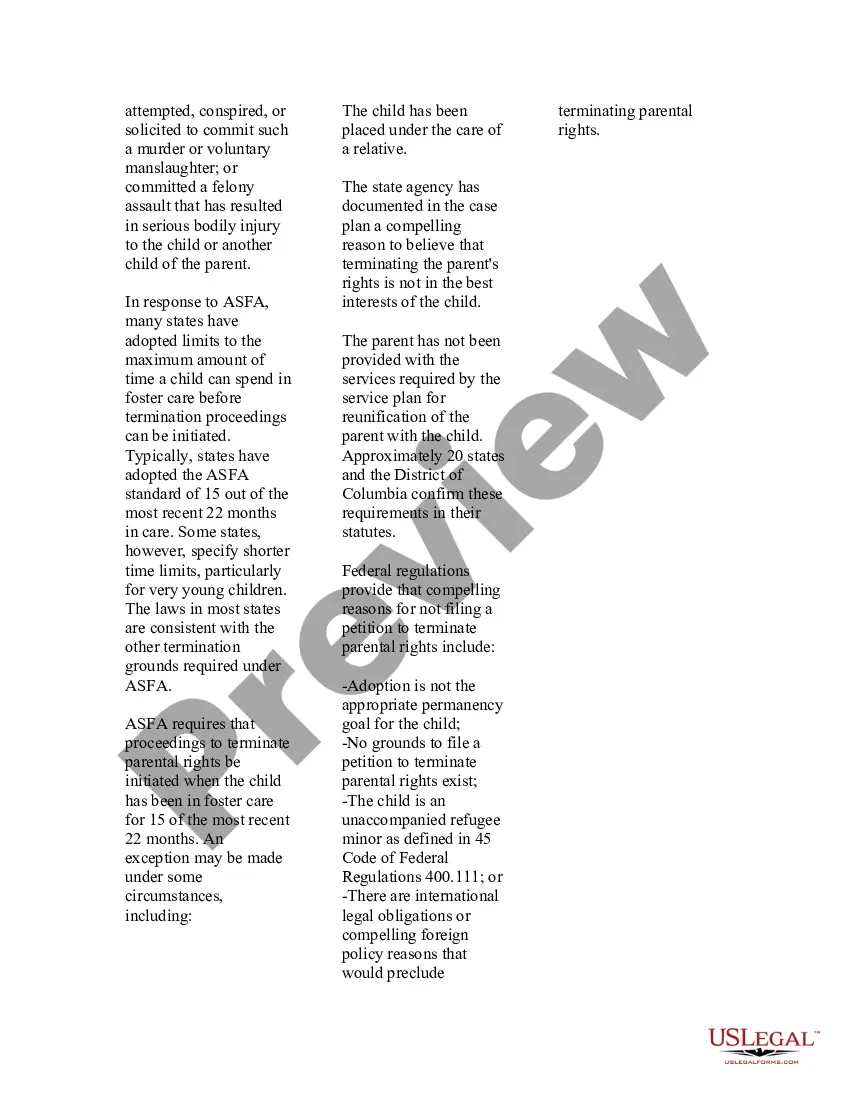
- Time frames for filing and processing the termination
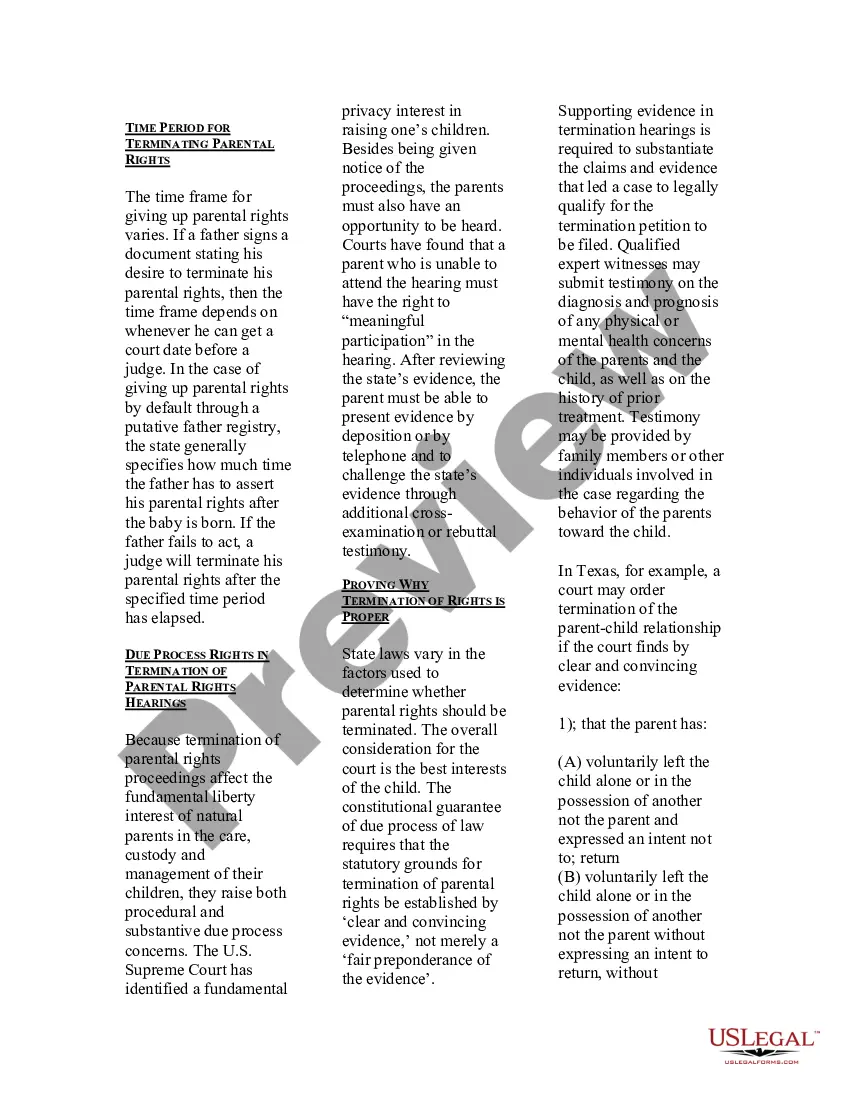
- Due process concerns and legal rights of parents
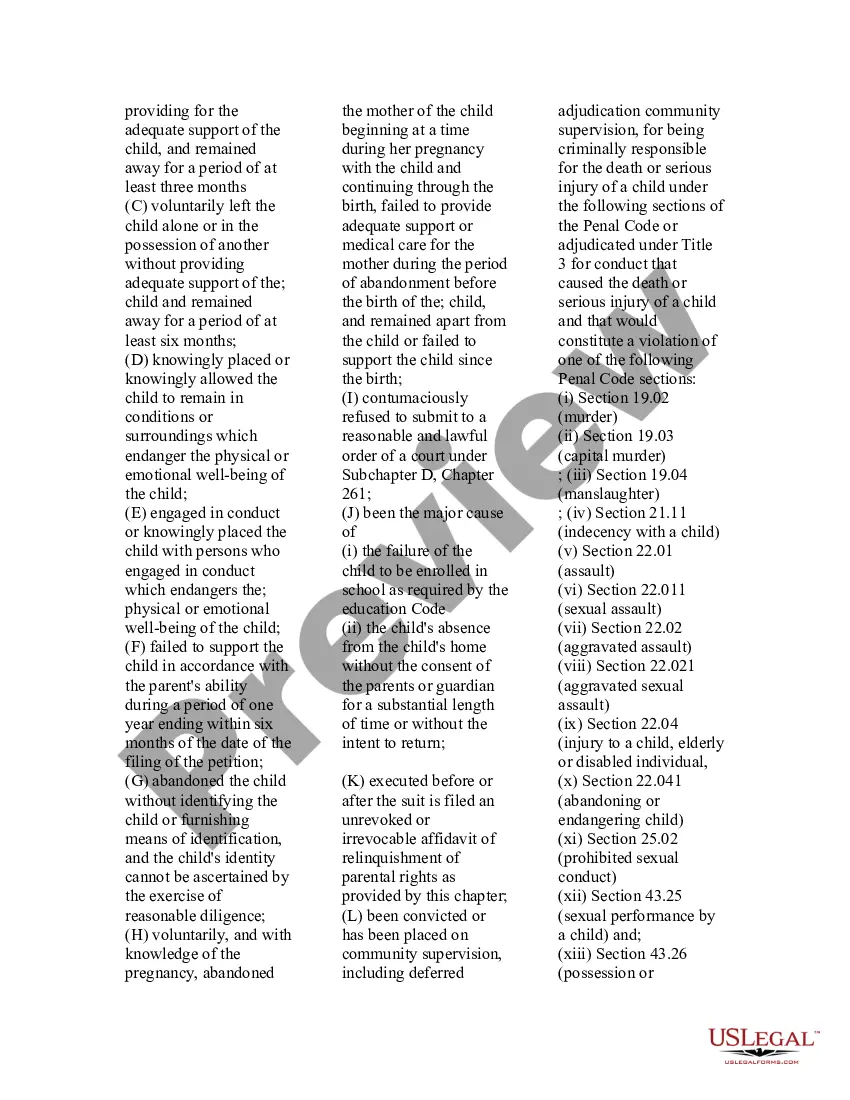
- Evidence required to support termination requests
- Involvement of state agencies in the termination process

Situations where this form applies
This guide is useful in various scenarios, such as when a biological parent wishes to give up their parental rights in the context of adoption, or when parents are undergoing a divorce and one parent wants to relinquish their rights for another parent to adopt the child. It can also apply to cases where a parent is unable or unwilling to maintain a parental role and seeks legal closure.
Who needs this form
- Biological parents seeking to terminate their parental rights.
- Adoptive parents wanting to understand legal transition processes.
- Parents involved in divorce proceedings where custody issues are contested.
- Individuals involved in voluntary or involuntary termination of parental rights.
How to complete this form
- Identify the parties involved, including the parent(s) and child.
- Outline the reasons for the request to terminate parental rights.
- Gather necessary evidence to support claims regarding the child's best interests.
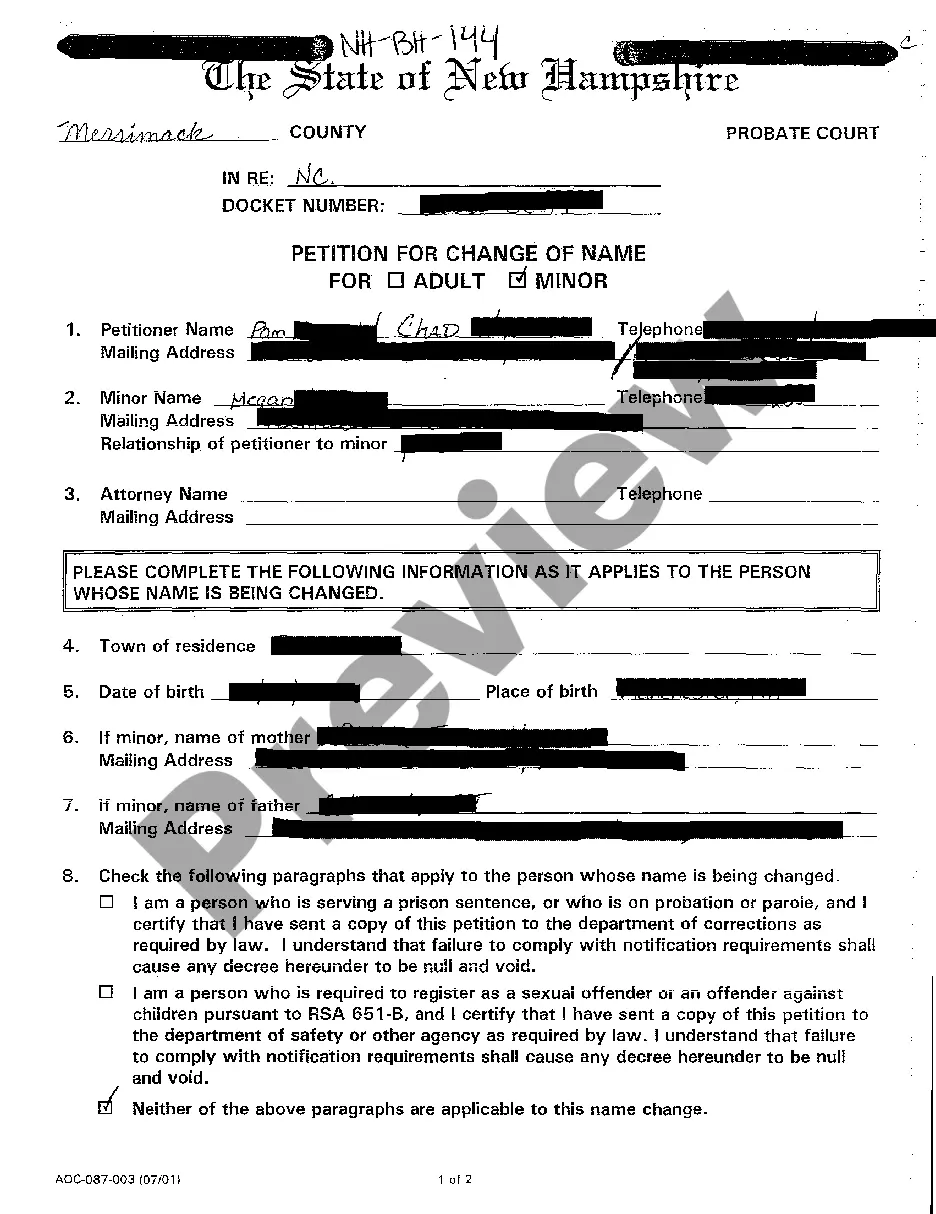
- File a petition in the appropriate family court, adhering to local regulations.
- Prepare for and attend the court hearing, if required, to present your case.
Is notarization required?
This form does not typically require notarization unless specified by local law. However, consulting a legal expert can help clarify specific requirements for your jurisdiction.
Get your form ready online
Our built-in tools help you complete, sign, share, and store your documents in one place.
Make edits, fill in missing information, and update formatting in US Legal Forms—just like you would in MS Word.
Download a copy, print it, send it by email, or mail it via USPS—whatever works best for your next step.
Sign and collect signatures with our SignNow integration. Send to multiple recipients, set reminders, and more. Go Premium to unlock E-Sign.
If this form requires notarization, complete it online through a secure video call—no need to meet a notary in person or wait for an appointment.
We protect your documents and personal data by following strict security and privacy standards.

Make edits, fill in missing information, and update formatting in US Legal Forms—just like you would in MS Word.

Download a copy, print it, send it by email, or mail it via USPS—whatever works best for your next step.

Sign and collect signatures with our SignNow integration. Send to multiple recipients, set reminders, and more. Go Premium to unlock E-Sign.

If this form requires notarization, complete it online through a secure video call—no need to meet a notary in person or wait for an appointment.

We protect your documents and personal data by following strict security and privacy standards.
Common mistakes to avoid
- Not understanding the long-term implications of terminating parental rights.
- Failing to provide sufficient evidence supporting the best interests of the child.
- Missing filing deadlines or failing to follow local court procedures.
- Not seeking legal advice or assistance during the process.
Benefits of completing this form online
- Convenient and accessible from any location, at any time.
- Editable templates make it easy to customize for specific situations.
- Provides guidance from licensed attorneys, ensuring legal accuracy.
- Allows for secure storage and retrieval of important legal documents.
Legal use & context
- The termination of parental rights is a significant legal action and may have lifelong consequences for both the parent and the child.
- State laws regarding termination vary, and parental rights can only be terminated when it is deemed to serve the child's best interests.
- Consulting with an attorney experienced in family law can provide valuable insights during this process.
Quick recap
- Understand the specific legal procedures and evidence required to relinquish parental rights.
- Be aware of the potential implications on child support obligations and responsibilities.
- Engage in open communication with legal representatives to effectively navigate the court system.
Looking for another form?

Form popularity
FAQ
Parental right can be terminated voluntarily by the parent(s) or involuntarily by the court to typically allow an agency, independent, or stepparent adoption to take place.
You may voluntarily give up your parental rights if someone else wants to adopt the child, or if someone else has filed a petition to terminate your rights. You will typically need to go to a court hearing to let the judge know your wishes in person.
Parents will have to file a petition with their local court requesting a hearing to determine parental rights. Once a petition is filed, parents need to attend a hearing before the judge who will determine whether rights will be granted/terminated.
California courts only allow parents to terminate their parental rights voluntarily under specific circumstances.Another example could be a biological parent surrendering his or her parental rights to allow the other biological parent's new spouse to formally adopt the child.
Voluntary consents must be witnessed by a district judge, a magistrate judge, or an equivalent judicial officer in another state. to the child, to consent to termination of parental rights, to waive hearing on the petition to terminate parental rights, and to request entry of a decree of termination.
You may voluntarily give up your parental rights if someone else wants to adopt the child, or if someone else has filed a petition to terminate your rights. You will typically need to go to a court hearing to let the judge know your wishes in person.
Based on Ala. Code Section 12-15-319, a court may terminate a parent's rights if the parent is unable or unwilling to discharge their responsibilities, and the conduct or condition of the parent that makes them unable to care for their child is unlikely to change in the foreseeable future.
A parent cannot just sign over his rights to avoid child support. Even if he chooses not to pursue rights regarding parenting time or decision-making, he will still have the obligation to support his child and you can work with the state to get the support established.