US Legal Guide to Revocable Land Trusts
Overview of this form
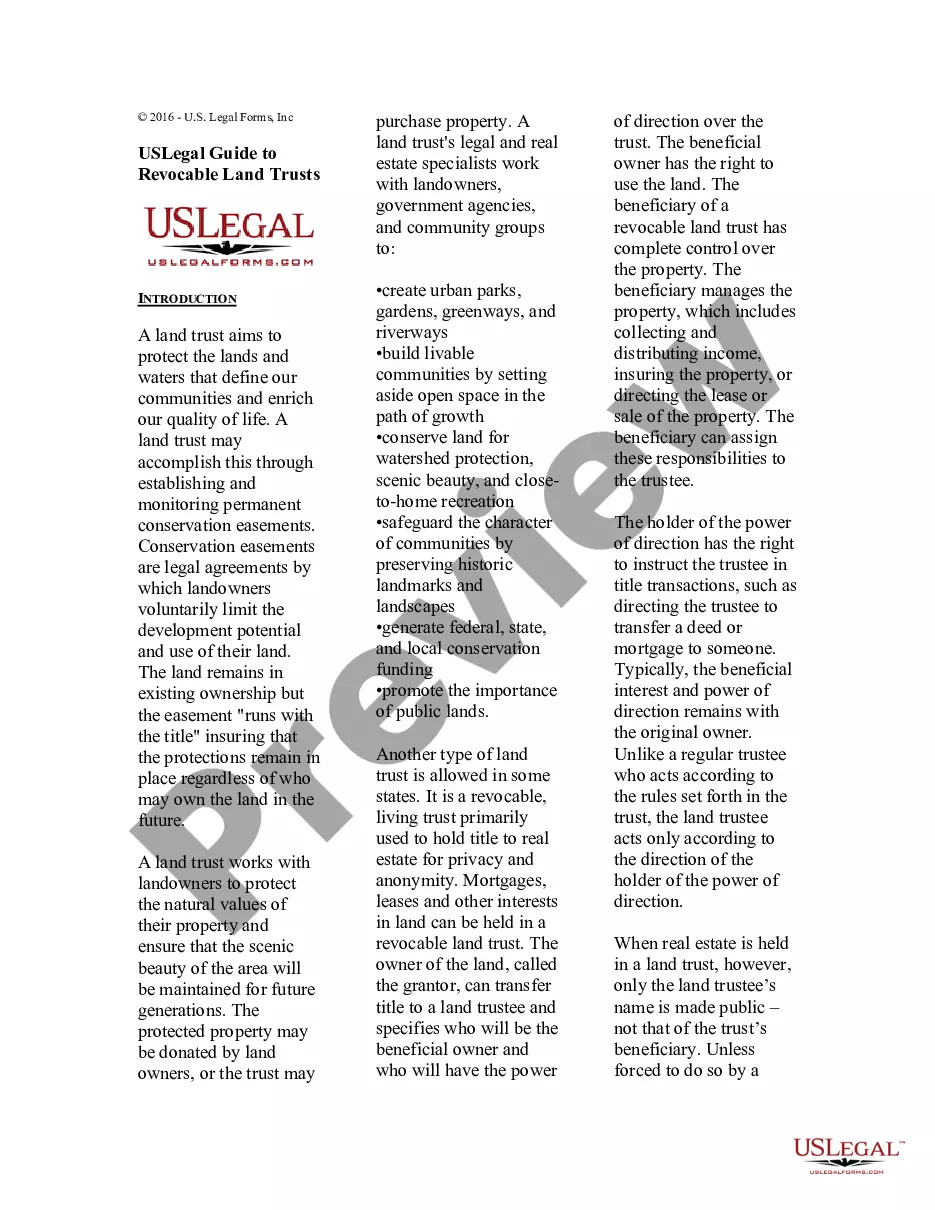
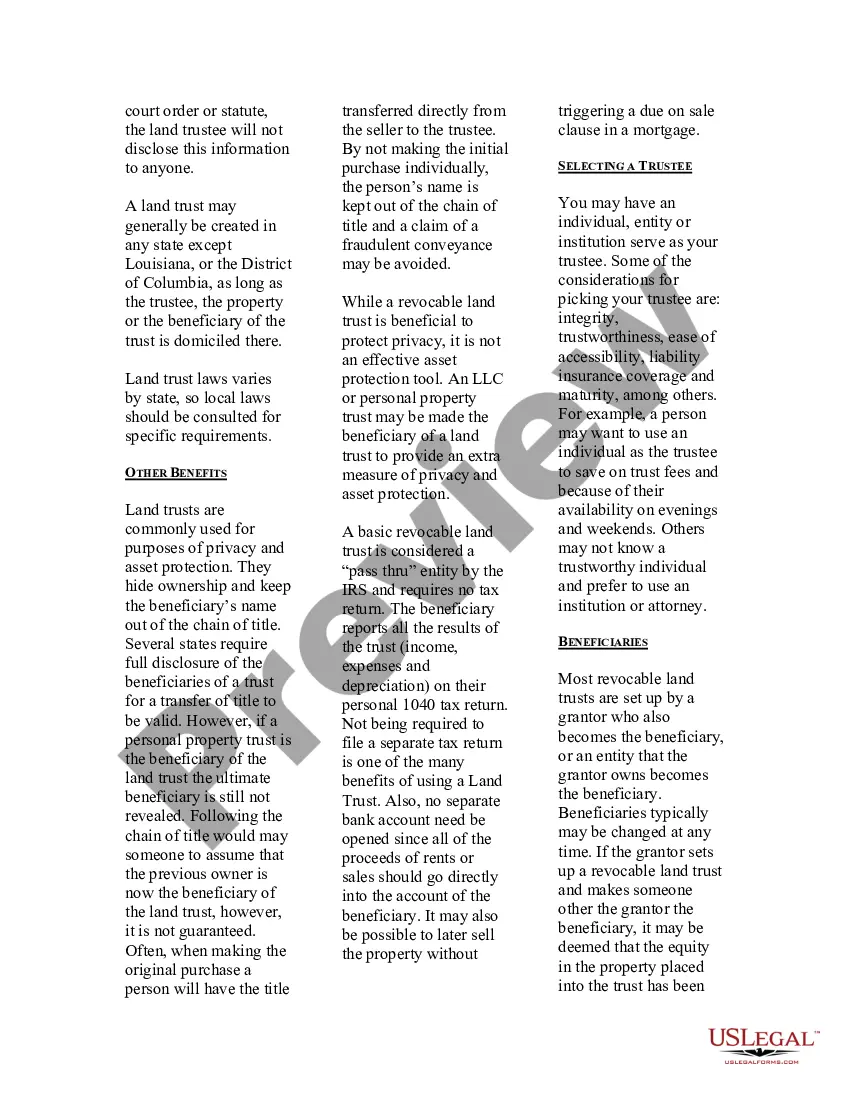
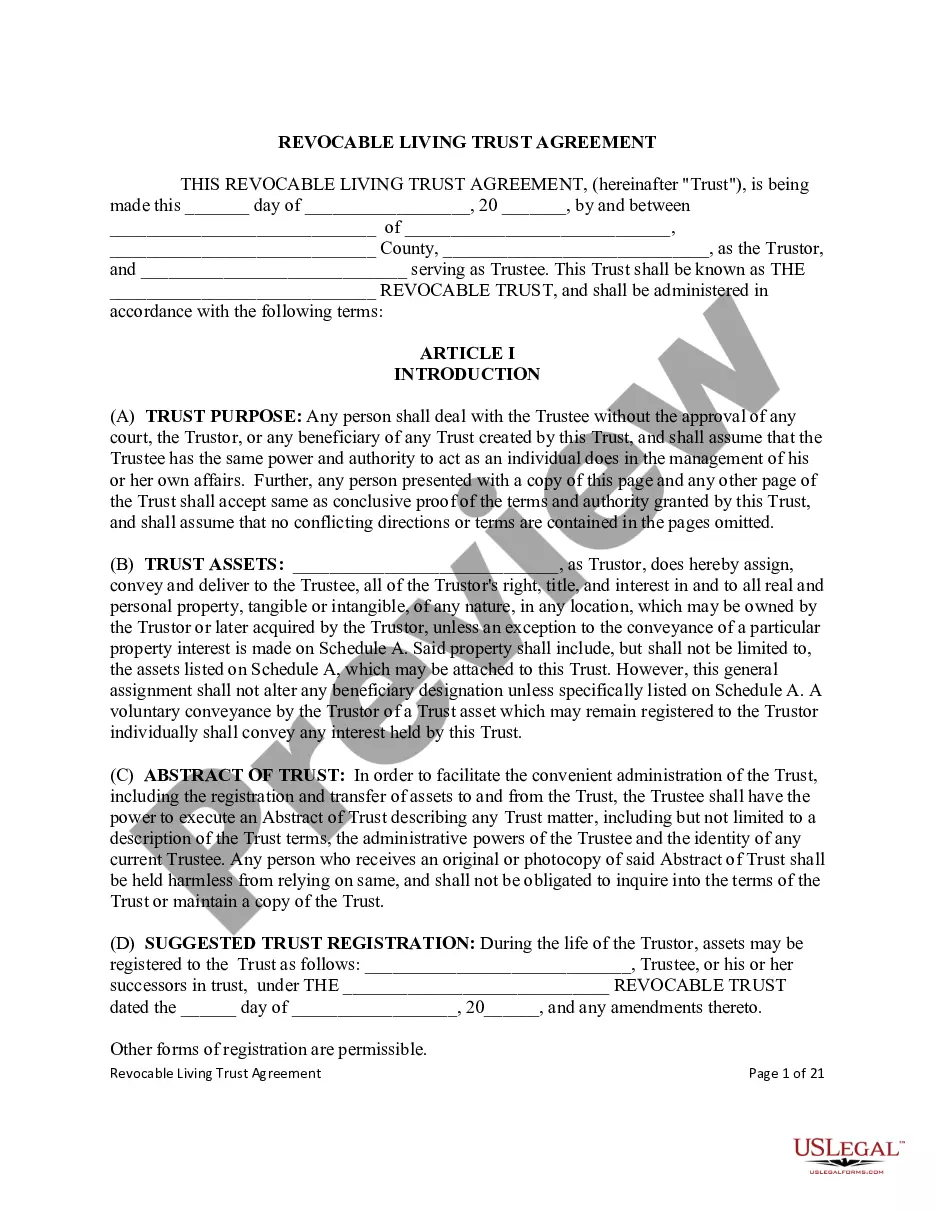
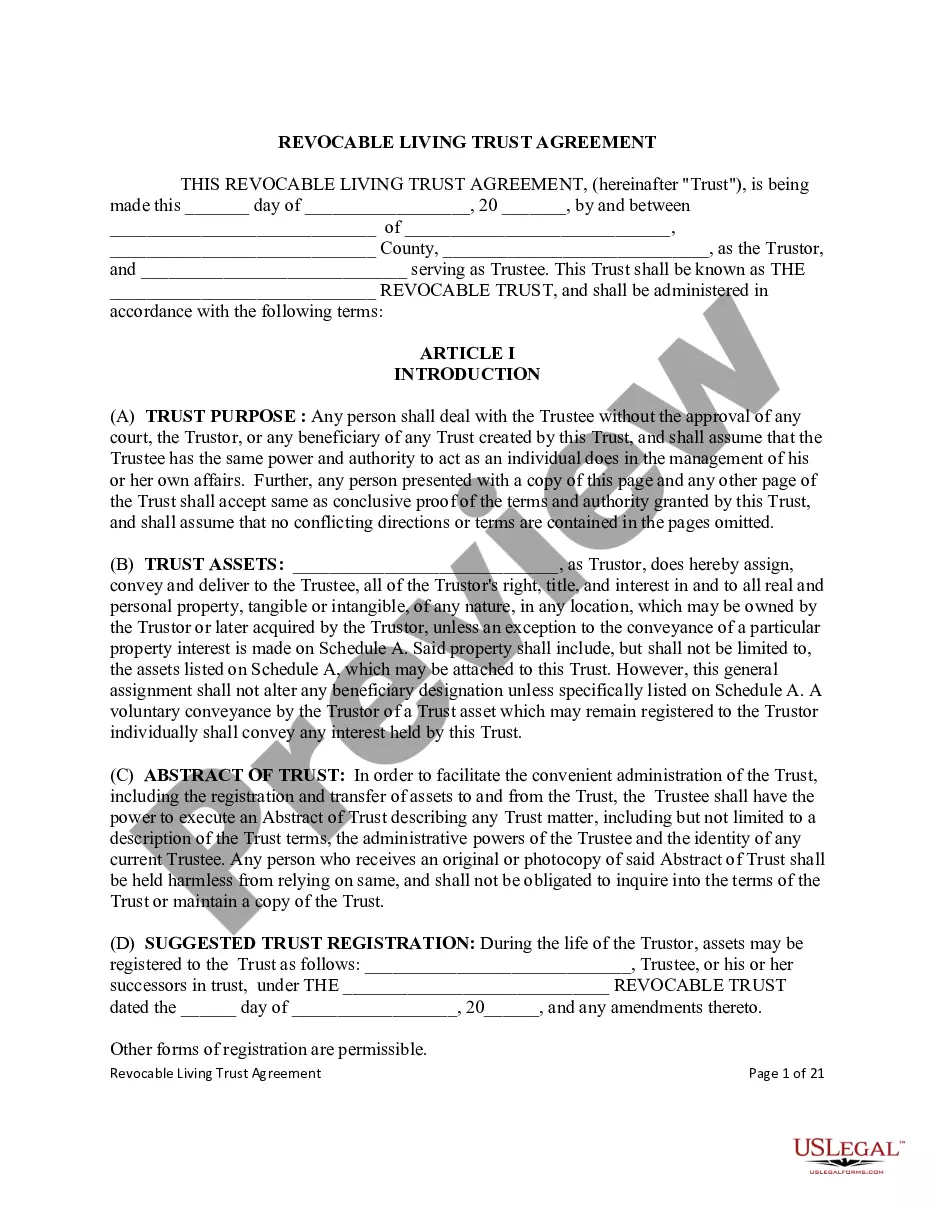
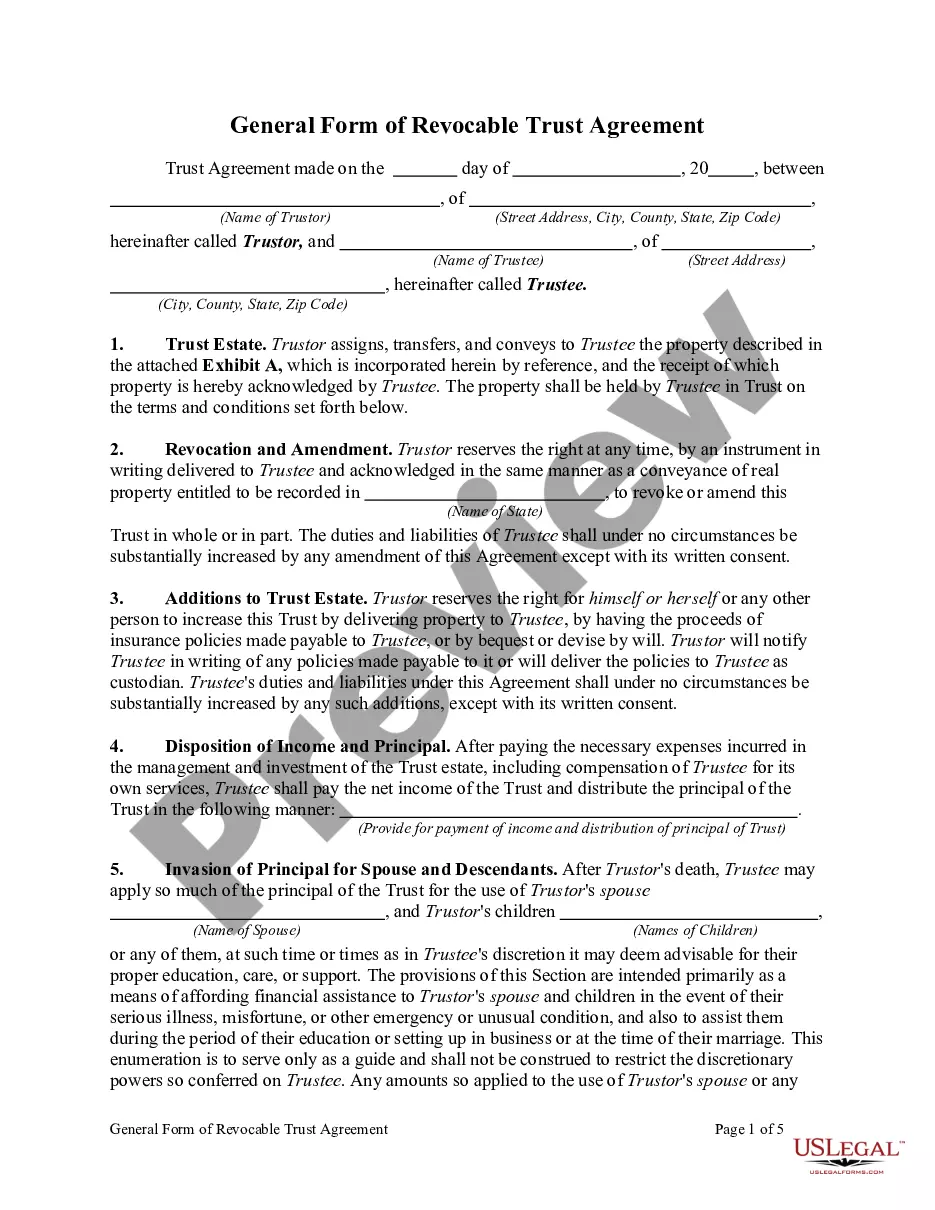
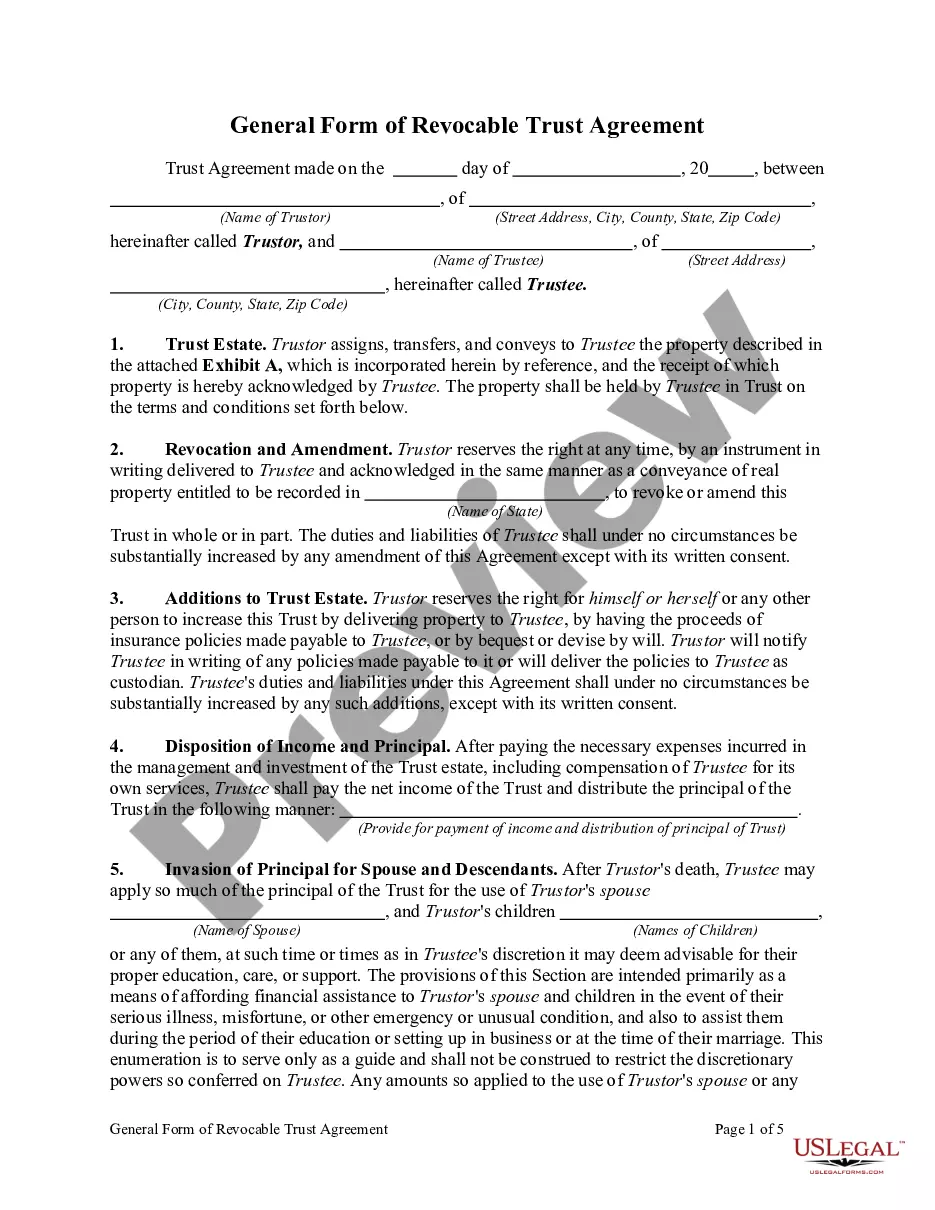
The US Legal Guide to Revocable Land Trusts is a comprehensive resource designed to educate individuals about revocable land trusts. This guide covers the key features and benefits of a revocable land trust, how to select a trustee, and the necessary steps to create one. Unlike traditional land ownership, a revocable land trust allows for privacy and flexibility in managing real estate, providing a useful tool for those looking to protect property while maintaining control over its use and management.
What’s included in this form
- Introduction to land trusts and conservation easements.
- Key benefits of establishing a revocable land trust, including privacy and ease of management.
- Guidance on selecting a trustworthy trustee.
- Information on beneficiaries and their roles in trust management.
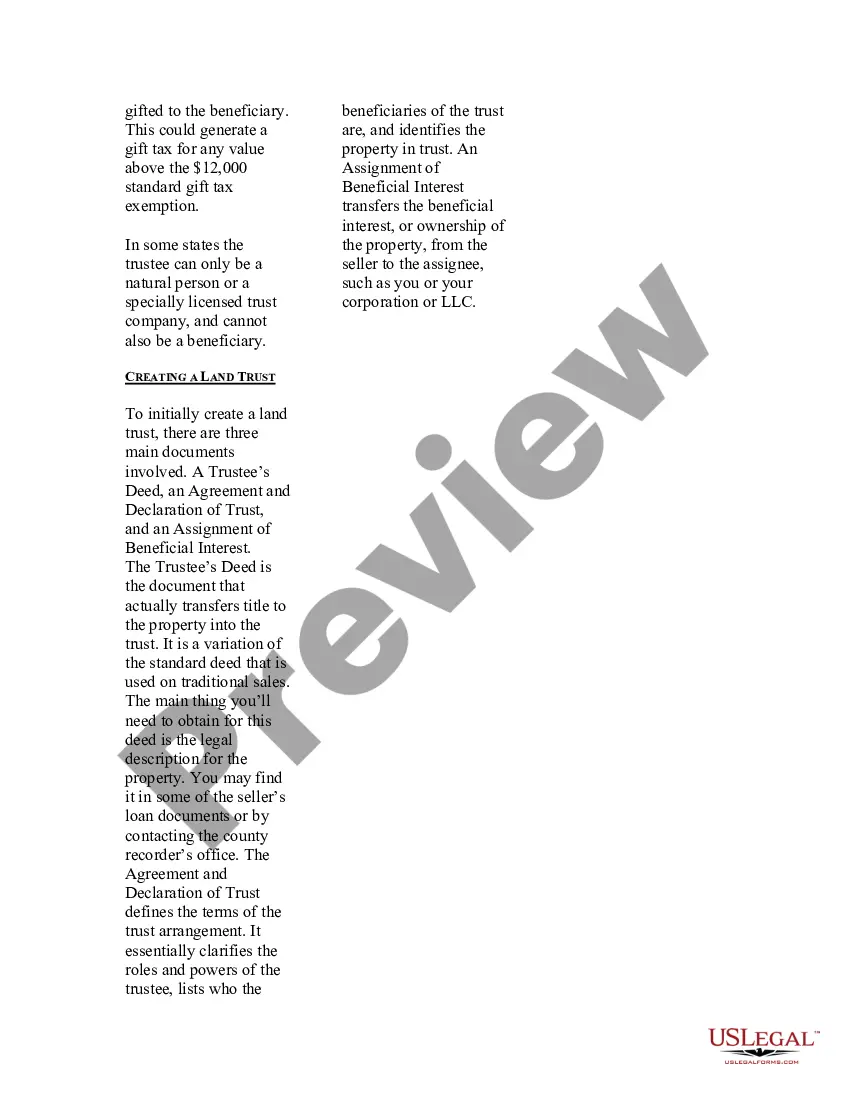
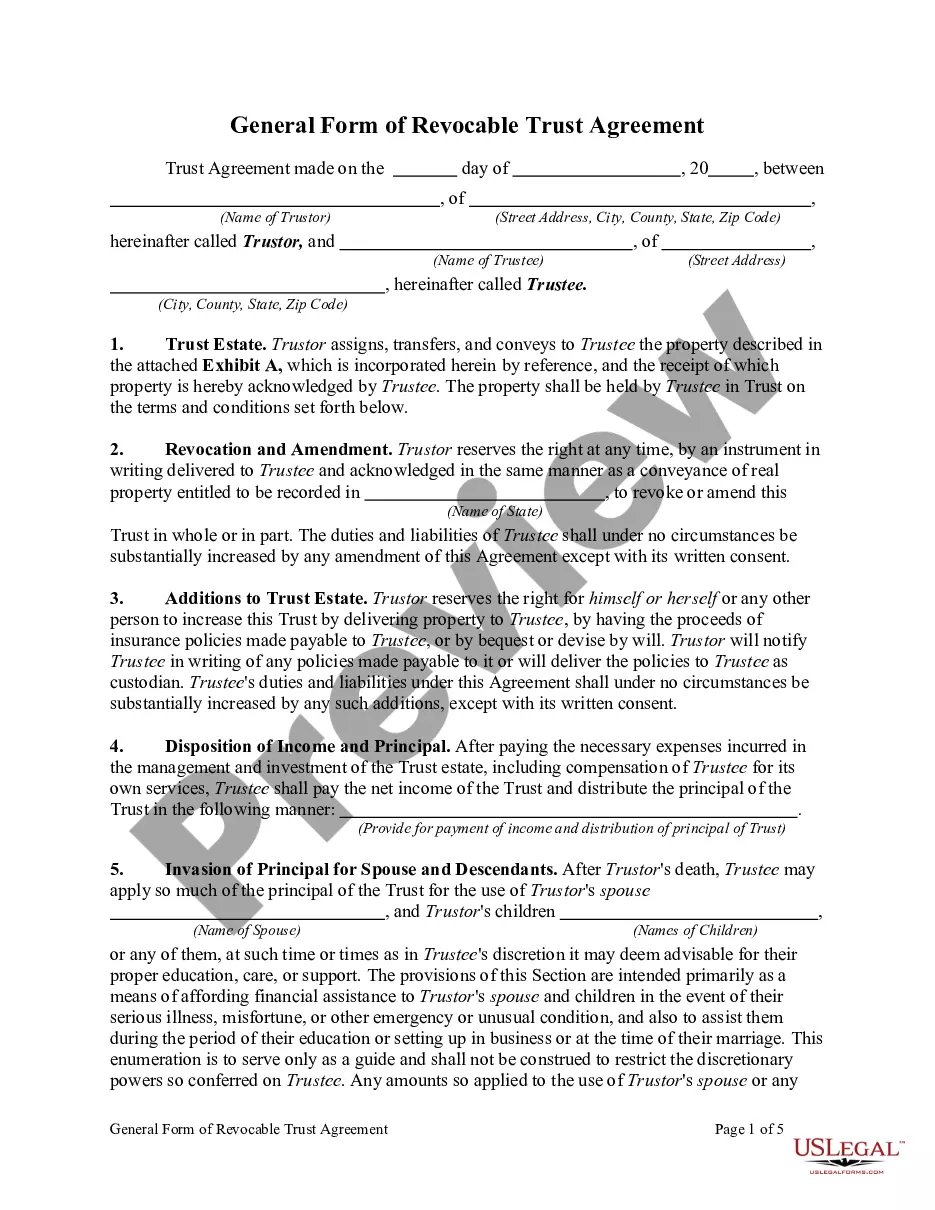
- Steps to create a revocable land trust, including required documents.
When this form is needed
This guide is beneficial for those considering establishing a revocable land trust to manage their real estate. It is particularly useful during estate planning, property acquisition, or when confidentiality in property ownership is desired. If you are looking to simplify property management or ensure the smooth transition of property upon your death, this guide can help you understand the process and legal requirements involved.
Who can use this document
- Individuals seeking to protect their privacy in real estate ownership.
- Property owners wanting a flexible estate planning tool.
- Anyone needing guidance on managing real estate without public disclosure.
- Estate planners and attorneys advising clients on property management strategies.
How to prepare this document
- Identify the parties involved, including the grantor and beneficiaries.
- Research local laws regarding revocable land trusts to ensure compliance.
- Complete the Trustees Deed to transfer property into the trust.
- Draft the Agreement and Declaration of Trust to define the trust's terms.
- Use the Assignment of Beneficial Interest to assign ownership of the property to the trust.
Notarization guidance
To make this form legally binding, it must be notarized. Our online notarization service, powered by Notarize, lets you verify and sign documents remotely through an encrypted video session.
Get your form ready online
Our built-in tools help you complete, sign, share, and store your documents in one place.
Make edits, fill in missing information, and update formatting in US Legal Forms—just like you would in MS Word.
Download a copy, print it, send it by email, or mail it via USPS—whatever works best for your next step.
Sign and collect signatures with our SignNow integration. Send to multiple recipients, set reminders, and more. Go Premium to unlock E-Sign.
If this form requires notarization, complete it online through a secure video call—no need to meet a notary in person or wait for an appointment.
We protect your documents and personal data by following strict security and privacy standards.

Make edits, fill in missing information, and update formatting in US Legal Forms—just like you would in MS Word.

Download a copy, print it, send it by email, or mail it via USPS—whatever works best for your next step.

Sign and collect signatures with our SignNow integration. Send to multiple recipients, set reminders, and more. Go Premium to unlock E-Sign.

If this form requires notarization, complete it online through a secure video call—no need to meet a notary in person or wait for an appointment.

We protect your documents and personal data by following strict security and privacy standards.
Common mistakes to avoid
- Failing to select a qualified and trustworthy trustee.
- Not fully understanding the implications of transferring property into a trust.
- Overlooking state-specific laws and regulations that govern land trusts.
- Ignoring potential tax implications linked to beneficiaries of the trust.
Advantages of online completion
- Convenience of downloading the guide for easy access.
- Editability allows tailoring the document to meet specific needs.
- Reliable information drafted by licensed attorneys for accuracy and compliance.
Legal use & context
- Revocable land trusts are recognized by most states for managing and transferring real estate.
- They offer privacy in property ownership and minimize estate taxes.
- Trusts must be established following specific legal requirements to ensure enforceability.
Summary of main points
- A revocable land trust provides privacy and control to the grantor.
- Proper selection of a trustee is vital for the trust's effectiveness.
- Understanding state-specific laws is crucial for valid trust creation.
- This guide simplifies the process of establishing a revocable land trust.
Looking for another form?






Form popularity
FAQ
Property you put in a living trust doesn't have to go through probate, which means that the assets won't get tied up in court for months and maybe years. However, you don't have to put bank accounts in a living trust, and sometimes it's not a good idea.
List Your Assets and Decide Which You'll Include in the Trust. Gather the Paperwork. Decide Whether You Will Be the Sole Grantor. Choose Beneficiaries. Choose a Successor Trustee. Choose Someone to Manage Property for Minor Children. Prepare the Trust Document. Sign and Notarize.
Paperwork. Setting up a living trust isn't difficult or expensive, but it requires some paperwork. Record Keeping. After a revocable living trust is created, little day-to-day record keeping is required. Transfer Taxes. Difficulty Refinancing Trust Property. No Cutoff of Creditors' Claims.
Pick a type of living trust. If you're married, you'll first need to decide whether you want a single or joint trust. Take stock of your property. Choose a trustee. Draw up the trust document. Sign the trust. Transfer your property to the trust.
Houses and other real estate (even if they're mortgaged) stock, bond, and other security accounts held by brokerages (but think about naming a TOD beneficiary instead) small business interests (stock in a closely held corporation, partnership interests, or limited liability company shares)
A land trust is a legal entity that assumes control over property and other real estate assets at the behest of the property's owner. It's a living trust, which is generally revocable, meaning the terms of the trust can be changed or terminated at any time.
The process of funding your living trust by transferring your assets to the trustee is an important part of what helps your loved ones avoid probate court in the event of your death or incapacity. Qualified retirement accounts such as 401(k)s, 403(b)s, IRAs, and annuities, should not be put in a living trust.
The trust itself. The land trust typically names the trustee, who is in charge of the trust. A deed. The deed is the document that is recorded in the public records that conveys the title from the prior owner to the trust, itself.
A Revocable Living Trust Defined Assets can include real estate, valuable possessions, bank accounts and investments. As with all living trusts, you create it during your lifetime.