IRS 20 Quiz to Determine 1099 vs Employee Status
What is this form?
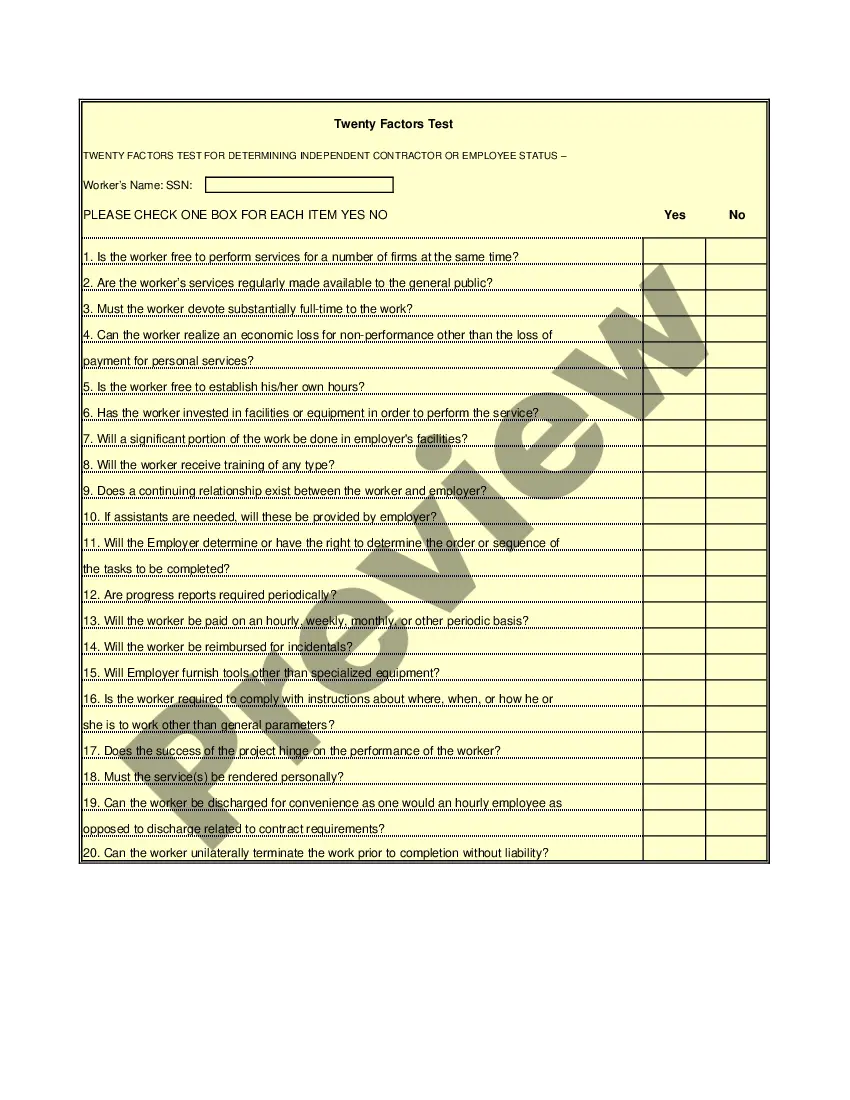
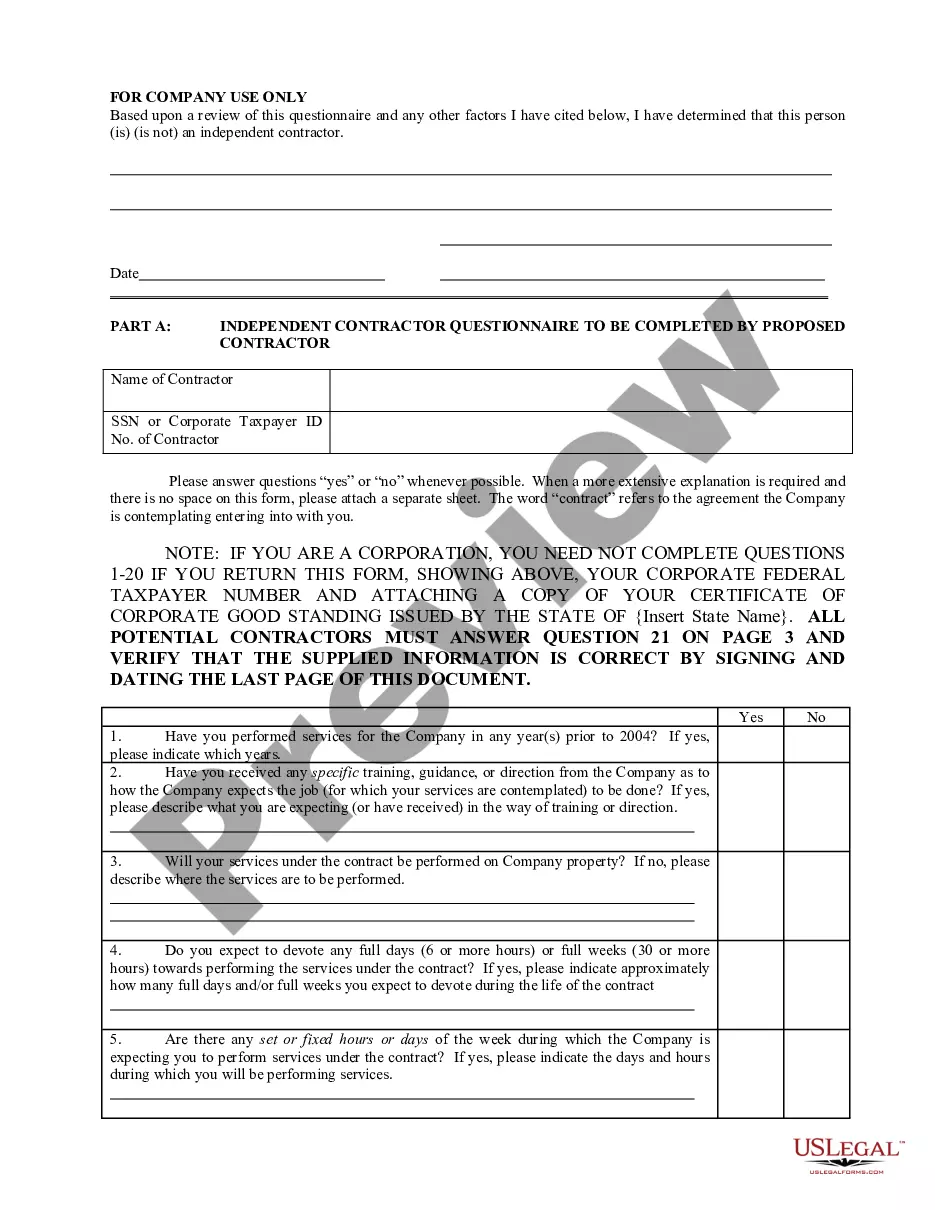
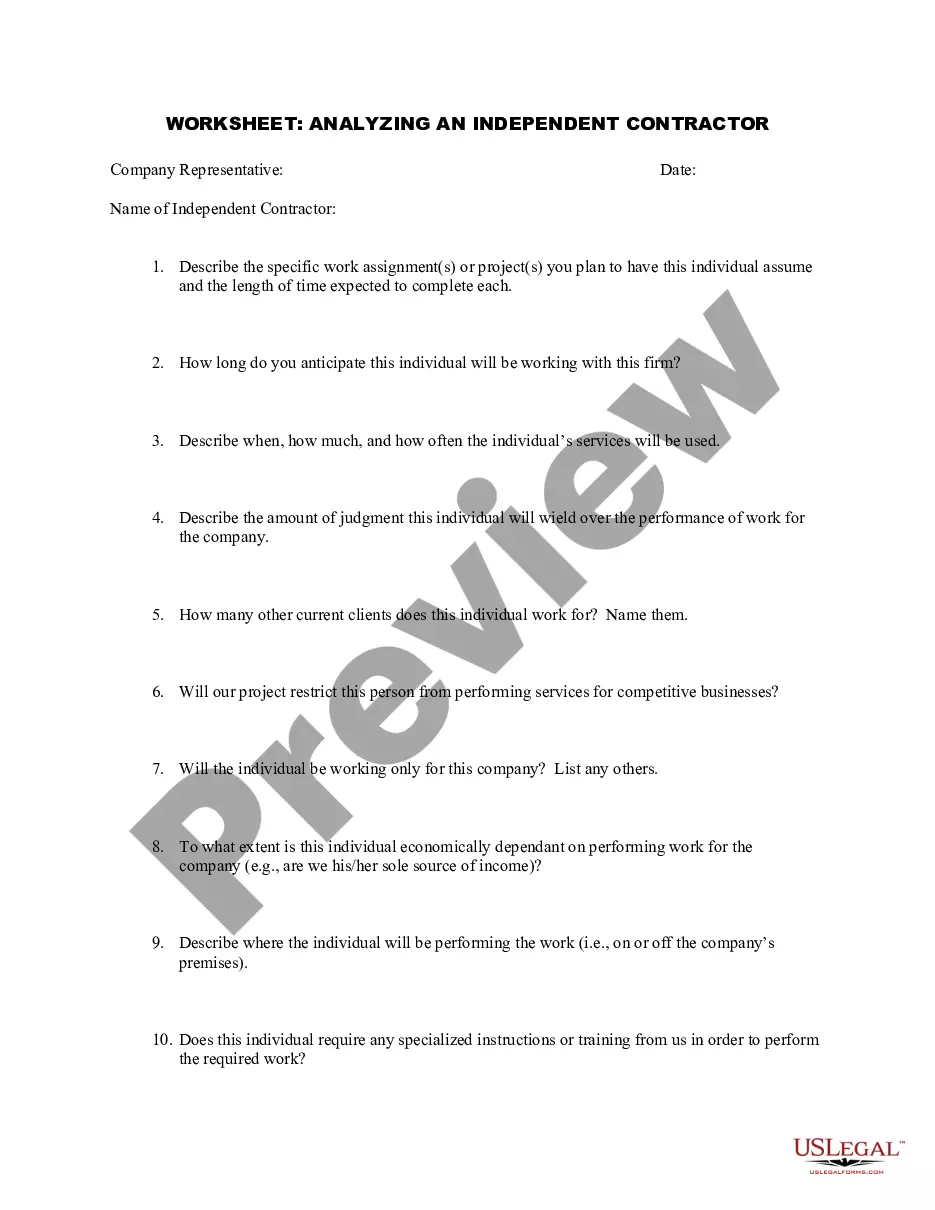
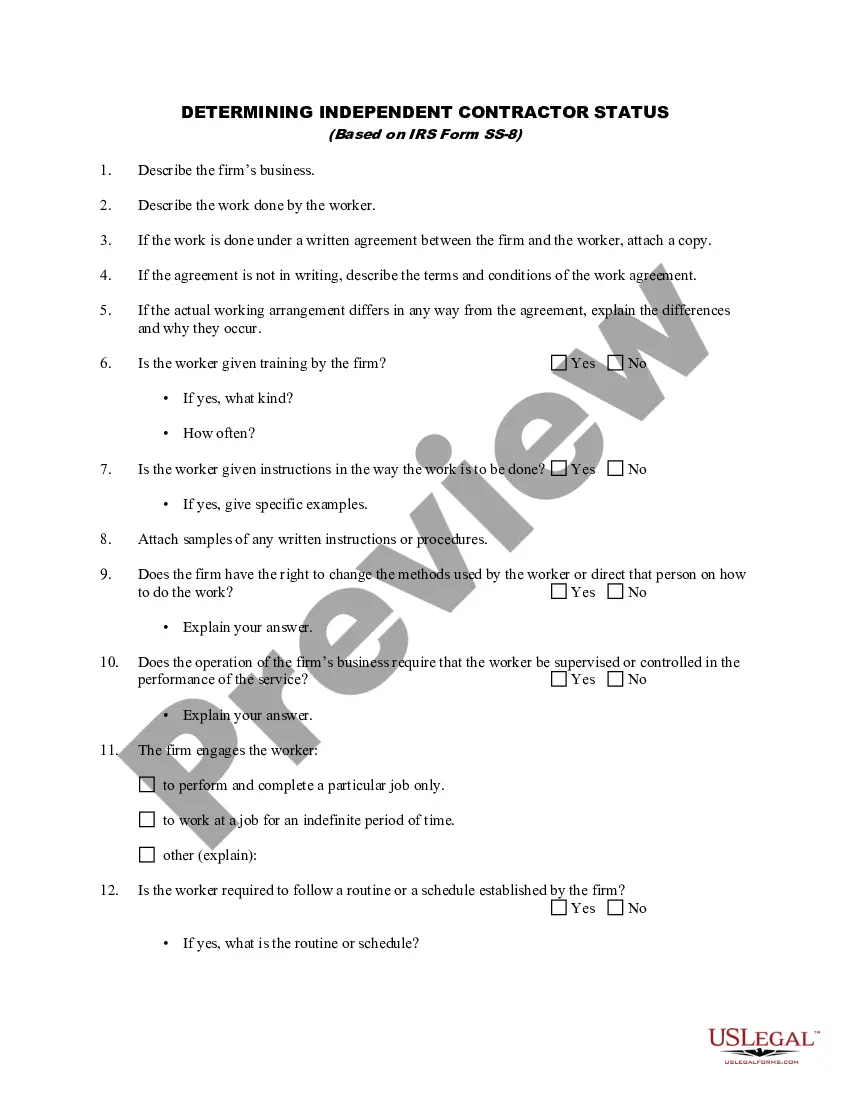
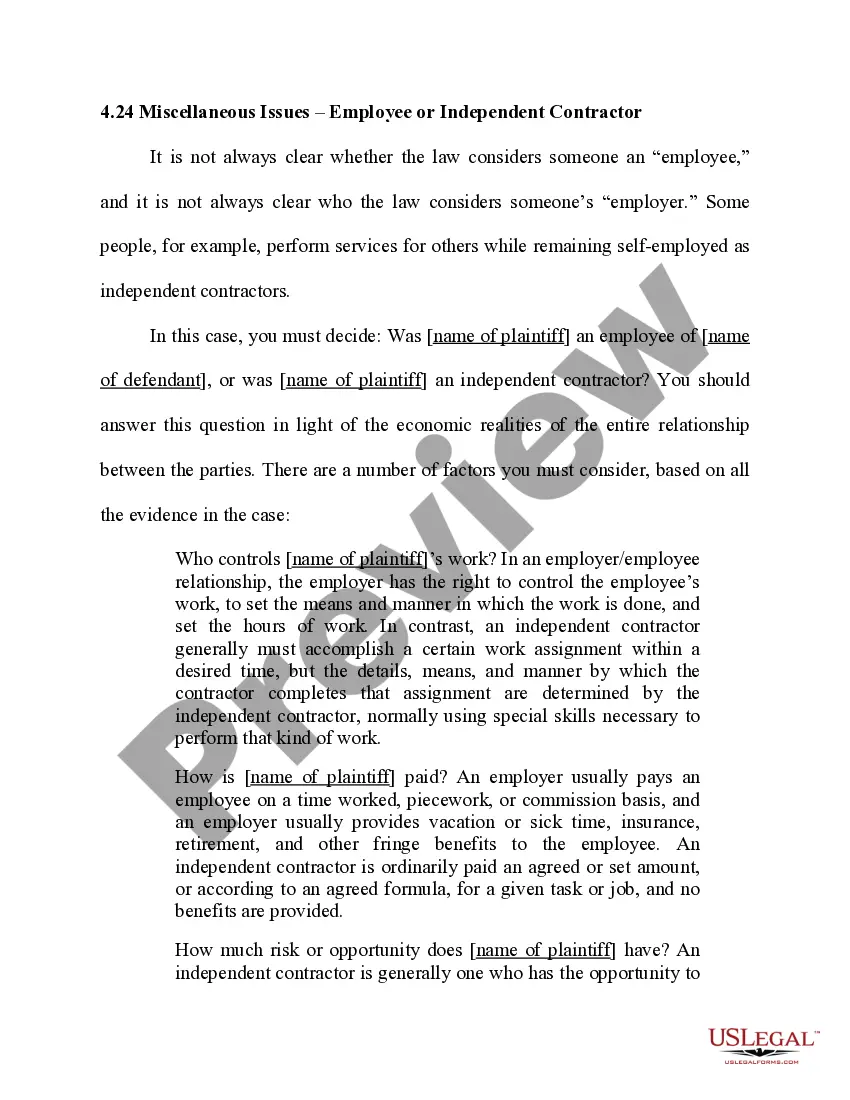
The IRS 20 Quiz to Determine 1099 vs Employee Status is a crucial tool for employers to classify workers correctly as either employees or independent contractors. This form helps to assess the nature of the working relationship based on a set of twenty specific factors. Understanding the classification can prevent legal disputes and ensure compliance with tax obligations, distinguishing it from other employment-related forms that do not address this classification.
What’s included in this form
- Twenty factors test for determining worker status.
- Checkboxes for âYesâ or âNoâ responses to each factor.
- Fields for worker's name and Social Security Number (SSN).
Common use cases
This form should be utilized when an employer needs to evaluate whether their workers qualify as independent contractors or employees. It is particularly relevant when creating new contracts, during audits, or when workers are being hired or retained. Utilizing this form helps to clarify and document the employer-employee relationship during potential disputes regarding classification.
Who this form is for
- Employers looking to properly classify their workers.
- Business owners hiring freelancers or contractors.
- Human Resource professionals involved in worker classification.
- Accountants and tax professionals advising clients on employment status.
How to complete this form
- Begin by entering the worker's name and Social Security Number at the top of the form.
- Review each of the twenty factors listed in the test.
- For each factor, check the appropriate boxââYesâ or âNoâ based on your assessment of the workerâs situation.
- Ensure that you answer each question honestly to ensure accurate classification.
- Keep a copy of the completed form for your records as it may be needed for future reference.
Does this form need to be notarized?
This form does not typically require notarization unless specified by local law. It is essential to check your jurisdictionâs requirements to ensure compliance.
Get your form ready online
Our built-in tools help you complete, sign, share, and store your documents in one place.
Make edits, fill in missing information, and update formatting in US Legal Forms—just like you would in MS Word.
Download a copy, print it, send it by email, or mail it via USPS—whatever works best for your next step.
Sign and collect signatures with our SignNow integration. Send to multiple recipients, set reminders, and more. Go Premium to unlock E-Sign.
If this form requires notarization, complete it online through a secure video call—no need to meet a notary in person or wait for an appointment.
We protect your documents and personal data by following strict security and privacy standards.

Make edits, fill in missing information, and update formatting in US Legal Forms—just like you would in MS Word.

Download a copy, print it, send it by email, or mail it via USPS—whatever works best for your next step.

Sign and collect signatures with our SignNow integration. Send to multiple recipients, set reminders, and more. Go Premium to unlock E-Sign.

If this form requires notarization, complete it online through a secure video call—no need to meet a notary in person or wait for an appointment.

We protect your documents and personal data by following strict security and privacy standards.
Avoid these common issues
- Failing to consider all twenty factors thoroughly.
- Rushing to classify a worker without completing the form.
- Ignoring state-specific laws that may impact worker classification.
Why use this form online
- Convenience of downloading and completing at your own pace.
- Editability allows you to adjust your answers as needed.
- Reliable access to legal forms created by licensed attorneys.
Looking for another form?

Form popularity
FAQ
Finally, the new stimulus bill provides independent contractors with paid sick and paid family leave benefits through March 14, 2021.Under CARES Act II, unemployed or underemployed independent contractors who have an income mix from self-employment and wages paid by an employer are still eligible for PUA.
The general rule is that an individual is an independent contractor if the payer has the right to control or direct only the result of the work and not what will be done and how it will be done.However, your earnings as an employee may be subject to FICA (Social Security tax and Medicare) and income tax withholding.
Anyone your business paid $600 or more in non-employee compensation over the year must be issued a Form 1099-MISC. According to IRS guidance, a form 1099-MISC may be required if a company makes the following types of payments: At least $10 in royalties or broker payments in lieu of dividends or tax-exempt interest.
The general rule is that an individual is an independent contractor if the payer has the right to control or direct only the result of the work, not what will be done and how it will be done. Small businesses should consider all evidence of the degree of control and independence in the employer/worker relationship.
Wage and Tax Statement for Self Employed (1099). These forms prove your wages and taxes as a self employed individual. Profit and Loss Statement or Ledger Documentation. Bank Statements.
Income-verification letter. The most reliable method for proving earnings for independent contractors is a letter from a current or former employer describing your working arrangement. Contracts and agreements. Invoices. Bank statements and Pay stubs.
If you have a written contract to complete a specific task or project for a predetermined sum of money, you are probably a 1099 worker. However, if your employment is open-ended, without a contract and subject to a job description, you will typically be considered an employee.
A worker does not have to meet all 20 criteria to qualify as an employee or independent contractor, and no single factor is decisive in determining a worker's status. The individual circumstances of each case determine the weight IRS assigns different factors.