Sample Identity Theft Policy for FCRA and FACTA Compliance
About this form
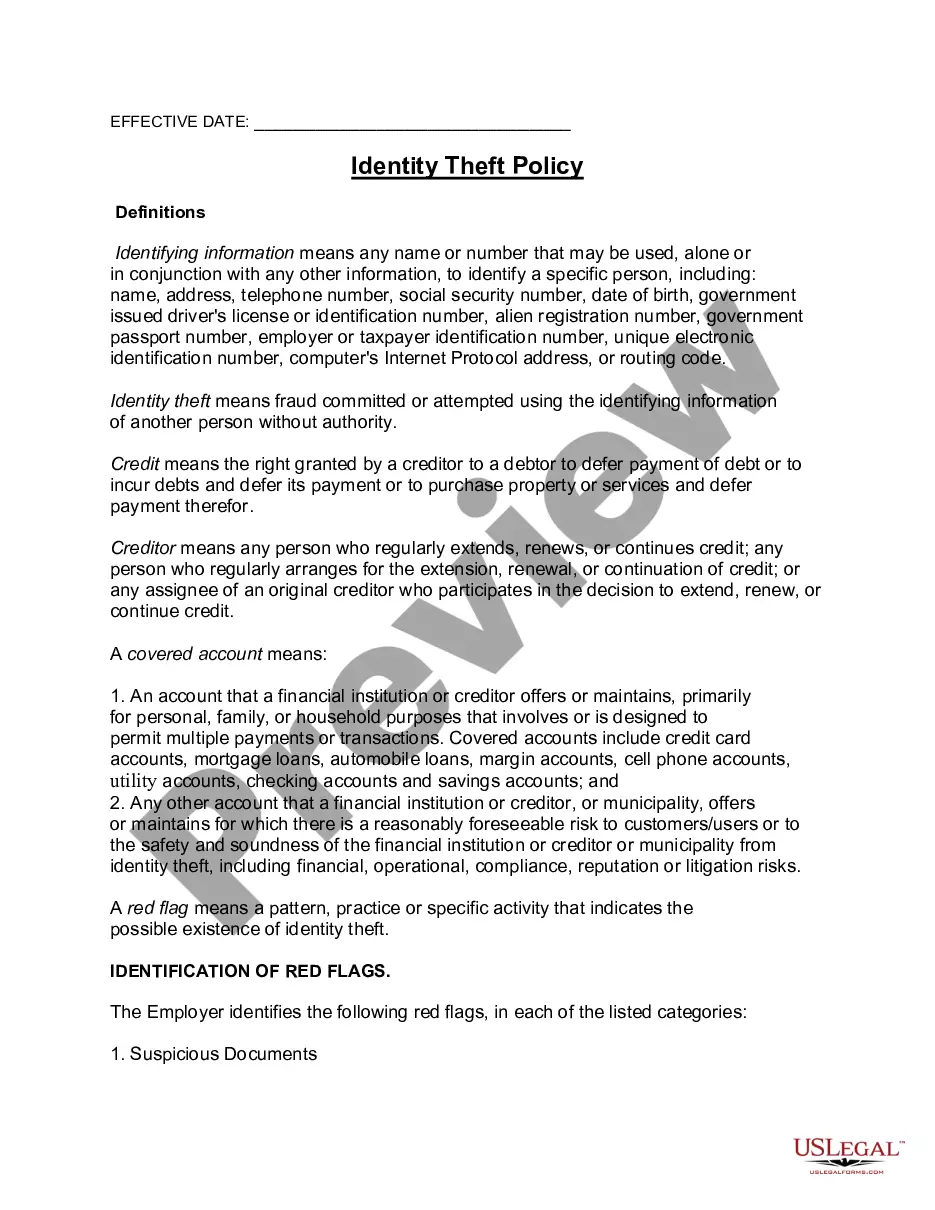
The Sample Identity Theft Policy for FCRA and FACTA Compliance is a legal template designed to help organizations fulfill their federal obligations under the Fair Credit Reporting Act (FCRA) and the Fair and Accurate Credit Transactions Act (FACTA). This form outlines reasonable policies and procedures organizations must implement when they receive notices of address discrepancies from consumer reporting agencies. It also delineates the establishment of an Identity Theft Prevention Program aimed at combating identity theft associated with both new and existing accounts.
Form components explained
- Definitions of key terms related to identity theft and credit
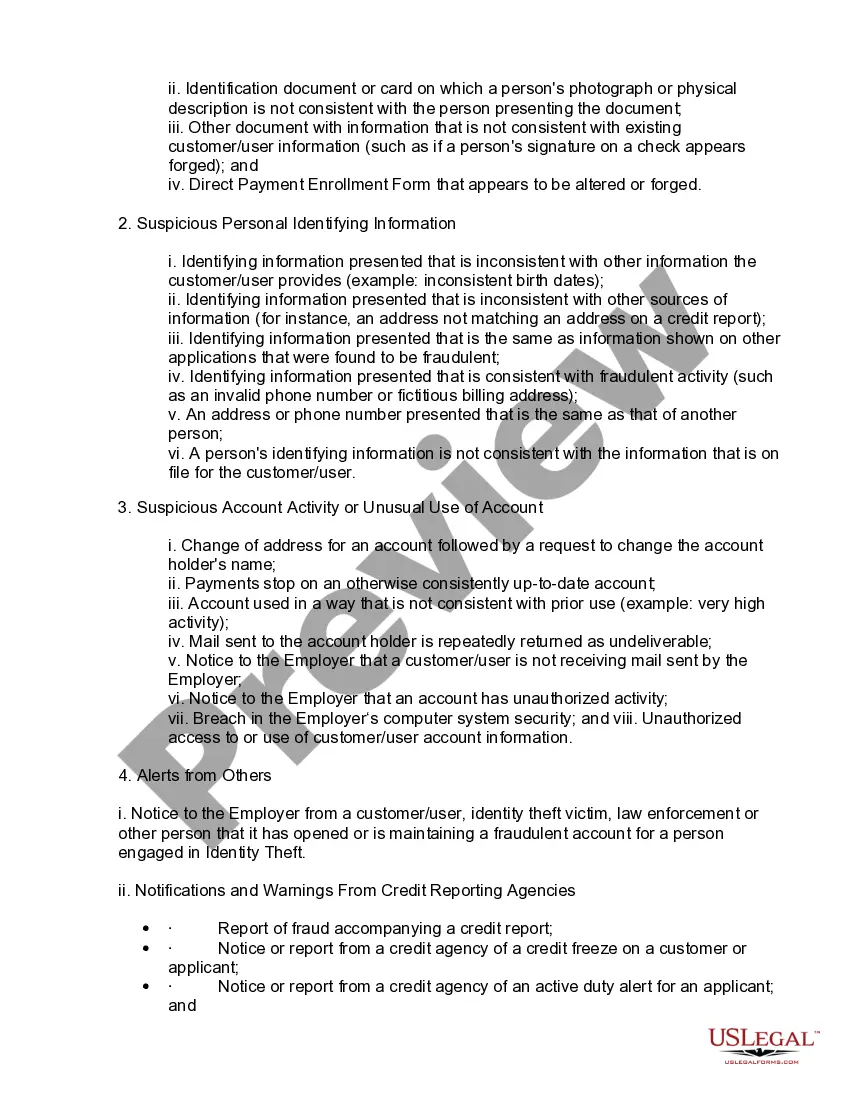
- Identification of red flags indicating potential identity theft
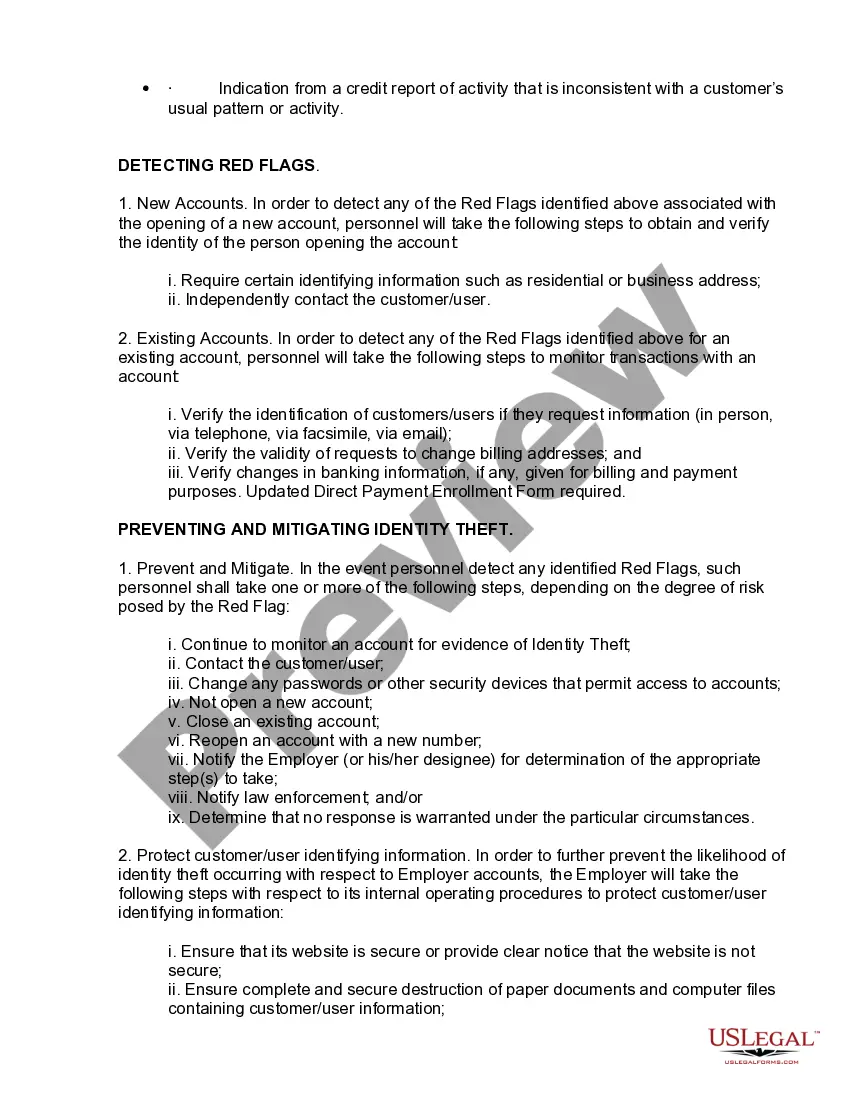
- Guidelines for detecting red flags in new and existing accounts
- Procedures for preventing and mitigating identity theft
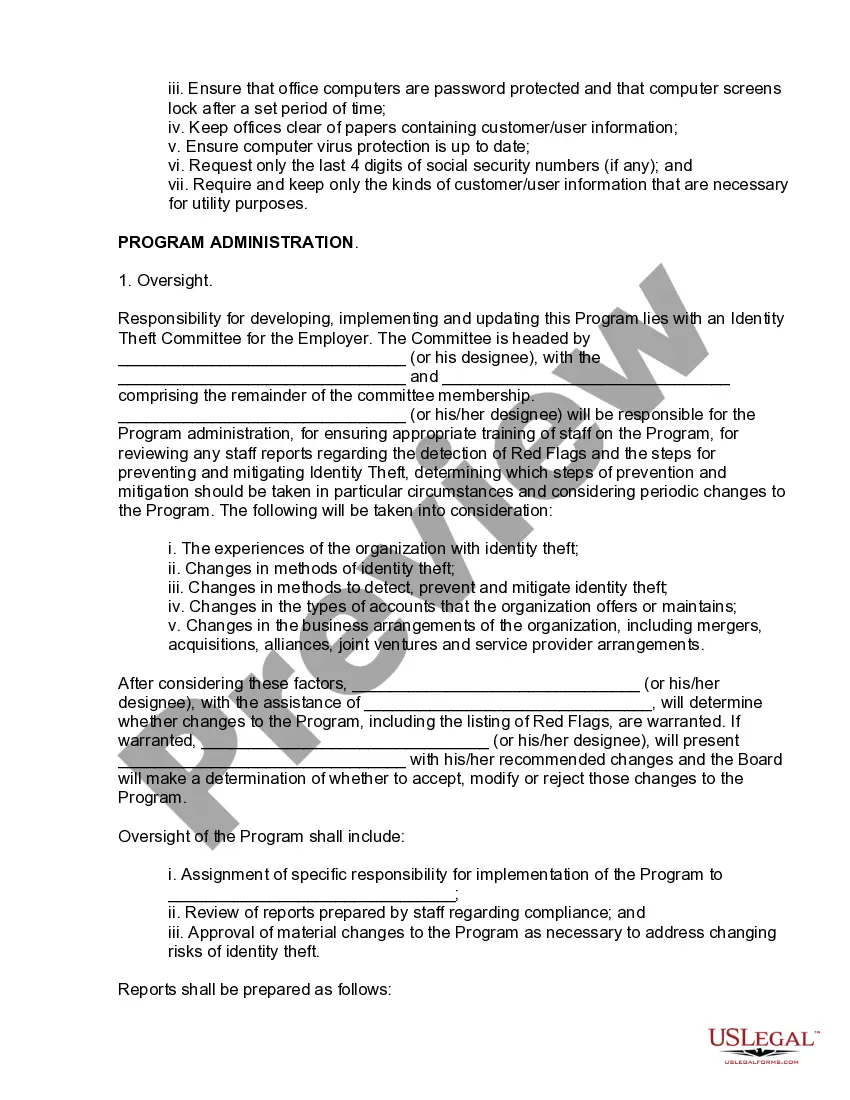
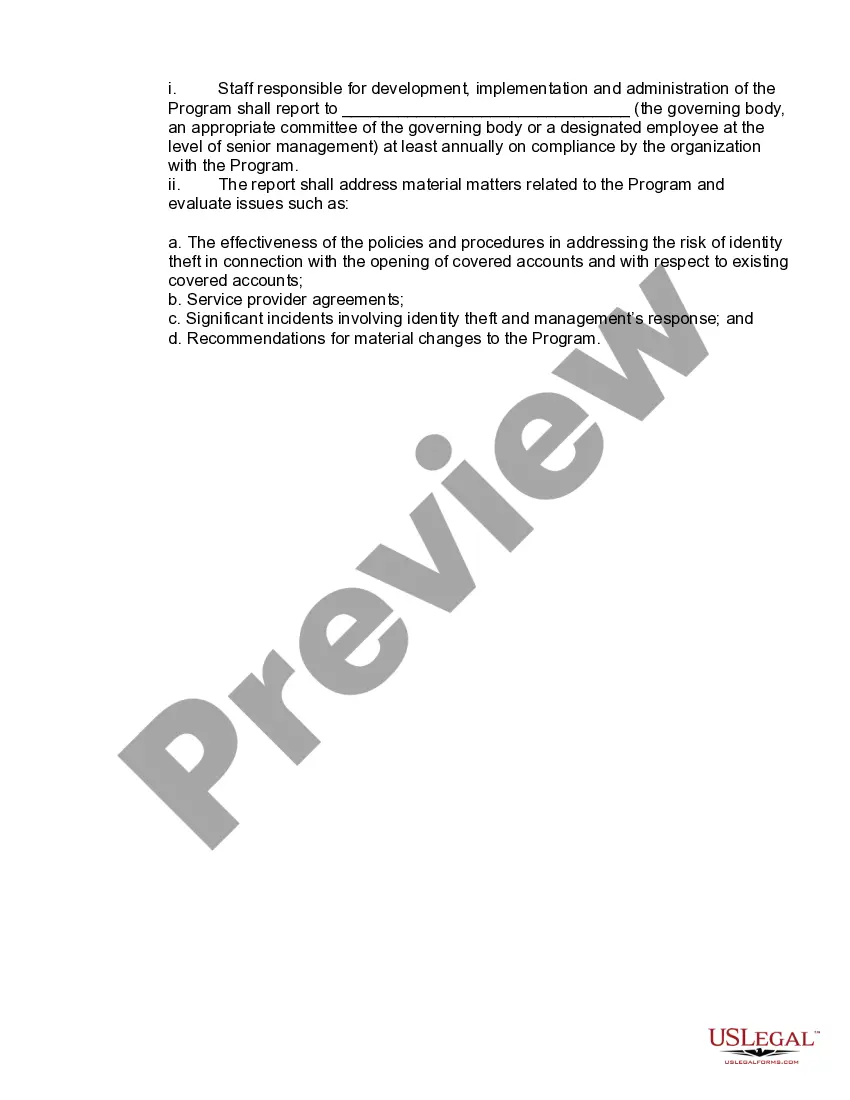
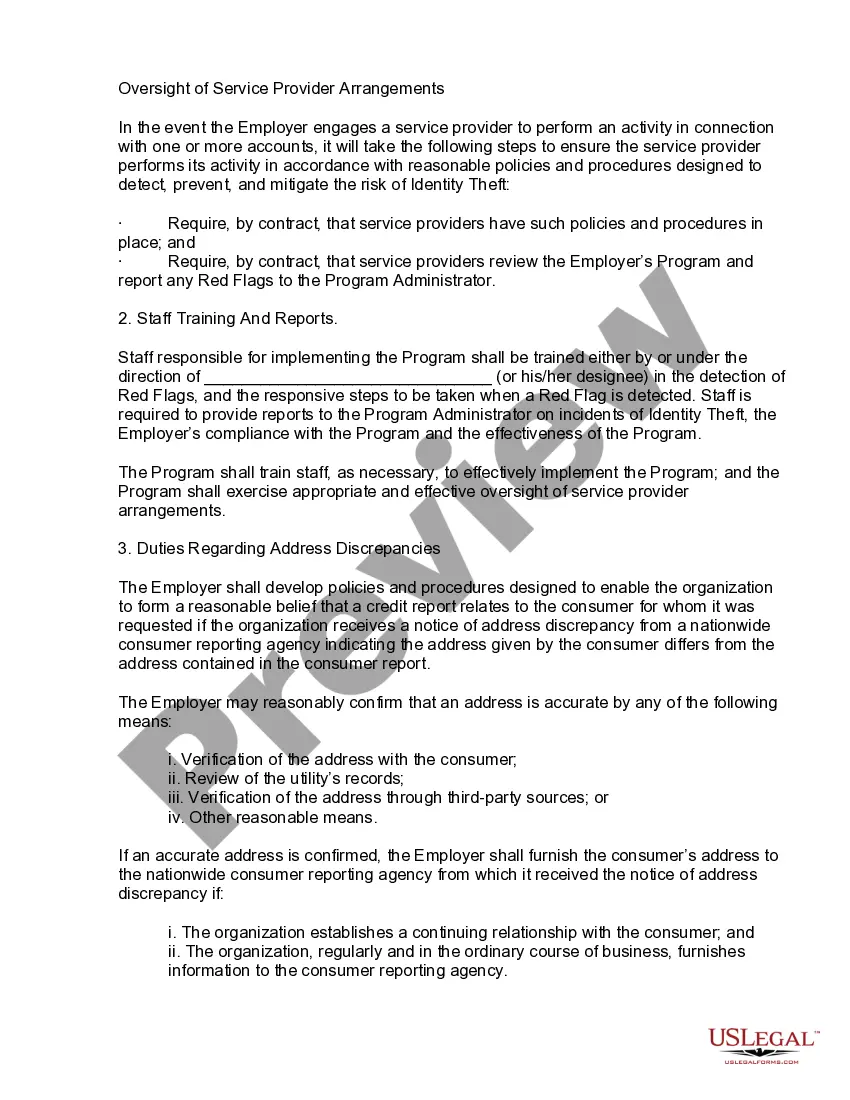
- Program administration responsibilities and oversight
- Staff training requirements and reporting protocols
When this form is needed
This Sample Identity Theft Policy should be utilized by organizations that handle consumer credit reports and accounts. It is particularly relevant when implementing measures to detect and prevent identity theft, especially if they receive notifications of address discrepancies from credit agencies. Businesses and financial institutions that maintain covered accounts must adopt such policies to comply with federal regulations.
Who this form is for
- Financial institutions and creditors
- Organizations that process consumer credit information
- Compliance officers and security personnel
- Businesses aiming to enhance their identity theft prevention strategies
How to complete this form
- Define the key terms relevant to your organization, including identity theft and covered accounts.
- Identify potential red flags associated with identity theft in both new and existing accounts.
- Establish monitoring procedures to promptly detect any signs of identity theft.
- Designate an identity theft committee to oversee the program and ensure its effectiveness.
- Train staff on the policies and procedures outlined in the form to facilitate compliance.
Notarization requirements for this form
This form does not typically require notarization unless specified by local law. Organizations should check any state-specific requirements to ensure compliance.
Get your form ready online
Our built-in tools help you complete, sign, share, and store your documents in one place.
Make edits, fill in missing information, and update formatting in US Legal Forms—just like you would in MS Word.
Download a copy, print it, send it by email, or mail it via USPS—whatever works best for your next step.
Sign and collect signatures with our SignNow integration. Send to multiple recipients, set reminders, and more. Go Premium to unlock E-Sign.
If this form requires notarization, complete it online through a secure video call—no need to meet a notary in person or wait for an appointment.
We protect your documents and personal data by following strict security and privacy standards.

Make edits, fill in missing information, and update formatting in US Legal Forms—just like you would in MS Word.

Download a copy, print it, send it by email, or mail it via USPS—whatever works best for your next step.

Sign and collect signatures with our SignNow integration. Send to multiple recipients, set reminders, and more. Go Premium to unlock E-Sign.

If this form requires notarization, complete it online through a secure video call—no need to meet a notary in person or wait for an appointment.

We protect your documents and personal data by following strict security and privacy standards.
Mistakes to watch out for
- Failing to regularly update the identity theft policy to address new threats.
- Not training staff adequately on recognizing and responding to red flags.
- Neglecting to document compliance efforts and incidents of identity theft.
- Ignoring state-specific regulations that may add extra requirements.
Advantages of online completion
- Convenience of immediate access and downloadable format for ease of use.
- Reliability of professionally drafted content, ensuring legal compliance.
- Editability to tailor the policy to specific organizational needs.
- Efficient updates reflecting changes in regulations and best practices.
Quick recap
- This form is essential for organizations to comply with FCRA and FACTA regulations.
- Understanding and identifying red flags can significantly enhance identity theft prevention efforts.
- Regular training and updates of the policy are crucial to address emerging identity theft risks.
Looking for another form?
Form popularity
FAQ
The Red Flags Rule requires that each "financial institution" or "creditor"which includes most securities firmsimplement a written program to detect, prevent and mitigate identity theft in connection with the opening or maintenance of "covered accounts." These include consumer accounts that permit multiple payments
1) Identify Relevant Red Flags. 2) Detect Red Flags. 3) Prevent and Mitigate Identity Theft. 4) Update Program.
Red Flag Requirements Initial Risk Assessment Policies and Procedures Manual Train Staff on Program Implementation New Account Authentication. (All consumer accounts) Validate Change of Address Requests. (All consumer accounts) Anti-Phishing Program Identity Theft Protection. (All consumer accounts)
Step 1: Call the companies where you know fraud occurred. Ask them to close or freeze the accounts. Then, no one can add new charges unless you agree. Change logins, passwords and PINS for your accounts. You might have to contact these companies again after you have an FTC Identity Theft Report.
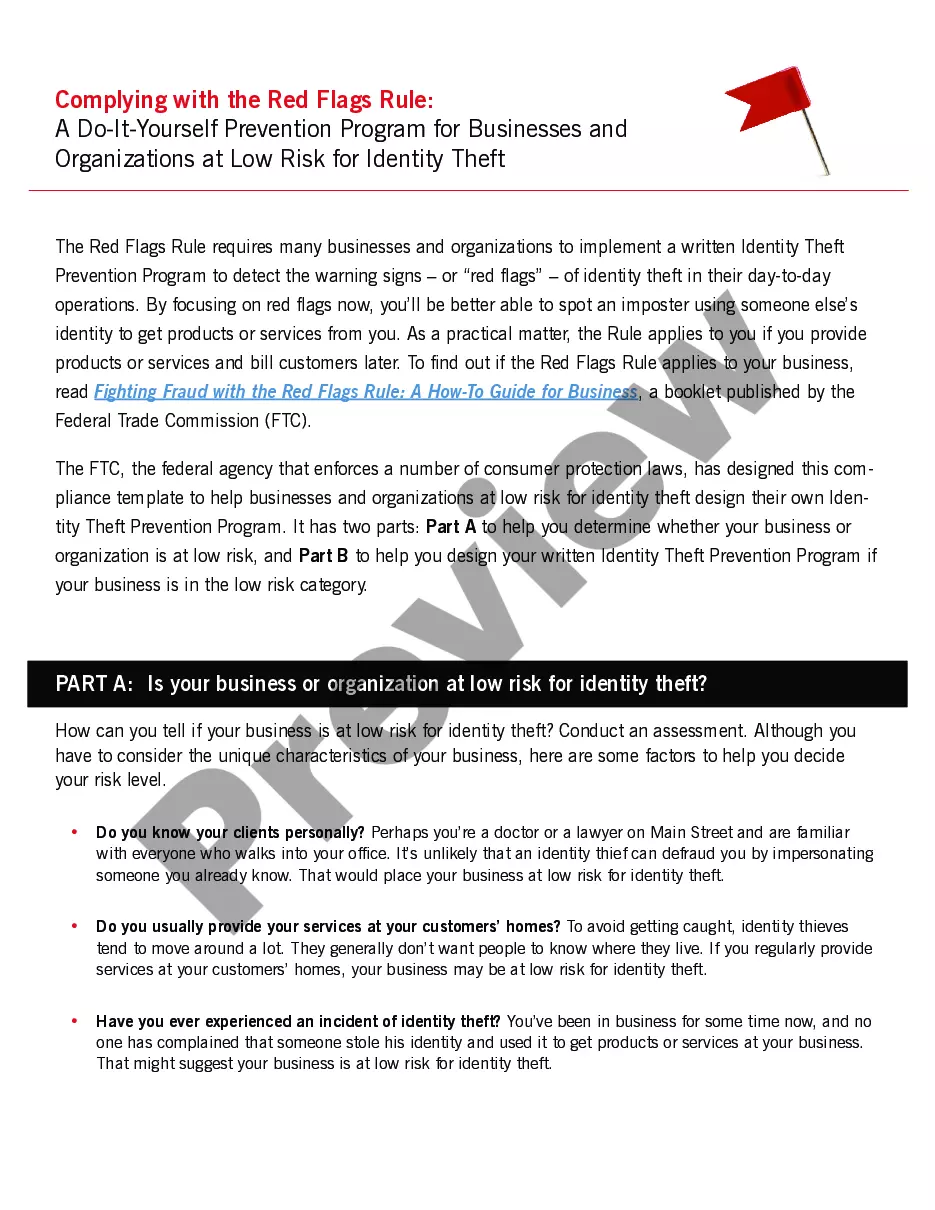
Red Flags Rule and Identity Theft Prevention Program The Red Flags Rule requires financial institutions (and some other organizations) to establish and implement a written Identity Theft Prevention Program (ITPP) designed to detect, prevent and mitigate identity theft in connection with their covered accounts.
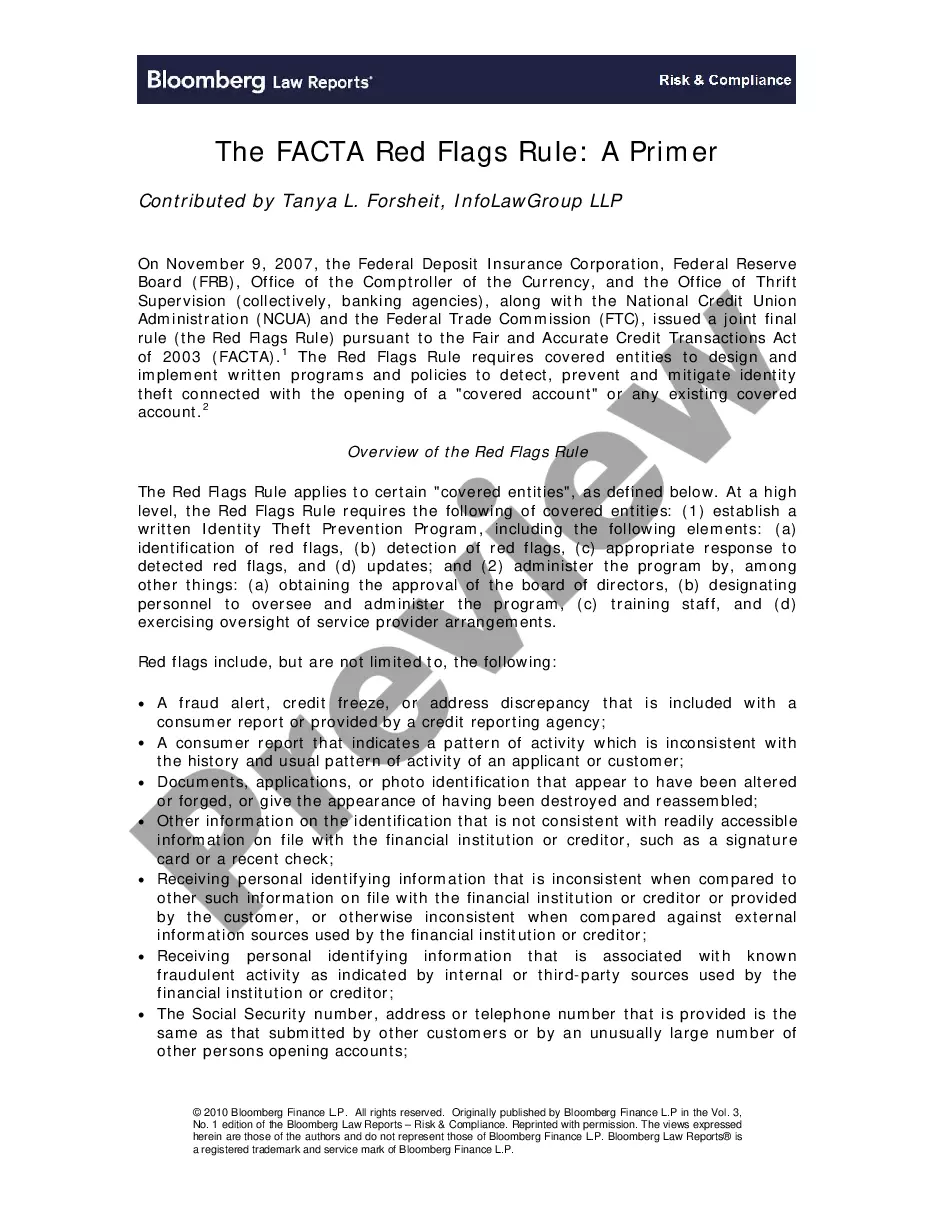
The Fair and Accurate Credit Transaction Act (FACTA) is an amendment to the Fair Credit Reporting Act (FCRA) and includes the Red Flags Rule, implemented in 2008. The Red Flags Rule calls for financial institutions and creditors to implement red flags to detect and prevent against identity theft.
The Red Flags Program helps organizations plan, develop, implement and administer an identity theft prevention program to ensure compliance.Red Flags present as suspicious patterns or specific practices that provide clues that there may be identity fraud activity.
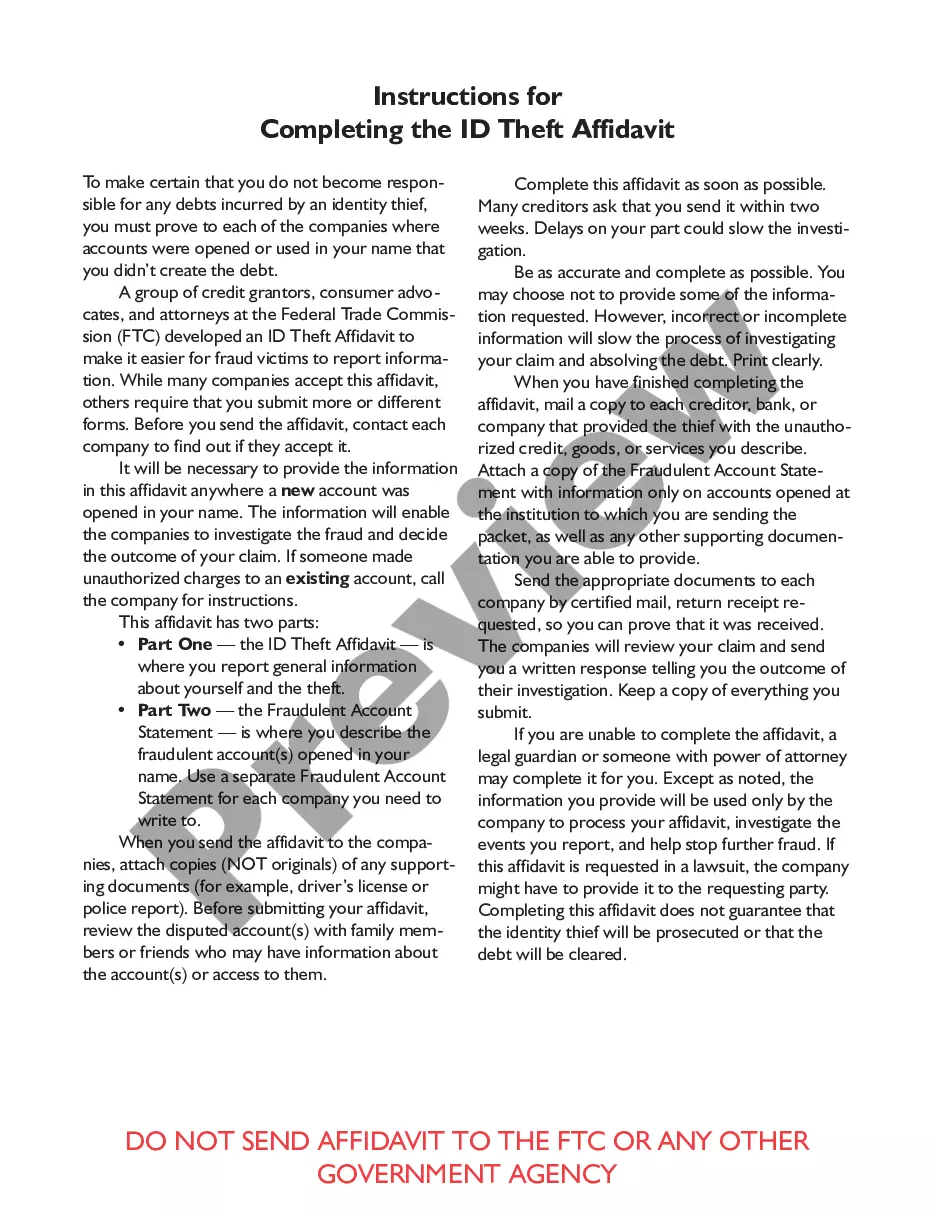
The Identity Theft Affidavit you filed with the FTC; Government-issued photographic ID (such as a state ID card or driver's license); Proof of your home address (like a utility bill or rent agreement); Proof of the theft (bills from creditors or notices from the IRS); and.