The FACTA Red Flags Rule: A Primer
What is this form?
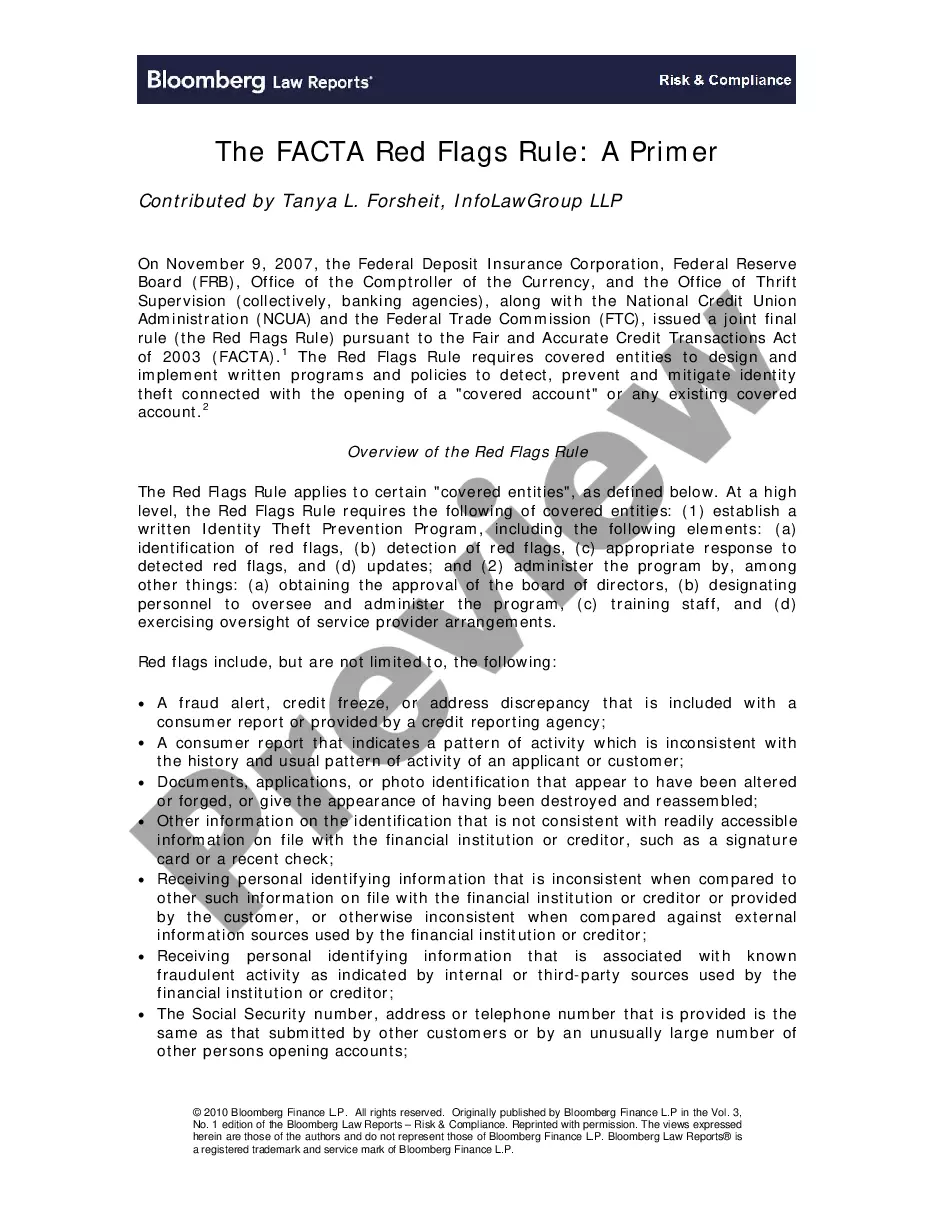
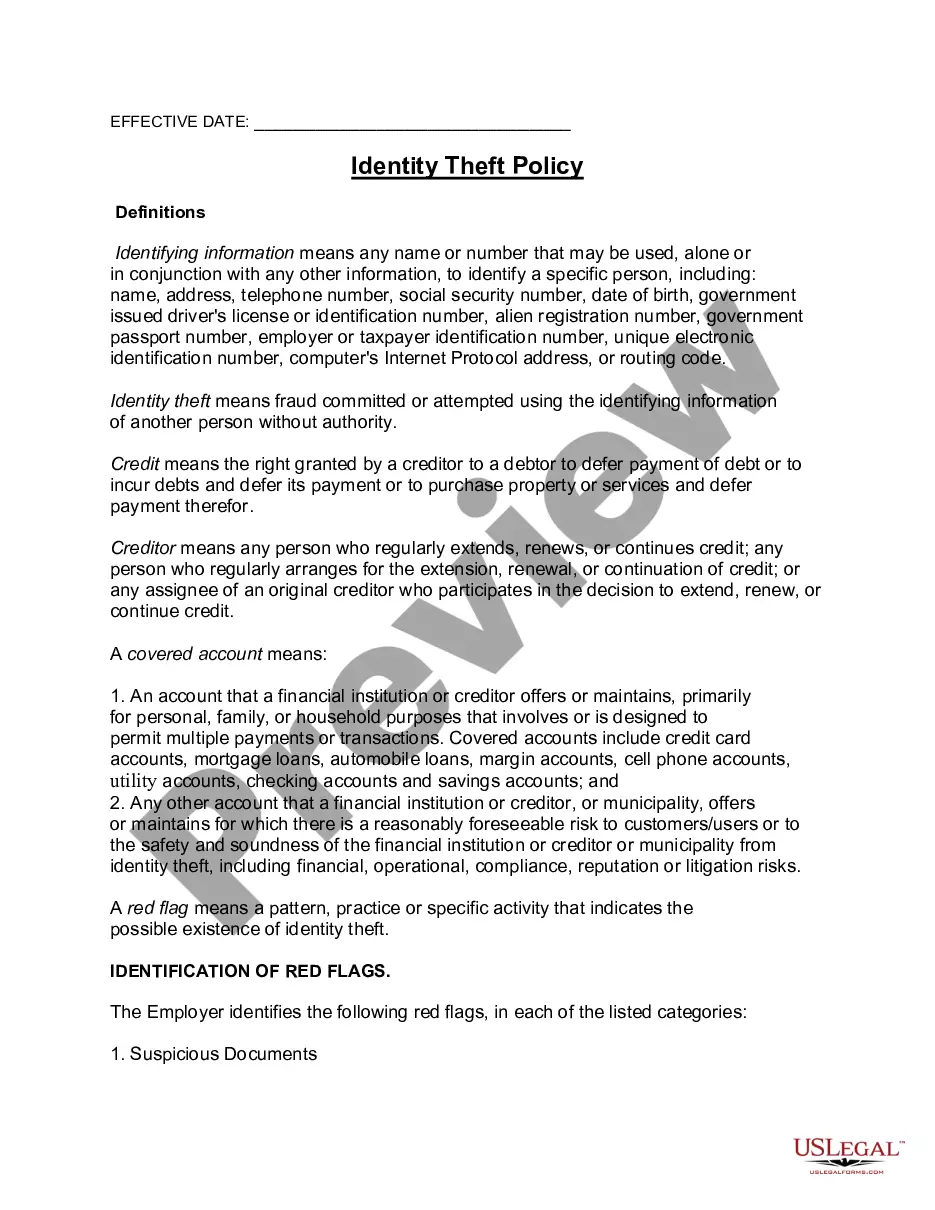
The FACTA Red Flags Rule serves as a crucial guideline for entities to protect against identity theft, particularly with "covered accounts." This form outlines the necessary written programs and policies that covered entities must implement to detect and prevent incidents of identity theft. Unlike other compliance forms, this primer specifically focuses on identity theft risk associated with financial activities and responsibilities laid out in the Fair and Accurate Credit Transactions Act of 2003 (FACTA).
Key components of this form
- Requirements for establishing an Identity Theft Prevention Program.
- Identification and detection of potential red flags related to identity theft.
- Procedures for appropriate responses to identified red flags.
- Regular updates and training for staff on the prevention program.
- Approval processes involving the board of directors.
When to use this document
This form is essential when a business or financial institution is opening or managing accounts that may pose a risk of identity theft. If you are involved in activities that involve deferring payments or providing goods and services on credit, implementing the Red Flags Rule is necessary to stay compliant and mitigate risks associated with identity theft.
Who should use this form
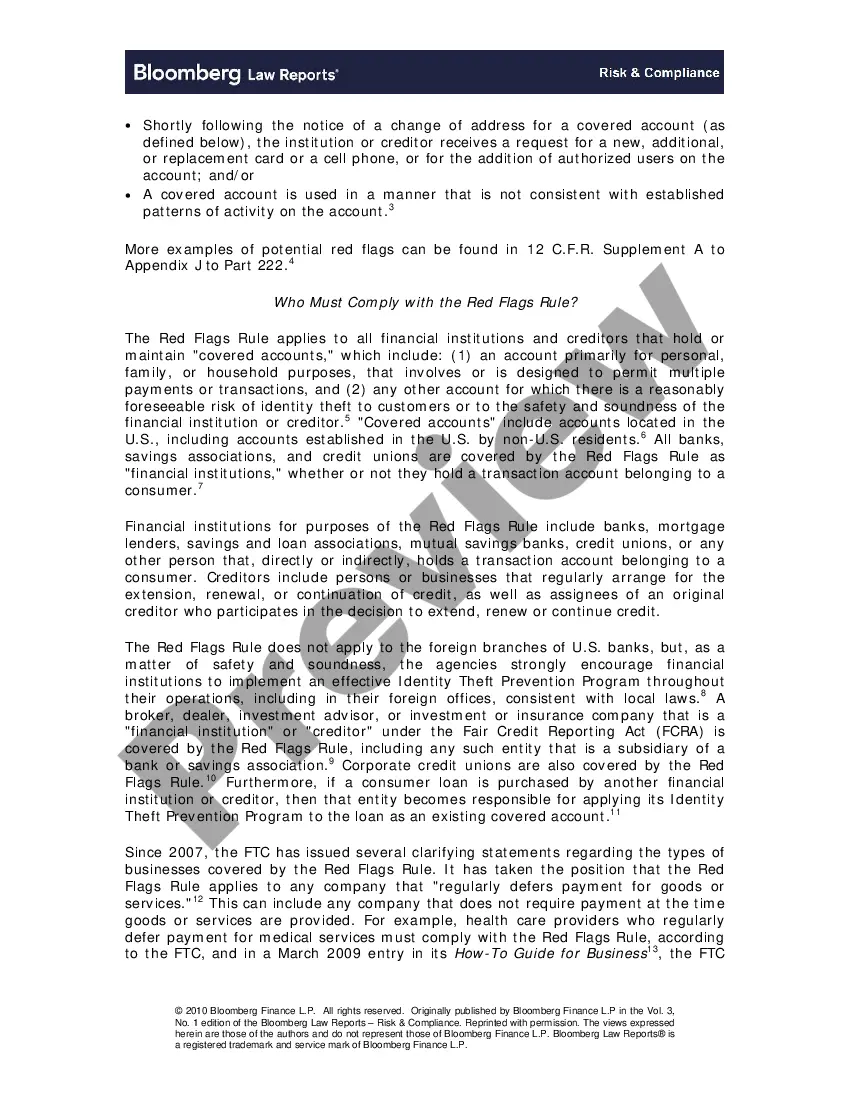
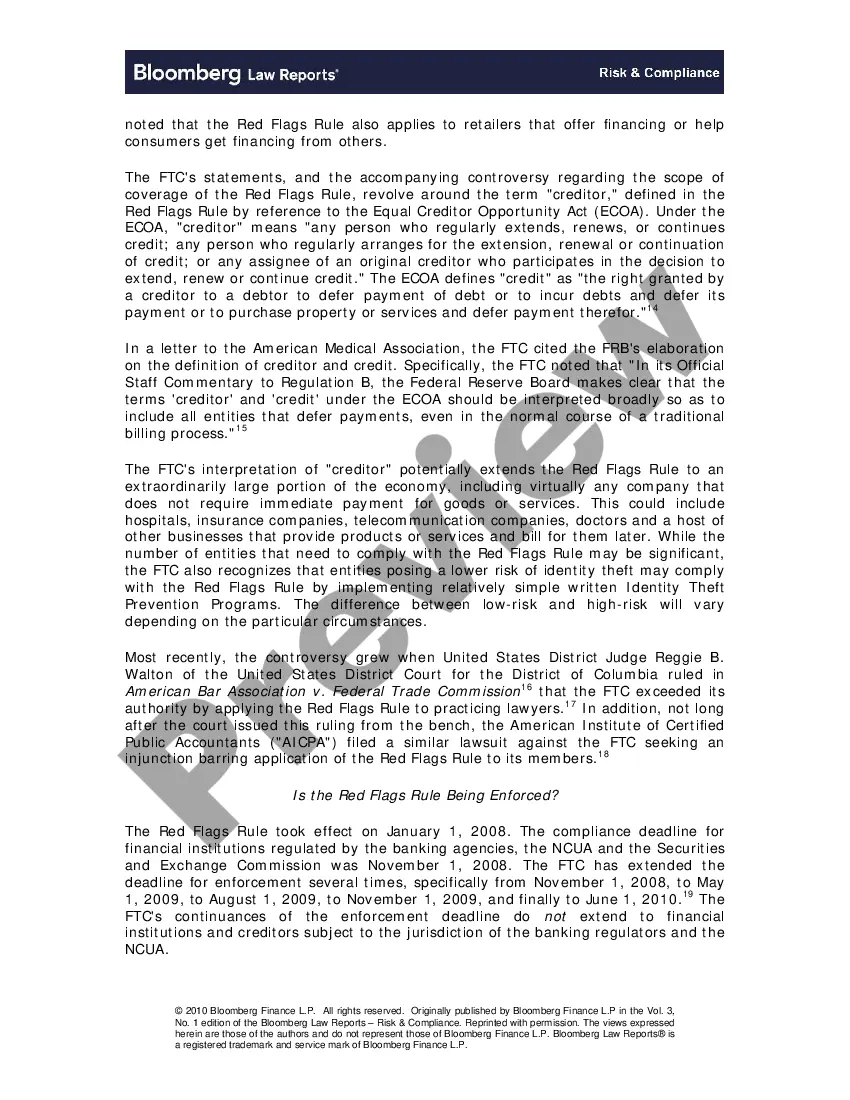
- Financial institutions such as banks, credit unions, and mortgage lenders.
- Businesses that provide financing or defer payment for goods or services.
- Healthcare providers and other firms regularly deferring payment.
- Legal and accounting professionals who extend credit.
- Any organization managing covered accounts as defined by the Red Flags Rule.
Instructions for completing this form
- Identify the types of accounts that qualify as "covered accounts."
- Establish a comprehensive Identity Theft Prevention Program that incorporates the necessary elements outlined by the Red Flags Rule.
- Identify potential red flags that could indicate identity theft risks.
- Designate responsible personnel for overseeing the implementation of this program.
- Obtain approval for the program from the organization's board of directors.
- Train staff on recognizing red flags and responding appropriately.
Notarization guidance
In most cases, this form does not require notarization. However, some jurisdictions or signing circumstances might. US Legal Forms offers online notarization powered by Notarize, accessible 24/7 for a quick, remote process.
Get your form ready online
Our built-in tools help you complete, sign, share, and store your documents in one place.
Make edits, fill in missing information, and update formatting in US Legal Forms—just like you would in MS Word.
Download a copy, print it, send it by email, or mail it via USPS—whatever works best for your next step.
Sign and collect signatures with our SignNow integration. Send to multiple recipients, set reminders, and more. Go Premium to unlock E-Sign.
If this form requires notarization, complete it online through a secure video call—no need to meet a notary in person or wait for an appointment.
We protect your documents and personal data by following strict security and privacy standards.

Make edits, fill in missing information, and update formatting in US Legal Forms—just like you would in MS Word.

Download a copy, print it, send it by email, or mail it via USPS—whatever works best for your next step.

Sign and collect signatures with our SignNow integration. Send to multiple recipients, set reminders, and more. Go Premium to unlock E-Sign.

If this form requires notarization, complete it online through a secure video call—no need to meet a notary in person or wait for an appointment.

We protect your documents and personal data by following strict security and privacy standards.
Mistakes to watch out for
- Failing to identify all types of covered accounts within the organization.
- Not updating the Identity Theft Prevention Program regularly to reflect new red flags.
- Inadequate training for staff on recognizing and responding to identity theft risks.
- Neglecting to obtain board approval for the prevention program.
Why use this form online
- Convenience of accessing a comprehensive primer at any time.
- Editability allows for customization based on specific organizational needs.
- Reliable legal content prepared by licensed attorneys ensures compliance with current laws.
Legal use & context
- The Red Flags Rule is enforced to prevent identity theft across applicable industries.
- Compliance is essential to avoid penalties and legal repercussions.
- Understanding of the rule's requirements offers protection for consumers and businesses alike.
Looking for another form?

Form popularity
FAQ
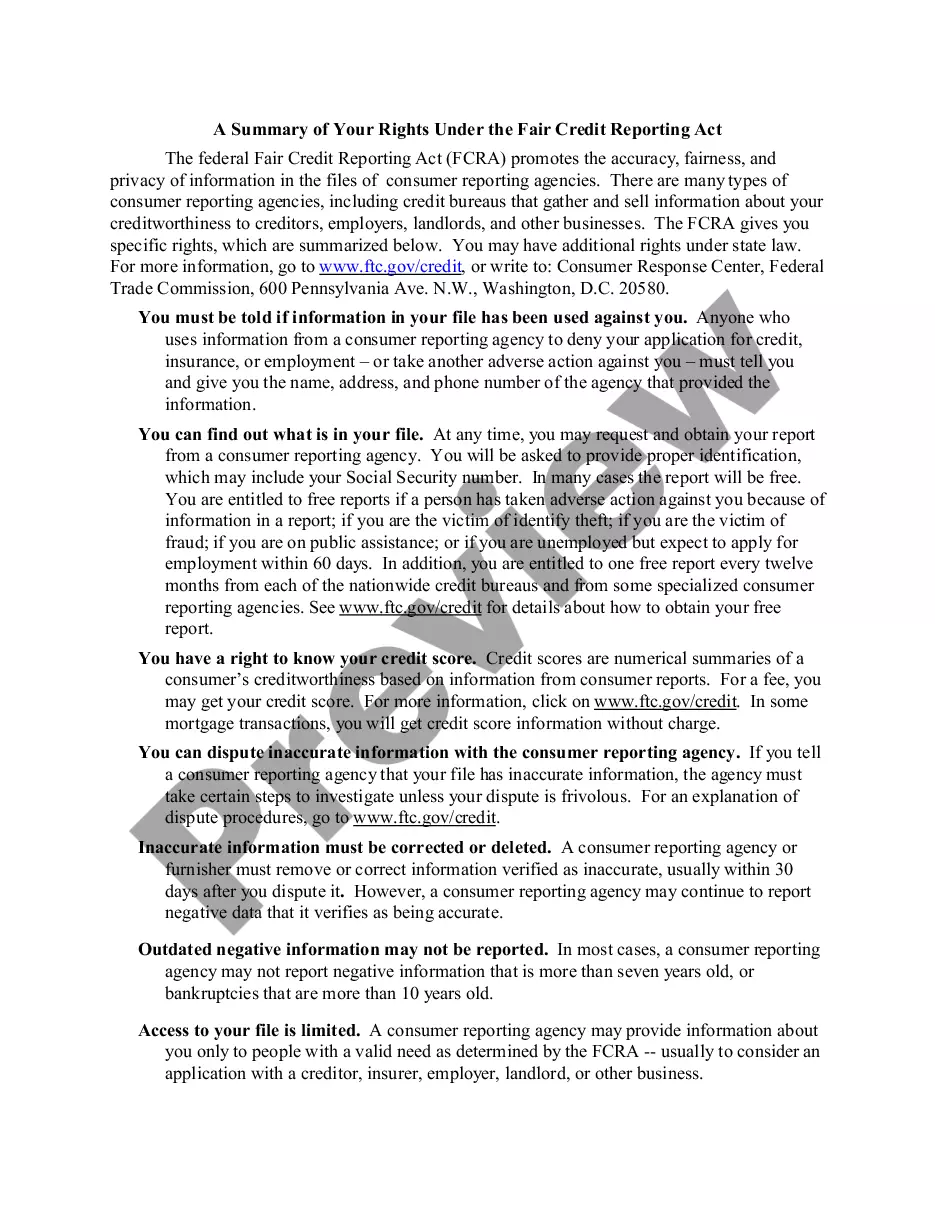
The Fair and Accurate Credit Transaction Act (FACTA) is an amendment to the Fair Credit Reporting Act (FCRA) and includes the Red Flags Rule, implemented in 2008. The Red Flags Rule calls for financial institutions and creditors to implement red flags to detect and prevent against identity theft.
Red Flag Requirements Initial Risk Assessment Policies and Procedures Manual Train Staff on Program Implementation New Account Authentication. (All consumer accounts) Validate Change of Address Requests. (All consumer accounts) Anti-Phishing Program Identity Theft Protection. (All consumer accounts)
1) Identify Relevant Red Flags. 2) Detect Red Flags. 3) Prevent and Mitigate Identity Theft. 4) Update Program.
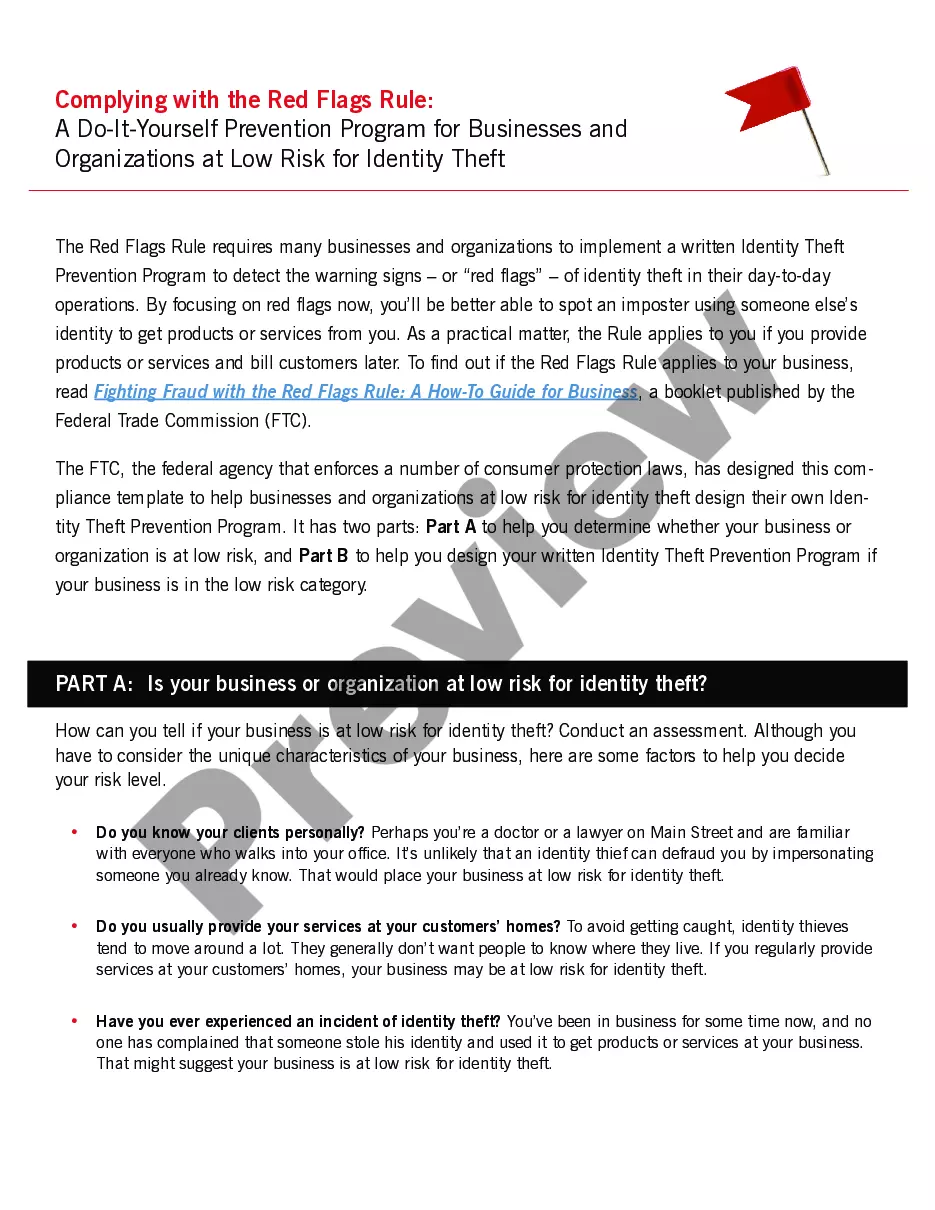
The Red Flags Rule requires organizations to implement a written identity theft prevention program to help them identify any of the relevant red flags that indicate identity theft in daily operations. The Rule also offers steps to help prevent the crime and to mitigate its damage.
The Red Flags Rule (RFR) is a set of United States federal regulations that require certain businesses and organizations to develop and implement documented plans to protect consumers from identity theft.A creditor is any business or organization that regularly provides goods or services and bill customers later.
The Red Flags Program helps organizations plan, develop, implement and administer an identity theft prevention program to ensure compliance.Red Flags present as suspicious patterns or specific practices that provide clues that there may be identity fraud activity.
1 The Red Flags Rule was issued in 2007 under Section 114 of the Fair and Accurate Credit Transaction Act of 2003 (FACT Act), Pub. L. 108-159, amending the Fair Credit Reporting Act (FCRA), 15 U.S.C. ' 1681m(e).
Red Flags Rule and Identity Theft Prevention Program The Red Flags Rule requires financial institutions (and some other organizations) to establish and implement a written Identity Theft Prevention Program (ITPP) designed to detect, prevent and mitigate identity theft in connection with their covered accounts.
The Red Flags Rule requires that each "financial institution" or "creditor"which includes most securities firmsimplement a written program to detect, prevent and mitigate identity theft in connection with the opening or maintenance of "covered accounts." These include consumer accounts that permit multiple payments