Guide to Complying with the Red Flags Rule under FCRA and FACTA
About this form
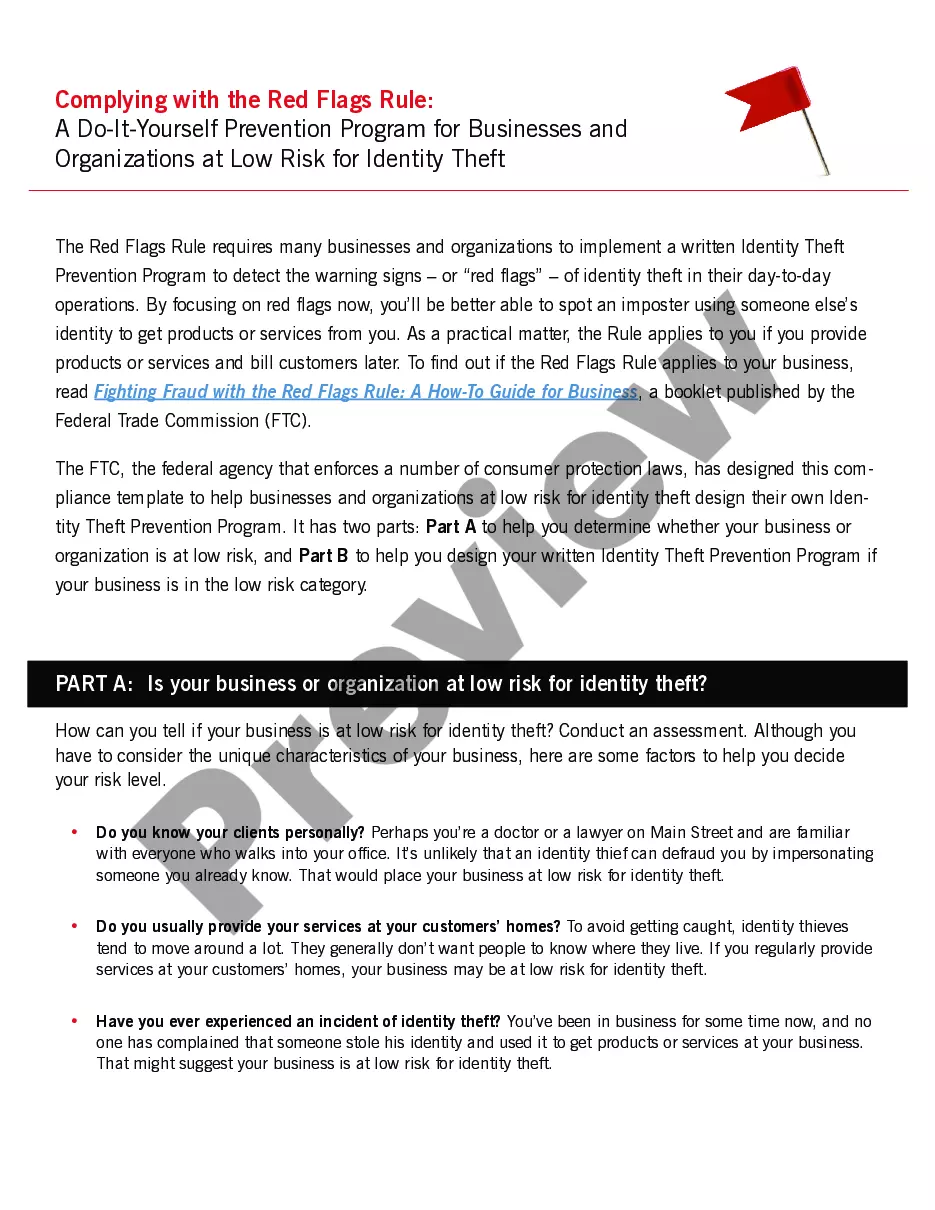
This guide is a valuable resource for businesses and organizations to comply with the Red Flags Rule under the Fair Credit Reporting Act (FCRA) and the Fair and Accurate Credit Transactions Act (FACTA). It helps identify whether a business is at low risk for identity theft and outlines how to create a comprehensive Identity Theft Prevention Program tailored to low-risk environments. This form stands out as it offers a structured way to assess your risk level and develop appropriate strategies to safeguard against identity theft.
What’s included in this form
- Part A: Assessment to determine if your organization is at low risk for identity theft.
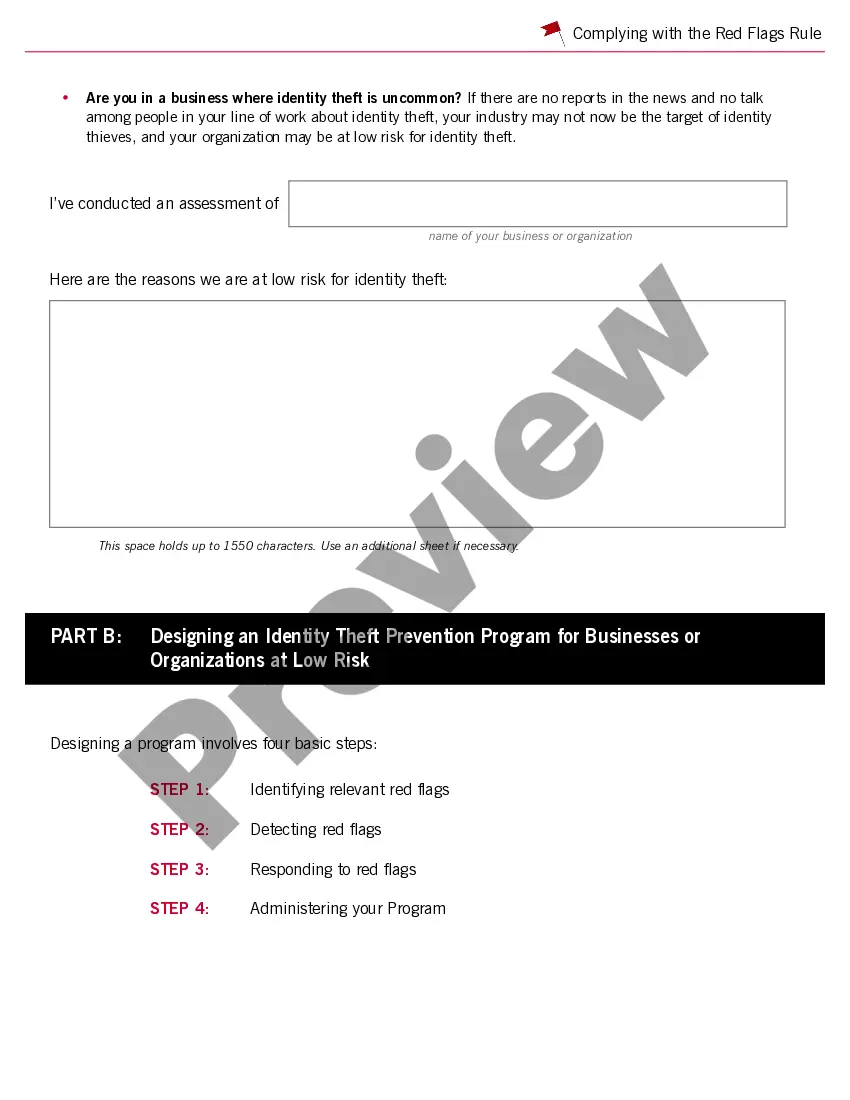
- Part B: Steps to create a tailored Identity Theft Prevention Program.
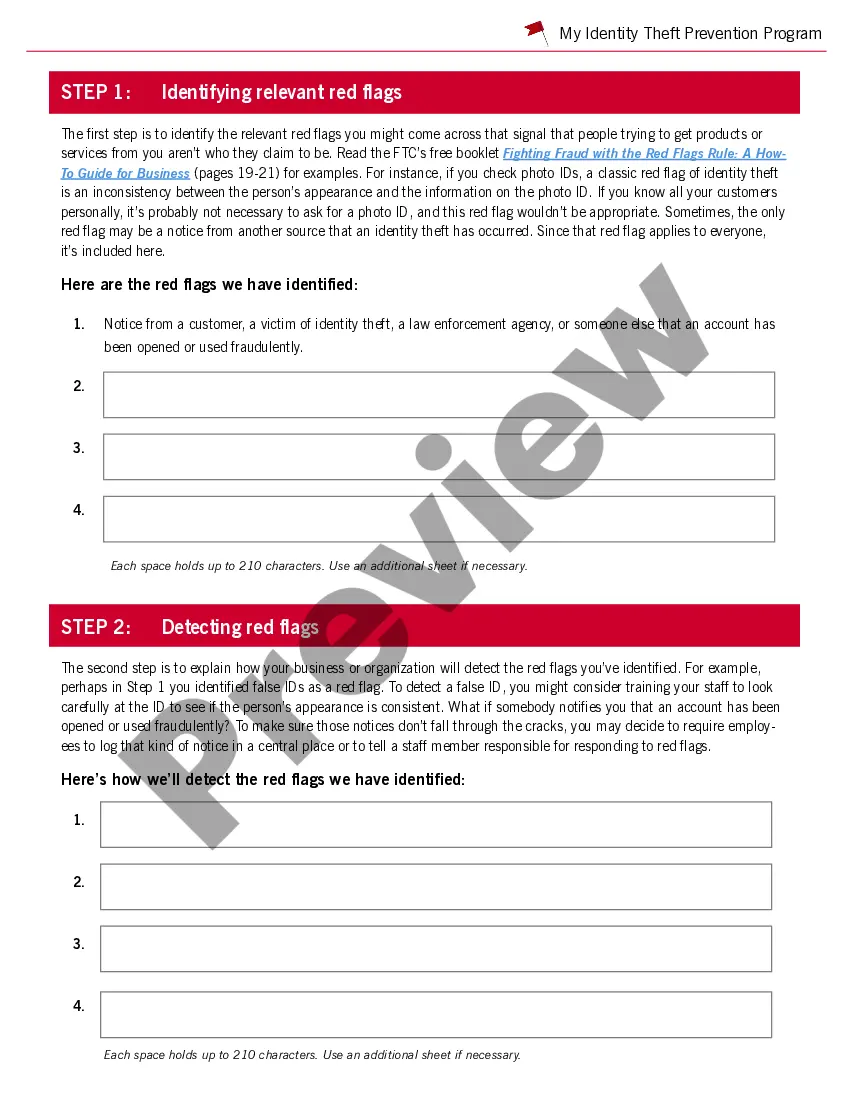
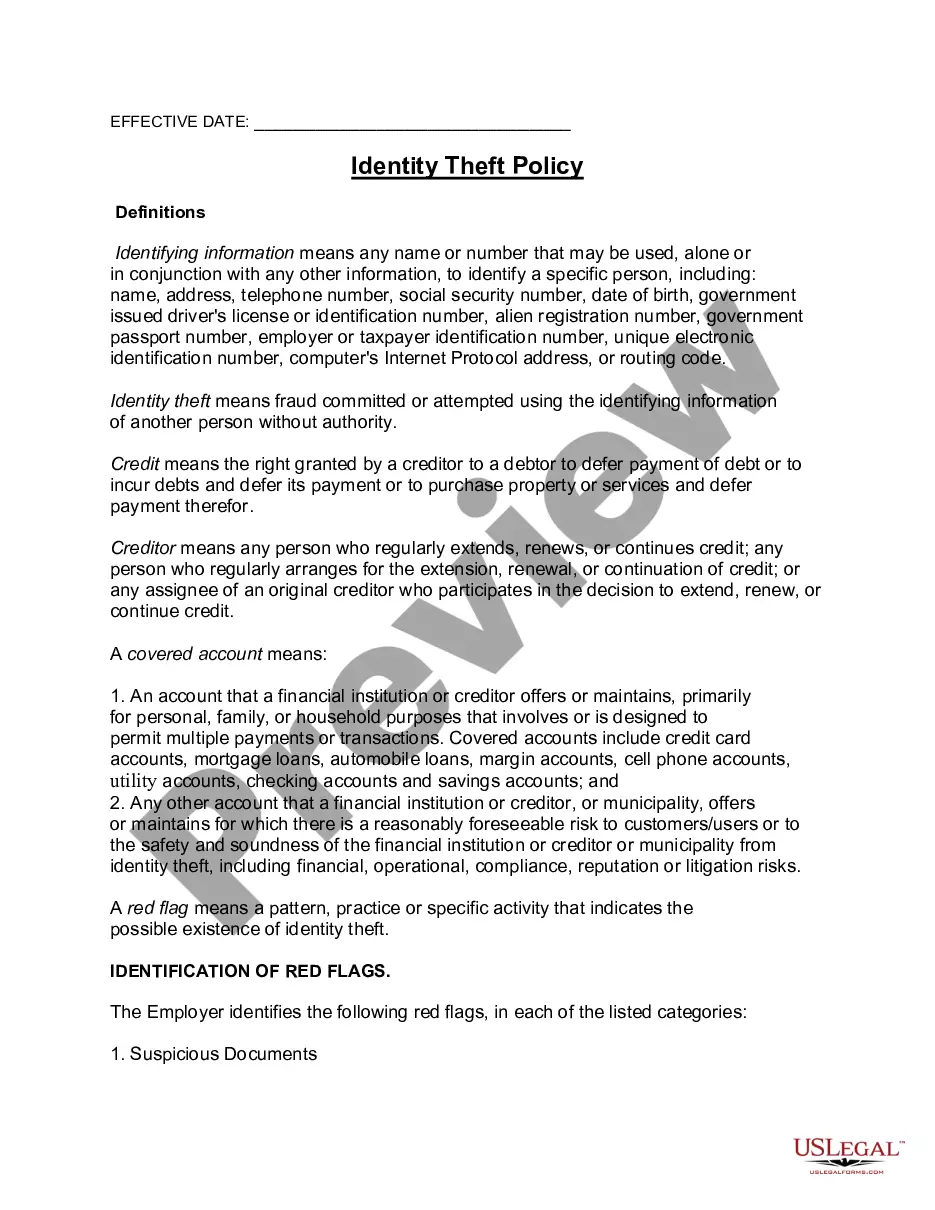
- Identification of relevant red flags that may indicate attempts at identity theft.
- Guidelines on detecting and responding to identified red flags.
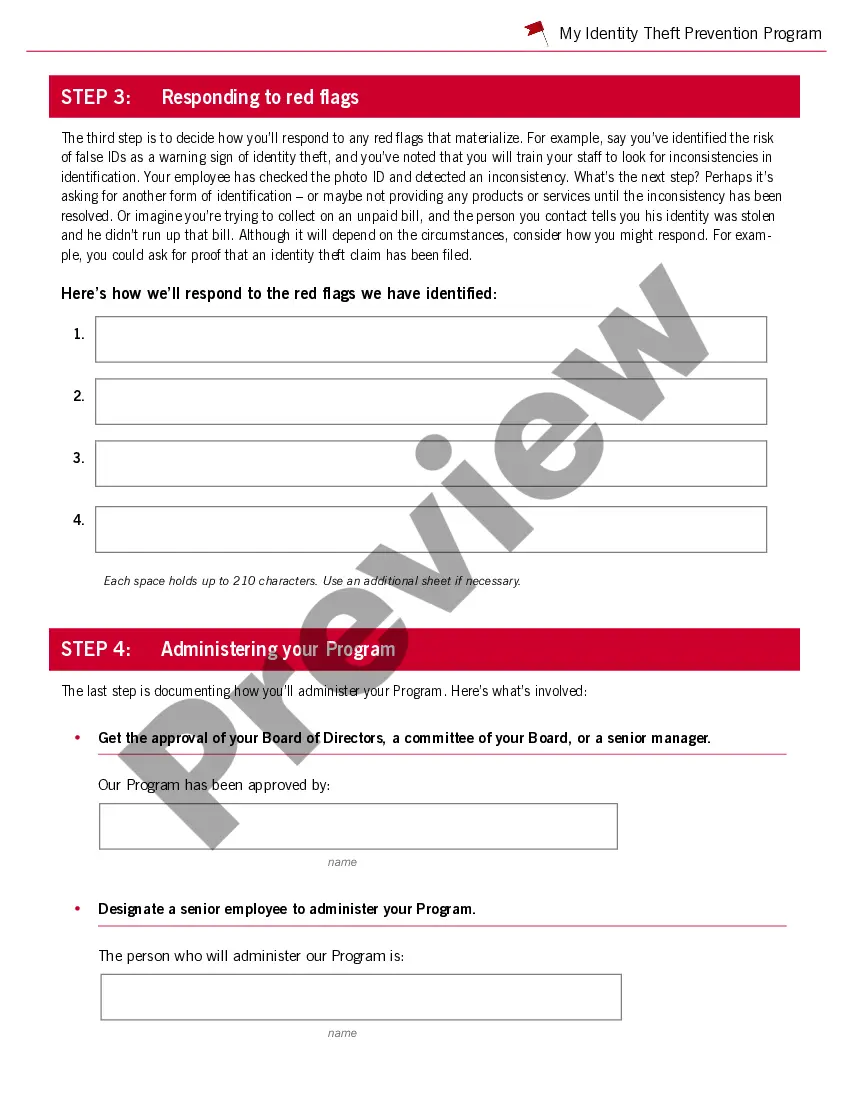
- Administration strategies to manage and regularly update your prevention program.
When to use this document
This form is beneficial when your business is assessing its vulnerability to identity theft. Use it if you provide products or services on credit or if you're required to comply with identity theft prevention regulations. It aids businesses with a personal approach to their customers, such as local professionals or service providers operating in low-risk environments.
Intended users of this form
- Small business owners providing services directly to known clients.
- Local professionals, such as doctors, lawyers, and consultants, who have personal relationships with their clientele.
- Organizations looking to comply with federal regulations regarding identity theft prevention.
- Managers responsible for overseeing compliance and risk management processes.
How to prepare this document
- Determine your risk level by conducting an assessment using the criteria provided in Part A.
- Identify specific red flags relevant to your business and document them accordingly.
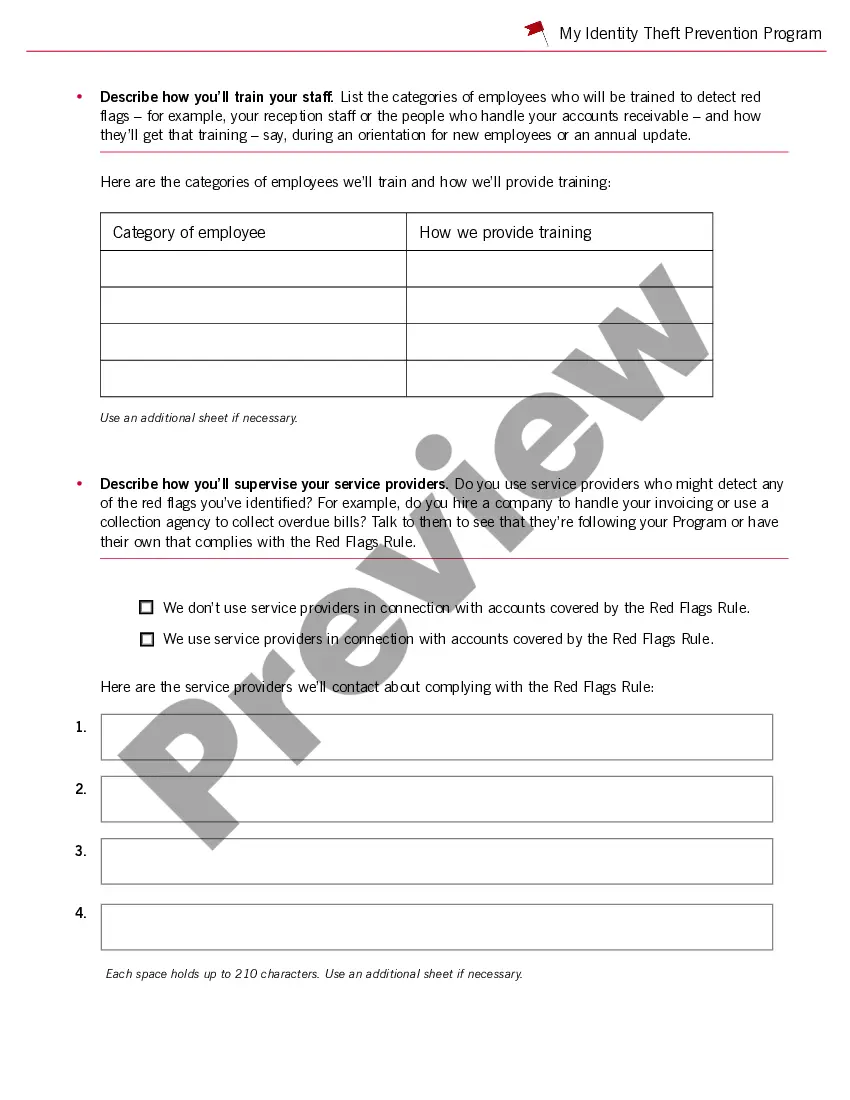
- Outline procedures for detecting these red flags, including staff training requirements.
- Create a response plan for any identified red flags, specifying steps your business will take.
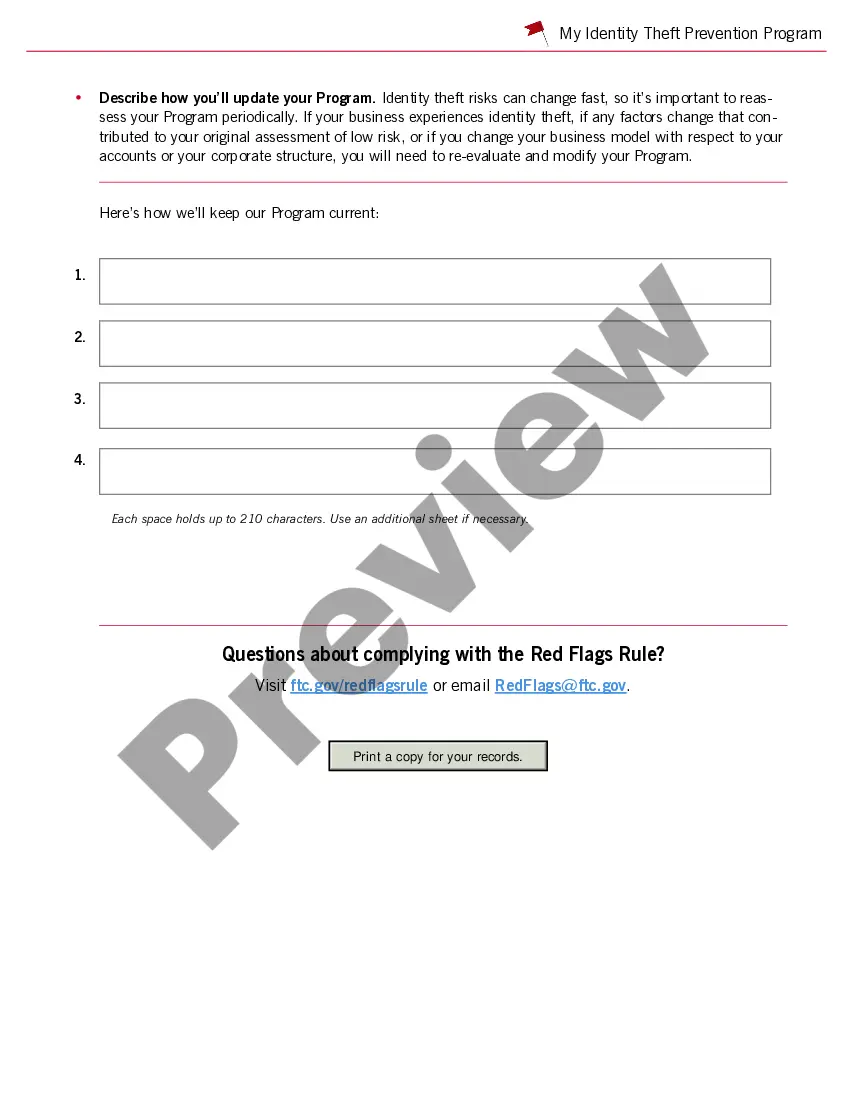
- Document the administration plan for your Identity Theft Prevention Program, ensuring it includes updates and staff training measures.
Does this form need to be notarized?
This form does not typically require notarization to be legally valid. However, some jurisdictions or document types may still require it. US Legal Forms provides secure online notarization powered by Notarize, available 24/7 for added convenience.
Get your form ready online
Our built-in tools help you complete, sign, share, and store your documents in one place.
Make edits, fill in missing information, and update formatting in US Legal Forms—just like you would in MS Word.
Download a copy, print it, send it by email, or mail it via USPS—whatever works best for your next step.
Sign and collect signatures with our SignNow integration. Send to multiple recipients, set reminders, and more. Go Premium to unlock E-Sign.
If this form requires notarization, complete it online through a secure video call—no need to meet a notary in person or wait for an appointment.
We protect your documents and personal data by following strict security and privacy standards.

Make edits, fill in missing information, and update formatting in US Legal Forms—just like you would in MS Word.

Download a copy, print it, send it by email, or mail it via USPS—whatever works best for your next step.

Sign and collect signatures with our SignNow integration. Send to multiple recipients, set reminders, and more. Go Premium to unlock E-Sign.

If this form requires notarization, complete it online through a secure video call—no need to meet a notary in person or wait for an appointment.

We protect your documents and personal data by following strict security and privacy standards.
Common mistakes
- Failing to regularly update the risk assessment to reflect current business practices.
- Ineffectively training staff on the identification and handling of red flags.
- Not documenting procedures for responding to identified red flags adequately.
- Neglecting to obtain necessary approvals from management on the prevention program.
Advantages of online completion
- Convenience of immediate access to the form and guidelines for completing it.
- Editability allows businesses to customize the form according to their specific needs.
- Reliability through structured content developed by licensed attorneys, ensuring compliance with regulations.
Legal use & context
- This guide aids businesses in complying with the Red Flags Rule, which is part of consumer protection laws.
- Following the recommendations significantly reduces risks associated with identity theft.
- Understanding and applying this form correctly can protect business reputation and customer trust.
Looking for another form?

Form popularity
FAQ
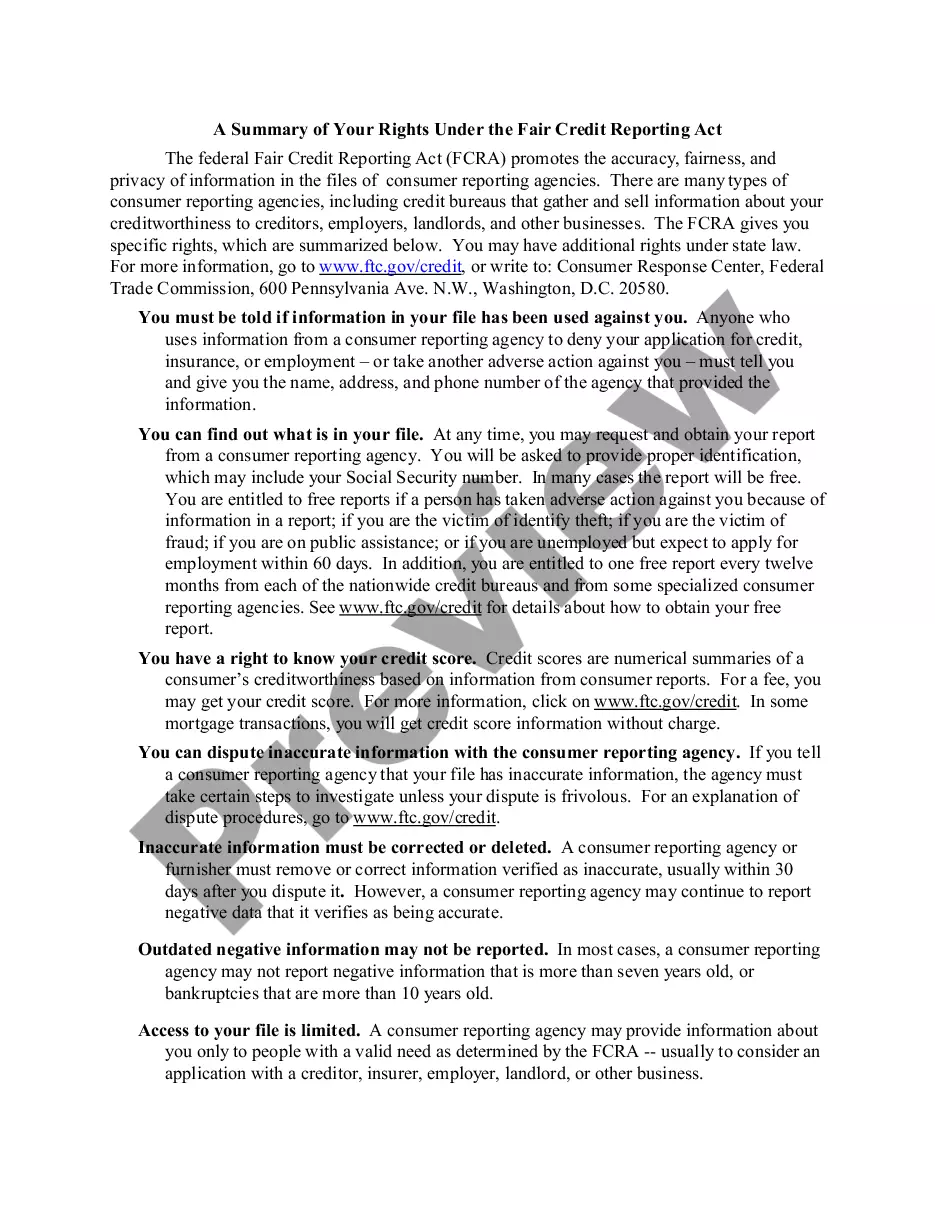
The Red Flags Rule (RFR) is a set of United States federal regulations that require certain businesses and organizations to develop and implement documented plans to protect consumers from identity theft.A creditor is any business or organization that regularly provides goods or services and bill customers later.
When verifying the identity of the person who is opening a new account, reasonable procedures may include getting a name, address, and identification number and, for in-person verification, checking a current government-issued identification card, like a driver's license or passport.
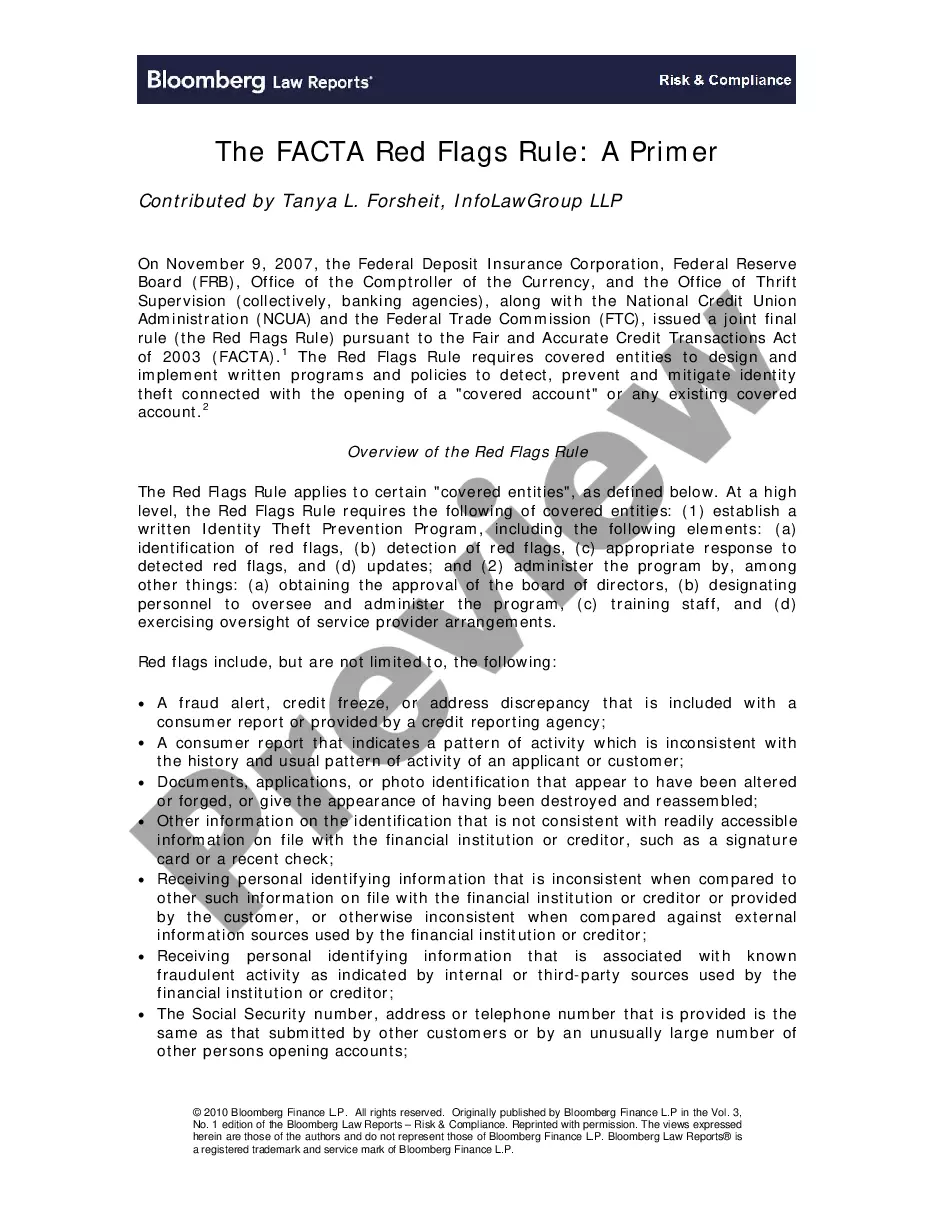
The Fair and Accurate Credit Transaction Act (FACTA) is an amendment to the Fair Credit Reporting Act (FCRA) and includes the Red Flags Rule, implemented in 2008. The Red Flags Rule calls for financial institutions and creditors to implement red flags to detect and prevent against identity theft.
Red Flag Requirements Initial Risk Assessment Policies and Procedures Manual Train Staff on Program Implementation New Account Authentication. (All consumer accounts) Validate Change of Address Requests. (All consumer accounts) Anti-Phishing Program Identity Theft Protection. (All consumer accounts)
1 The Red Flags Rule was issued in 2007 under Section 114 of the Fair and Accurate Credit Transaction Act of 2003 (FACT Act), Pub. L. 108-159, amending the Fair Credit Reporting Act (FCRA), 15 U.S.C. ' 1681m(e).
The Red Flags Rule requires organizations to implement a written identity theft prevention program to help them identify any of the relevant red flags that indicate identity theft in daily operations. The Rule also offers steps to help prevent the crime and to mitigate its damage.
The Red Flags Rule requires that each "financial institution" or "creditor"which includes most securities firmsimplement a written program to detect, prevent and mitigate identity theft in connection with the opening or maintenance of "covered accounts." These include consumer accounts that permit multiple payments