Trademark License Agreement for a Multimedia Business
Overview of this form
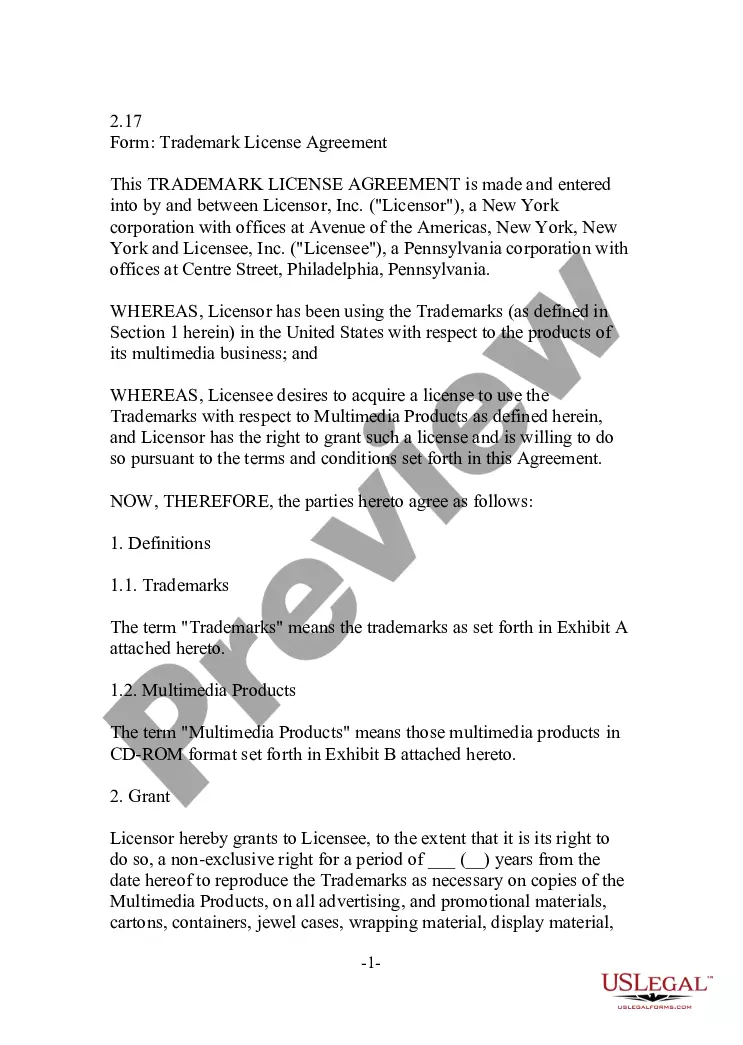
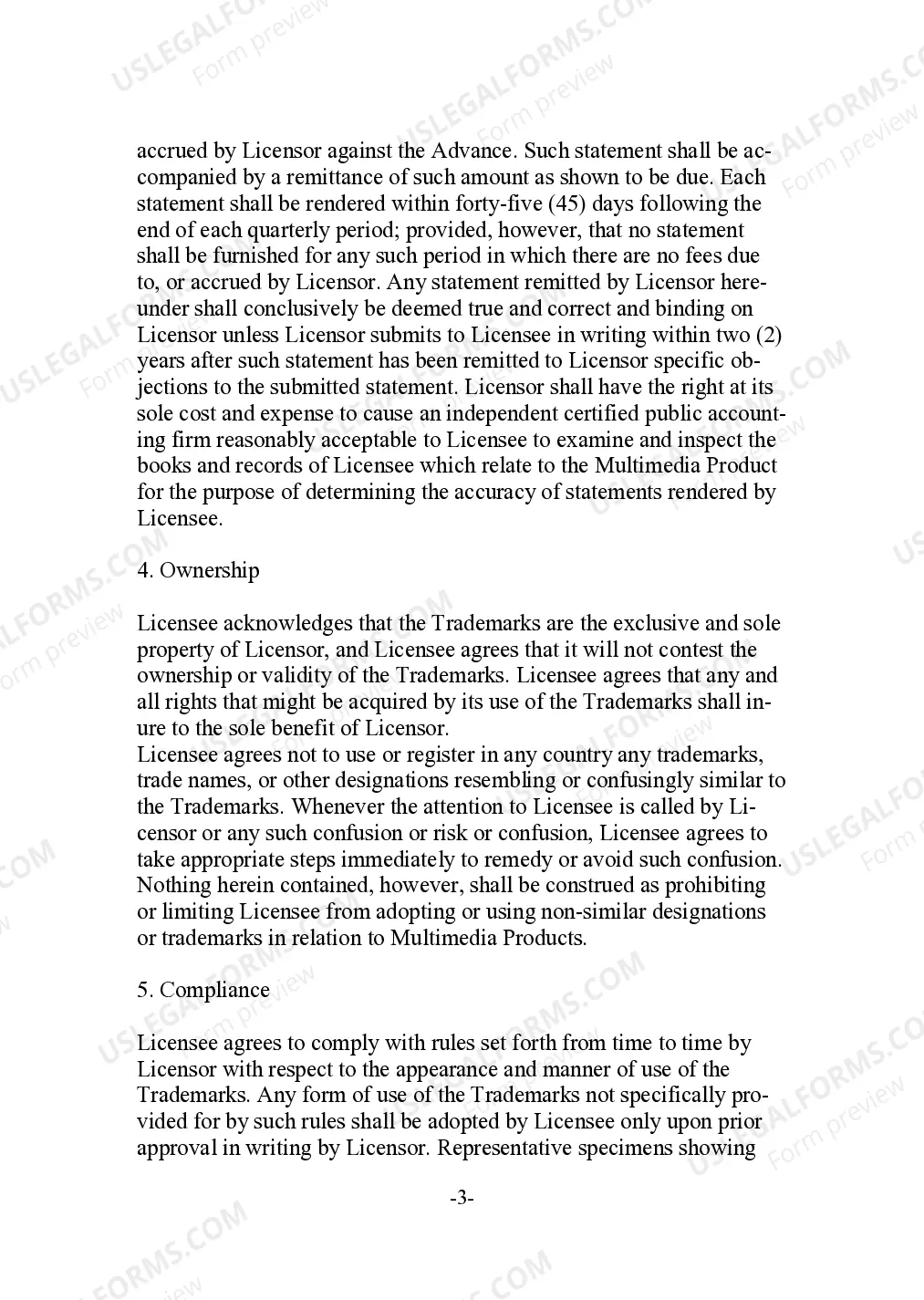
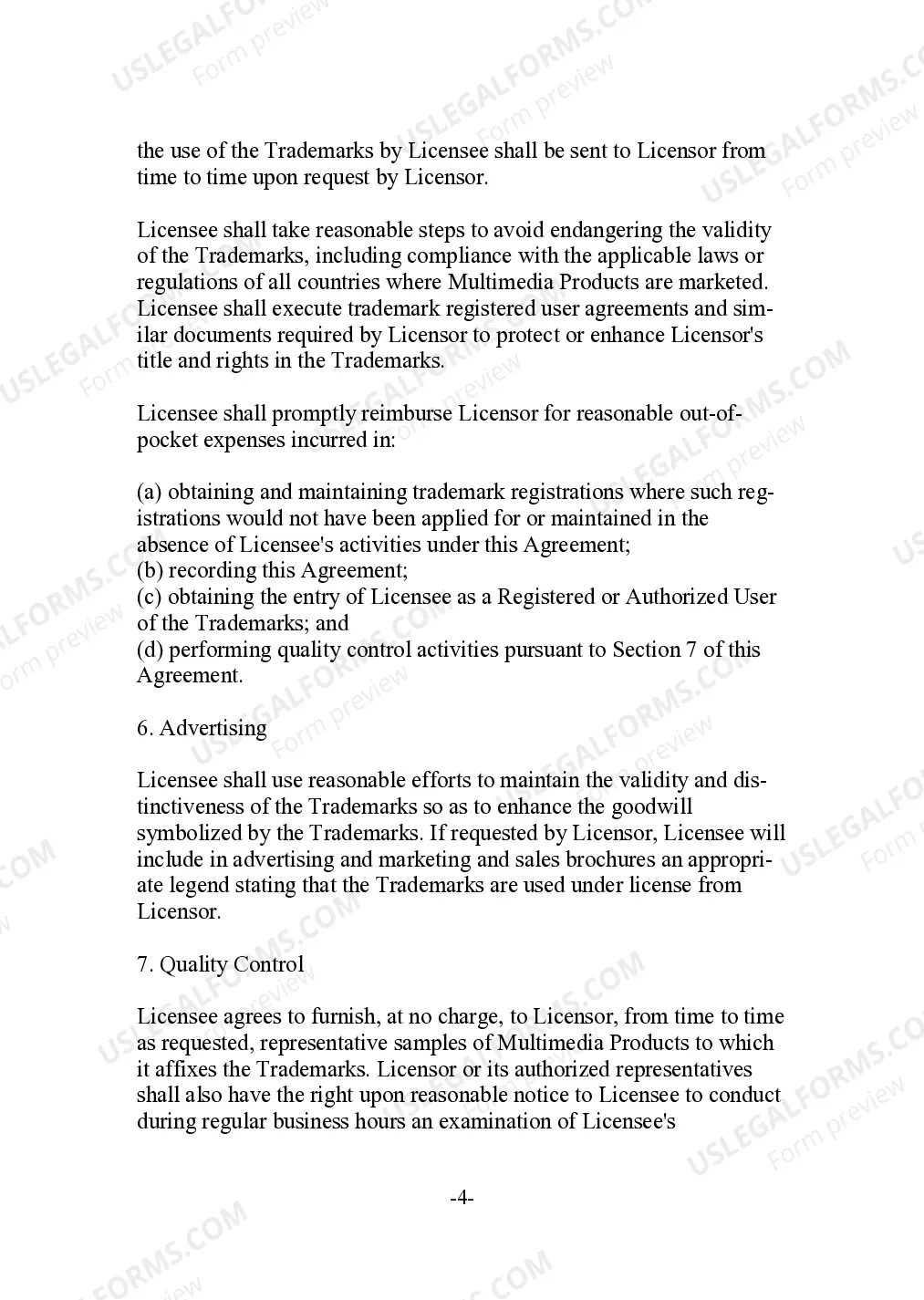
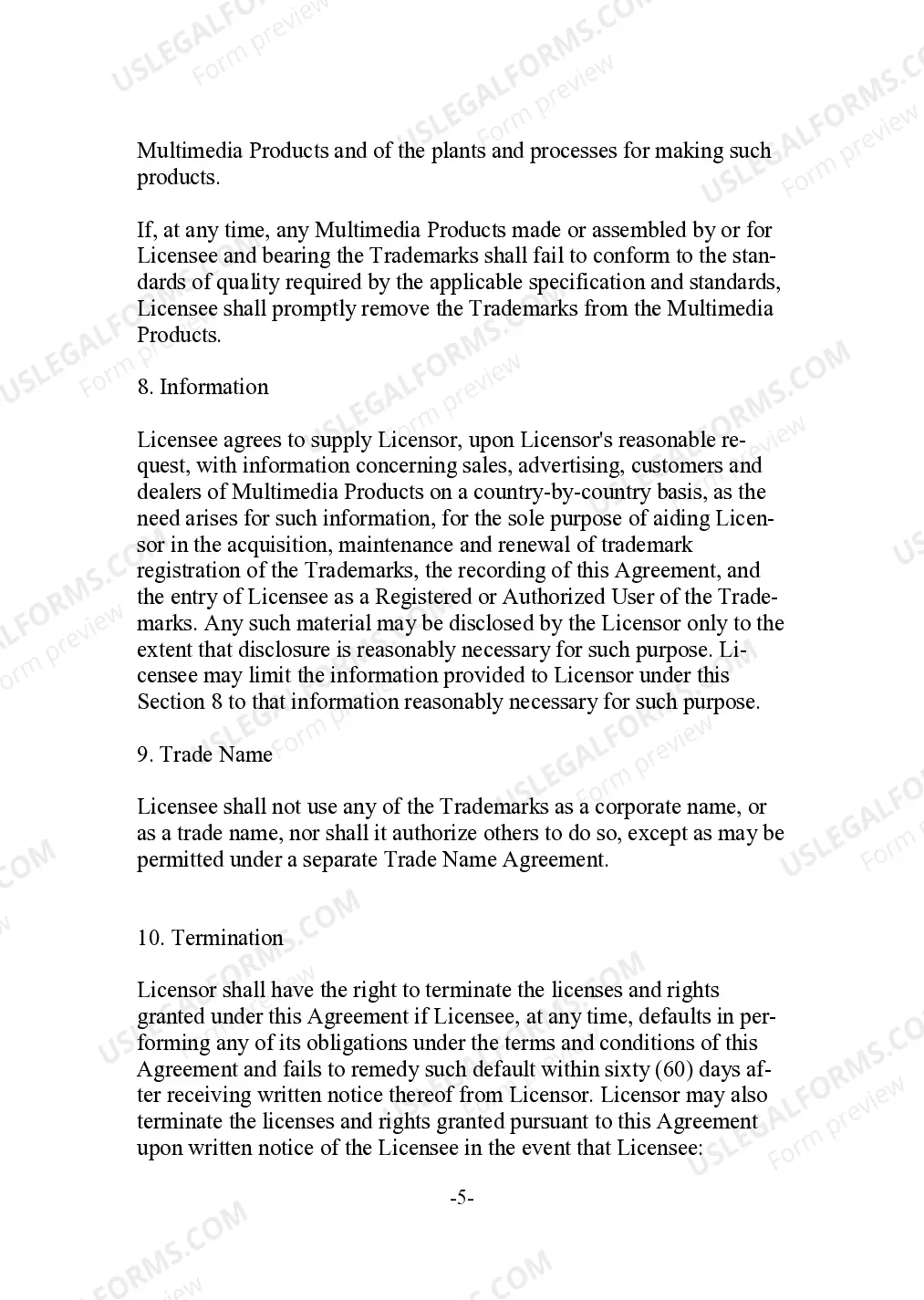
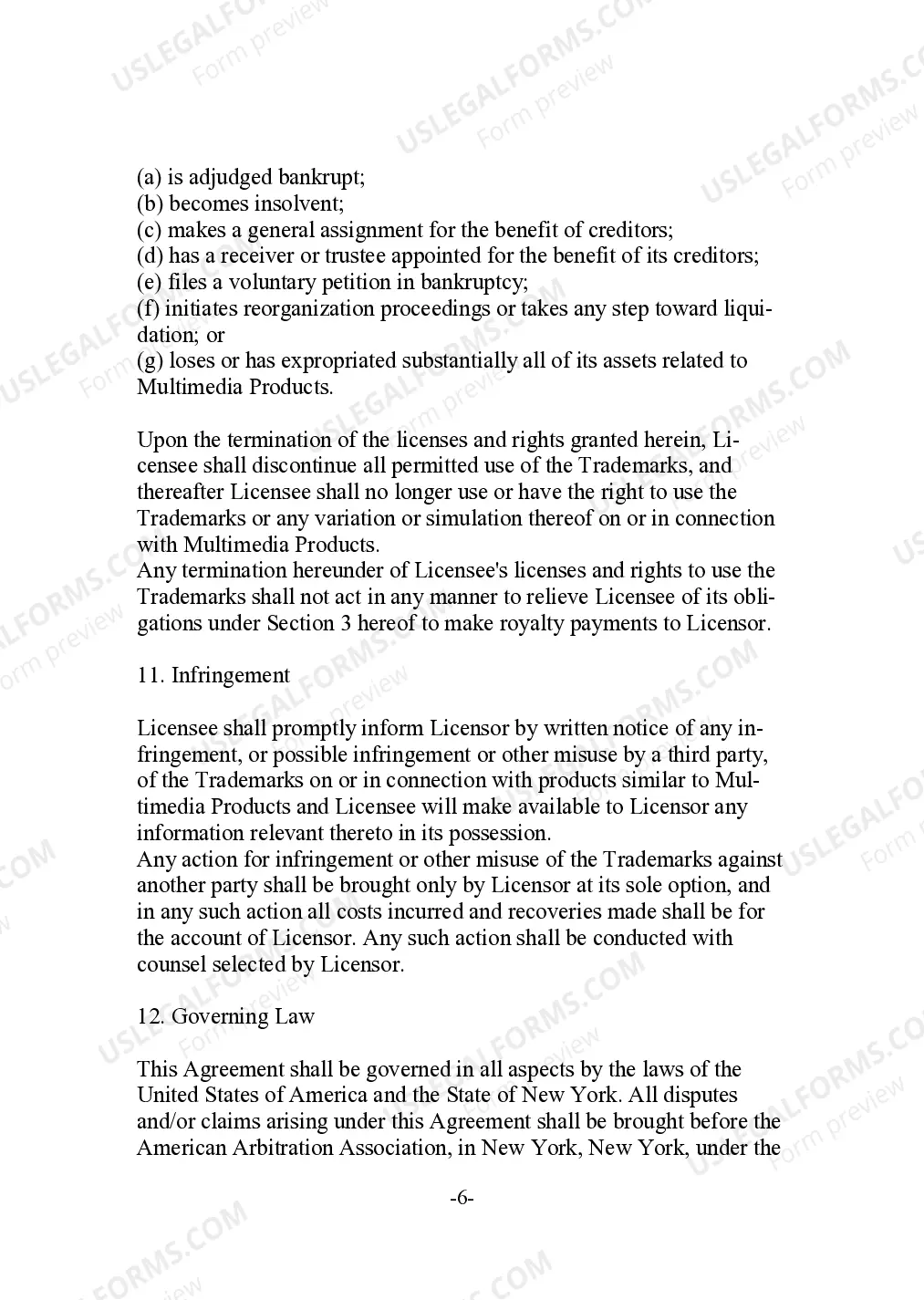
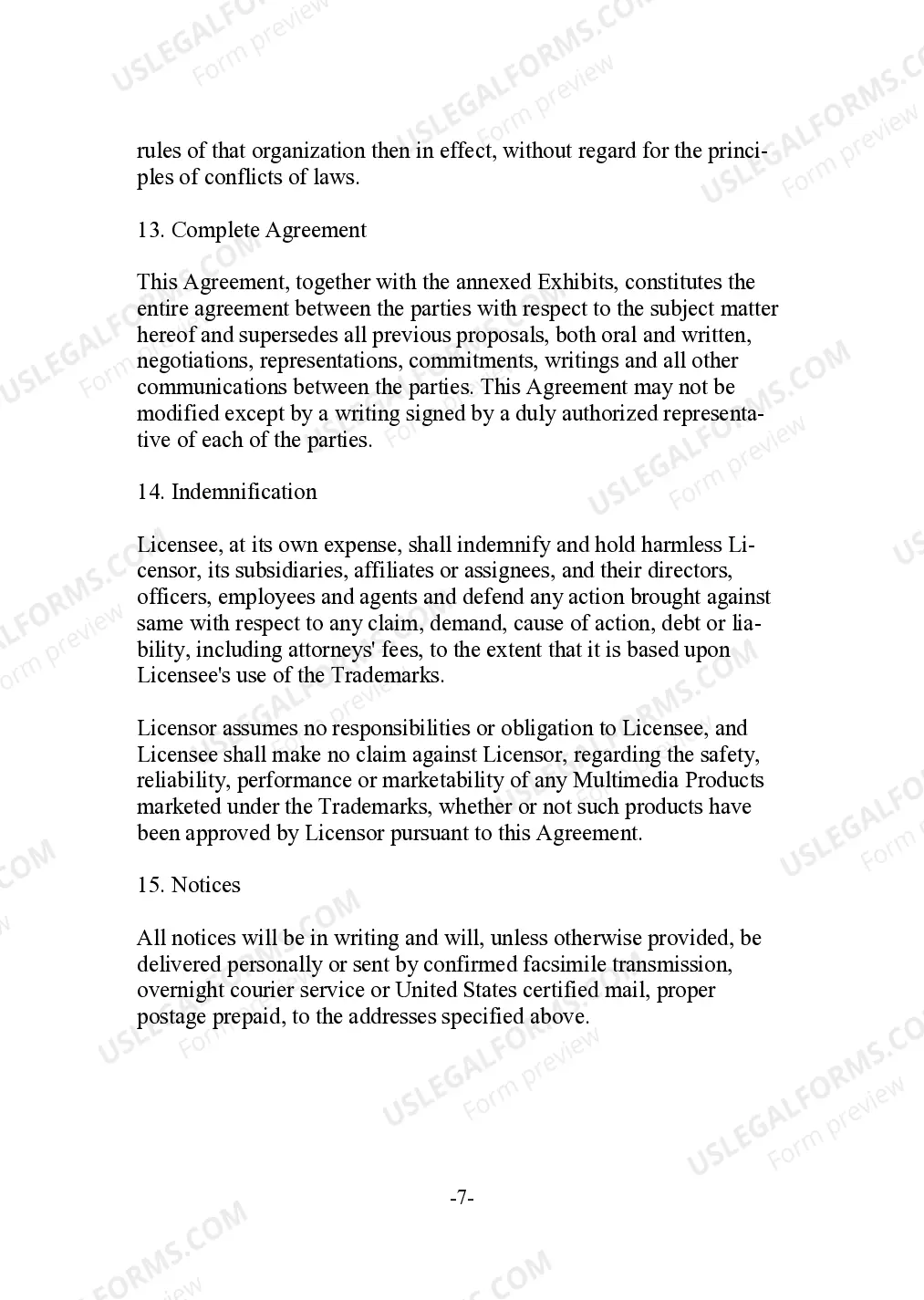
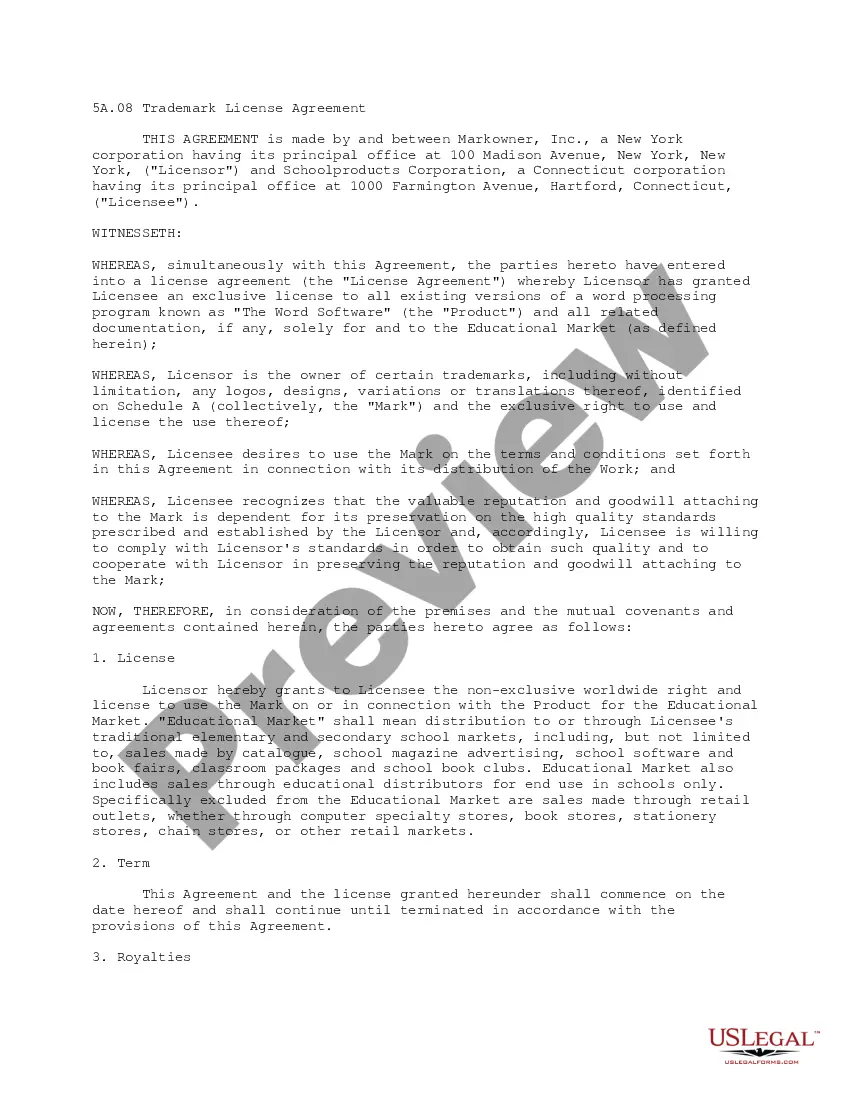
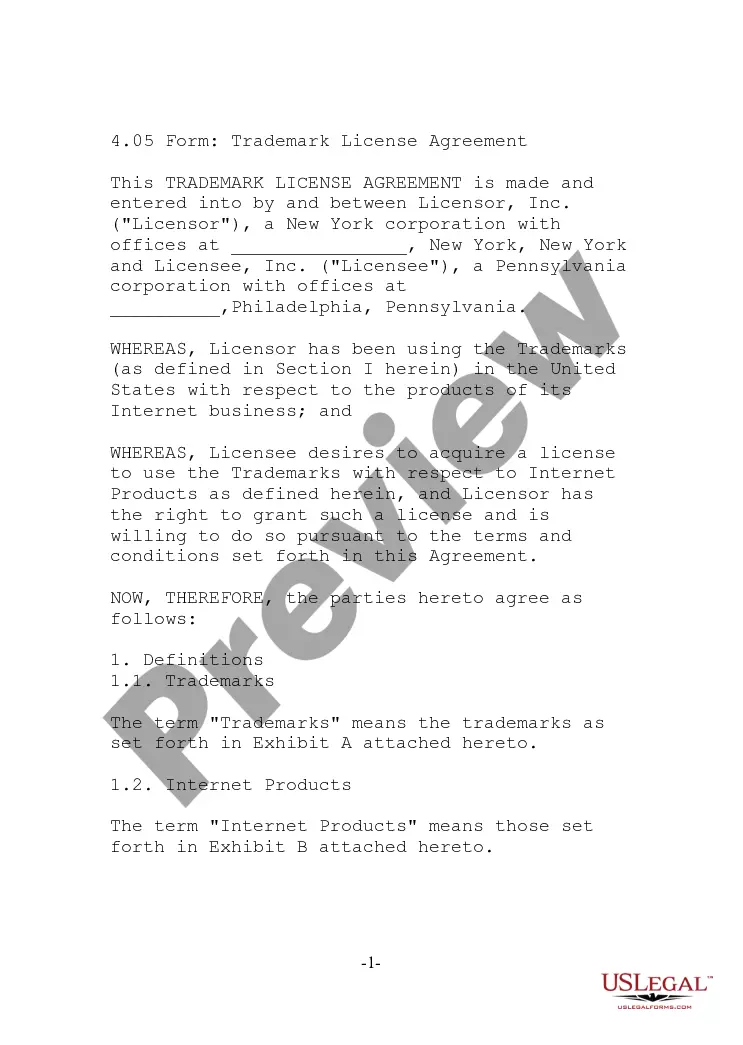
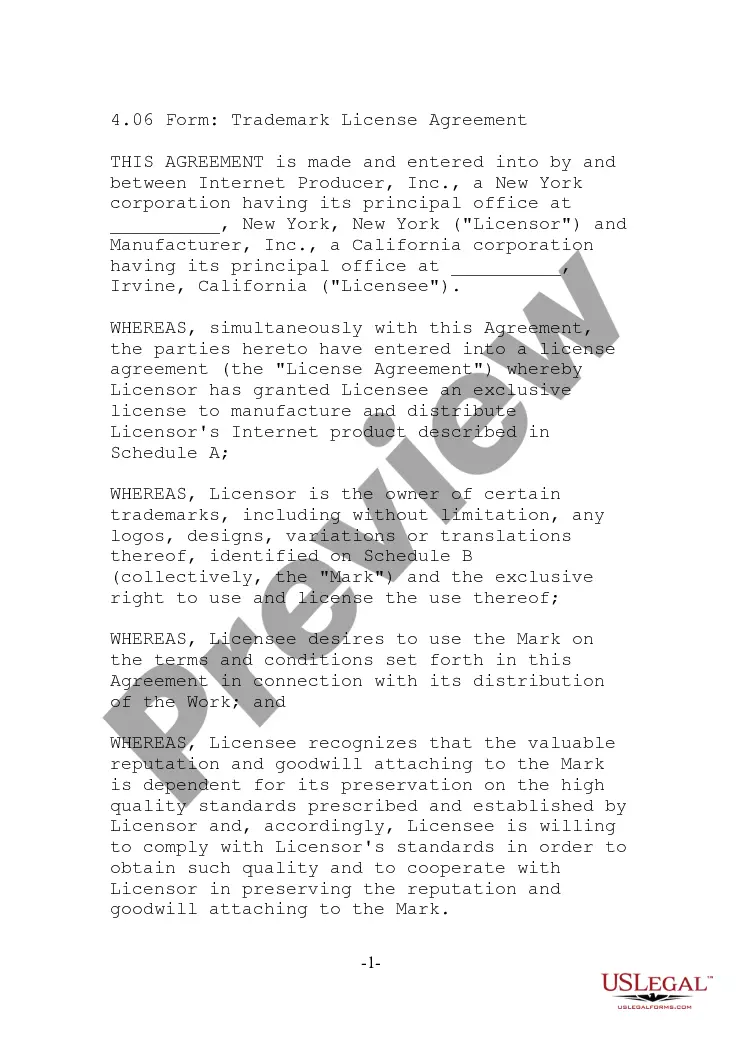
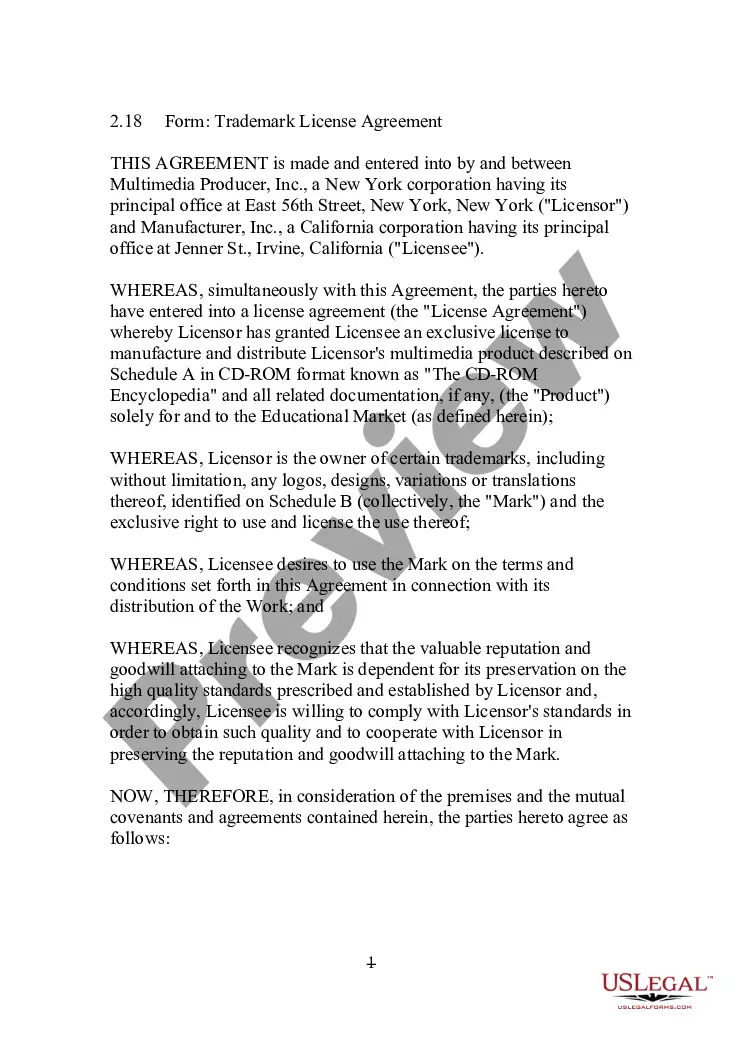
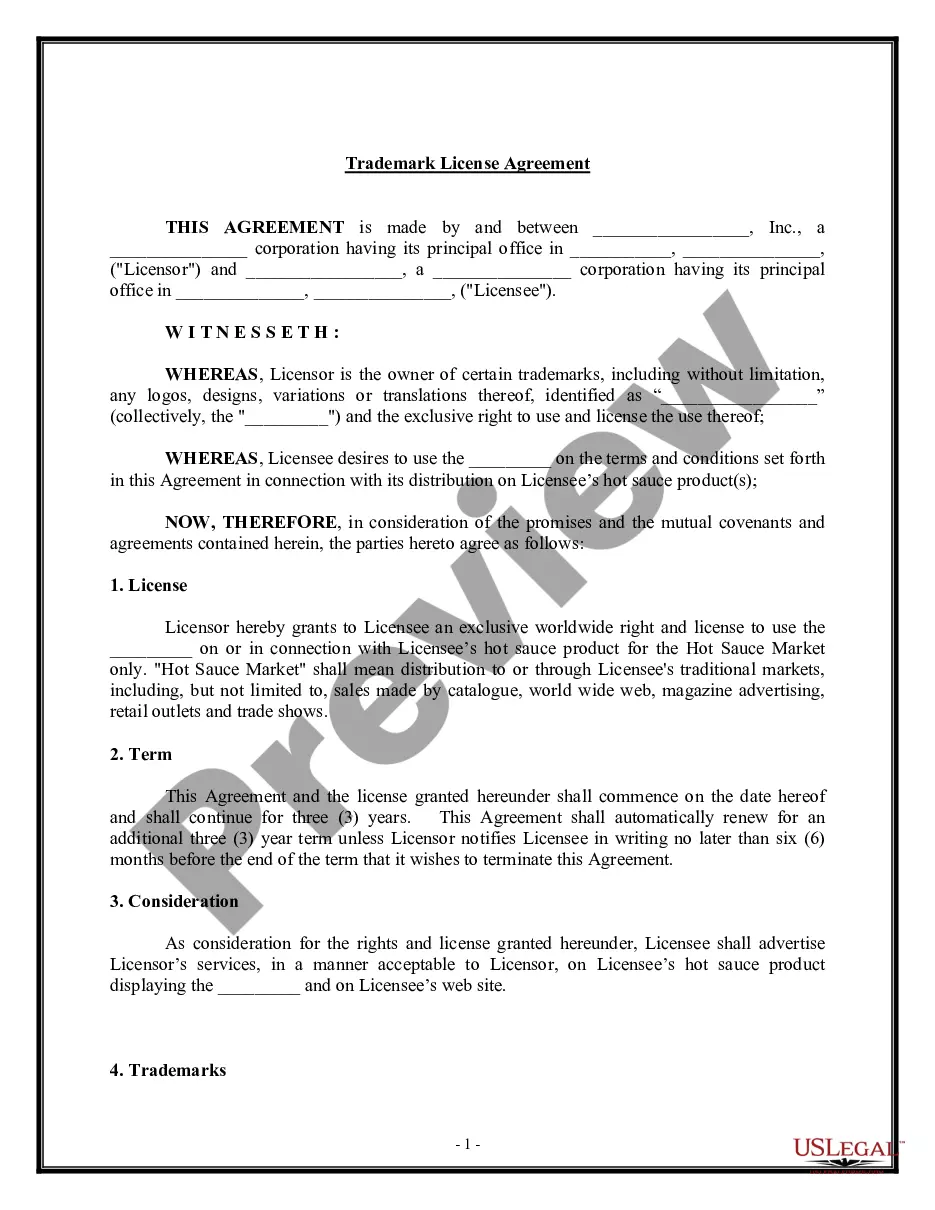
The Trademark License Agreement for a Multimedia Business is a legal document that permits a licensee to use specific trademarks owned by a licensor in connection with multimedia products. This agreement is tailored for businesses in the internet, technology, and multimedia sectors and outlines the rights, obligations, and licensing terms essential for both parties. It helps to protect the ownership of trademarks while granting the licensee the necessary permissions to market their products effectively.
Main sections of this form
- Definitions: Clarifies terms such as "Trademarks" and "Multimedia Products" included in the agreement.
- Grant of License: Details the extent of the license granted to the licensee, including duration and scope of use.
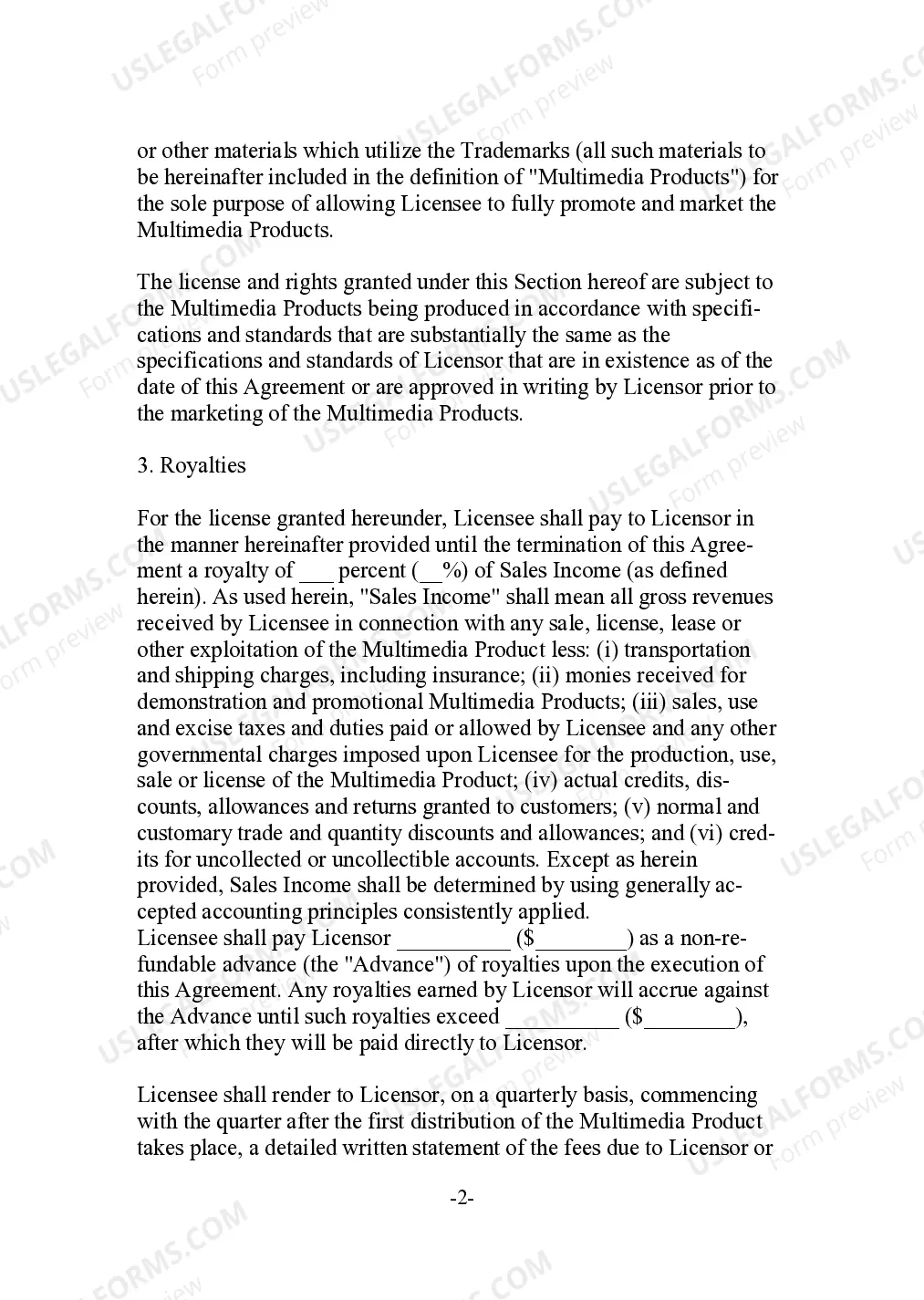
- Royalties: Outlines the payment structure for using the trademarks, including any advance payments and calculations for ongoing royalties.
- Quality Control: Specifies the licensor's rights to inspect the quality of the products bearing the trademarks.
- Termination Clauses: Lists the conditions under which the agreement can be terminated by the licensor.
When this form is needed
This trademark license agreement is necessary when a business (licensee) wants to use a trademark owned by another party (licensor) for its multimedia products. It is applicable when companies aim to leverage established brands to enhance their product visibility while ensuring compliance with trademark laws. This form is particularly useful in scenarios where companies collaborate or license intellectual property for projects involving software, digital content, or related technologies.
Who needs this form
- Business owners in the multimedia, technology, or internet sectors seeking to utilize existing trademarks.
- Licensors who want to formalize the terms of trademark usage with a licensee.
- Startups or companies developing multimedia products looking to enhance their market presence through established brands.
- Legal teams or professionals assisting businesses in drafting and negotiating trademark license agreements.
How to complete this form
- Identify the licensor and licensee, including their business details.
- Specify the trademarks involved by listing them in the appropriate section.
- Define the multimedia products covered under the agreement.
- Outline the royalty structure, including percentages and advance payment amounts.
- Include any additional clauses necessary for quality control and termination conditions.
Notarization requirements for this form
This form usually doesn’t need to be notarized. However, local laws or specific transactions may require it. Our online notarization service, powered by Notarize, lets you complete it remotely through a secure video session, available 24/7.
Get your form ready online
Our built-in tools help you complete, sign, share, and store your documents in one place.
Make edits, fill in missing information, and update formatting in US Legal Forms—just like you would in MS Word.
Download a copy, print it, send it by email, or mail it via USPS—whatever works best for your next step.
Sign and collect signatures with our SignNow integration. Send to multiple recipients, set reminders, and more. Go Premium to unlock E-Sign.
If this form requires notarization, complete it online through a secure video call—no need to meet a notary in person or wait for an appointment.
We protect your documents and personal data by following strict security and privacy standards.

Make edits, fill in missing information, and update formatting in US Legal Forms—just like you would in MS Word.

Download a copy, print it, send it by email, or mail it via USPS—whatever works best for your next step.

Sign and collect signatures with our SignNow integration. Send to multiple recipients, set reminders, and more. Go Premium to unlock E-Sign.

If this form requires notarization, complete it online through a secure video call—no need to meet a notary in person or wait for an appointment.

We protect your documents and personal data by following strict security and privacy standards.
Mistakes to watch out for
- Failing to specify the trademarks or products accurately, leading to ambiguous terms.
- Neglecting to outline the termination conditions clearly, which can lead to disputes.
- Not addressing quality control standards, potentially harming the licensor's brand reputation.
- Forgetting to include the royalty payment schedule, which is crucial for financial arrangements.
Advantages of online completion
- Convenient access to customizable templates that save time and reduce legal costs.
- Easy to download and fill out, allowing for quick adaptation to specific business needs.
- Professionally drafted by licensed attorneys, ensuring legal compliance and effectiveness.
Legal use & context
- This agreement is enforceable under New York state law.
- Proper execution of the agreement protects both parties' rights regarding trademark usage.
- Compliance with the agreement is necessary to maintain trademark protection and avoid infringement claims.
Quick recap
- The Trademark License Agreement is crucial for licensing trademarks in multimedia contexts.
- Clear definitions and compliance clauses are essential to protect the interests of both the licensor and licensee.
- Understanding state-specific laws can enhance the effectiveness of the agreement.
Looking for another form?
Form popularity
FAQ
Exclusive or non-exclusive. In an exclusive license, the intellectual property holder is licensing the work only to one person, for that particular use/territory. Territory. Use. Attribution. Derivative works. Confidentiality. Time frame. Termination.
A trademark licensing agreement is a legal contract between a trademark owner and another party that have agreed to use the trademark on preapproved terms decided between the contracting parties.
An example of a licensing agreement is a contract between the copyright holders of software and another company, allowing the latter to use the computer software for their daily business operations.
What is a Licensing Agreement? A licensing agreement is a contract between two parties (the licensor and licensee) in which the licensor grants the licensee the right to use the brand name, trademark, patented technology, or ability to produce and sell goods owned by the licensor.
A license agreement is a business contract between two parties. The licensor (the seller of the license) owns the asset being licensed and the licensee (the buyer) pays for the right to use the license. The licensee pays royalties to the owner in exchange for the right to sell the product or use the technology.
An example of a licensing agreement is a contract between the copyright holders of software and another company, allowing the latter to use the computer software for their daily business operations.
The 3 P's of collegiate licensing are protection, promotion, and profit.
Trademark licensing is the process by which a registered trademark owner, called a licensor or proprietor, allows another party, called a licensee, to make and distribute specific products or services under the licensor's trademark agreement. Trademark licensing is a type of merchandise agreement.
Download a template for a licensing agreement. Choose your role as the licensor or licensee. Define the license(s) in the agreement. Decide whether the license is exclusive or not. Settle the matter of fees and payment schedule. Add a renewal date and rules.