Form - Cease and Desist Letter For Trademark Infringement Internet Domain Name
What this document covers
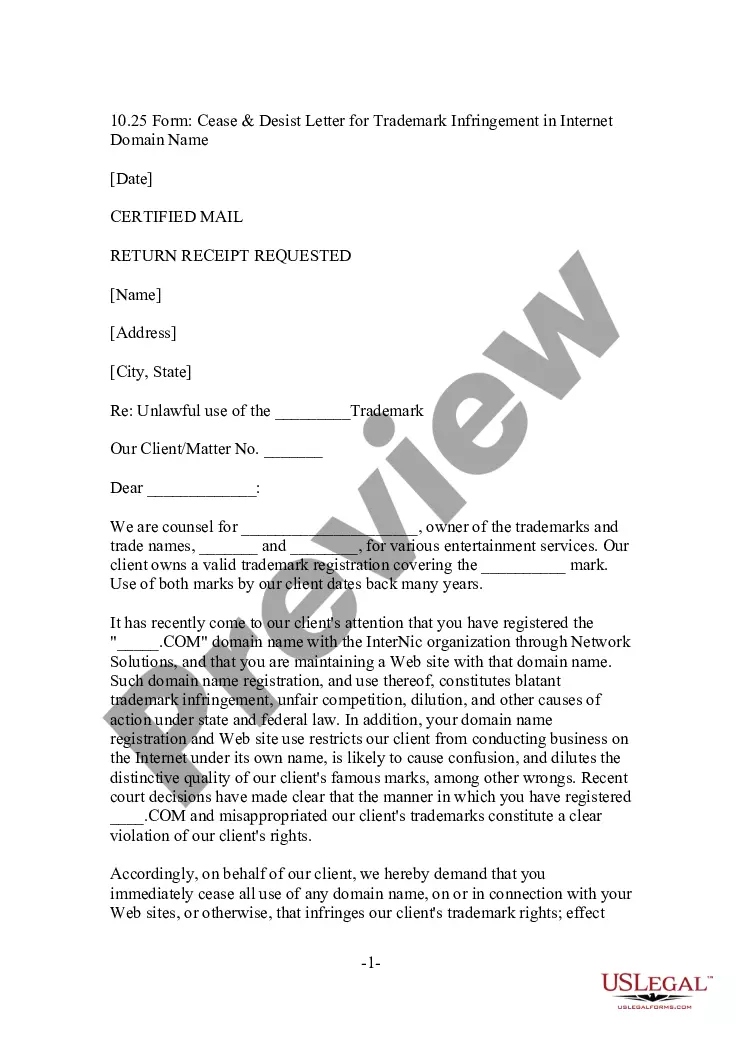
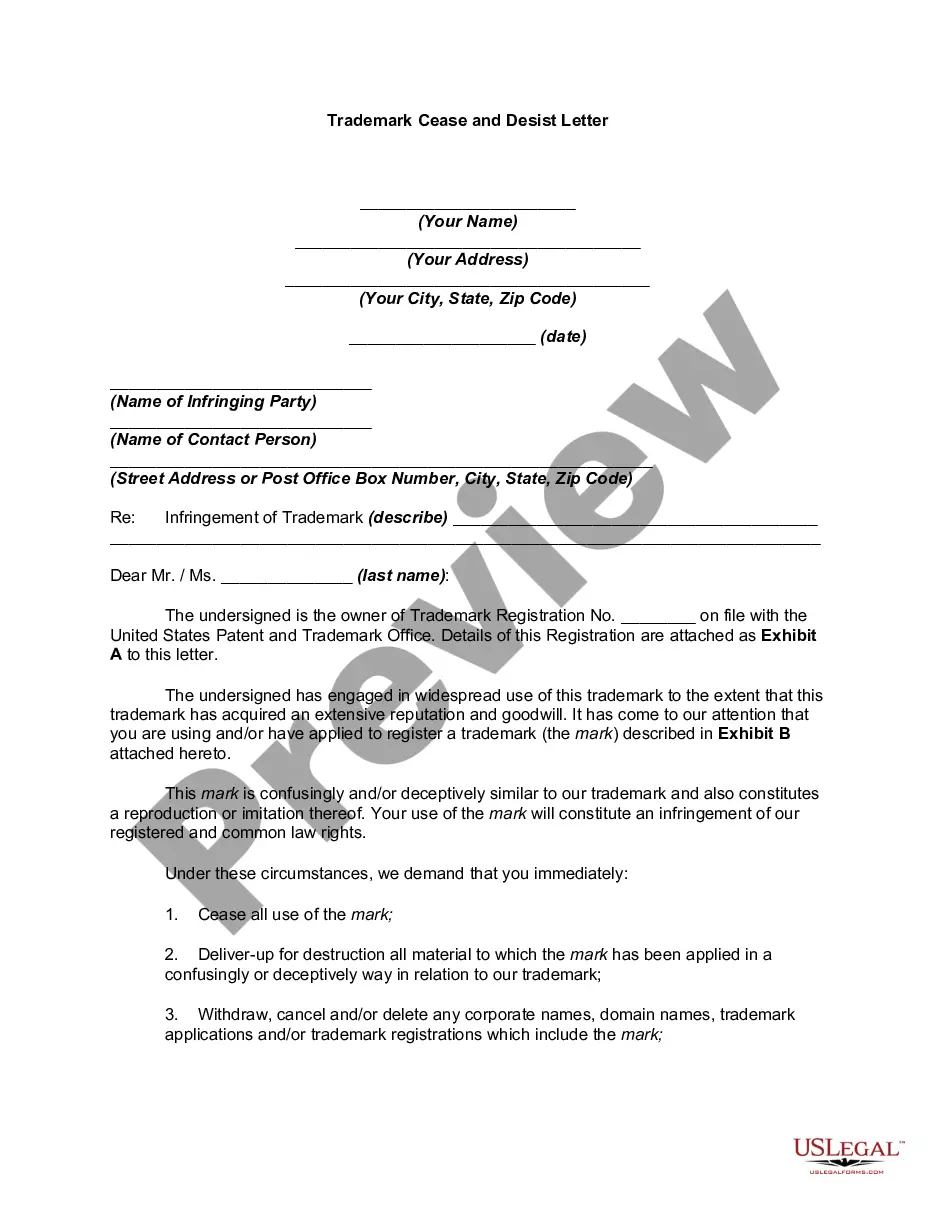
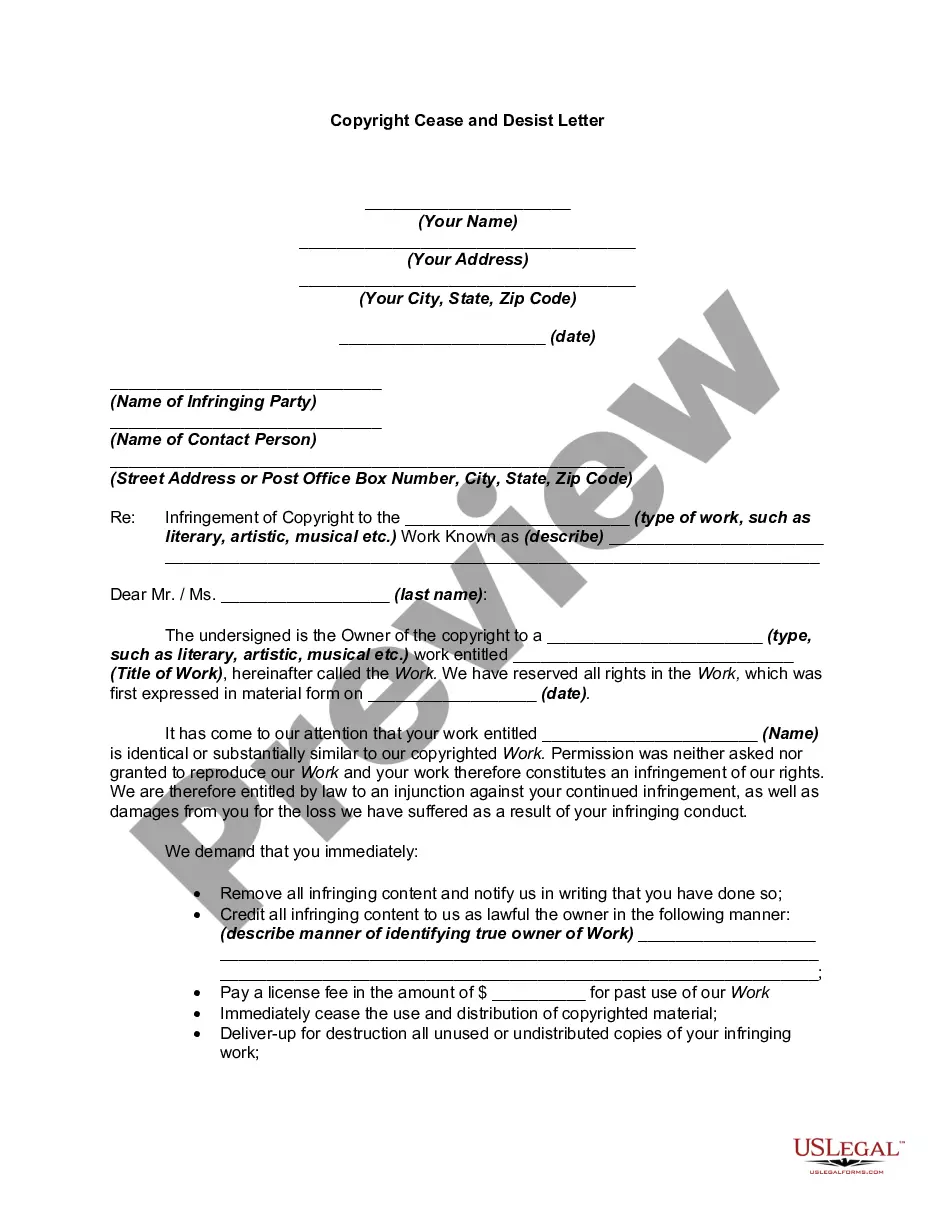
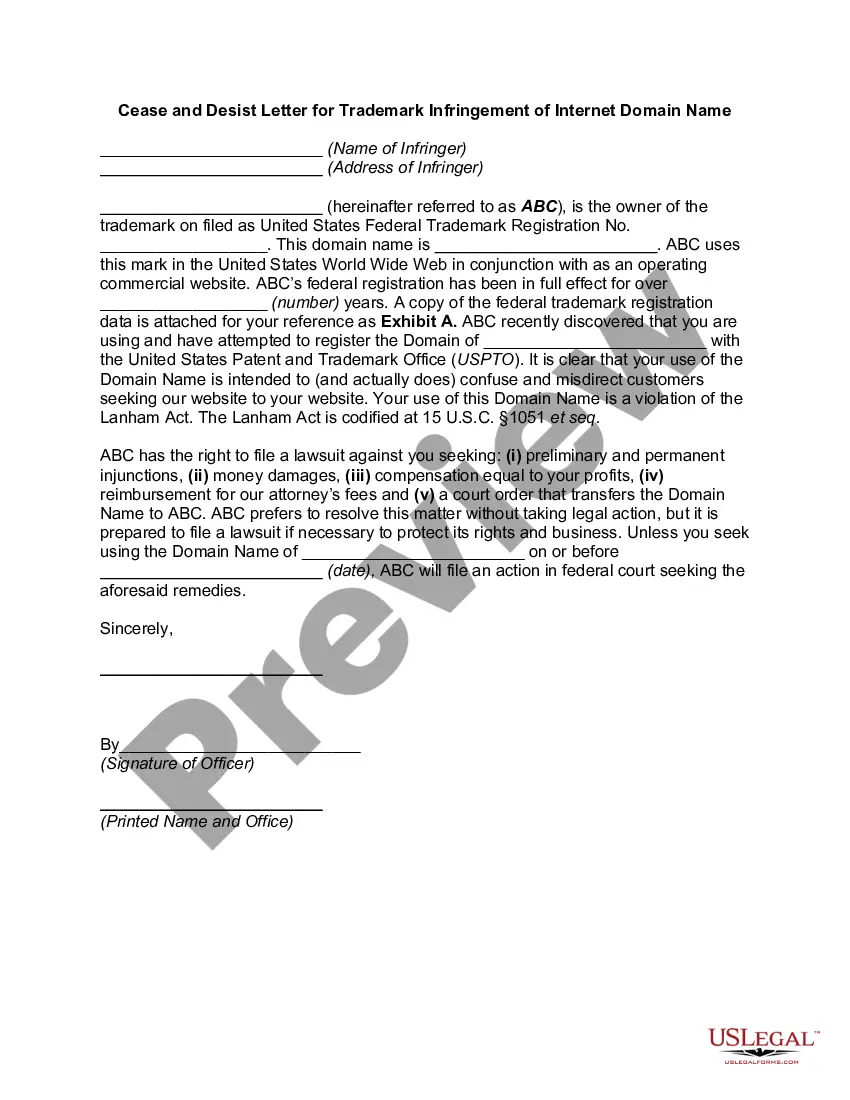
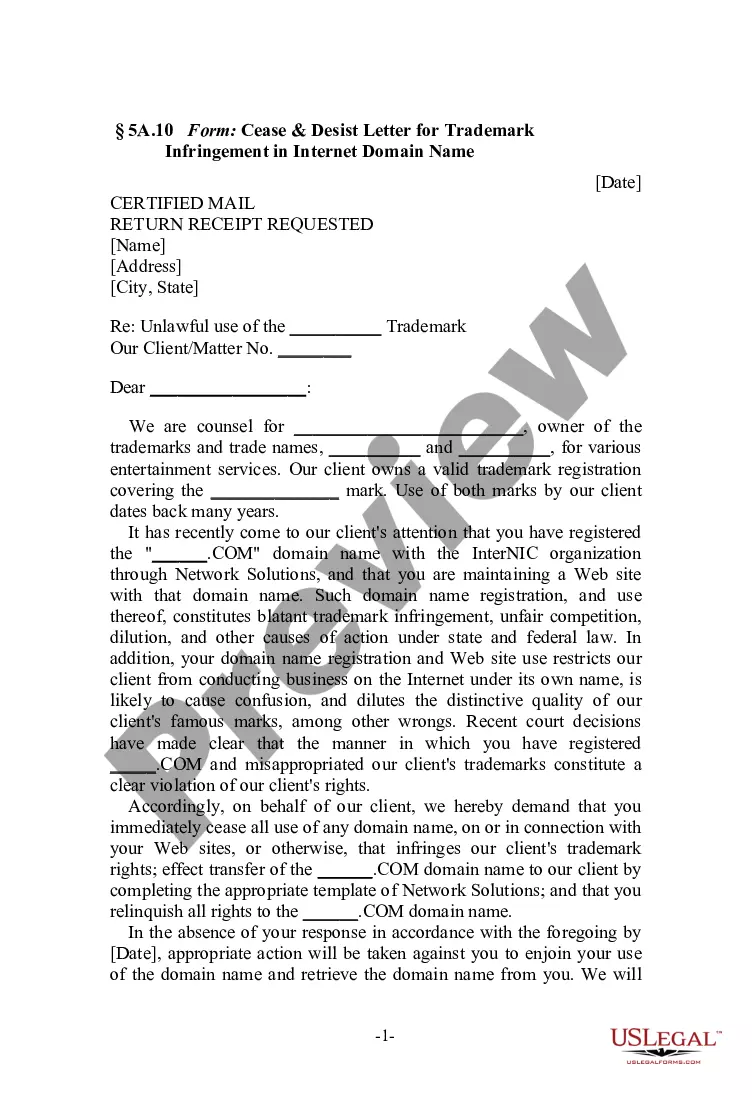
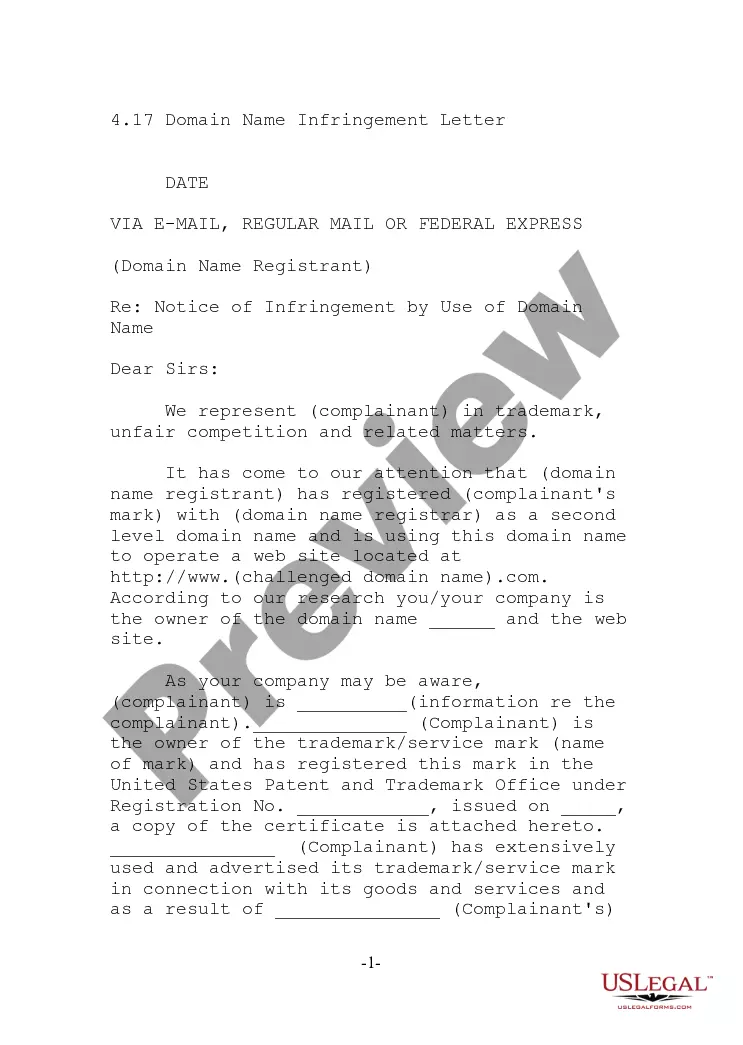
A Cease and Desist Letter for Trademark Infringement Internet Domain Name is a legal document used to formally notify a party that they are infringing on a trademark by using a domain name. This form is a critical tool for trademark owners to protect their intellectual property rights and request the immediate cessation of unauthorized use. Unlike other types of cease and desist letters, this version specifically addresses issues related to domain names and internet use, making it tailored for online infringements.
Key parts of this document
- Date of the letter.
- Sender's name and address.
- Recipient's name and address.
- Identification of the trademark at issue.
- Details of the alleged infringement, including the registered domain name.
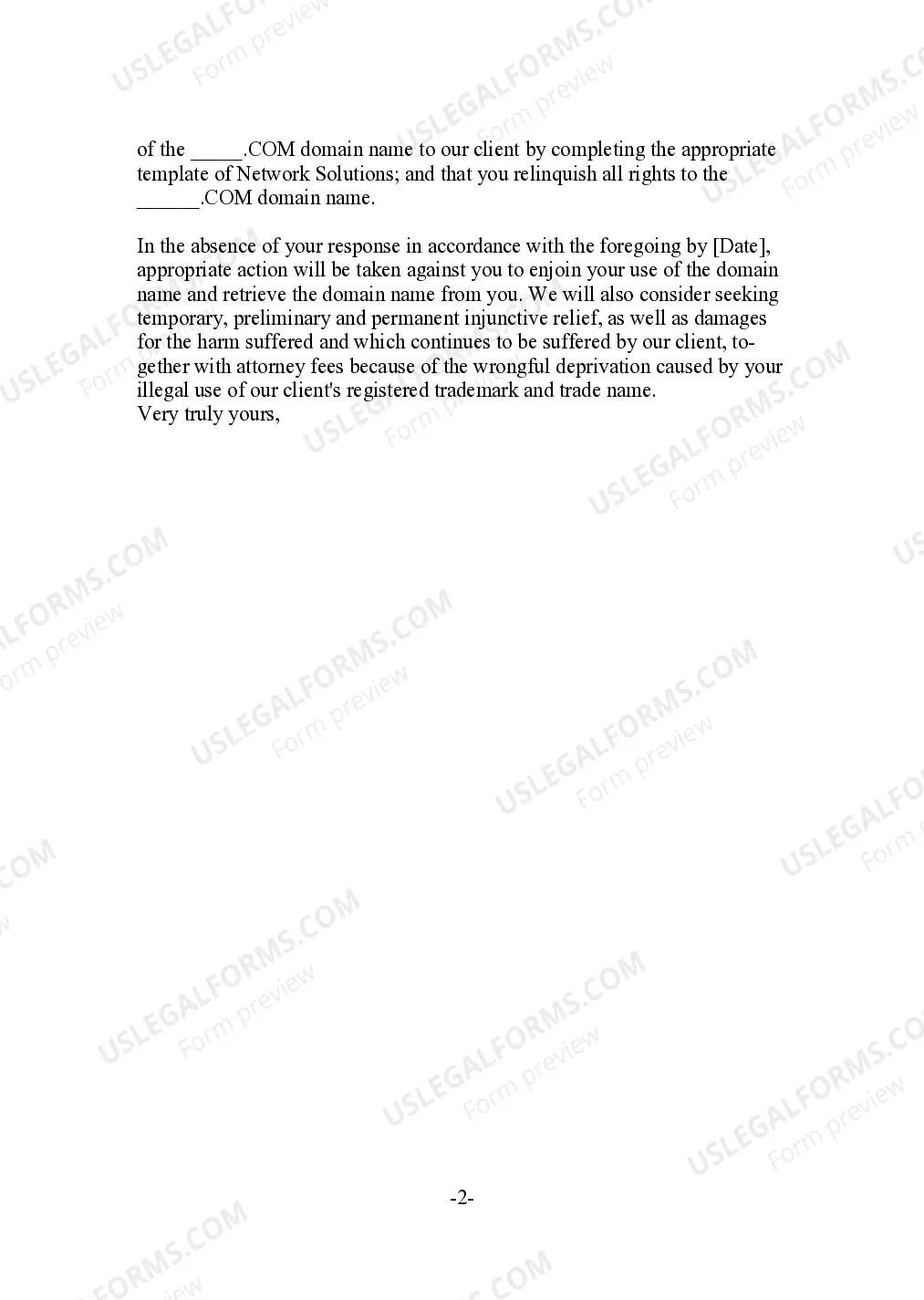
- Demand for cessation of use and transfer of the domain name.
- Deadline for compliance before legal action may be taken.
When to use this form
This form is used when a trademark owner discovers that another party is using a domain name that infringes upon their registered trademark. It can be particularly important when the use of the domain name causes confusion among consumers or dilutes the value of the trademark. Ideal scenarios include when a business wants to protect its brand identity from being compromised online or when it wishes to reclaim a domain name that is improperly held by another party.
Who needs this form
- Trademark owners or their legal representatives.
- Businesses facing unauthorized use of their trademark in a domain name.
- Individuals looking to address personal trademark infringements.
- Legal professionals advising clients on trademark protection.
How to complete this form
- Identify and enter the date of the letter.
- Fill in your name and address as the sender.
- Provide the recipient's name and address.
- Specify the trademark that is being infringed upon.
- Describe the infringement, including the domain name in question.
- State your demands clearly, including the deadline for compliance.
- Sign the letter to finalize it.
Is notarization required?
Notarization is not commonly needed for this form. However, certain documents or local rules may make it necessary. Our notarization service, powered by Notarize, allows you to finalize it securely online anytime, day or night.
Get your form ready online
Our built-in tools help you complete, sign, share, and store your documents in one place.
Make edits, fill in missing information, and update formatting in US Legal Forms—just like you would in MS Word.
Download a copy, print it, send it by email, or mail it via USPS—whatever works best for your next step.
Sign and collect signatures with our SignNow integration. Send to multiple recipients, set reminders, and more. Go Premium to unlock E-Sign.
If this form requires notarization, complete it online through a secure video call—no need to meet a notary in person or wait for an appointment.
We protect your documents and personal data by following strict security and privacy standards.

Make edits, fill in missing information, and update formatting in US Legal Forms—just like you would in MS Word.

Download a copy, print it, send it by email, or mail it via USPS—whatever works best for your next step.

Sign and collect signatures with our SignNow integration. Send to multiple recipients, set reminders, and more. Go Premium to unlock E-Sign.

If this form requires notarization, complete it online through a secure video call—no need to meet a notary in person or wait for an appointment.

We protect your documents and personal data by following strict security and privacy standards.
Typical mistakes to avoid
- Failing to provide sufficient details about the trademark being infringed.
- Not including a clear deadline for compliance.
- Addressing the letter to an incorrect or outdated recipient.
- Neglecting to sign the letter, which can weaken its effectiveness.
Benefits of using this form online
- Immediate access to professionally drafted legal documents.
- Ability to edit and personalize the letter to fit your specific situation.
- Convenient download and distribution without requiring a lengthy consultation.
- Reliable templates created by licensed attorneys, ensuring compliance with legal standards.
Legal use & context
- The cease and desist letter serves as the first step in a dispute resolution process.
- It establishes a formal record of the trademark owner's objections to the infringement.
- While it is not specifically a court document, it can be used as evidence in potential legal proceedings.
Summary of main points
- This form is essential for trademark owners confronting unauthorized use of their trademarks online.
- Clear communication and a structured approach are critical when completing the letter.
- Ensuring compliance with both state and federal trademark laws strengthens the case.
Looking for another form?
Form popularity
FAQ
A domain name can function as a trademark if it is used to identify goods or services and is not used simply as a website address. Although providing a staggering global market forum, the internet also provides fertile ground for trademark infringers.
A business registered a domain name that was already trademarked by a competitor but had not yet been registered as a domain name.In such cases, the owner of the domain name unfairly benefits from the deceptive domain name. Courts will find the domain name constitutes trademark infringement.
Having your attorney write a response letter to try bargaining with the other trademark owner for continued use of the name. Asking the other party for more information, including seeing their trademark to evaluate whether they have a legitimate claim.
1Identification of complaining party (trademark owner) and its trademark rights (include information about your federal registration with the trademark office)2Identification of the challenged use.3Statement of basis for concern or complaint.Draft a Free Trademark Infringement Cease & Desist Letter \n.com > cease-and-desist-trademark-infringement-letter
Yes you can get sued. The issue is whether your use of the domain name violates the trademark rights of this competitor. Trademarks identify the source of goods and services.
A person or business lacked a legitimate claim to a domain name, but registered a trademarked domain name with the sole intent to sell the name, prevent the trademark holder from gaining access to the name, or divert traffic to the domain's site. This is a practice known as cybersquatting.
Identification of complaining party (trademark owner) and its trademark rights (include information about your federal registration with the trademark office) Identification of the challenged use. Statement of basis for concern or complaint.
No specified method of delivery is required for a cease-and-desist letter. Because it is not a legal document, you can write and send the letter yourself without the help of a legal professional, or you can hire an attorney to write and serve the letter for you.
Even if your business name isn't directly infringing on another company's name, you could still be violating another trademark. If a company holds a registered trademark that your company name may be likely to cause confusion with, you could be vulnerable to a lawsuit.