Special Military Power of Attorney
What is this form?
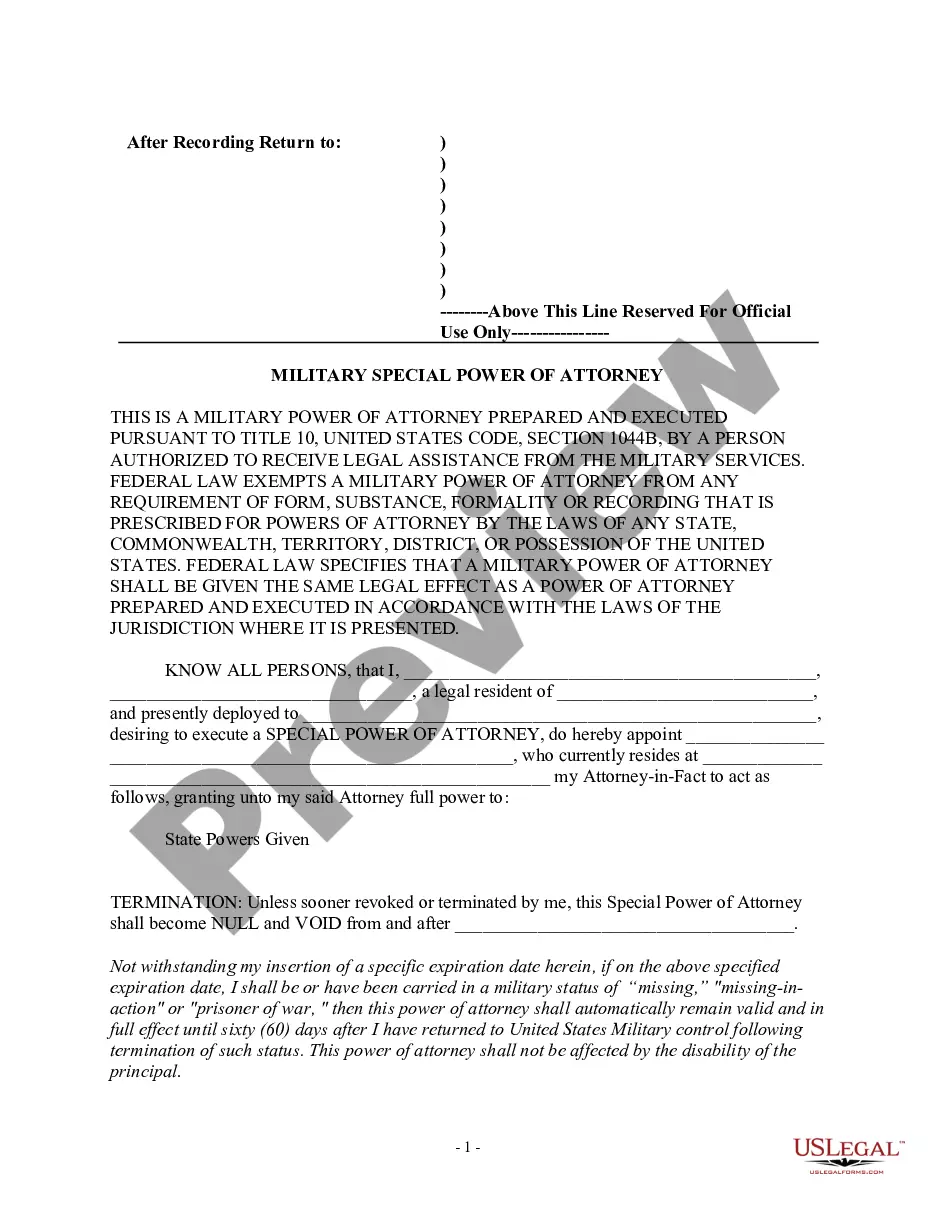
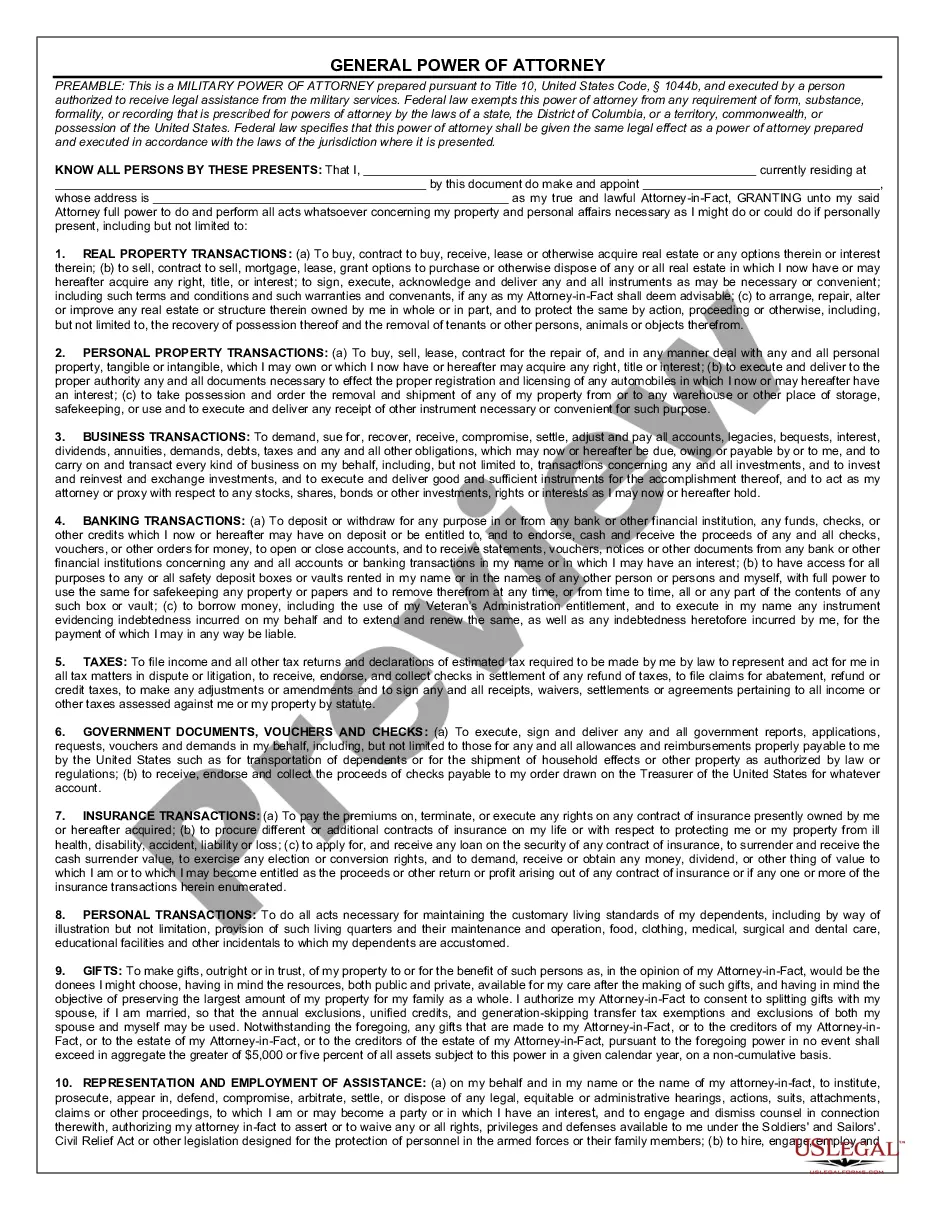
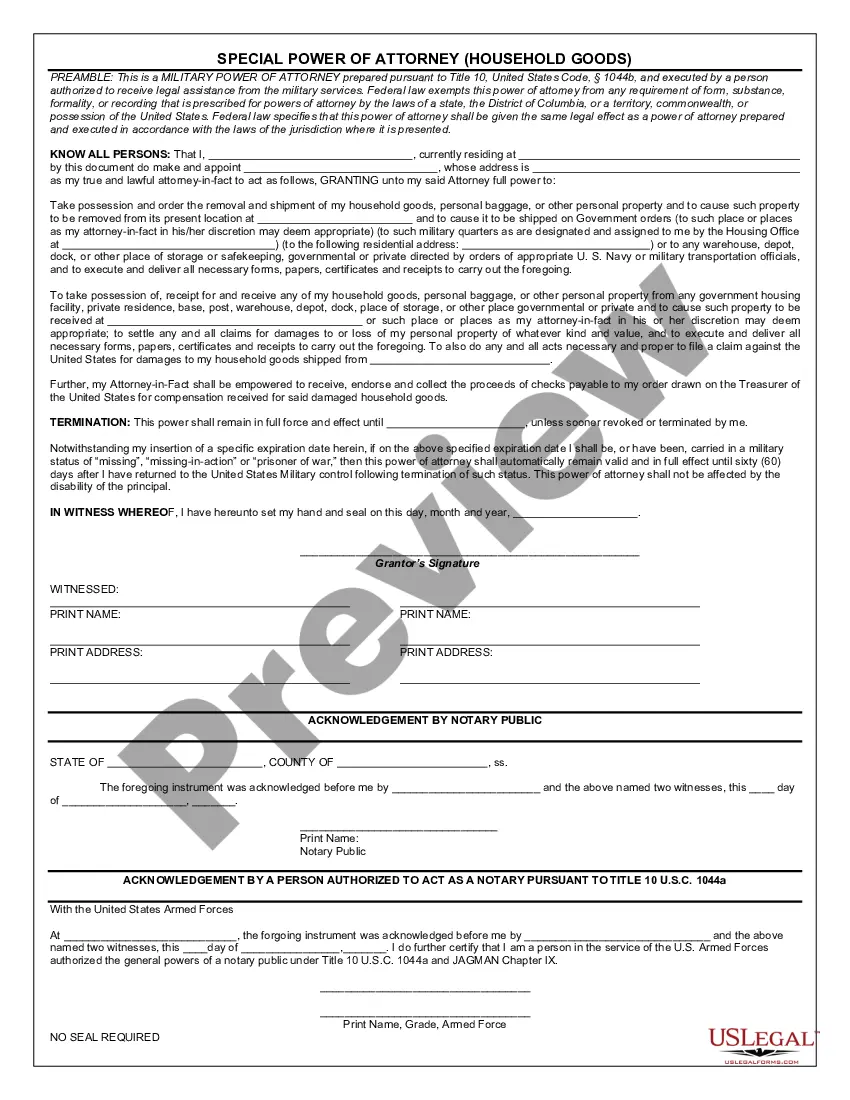
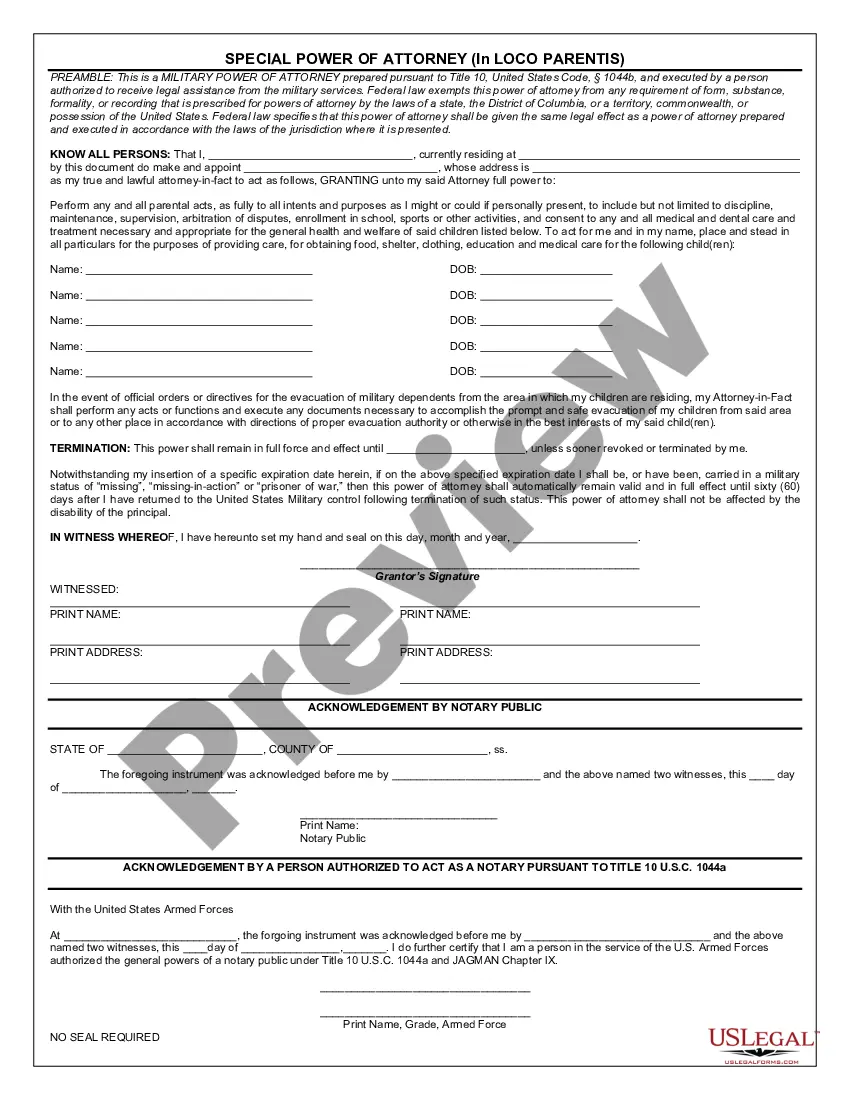
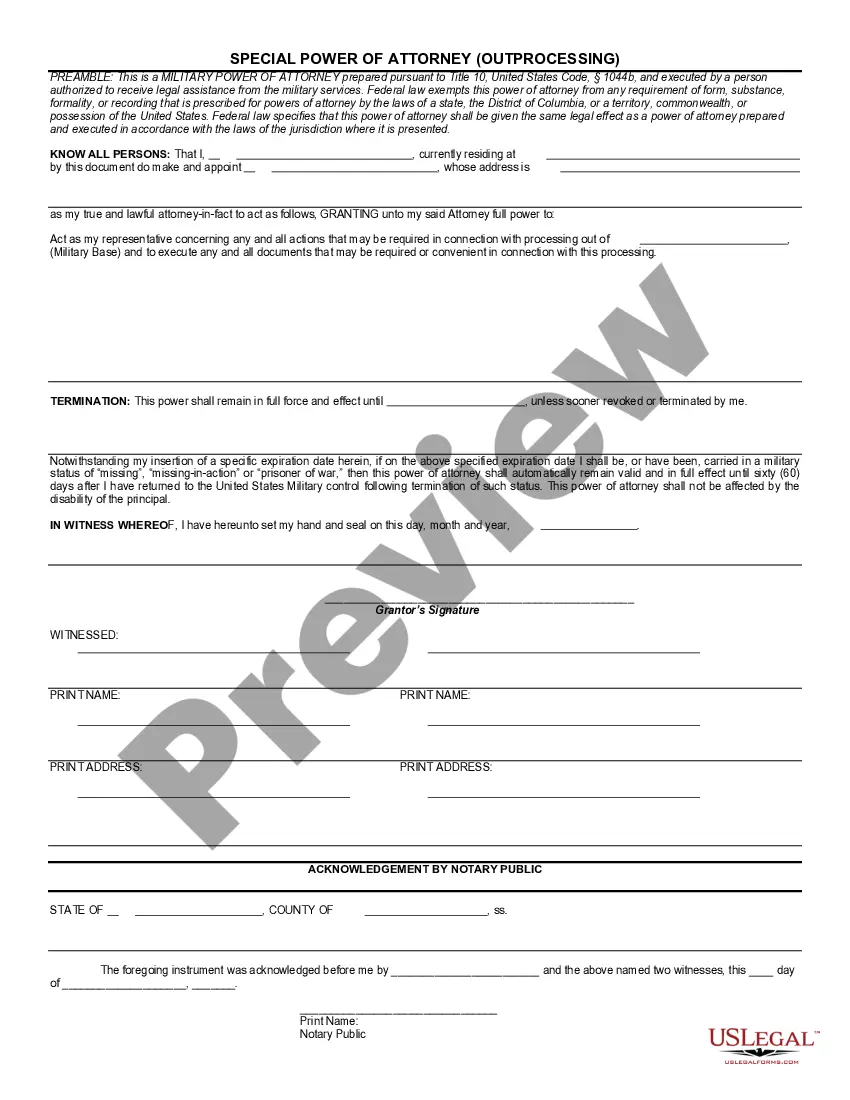
The Special Military Power of Attorney is a legal document specifically designed for military personnel. It allows a designated individual to act on behalf of the military member in certain specified matters while they are deployed or unavailable. This form is governed by federal law, which ensures that it is recognized in all U.S. jurisdictions, offering the same legal standing as a standard power of attorney executed under state laws. This is important for military members who need to manage affairs while serving away from home.
Key components of this form
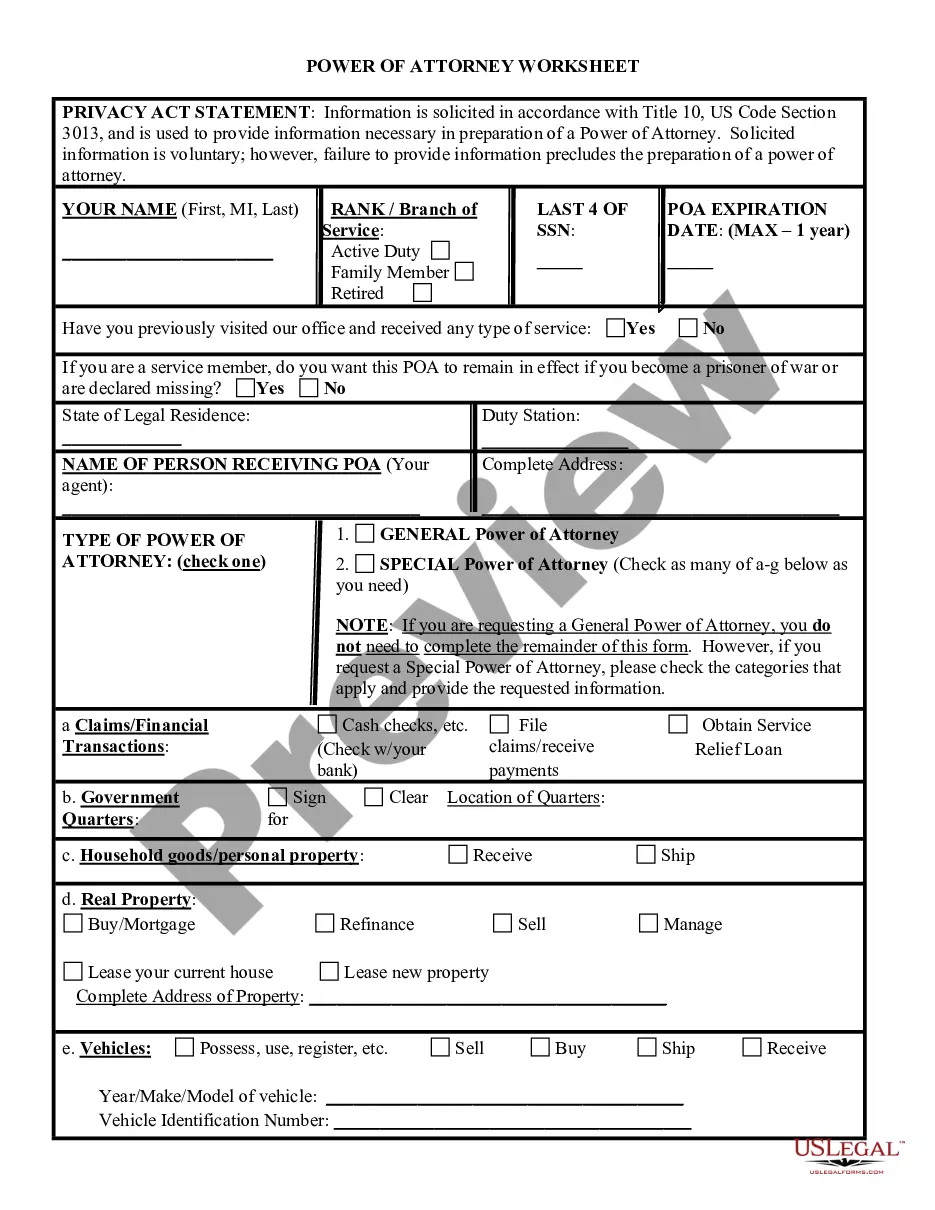
- Identification of the principal and appointed attorney-in-fact.
- Specific powers granted to the attorney-in-fact.
- Expiration date of the power of attorney and conditions for extension.
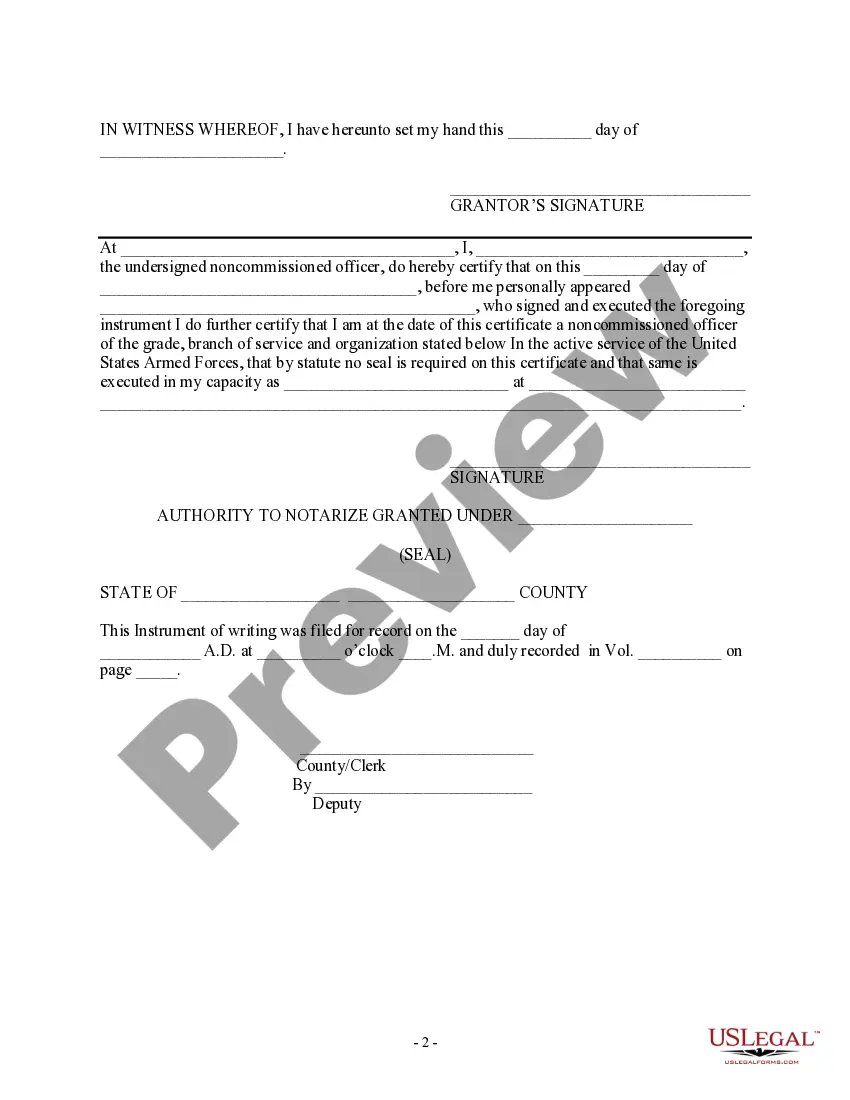
- Signature and certification by a noncommissioned officer.
- Recording requirements, if applicable.
When to use this document
This form should be used when a military service member needs to authorize another person to handle specific legal matters on their behalf while they are deployed or unavailable. Scenarios may include managing financial affairs, signing documents, or handling property transactions. It is particularly useful for service members who may be unable to attend to their personal affairs due to military commitments.
Who needs this form
This form is intended for:
- Active duty military personnel who require representation for legal actions.
- Service members deployed away from their home state.
- Individuals needing a trusted person to manage their affairs during military service.
Instructions for completing this form
- Identify and enter the name of the principal (the service member) and their current deployment location.
- Designate the attorney-in-fact by providing their full name and residential address.
- Specify the powers granted to the attorney-in-fact, detailing the authority they will hold.
- Indicate the expiration date of the power of attorney or state conditions under which it remains valid.
- Have the principal sign the document and ensure it is certified by a noncommissioned officer.
- Follow any local recording requirements if applicable.
Does this form need to be notarized?
Yes, this form must be notarized to be legally valid. A noncommissioned officer can certify the power of attorney directly, fulfilling the notarization requirement. US Legal Forms offers integrated online notarization services, making it easy to complete the process securely from your location.
Get your form ready online
Our built-in tools help you complete, sign, share, and store your documents in one place.
Make edits, fill in missing information, and update formatting in US Legal Forms—just like you would in MS Word.
Download a copy, print it, send it by email, or mail it via USPS—whatever works best for your next step.
Sign and collect signatures with our SignNow integration. Send to multiple recipients, set reminders, and more. Go Premium to unlock E-Sign.
If this form requires notarization, complete it online through a secure video call—no need to meet a notary in person or wait for an appointment.
We protect your documents and personal data by following strict security and privacy standards.

Make edits, fill in missing information, and update formatting in US Legal Forms—just like you would in MS Word.

Download a copy, print it, send it by email, or mail it via USPS—whatever works best for your next step.

Sign and collect signatures with our SignNow integration. Send to multiple recipients, set reminders, and more. Go Premium to unlock E-Sign.

If this form requires notarization, complete it online through a secure video call—no need to meet a notary in person or wait for an appointment.

We protect your documents and personal data by following strict security and privacy standards.
Avoid these common issues
- Failing to specify the powers granted to the attorney-in-fact clearly.
- Not including the service member's current deployment location.
- Missing the signature of the noncommissioned officer who certifies the document.
- Leaving the expiration date blank, which can cause confusion about the document's validity.
Why use this form online
- Convenient access to the form from anywhere with internet connectivity.
- Editable template allowing customization to meet specific needs.
- Access to legal advice and resources for proper completion.
- Quick and easy download for immediate use.
Main things to remember
- The Special Military Power of Attorney allows military personnel to authorize someone else to act on their behalf while deployed.
- This form is recognized under federal law and does not require additional state formalities.
- Notarization is required, but a noncommissioned officer can provide certification.
- Ensure all sections of the form are accurately completed to avoid common mistakes.
Looking for another form?







Form popularity
FAQ
The Special Military Power of Attorney is a federal-recognized legal document that lets a designated person act on behalf of a service member while they’re deployed or unavailable. It specifies the powers granted, who the attorney-in-fact is, and when the authority expires, with signature and certification by a noncommissioned officer and any required recording.
Not necessarily. The form components require a signature and certification by a noncommissioned officer, but they do not list notarization as a must. Some jurisdictions may have their own notary requirements. If you want extra authentication, check local rules; however, the Special Military Power of Attorney relies on the NCO certification for validity.
An invalid Special Military Power of Attorney would miss essential elements: proper identification of the principal and attorney-in-fact, the powers granted, an expiration date or extension terms, and the required signature and certification by a noncommissioned officer. If any of these items are missing or not properly executed, the document may be invalid; recording requirements may apply.
Common mistakes include failing to clearly identify the principal and the attorney-in-fact, not specifying the exact powers granted, omitting an expiration or extension provision, missing the required signature or NCO certification, and neglecting recording requirements if applicable. Avoid vague language that could broaden or limit authority beyond what’s intended.
Red flags for a POA include unclear or overly broad powers, signs of pressure or coercion, missing or improperly witnessed execution (such as failure to obtain the required noncommissioned officer certification), and lack of any recording when required. For this form, ensure the powers, parties, and NCO certification are clearly documented.
This form is designed for military personnel and is recognized across jurisdictions under federal law. It requires signature and certification by a noncommissioned officer, and may include recording requirements, plus an expiration or extension. A standard POA is typically governed by state law and may not include NCO certification or federal cross-jurisdiction recognition.