Warranty Easement Deed For Conservation of Wetlands
About this form
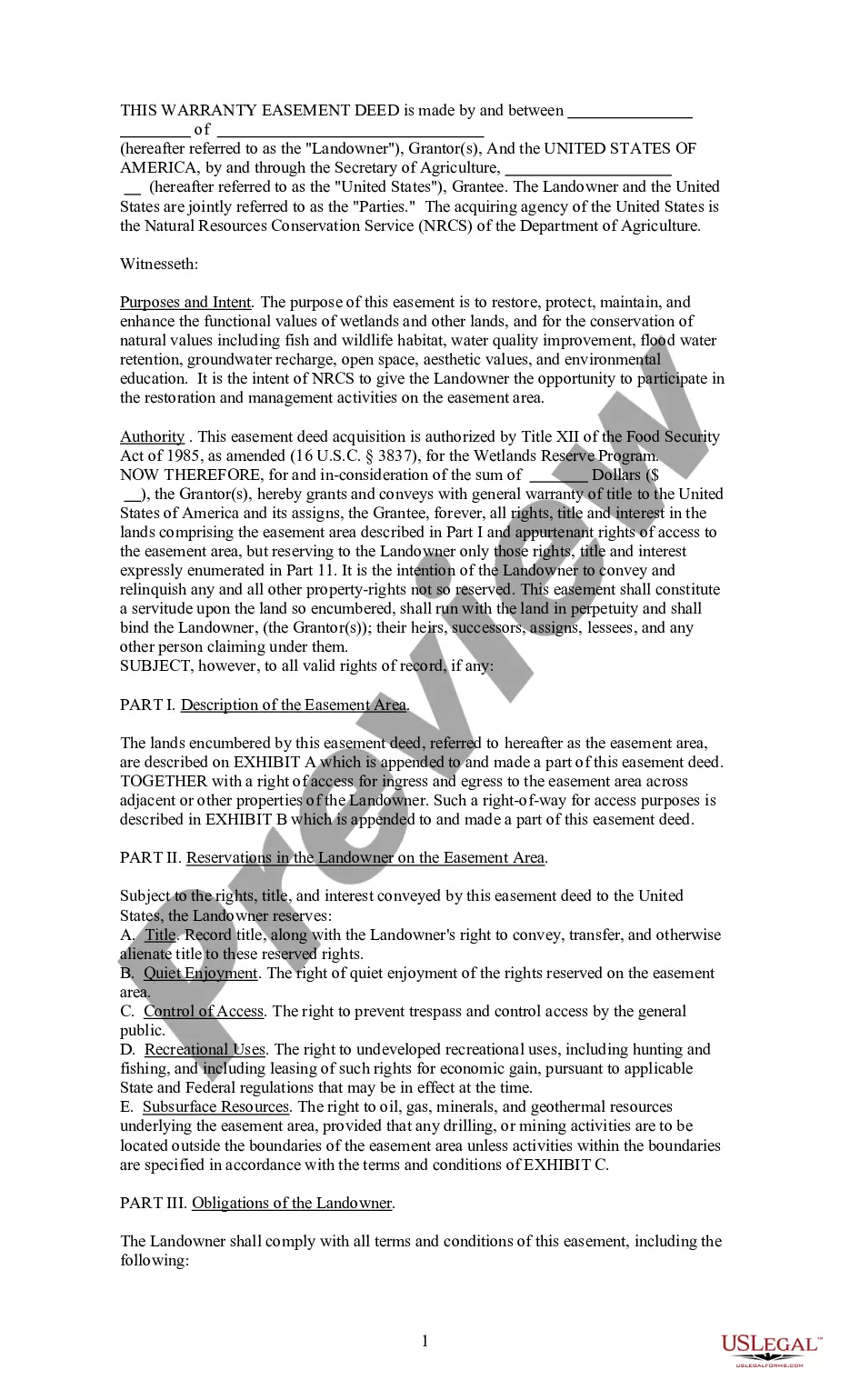
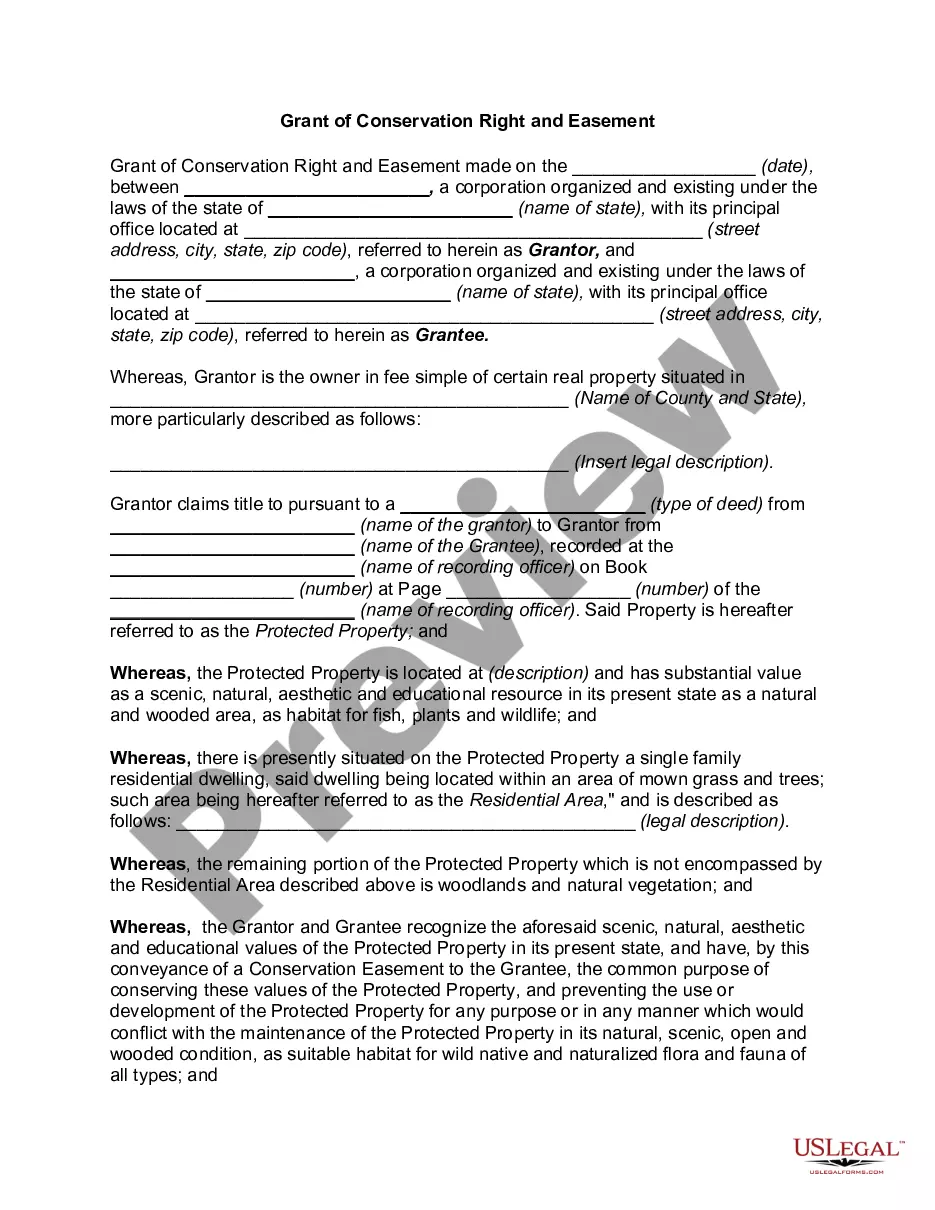
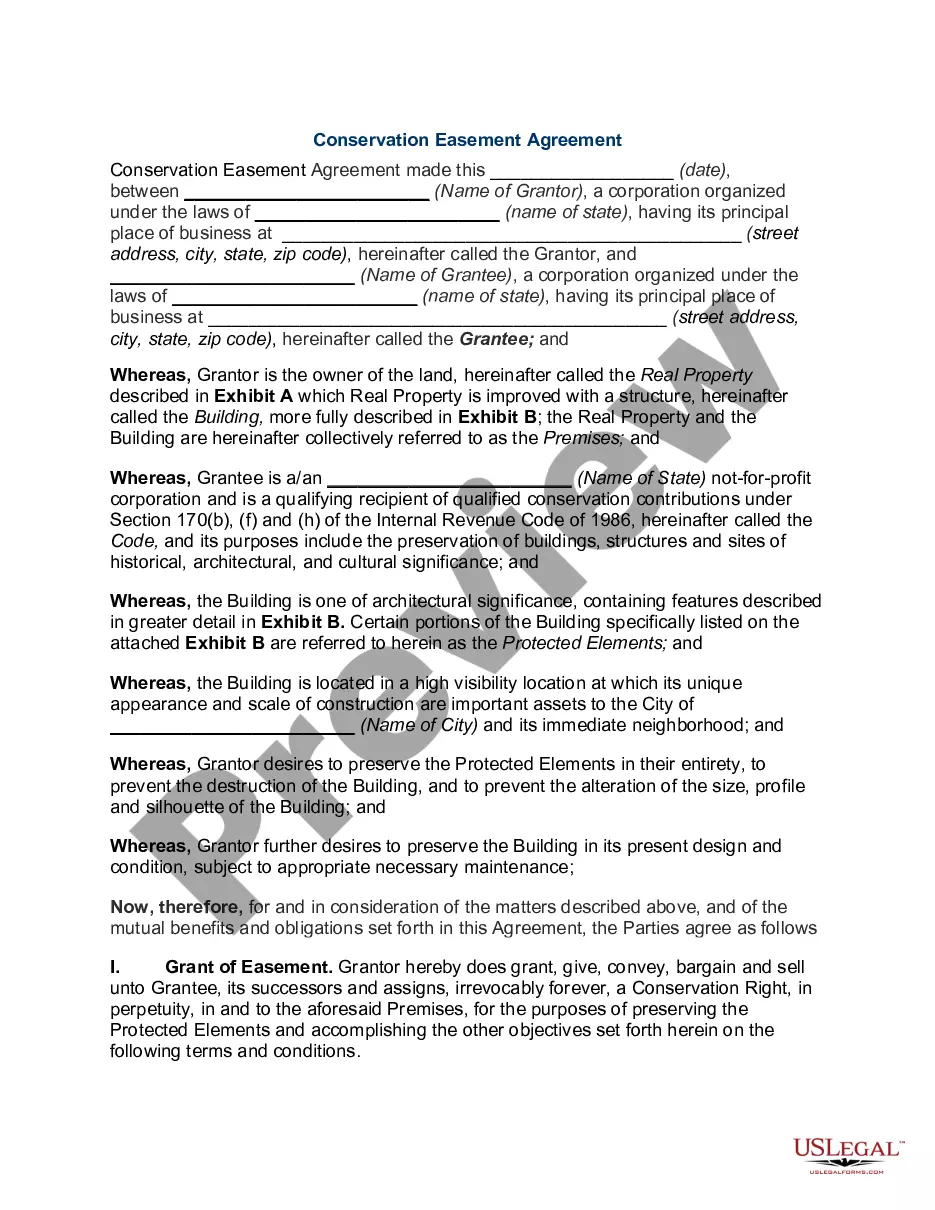
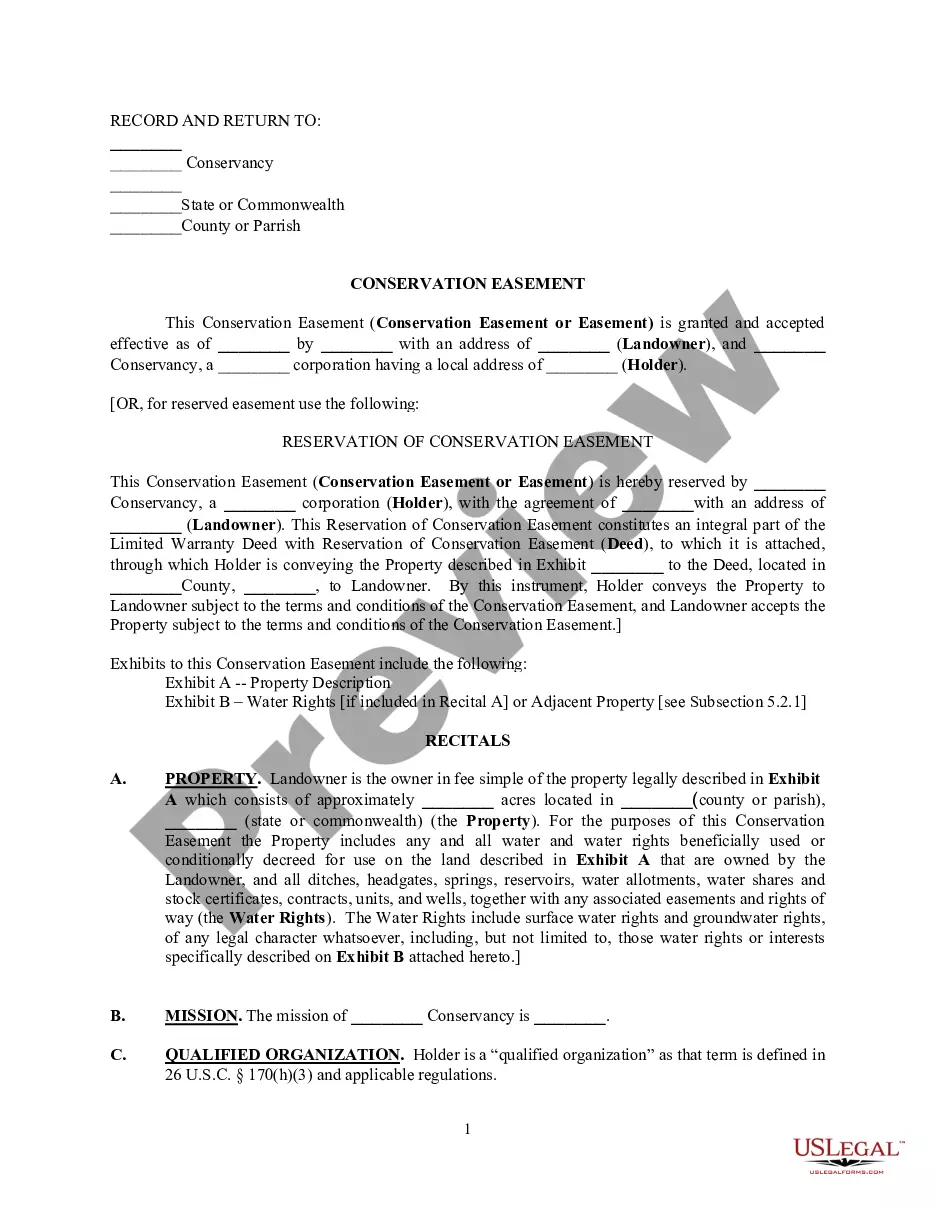
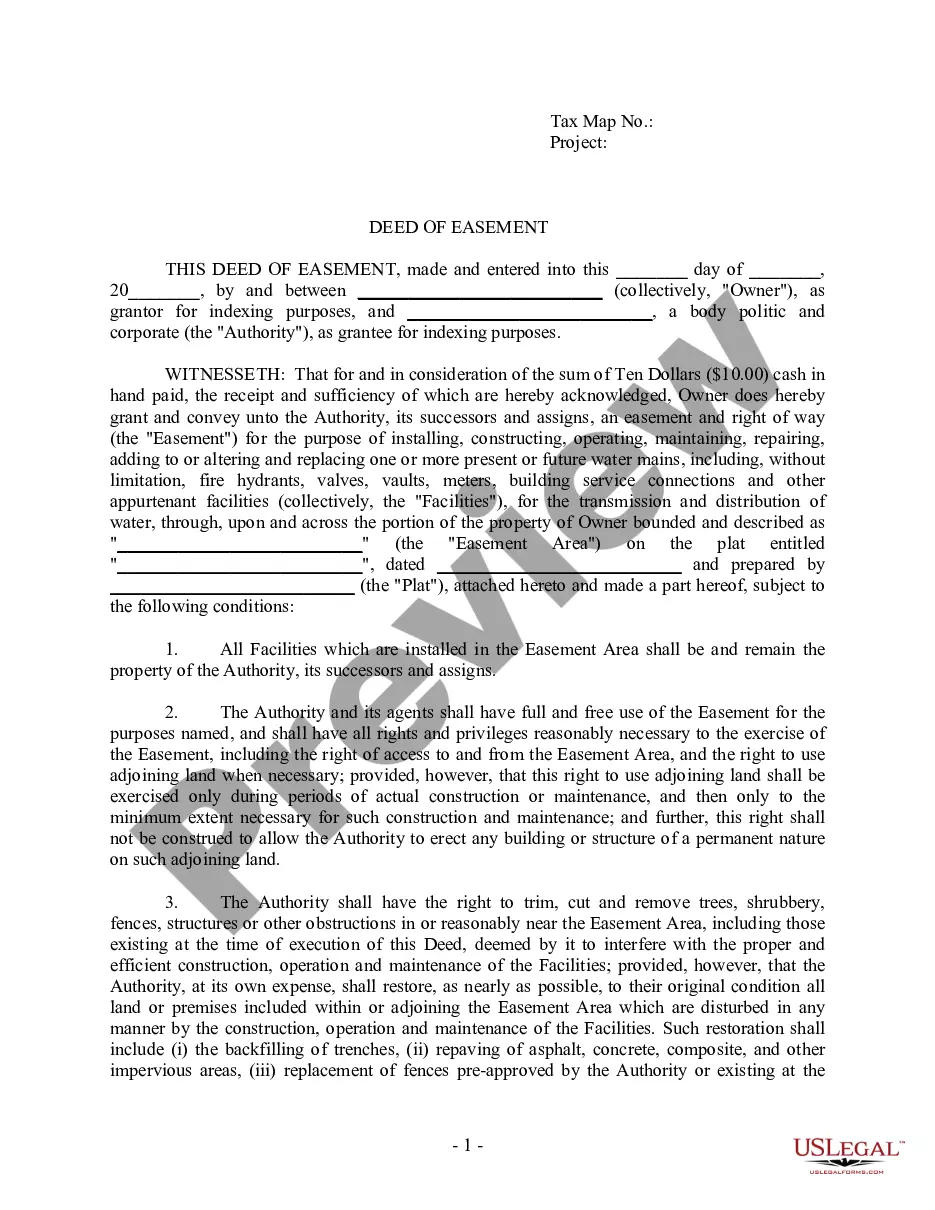
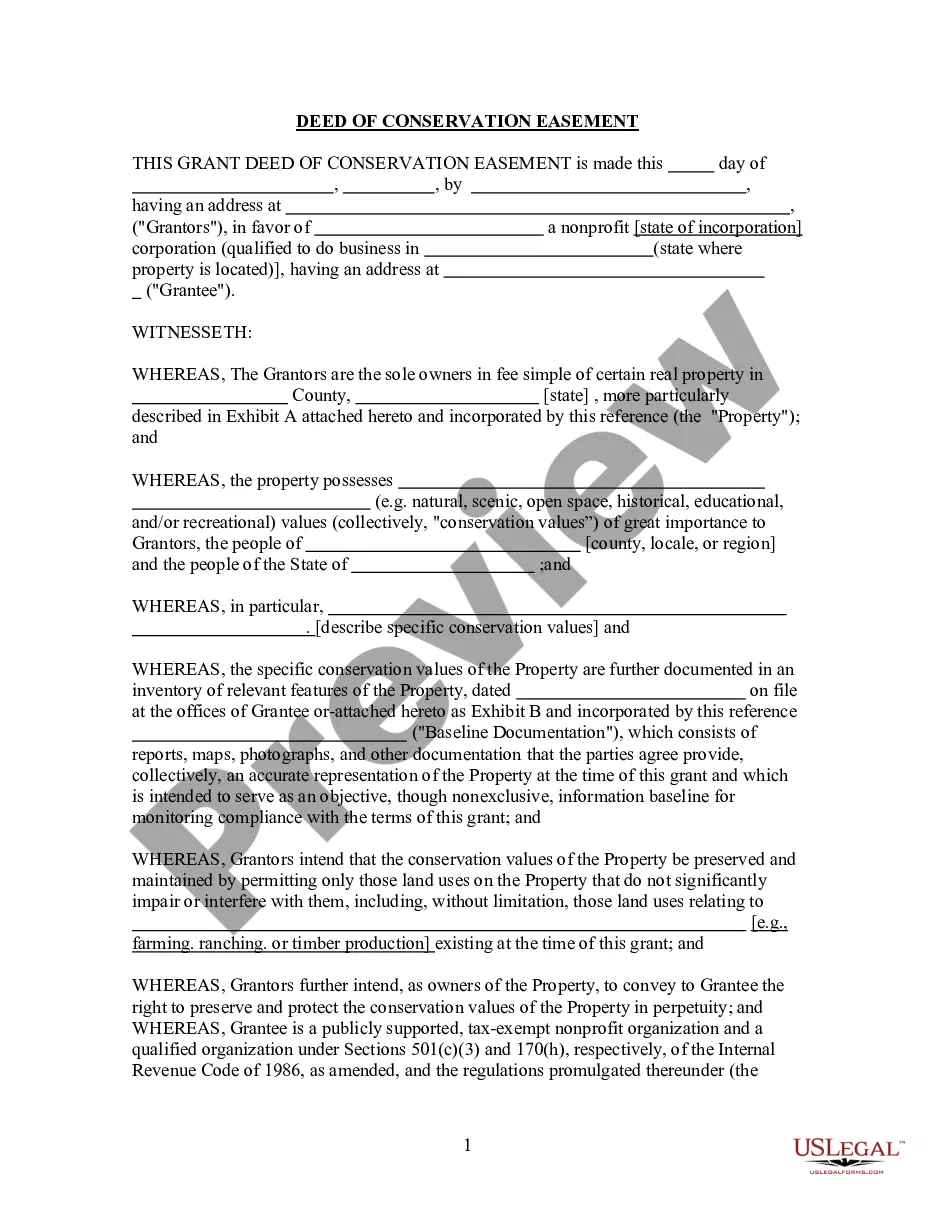
The Warranty Easement Deed for Conservation of Wetlands is a legal document used to establish an easement that allows for the restoration, protection, maintenance, and enhancement of wetlands. This form is unique as it focuses specifically on wetlands conservation, distinguishing it from other types of easements that might not emphasize environmental values. It is essential for landowners looking to participate in initiatives that support ecological health and biodiversity.
Key parts of this document
- Purpose of the easement: Restoration and conservation of wetlands and associated natural values.
- Description of the easement area: Defined property boundaries included in Exhibit A.
- Landowner reservations: Rights such as title retention, quiet enjoyment, and recreational uses reserved for the landowner.
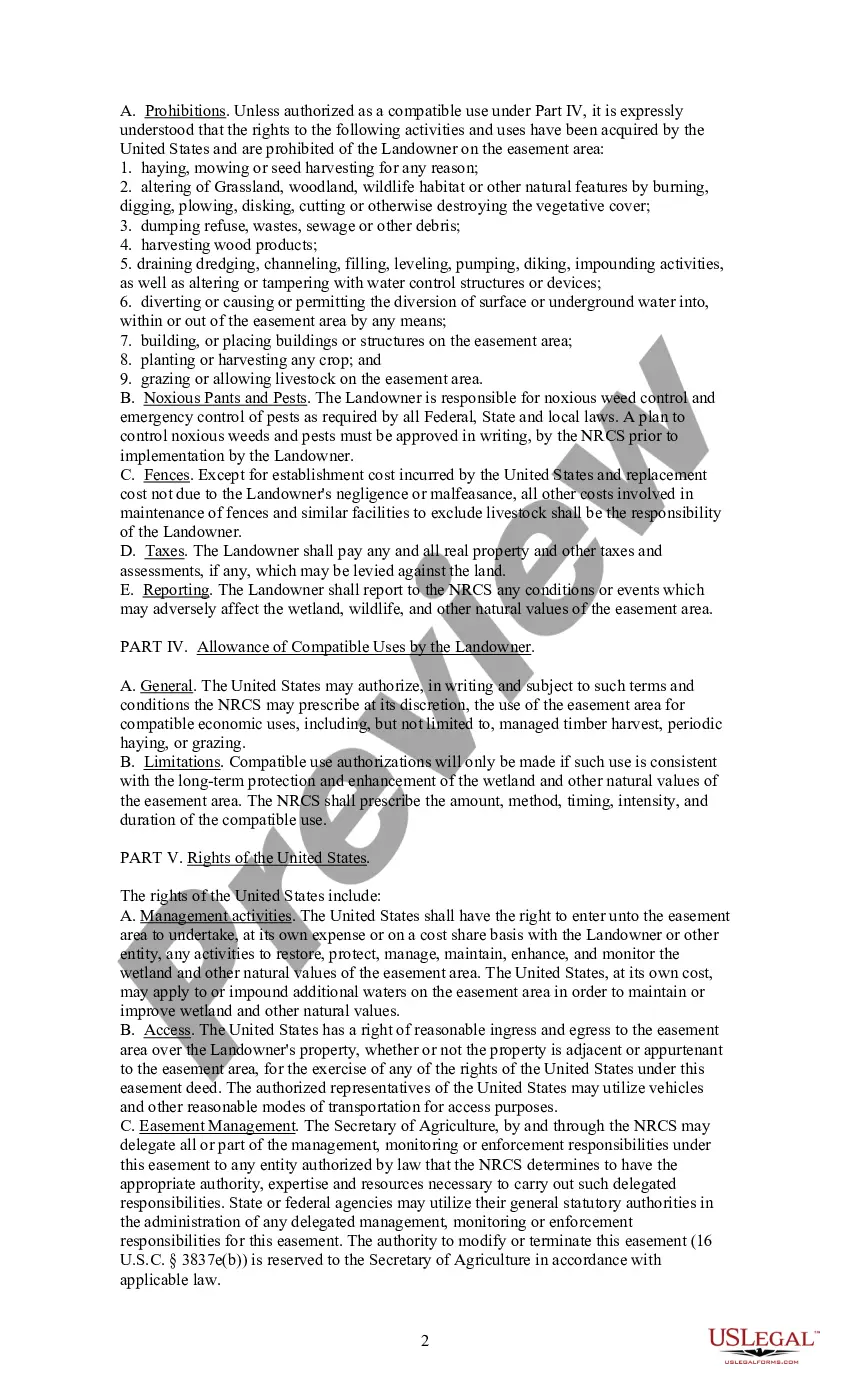
- Landowner obligations: Prohibitions on specific activities that could harm the wetlands.
- Rights of the United States: Authority to manage and restore the wetlands as necessary.
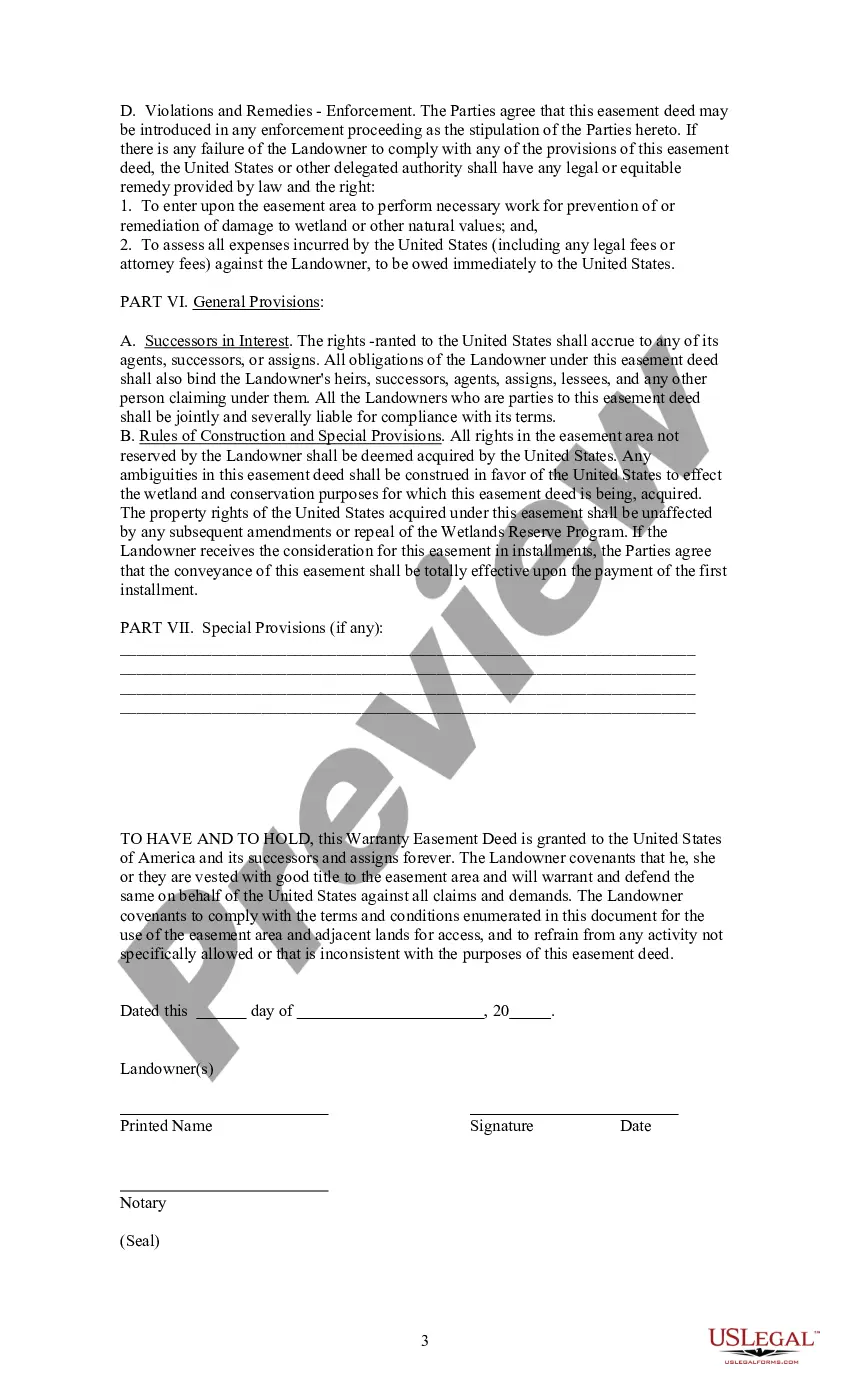
- General provisions: Guidelines for successors and liabilities related to the easement.
When to use this document
This form is applicable when landowners wish to enter into a conservation easement aimed at wetlands. It is particularly relevant for individuals or entities participating in governmental conservation programs, such as the Wetlands Reserve Program, or those seeking to formalize the protection of their wetlands while maintaining certain rights to the land.
Intended users of this form
- Landowners who wish to protect their wetlands and participate in conservation programs.
- Property owners looking to maintain specific rights while facilitating environmental restoration.
- Individuals and organizations interested in supporting biodiversity and environmental education.
How to prepare this document
- Identify the parties involved: Clearly state the name of the landowner and the representation of the United States.
- Specify the property: Describe the easement area, referring to Exhibit A for detailed boundaries.
- Detail the landowner's reservations: Note any rights the landowner will retain regarding use and access.
- Outline obligations: Include a list of prohibited activities that could conflict with conservation efforts.
- Sign and date the form: Ensure all parties provide their signatures and the date to finalize the agreement.
Does this document require notarization?
This document requires notarization to meet legal standards. US Legal Forms provides secure online notarization powered by Notarize, allowing you to complete the process through a verified video call, available 24/7.
Get your form ready online
Our built-in tools help you complete, sign, share, and store your documents in one place.
Make edits, fill in missing information, and update formatting in US Legal Forms—just like you would in MS Word.
Download a copy, print it, send it by email, or mail it via USPS—whatever works best for your next step.
Sign and collect signatures with our SignNow integration. Send to multiple recipients, set reminders, and more. Go Premium to unlock E-Sign.
If this form requires notarization, complete it online through a secure video call—no need to meet a notary in person or wait for an appointment.
We protect your documents and personal data by following strict security and privacy standards.

Make edits, fill in missing information, and update formatting in US Legal Forms—just like you would in MS Word.

Download a copy, print it, send it by email, or mail it via USPS—whatever works best for your next step.

Sign and collect signatures with our SignNow integration. Send to multiple recipients, set reminders, and more. Go Premium to unlock E-Sign.

If this form requires notarization, complete it online through a secure video call—no need to meet a notary in person or wait for an appointment.

We protect your documents and personal data by following strict security and privacy standards.
Avoid these common issues
- Failing to clearly describe the easement area, which can lead to disputes.
- Not including all necessary signatures, making the deed invalid.
- Overlooking local laws that may impact the easement agreement.
Why use this form online
- Convenience of downloading and completing the form at your own pace.
- Editability, allowing users to customize the form as needed before finalizing.
- Access to a reliable template drafted by licensed attorneys to ensure legal compliance.
Looking for another form?

Form popularity
FAQ
Defining the Term Easement Deed A deed is a legal document granting rights to a specific property. An easement deed allows a party that is not the owner to use a portion of the land. It is a written agreement between two parties that spells out what part of the property is available for access and how it may be used.
Benefits the owner of adjacent land. The easement is thus appurtenant to the holder's land. The benefited land is called the dominant tenementThe land that benefits from an easement., and the burdened landthat is, the land subject to the easementis called the servient tenement.
So, having an easement on a property may have a permanent outcome on the property with rights of the home owner. But not all easements are bad.If you live in a rural area, you run into bad easement issues more often, typically where the easement was created by a parcel owner next to your land.
An easement is a "nonpossessory" property interest that allows the holder of the easement to have a right of way or use property that they do not own or possess. An easement doesn't allow the easement holder to occupy the land or to exclude others from the land unless they interfere with the easement holder's use.
It is the intent of NRCS to give the Landowner the opportunity to participate in the restoration and management activities on the easement area. By signing this deed, the Landowner agrees to the restoration of the Easement Area and grants the right to carry out such restoration to the United States.
A wetland easement is a legal agreement signed with the United States of America, through the U.S. Fish and Wildlife Service (Service), that pays you to permanently protect wetlands. Wetlands covered by an easement cannot be drained, filled, leveled, or burned.
An easement is a "nonpossessory" property interest that allows the holder of the easement to have a right of way or use property that they do not own or possess.If the easement only benefits an individual personally, not as an owner of a particular piece of land, the easement is known as "in gross."
An easement deed allows a party that is not the owner to use a portion of the land. It is a written agreement between two parties that spells out what part of the property is available for access and how it may be used. Since you are granting an easement to your land, you can set any terms and conditions you like.
If an authority has an easement registered over your land, they have the right to access the easement to maintain or repair the easement land or their equipment on the land.