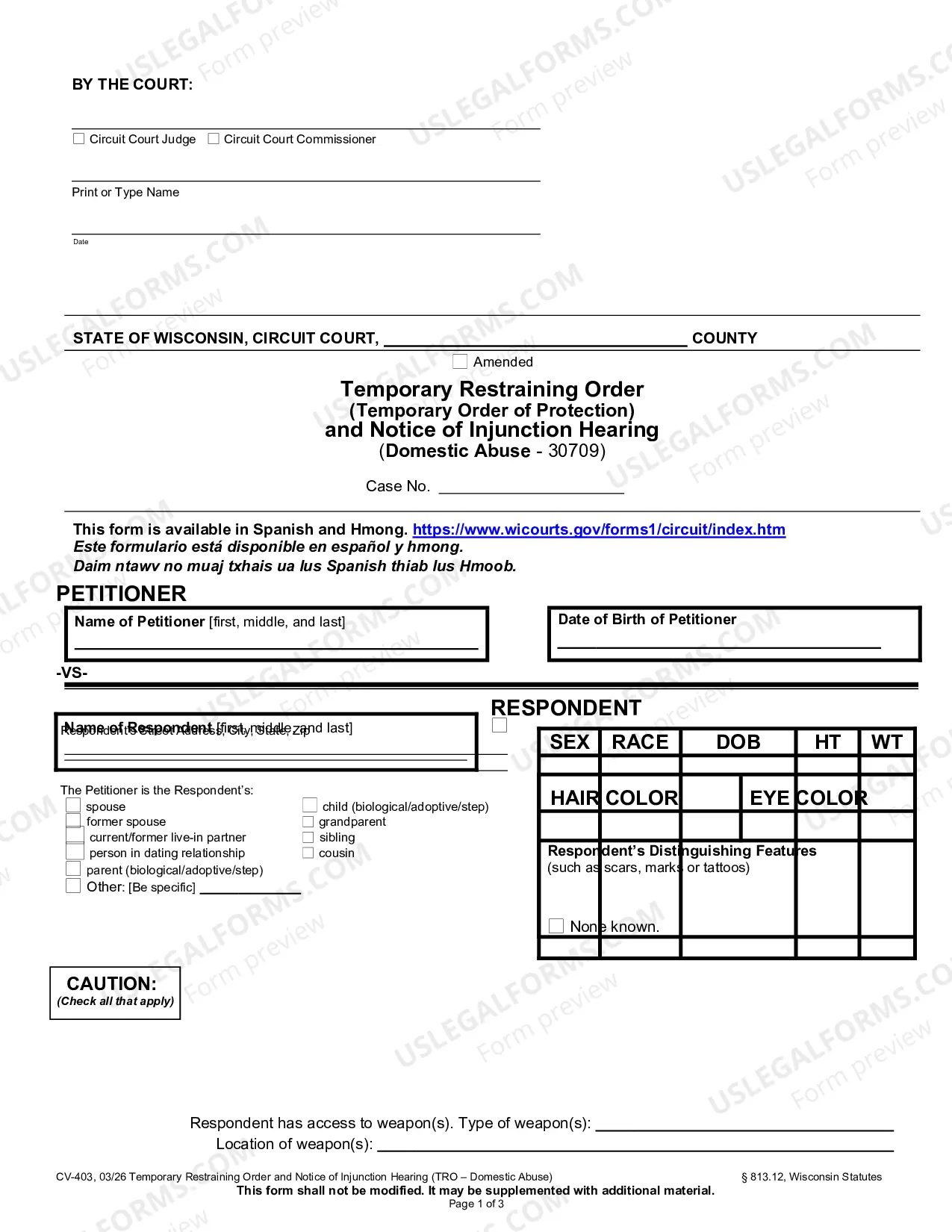
Due Diligence Memorandum Bankruptcy Restructuring
About this form
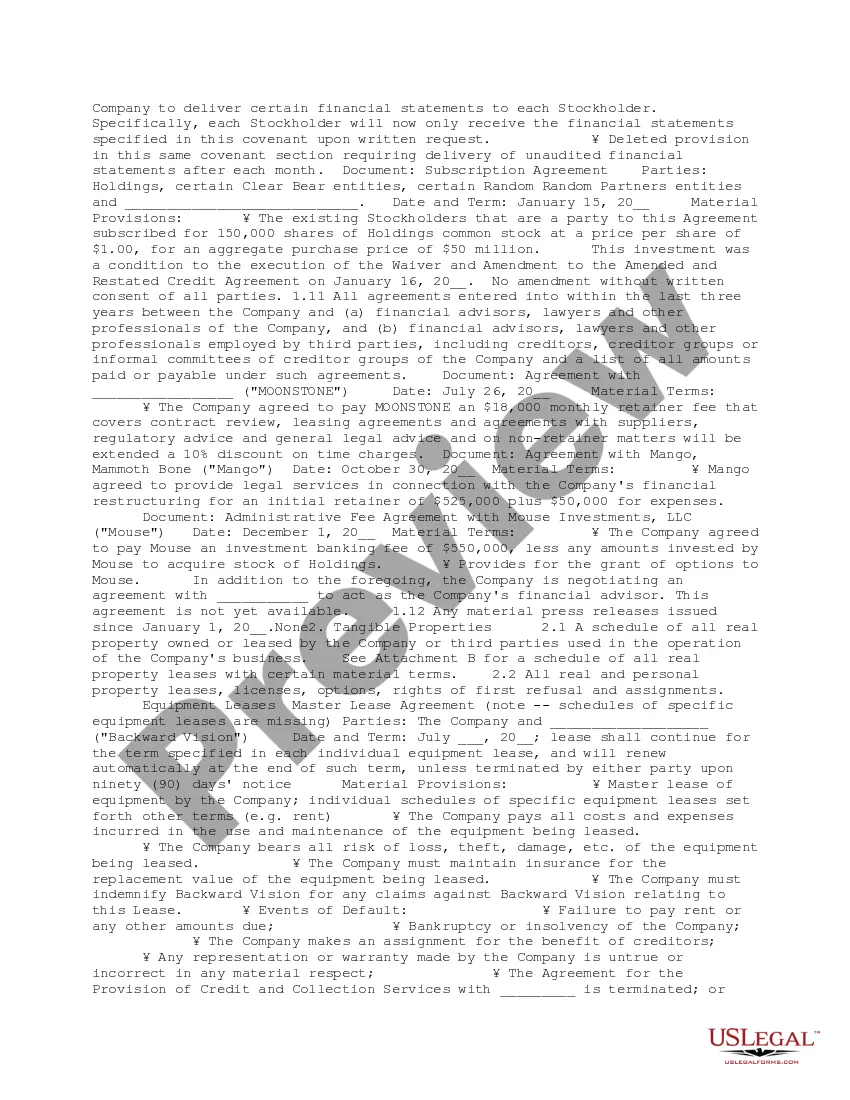
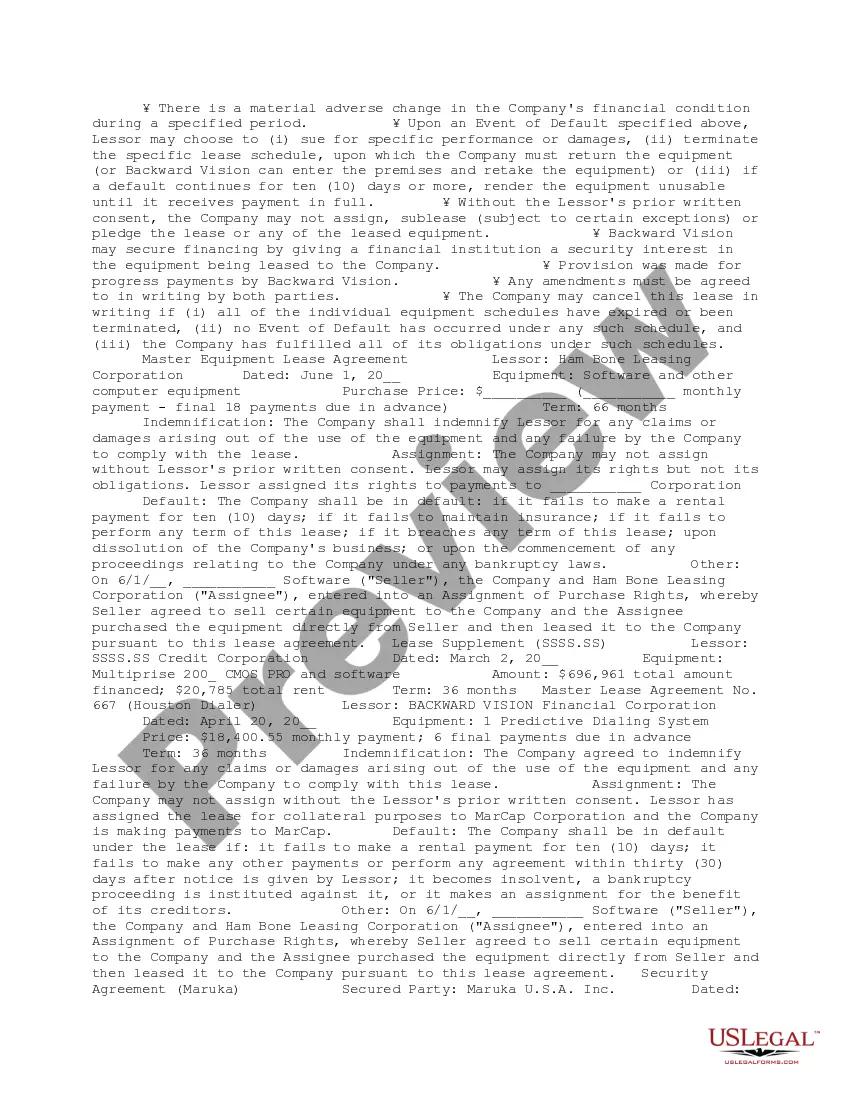
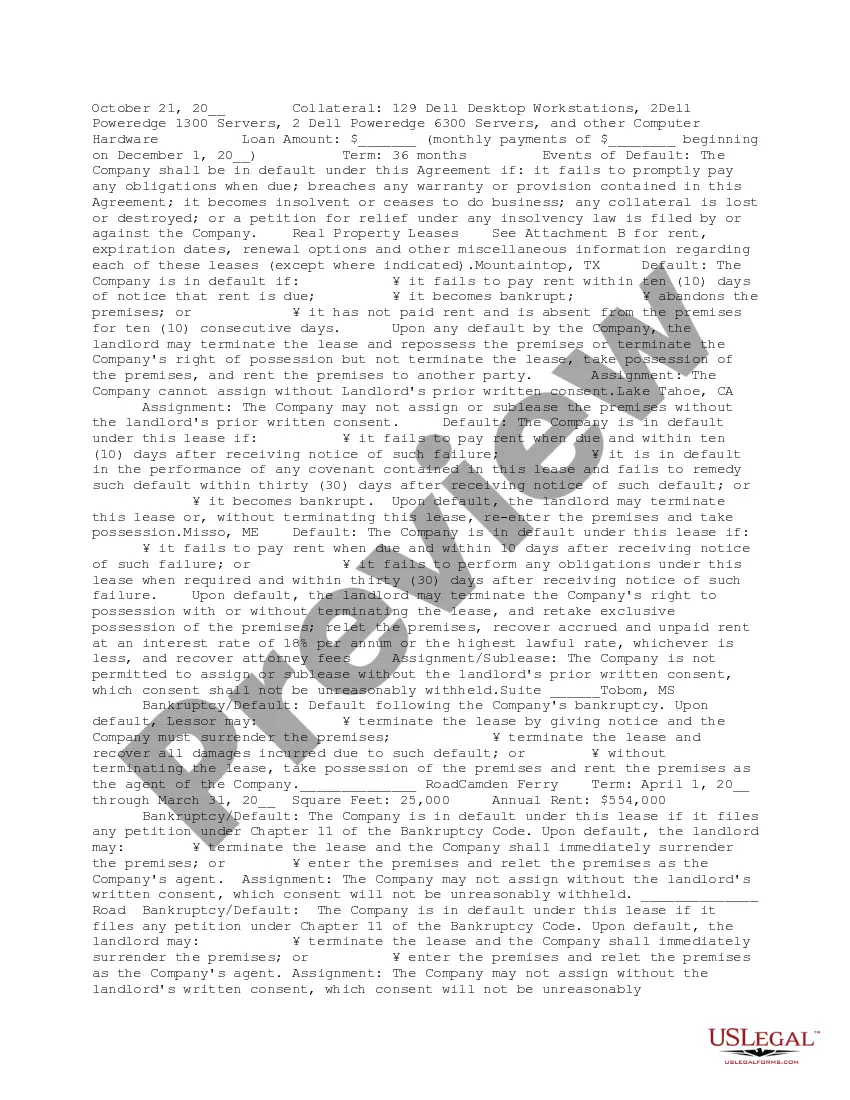
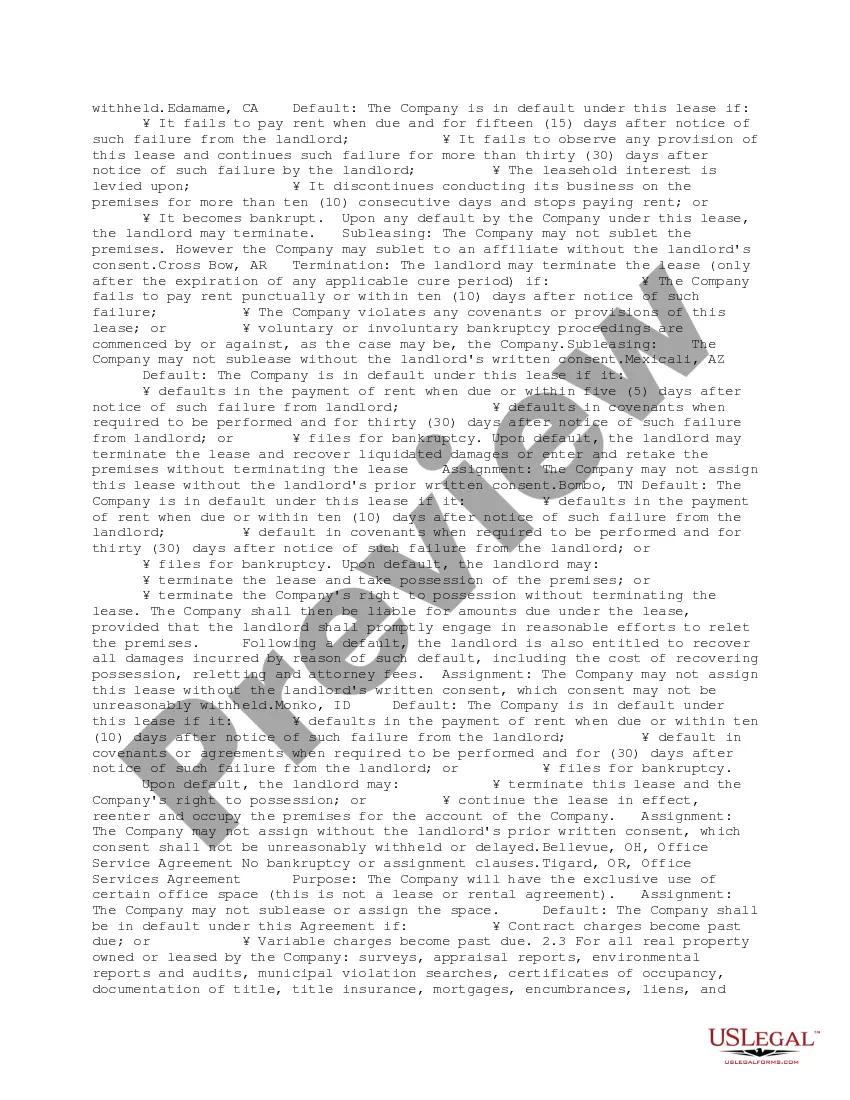
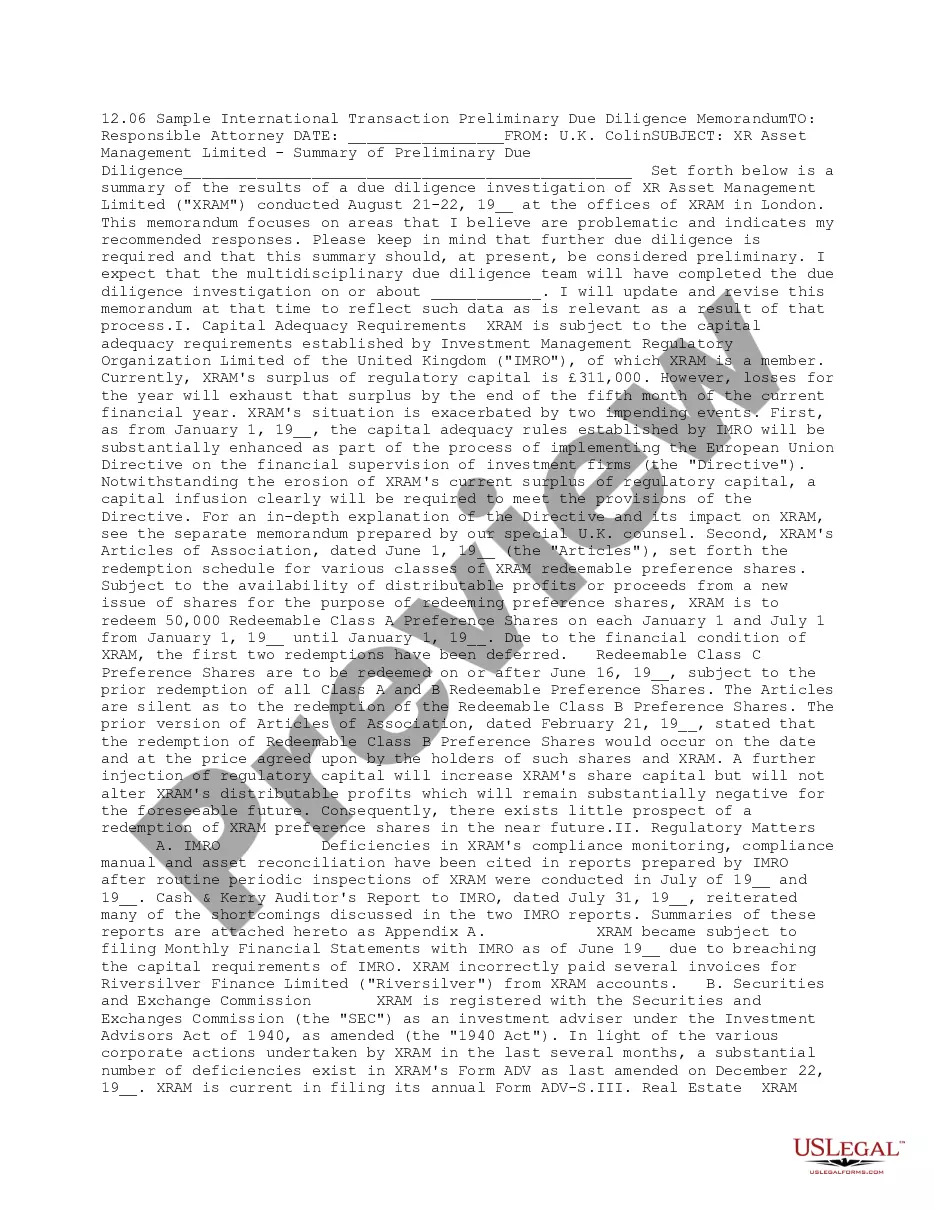
The Due Diligence Memorandum for Bankruptcy Restructuring is a formal document designed to record the findings of a corporation's due diligence process during its bankruptcy and restructuring phase. This memorandum details the essential documents reviewed to assess the company's financial health and operational structure, which sets it apart from other forms that may cover general due diligence or different legal scenarios.
Main sections of this form
- TO/FROM sections to identify the parties involved.
- Date and project identification to specify the memorandum's context.
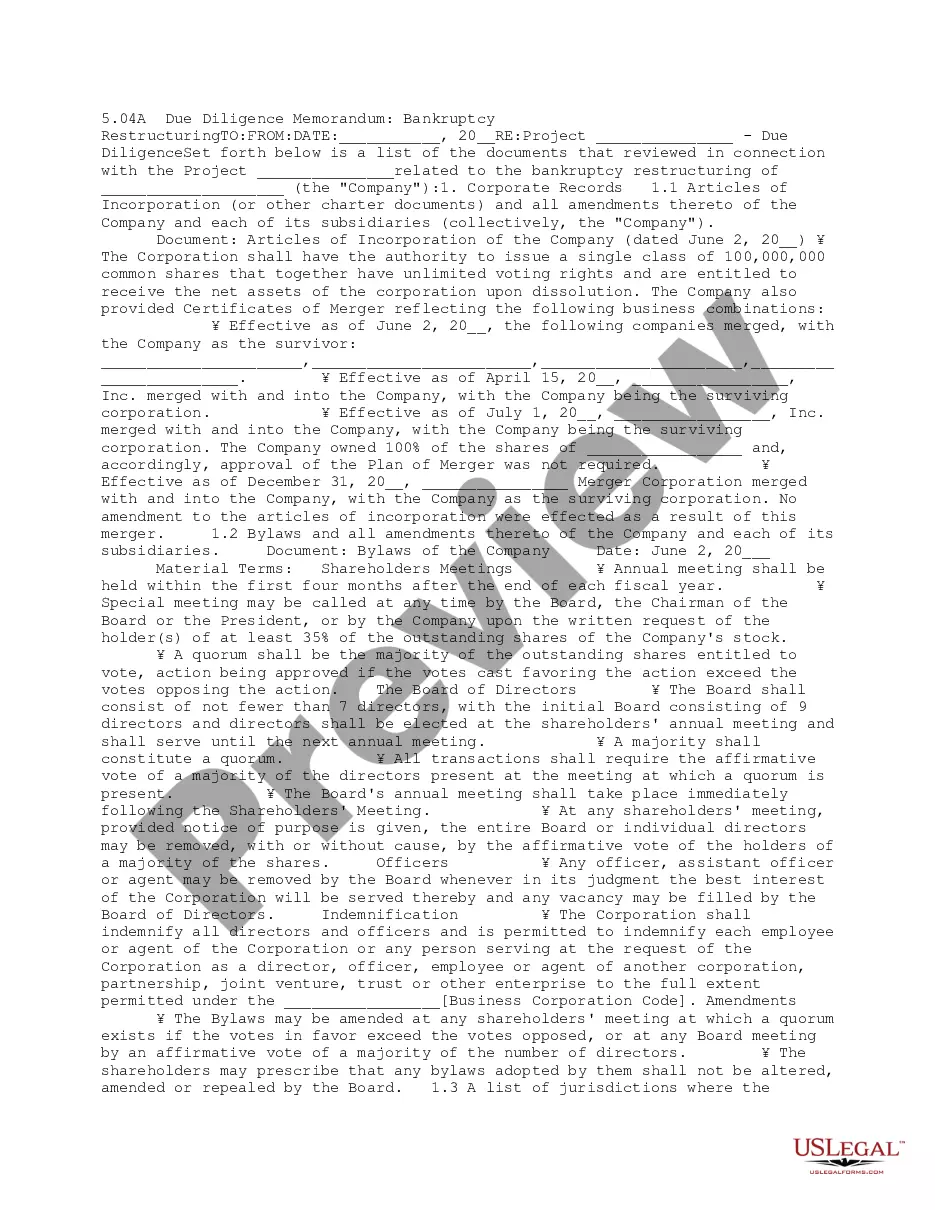
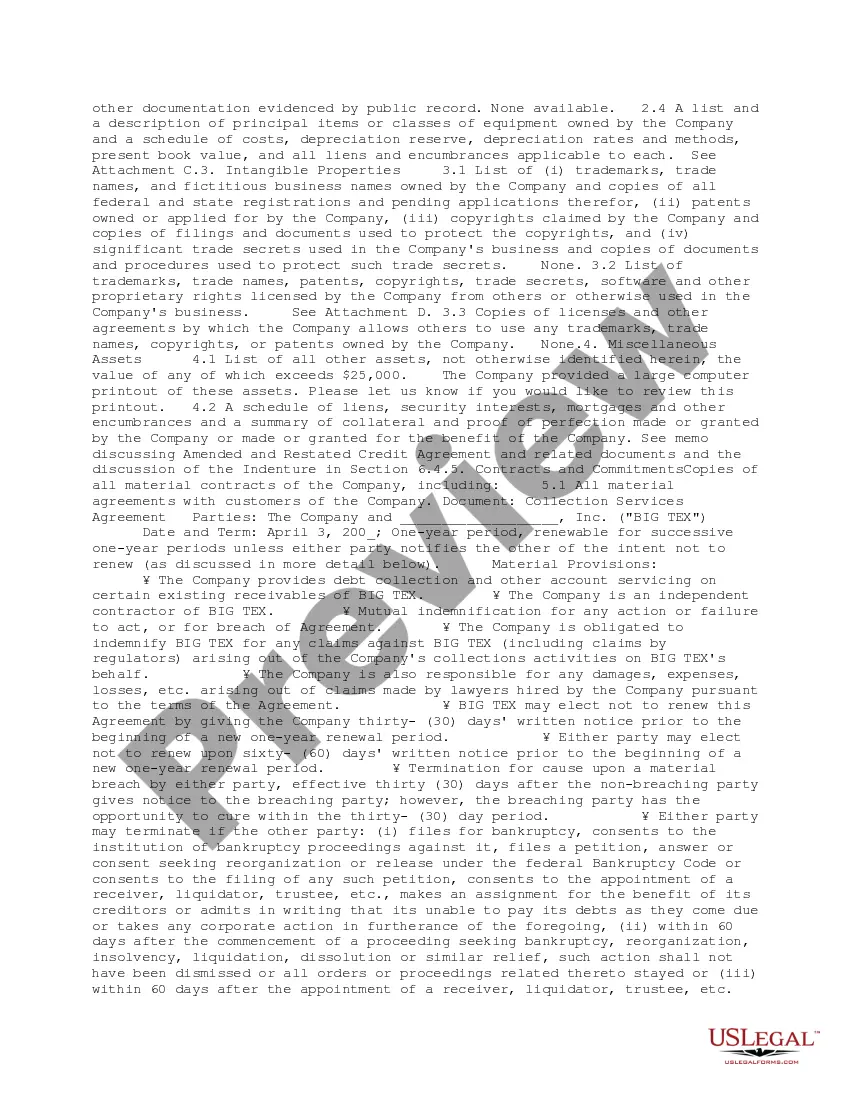
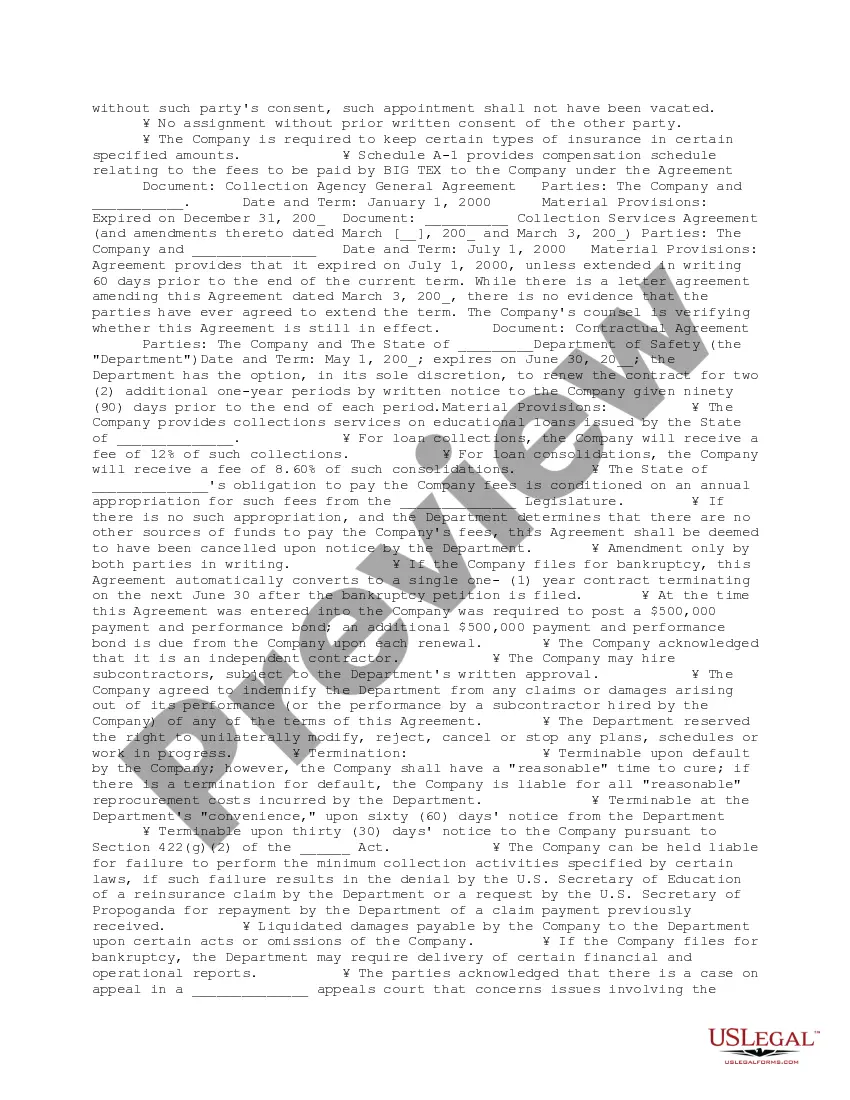
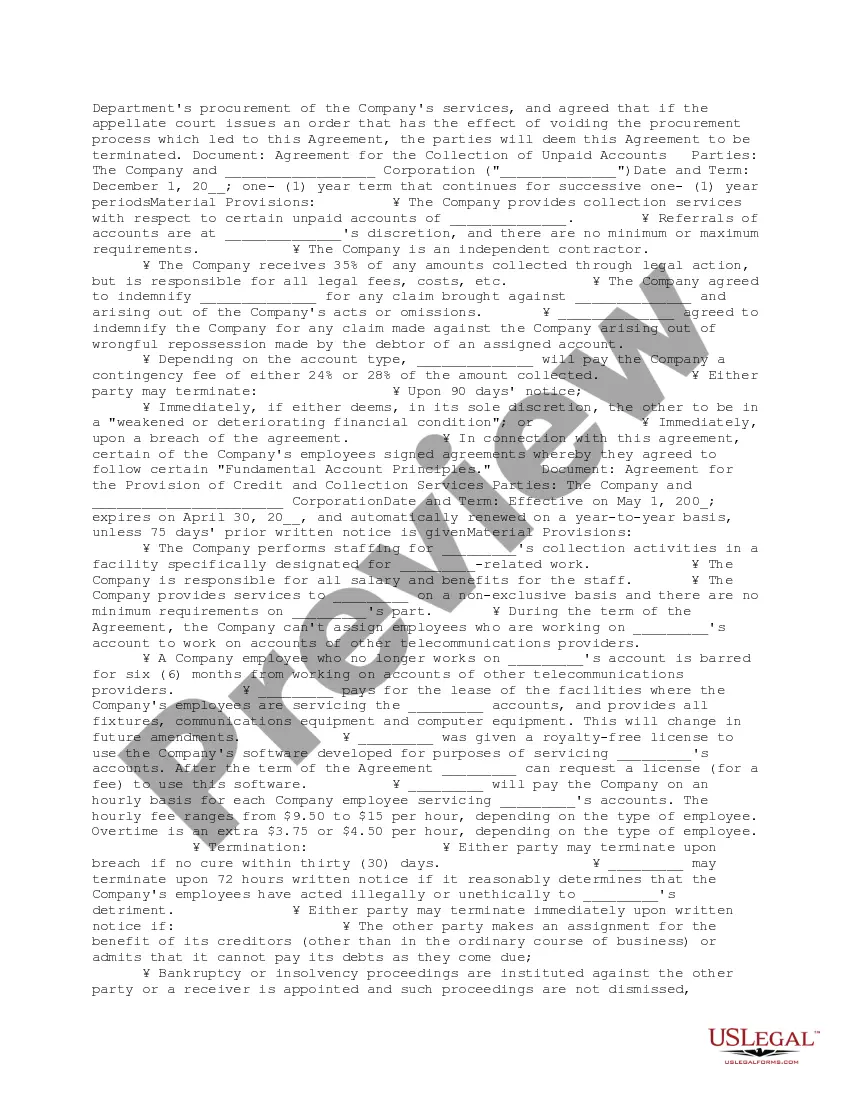
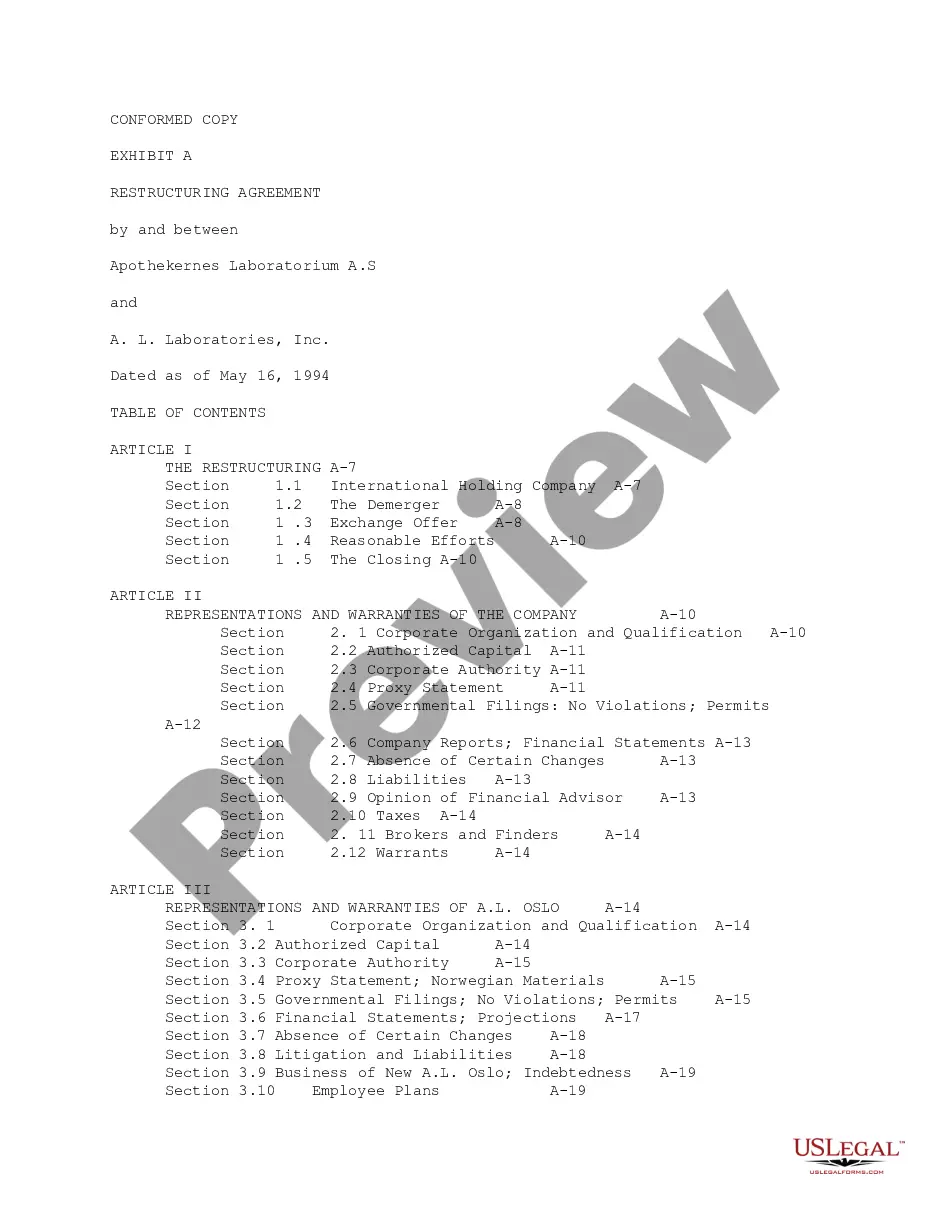
- A detailed list of reviewed corporate records, including articles of incorporation and bylaws.
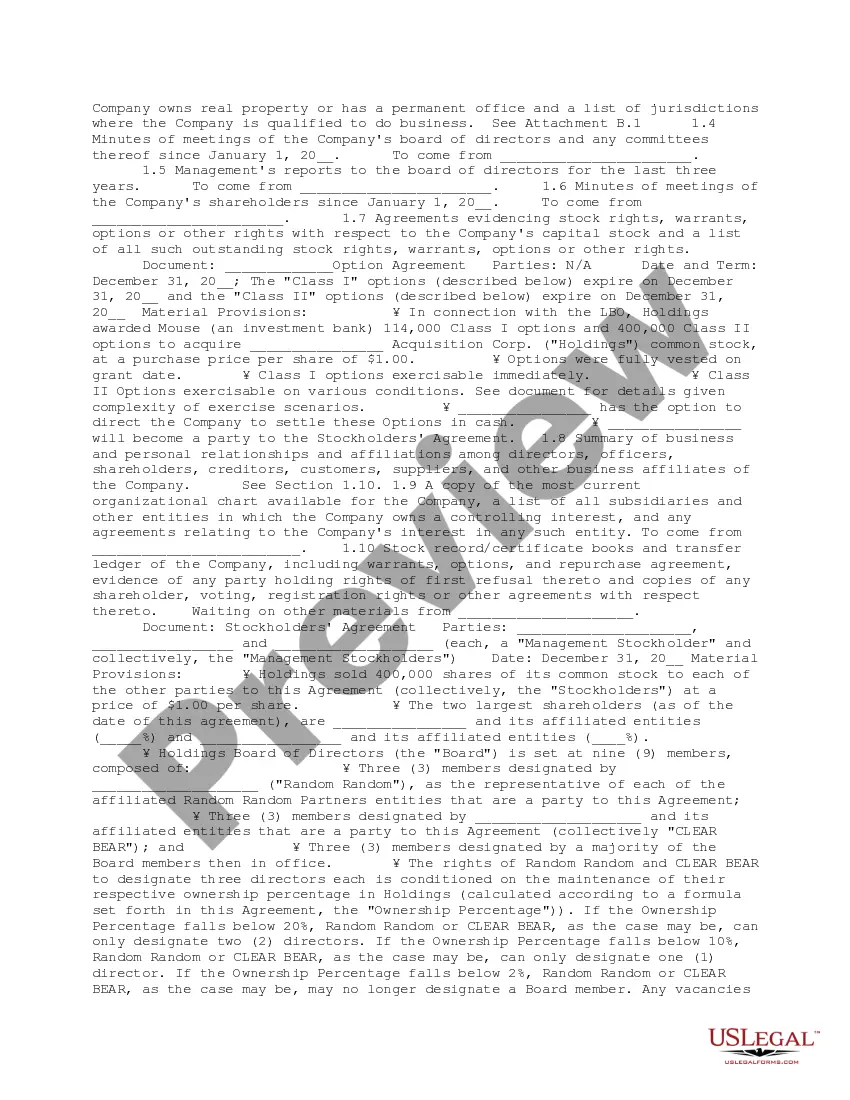
- Reports and minutes from board meetings highlighting company decisions and management actions.
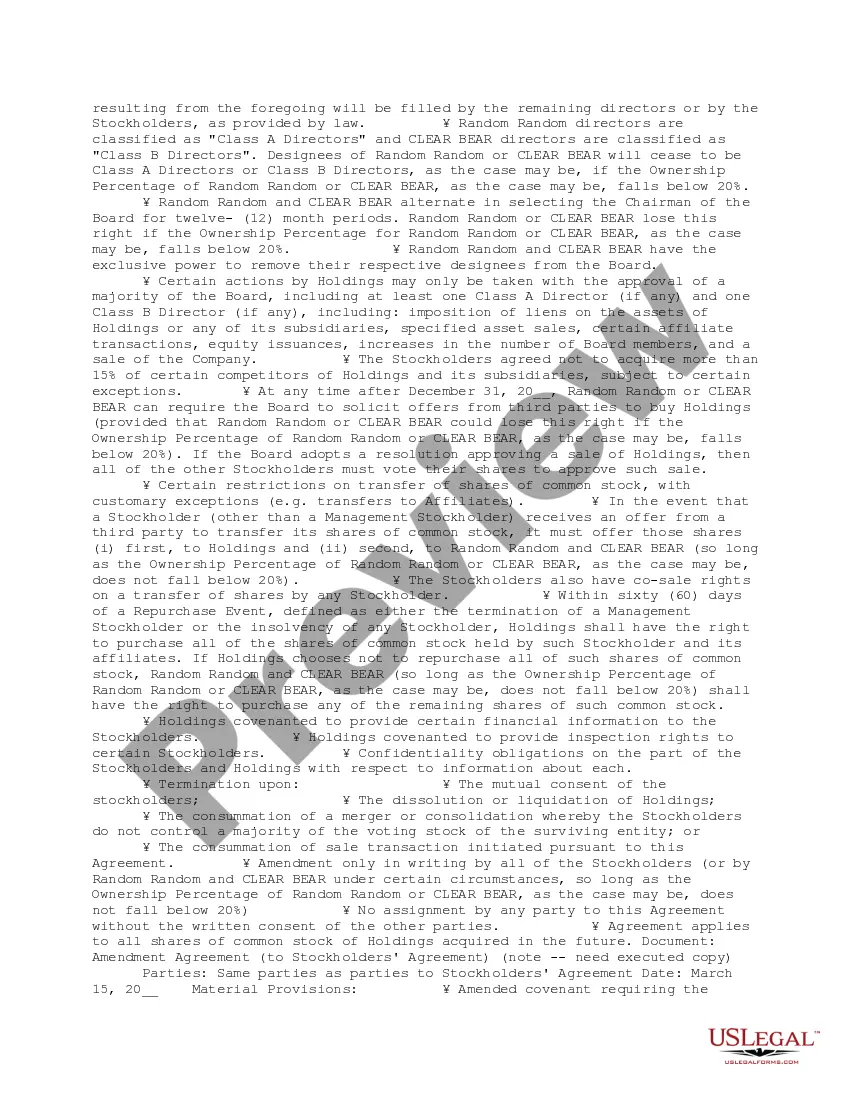
- Agreements relating to stock rights, warrants, and options associated with the company's capital stock.
- Information on tangible and intangible properties, including leases and insurance policies.

Situations where this form applies
This form should be utilized during the bankruptcy restructuring process of a corporation. It is essential for capturing the necessary documentation that financial advisors, legal teams, or restructuring professionals need to evaluate the company's status and formulate a recovery plan. It serves as a comprehensive record that aids in ensuring all relevant materials are addressed and analyzed correctly.
Who can use this document
This memorandum is especially useful for:
- Corporate legal teams handling bankruptcy filings.
- Corporate executives involved in restructuring efforts.
- Financial advisors and consultants providing assistance in bankruptcy situations.
- Stakeholders and creditors seeking detailed insight into the company's operations during restructuring.
How to prepare this document
To effectively complete the Due Diligence Memorandum for Bankruptcy Restructuring, follow these steps:
- Identify the parties in the TO/FROM sections.
- Specify the date and the related project that prompted the memorandum.
- Include a comprehensive list of all corporate records, such as articles of incorporation and bylaws.
- Document minutes from board meetings and management reports for thoroughness.
- Gather agreements related to stock options or rights, ensuring all relevant documents are included.
Notarization requirements for this form
This form does not typically require notarization unless specified by local law. However, having notarized documents can add an extra layer of formality and authenticity to the memorandum in certain jurisdictions.
Get your form ready online
Our built-in tools help you complete, sign, share, and store your documents in one place.
Make edits, fill in missing information, and update formatting in US Legal Forms—just like you would in MS Word.
Download a copy, print it, send it by email, or mail it via USPS—whatever works best for your next step.
Sign and collect signatures with our SignNow integration. Send to multiple recipients, set reminders, and more. Go Premium to unlock E-Sign.
If this form requires notarization, complete it online through a secure video call—no need to meet a notary in person or wait for an appointment.
We protect your documents and personal data by following strict security and privacy standards.

Make edits, fill in missing information, and update formatting in US Legal Forms—just like you would in MS Word.

Download a copy, print it, send it by email, or mail it via USPS—whatever works best for your next step.

Sign and collect signatures with our SignNow integration. Send to multiple recipients, set reminders, and more. Go Premium to unlock E-Sign.

If this form requires notarization, complete it online through a secure video call—no need to meet a notary in person or wait for an appointment.

We protect your documents and personal data by following strict security and privacy standards.
Typical mistakes to avoid
- Failing to include all relevant corporate documents that may impact the restructuring process.
- Not updating the memorandum with the most recent board meeting minutes or management reports.
- Omitting critical agreements related to stock rights or company liabilities.
- Using incorrect or outdated information, which can affect the memorandum's credibility.
Why use this form online
- Conveniently download and customize the memorandum to fit specific restructuring needs.
- Access professionally drafted content prepared by licensed attorneys for reliability.
- Edit digital forms quickly to add or adjust information as necessary during the restructuring process.
- Electronic format makes sharing and collaboration easier among stakeholders and advisors.
- The memorandum serves as a crucial legal document during restructuring processes.
- Utilizing this form can establish a well-documented process that reflects due diligence.
Key takeaways
- The Due Diligence Memorandum is critical during bankruptcy restructuring to summarize key findings of corporate records.
- Intended for use by corporate legal teams, executives, and financial advisors involved in restructuring.
- Completing this memorandum requires careful collection of all relevant documents to support thorough due diligence.
- No notarization is generally needed, though local regulations should be checked for specific requirements.
Looking for another form?

Form popularity
FAQ
Well very simply a due diligence information packet is a set of documents that is required by a licensed financial institution to be able to do due diligence on you. What's the name of your company.Can you show the incorporation documents of your company.
Write for the target audience. Focus on the report objectives. Limit the report to information that has material impact to your company. Structure the information to be used as valuable reference material later.
A due diligence checklist is an organized way to analyze a company. The checklist will include all the areas to be analyzed, such as ownership and organization, assets and operations, the financial ratios, shareholder value, processes and policies, future growth potential, management, and human resources.
Due diligence is an investigation, audit, or review performed to confirm facts or details of a matter under consideration. In the financial world, due diligence requires an examination of financial records before entering into a proposed transaction with another party.
Step 1: Company Capitalization. Step 2: Revenue, Margin Trends. Step 3: Competitors & Industries. Step 4: Valuation Multiples. Step 5: Management and Ownership. Step 6: Balance Sheet Exam. Step 7: Stock Price History. Step 8: Stock Options & Dilution.
Due Diligence Examples Conducting thorough inspections on a property before buying it in order to make sure that it is a good investment. An underwriter auditing an issuer's business and operations prior to selling it.
A due diligence checklist is an organized way to analyze a company that you are acquiring through sale, merger, or another method. By following this checklist, you can learn about a company's assets, liabilities, contracts, benefits, and potential problems.
The report will include a list of key findings and valid recommendations, as well as a reasoned conclusion with a financial analysis explaining the feasibility of our recommendations, and its impact on the company.