Labor and Employee Relations Workforce
What this document covers
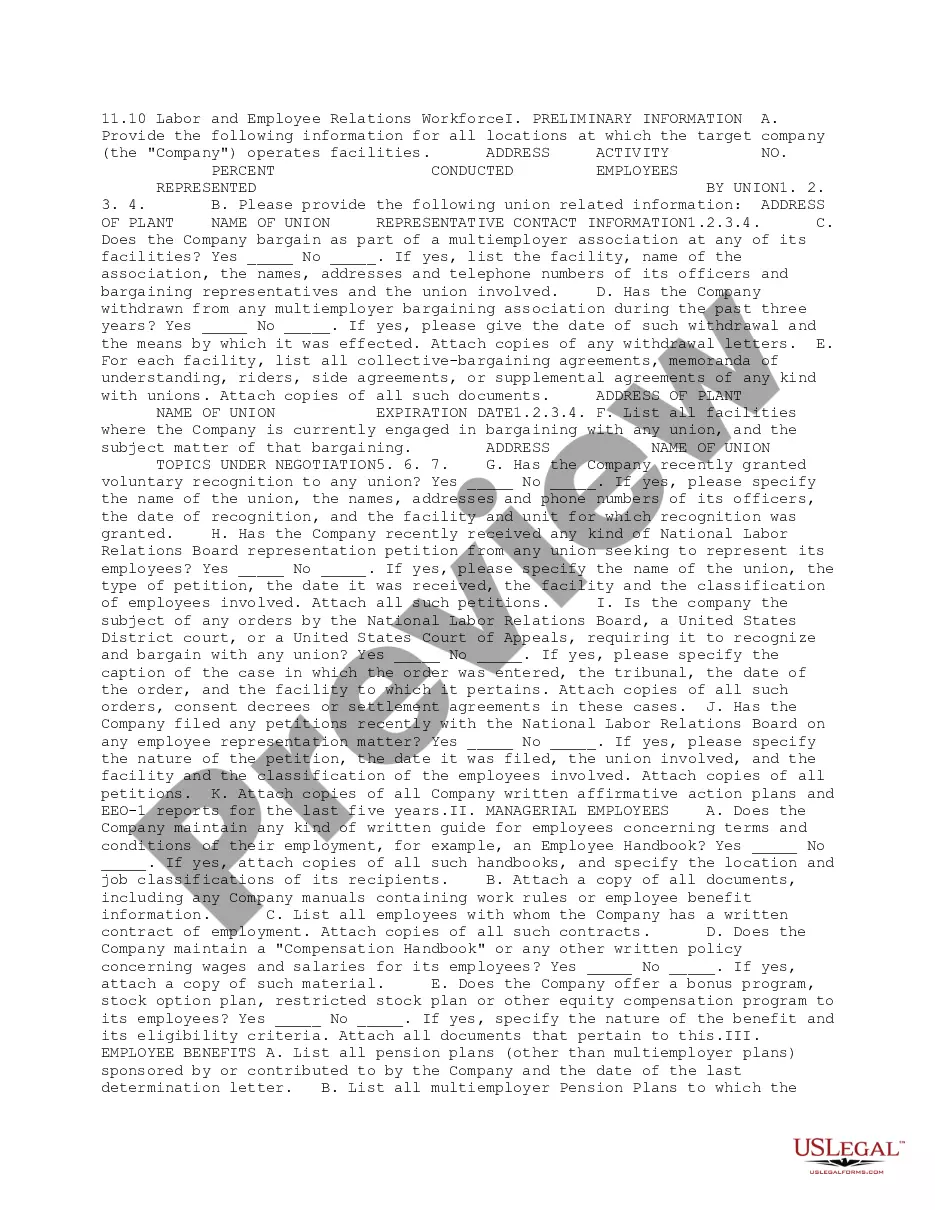
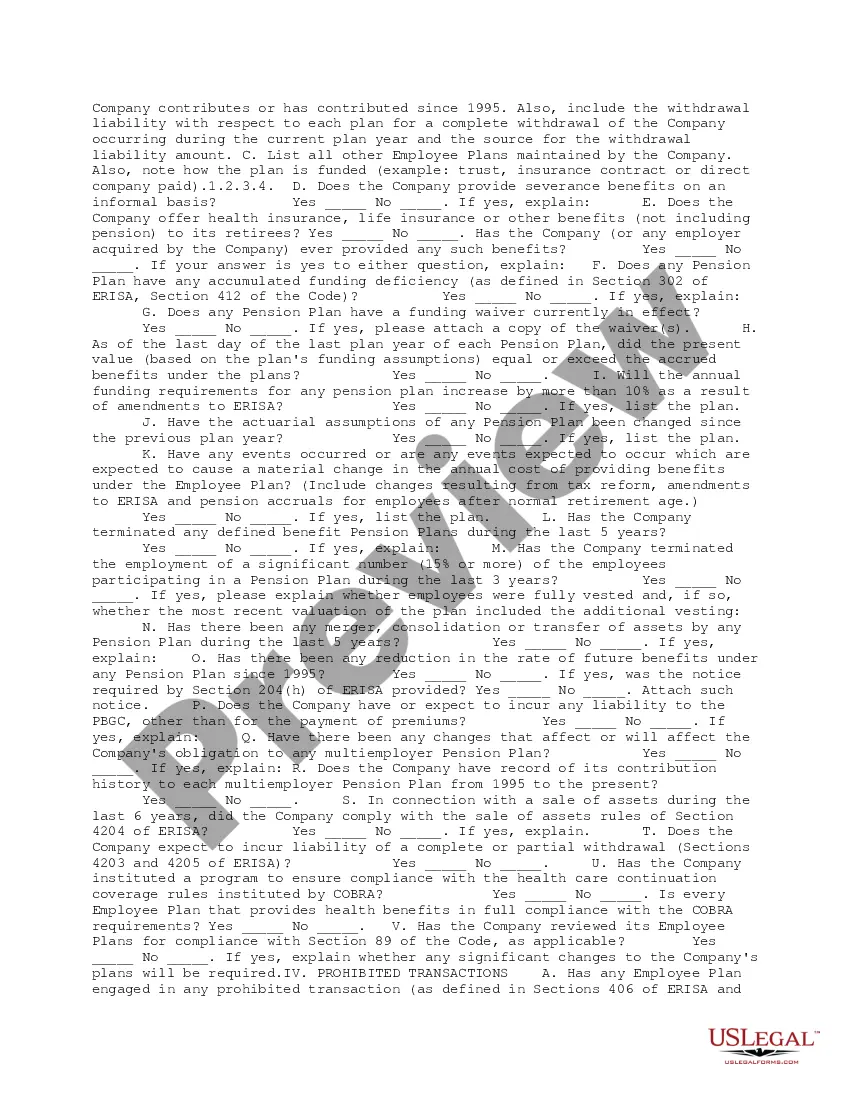
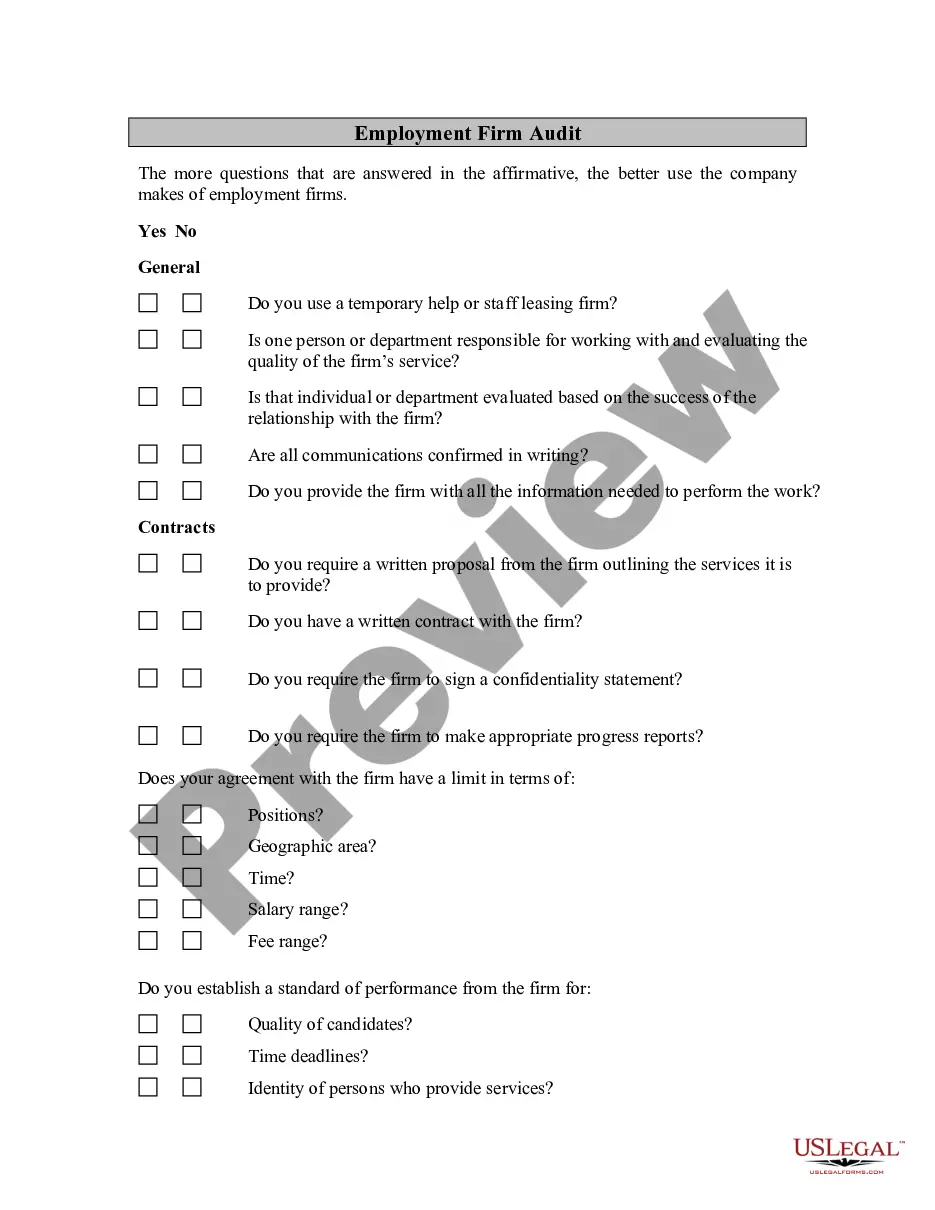
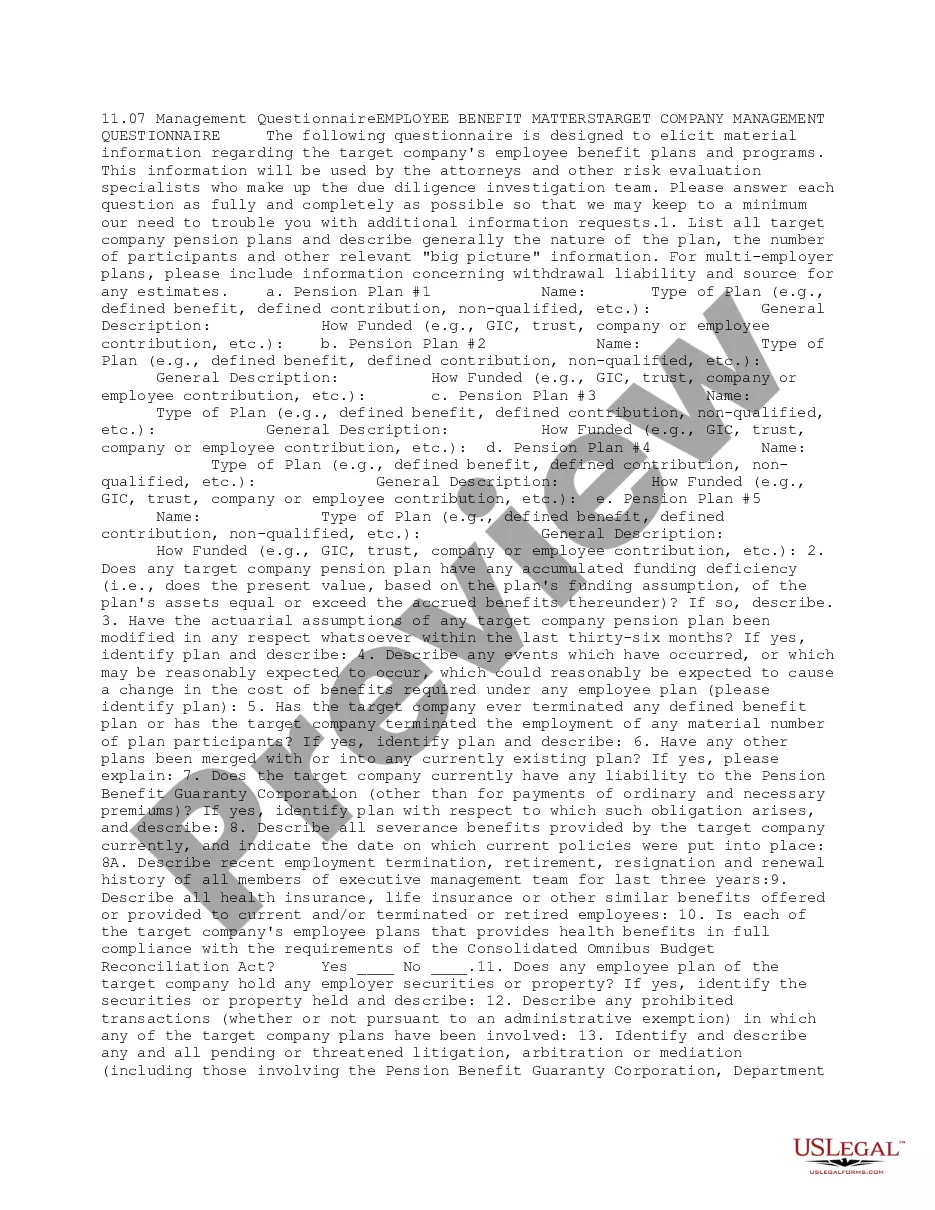
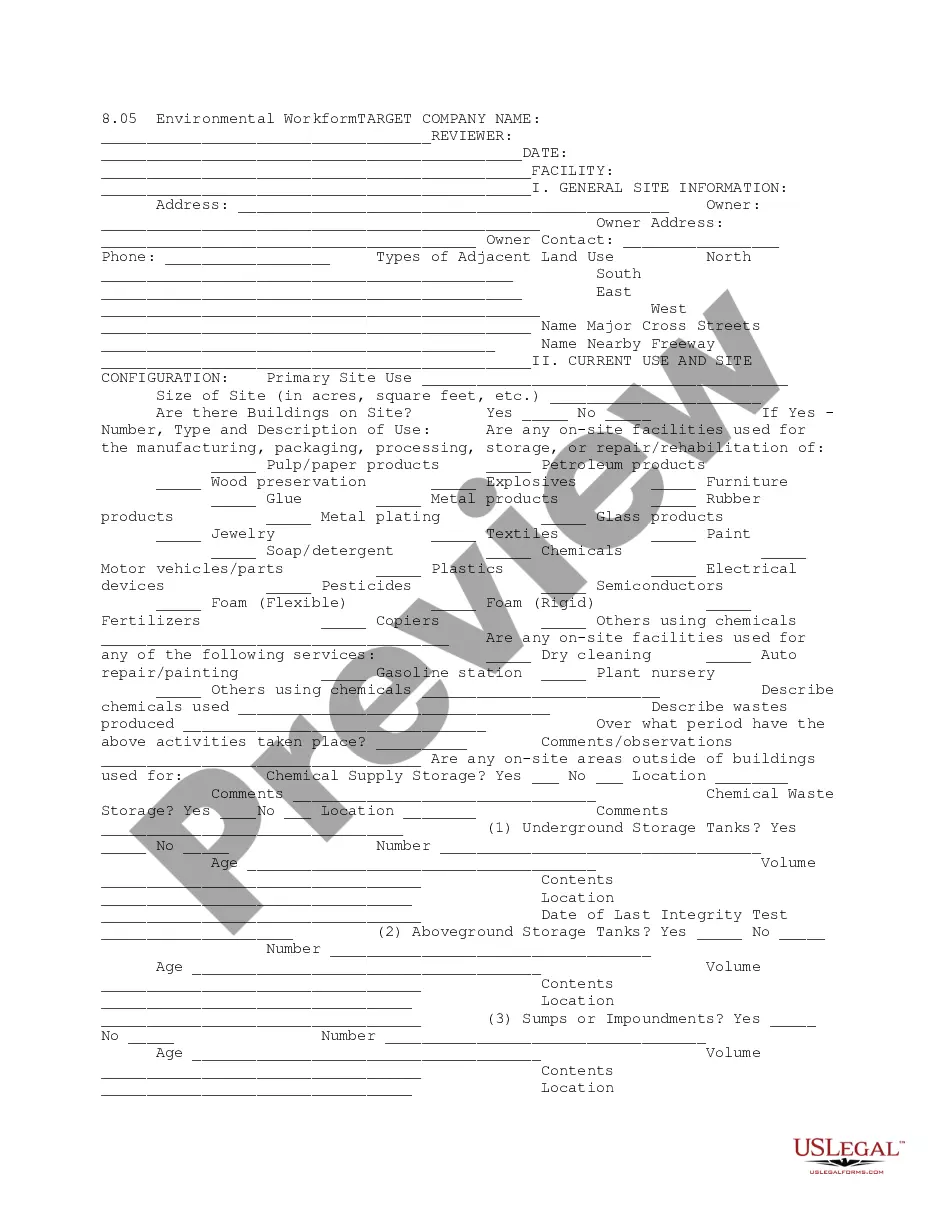
The Labor and Employee Relations Workforce form is a due diligence document used to gather vital information about a company's labor and employee relations during business transactions. This form differs from other employment-related documents by focusing specifically on union relationships, collective bargaining agreements, and employee benefits, ensuring thorough analysis in labor aspects of business dealings.
Main sections of this form
- Preliminary information about the company's facilities and employee representation.
- Details on unions, collective bargaining agreements, and multiemployer associations.
- Information regarding employee benefits, including pension plans and health insurance.
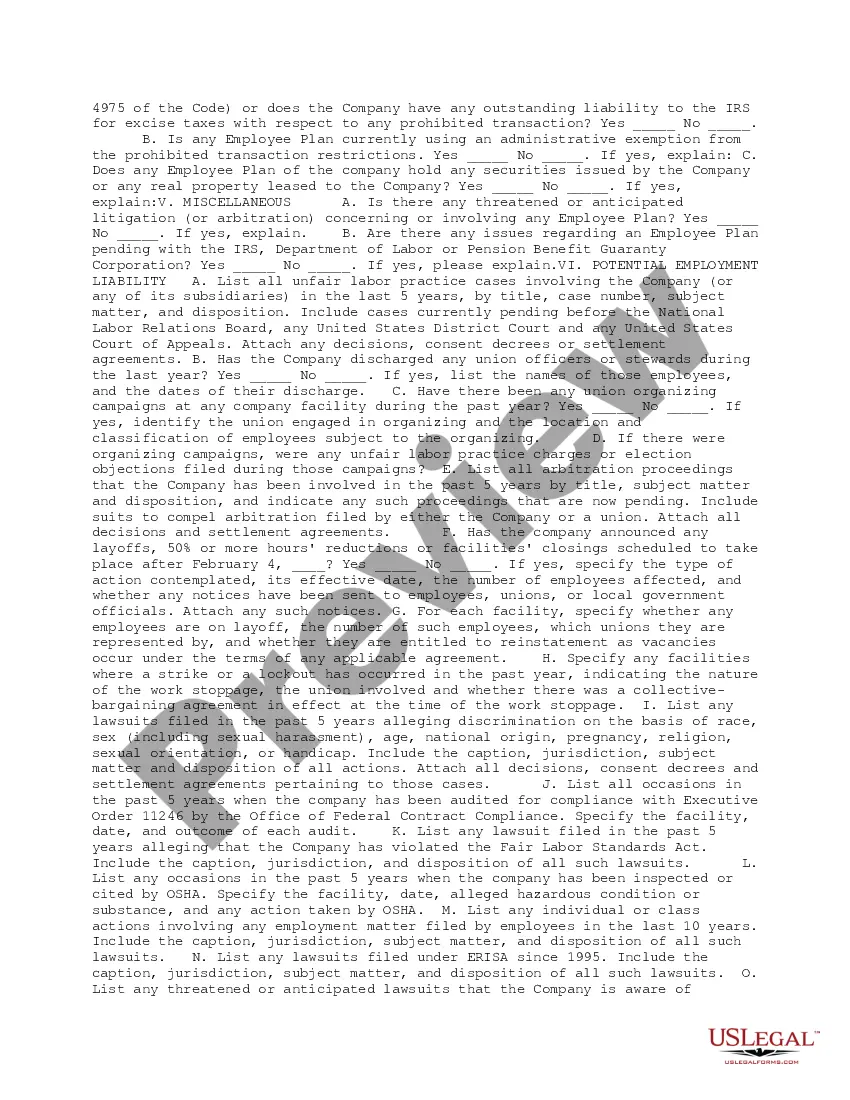
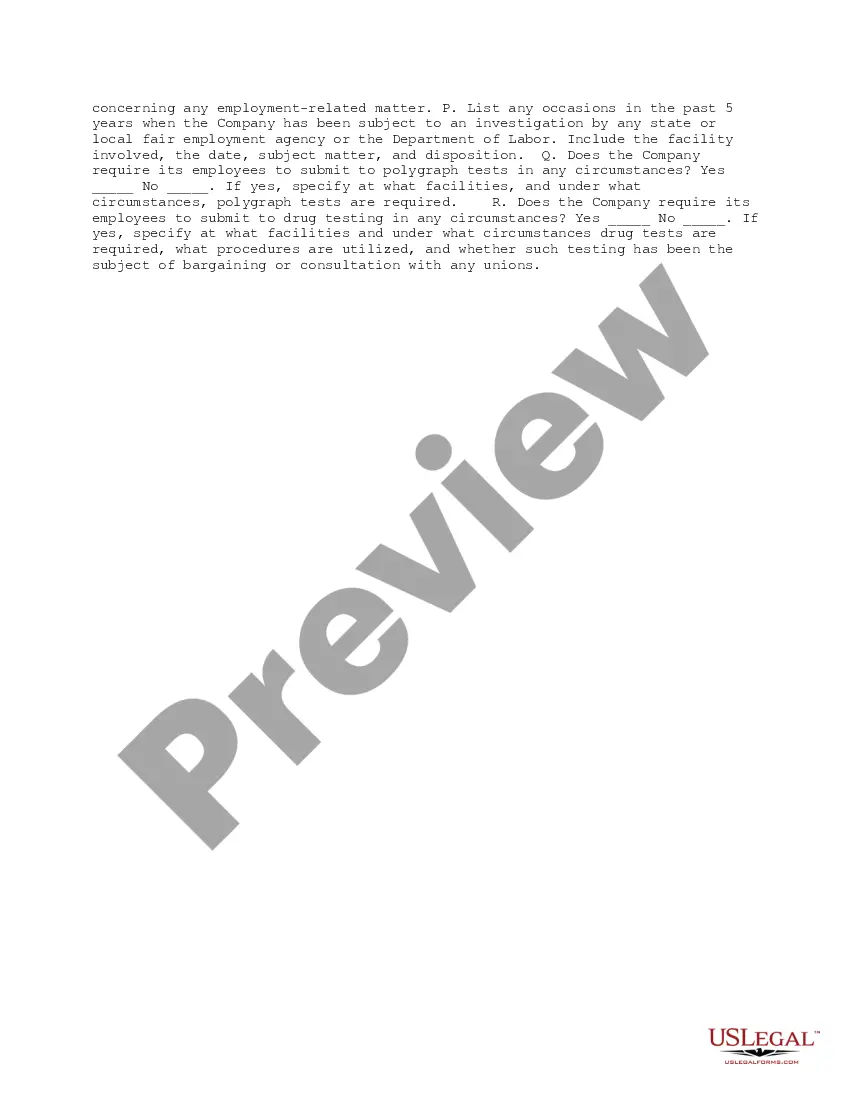
- Sections addressing potential employment liabilities and any related legal matters.
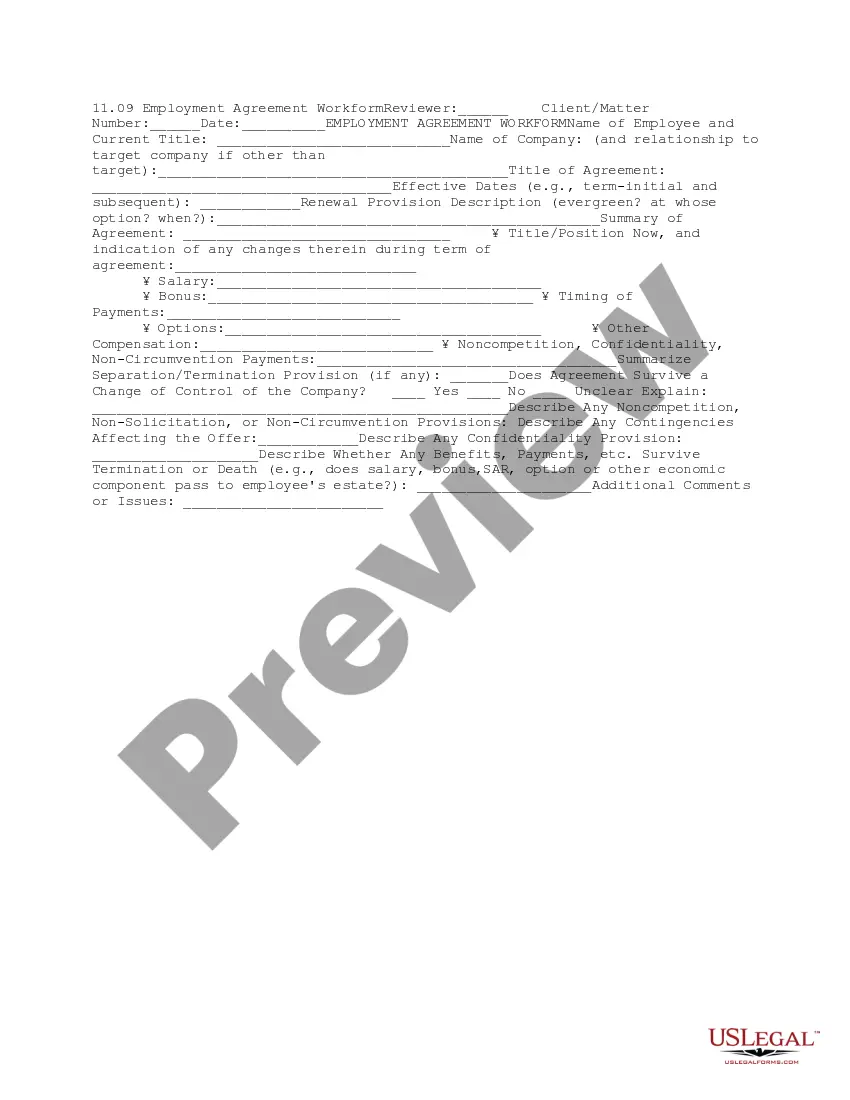
- Documentation requirements for various employee-related policies and actions.
When this form is needed
This form should be used in scenarios where an organization is involved in business transactions such as mergers, acquisitions, or partnerships. It is essential for companies that need to assess potential labor-related liabilities or compliance with labor laws, particularly if they are acquiring or merging with another company that has existing union relations.
Who should use this form
- Business owners preparing for a merger or acquisition.
- Legal professionals conducting due diligence on labor relations.
- Human resources personnel assessing employee relations programs.
- Investors seeking to understand the labor landscape of potential investments.
How to complete this form
- Identify and provide preliminary information for all company locations, including address and employee representation.
- Collect details on any unions associated with the company and list collective bargaining agreements in effect.
- Document all employee benefits and pension plans, attaching any required reports or agreements.
- Specify any recent or ongoing litigation or disputed matters related to employment practices.
- Ensure that all information provided is accurate and supported by relevant documentation.
Does this document require notarization?
This form does not typically require notarization to be legally valid. However, some jurisdictions or document types may still require it. US Legal Forms provides secure online notarization powered by Notarize, available 24/7 for added convenience.
Get your form ready online
Our built-in tools help you complete, sign, share, and store your documents in one place.
Make edits, fill in missing information, and update formatting in US Legal Forms—just like you would in MS Word.
Download a copy, print it, send it by email, or mail it via USPS—whatever works best for your next step.
Sign and collect signatures with our SignNow integration. Send to multiple recipients, set reminders, and more. Go Premium to unlock E-Sign.
If this form requires notarization, complete it online through a secure video call—no need to meet a notary in person or wait for an appointment.
We protect your documents and personal data by following strict security and privacy standards.

Make edits, fill in missing information, and update formatting in US Legal Forms—just like you would in MS Word.

Download a copy, print it, send it by email, or mail it via USPS—whatever works best for your next step.

Sign and collect signatures with our SignNow integration. Send to multiple recipients, set reminders, and more. Go Premium to unlock E-Sign.

If this form requires notarization, complete it online through a secure video call—no need to meet a notary in person or wait for an appointment.

We protect your documents and personal data by following strict security and privacy standards.
Common mistakes
- Forgetting to include documentation on collective bargaining agreements.
- Not updating information on pending litigation or disputes.
- Providing incomplete details about employee benefits or pension plans.
Why complete this form online
- Convenience: Access and complete the form from anywhere at any time.
- Editability: Easily make changes to the form as required.
- Reliability: Rely on professionally drafted templates that align with legal standards.
Legal use & context
- This form is crucial for ensuring compliance with labor laws and for managing potential liabilities during business transactions.
- Proper use of this form can help protect against future disputes related to labor relations.
Quick recap
- The Labor and Employee Relations Workforce form is essential for due diligence in business transactions.
- Accurate and complete information is critical to assessing labor-related risks.
- This form caters to various audiences, including legal and HR professionals.
Looking for another form?

Form popularity
FAQ
Employee relations focuses on creating and delivering people practices which develop - and maintain - positive working relationships between an organisation and its people. Working closely with unions and employee representatives, you'll need to ensure that people practices are fair and transparent.
Conflicts, sexual harassment, annual leave disputes, bullying and other employee relations issues can negatively impact your organization. As a business owner or HR manager, it's your responsibility to prevent and address these problems before they escalate.
Essentially, Employee and Labor Relations is concerned with preventing and resolving problems involving employees which stem out of or affect work situations. In addition, Employee Relations recognizes employees for service contributed to the Pace community and provides assistance with professional growth.
The definition of employee relations refers to an organization's efforts to create and maintain a positive relationship with its employees.Typically, an organization's human resources department manages employee relations efforts; however, some organizations may have a dedicated employee relations manager role.
Open Communication. If you notice a lot of the items I mentioned in the list of things that managers get wrong, have to do with communication. Show Gratitude. I've seen so many leaders make the mistake of not saying please and thank you enough. Consistent Feedback. Invest In Your Employees.
: the way in which workers and managers of a company talk to, behave toward, and deal with each other The company has a history of poor labor relations.
Labor relations are relations between the union(s) and the company. Employee relations are relations between the employer (management) and the employees.
Have excessive unplanned absences from work. Watch sexually explicit material via the company internet. Show little to no respect when speaking to their supervisor. Get into disputes with co-workers. Are (always late) for meetings. Gossip all the time.