Notice to Debt Collector - Falsely Representing a Debt
About this form
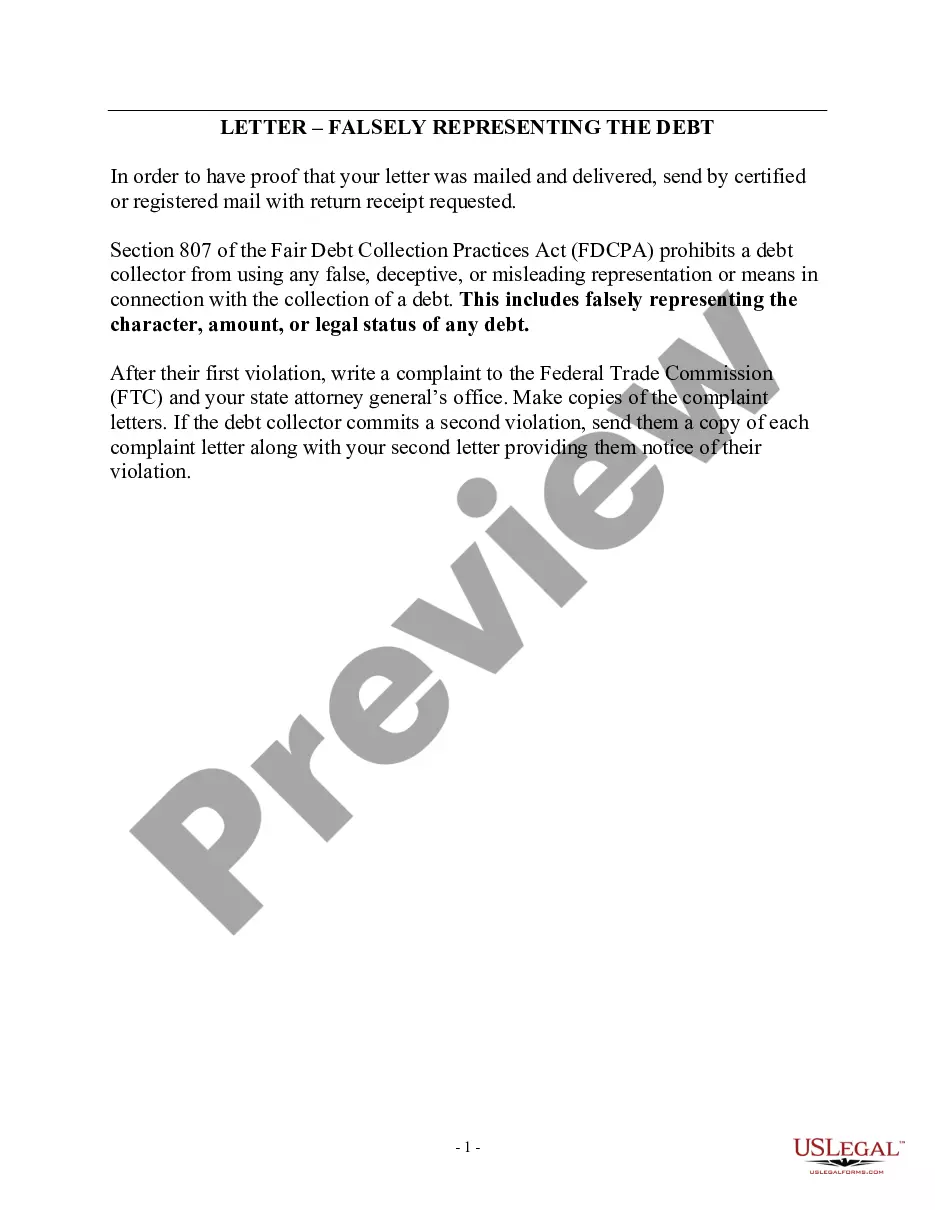
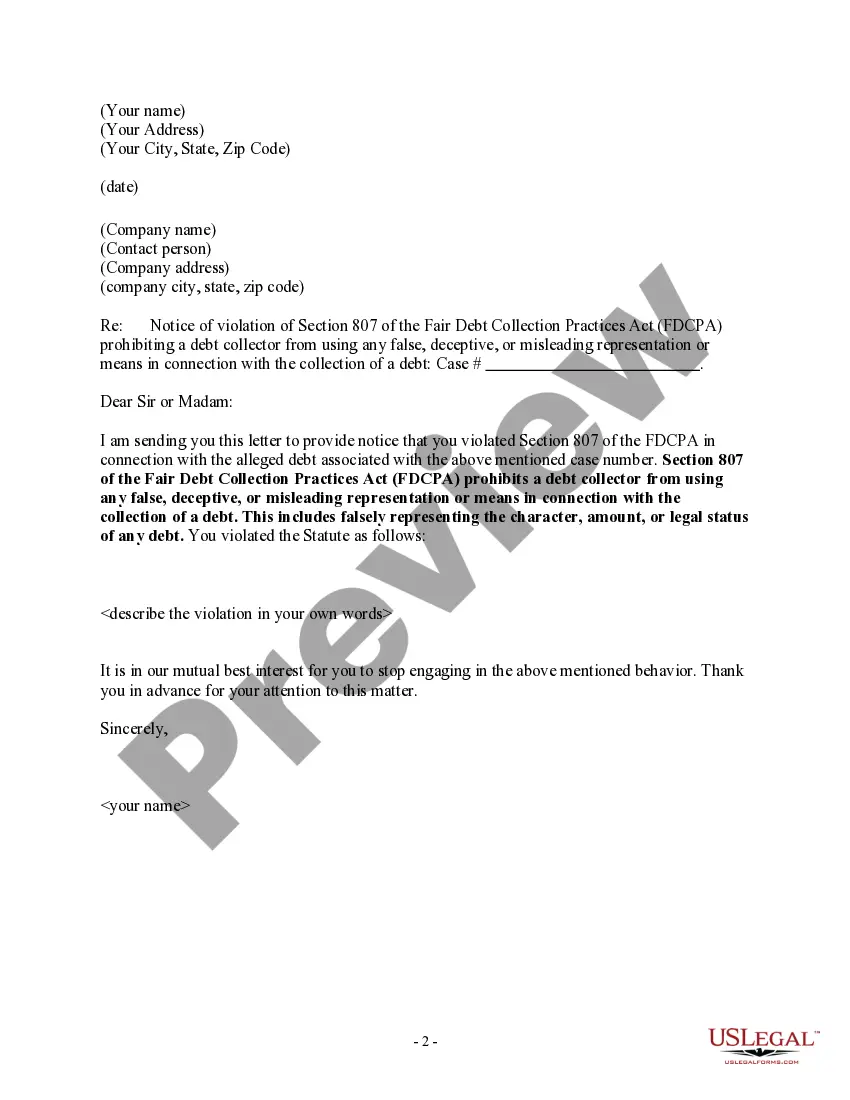
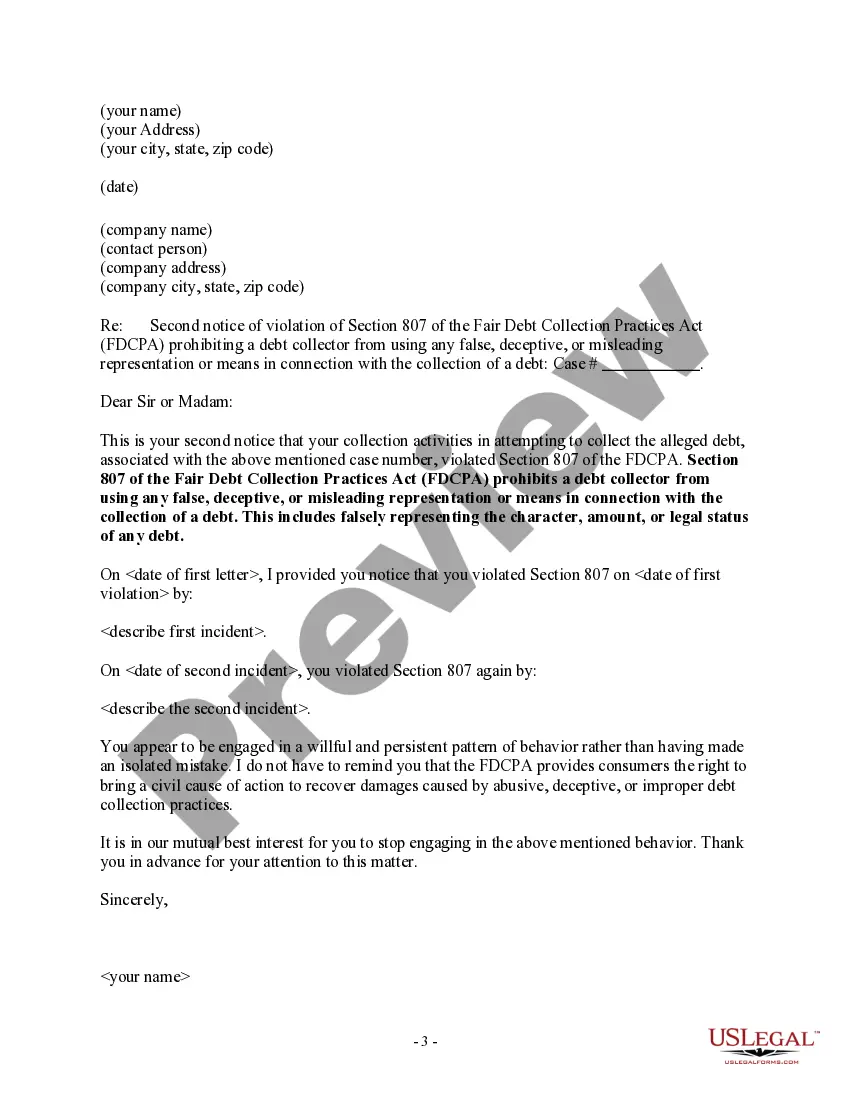
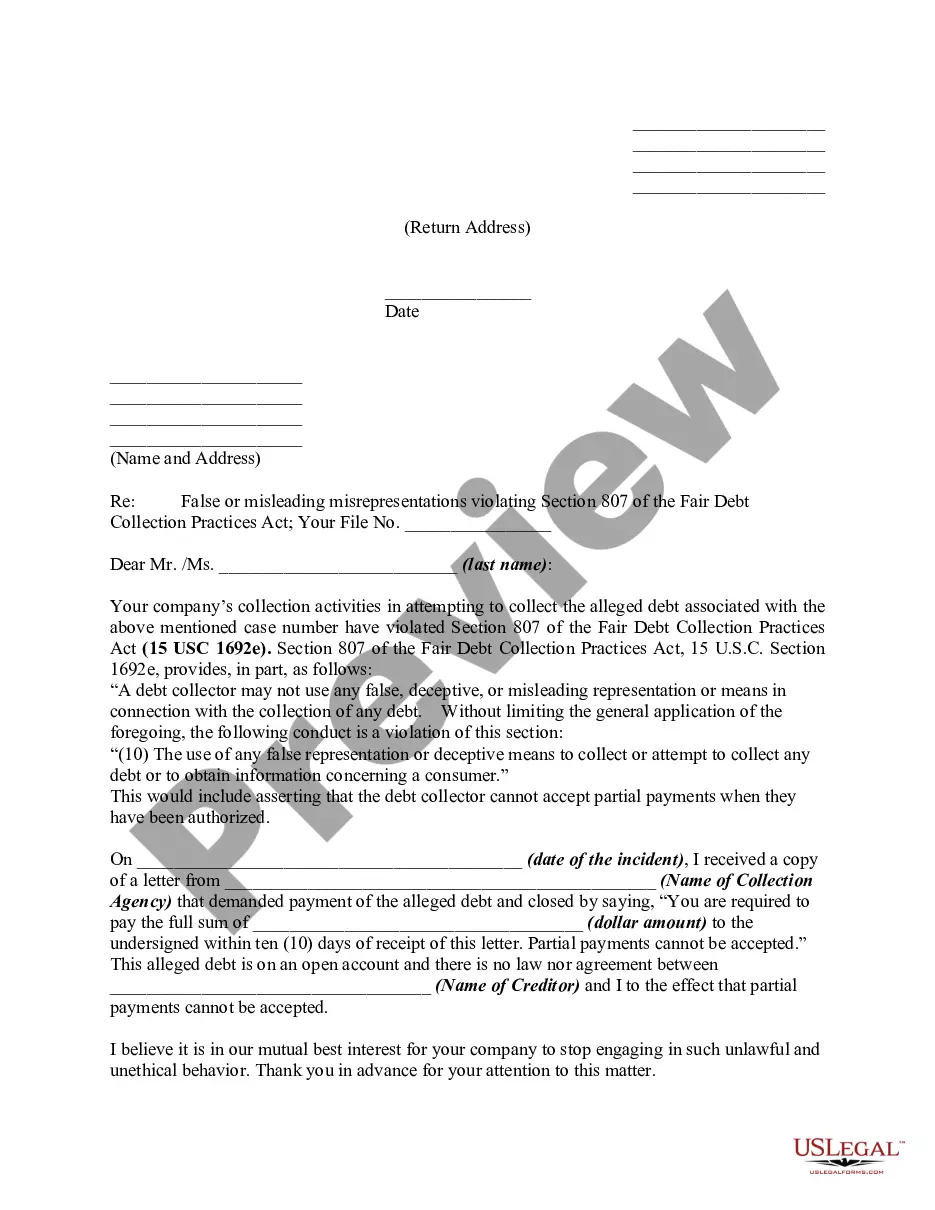
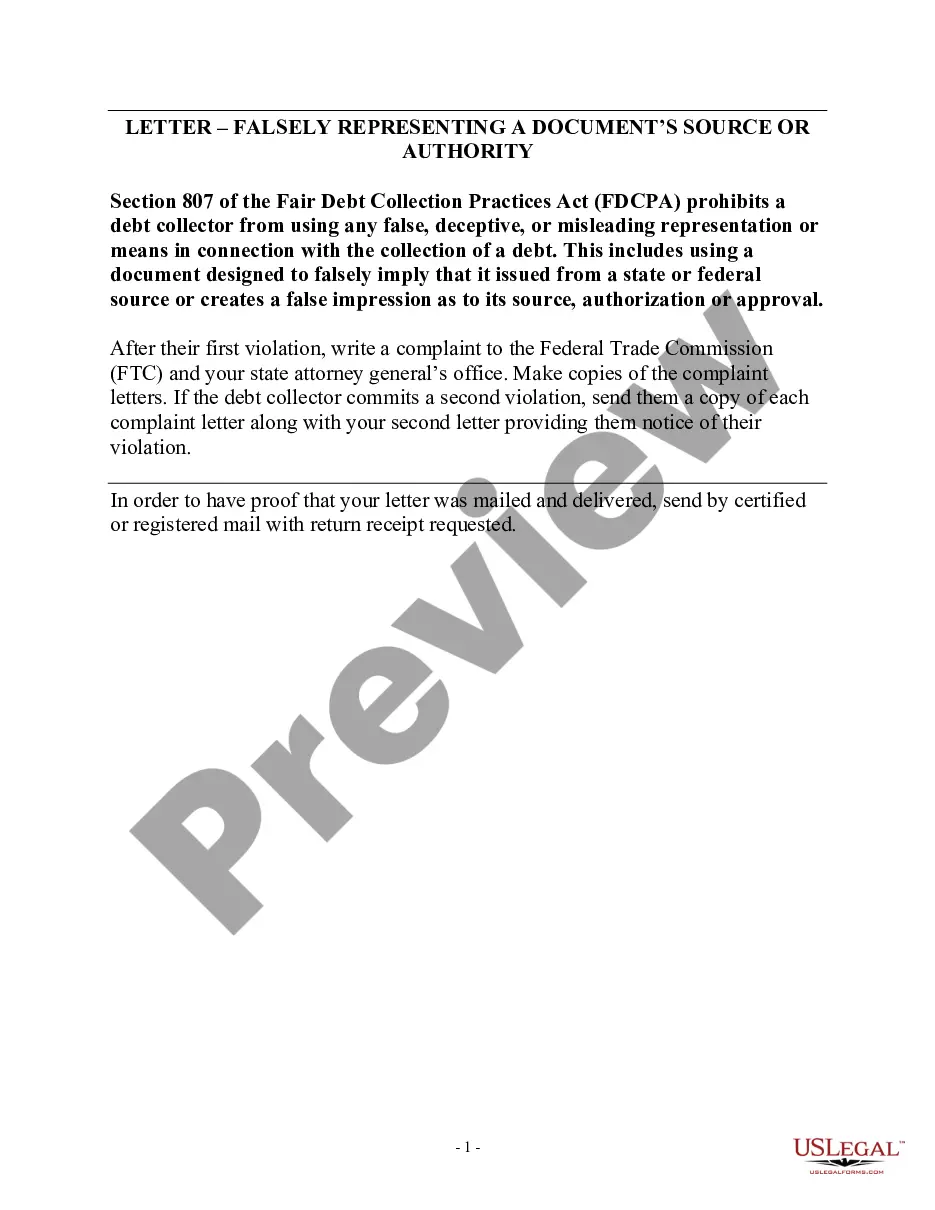
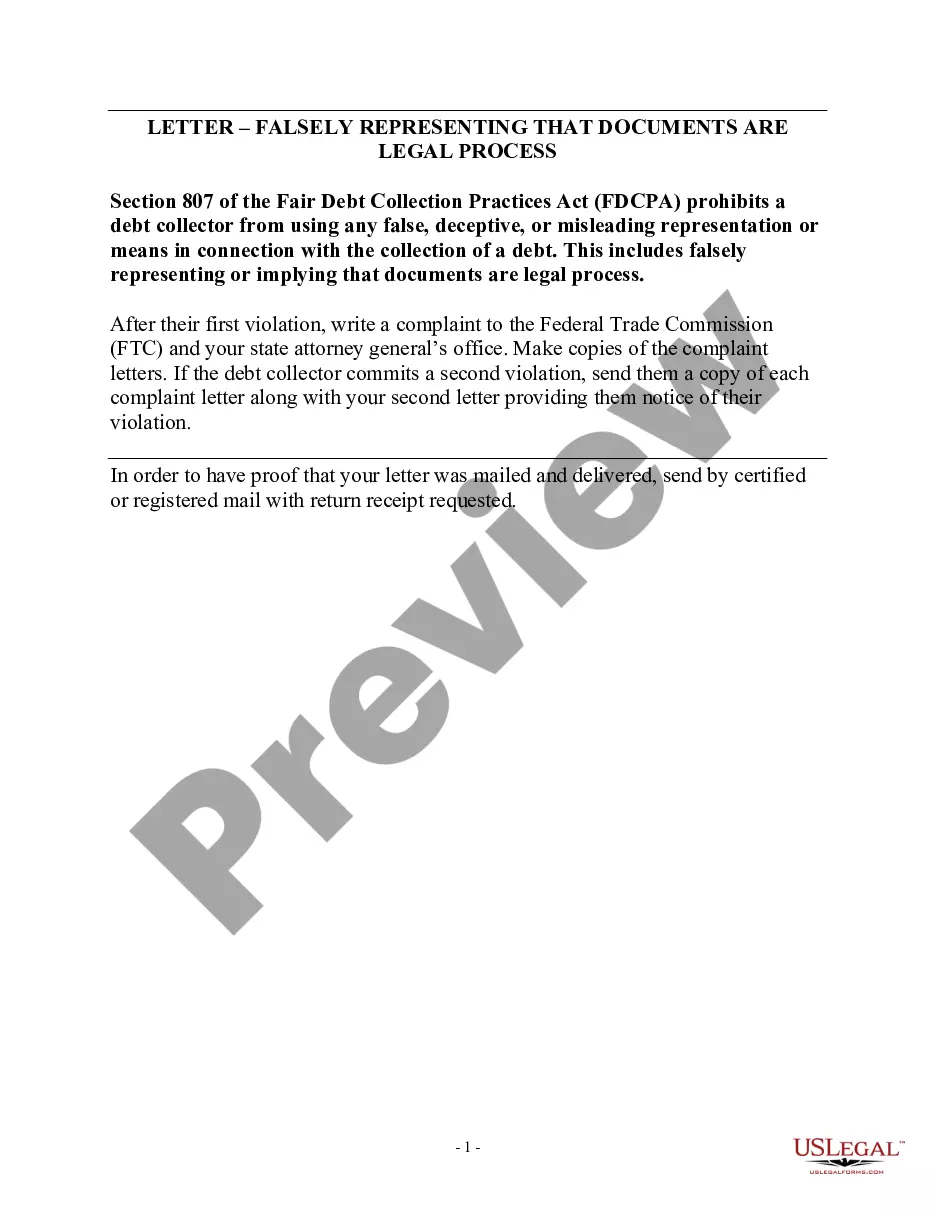
The Notice to Debt Collector - Falsely Representing a Debt is a legal document that allows consumers to formally notify debt collectors that they have violated the Fair Debt Collection Practices Act (FDCPA). This form is crucial because it establishes a written record of the violation, potentially supporting consumers in future legal actions if the debt collector continues their improper practices. Distinct from other debt-related forms, this notice focuses specifically on misrepresentations made by debt collectors regarding the debts they pursue.
Main sections of this form
- Contact information for the consumer and the debt collector.
- Reference to the specific FDCPA section violated (Section 807).
- A detailed description of the alleged violation.
- Request for the debt collector to cease the misleading behavior.
- Notice of prior complaints filed with government authorities.
Situations where this form applies
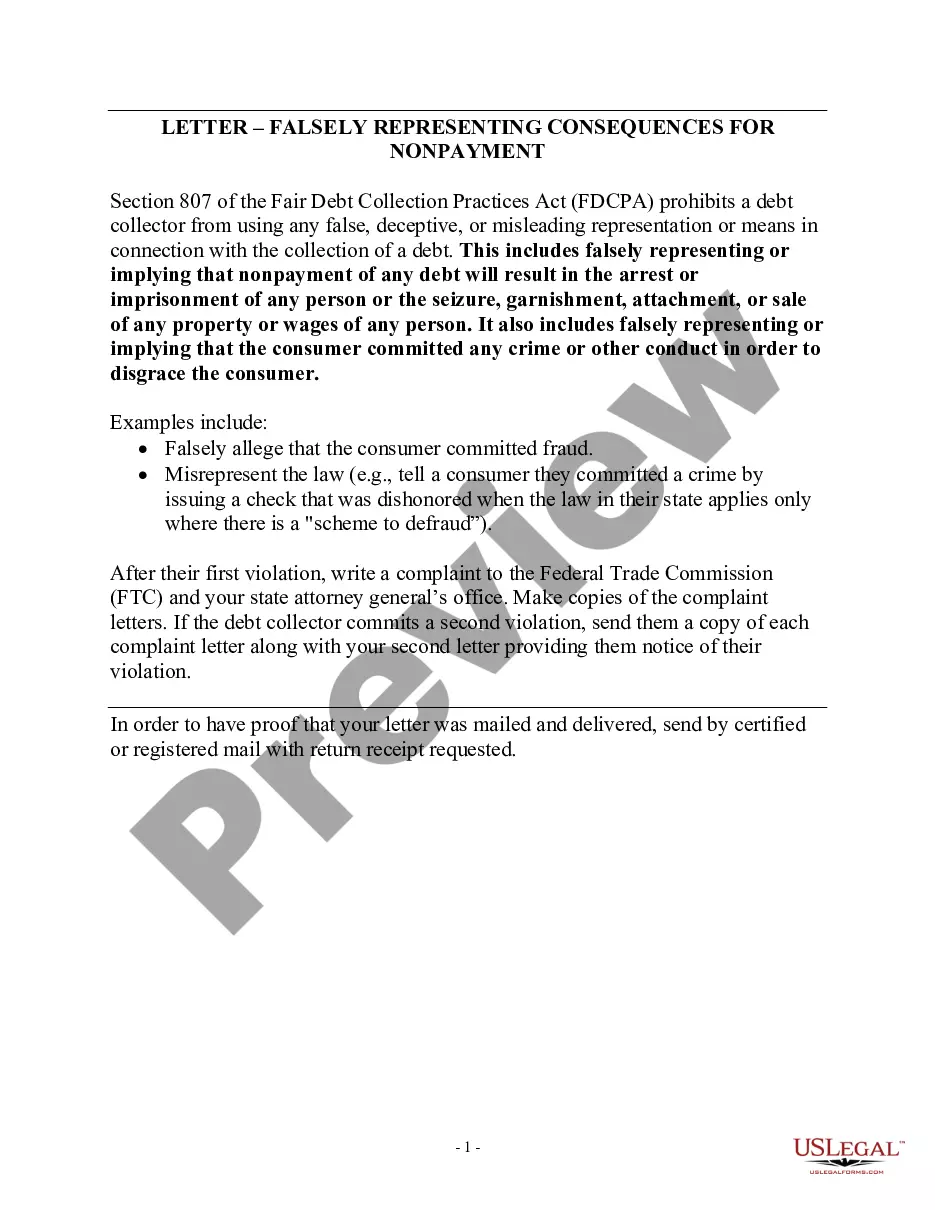
This form should be used when you believe a debt collector has engaged in false or misleading practices while attempting to collect a debt. Common scenarios include situations where the collector misrepresents the amount owed, the legal status of the debt, or claims payment is required on a time-barred debt. Sending this notice can prompt the debt collector to comply with the FDCPA and cease their misleading activities.
Intended users of this form
This form is intended for:
- Consumers who are being contacted by debt collectors.
- Individuals who believe a debt collector has violated their rights under the FDCPA.
- People looking to document instances of debt collection harassment or misrepresentation.
How to complete this form
- Fill in your personal contact information at the top of the letter.
- Provide the contact details of the debt collector, including the company name and address.
- Clearly state the specific violation(s) of the FDCPA that occurred in your case.
- Attach copies of any previous complaints you may have filed with relevant authorities.
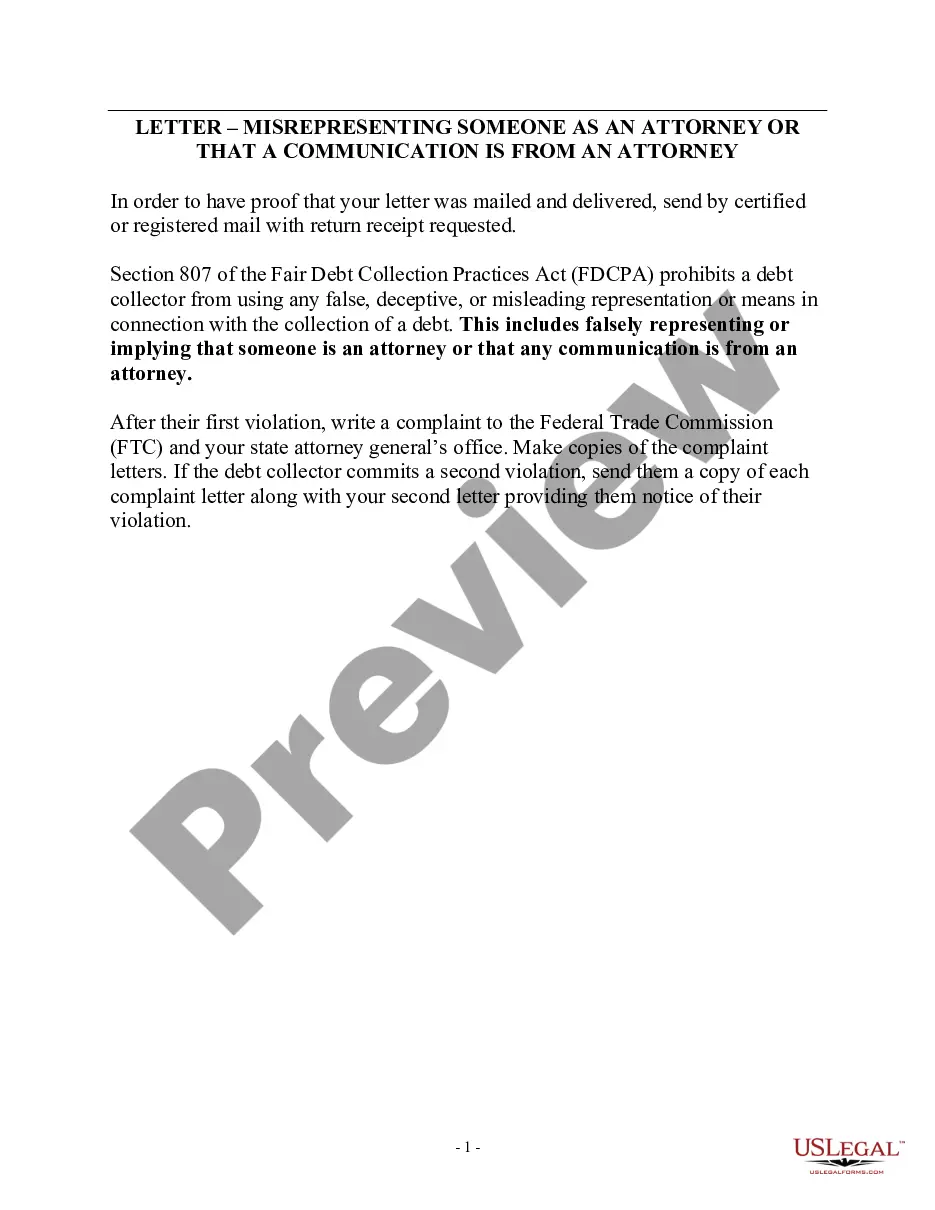
- Sign and date the letter before sending it via certified or registered mail.
Notarization requirements for this form
In most cases, this form does not require notarization. However, some jurisdictions or signing circumstances might. US Legal Forms offers online notarization powered by Notarize, accessible 24/7 for a quick, remote process.
Get your form ready online
Our built-in tools help you complete, sign, share, and store your documents in one place.
Make edits, fill in missing information, and update formatting in US Legal Forms—just like you would in MS Word.
Download a copy, print it, send it by email, or mail it via USPS—whatever works best for your next step.
Sign and collect signatures with our SignNow integration. Send to multiple recipients, set reminders, and more. Go Premium to unlock E-Sign.
If this form requires notarization, complete it online through a secure video call—no need to meet a notary in person or wait for an appointment.
We protect your documents and personal data by following strict security and privacy standards.

Make edits, fill in missing information, and update formatting in US Legal Forms—just like you would in MS Word.

Download a copy, print it, send it by email, or mail it via USPS—whatever works best for your next step.

Sign and collect signatures with our SignNow integration. Send to multiple recipients, set reminders, and more. Go Premium to unlock E-Sign.

If this form requires notarization, complete it online through a secure video call—no need to meet a notary in person or wait for an appointment.

We protect your documents and personal data by following strict security and privacy standards.
Common mistakes
- Failing to document the specific violation accurately.
- Not sending the letter via certified mail, which does not provide proof of delivery.
- Neglecting to keep copies of all correspondence related to the dispute.
- Using vague language instead of clearly describing the misleading practices.
Advantages of online completion
- Immediate access to a professionally drafted template tailored for your needs.
- The ability to customize the form with your details quickly and easily.
- A streamlined process for generating documents without needing legal expertise.
Legal use & context
- This form serves as a formal notice intended to protect consumer rights under the FDCPA.
- When filed correctly, it can support claims of harassment or false representation in legal disputes.
- Using this form may also prevent further misleading actions by the debt collector.
Quick recap
- This notice alerts a debt collector to their violations under the FDCPA.
- Document your case to enhance potential legal actions.
- Follow the proper steps to ensure your notice is effective and compliant.
Looking for another form?








Form popularity
FAQ
Know Your Rights! RIGHT TO DISPUTE THE DEBT: Within 30 DAYS of receiving notice of the debt from the debt collector, you can send a letter to the debt collector disputing the debt and requesting the name and contact information of the original creditor.
Within 30 days of receiving the written notice of debt, send a written dispute to the debt collection agency. You can use this sample dispute letter (PDF) as a model. Once you dispute the debt, the debt collector must stop all debt collection activities until it sends you verification of the debt.
Reach out to the company the collector says is the original creditor. They might help you figure out if the debt is legitimate and if this collector has the right to collect the debt. Also, get your free, annual credit report online or at 877-322-8228 and see if the debt shows up there. Dispute the debt in writing.
Write a letter disputing the debt. You have 30 days after receiving a collection notice to dispute a debt in writing. Dispute the debt on your credit report. Lodge a complaint. Respond to a lawsuit. Hire an attorney.
If you believe any account information is incorrect, you should dispute the information to have it either removed or corrected. If, for example, you have a collection or multiple collections appearing on your credit reports and those debts do not belong to you, you can dispute them and have them removed.
Debt validation is your federal right granted under the Fair Debt Collection Practices Act (FDCPA). To request debt validation, you must send a written request to the debt collector within 30 days of being contacted by the collection agency.
The debt dispute letter should include your personal identifying information; verification of the amount of debt owed; the name of the creditor for the debt; and a request that the debt not be reported to credit reporting agencies until the matter is resolved or have it removed from the report, if it already has been
Your full name and address. The collections agency's name and address. A request for the amount of the debt claimed to be owed. A request for the name of the original creditor. A request for the judgment information (if applicable) A request for proof of the company's license.
Can You Sue a Company for Sending You to Collections? Yes, the FDCPA allows for legal action against certain collectors that don't comply with the rules in the law. If you're sent to collections for a debt you don't owe or a collector otherwise ignores the FDCPA, you might be able to sue that collector.