Notice to Debt Collector - Posing Lengthy Series of Questions or Comments
Overview of this form
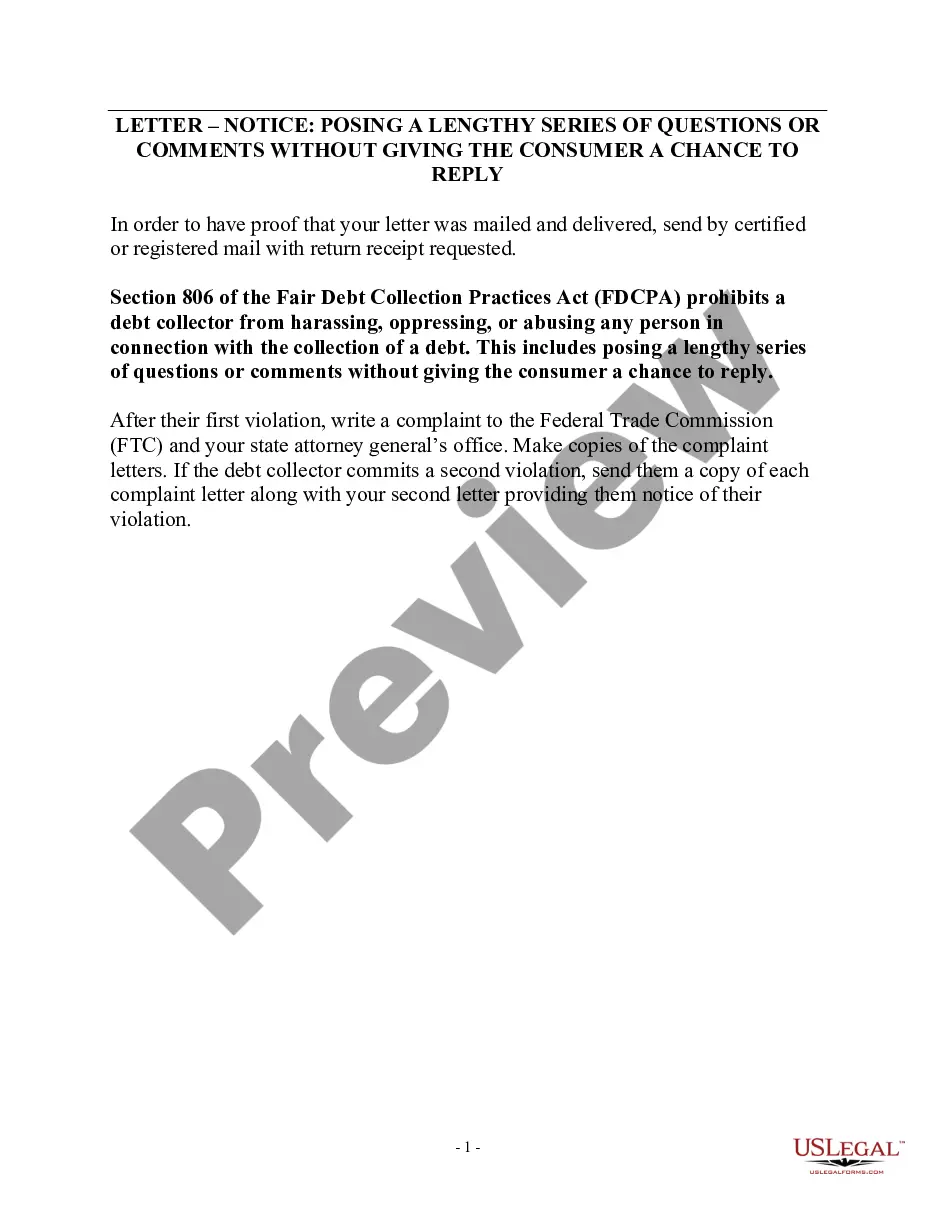
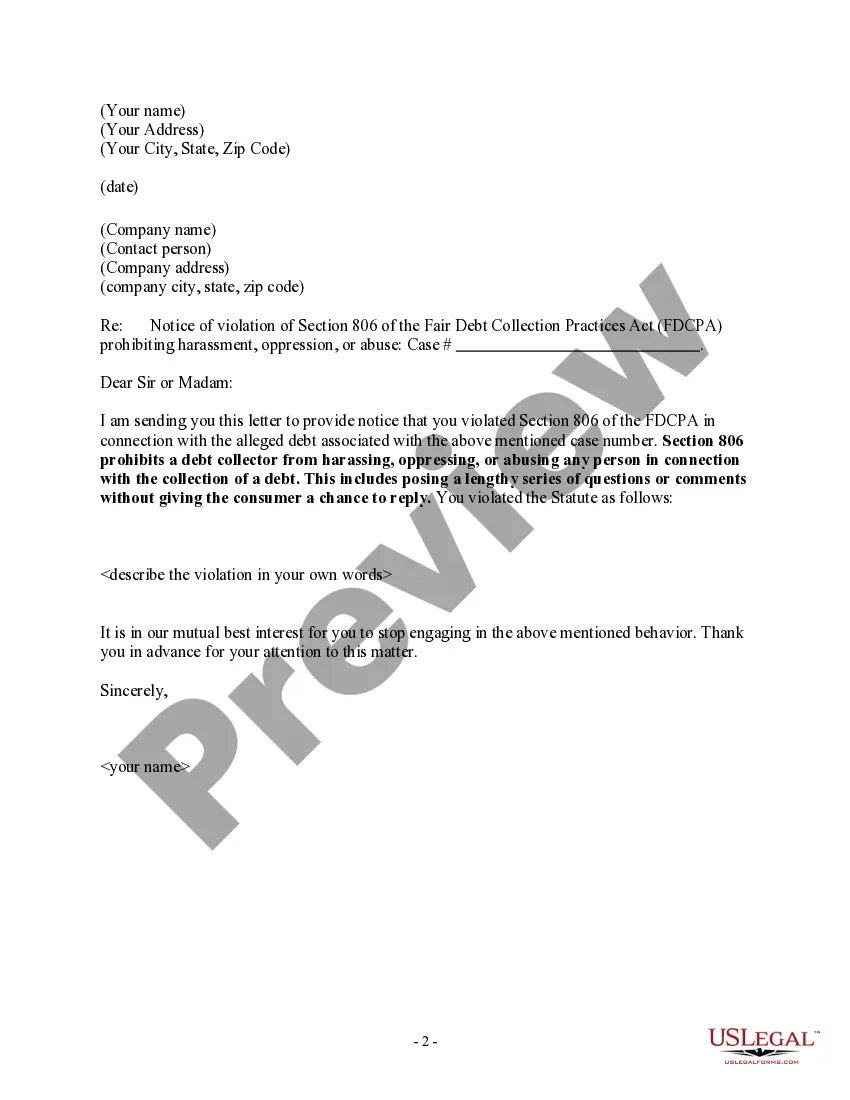
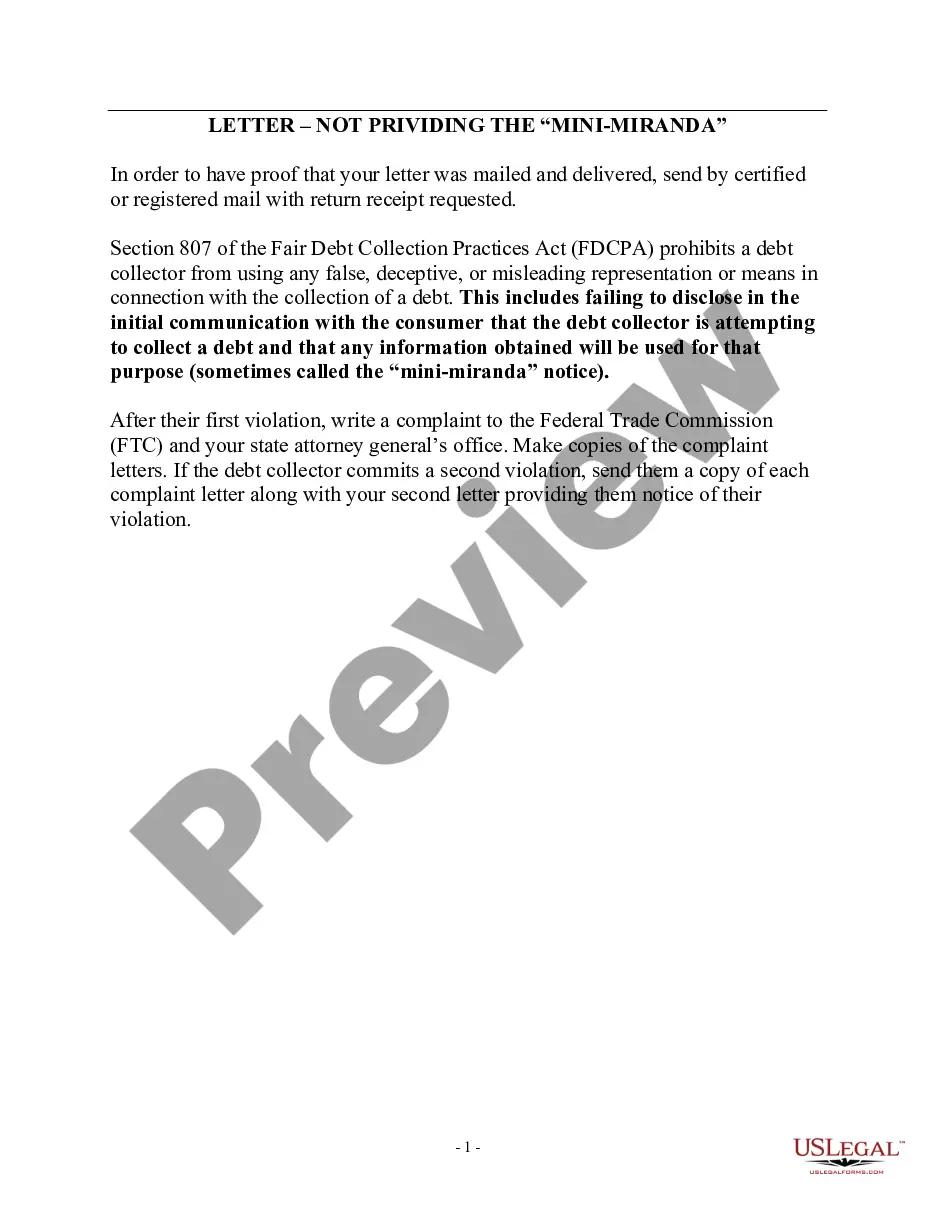
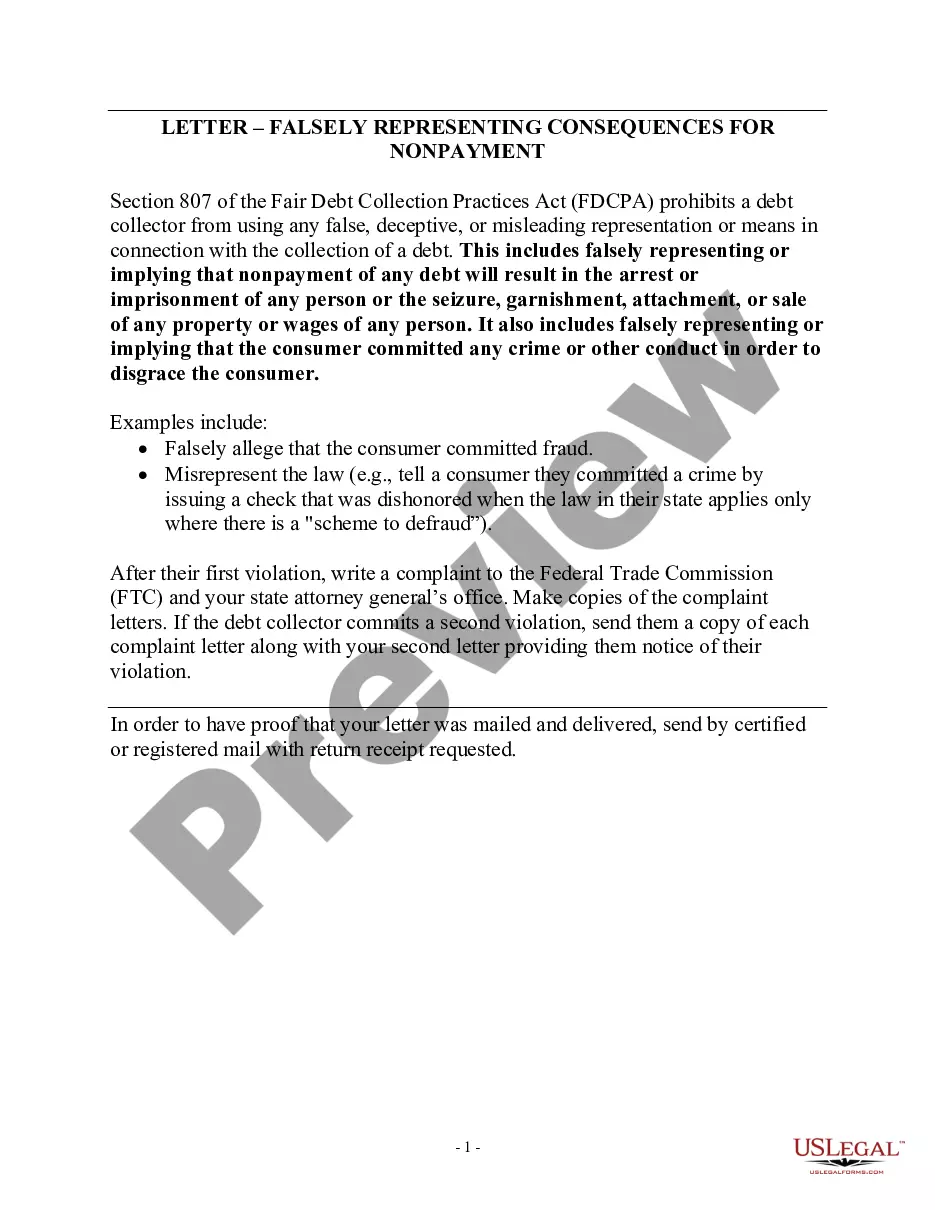
The Notice to Debt Collector is a formal letter you can use to inform a debt collector that they have violated the Fair Debt Collection Practices Act (FDCPA). This form specifically addresses instances where a collector poses a lengthy series of questions or comments without allowing you to respond. Taking this step increases the likelihood that the collector will comply with the law, and it can serve as documentation if further action is needed against them.
Key parts of this document
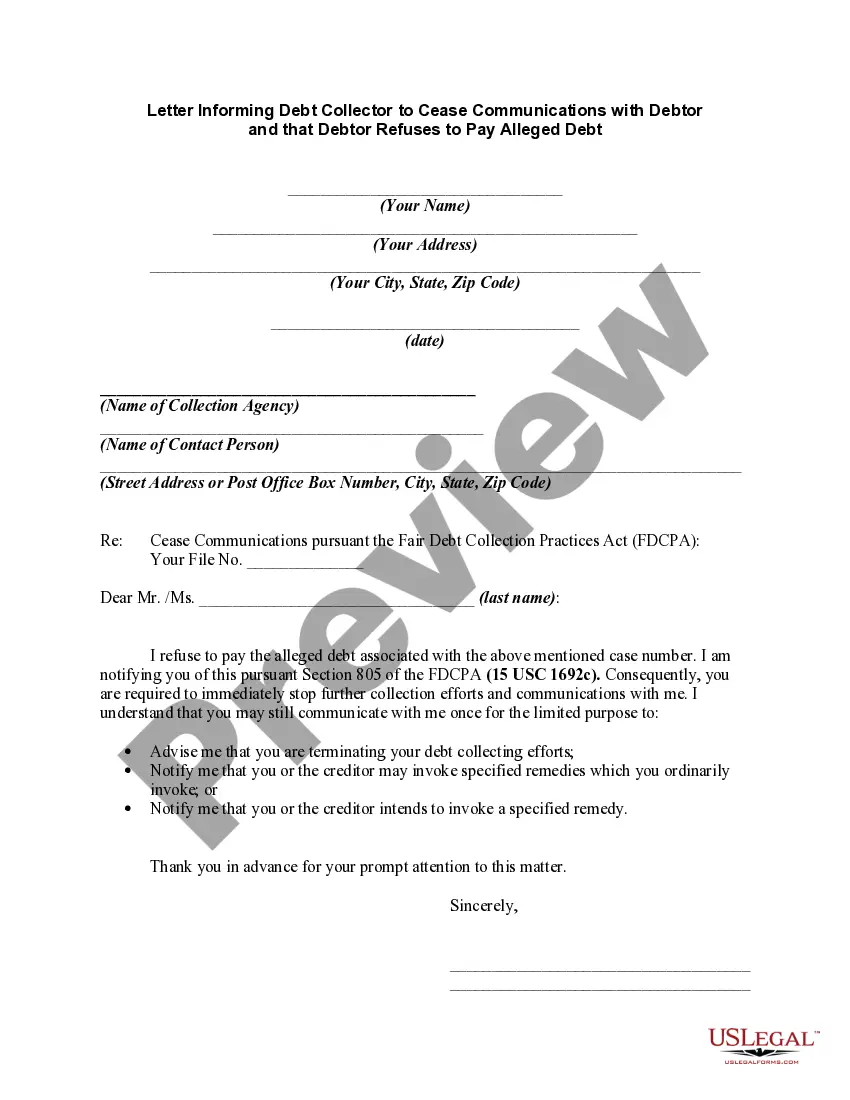
- Contact information for the consumer and the debt collector.
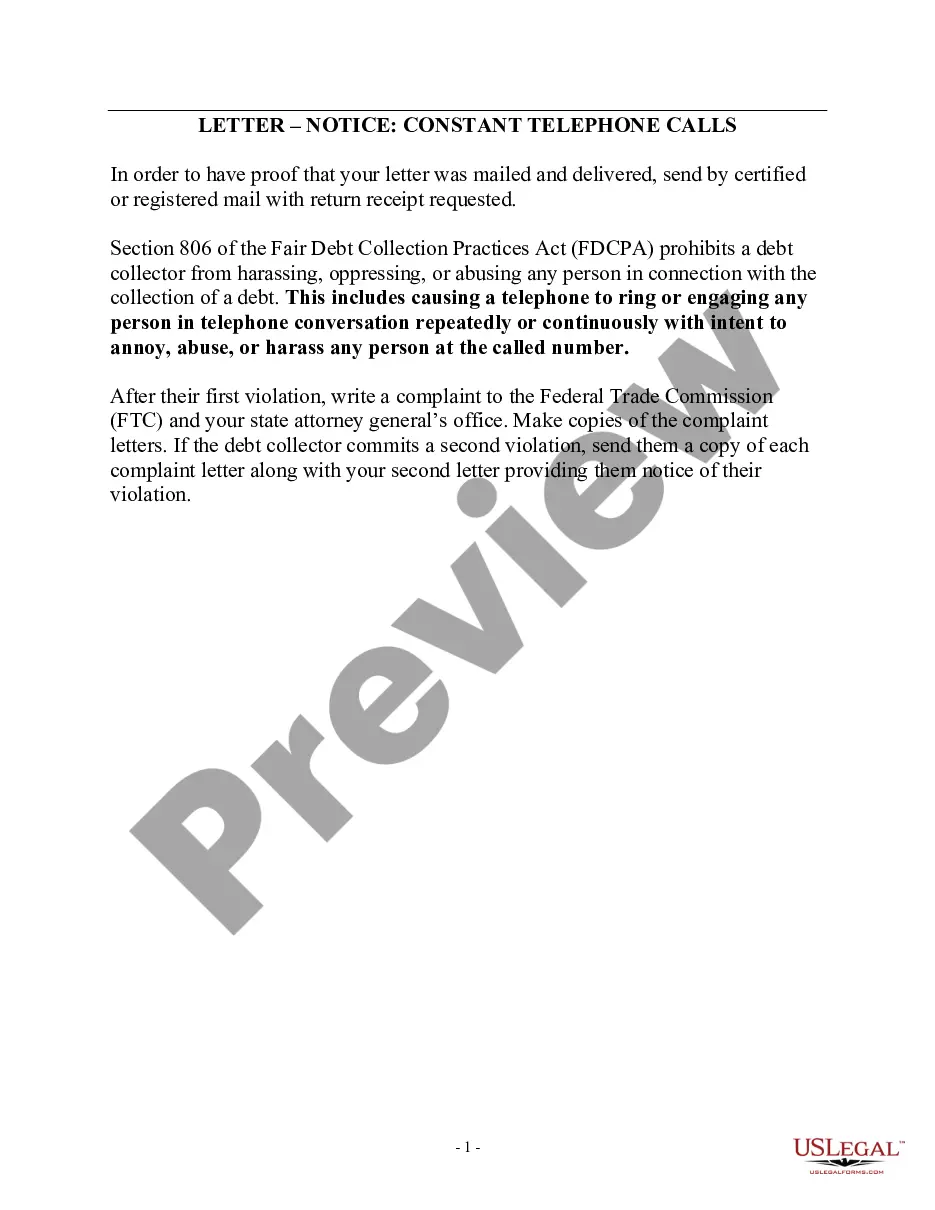
- Clear statement identifying the violation of Section 806 of the FDCPA.
- Space for the consumer to describe the specific violation in their own words.
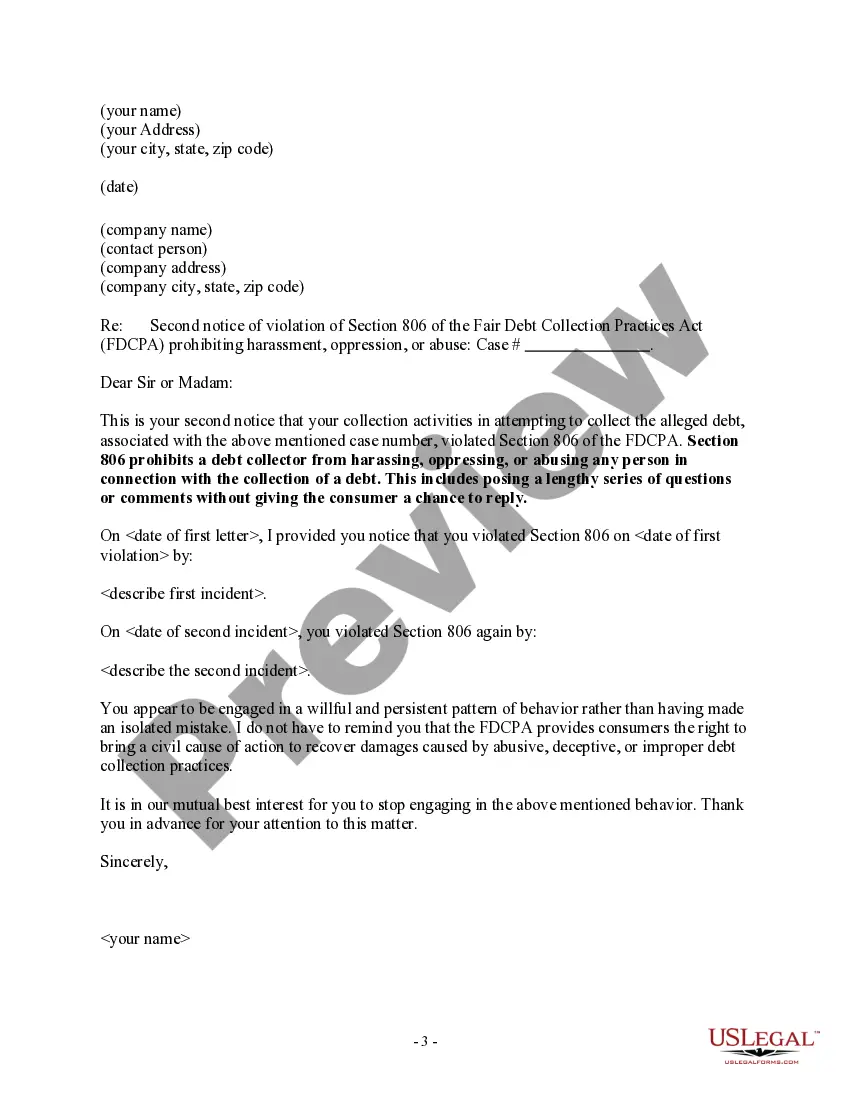
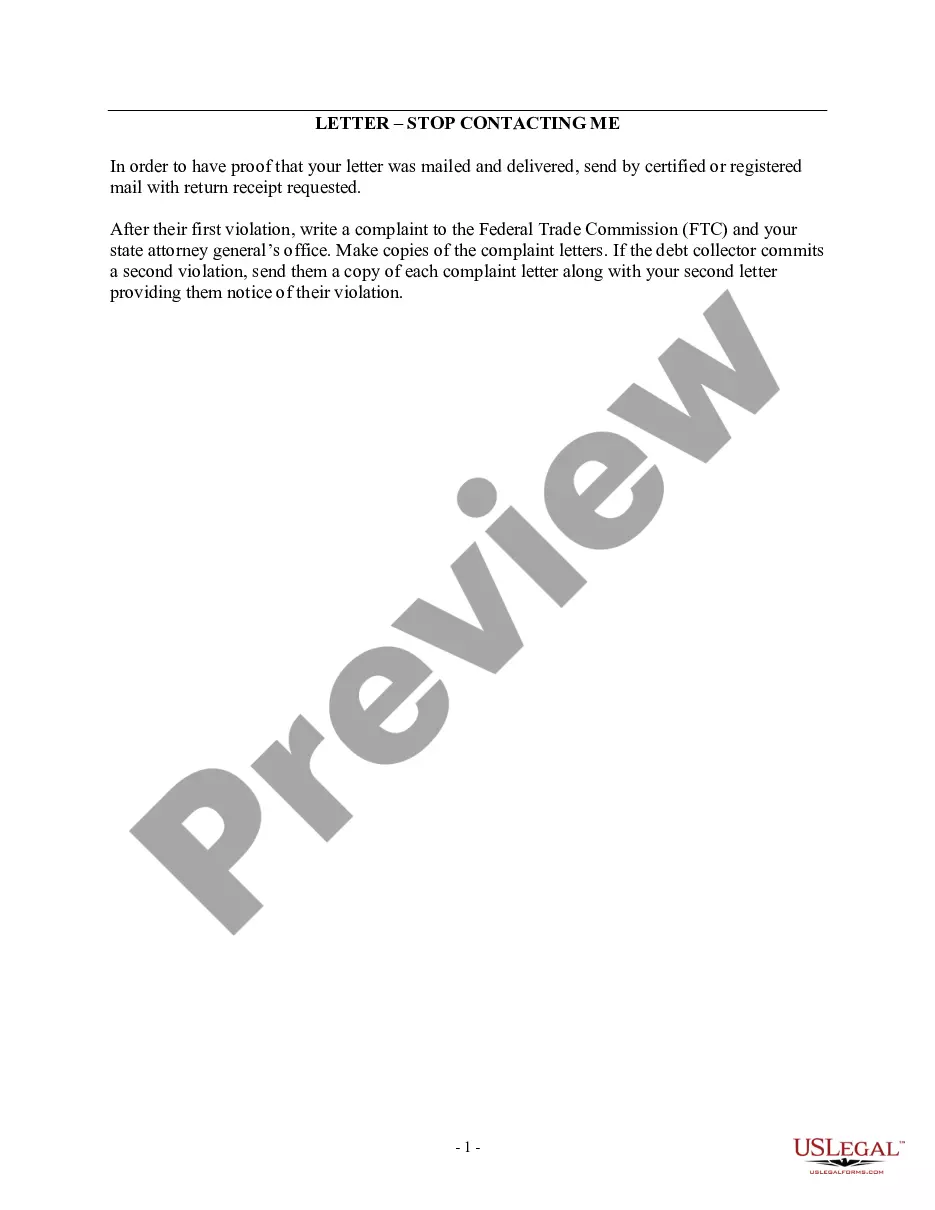
- Instructions regarding follow-up actions if violations continue.
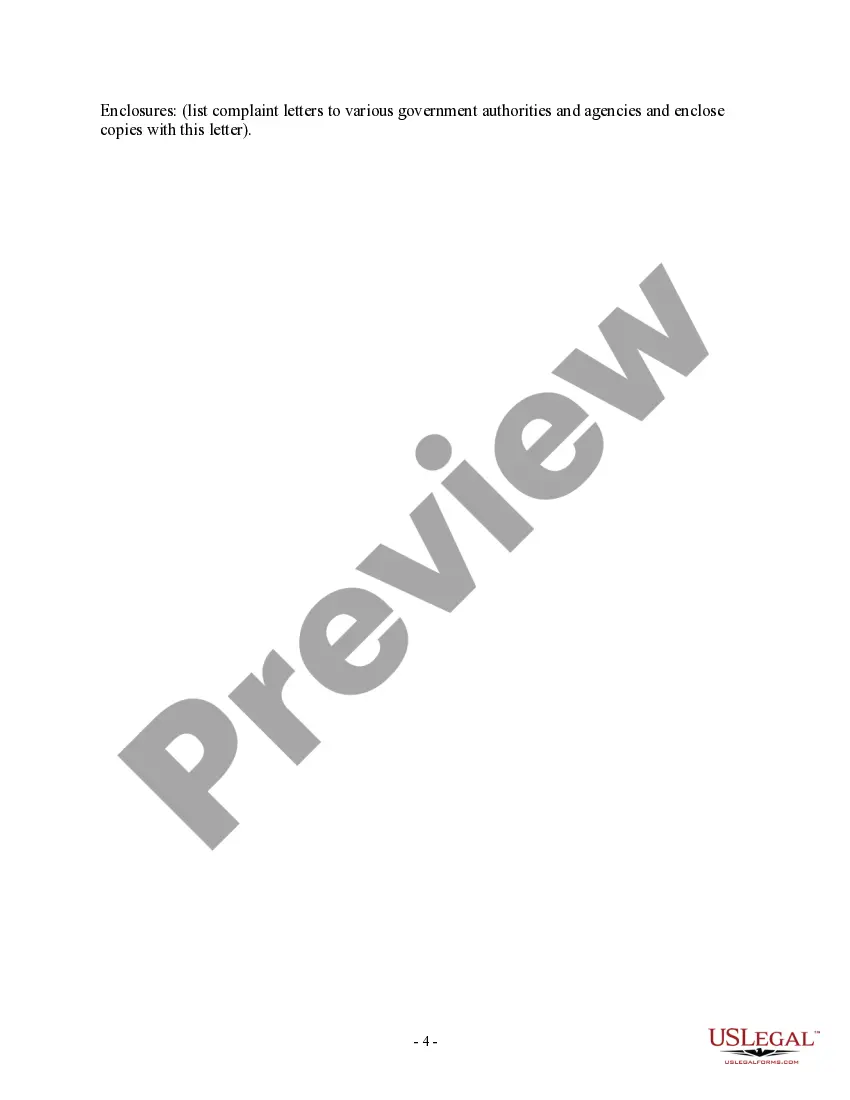
- Enclosure details for any complaints sent to government authorities.
Situations where this form applies
You should use the Notice to Debt Collector when you experience harassment from a debt collector, specifically when they pose a long series of questions or comments without giving you a chance to reply. This form is helpful after the first incident and can serve as evidence if the behavior continues. It is essential to act promptly to protect your rights as a consumer.
Who can use this document
- Consumers who are being targeted by debt collectors.
- Individuals who believe their rights under the FDCPA have been violated.
- Anyone who wants to formally document harassing communication from a collector.
How to prepare this document
- Identify and fill in your name and address at the top of the letter.
- Provide the contact information for the debt collector, including the company name and address.
- Clearly describe the violation of the FDCPA, referencing Section 806 and your specific experience.
- State your intention for the debt collector to cease the problematic behavior.
- Mail the letter via certified or registered mail, ensuring that you receive a return receipt for your records.
Notarization guidance
This form usually doesn’t need to be notarized. However, local laws or specific transactions may require it. Our online notarization service, powered by Notarize, lets you complete it remotely through a secure video session, available 24/7.
Get your form ready online
Our built-in tools help you complete, sign, share, and store your documents in one place.
Make edits, fill in missing information, and update formatting in US Legal Forms—just like you would in MS Word.
Download a copy, print it, send it by email, or mail it via USPS—whatever works best for your next step.
Sign and collect signatures with our SignNow integration. Send to multiple recipients, set reminders, and more. Go Premium to unlock E-Sign.
If this form requires notarization, complete it online through a secure video call—no need to meet a notary in person or wait for an appointment.
We protect your documents and personal data by following strict security and privacy standards.

Make edits, fill in missing information, and update formatting in US Legal Forms—just like you would in MS Word.

Download a copy, print it, send it by email, or mail it via USPS—whatever works best for your next step.

Sign and collect signatures with our SignNow integration. Send to multiple recipients, set reminders, and more. Go Premium to unlock E-Sign.

If this form requires notarization, complete it online through a secure video call—no need to meet a notary in person or wait for an appointment.

We protect your documents and personal data by following strict security and privacy standards.
Mistakes to watch out for
- Failing to mail the notice by certified or registered mail.
- Not clearly specifying the violation in your own words.
- Neglecting to keep copies of all correspondence for your records.
- Not following up with a complaint to the FTC after the first violation.
Advantages of online completion
- Conveniently download and complete the form from anywhere, at any time.
- Edit the document to suit your particular situation easily.
- Access reliable templates created by licensed attorneys, ensuring legal compliance.
Legal use & context
- This notice is part of your rights as a consumer under the FDCPA.
- Documentation can strengthen your case if further action is necessary.
- Understanding your legal standing helps prevent intimidation from collectors.
Looking for another form?

Form popularity
FAQ
Consumers have 30 days from the initial communication about the debt (for example, the first letter received explaining the debt is in collections) to call the collector and ask for the debt to be verified in writing. The collector must return your request before it can start trying to collect the debt again.
If you discover that an old debt has reappeared on your credit report as a new account or contains inaccurate information about its age or status, it might be because a debt buyer "parked" the debt on your credit report, or re-aged the status of your debt. These debt collection practices might be illegal.
Debt collectors cannot harass or abuse you. They cannot swear, threaten to illegally harm you or your property, threaten you with illegal actions, or falsely threaten you with actions they do not intend to take. They also cannot make repeated calls over a short period to annoy or harass you.
If you pay the collection agency directly, the debt is removed from your credit report in six years from the date of payment. If you don't pay, it purges six years from the last activity date, but you may be at risk for wage garnishment.
Never Give Them Your Personal Information. A call from a debt collection agency will include a series of questions. Never Admit That The Debt Is Yours. Even if the debt is yours, don't admit that to the debt collector. Never Provide Bank Account Information.
A collection account is considered a continuation of the original debt. It is a violation of law for a collection agency to report old past-due amounts as if they are new again when the debts are sold.Check your credit report and make sure the old debt not some more recent one is actually showing on your report.
Some debt collectors may try to report a debt on a consumer's credit report twice. Doing so can make a single bad debt hurt twice as much. Though some consumers may have multiple debts owed to the same debt collector or creditor (which can be reported separately), each debt can only be reported one time.
Unpaid collection accounts can get sold from debt collector to another, leaving your credit report with multiple collection accounts for one debt. It is up to you to review your credit reports to make sure you do not have multiple debt collectors reporting for the same debt.
This is important: You have just 30 days to respond to a debt validation letter. If you don't dispute the debt within 30 days, the debt is assumed valid. That means the debt collector can continue to contact you. You can send a dispute after 30 days.