Notice to Debt Collector - Unlawful Messages to 3rd Parties
What is this form?
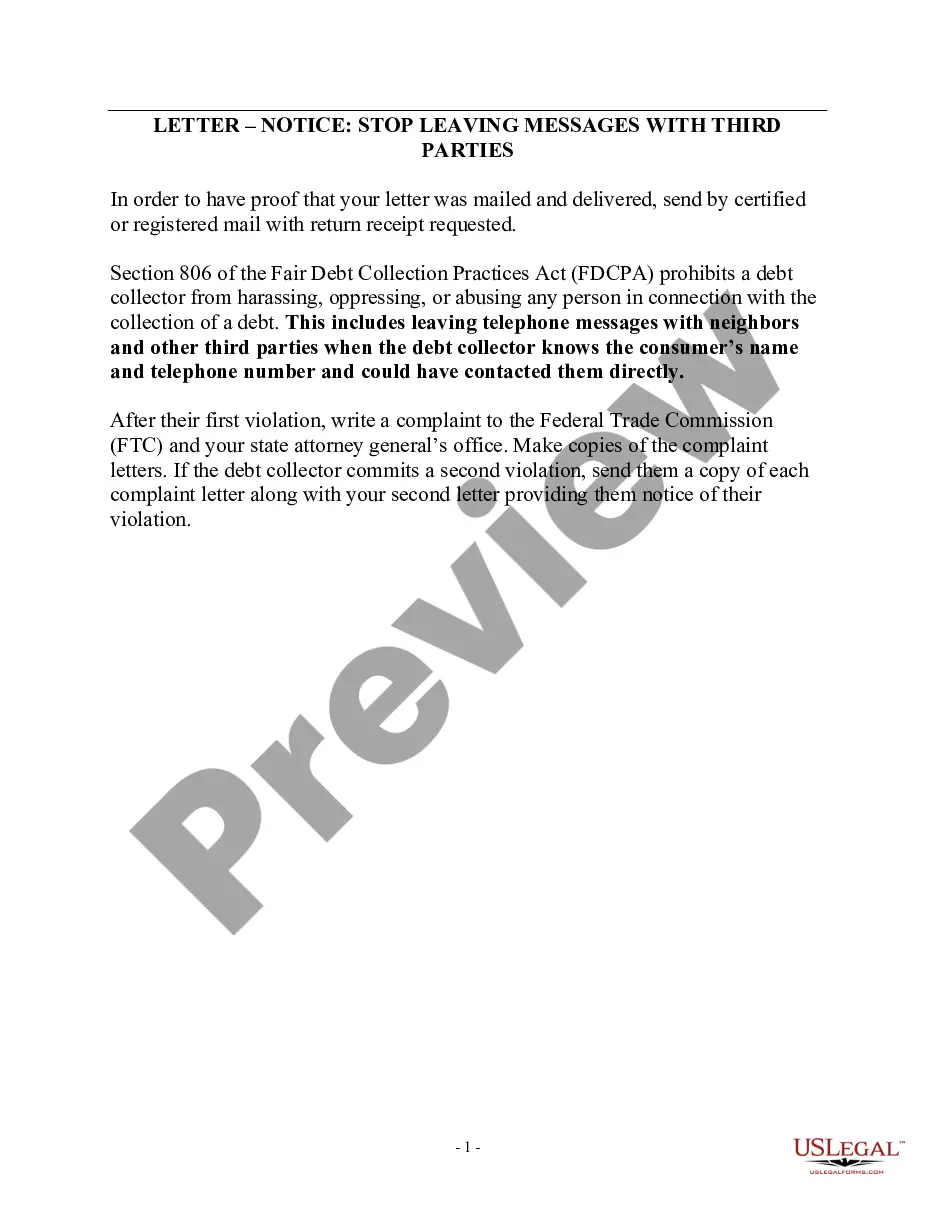
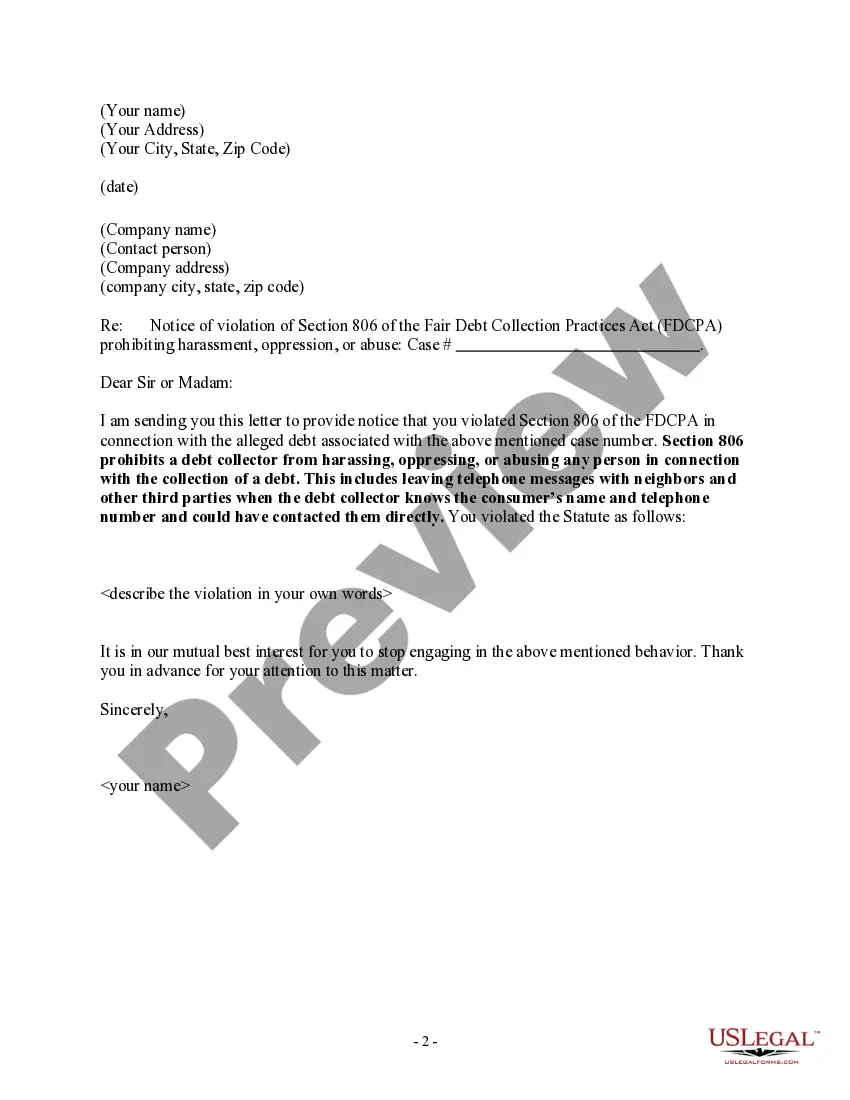
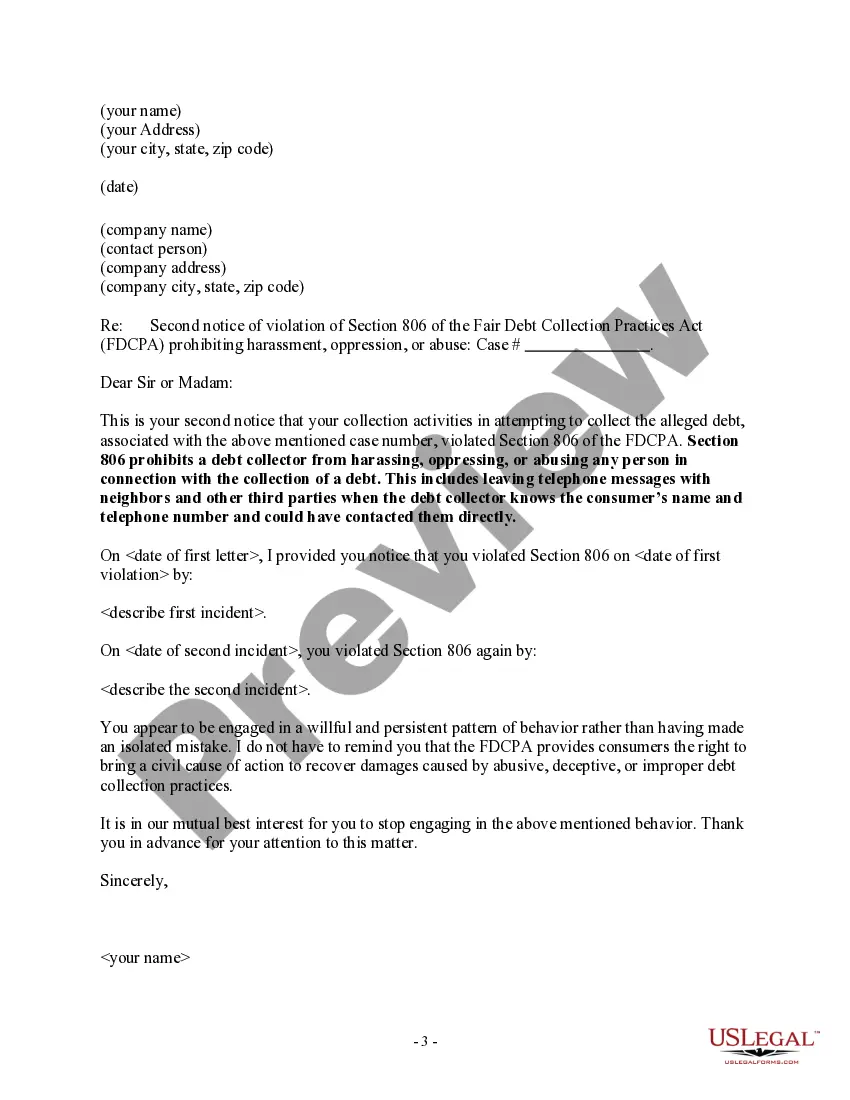
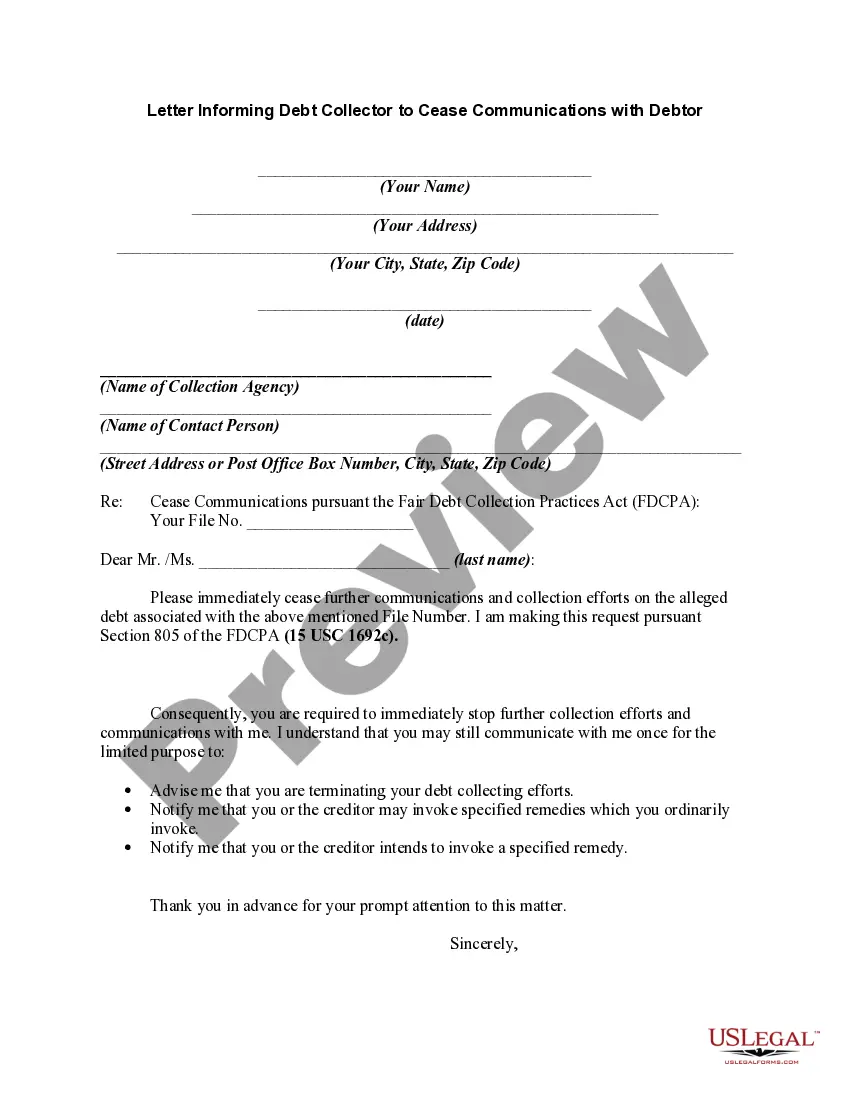
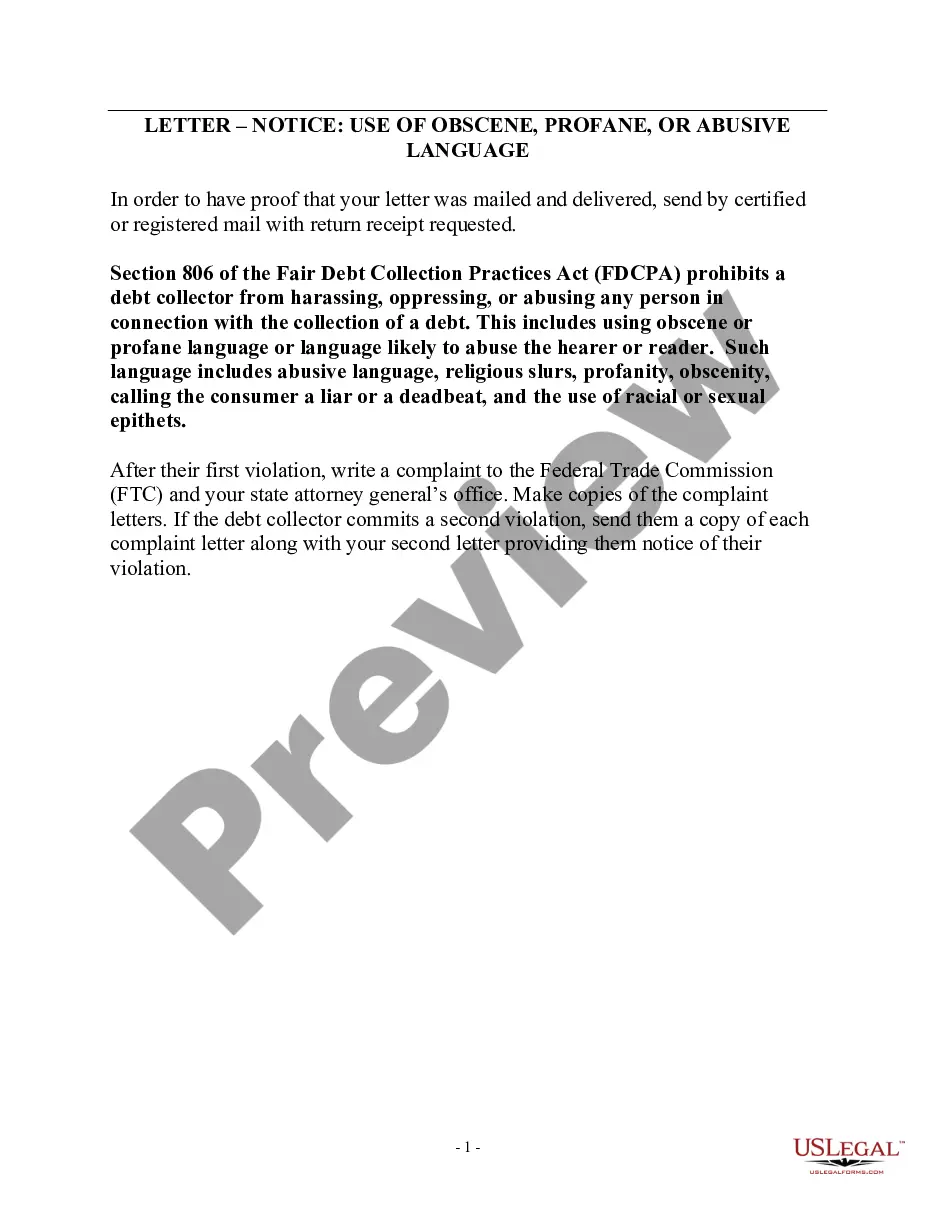
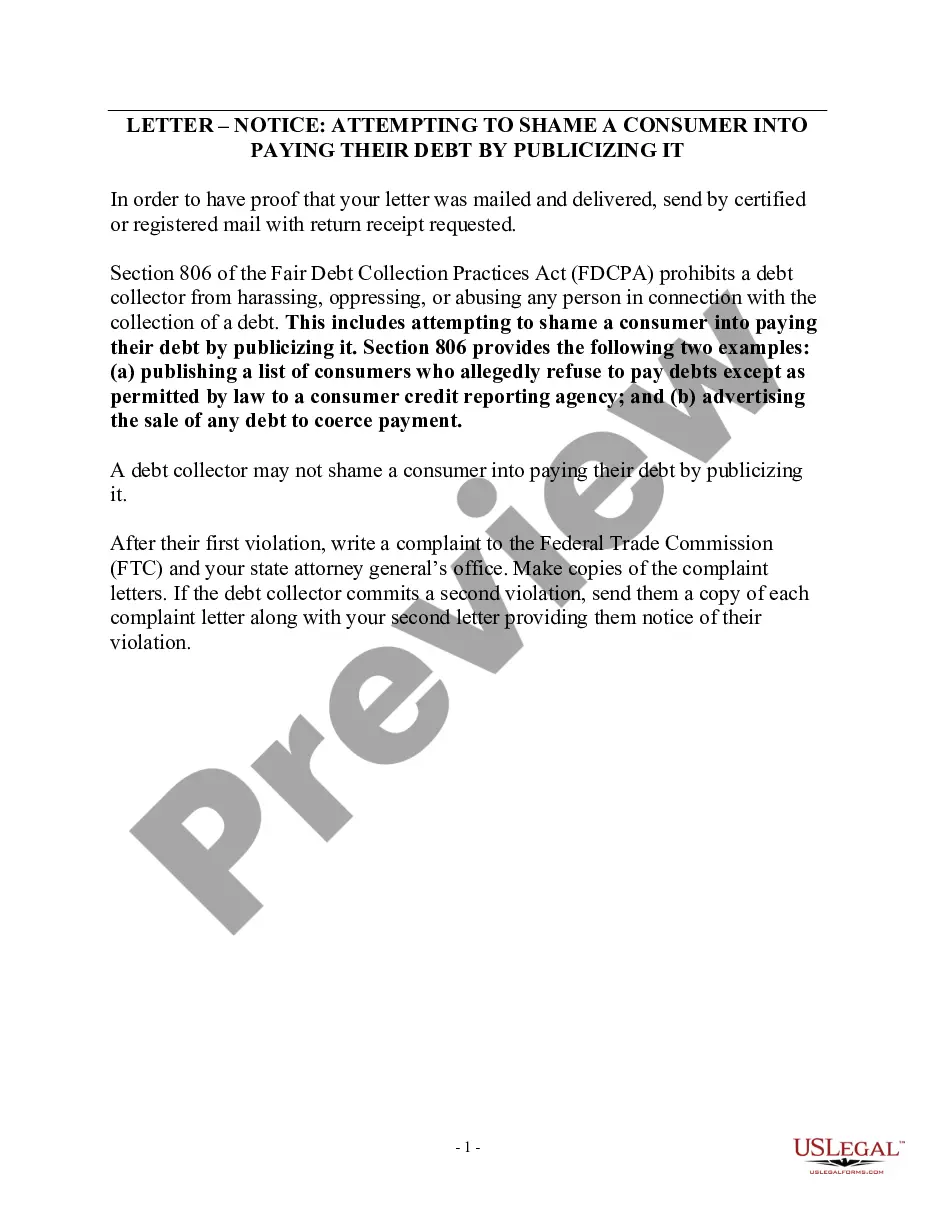
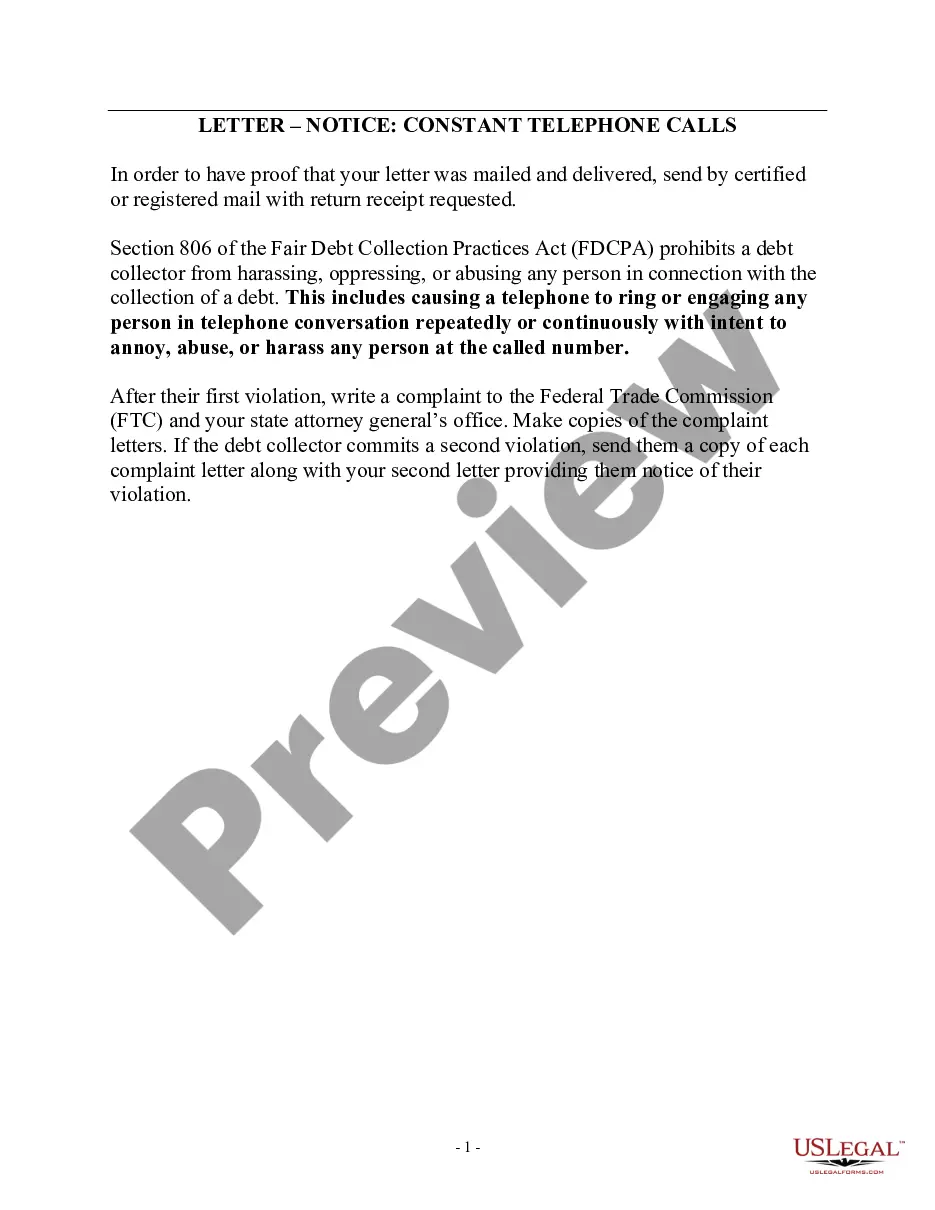
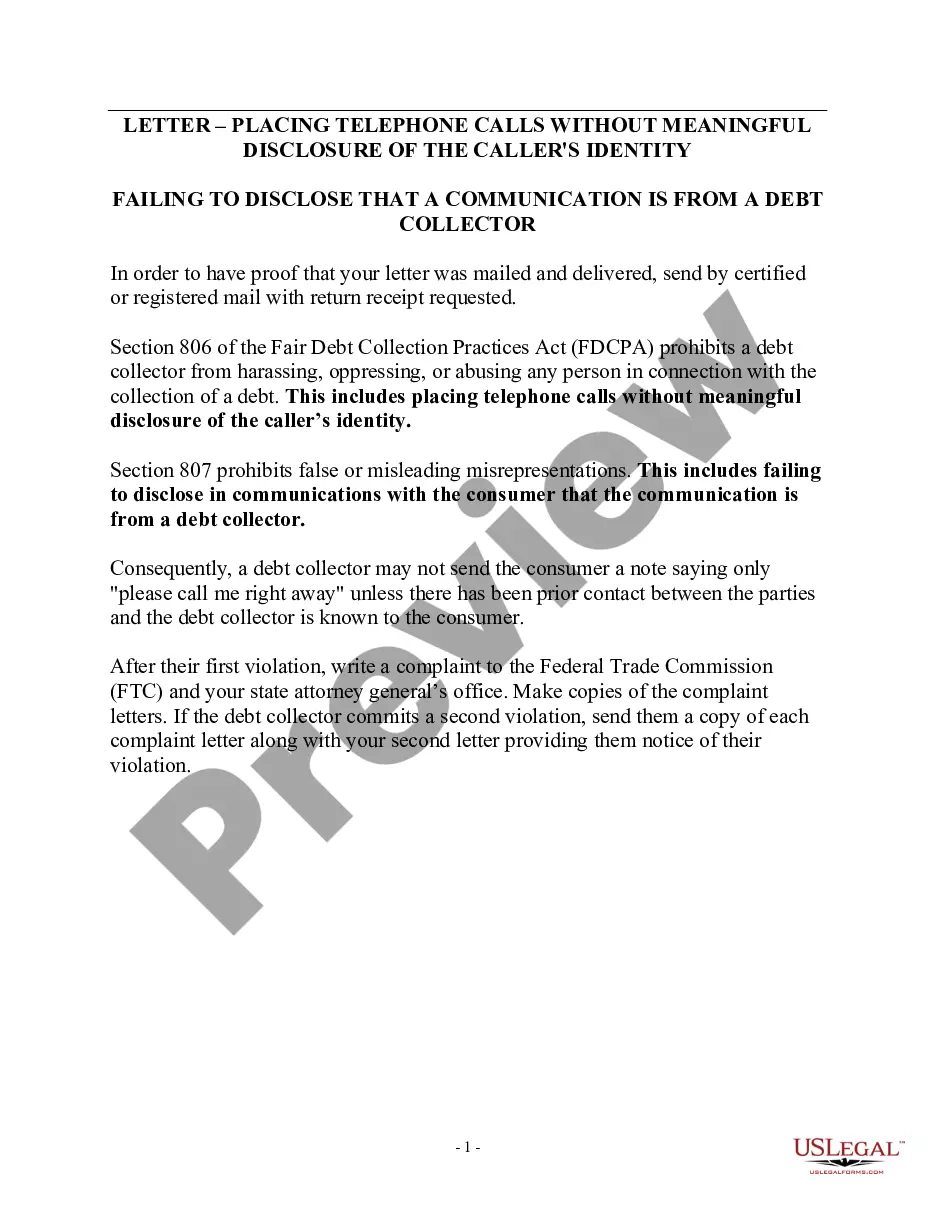
The Notice to Debt Collector - Unlawful Messages to 3rd Parties is a legal form utilized to inform debt collectors that they have breached the Fair Debt Collection Practices Act (FDCPA). This form serves as a proactive measure for consumers who have experienced unlawful communication methods, such as leaving messages with third parties instead of contacting the consumer directly. By using this form, consumers can assert their rights and encourage debt collectors to comply with the law.
Main sections of this form
- Sender's information: Name and address of the consumer notifying the debt collector.
- Debt collector's information: Name and address of the debt collection agency or individual.
- Case reference: Space to cite the specific case related to the alleged debt.
- Violation notice: A clear statement regarding the specific Section 806 violation of the FDCPA.
- Description of incidents: Sections to describe each instance of unlawful communication by the debt collector.
- Signature: A place for the consumer's signature to validate the notice.
Common use cases
This form is particularly relevant in situations where a debt collector has contacted third parties, such as neighbors or family members, to collect a debt. It is also applicable when the collector is aware of the consumer's contact information but chooses to bypass direct communication. Using this form promptly informs the debt collector of their legal misstep and can help prevent further violations.
Who should use this form
- Consumers who have been contacted by debt collectors using inappropriate communication methods.
- Individuals seeking to assert their rights under the FDCPA.
- Anyone who has received messages about their debt from a collector that involve third parties.
How to complete this form
- Identify the parties: Enter your name and address at the top of the form, followed by the debt collector's name and address.
- Reference the case: Fill in the case number related to your debt.
- State the violation: Clearly outline how the debt collector violated Section 806 of the FDCPA.
- Describe the incidents: Provide specific details regarding each violation, as you perceive it.
- Sign the form: End the letter with your signature and date, ensuring all information is accurate before sending.
Notarization guidance
This form does not typically require notarization to be legally valid. However, some jurisdictions or document types may still require it. US Legal Forms provides secure online notarization powered by Notarize, available 24/7 for added convenience.
Get your form ready online
Our built-in tools help you complete, sign, share, and store your documents in one place.
Make edits, fill in missing information, and update formatting in US Legal Forms—just like you would in MS Word.
Download a copy, print it, send it by email, or mail it via USPS—whatever works best for your next step.
Sign and collect signatures with our SignNow integration. Send to multiple recipients, set reminders, and more. Go Premium to unlock E-Sign.
If this form requires notarization, complete it online through a secure video call—no need to meet a notary in person or wait for an appointment.
We protect your documents and personal data by following strict security and privacy standards.

Make edits, fill in missing information, and update formatting in US Legal Forms—just like you would in MS Word.

Download a copy, print it, send it by email, or mail it via USPS—whatever works best for your next step.

Sign and collect signatures with our SignNow integration. Send to multiple recipients, set reminders, and more. Go Premium to unlock E-Sign.

If this form requires notarization, complete it online through a secure video call—no need to meet a notary in person or wait for an appointment.

We protect your documents and personal data by following strict security and privacy standards.
Common mistakes
- Failing to send the notice via certified or registered mail, which is necessary for proof of delivery.
- Not providing enough detail about the violations, making it harder to establish a case.
- Sending the notice without keeping copies for personal records.
- Ignoring local state regulations that may further define rights under the FDCPA.
Benefits of using this form online
- Convenience: Easily download and complete the form from anywhere.
- Editability: Customize the form to accurately reflect your situation before sending.
- Instant access: Quickly obtain legal documentation without needing to visit an attorney.
- Compliance assurance: The forms are drafted by licensed attorneys to ensure legal validity.
Legal use & context
- The FDCPA protects consumers from abusive debt collection practices.
- This notice serves as a formal complaint that can enhance your legal standing if further ignored by the debt collector.
- Providing notice can often deter future violations from the debt collector.
Summary of main points
- Utilizing the Notice to Debt Collector can significantly strengthen your position when dealing with violations of the FDCPA.
- Documenting violations can help establish a pattern of abusive behavior by the debt collector.
- Send the notice via certified mail to ensure you have proof of delivery.
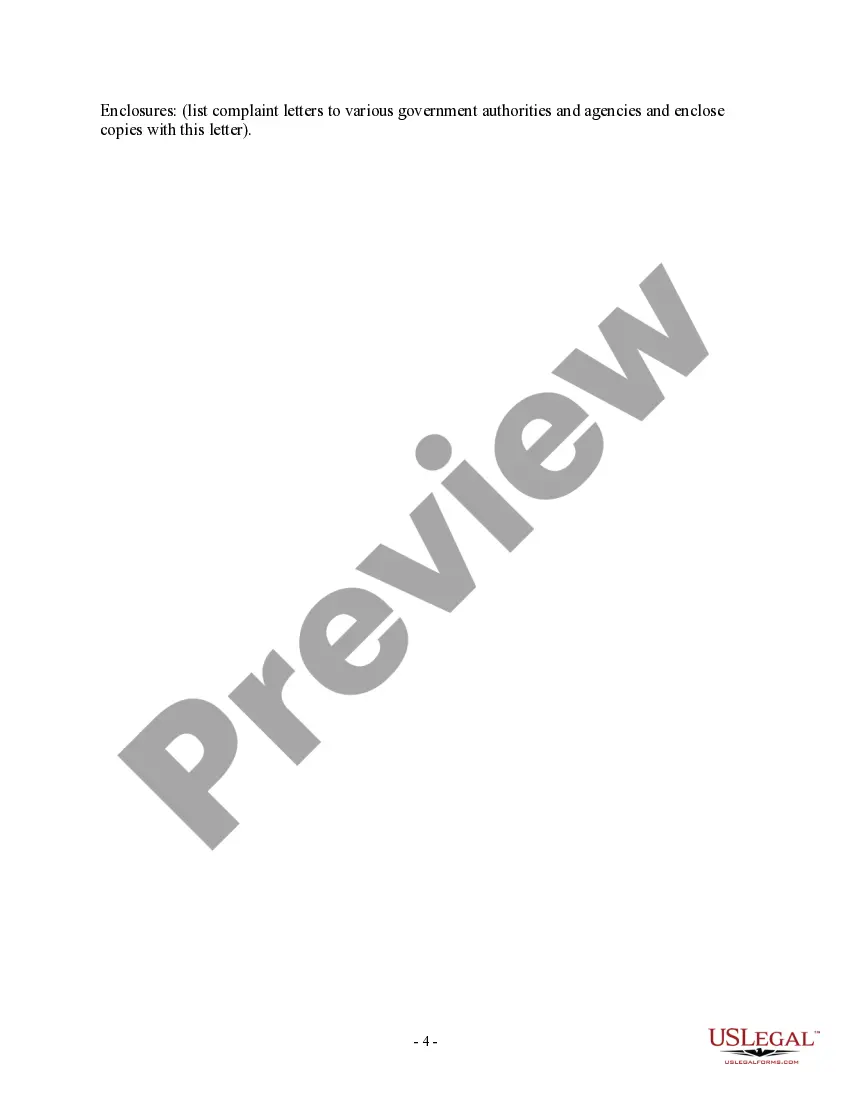
- Consider following up with complaints to regulatory agencies if violations continue after this notice.
Looking for another form?





Form popularity
FAQ
Create a payment plan. Pay it off in one lump sum. Settle the debt for less than you owe.
Text Messages and Emails A third-party debt collector is permitted to send you electronic messages including texts and emails. Each of these messages must include instructions for a consumer to opt out of receiving those types of messages.
Yes. When a debt is sold to a collection agency, you then owe the money to them instead, meaning you still have to pay what you owe. This is the case whether your debt has been sold to an agency, or the original lender has passed it to one to act on their behalf.
Never Give Them Your Personal Information. A call from a debt collection agency will include a series of questions. Never Admit That The Debt Is Yours. Even if the debt is yours, don't admit that to the debt collector. Never Provide Bank Account Information.
Text Messages and Emails A third-party debt collector is permitted to send you electronic messages including texts and emails. Each of these messages must include instructions for a consumer to opt out of receiving those types of messages.
Don't ignore them. Debt collectors will continue to contact you until a debt is paid. Find out debt information. Get it in writing. Don't give personal details over the phone. Try settling or negotiating.
If you pay the collection agency directly, the debt is removed from your credit report in six years from the date of payment. If you don't pay, it purges six years from the last activity date, but you may be at risk for wage garnishment.
The law: Collectors can call third parties such as family members, neighbors, friends, or co-workers only once to locate the debtor. When they do, they are not allowed to reveal the debt.. They can only make contact again under specific circumstances.
Debt collectors are allowed to contact third parties to obtain or confirm location information, but the FDCPA does not allow debt collectors to leave messages with third parties.The collector cannot ask the third-party to pass on a message, ask for other information, or harass the third-party.