Letter Informing Debt Collector of False or Misleading Misrepresentations in Collection Activities - Using False Representation or Deceptive Means to Collect a Debt - Asserting that the Debt Collector Cannot Accept Partial Payments When They Can
What is this form?
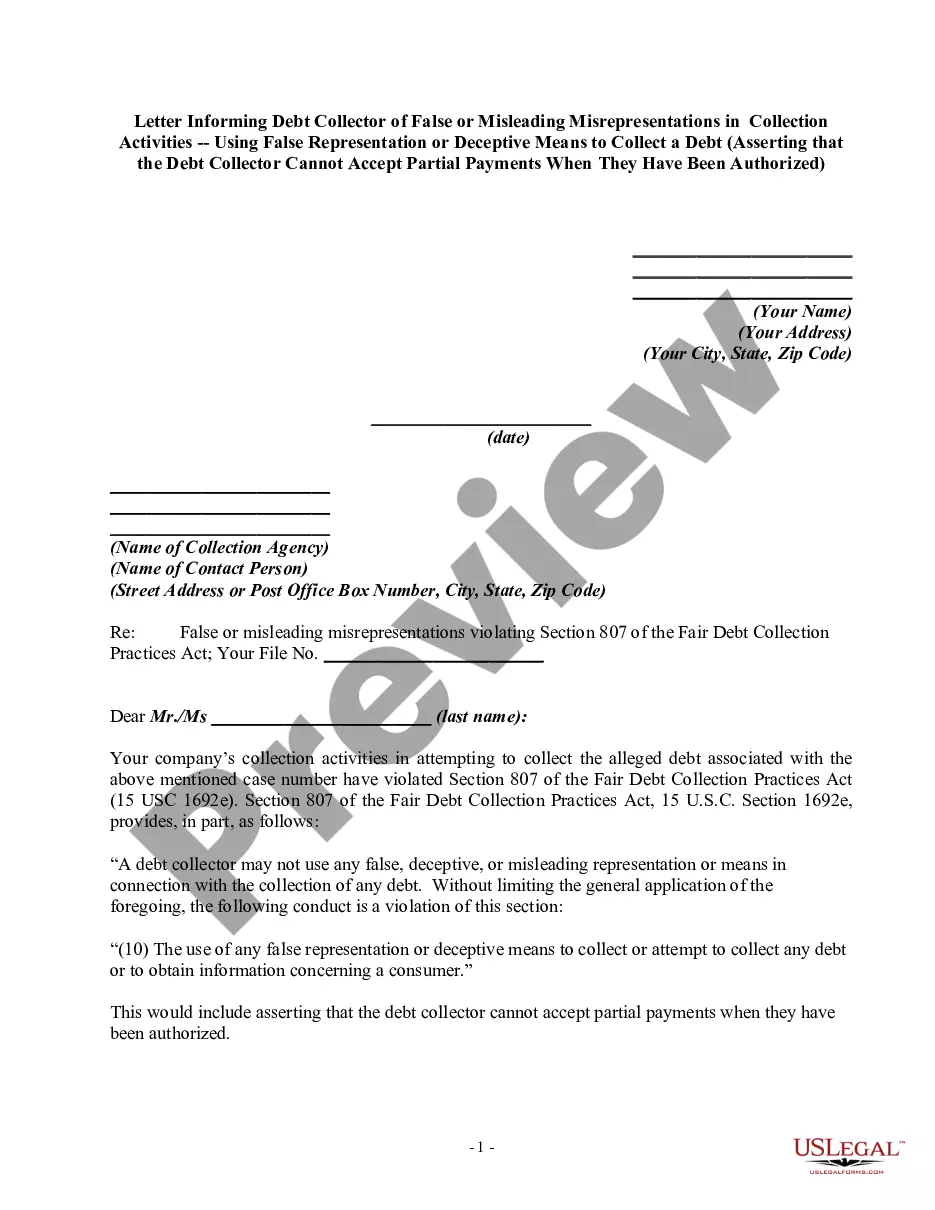
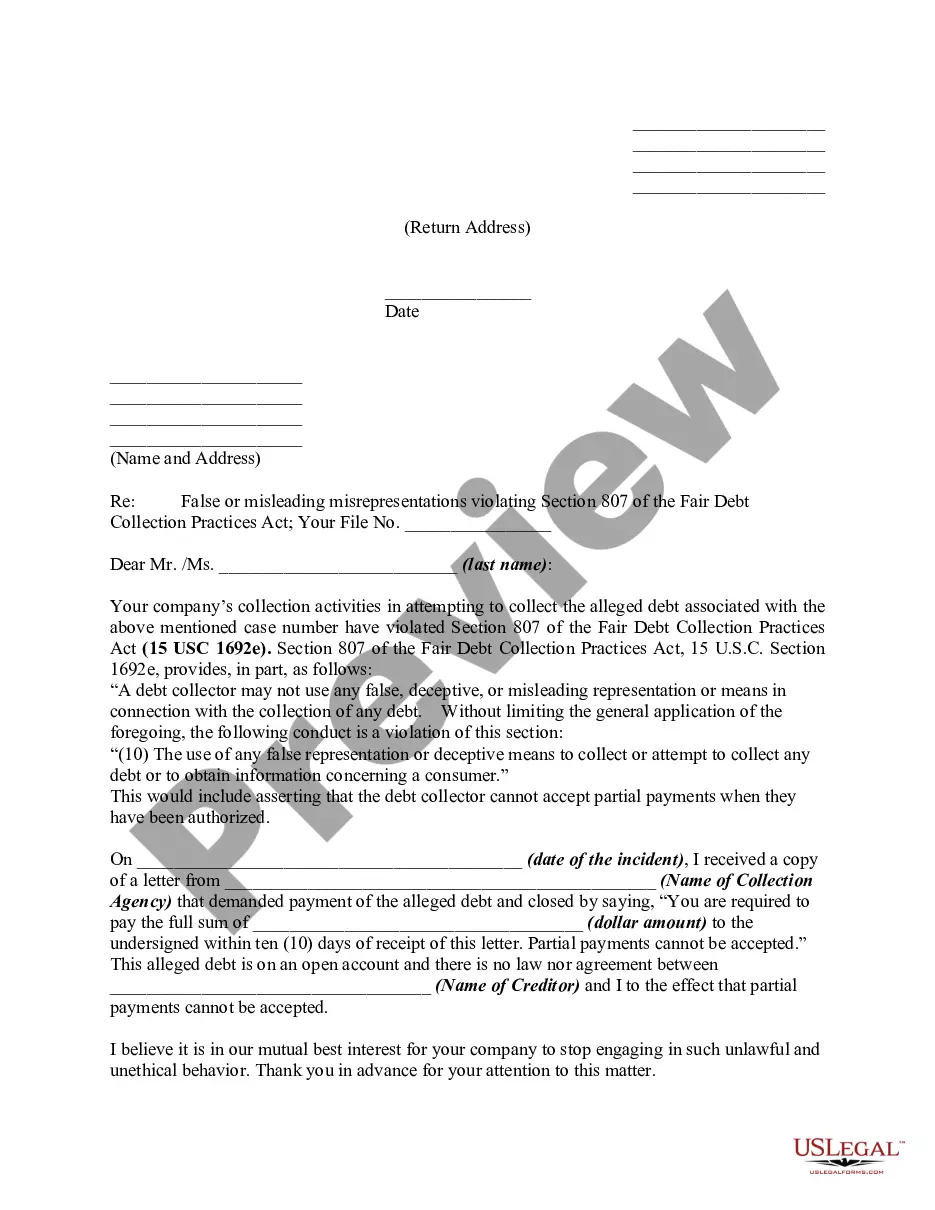
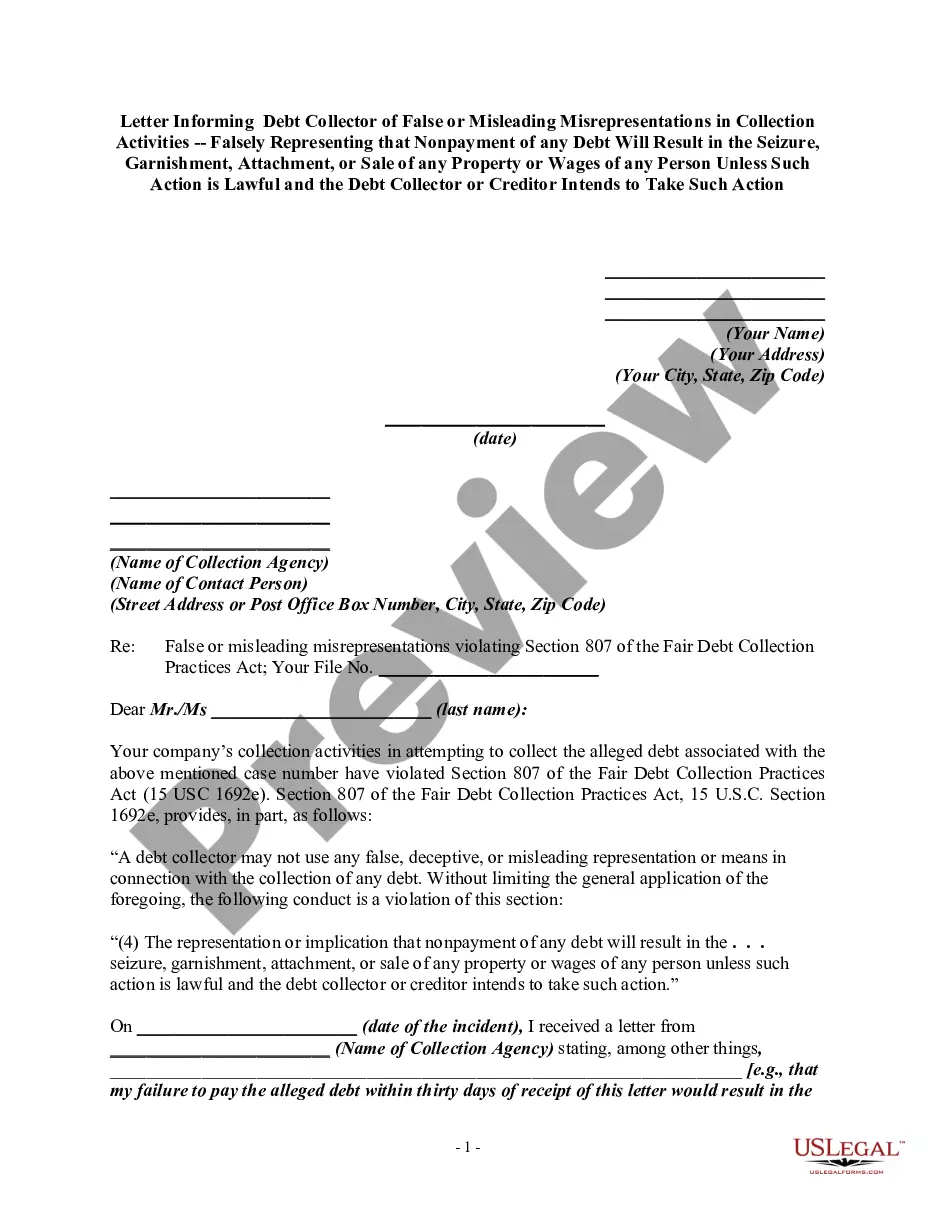
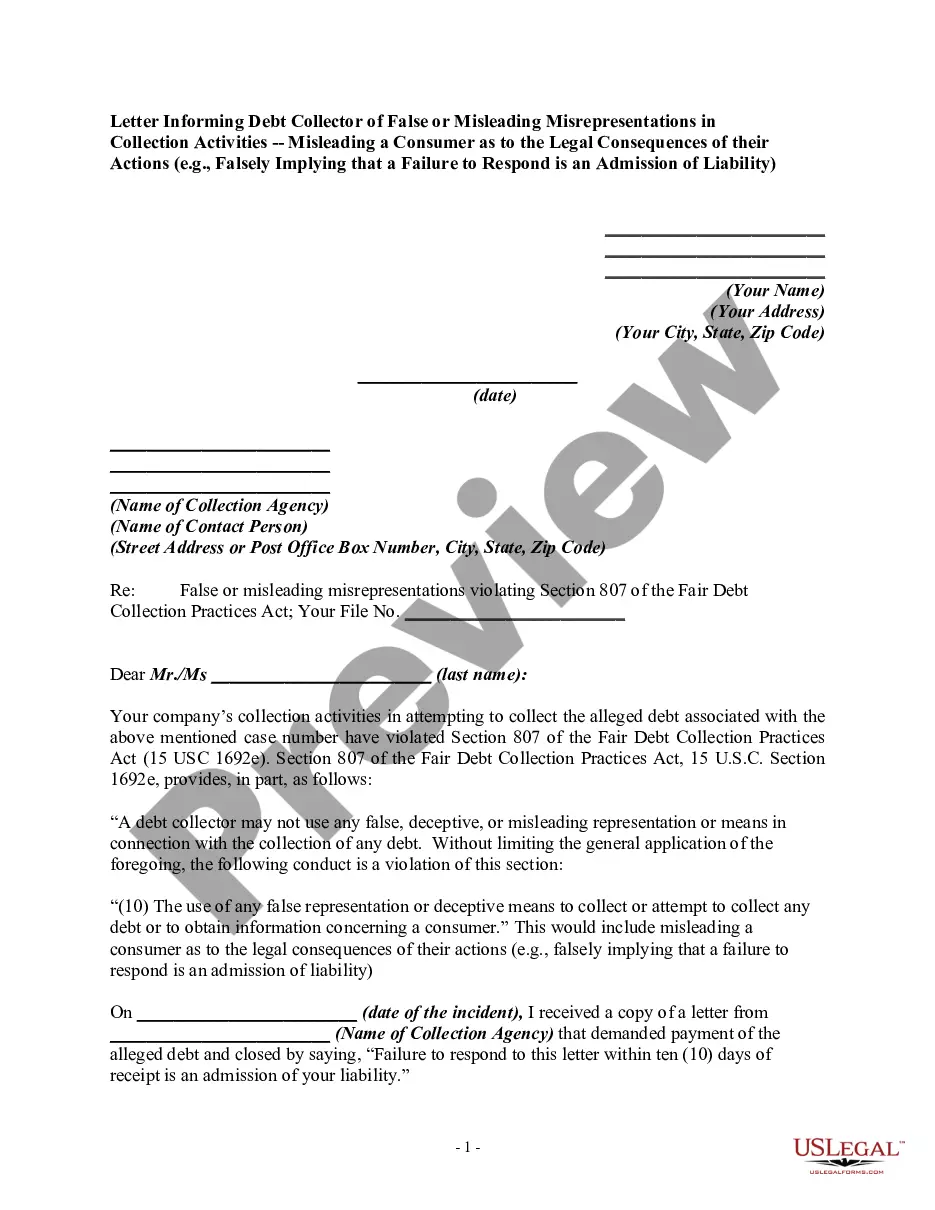
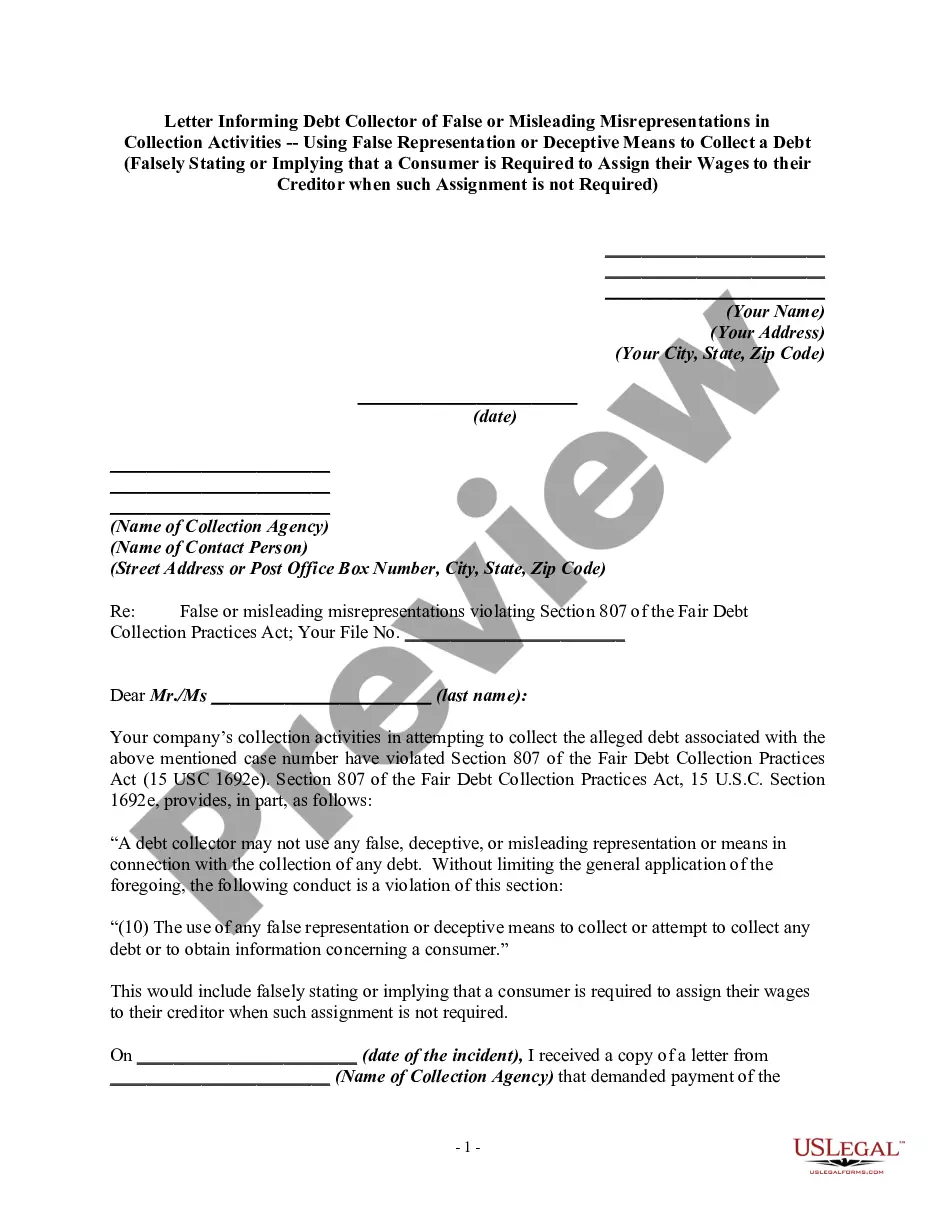
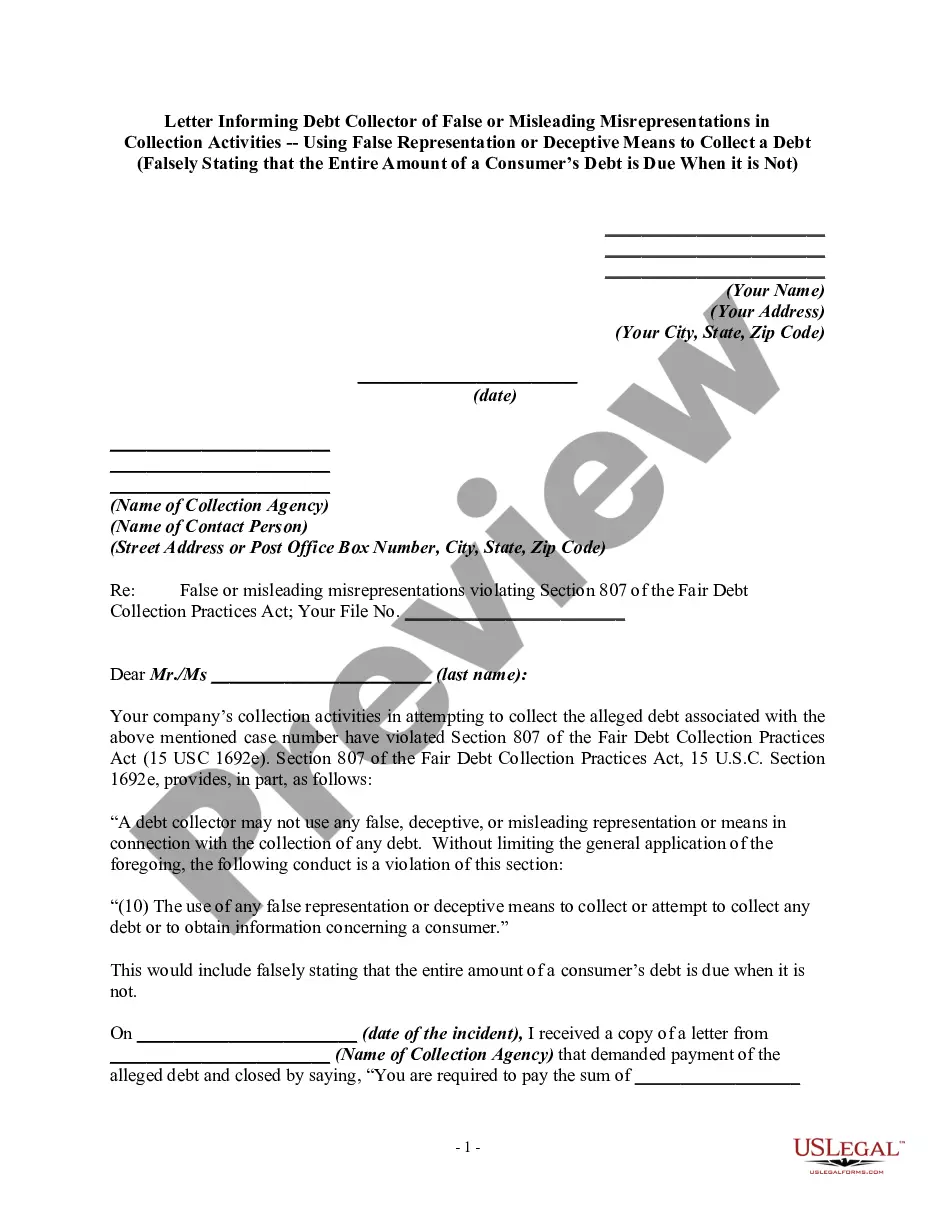
The Letter Informing Debt Collector of False or Misleading Misrepresentations in Collection Activities serves as a formal notice to a debt collector, highlighting violations of the Fair Debt Collection Practices Act. This letter is specifically designed to address situations where a collector falsely asserts they cannot accept partial payments on a debt, thereby protecting your rights as a consumer. This form is crucial for individuals facing aggressive collection methods that do not comply with legal standards."
Key components of this form
- Your name and contact information.
- Date of the correspondence.
- Name and address of the collection agency.
- Specific reference to the alleged debt and associated case number.
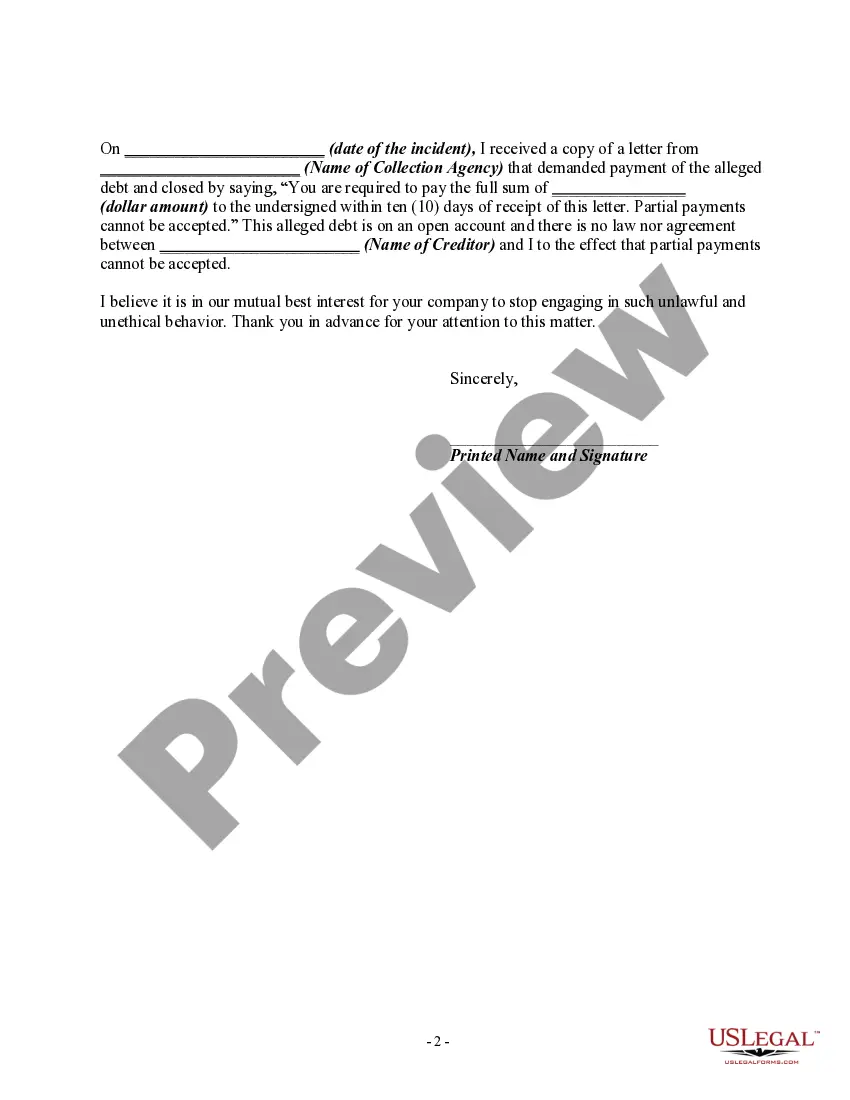
- Detailed account of the misleading representation made by the debt collector.
- Your request for the debt collector to cease unlawful activities.
- Your printed name and signature.
When to use this document
This form should be used if you receive communication from a debt collector that includes false statements regarding your payment options. If a collector claims they cannot accept partial payments when they are legally allowed to do so, this letter serves as a method to formally address that misleading representation and assert your rights under the Fair Debt Collection Practices Act.
Who this form is for
- Consumers who have received a misleading debt collection notice.
- Individuals seeking to protect their rights against unlawful collection practices.
- Anyone who has been informed by a debt collector that partial payments cannot be accepted.
Instructions for completing this form
- Identify yourself by entering your full name and address at the top of the letter.
- Fill in the date when you are sending the letter.
- Provide the name and address of the collection agency and a specific contact person if available.
- Clearly state the reference to the alleged debt and any relevant case number.
- Detail the misleading statement made by the collector regarding the acceptance of partial payments.
- Sign your name at the bottom, ensuring to print it above your signature for clarity.
Notarization guidance
This form does not typically require notarization unless specified by local law. It is advisable to check state requirements to ensure compliance.
Get your form ready online
Our built-in tools help you complete, sign, share, and store your documents in one place.
Make edits, fill in missing information, and update formatting in US Legal Forms—just like you would in MS Word.
Download a copy, print it, send it by email, or mail it via USPS—whatever works best for your next step.
Sign and collect signatures with our SignNow integration. Send to multiple recipients, set reminders, and more. Go Premium to unlock E-Sign.
If this form requires notarization, complete it online through a secure video call—no need to meet a notary in person or wait for an appointment.
We protect your documents and personal data by following strict security and privacy standards.

Make edits, fill in missing information, and update formatting in US Legal Forms—just like you would in MS Word.

Download a copy, print it, send it by email, or mail it via USPS—whatever works best for your next step.

Sign and collect signatures with our SignNow integration. Send to multiple recipients, set reminders, and more. Go Premium to unlock E-Sign.

If this form requires notarization, complete it online through a secure video call—no need to meet a notary in person or wait for an appointment.

We protect your documents and personal data by following strict security and privacy standards.
Common mistakes to avoid
- Neglecting to include your personal contact information.
- Failing to mention the specific date of the misleading communication.
- Omitting the relevant debt case number, which can confuse the collector.
- Not keeping a copy of the letter for your records.
Why complete this form online
- Convenience of filling out the form from home.
- Easy access to customizable templates tailored for various needs.
- Instant download option for quick delivery to the debt collector.
- Comprehensive guidance on filling out the form correctly.
Looking for another form?


Form popularity
FAQ
Never Give Them Your Personal Information. A call from a debt collection agency will include a series of questions. Never Admit That The Debt Is Yours. Even if the debt is yours, don't admit that to the debt collector. Never Provide Bank Account Information.
If you pay the collection agency directly, the debt is removed from your credit report in six years from the date of payment. If you don't pay, it purges six years from the last activity date, but you may be at risk for wage garnishment.
Once a debt collector receives written notice from a consumer that he or she refuses to pay the debt or wants the collector to stop further collection efforts, the debt collector must cease any further communication with the consumer except "(1) to advise the consumer that the debt collector's further efforts are being
You have the right to sue the collection agency if they act improperly for one year from the improper action. You can sue for lost wages and other expenses incurred, including legal and court costs. Also, the judge is allowed to award you up to $1,000 in punitive damages.
No. Debt collectors are prohibited from deceiving or misleading you while trying to collect a debt. Debt collectors are generally prohibited under federal law from using any false, deceptive, or misleading misrepresentation in collecting a debt.
In general, if you want to escalate the issue with the debt collector, you should do so within 30 days of receiving the validation letter. This includes disputing that you owe the debt, requesting additional verification of the debt, or requesting the name and address of the original creditor.
Debt validation is your federal right granted under the Fair Debt Collection Practices Act (FDCPA). To request debt validation, you must send a written request to the debt collector within 30 days of being contacted by the collection agency.
Debt collectors cannot harass or abuse you. They cannot swear, threaten to illegally harm you or your property, threaten you with illegal actions, or falsely threaten you with actions they do not intend to take. They also cannot make repeated calls over a short period to annoy or harass you.