Right of Publicity - Picture and Name Release
About this form
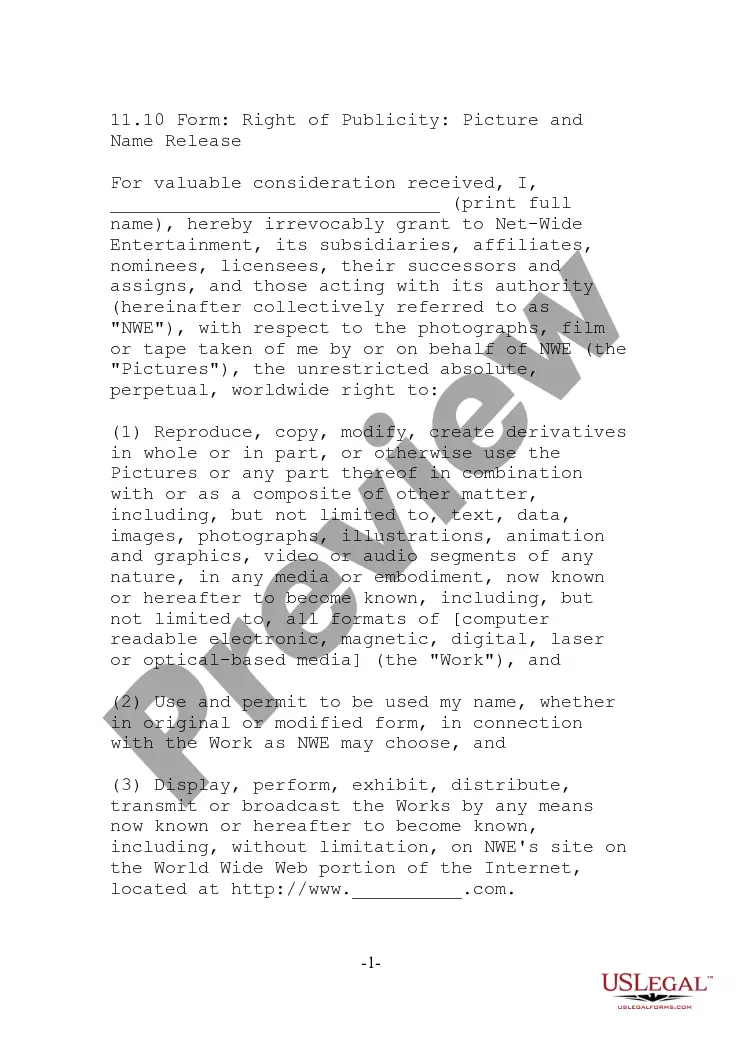
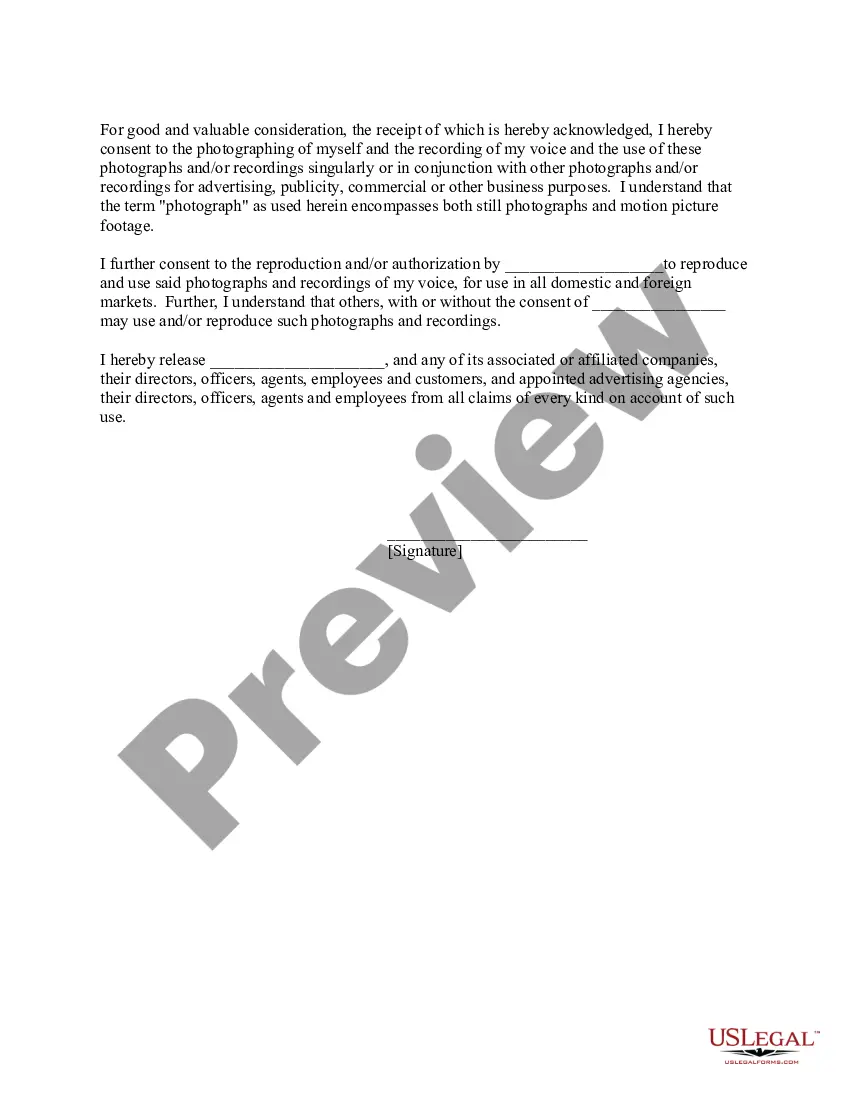
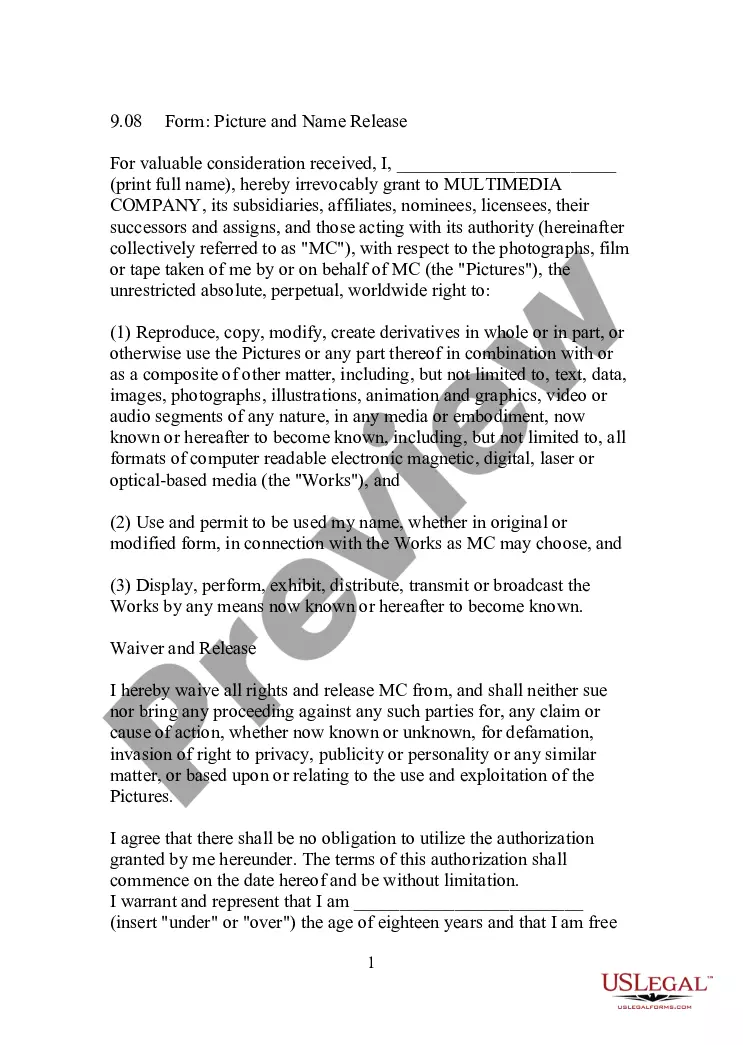
The Right of Publicity - Picture and Name Release form is a legal document that allows individuals to grant permission for the use of their name and likeness in promotional materials or media. This form protects the rights of individuals while providing businesses, such as Net-Wide Entertainment, the freedom to utilize these images and names in various formats and channels without seeking additional consent. It differs from standard contracts as it specifically addresses the use of personal image and name in the context of publicity and commercial exploitation.
Key parts of this document
- Identification of the individual granting permission, including full name.
- Grant of the right to use photographs and likeness without limitations.
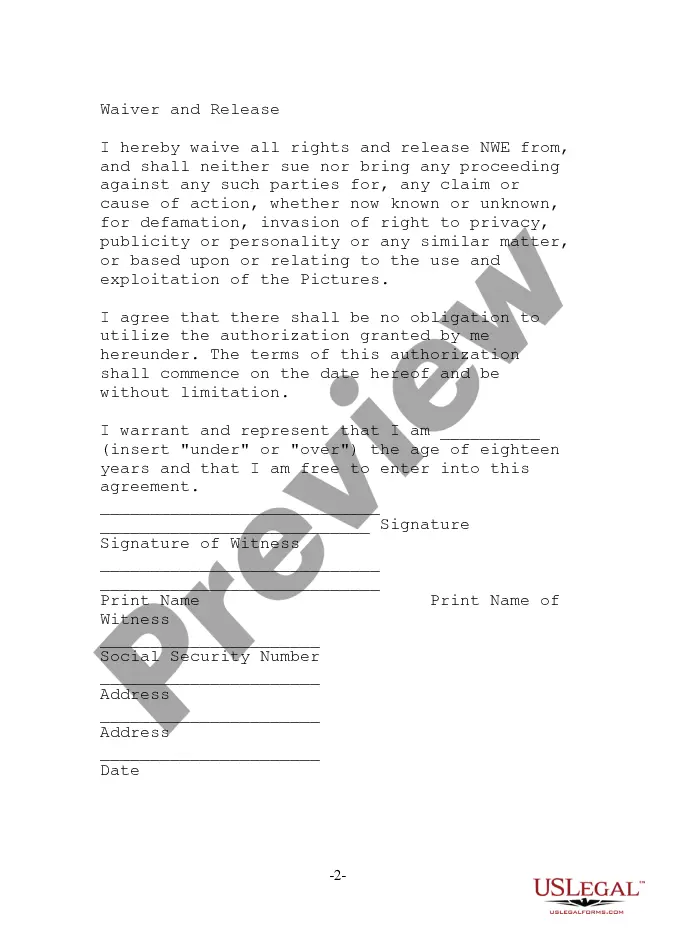
- Warranties regarding the individual's age and ability to enter into the agreement.
- Provisions for waiver and release of liability concerning the use of the individual's likeness.
- Space for signatures of the individual and witnesses.
When to use this document
This form should be used when an individual is being photographed or filmed for commercial or promotional purposes. For example, it is necessary when a business wants to include images of actors, models, or participants in advertisements, websites, social media, or other media outlets. Using this form ensures that the business has legal rights to use the individual's likeness and name without risking potential legal claims regarding privacy or publicity rights.
Who this form is for
Individuals and businesses should consider this form when:
- Businesses engaging models or actors in promotional materials.
- Photographers capturing images intended for commercial use.
- Individuals participating in any media production who want to protect their rights.
Steps to complete this form
- Identify the individual granting permission by entering their full name.
- Specify the terms of the grant, ensuring all rights to use the pictures and names are clearly stated.
- Enter the date of the agreement and verify the individual's age.
- Watch for spaces requiring the signatures of the individual and a witness.
- If the individual is under the age of eighteen, ensure that a parent or guardian signs where indicated.
Does this form need to be notarized?
In most cases, this form does not require notarization. However, some jurisdictions or signing circumstances might. US Legal Forms offers online notarization powered by Notarize, accessible 24/7 for a quick, remote process.
Get your form ready online
Our built-in tools help you complete, sign, share, and store your documents in one place.
Make edits, fill in missing information, and update formatting in US Legal Forms—just like you would in MS Word.
Download a copy, print it, send it by email, or mail it via USPS—whatever works best for your next step.
Sign and collect signatures with our SignNow integration. Send to multiple recipients, set reminders, and more. Go Premium to unlock E-Sign.
If this form requires notarization, complete it online through a secure video call—no need to meet a notary in person or wait for an appointment.
We protect your documents and personal data by following strict security and privacy standards.

Make edits, fill in missing information, and update formatting in US Legal Forms—just like you would in MS Word.

Download a copy, print it, send it by email, or mail it via USPS—whatever works best for your next step.

Sign and collect signatures with our SignNow integration. Send to multiple recipients, set reminders, and more. Go Premium to unlock E-Sign.

If this form requires notarization, complete it online through a secure video call—no need to meet a notary in person or wait for an appointment.

We protect your documents and personal data by following strict security and privacy standards.
Common mistakes to avoid
- Failing to include a witness signature can invalidate the agreement.
- Not specifying the intended use of pictures and likeness can lead to misunderstandings.
- Overlooking the age requirement for individuals signing the form.
Why complete this form online
- Convenient access to the form allows for quick download and completion.
- Editability enables users to tailor the form to their specific needs easily.
- Reliable templates drafted by licensed attorneys ensure compliance with legal standards.
Legal use & context
- This form establishes a binding agreement that waives the right to sue for publicity rights violations.
- It clearly delineates how the image and name may be used, providing legal protection for both parties.
- Enforceability may vary based on interpretation in different jurisdictions, so alignment with regional laws is crucial.
Key takeaways
- The Right of Publicity - Picture and Name Release is essential for legal use of an individual's likeness in media.
- Completing this form properly protects both the individual and the business from future disputes.
- Always ensure that proper agreements are executed for age requirements and witness signatures.
Looking for another form?

Form popularity
FAQ
The celebrity's likeness is not copyrightable, but celebrities have a right of publicity.Courts in recent cases have found First Amendment protection for artists using the celebrities' images in certain art works. These cases do not state that an artist can exploit a celebrity's likeness without permission.
You cannot trademark your likeness just to prevent its use without your express permission; there must be a commercial activity associated with your likeness in order for you to register for a trademark. The United States Patent and Trademark Office will not register a trademark simply for the sake of registration.
When a business uses the image or likeness of an individual without his or her consent or permission, they may file a suit for misappropriation of likeness.In many states, those that use a person's likeness or characteristics may be sued if they use these for personal gain or exploitative purposes.
It is generally permissible for people to take photographs at any public place or any private place that they own or rent. Being present on someone else's private property generally requires the property owner's consent to take photos.
The right of publicity, sometimes referred to as personality rights, is the right of an individual to control the commercial use of one's identity, such as name, image, likeness, or other unequivocal identifiers.
Specifically, California recognizes both common law and statutory rights. California Civil Code, Section 3344, provides that it is unlawful, for the purpose of advertising or selling, to knowingly use another's name, voice, signature, photograph, or likeness without that person's prior consent.
That US law states that the publication of a photo without consent is permitted if it serves a "socially useful" purpose.The Court said that in assessing a matter, the artist's right to publish their work must be taken into consideration, but so too must the subject's right not to consent.
Although the right of publicity is commonly associated with celebrities, every person, regardless of how famous, has a right to prevent unauthorized use of their name or image to sell products. This right also prohibits any implication that a person endorses a product (without the person's permission).
In most states, you can be sued for using someone else's name, likeness, or other personal attributes without permission for an exploitative purpose. Usually, people run into trouble in this area when they use someone's name or photograph in a commercial setting, such as in advertising or other promotional activities.