Celebrity Name and Likeness Release for Use on a Web Site
What is this form?
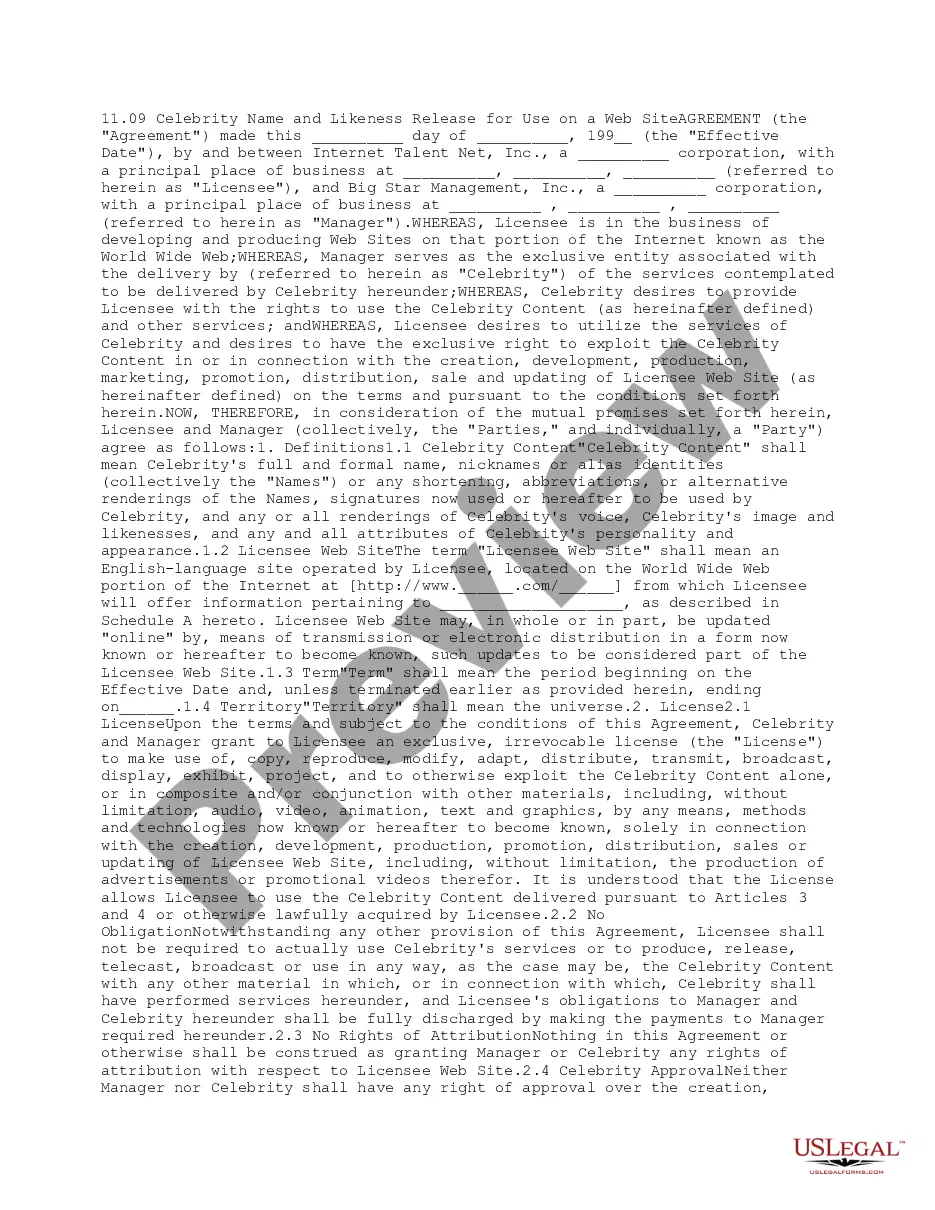
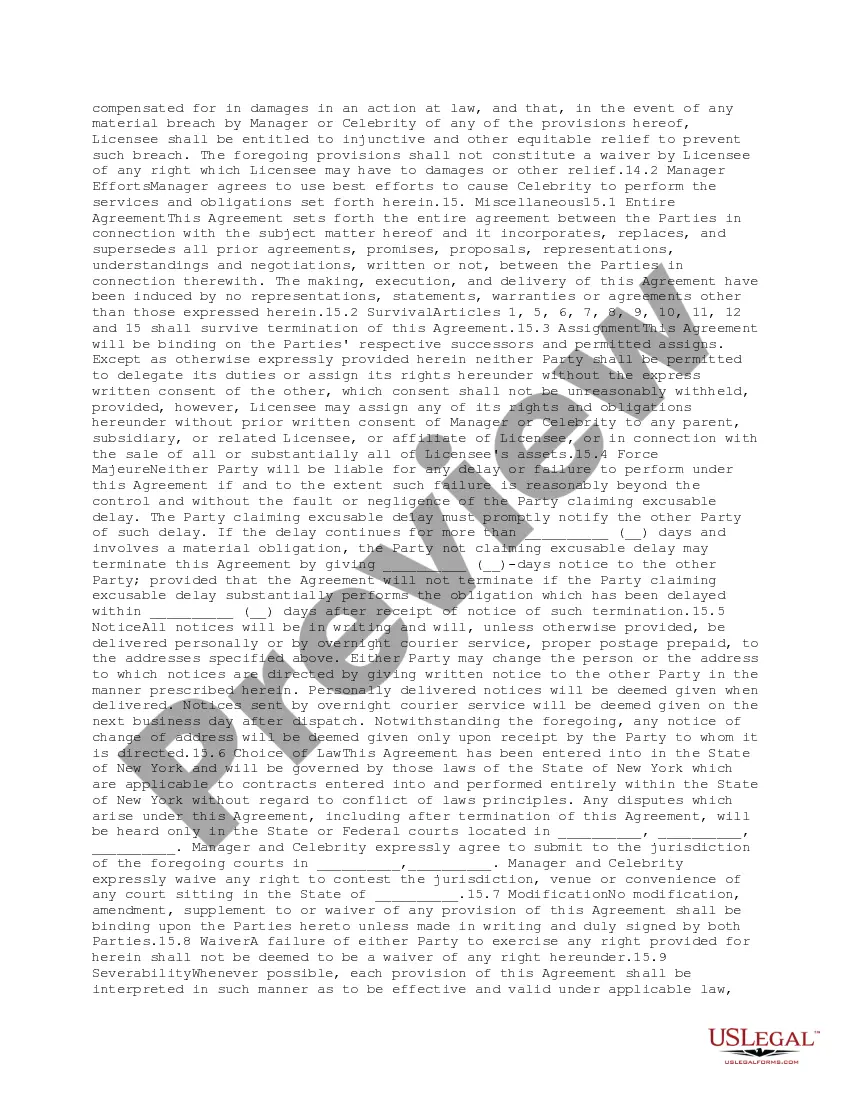
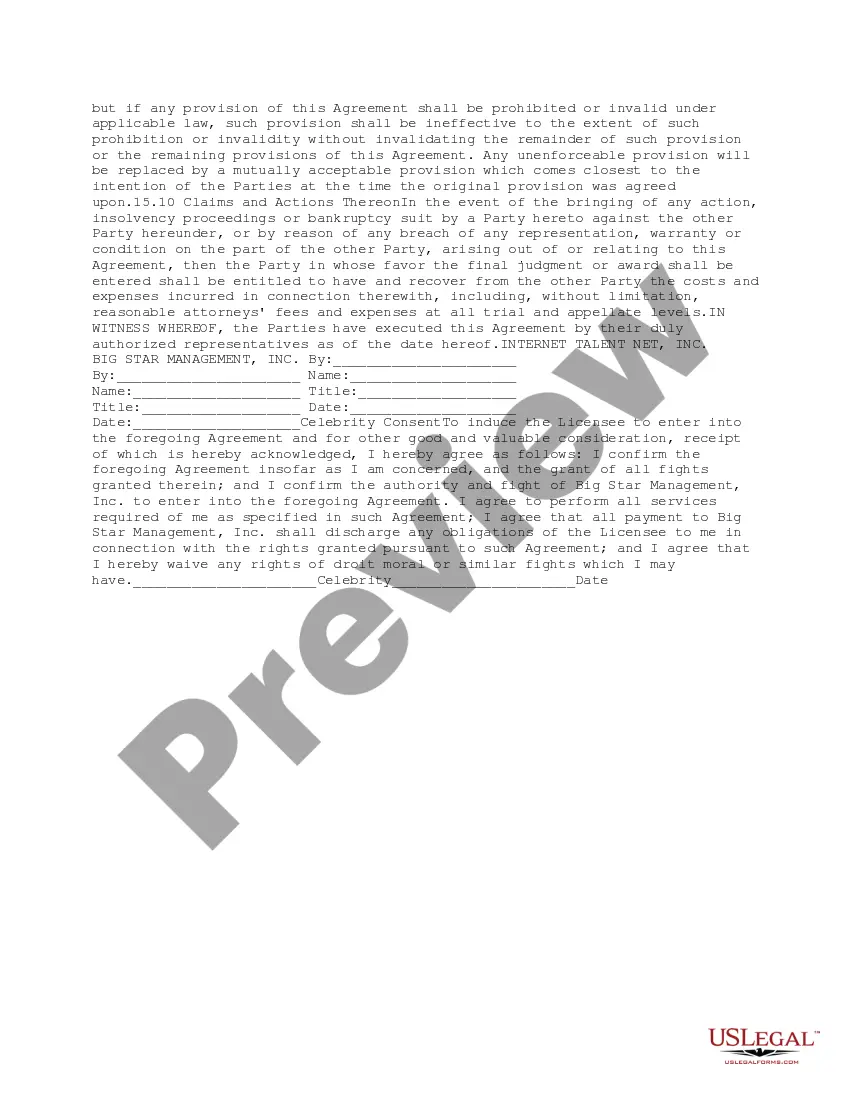
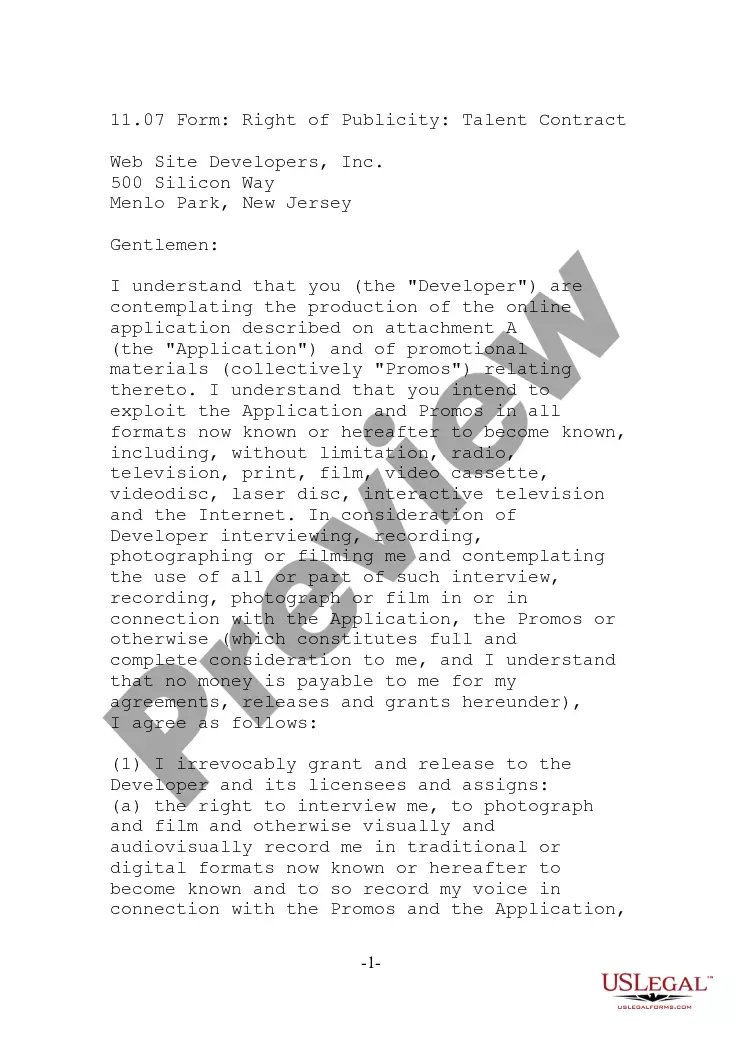
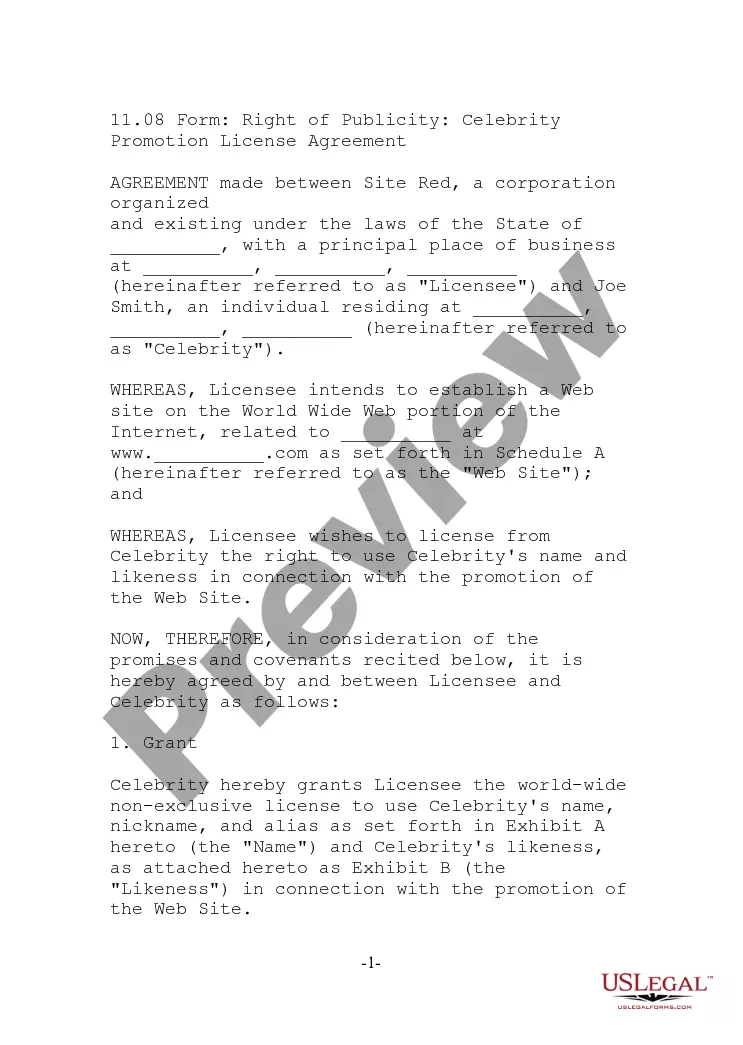
The Celebrity Name and Likeness Release for Use on a Web Site is a legal agreement that allows a licensee to use a celebrity's name and likeness on their website. This form delineates the rights and responsibilities of both the licensee and the manager of the celebrity, ensuring that the use of the celebrity's content is lawful. It serves to protect both parties' interests and clarify the expectations around how the celebrity's image and persona will be utilized online, differing from generic release forms by focusing specifically on the digital context.
Key components of this form
- License Agreement: Details the rights granted to the licensee to use the celebrity's content.
- Definitions: Clarifies terms such as "Celebrity Content" and "Licensee Web Site".
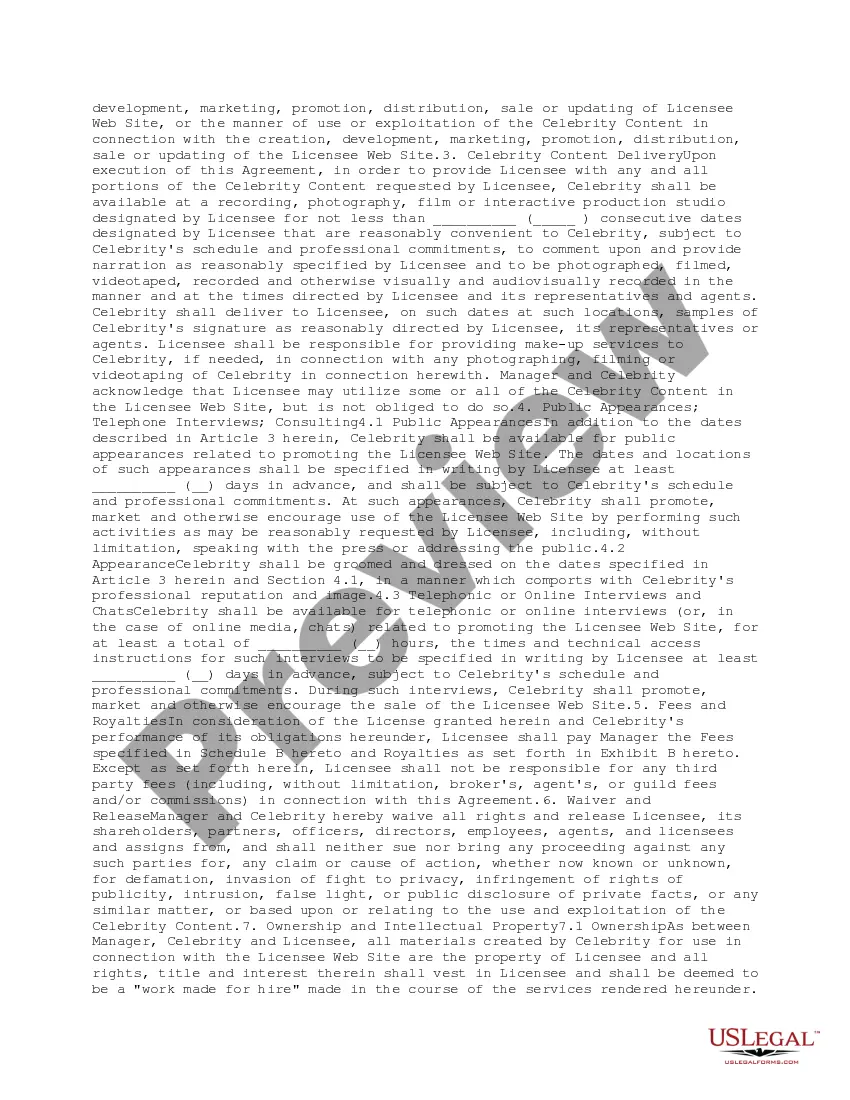
- Public Appearances: Outlines the celebrity's obligations regarding public appearances and interviews.
- Fees and Royalties: Specifies payment obligations and terms related to the use of the celebrity's content.
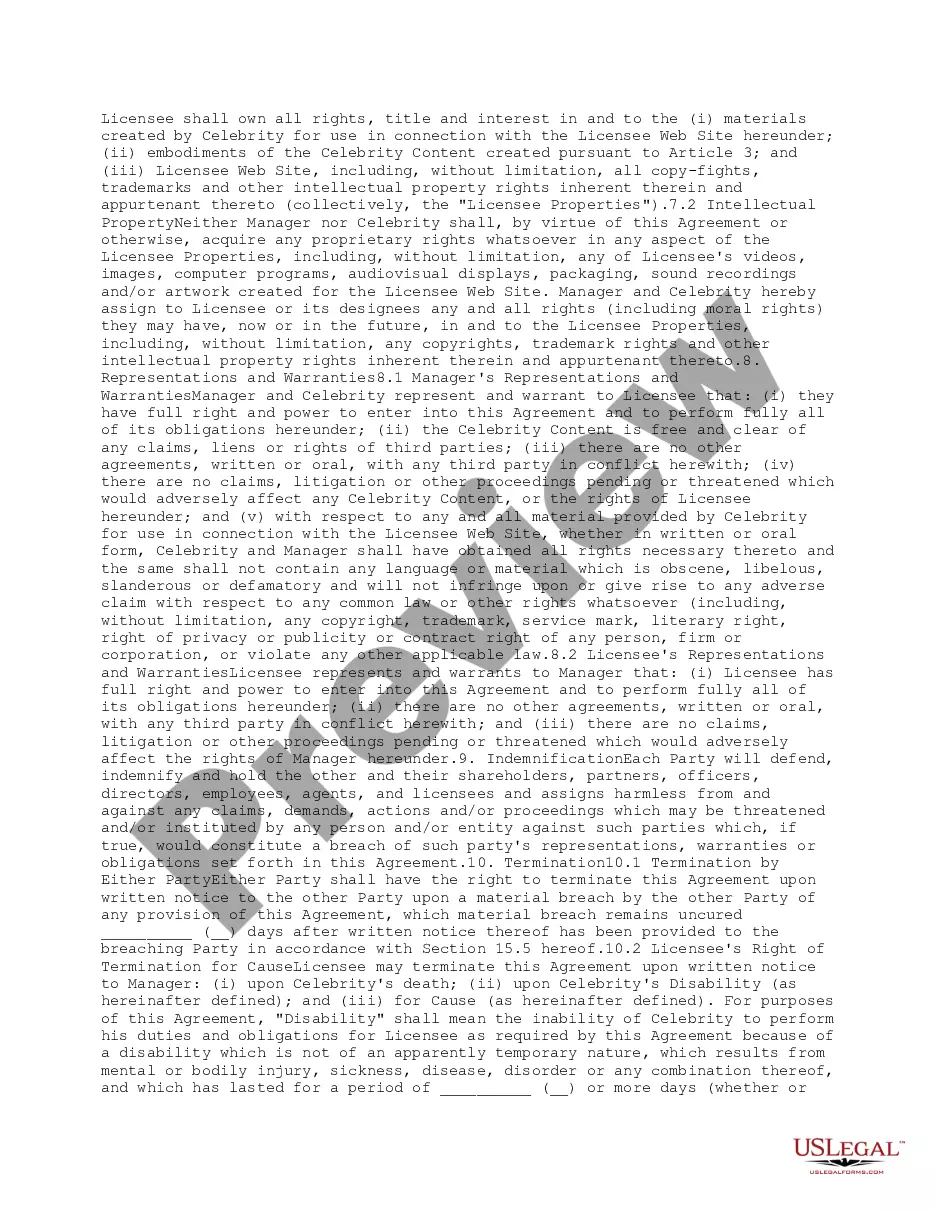
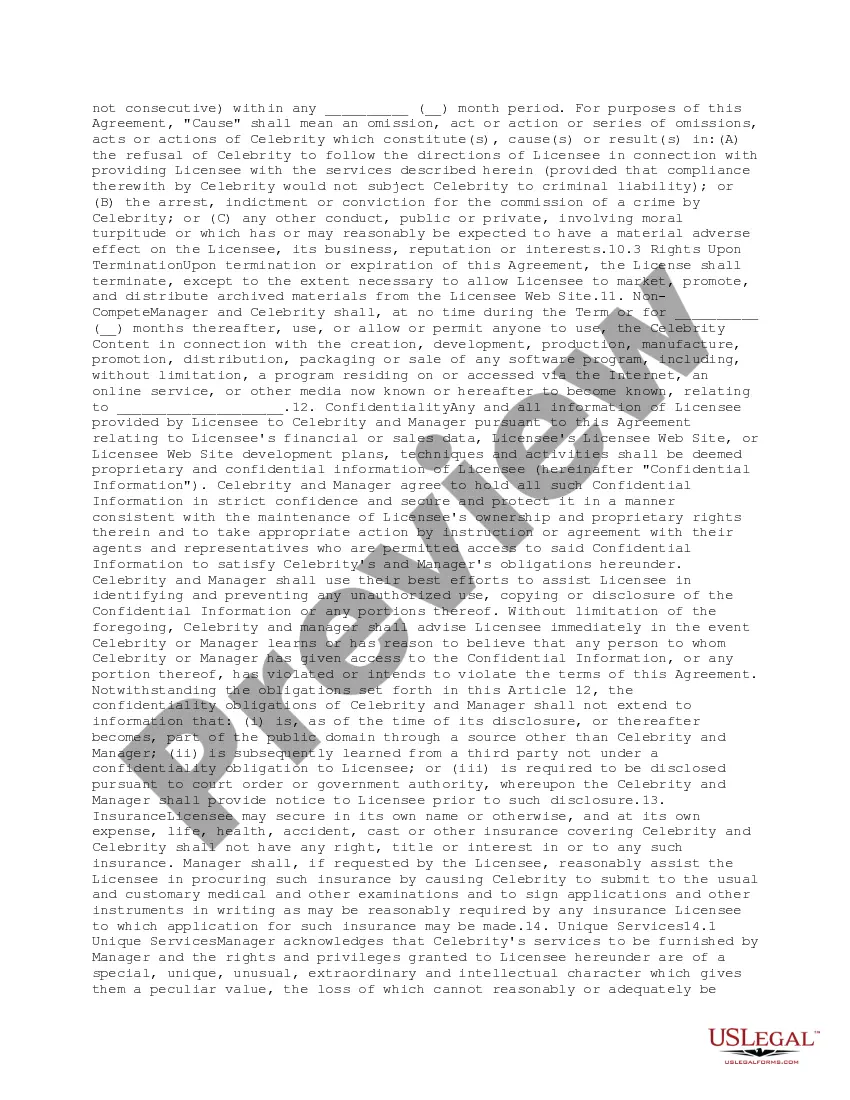
- Termination Clause: Details the circumstances under which the agreement can be terminated.
Situations where this form applies
This form should be utilized when a business or individual wishes to feature a celebrity's name, likeness, or other personal attributes on their website for promotional or marketing purposes. It is essential when launching a new online presence that plans to leverage celebrity endorsements, promotions, or appearances, thereby ensuring compliance with legal requirements surrounding publicity rights.
Who this form is for
- Businesses seeking to promote products, services, or events by using a celebrityâs likeness.
- Website developers aiming to create content featuring celebrities.
- Marketing agencies working on campaigns that involve celebrity endorsements.
- Managers of celebrities looking to set clear terms for the use of their client's image and name.
Completing this form step by step
- Identify the parties involved by filling in the names and addresses of the licensee and the manager.
- Specify the date the agreement becomes effective and the term duration.
- Detail the specific celebrity content that will be used, including names and likeness descriptions.
- Outline any public appearance obligations or interview times that the celebrity must fulfill.
- Complete any financial details regarding fees and royalties as per the agreement.
Is notarization required?
Notarization is not commonly needed for this form. However, certain documents or local rules may make it necessary. Our notarization service, powered by Notarize, allows you to finalize it securely online anytime, day or night.
Get your form ready online
Our built-in tools help you complete, sign, share, and store your documents in one place.
Make edits, fill in missing information, and update formatting in US Legal Forms—just like you would in MS Word.
Download a copy, print it, send it by email, or mail it via USPS—whatever works best for your next step.
Sign and collect signatures with our SignNow integration. Send to multiple recipients, set reminders, and more. Go Premium to unlock E-Sign.
If this form requires notarization, complete it online through a secure video call—no need to meet a notary in person or wait for an appointment.
We protect your documents and personal data by following strict security and privacy standards.

Make edits, fill in missing information, and update formatting in US Legal Forms—just like you would in MS Word.

Download a copy, print it, send it by email, or mail it via USPS—whatever works best for your next step.

Sign and collect signatures with our SignNow integration. Send to multiple recipients, set reminders, and more. Go Premium to unlock E-Sign.

If this form requires notarization, complete it online through a secure video call—no need to meet a notary in person or wait for an appointment.

We protect your documents and personal data by following strict security and privacy standards.
Mistakes to watch out for
- Failing to clearly define the scope of permitted use of the celebrityâs content.
- Not specifying the duration or territory of the license, which can lead to misunderstandings.
- Neglecting to confirm the celebrity's availability for public appearances during the term.
- Omitting detailed payment terms, which can lead to disputes over fees and royalties.
Advantages of online completion
- Convenience of completing the agreement from anywhere, without the need for in-person meetings.
- Editability allows users to modify terms according to specific scenarios and needs.
- Access to legal forms drafted by licensed attorneys ensures reliability and compliance.
- Simplified process with clear instructions reduces the likelihood of errors.
Legal use & context
- This release ensures the legal use of a celebrity's image and name, mitigating risks of publicity rights violations.
- Protects the licensee from potential legal claims related to unauthorized use of the celebrityâs likeness.
- Must comply with state laws regarding the use of likeness, which may vary.
Summary of main points
- Utilize this form to gain permission for the online use of a celebrityâs likeness legally.
- Understand the importance of clearly defined terms in the agreement.
- Be aware of state-specific regulations and the potential need for notarization.
- Read and follow through with all components to avoid common contractual pitfalls.
Looking for another form?
Form popularity
FAQ
California Civil Code, Section 3344, provides that it is unlawful, for the purpose of advertising or selling, to knowingly use another's name, voice, signature, photograph, or likeness without that person's prior consent.
The celebrity's likeness is not copyrightable, but celebrities have a right of publicity.Courts in recent cases have found First Amendment protection for artists using the celebrities' images in certain art works. These cases do not state that an artist can exploit a celebrity's likeness without permission.
In California, celebrity names are protected even after their death by the California Celebrities Rights Act - Wikipedia (Hollywood is in California after all.)Technically speaking (under U.S. copyright law), names cannot be copyrighted.
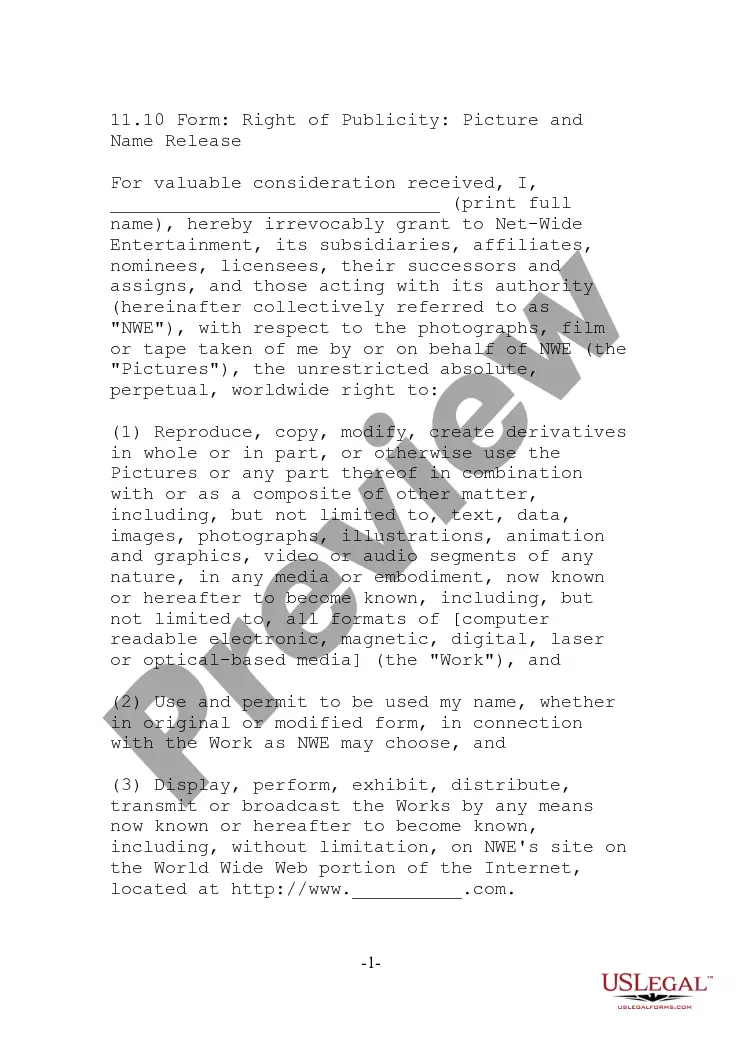
The right of publicity, sometimes referred to as personality rights, is the right of an individual to control the commercial use of one's identity, such as name, image, likeness, or other unequivocal identifiers.
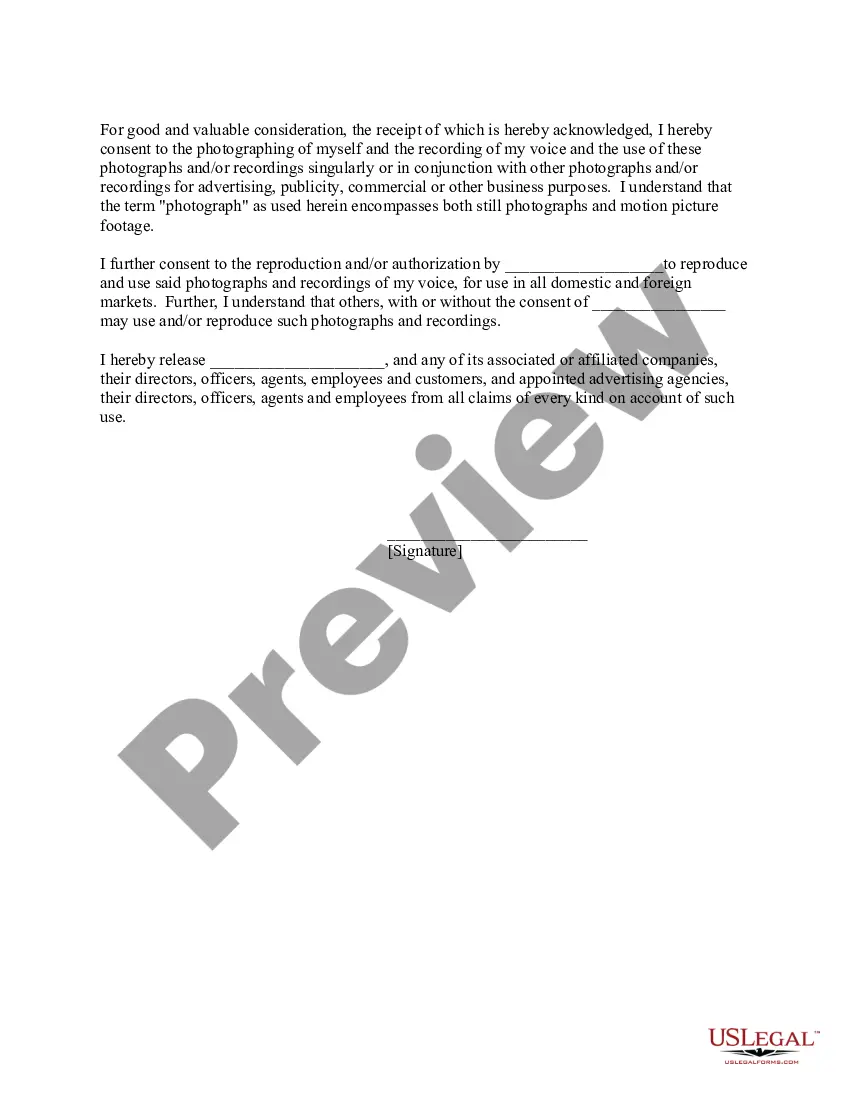
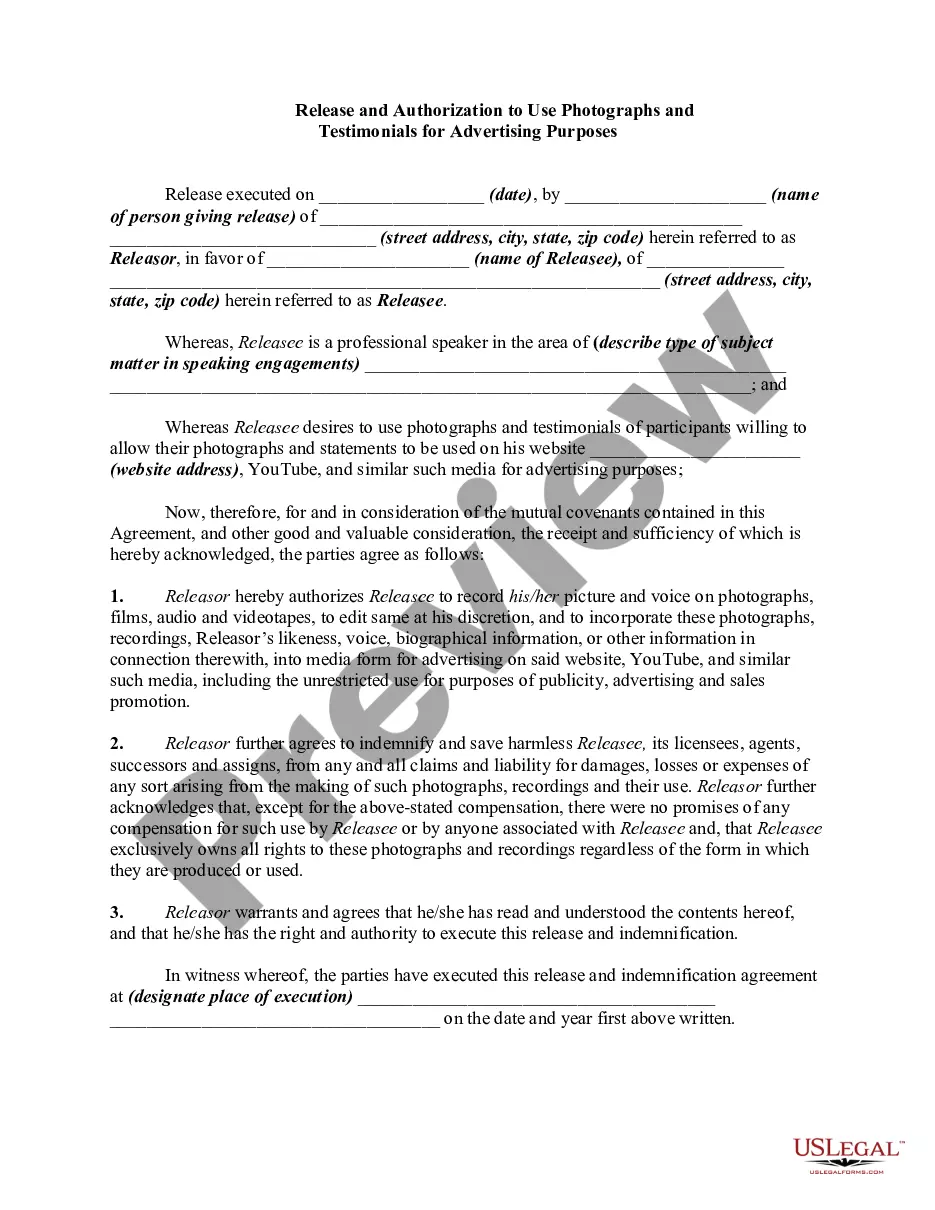
What is a Release for Use of Likeness? When you need to use someone's image (for instance, a photograph or video) in a publication, like a newsletter, magazine or website, a Release for Use of Likeness gives you permission from the person in that image.
Specifically, California recognizes both common law and statutory rights. California Civil Code, Section 3344, provides that it is unlawful, for the purpose of advertising or selling, to knowingly use another's name, voice, signature, photograph, or likeness without that person's prior consent.
Although the name is associated with a person, that does not make it a trademark, even if that person is famous. The law requires that the person claiming a trademark over her name prove what is called secondary meaning. The first meaning of the name is to identify the person.
There are two distinct legal claims that potentially apply to these kinds of unauthorized uses: (1) invasion of privacy through misappropriation of name or likeness ("misappropriation"); and (2) violation of the right of publicity.
A blanket release permits any use of the photographic image of the person signing the release and is suitable if the company or photographer needs an unlimited right to use the image. Stock photographers who sell their photos for unlimited purposes commonly use blanket releases.