Right of Publicity - Talent Contract
What this document covers
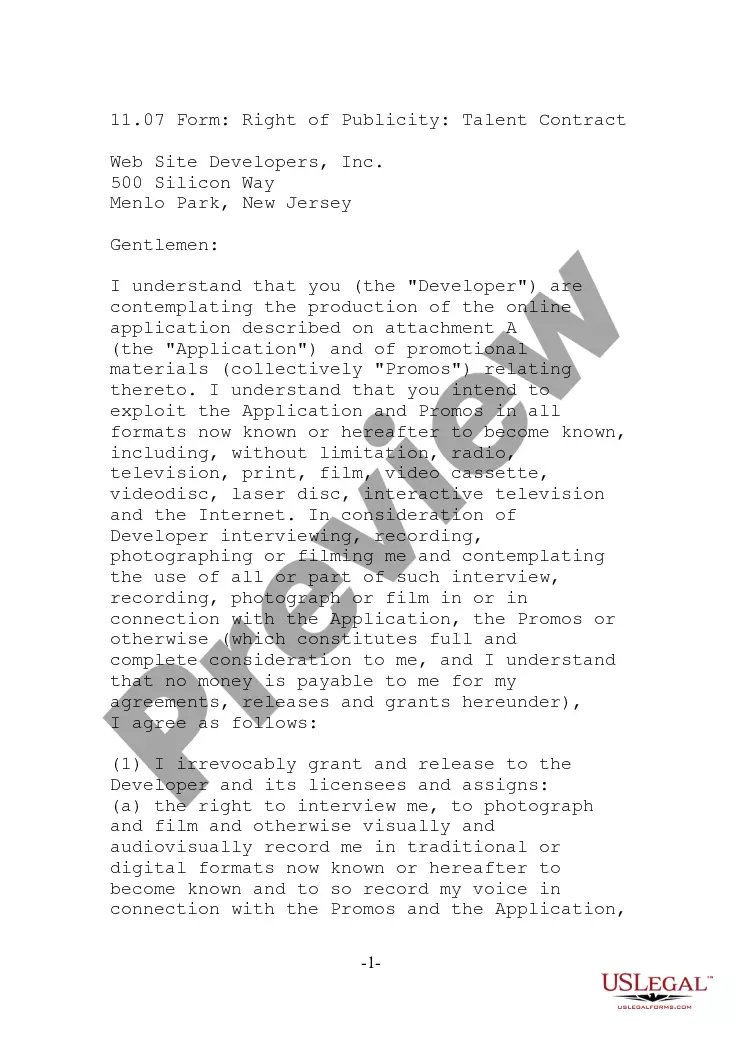
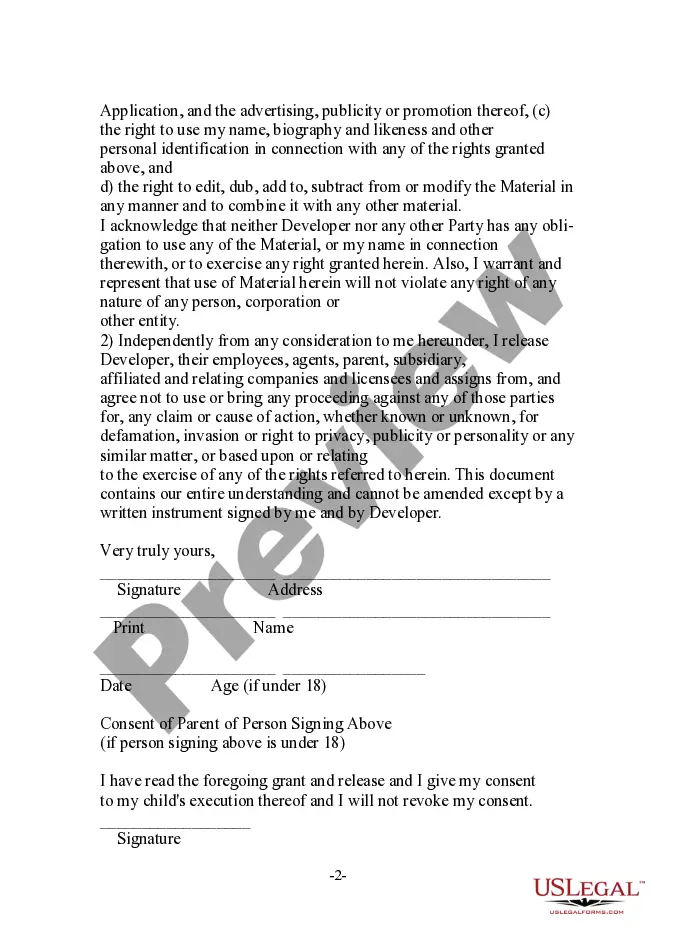
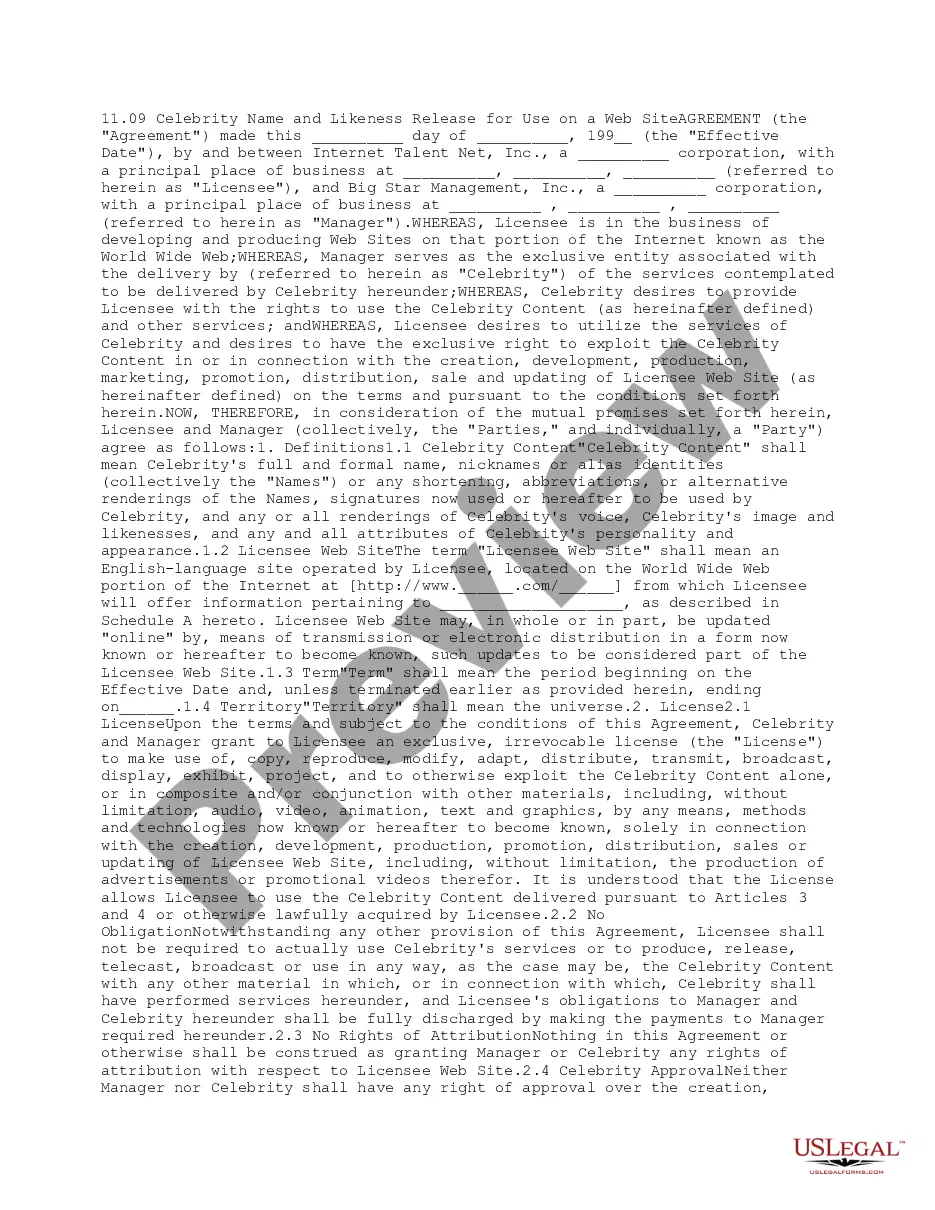
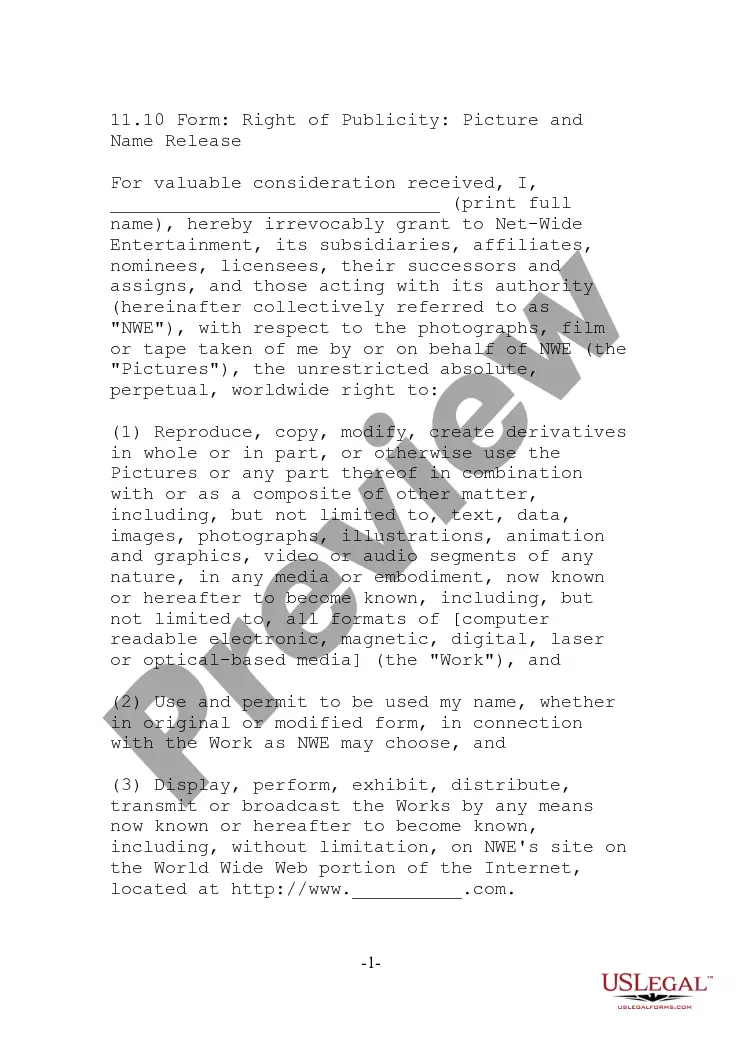
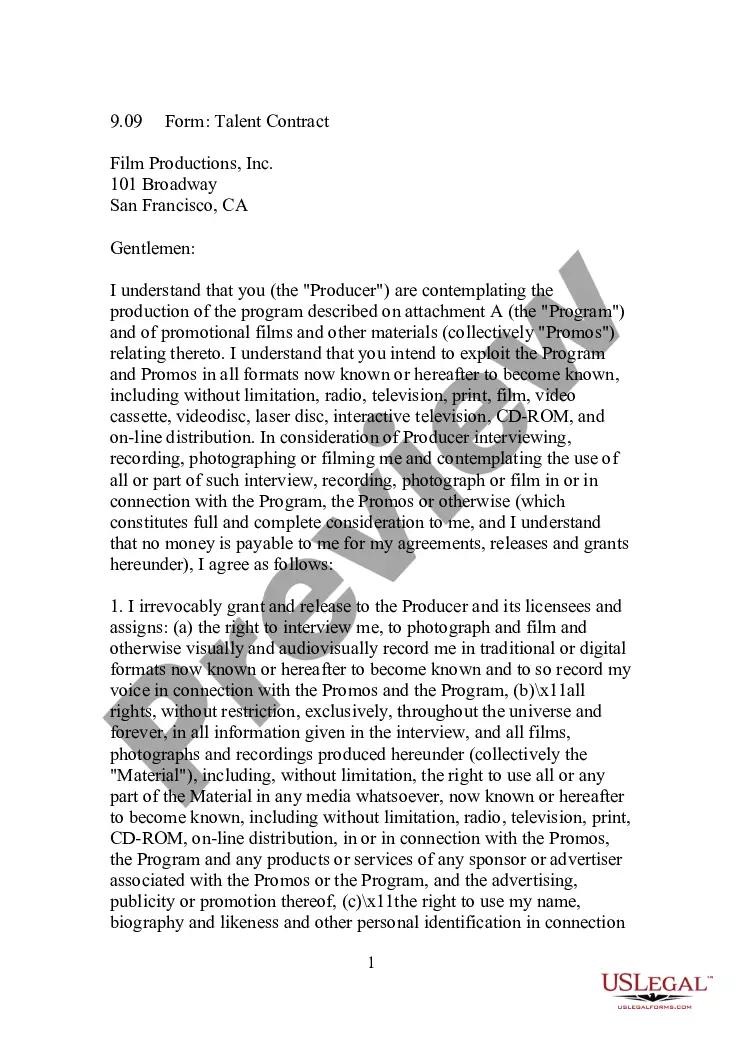
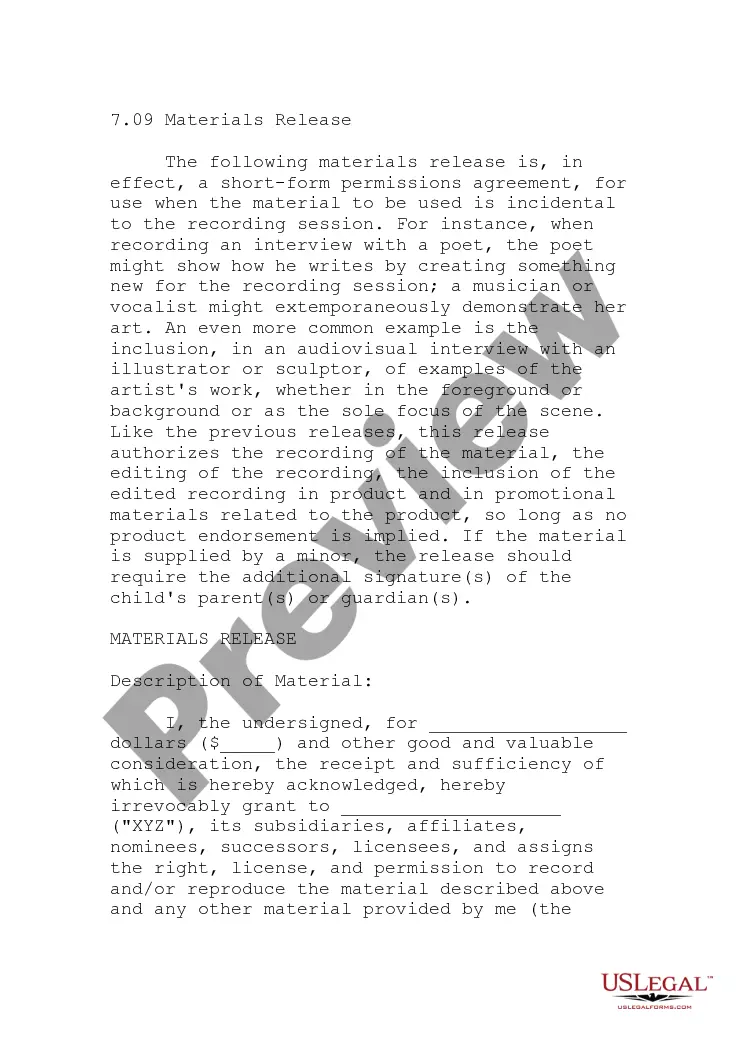
The Right of Publicity - Talent Contract is a legal document that grants permission for the use of an individual's name, likeness, and other personal attributes in promotional material and related media. This form is specifically designed for talent involved in projects such as online applications or promotional content. It differs from general contracts as it focuses on rights related to personal publicity, ensuring that the developer can use the talent's image and voice for various media formats without additional compensation or legal claims.
Main sections of this form
- Grant of Rights: Allows the developer to record and use interviews, photographs, and videos of the talent.
- Scope of Use: Defines the various media formats in which the material can be utilized, such as radio, television, and the Internet.
- Release of Claims: Ensures the talent releases the developer from any claims related to privacy or publicity rights stemming from the use of the material.
- Warranties: The talent warrants that their use of the material will not infringe on anyone else's rights.
- Signature and Consent: Requires signatures from both the talent and, if applicable, a parent or guardian if the talent is under 18.
When to use this document
This form should be used when a developer plans to create promotional materials that feature an individual's image, voice, or personal information. Situations may include filming a commercial, producing an online application that utilizes interviews, or crafting marketing content that requires the talent's participation. It is essential in securing legal rights to use the talent's likeness in various media without facing future legal issues.
Who can use this document
- Individual talents including actors, musicians, and influencers who will be featured in promotional content.
- Media producers and developers seeking to create content involving personal attributes of the talent.
- Businesses that engage in promotional activities utilizing personal imagery or endorsements from individuals.
Completing this form step by step
- Identify the parties involved: Clearly state the developer's name and the talentâs name.
- Specify the project: Provide details about the online application and promotional materials to be used.
- Grant rights: Complete the section detailing the rights the talent is granting to the developer related to their material.
- Sign and date: Ensure both the talent and the developer sign and date the document appropriately.
- If applicable, obtain parental consent: A parent or guardian must sign if the talent is under 18 to grant permission.
Does this document require notarization?
This form does not typically require notarization unless specified by local law. It is essential to check any jurisdiction-specific requirements that may necessitate notarization.
Get your form ready online
Our built-in tools help you complete, sign, share, and store your documents in one place.
Make edits, fill in missing information, and update formatting in US Legal Forms—just like you would in MS Word.
Download a copy, print it, send it by email, or mail it via USPS—whatever works best for your next step.
Sign and collect signatures with our SignNow integration. Send to multiple recipients, set reminders, and more. Go Premium to unlock E-Sign.
If this form requires notarization, complete it online through a secure video call—no need to meet a notary in person or wait for an appointment.
We protect your documents and personal data by following strict security and privacy standards.
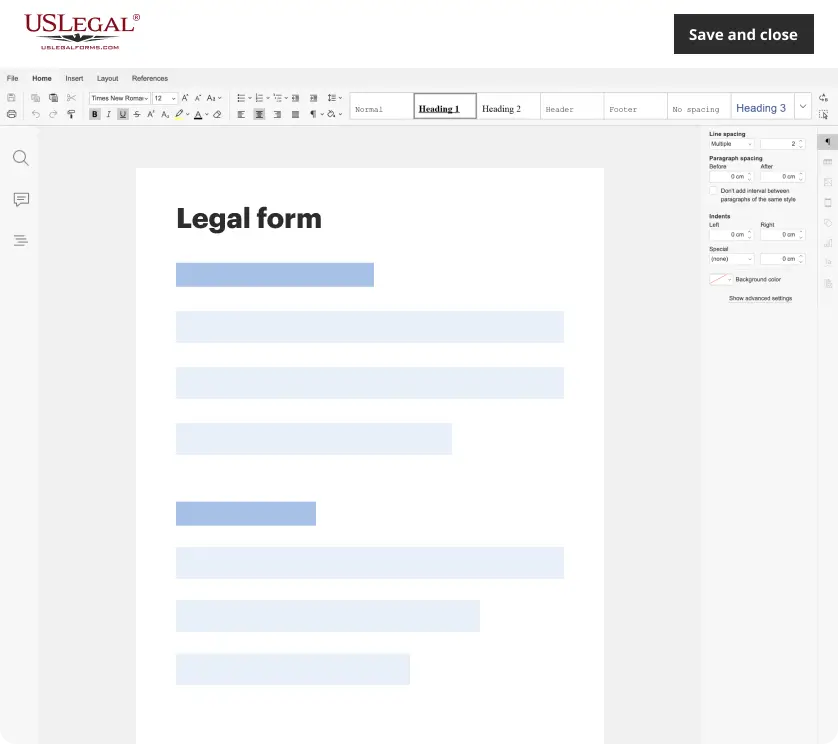
Make edits, fill in missing information, and update formatting in US Legal Forms—just like you would in MS Word.
Download a copy, print it, send it by email, or mail it via USPS—whatever works best for your next step.
Sign and collect signatures with our SignNow integration. Send to multiple recipients, set reminders, and more. Go Premium to unlock E-Sign.
If this form requires notarization, complete it online through a secure video call—no need to meet a notary in person or wait for an appointment.
We protect your documents and personal data by following strict security and privacy standards.
Common mistakes to avoid
- Failing to provide clear details about the project and how the talent's likeness will be used.
- Not including a date or signature, which could render the form invalid.
- Overlooking the need for parental consent if the talent is under 18.
- Neglecting to inform the talent about what rights they are granting and the implications of the contract.
Benefits of completing this form online
- Convenience: Downloadable format allows quick access and completion from any location.
- Editability: Users can tailor the form to fit their specific needs without requiring legal assistance.
- Reliability: The template is drafted by licensed attorneys, ensuring compliance with relevant laws.
Legal use & context
- This contract helps protect the rights of both the talent and the developer regarding the use of personal traits.
- It ensures that the developer can confidently proceed with the project without fearing legal repercussions.
- Understanding the scope of rights granted mitigates potential disputes in the future.
Main things to remember
- The Right of Publicity - Talent Contract secures permissions for using a talentâs personal likeness in media.
- Both parties must clearly understand their rights and obligations to avoid future disputes.
- Ensure that all necessary signatures, including parental consent if required, are obtained for the contract to be valid.
Looking for another form?
Form popularity
FAQ
Right of Publicity: an overview It gives an individual the exclusive right to license the use of their identity for commercial promotion. In the United States, the right of publicity is largely protected by state common or statutory law. Only about half the states have distinctly recognized a right of publicity.
Your name and business name. Your business address. A release of all claims against your company. Whether you want to release claims from other companies that buy, use, or obtain the licenses for your photos.
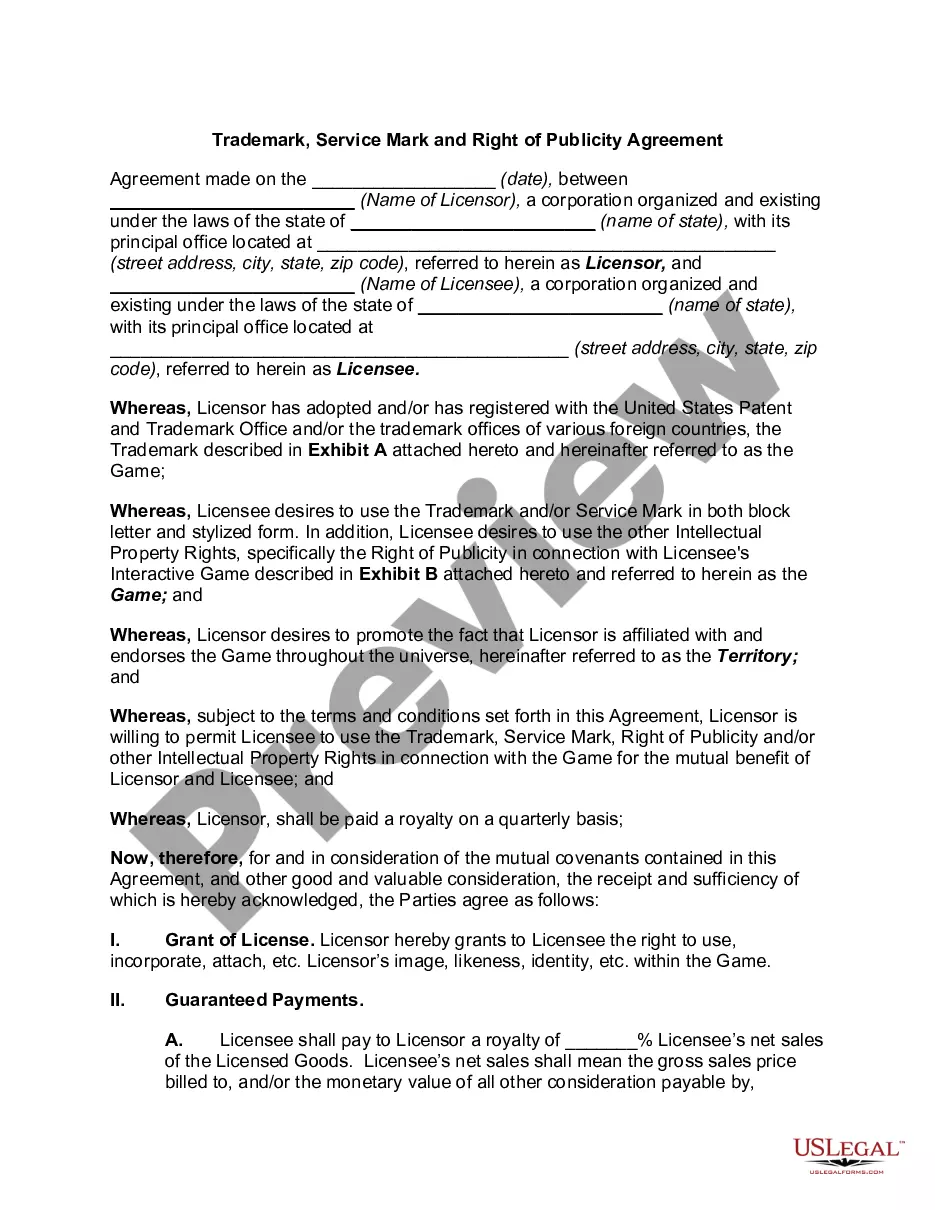
The right of publicity, sometimes referred to as personality rights, is the right of an individual to control the commercial use of one's identity, such as name, image, likeness, or other unequivocal identifiers.
The celebrity's likeness is not copyrightable, but celebrities have a right of publicity.Courts in recent cases have found First Amendment protection for artists using the celebrities' images in certain art works. These cases do not state that an artist can exploit a celebrity's likeness without permission.
Specifically, California recognizes both common law and statutory rights. California Civil Code, Section 3344, provides that it is unlawful, for the purpose of advertising or selling, to knowingly use another's name, voice, signature, photograph, or likeness without that person's prior consent.
There are two distinct legal claims that potentially apply to these kinds of unauthorized uses: (1) invasion of privacy through misappropriation of name or likeness ("misappropriation"); and (2) violation of the right of publicity.
When a business uses the image or likeness of an individual without his or her consent or permission, they may file a suit for misappropriation of likeness.In many states, those that use a person's likeness or characteristics may be sued if they use these for personal gain or exploitative purposes.
Identify the releasor. Describe the photo, image, likeness, or video. Address any payment the model receives for the release. Address royalties. Address whether the model has the ability to revoke their authorization. The parties sign and date the release.
You cannot trademark your likeness just to prevent its use without your express permission; there must be a commercial activity associated with your likeness in order for you to register for a trademark. The United States Patent and Trademark Office will not register a trademark simply for the sake of registration.