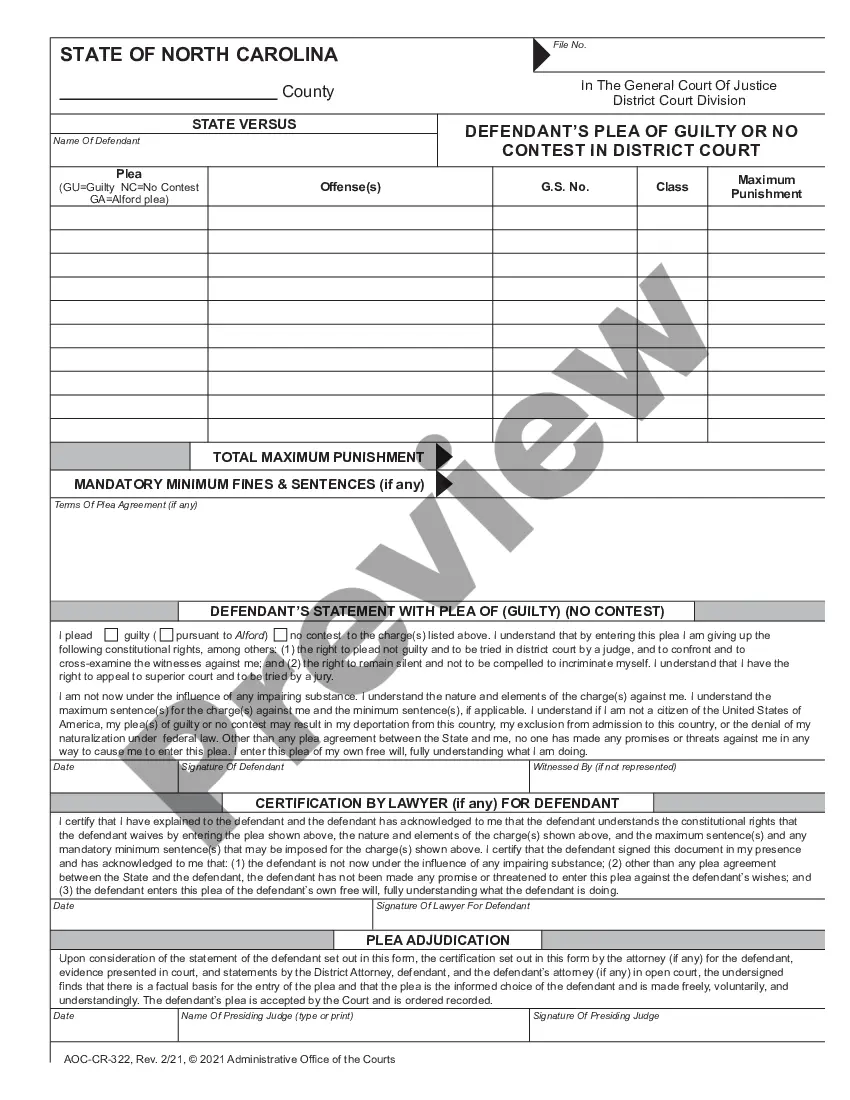
Complaint for Copyright and Trademark Infringement Based on Web Site Framing
Overview of this form
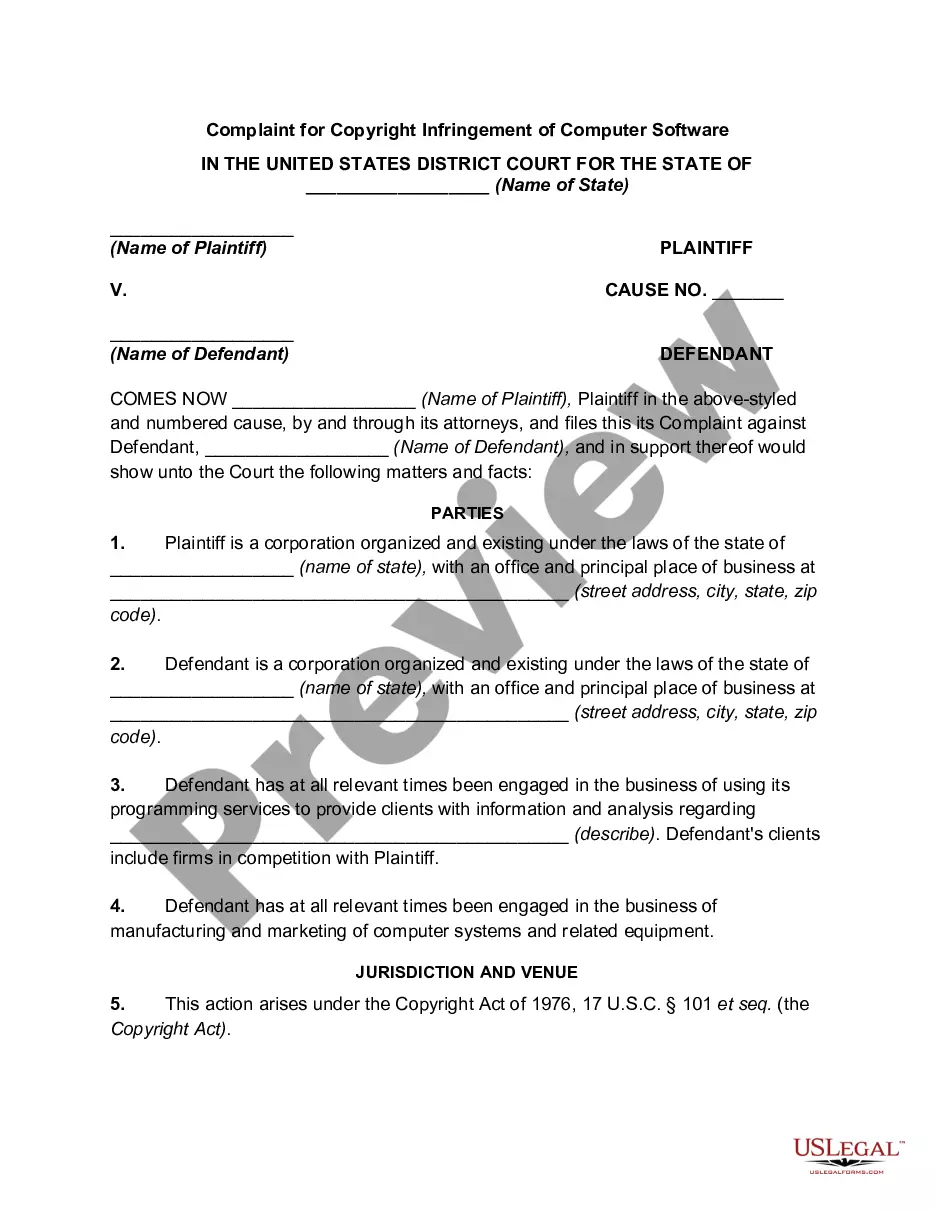
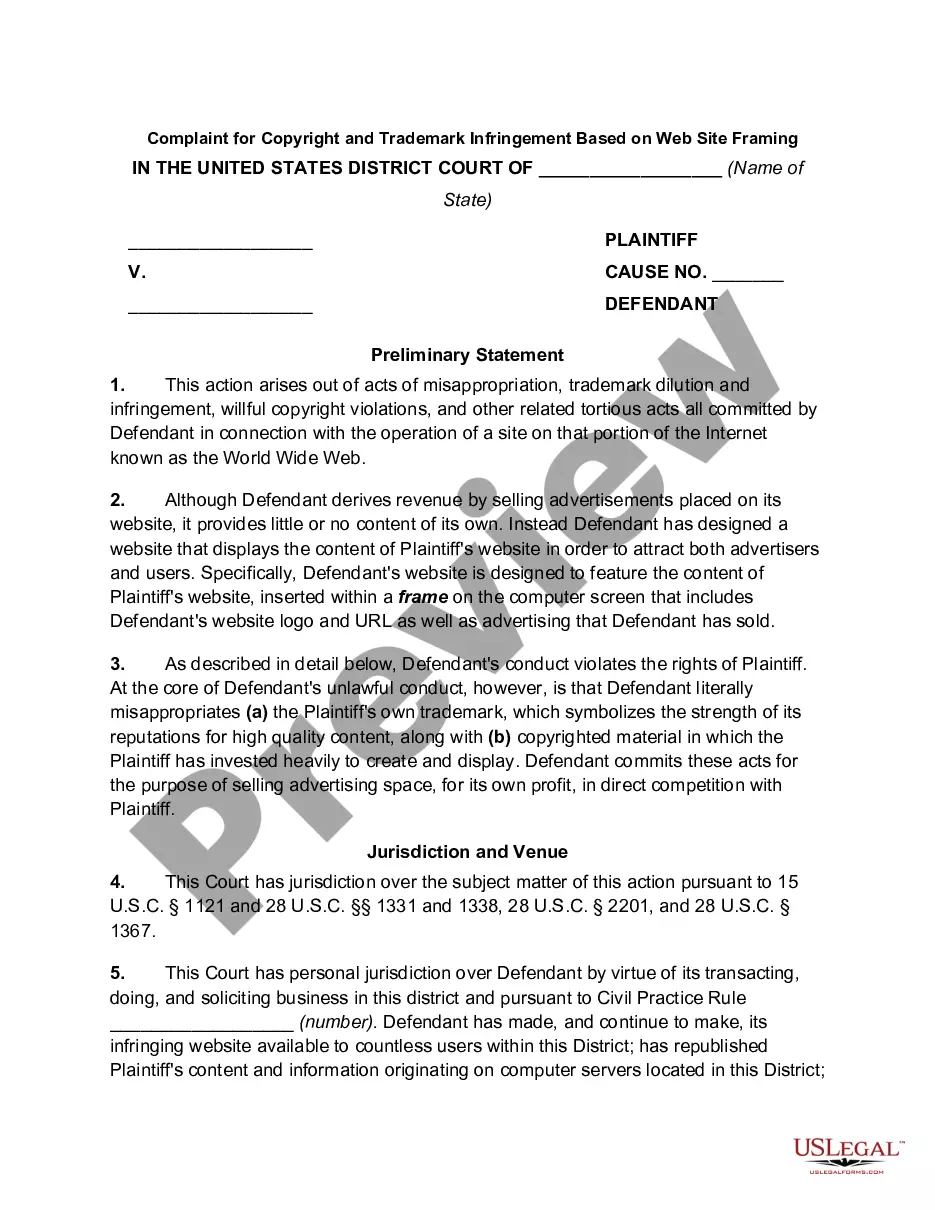
The "Complaint for Copyright and Trademark Infringement Based on Web Site Framing" is a legal document used to initiate a lawsuit against parties accused of infringing on copyright and trademark rights. This form is particularly relevant in the computer, internet, and software industries. It addresses unauthorized use of copyrighted material and trademark dilution when a website uses content from another site within a frame, effectively misrepresenting its source. This complaint is essential for businesses seeking to protect their intellectual property in the digital age.
Key components of this form
- Preliminary statements outlining the nature of the complaint.
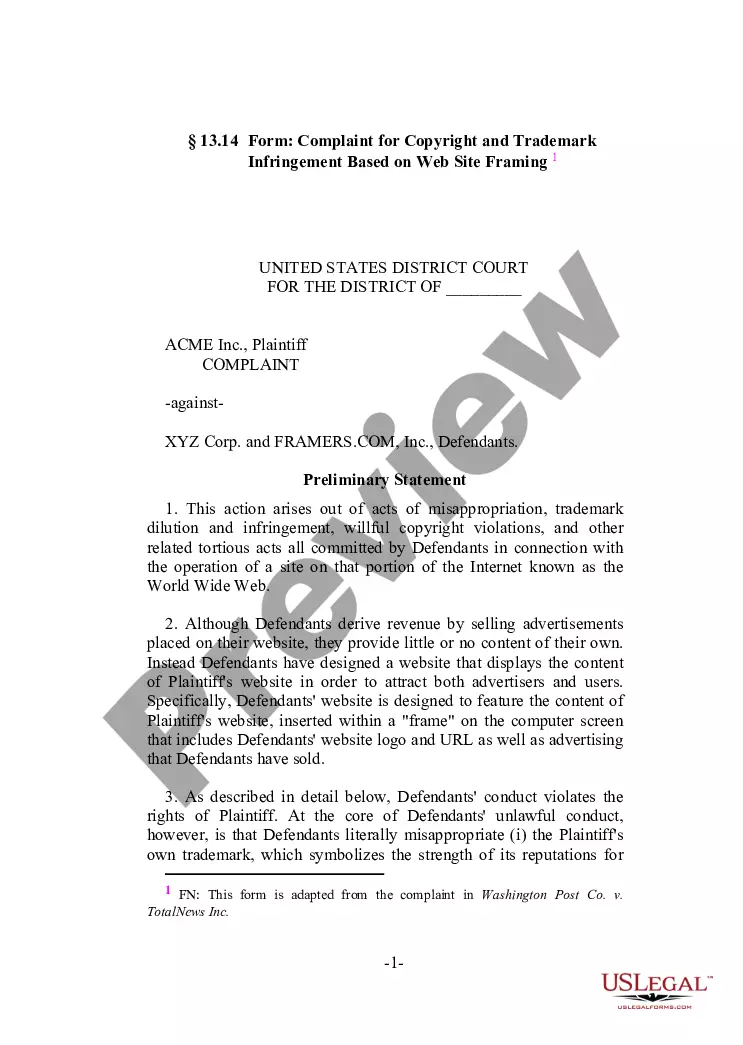
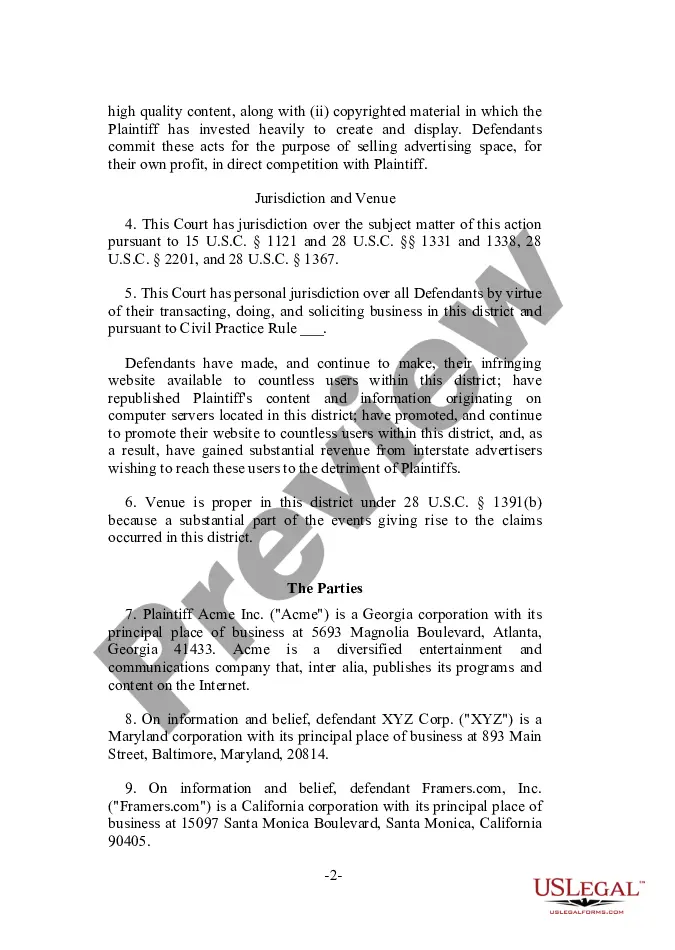
- Jurisdiction and venue information explaining why the court has authority over the case.
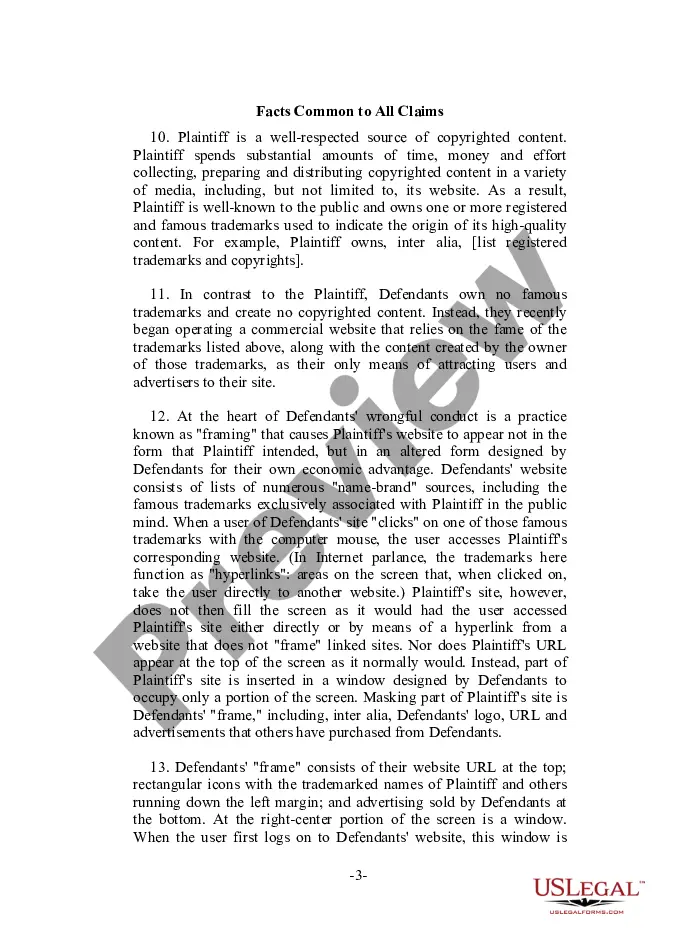
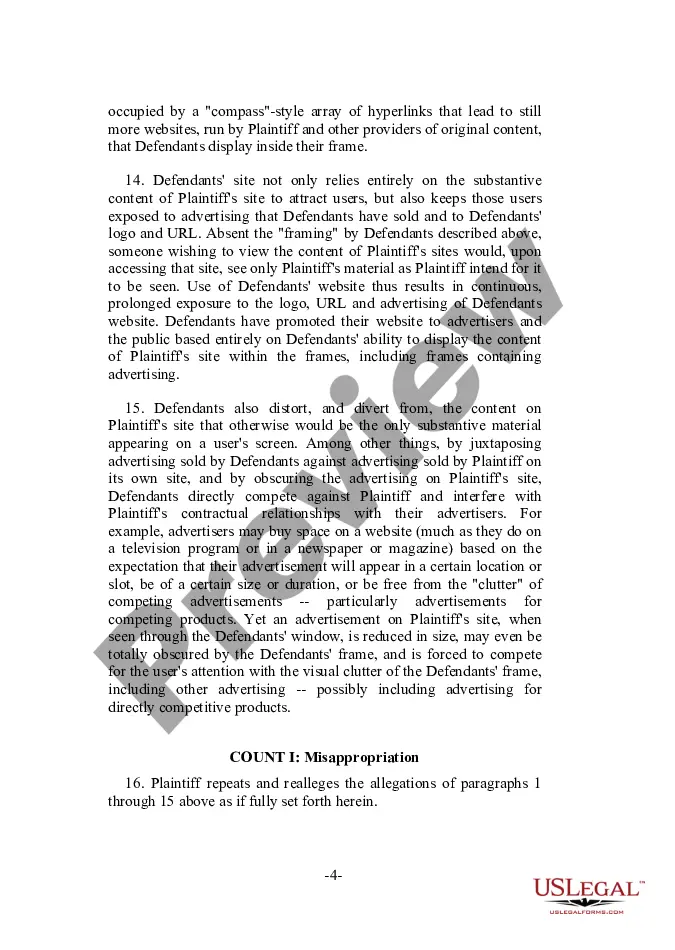
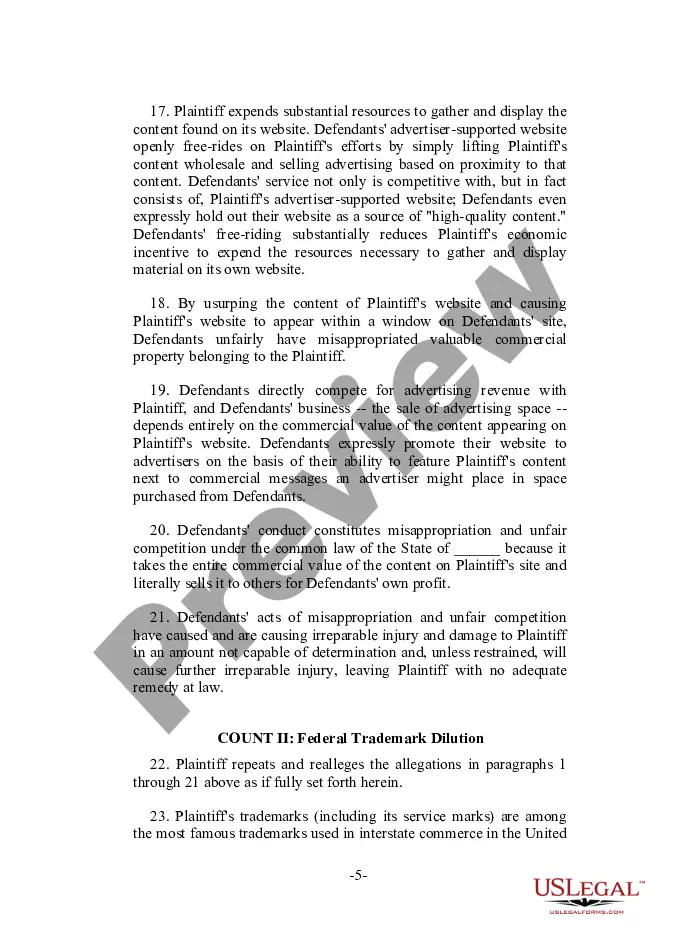
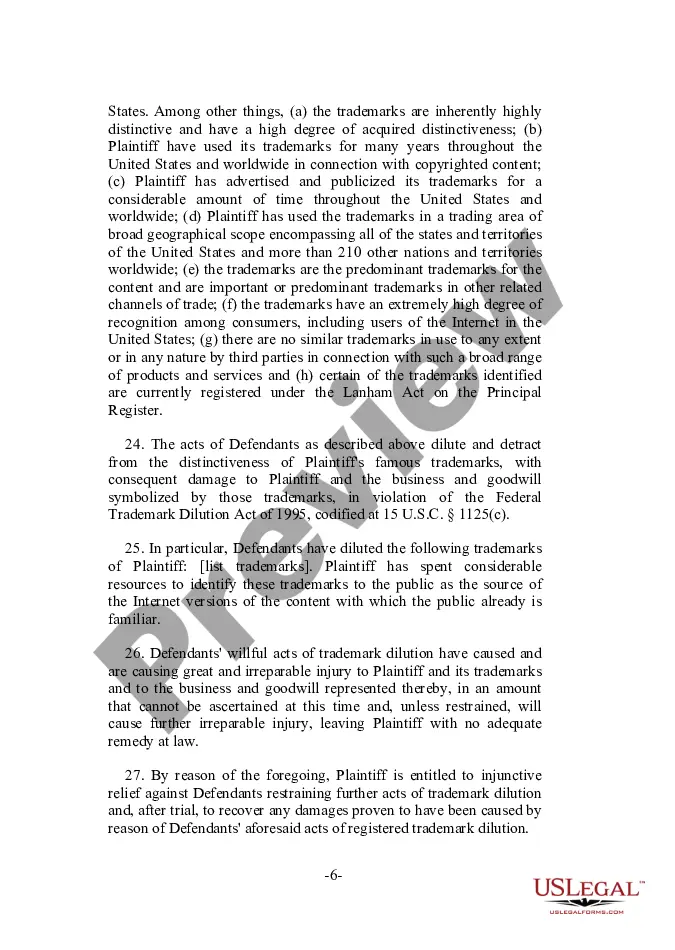
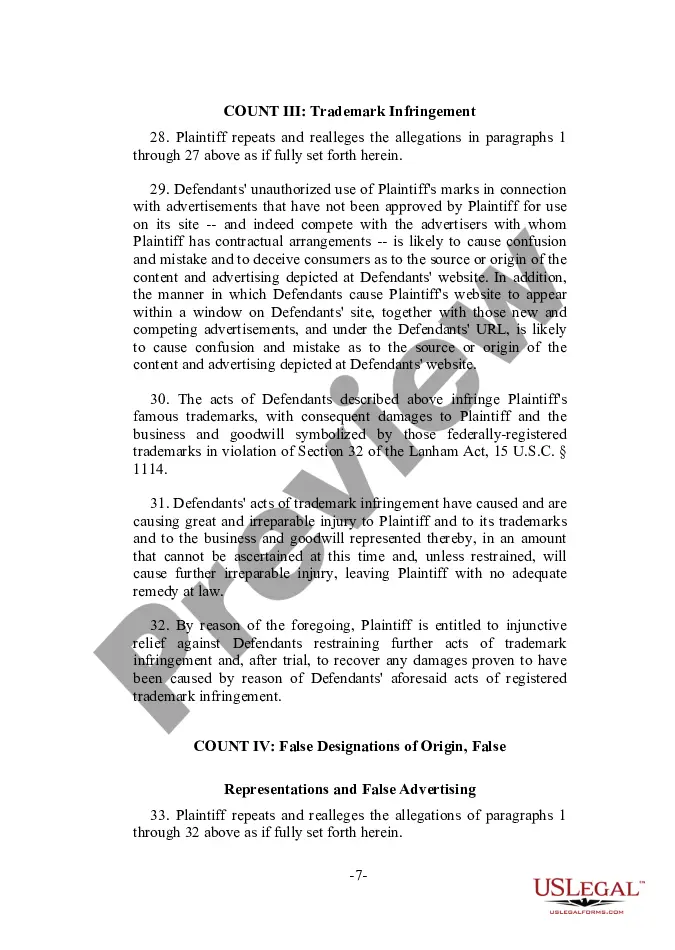
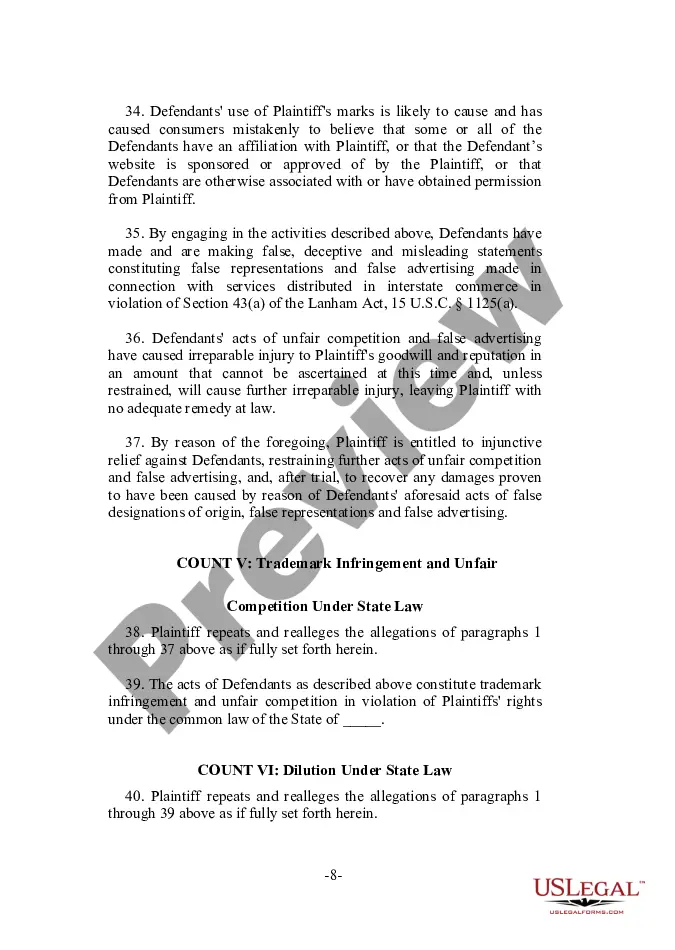
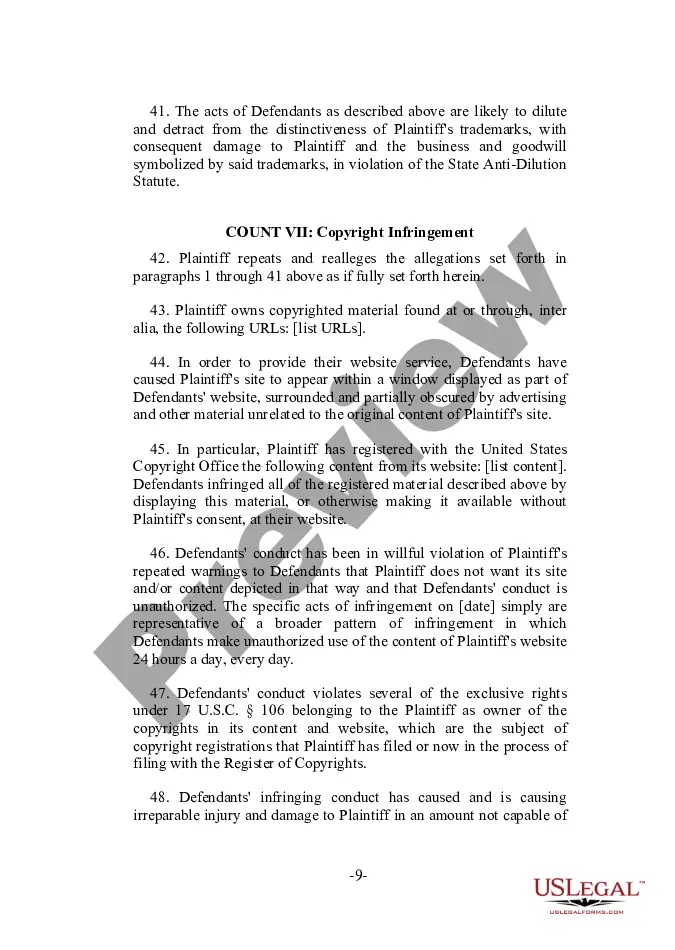
- Detailed allegations against the defendants, including misappropriation, trademark dilution, copyright infringement, and unfair competition claims.
- Identification of the parties involved, namely the plaintiff and defendants, including their locations and business activities.
- A list of the specific trademarks and copyrighted materials involved in the case.
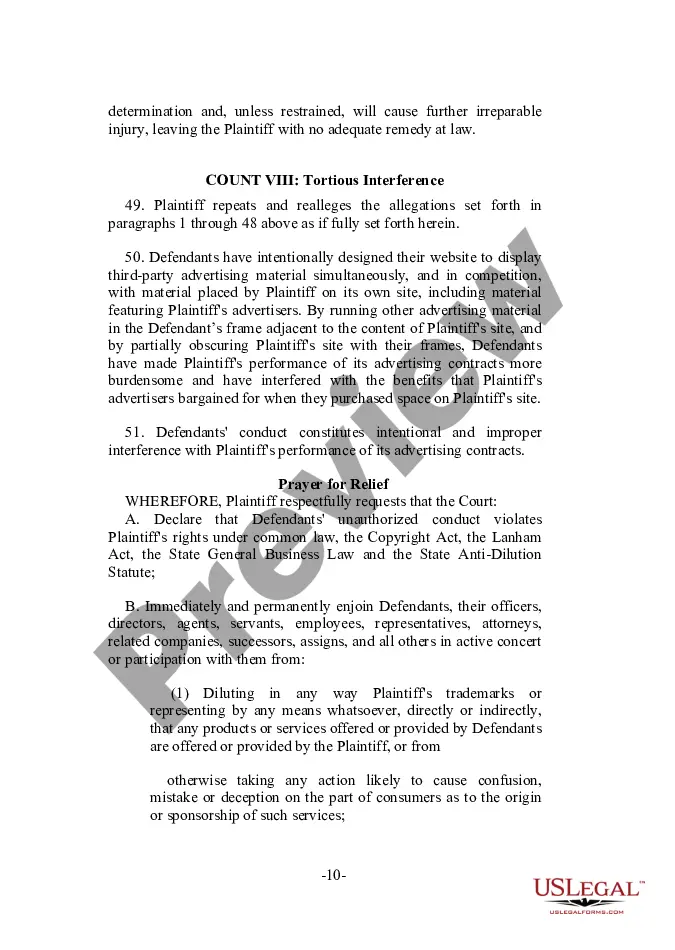
- Prayer for relief detailing the requests made to the court for resolution.

When to use this document
This form is used when a plaintiff believes that their copyright and trademark rights are being infringed upon by another party through web site framing. Situations may include a competitor displaying your website's content within their own site frame without permission, misusing your trademarks, or generating revenue from your intellectual property without authorization. If you own a website and your content is being incorporated into another site in a manner that harms your business or reputation, this form is appropriate for initiating legal action.
Intended users of this form
- Business owners and operators in the online content, advertising, or software industries.
- Individuals or companies whose copyrighted material is being used without consent.
- Plaintiffs seeking to protect their trademarks from dilution or unauthorized usage by competitors.
- Legal representatives preparing to file a complaint on behalf of a plaintiff in intellectual property disputes.
Instructions for completing this form
- Identify the parties involved: clearly name the plaintiff and defendants.
- State the jurisdiction: provide the appropriate district and legal basis for the complaint.
- Detail the allegations: specify the acts of infringement, including descriptions of the misappropriation and dilution claims.
- List the trademarks and copyrighted materials: include the intellectual property being infringed upon.
- Outline the requested relief: specify the damages sought and any injunctive relief necessary to prevent further infringement.
Notarization requirements for this form
This form usually doesn’t need to be notarized. However, local laws or specific transactions may require it. Our online notarization service, powered by Notarize, lets you complete it remotely through a secure video session, available 24/7.
Get your form ready online
Our built-in tools help you complete, sign, share, and store your documents in one place.
Make edits, fill in missing information, and update formatting in US Legal Forms—just like you would in MS Word.
Download a copy, print it, send it by email, or mail it via USPS—whatever works best for your next step.
Sign and collect signatures with our SignNow integration. Send to multiple recipients, set reminders, and more. Go Premium to unlock E-Sign.
If this form requires notarization, complete it online through a secure video call—no need to meet a notary in person or wait for an appointment.
We protect your documents and personal data by following strict security and privacy standards.

Make edits, fill in missing information, and update formatting in US Legal Forms—just like you would in MS Word.

Download a copy, print it, send it by email, or mail it via USPS—whatever works best for your next step.

Sign and collect signatures with our SignNow integration. Send to multiple recipients, set reminders, and more. Go Premium to unlock E-Sign.

If this form requires notarization, complete it online through a secure video call—no need to meet a notary in person or wait for an appointment.

We protect your documents and personal data by following strict security and privacy standards.
Typical mistakes to avoid
- Failing to identify all defendants involved in the infringement.
- Not adequately detailing the allegations of infringement or misappropriation.
- Leaving out jurisdictional information or improperly identifying the court.
- Neglecting to include specific trademarks or copyrighted works that are being infringed.
- Not clearly stating the type of relief sought from the court.
Advantages of online completion
- Convenient access to an attorney-drafted template that ensures legal compliance.
- Editability allows you to customize the form to fit your specific circumstances and needs.
- It provides a reliable framework for filing your complaint in intellectual property cases.
- Streamlined process helps you complete the necessary documents quickly.
Looking for another form?
Form popularity
FAQ
Copyright pages in books published by traditional publishers will include the name of the publisher, address (sometimes just the city), and URL. If you're self-publishing, you can include your name or create a name for your imprint along with an address and URL, if you choose.
Public Performing Right. The exclusive right of the copyright owner, granted by the U.S. Copyright Law, to authorize the performance or transmission of the work in public. Public Performance License. Reproduction Right. Mechanical License. Synchronization License.
These include books, pamphlets, articles and other writings; periodicals and newspapers; lectures, sermons, addresses, dissertations prepared for oral delivery; letters; dramatic or dramatico-musical compositions; choreographic works or entertainment in dumb shows; musical compositions; drawing, painting, architecture,
Copyright is a legal means of protecting an author's work. It is a type of intellectual property that provides exclusive publication, distribution, and usage rights for the author.Many different types of content can be protected by copyright. Examples include books, poems, plays, songs, films, and artwork.
The symbol © (the letter C in a circle), or the word "Copyright" or the abbreviation "Copr."; The year of first publication of the work; and. The name of the owner of copyright in the work.
Literary Works. Musical Works. Dramatic Works. Pantomimes and Choreographic Works. Pictorial, Graphic, and Sculptural Works. Motion Pictures and Other Audiovisual Works. Sound Recordings. Compilations.
Copyright is a legal means of protecting an author's work. It is a type of intellectual property that provides exclusive publication, distribution, and usage rights for the author.Many different types of content can be protected by copyright. Examples include books, poems, plays, songs, films, and artwork.
Copyright refers to the legal right of the owner of intellectual property.Copyright law gives creators of original material the exclusive right to further use and duplicate that material for a given amount of time, at which point the copyrighted item becomes public domain.