Complaint for Misappropriation of Software
Understanding this form
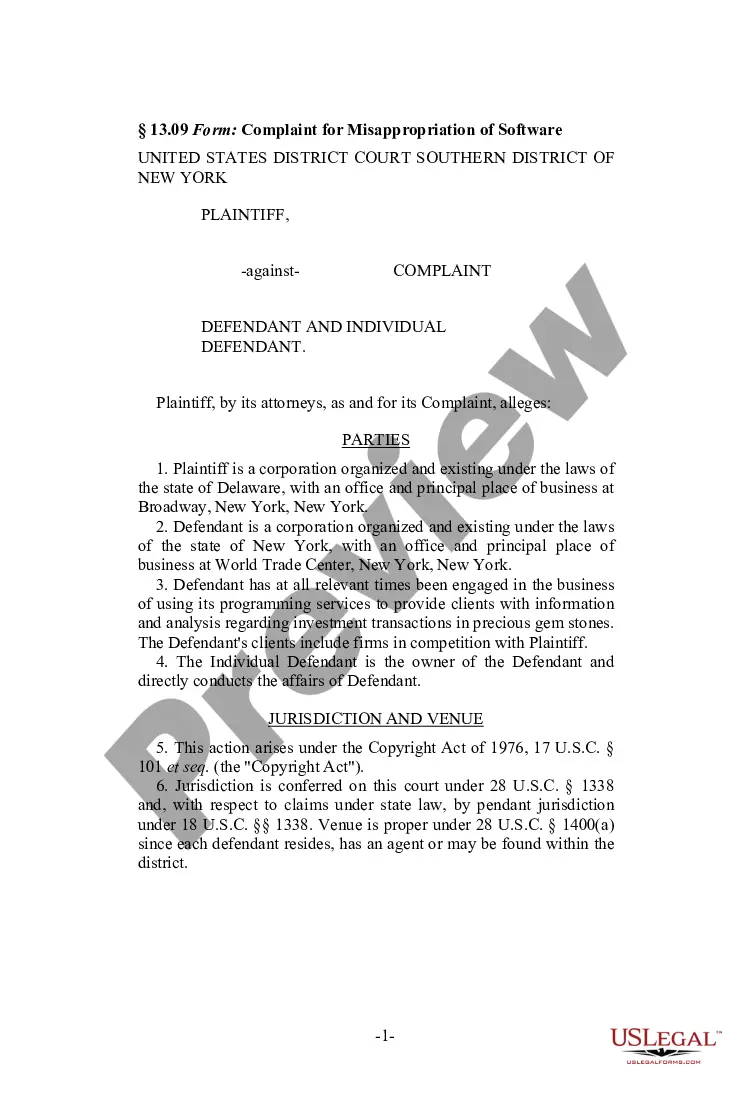
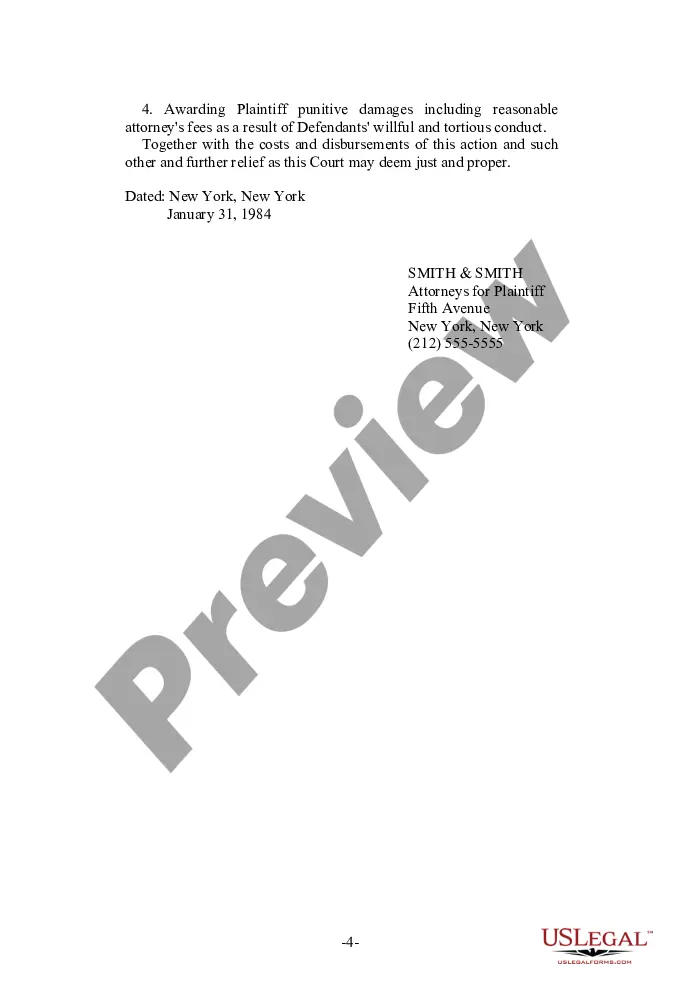
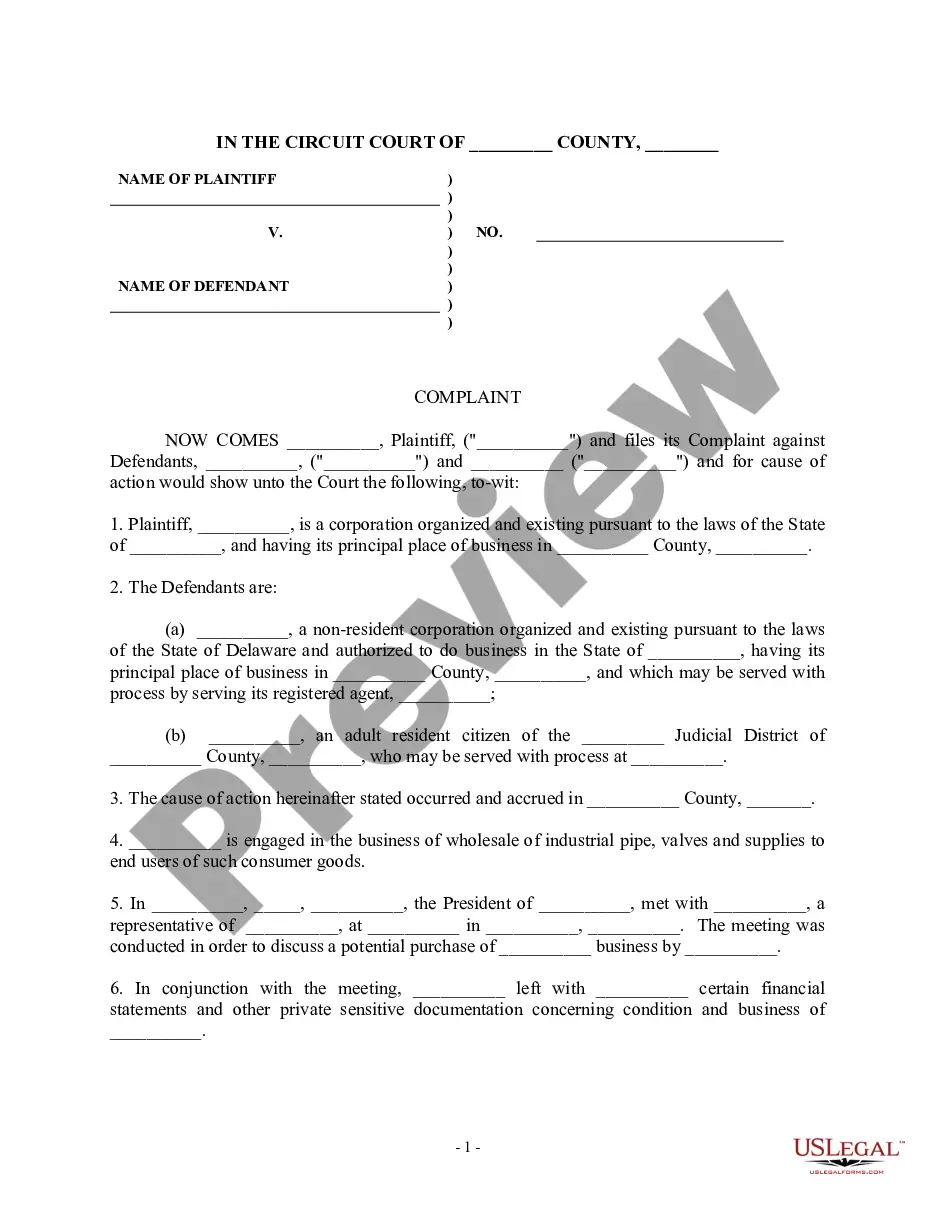
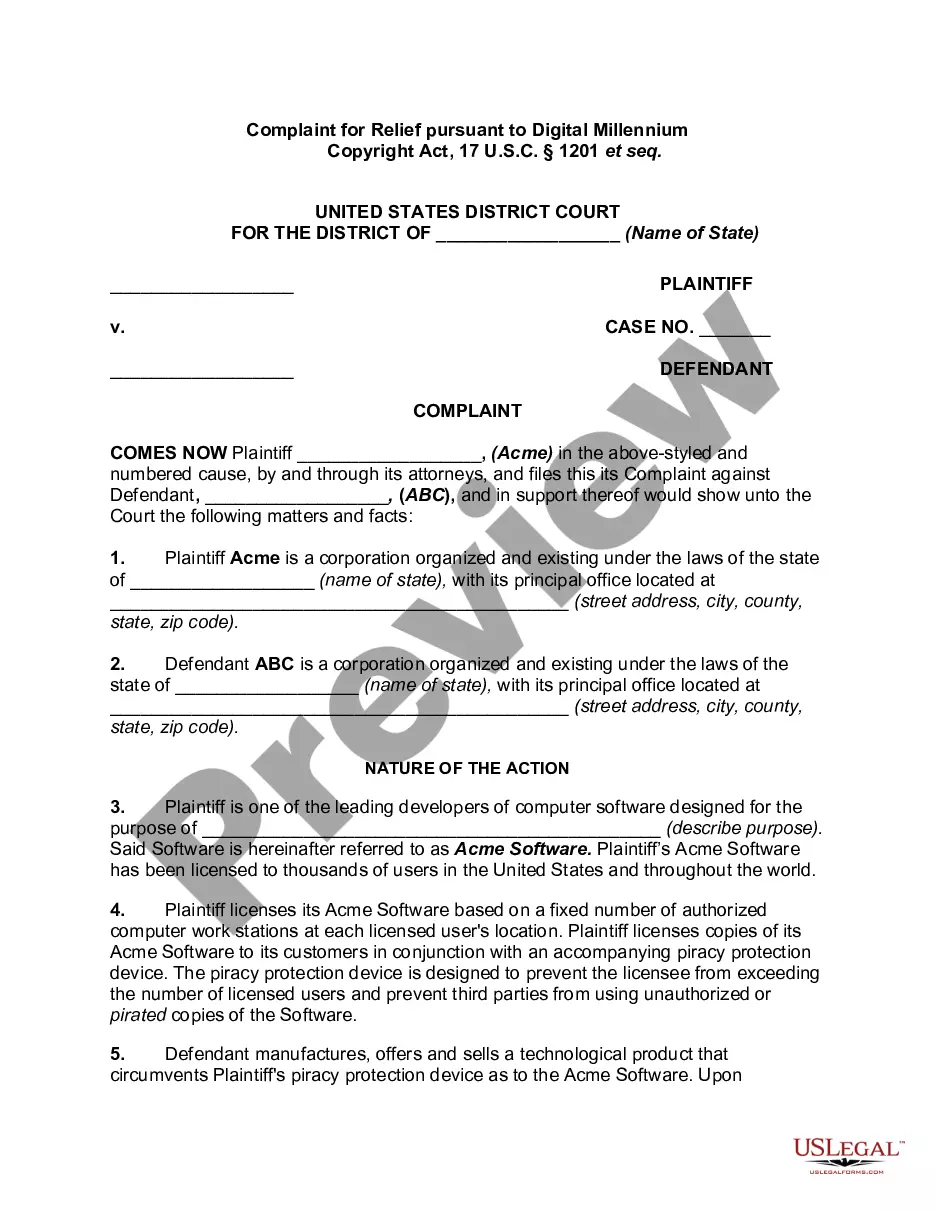
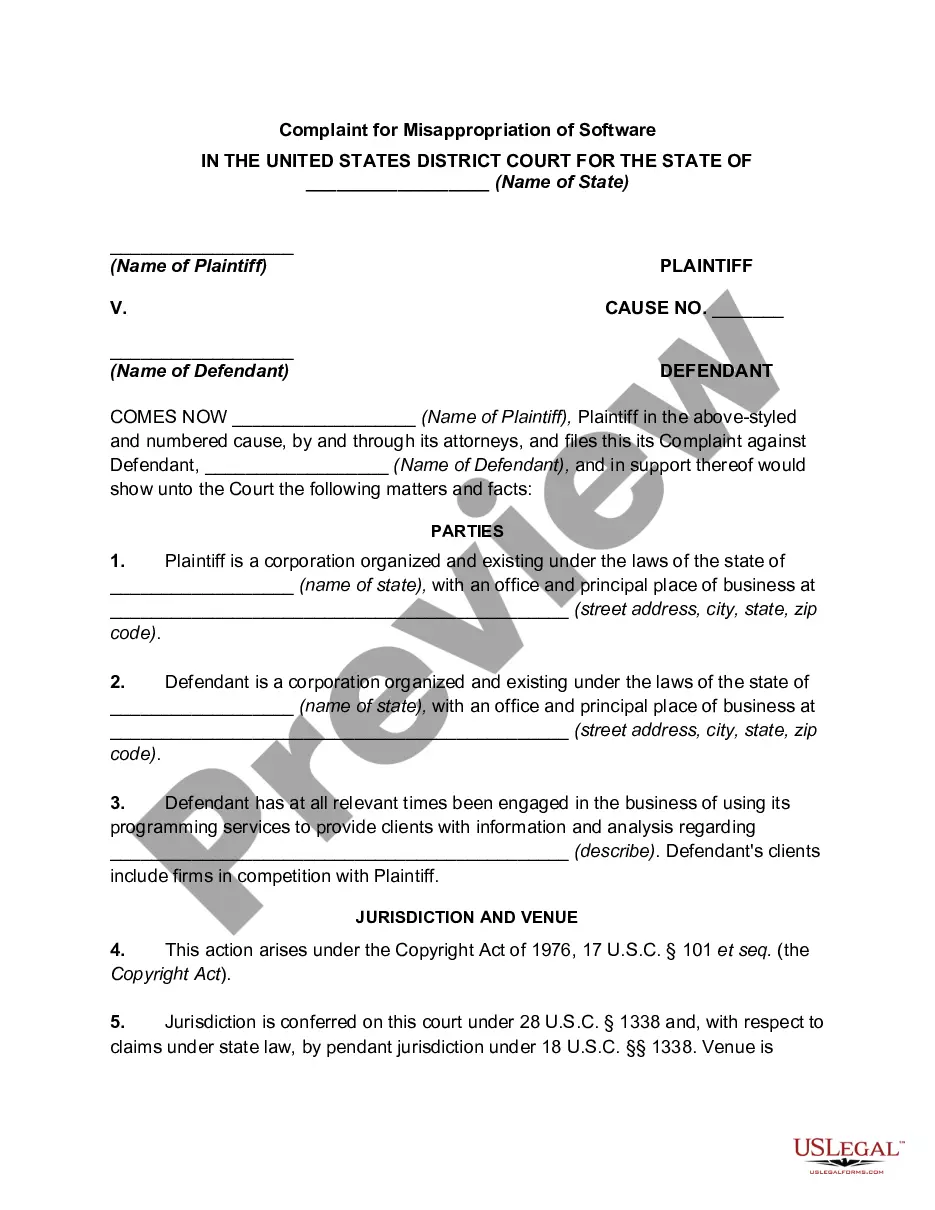
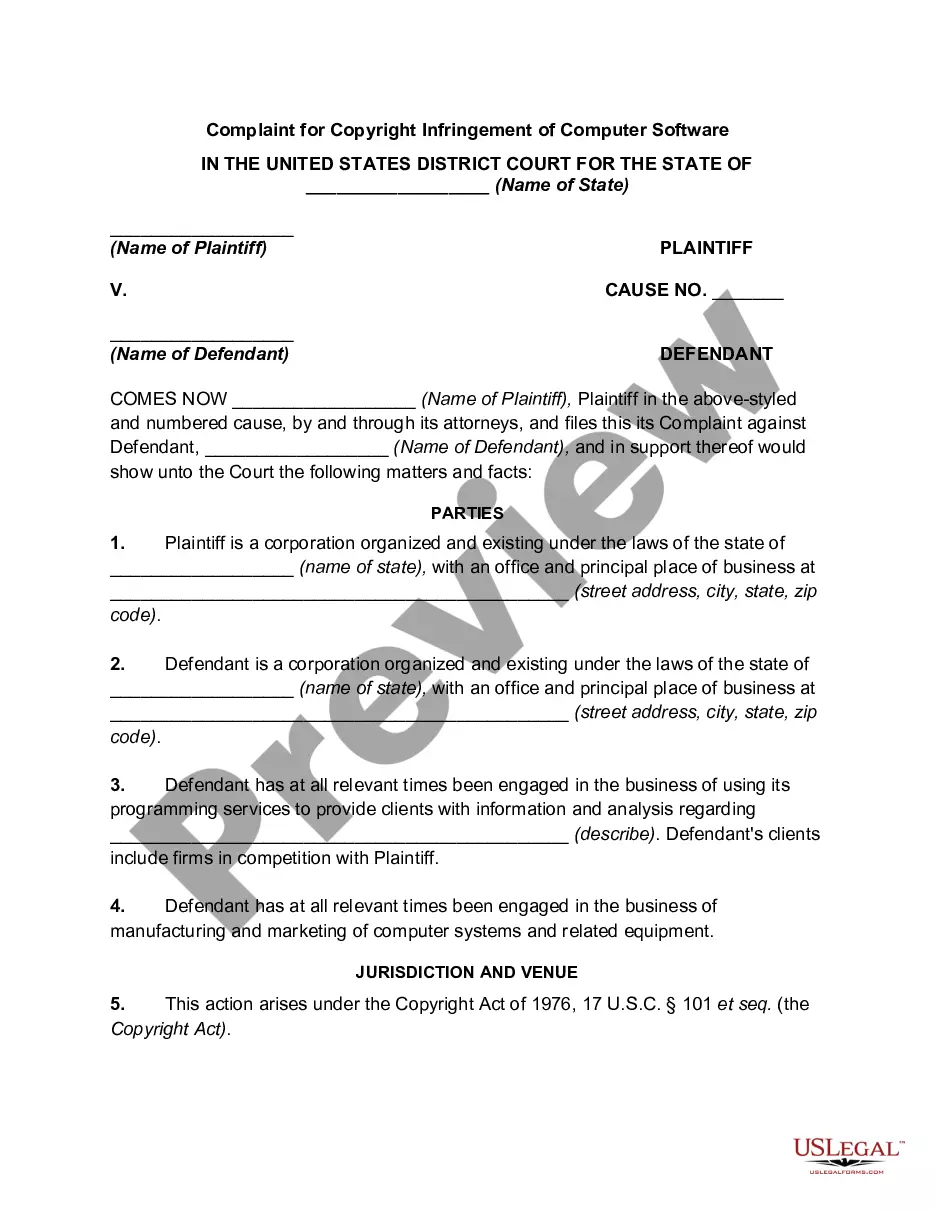
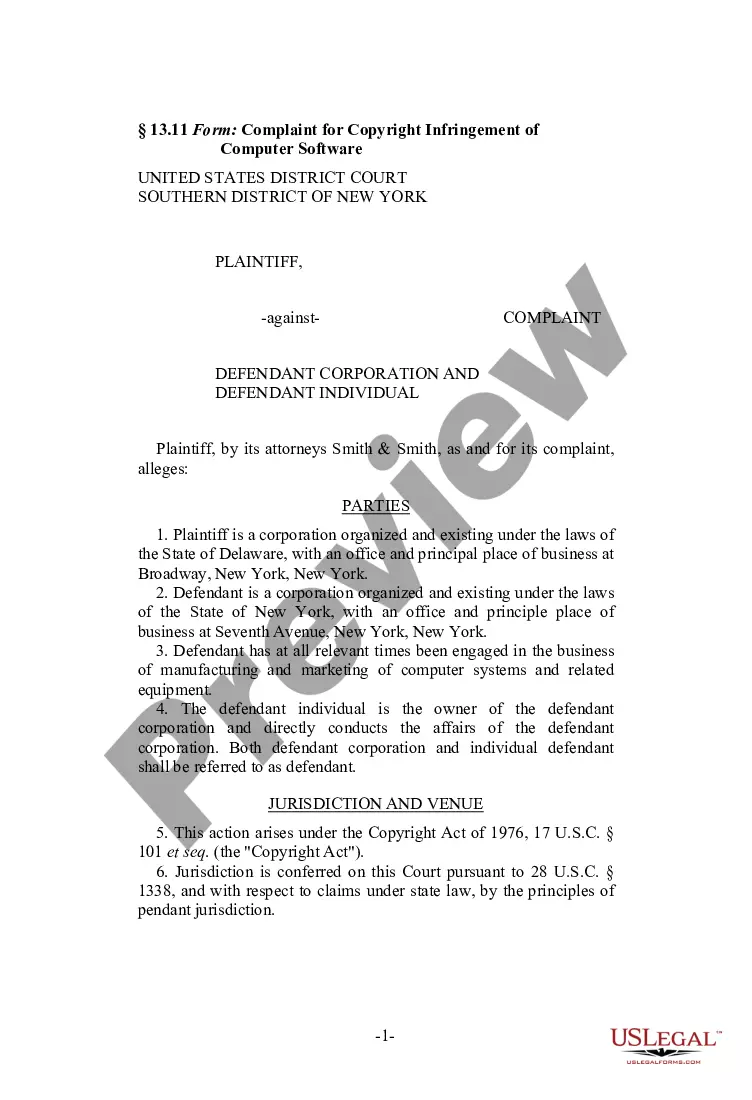
The Complaint for Misappropriation of Software is a legal document used primarily in the computer, internet, and software industries. This form is essential for individuals or businesses seeking to address instances of software misappropriation, particularly where confidential and proprietary computer programs are involved. Unlike general complaints, this specific form addresses copyright infringement and trade secret misappropriation, making it crucial for those involved in the technology sector to protect their intellectual property rights.
What’s included in this form
- Identification of the parties involved, including plaintiffs and defendants.
- Statement of jurisdiction and venue to establish the court's authority to rule on the case.
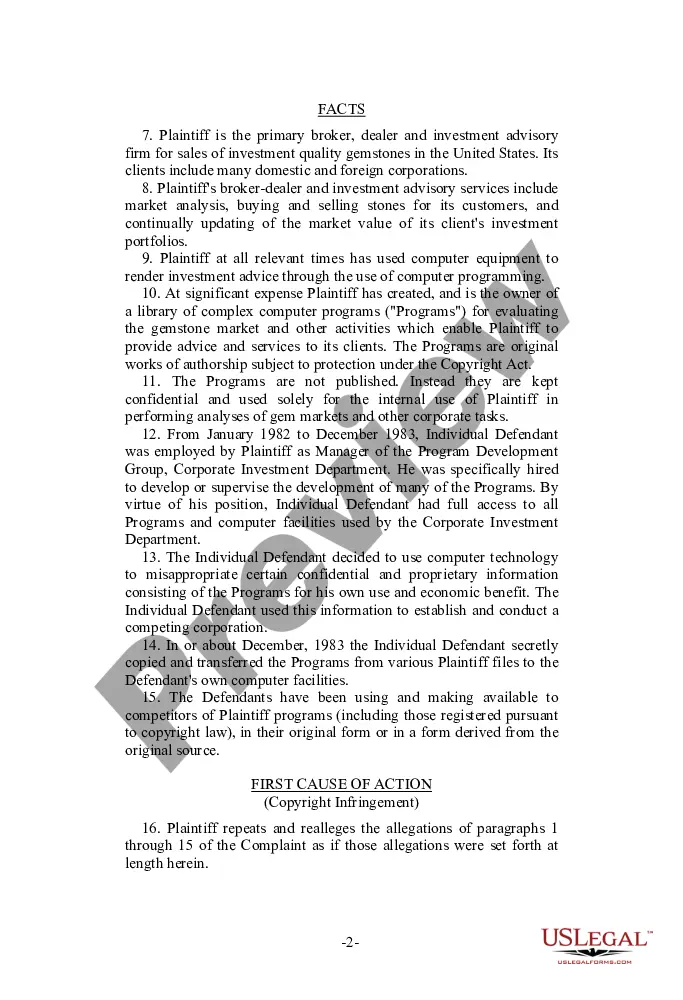
- Detailed factual background outlining the events leading to the complaint.
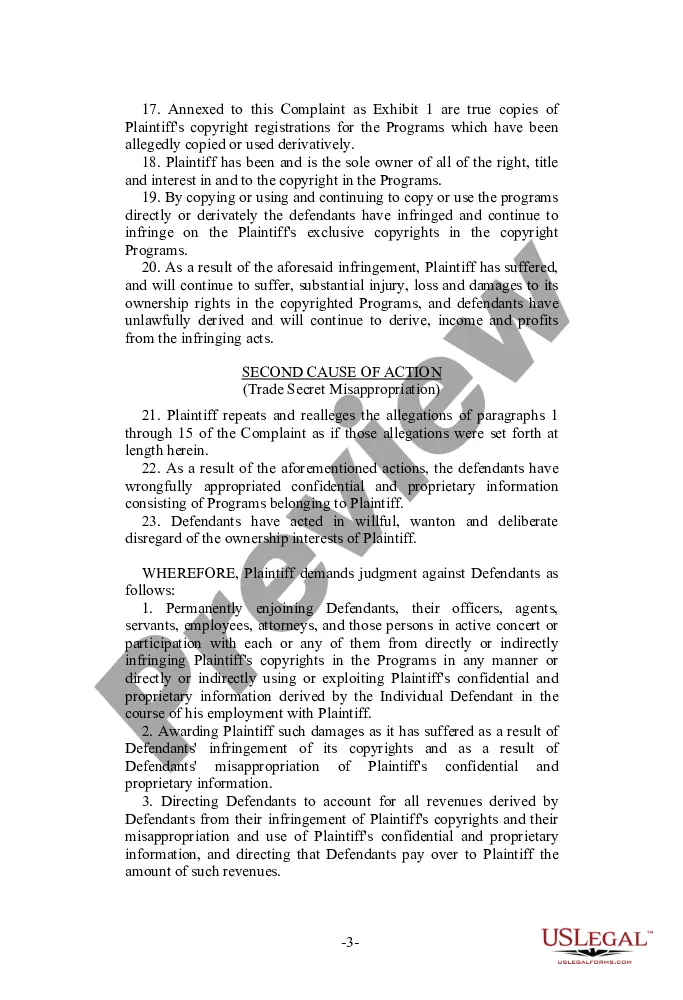
- Causes of action indicating claims under copyright law and trade secret misappropriation.
- Damages sought, including a request for monetary compensation and injunctive relief.
Common use cases
This form should be used when an individual or business believes that their software or computer programs have been improperly copied or used by another party. It is applicable in scenarios such as when a former employee starts a competing business using proprietary software, or when there are allegations of theft of trade secrets related to software development and maintenance.
Who should use this form
This form is designed for:
- Companies in the software or technology sectors seeking to protect their intellectual property.
- Individuals or small businesses who have developed unique software solutions and suspect misappropriation.
- Attorneys representing clients facing issues of software theft or copyright infringement.
Instructions for completing this form
- Identify all parties involved, including names and addresses of the plaintiff and defendant.
- Clearly articulate the jurisdiction and venue to establish where the case will be heard.
- Provide a concise factual background that details the misappropriation incident.
- Specify the causes of action, including copyright infringement and trade secret misappropriation.
- State the damages sought, including amounts for lost revenue and any requested injunctive relief.
Notarization requirements for this form
This form usually doesn’t need to be notarized. However, local laws or specific transactions may require it. Our online notarization service, powered by Notarize, lets you complete it remotely through a secure video session, available 24/7.
Get your form ready online
Our built-in tools help you complete, sign, share, and store your documents in one place.
Make edits, fill in missing information, and update formatting in US Legal Forms—just like you would in MS Word.
Download a copy, print it, send it by email, or mail it via USPS—whatever works best for your next step.
Sign and collect signatures with our SignNow integration. Send to multiple recipients, set reminders, and more. Go Premium to unlock E-Sign.
If this form requires notarization, complete it online through a secure video call—no need to meet a notary in person or wait for an appointment.
We protect your documents and personal data by following strict security and privacy standards.

Make edits, fill in missing information, and update formatting in US Legal Forms—just like you would in MS Word.

Download a copy, print it, send it by email, or mail it via USPS—whatever works best for your next step.

Sign and collect signatures with our SignNow integration. Send to multiple recipients, set reminders, and more. Go Premium to unlock E-Sign.

If this form requires notarization, complete it online through a secure video call—no need to meet a notary in person or wait for an appointment.

We protect your documents and personal data by following strict security and privacy standards.
Avoid these common issues
- Failing to clearly identify all parties involved in the complaint.
- Neglecting to establish jurisdiction properly, which can lead to case dismissal.
- Not providing enough factual detail to support claims of misappropriation.
- Forgetting to include the correct damages sought in the claim.
Why complete this form online
- Quick access to downloadable formats, allowing for immediate use.
- Editability, enabling users to customize the form for specific situations.
- Reliability, with legal templates created and vetted by licensed attorneys.
Legal use & context
- This form serves as a crucial step in seeking legal remedy for misappropriation of proprietary software.
- Filing this complaint initiates legal proceedings, allowing the plaintiff to assert rights under copyright and trade secret laws.
- It is important to gather substantial evidence to support claims of infringement or misappropriation for successful legal recourse.
Main things to remember
- The Complaint for Misappropriation of Software is vital for protecting intellectual property.
- Understanding the components and proper procedures can significantly impact the outcome of a case.
- Timely filing and accurate completion of the form are critical to asserting legal rights.
Looking for another form?
Form popularity
FAQ
Many states have also enacted laws making trade secret infringement a crime. For example, in California it is a crime to acquire, disclose or use trade secrets without authorization. Violators may be fined up to $5,000, sentenced to up to one year in jail, or both.
Notably, California has a statutory provision, albeit buried in its code of civil procedure, that requires a plaintiff to disclose its trade secrets with reasonable particularity before it can obtain discovery from defendants.
For instance, in order to get a conviction for misappropriation of funds in federal court, the government must prove the following elements of the crime beyond a reasonable doubt: You had access to the funds, but not ownership of them; You knowingly and intentionally took the money or intended to take the money; and.
Trade secrets are intellectual property (IP) rights on confidential information which may be sold or licensed. In general, to qualify as a trade secret, the information must be: commercially valuable because it is secret, be known only to a limited group of persons, and.
Under federal and state law, owners of trade secrets may sue to protect the trade secret from misappropriation. Money damages are available as are various levels of injunctive relief.Legally, trade secrets are also protected under state and federal tort law.
The plaintiff in a trade-secret case lawsuit must prove three facts: (1) it has some valuable business information that it has kept secret; (2) the information is not generally known; and (3) the defendant has used that secret. A defendant may attack each showing, but some attacks are better than others.
"Misappropriation " means: (i) acquisition of a trade secret of another by a person who knows or has reason to know that the trade secret was acquired by improper means; or (ii) disclosure or use of a trade secret of another without express or implied consent by a person who (A) used improper means to acquire knowledge