Letter to limited partners
What is this form?
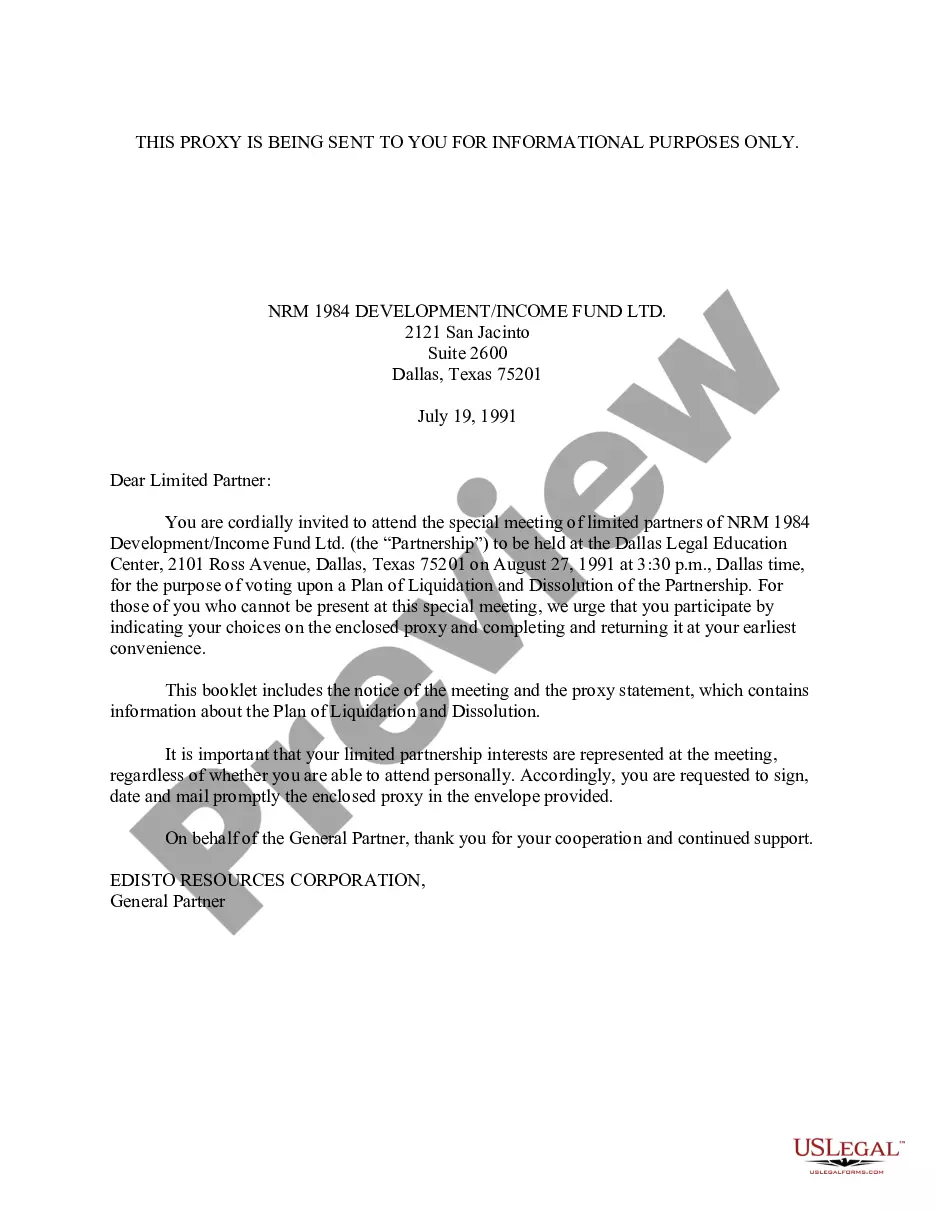
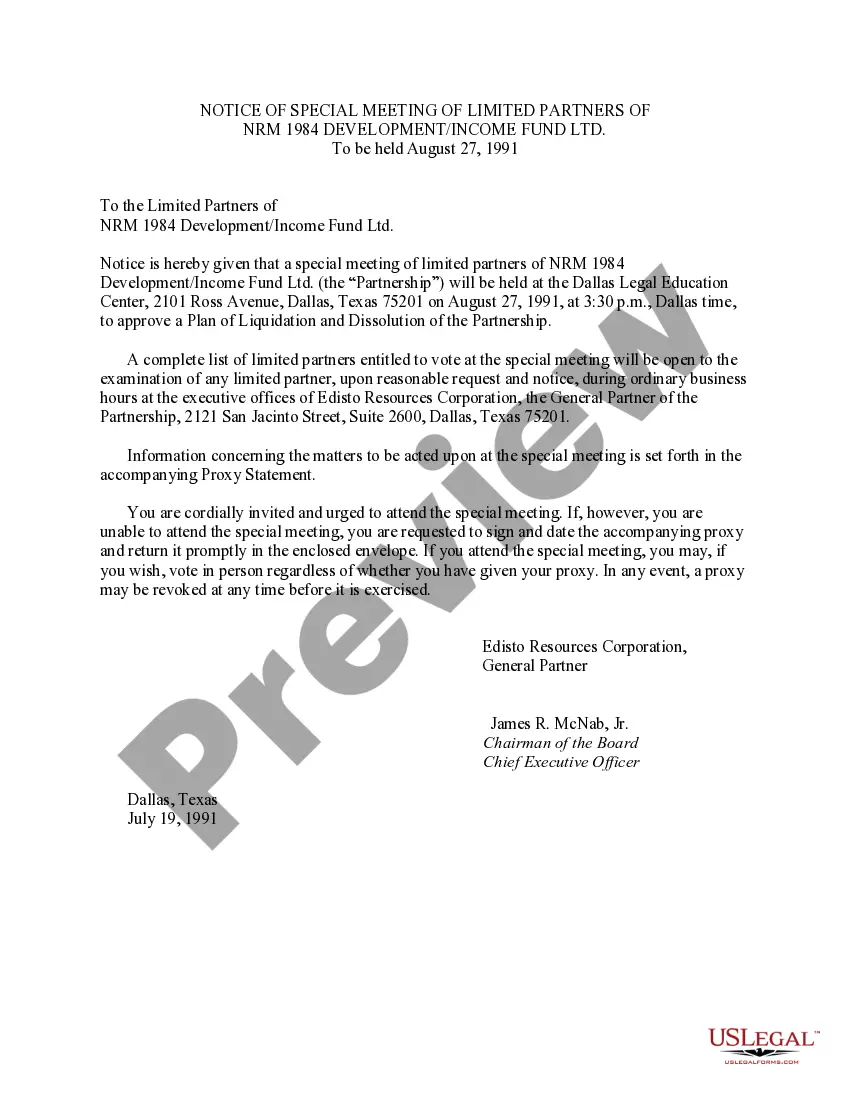
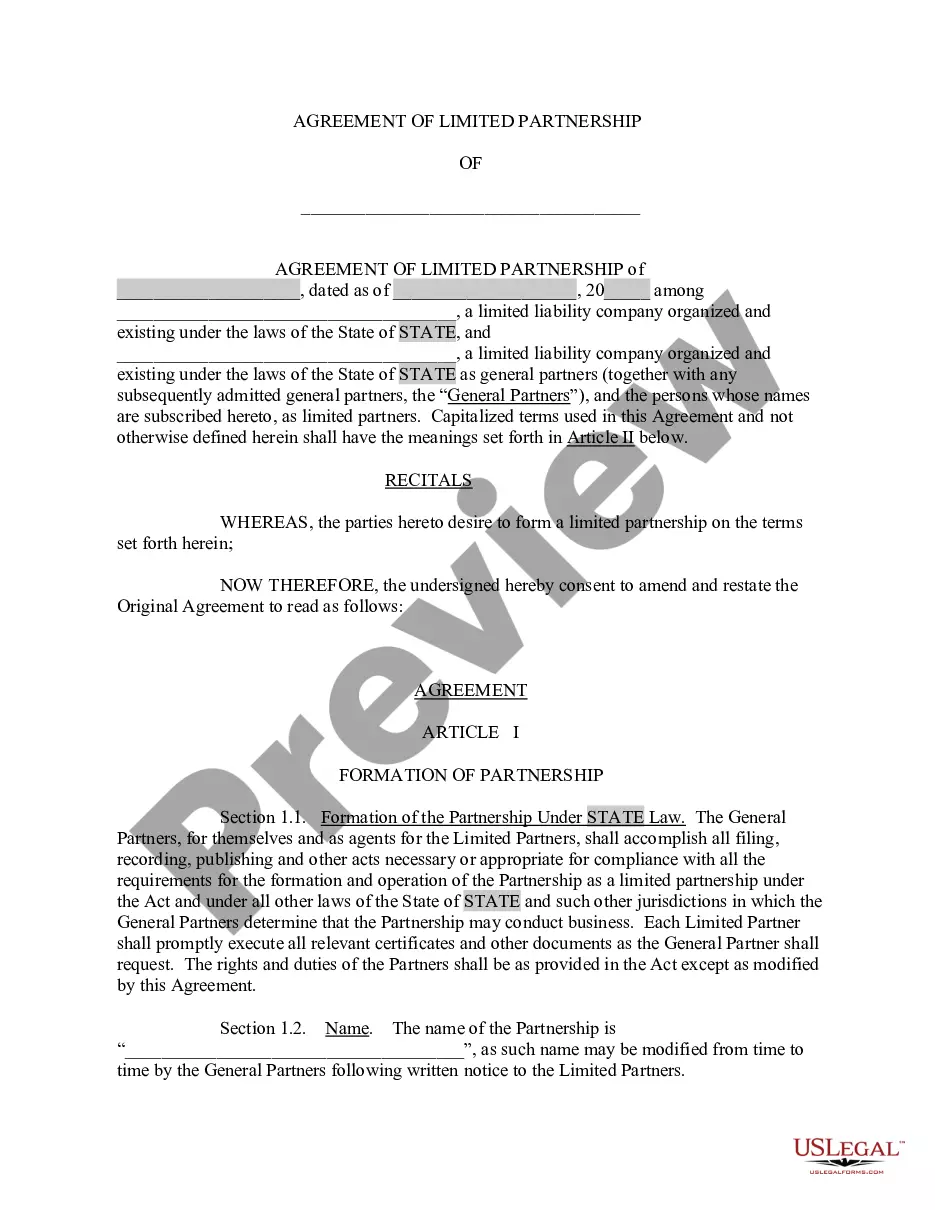
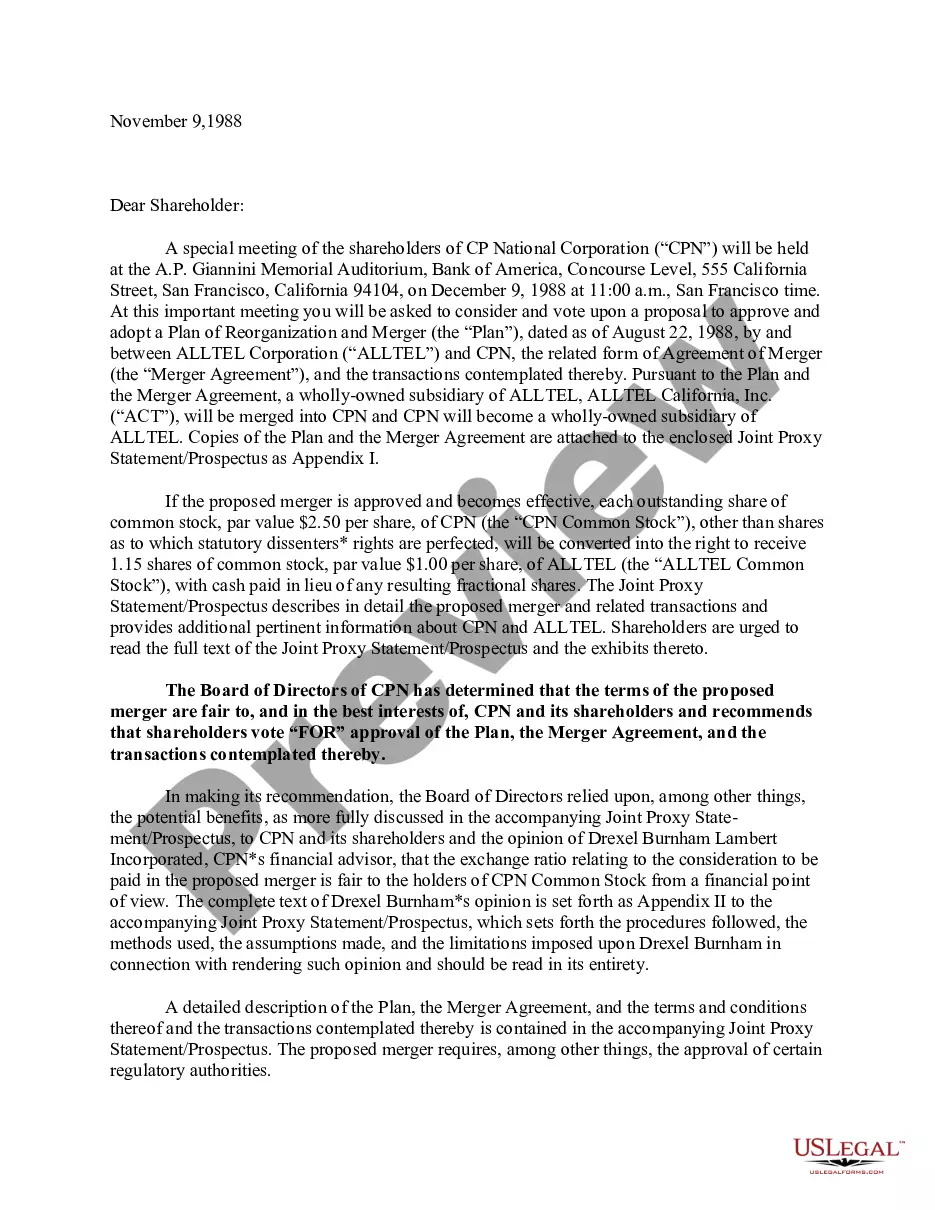
The Letter to Limited Partners is a formal communication intended for limited partners in a partnership. It serves the purpose of notifying them about important meetings, such as special meetings where decisions, like a Plan of Liquidation and Dissolution, are voted on. This form is essential for ensuring that all partners have a voice in the partnershipâs decisions, distinguishing it from general notices or company updates.
Form components explained
- Date and address of the partnership.
- Invitation to a special meeting and agenda.
- Proxy statement for limited partners unable to attend.
- Information about the voting process and proxy revocation.
- Signatures of the general partner and officers.

Situations where this form applies
This form should be used when a partnership needs to inform limited partners about an upcoming special meeting. Scenarios include voting on significant actions, like liquidation or amendments to partnership agreements. This ensures that all partners can express their preferences, even if they cannot attend in person.
Intended users of this form
This form is intended for:
- General partners of a partnership looking to communicate with limited partners.
- Limited partners who need to understand their voting rights and responsibilities.
How to complete this form
- Identify the date and location of the special meeting.
- Include a brief agenda outlining the voting items.
- Attach the proxy statement for partners to complete.
- Include signatures from the general partner and relevant officers.
- Distribute the completed letter to all limited partners promptly.
Does this document require notarization?
This form does not typically require notarization unless specified by local law. Make sure to check any specific jurisdictional rules that may apply to your situation.
Get your form ready online
Our built-in tools help you complete, sign, share, and store your documents in one place.
Make edits, fill in missing information, and update formatting in US Legal Forms—just like you would in MS Word.
Download a copy, print it, send it by email, or mail it via USPS—whatever works best for your next step.
Sign and collect signatures with our SignNow integration. Send to multiple recipients, set reminders, and more. Go Premium to unlock E-Sign.
If this form requires notarization, complete it online through a secure video call—no need to meet a notary in person or wait for an appointment.
We protect your documents and personal data by following strict security and privacy standards.

Make edits, fill in missing information, and update formatting in US Legal Forms—just like you would in MS Word.

Download a copy, print it, send it by email, or mail it via USPS—whatever works best for your next step.

Sign and collect signatures with our SignNow integration. Send to multiple recipients, set reminders, and more. Go Premium to unlock E-Sign.

If this form requires notarization, complete it online through a secure video call—no need to meet a notary in person or wait for an appointment.

We protect your documents and personal data by following strict security and privacy standards.
Typical mistakes to avoid
- Failing to provide clear information about the meeting time and place.
- Omitting the proxy statement or necessary voting instructions.
- Not allowing enough time for limited partners to respond and submit their proxies.
Why use this form online
- Convenience in accessing and downloading customizable templates.
- Ability to edit the document to fit specific partnership needs.
- Reliable legal guidance provided through templates drafted by licensed attorneys.
Legal use & context
- This letter serves as a formal means of communication in a limited partnership context.
- It is crucial for ensuring that all partners are informed and have the opportunity to vote on significant matters.
- Proper use of this document can strengthen compliance with local partnership laws and regulations.
Summary of main points
- The Letter to Limited Partners is essential for facilitating communication regarding important meetings.
- Clear instructions and complete information are vital for ensuring participation.
- Understanding local regulations is important for compliance and the effective use of this form.
Looking for another form?

Form popularity
FAQ
Step One) Choose an LP Name. Step Two) Designate a Registered Agent. Step Three) File the Certificate of Limited Partnership. Step Four) Create a Limited Partnership Agreement. Step Five) Handle Taxation Requirements. Step Six) Obtain Business Licenses and Permits.
When you are a general partner in a limited partnership you by default are like an employee of the company, and therefore, all your income is considered earned income.Throughout the year, you may get paid by the business with guaranteed payments as a way of compensating you as the general partner.
A limited partnership is similar to a general partnership, but offers limited liability protection to some partners. At least one partner must be a general partner with unlimited liability, and at least one partner must be a limited partner whose liability is typically limited to the amount of his or her investment.
Cost to Form an LP: The state of California charges a filing fee of $70 to form a limited partnership. Processing Time: The Secretary of State will generally process your LP formation in around 10 business days.
A limited liability partnership (LLP) is a type of partnership where all partners have limited liability. All partners can also partake in management activities. This is unlike a limited partnership, where at least one general partner must have unlimited liability and limited partners cannot be part of management.
LPs are pass-through entities that offer little to no reporting requirements.Most U.S. states govern the formation of limited partnerships, requiring registration with the Secretary of State.
To form a limited partnership, you have to register in your state, pay a filing fee and create a limited partnership agreement, which defines how much ownership each limited partner has in your company, and other terms of the partnership.
The same person can be both a general partner and a limited partner, as long as there are at least two legal persons who are partners in the partnership.Limited partners have no personal liability.