Amendment of common stock par value
About this form
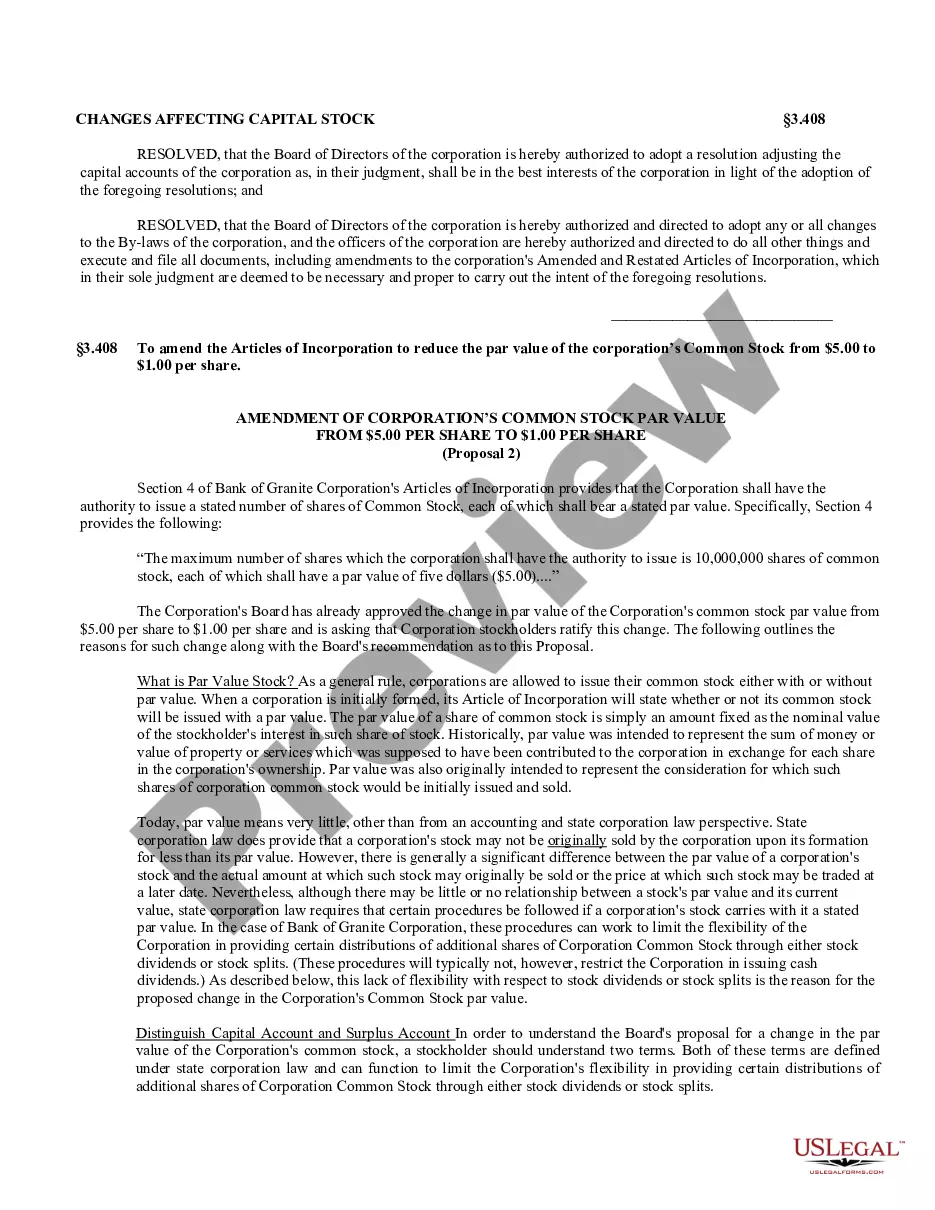
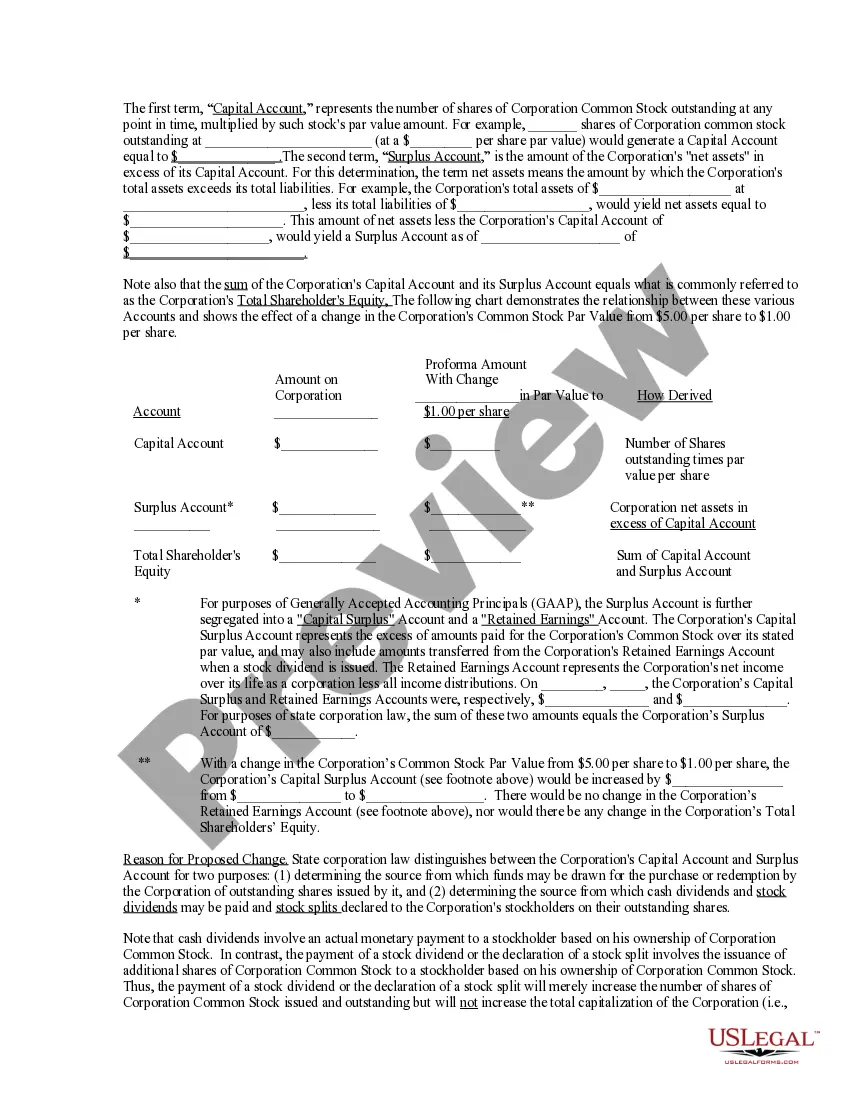
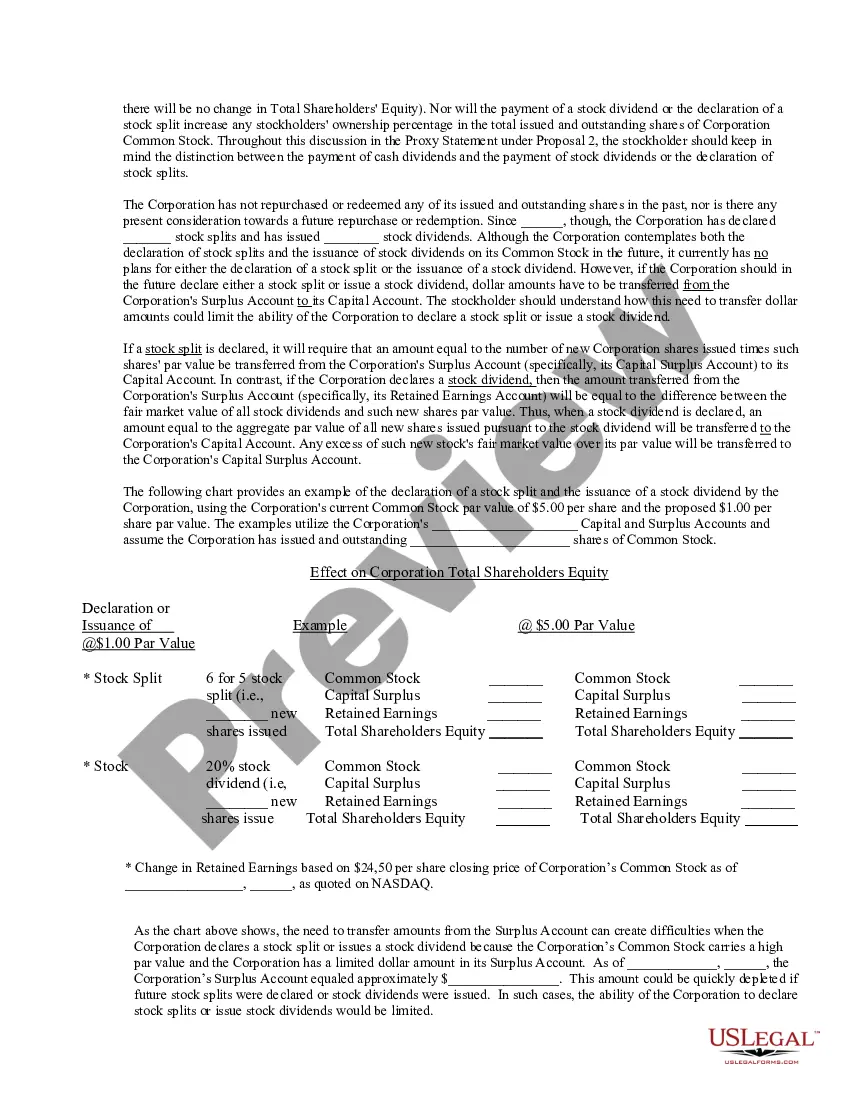
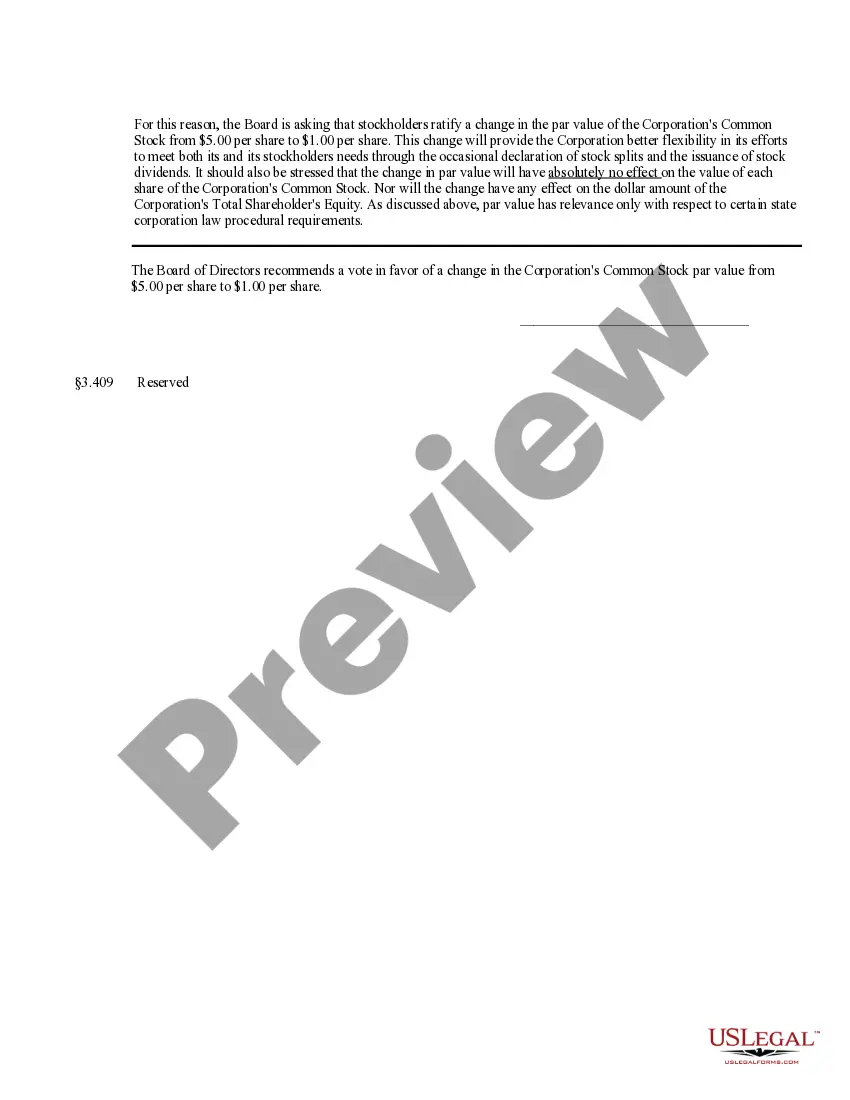
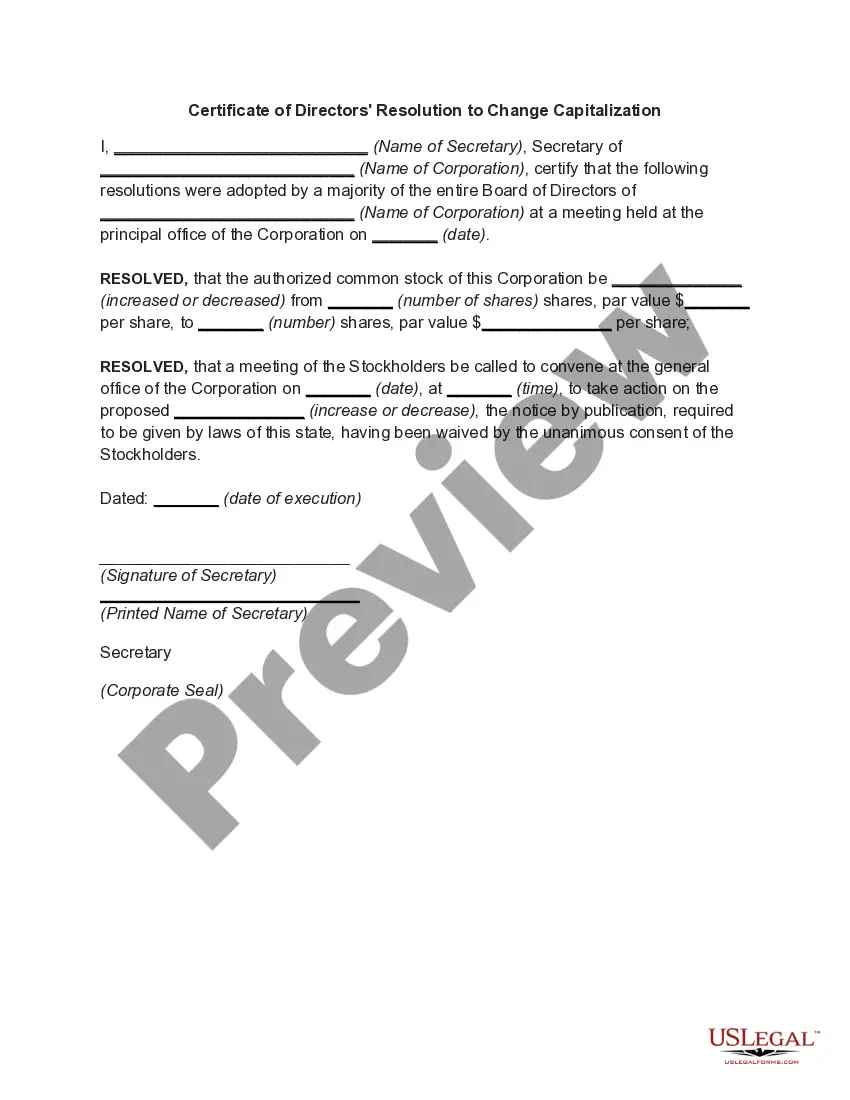
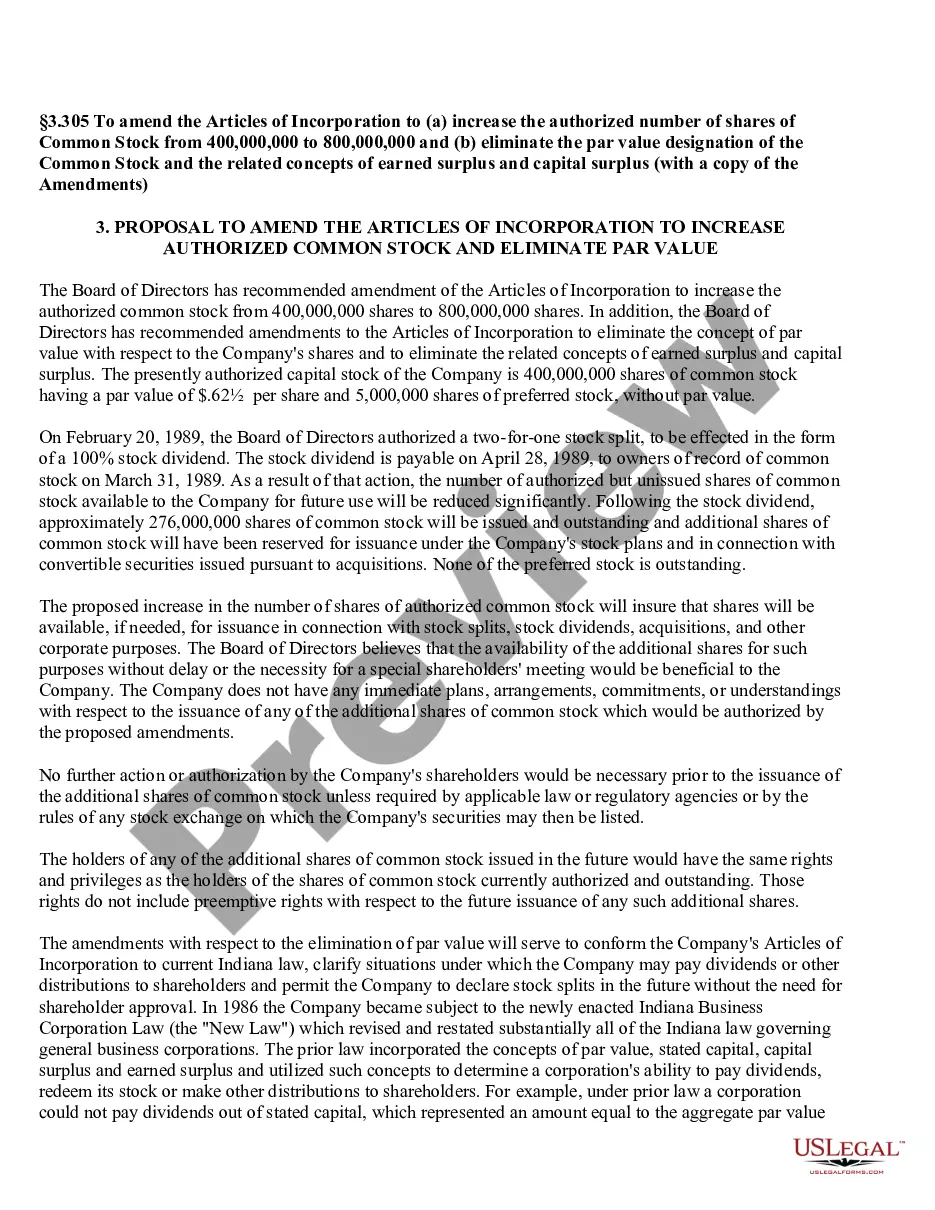
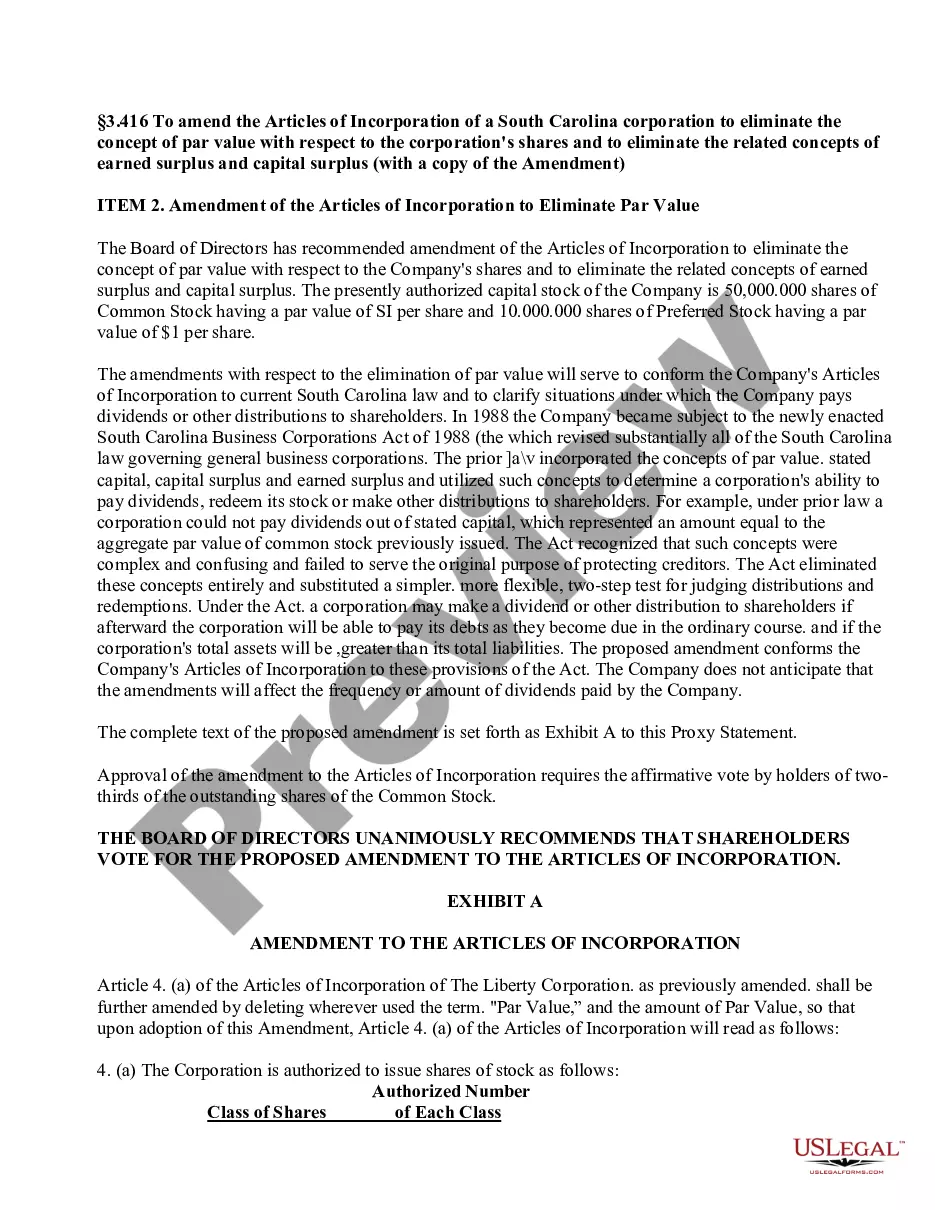
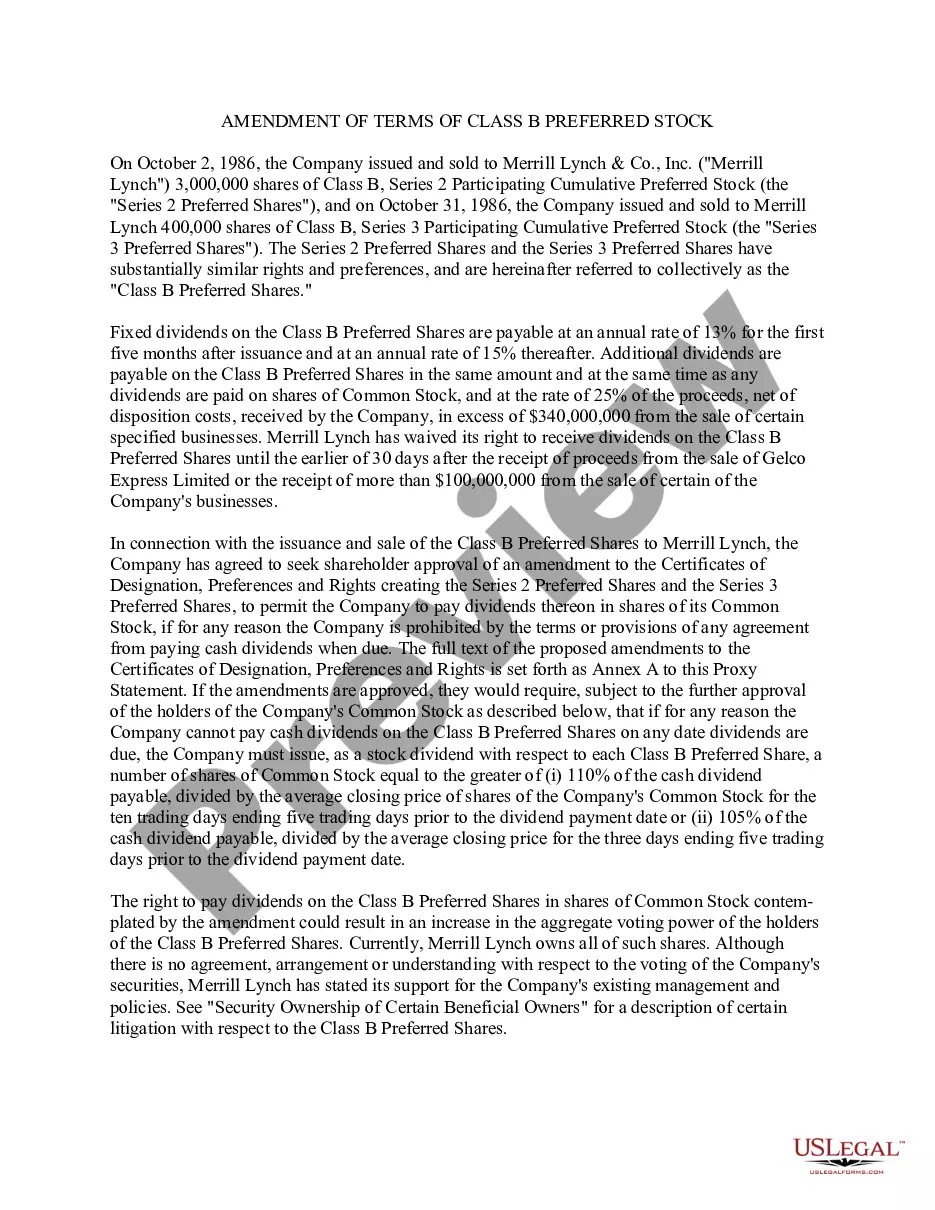
The Amendment of Common Stock Par Value is a legal document used by corporations to modify the nominal value of their common stock shares. This form allows a company's Board of Directors to propose changes to the par value of shares, which can impact flexibility in issuing dividends or conducting stock splits. It is important as it differs from other forms related to stock adjustments by focusing specifically on the par value aspect rather than the overall share structure.
Main sections of this form
- Resolution authorizing the adjustment of the capital accounts of the corporation.
- Details outlining the changes to the corporation's By-laws as necessary.
- Specification of the proposed new par value and the reasons for the change.
- Information on the implications for the corporation's capital and surplus accounts.
- Signature lines for board members and officers for approval.
When this form is needed
This form is typically used when a corporation's Board of Directors seeks to lower the par value of its shares, whether to enhance financial flexibility, facilitate future stock splits or dividends, or comply with state corporation laws. It may also be necessary when the current par value limits the corporation's ability to manage its capital effectively.
Intended users of this form
- Corporation directors and officers responsible for financial decision-making.
- Corporate stakeholders interested in understanding or approving changes to share value.
- Legal professionals working with corporations on capital structure matters.
How to prepare this document
- Gather the necessary information about the corporation's current share structure and financial status.
- Prepare a resolution outlining the desired changes in par value.
- Ensure the resolution includes reasoning for the change and any relevant financial implications.
- Have all board members review and sign the resolution to formalize approval.
- File the amended Articles of Incorporation with the appropriate state authority as required.
Does this document require notarization?
This form does not typically require notarization unless specified by local law. Always verify local regulations to ensure compliance.
Get your form ready online
Our built-in tools help you complete, sign, share, and store your documents in one place.
Make edits, fill in missing information, and update formatting in US Legal Forms—just like you would in MS Word.
Download a copy, print it, send it by email, or mail it via USPS—whatever works best for your next step.
Sign and collect signatures with our SignNow integration. Send to multiple recipients, set reminders, and more. Go Premium to unlock E-Sign.
If this form requires notarization, complete it online through a secure video call—no need to meet a notary in person or wait for an appointment.
We protect your documents and personal data by following strict security and privacy standards.

Make edits, fill in missing information, and update formatting in US Legal Forms—just like you would in MS Word.

Download a copy, print it, send it by email, or mail it via USPS—whatever works best for your next step.

Sign and collect signatures with our SignNow integration. Send to multiple recipients, set reminders, and more. Go Premium to unlock E-Sign.

If this form requires notarization, complete it online through a secure video call—no need to meet a notary in person or wait for an appointment.

We protect your documents and personal data by following strict security and privacy standards.
Typical mistakes to avoid
- Failing to obtain proper approval from the Board of Directors before making amendments.
- Not providing adequate justification for the proposed changes.
- Overlooking state-specific filing procedures and deadlines.
Why complete this form online
- Convenient access to customizable templates that can be tailored to meet specific corporate needs.
- Editability allows modifications based on the corporation's current circumstances.
- Reliable legal language drafted by licensed attorneys ensures compliance with applicable laws.
Legal use & context
- This form is used to ensure compliance with state corporation laws when changing stock par values.
- Amending the par value can affect future stock splits and dividends.
- The change in par value does not modify the market value of the stock itself.
- Understanding the implications of this amendment is vital for corporate governance.
Key takeaways
- The Amendment of Common Stock Par Value is essential for corporations looking to adjust stock valuation.
- Proper completion of this form requires accurate financial details and board approvals.
- The change in par value can enhance corporate flexibility without impacting shareholder equity.
- This form must align with state-specific regulations regarding corporate amendments.
Looking for another form?
Form popularity
FAQ
Par value is the value of a single common share as set by a corporation's charter. It is not typically related to the actual value of the shares. In fact it is often lower. Any stock certificate issued for shares purchased shows the par value.
Check the company's books to determine the par value of the stock. Examine the type of stock split. A normal two-for-one stock split means that the company's outstanding shares will be double. Determine the new par value.
A stock's par value is its stated value, not its actual value. When a stock sells, it will be issued at its actual value and not the stated par value. The most common reason for a change in par value is a stock split. During a split, the total par value will actually remain unchanged.
Most shares issued today are indeed classified as no-par or low-par value stock. No-par value stock prices are determined by the amount that investors are willing to pay for the stocks on the open market. Par value has no relation to the market value of a stock.
Thus, par value is the nominal value of a security which is determined by the issuing company to be its minimum price. This was far more important in unregulated equity markets than in the regulated markets that exist today, where stock issuance prices must usually be published.
A par value for a stock is its per-share value assigned by the company that issues it and is often set at a very low amount such as one cent. A no-par stock is issued without any designated minimum value.
You can help keep your company private by reducing the number of stock shares available for purchase. A reverse split raises your stock's par value and reduces the number of shares at the same time. The reverse split doesn't change the value of the retained earnings, paid-in capital or cash accounts.
Par value is a per share amount that will appear on some stock certificates and in the corporation's articles of incorporation.In the case of common stock the par value per share is usually a very small amount such as $0.10 or $0.01 and it has no connection to the market value of the share of stock.