Stock Option Grants and Exercises and Fiscal Year-End Values
Overview of this form
The Stock Option Grants and Exercises and Fiscal Year-End Values form provides a detailed framework for recording stock options granted and exercised by executives within a company. This form serves to document the value of these options at the fiscal year's end, distinguishing it from general stock option agreements by its emphasis on fiscal reporting and executive stock performance. It is vital for compliance with corporate governance and financial reporting requirements.
Form components explained
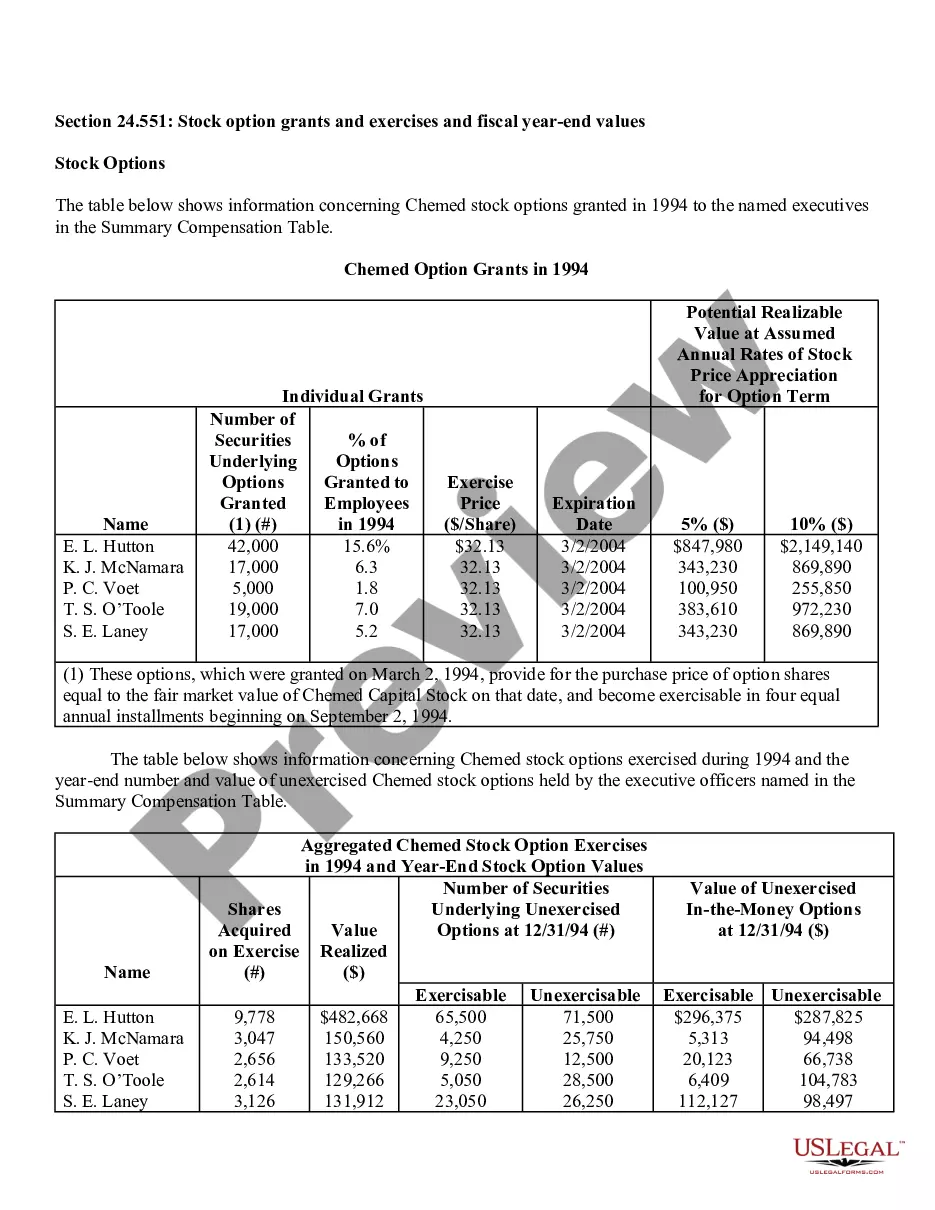
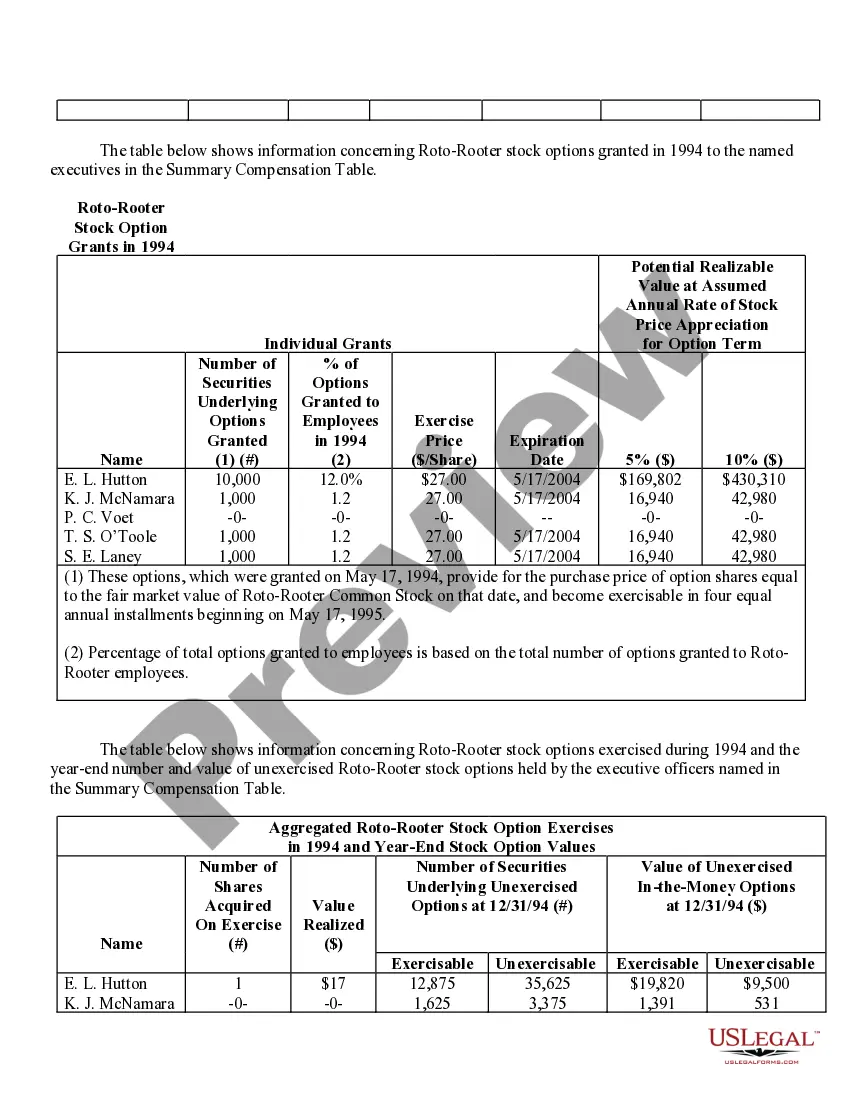
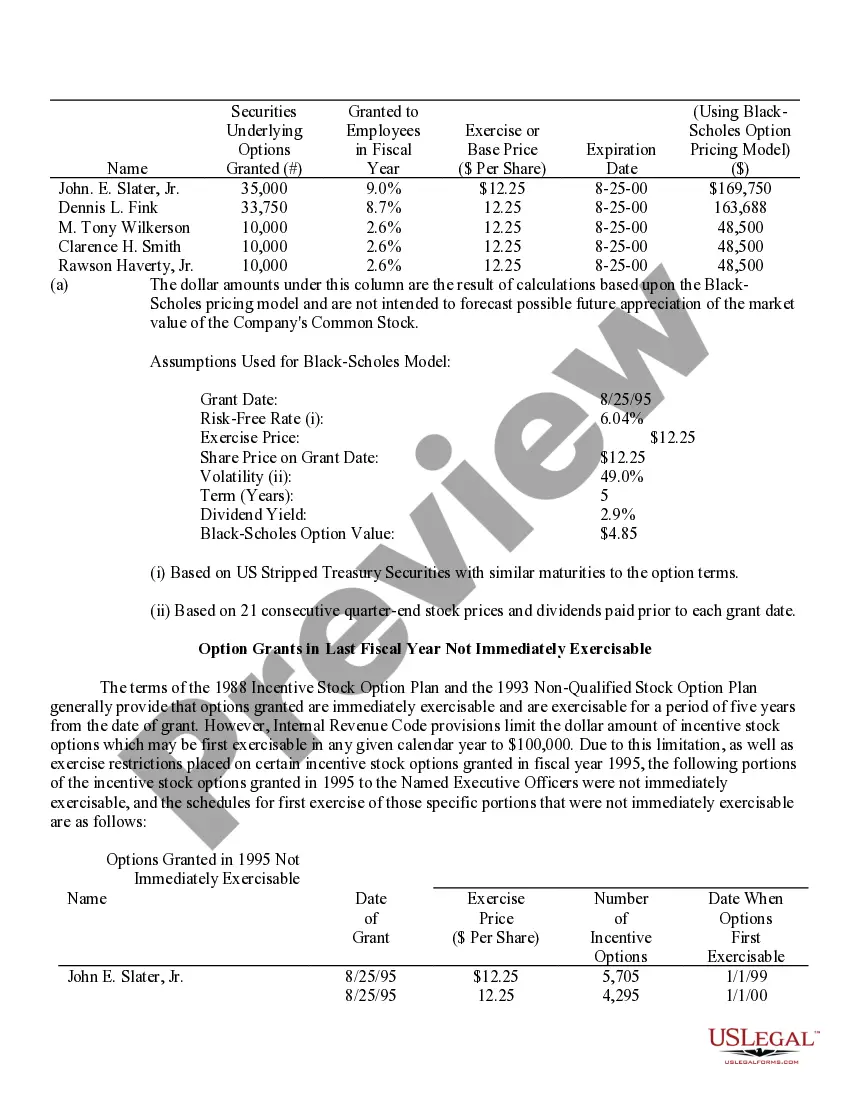
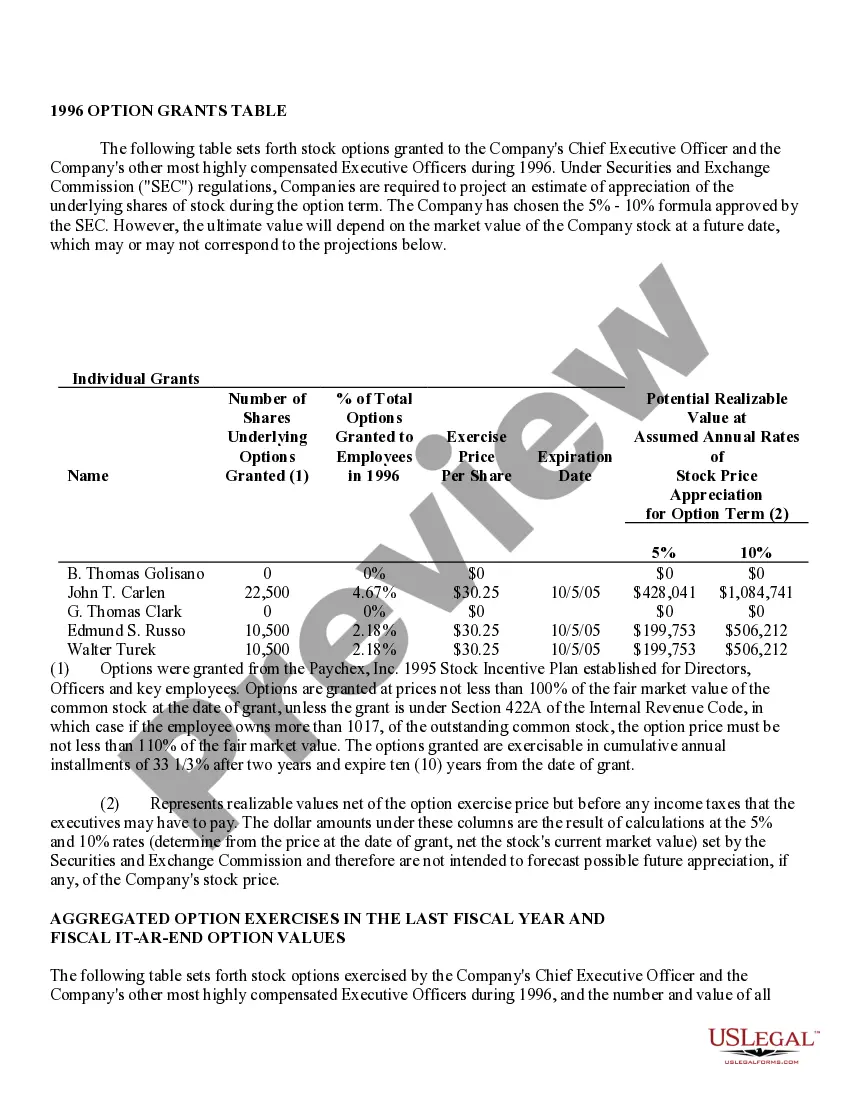
- Information on stock options granted, including number of securities and exercise price.
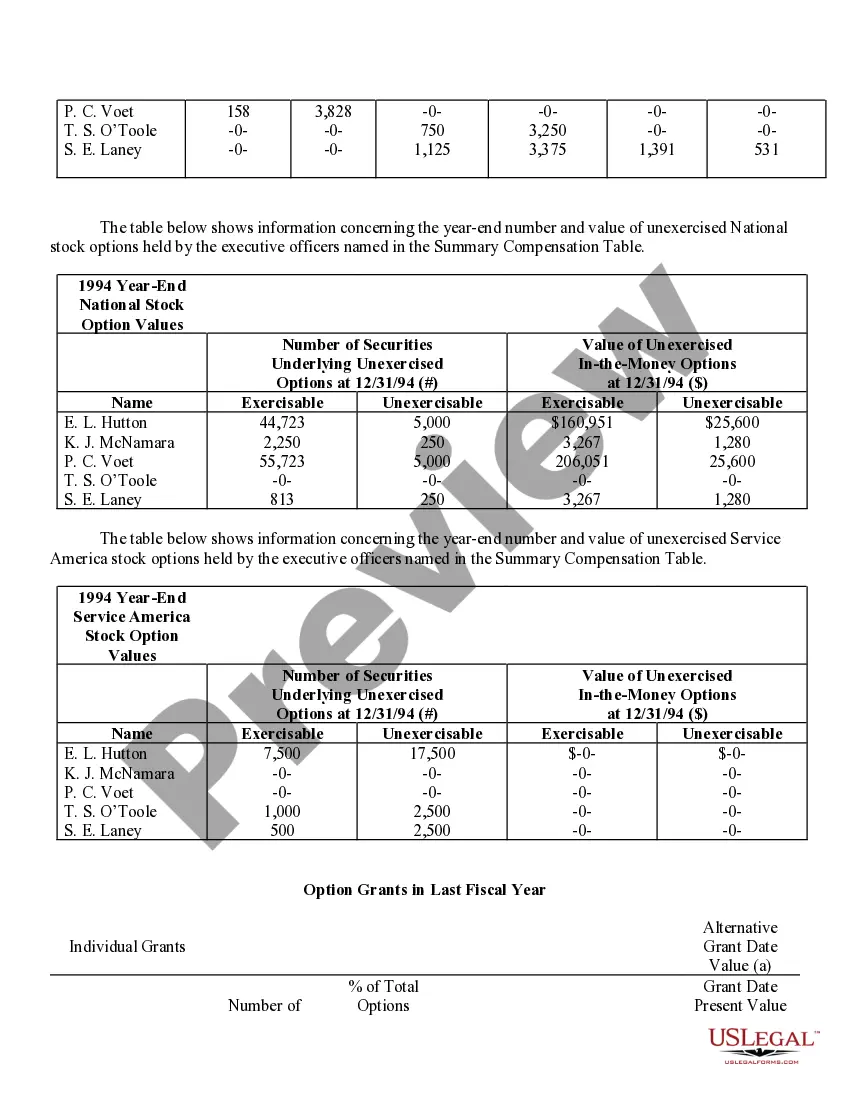
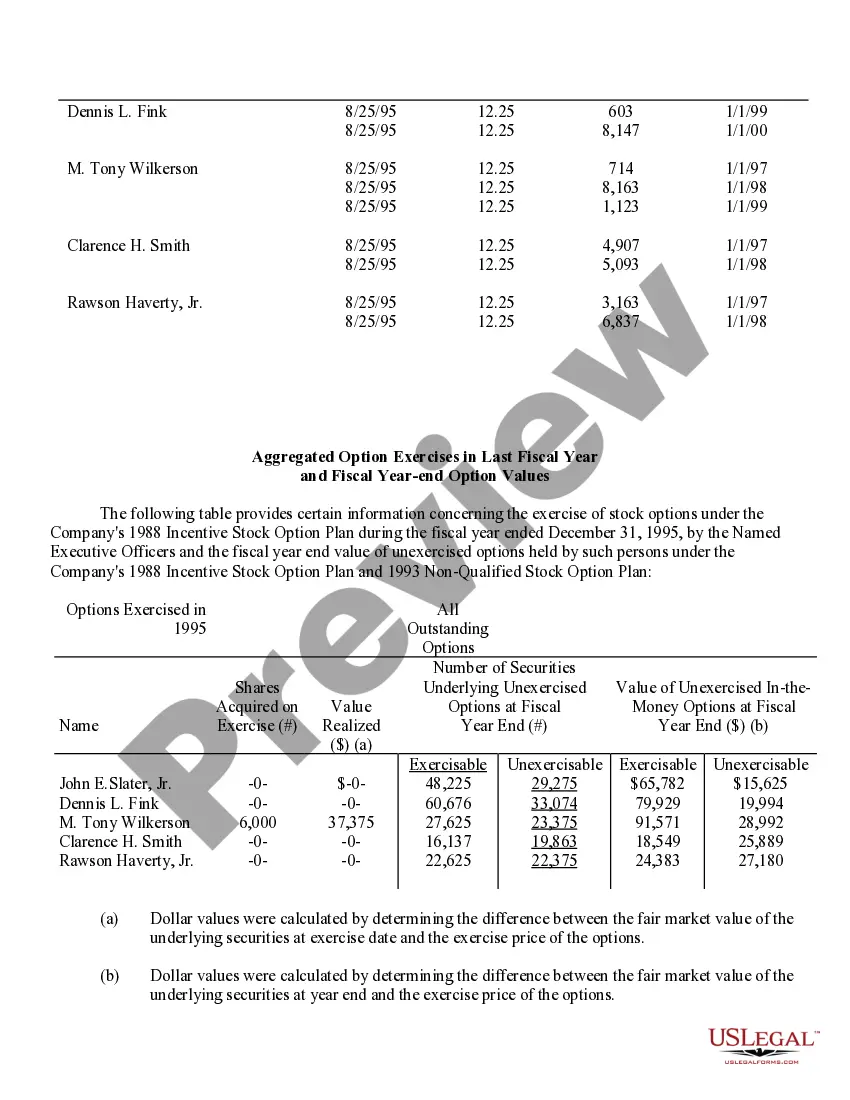
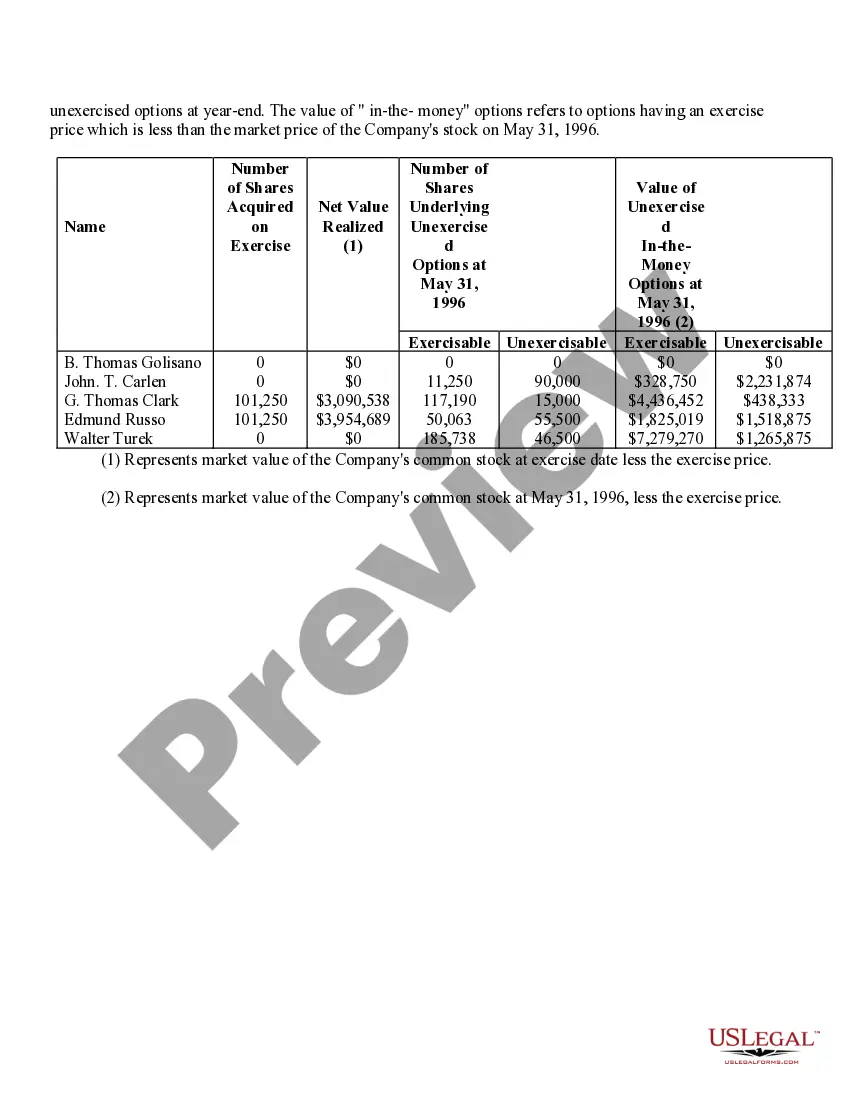
- Details of stock options exercised during the fiscal year and values realized.
- Year-end values of unexercised stock options, both exercisable and unexercisable.
- Summaries of stock options for multiple years, with the potential realizable value estimates.
- Grant date and expiration details for each stock option issued.

When to use this form
This form should be utilized during the preparation of annual financial statements to accurately reflect executive compensation in the form of stock options. Companies will find it necessary when documenting stock option grants and exercises for each executive, especially for reporting periods ending in fiscal years. It is also critical for compliance with SEC regulations regarding executive compensation disclosures.
Intended users of this form
- Corporate finance teams preparing annual reports.
- Human resources departments documenting employee compensation.
- Executive management for transparency in compensation packages.
- Accountants ensuring compliance with financial reporting standards.
- Legal advisors reviewing executive compensation agreements.
How to complete this form
- Gather executive compensation records and stock option details.
- Fill out the table for stock options granted, detailing the number and exercise price.
- Document the stock options exercised, including the value realized for each executive.
- List year-end values of unexercised stock options, specifying which are exercisable and unexercisable.
- Include grant and expiration dates for all stock options.
Does this form need to be notarized?
This form usually doesn’t need to be notarized. However, local laws or specific transactions may require it. Our online notarization service, powered by Notarize, lets you complete it remotely through a secure video session, available 24/7.
Get your form ready online
Our built-in tools help you complete, sign, share, and store your documents in one place.
Make edits, fill in missing information, and update formatting in US Legal Forms—just like you would in MS Word.
Download a copy, print it, send it by email, or mail it via USPS—whatever works best for your next step.
Sign and collect signatures with our SignNow integration. Send to multiple recipients, set reminders, and more. Go Premium to unlock E-Sign.
If this form requires notarization, complete it online through a secure video call—no need to meet a notary in person or wait for an appointment.
We protect your documents and personal data by following strict security and privacy standards.

Make edits, fill in missing information, and update formatting in US Legal Forms—just like you would in MS Word.

Download a copy, print it, send it by email, or mail it via USPS—whatever works best for your next step.

Sign and collect signatures with our SignNow integration. Send to multiple recipients, set reminders, and more. Go Premium to unlock E-Sign.

If this form requires notarization, complete it online through a secure video call—no need to meet a notary in person or wait for an appointment.

We protect your documents and personal data by following strict security and privacy standards.
Avoid these common issues
- Failing to accurately report the exercise price, which can lead to financial discrepancies.
- Neglecting to update records for stock options exercised during the fiscal year.
- Using incorrect expiration dates for stock options, which can impact financial reporting.
- Misclassifying options as exercisable when they are not, leading to compliance issues.
Why complete this form online
- Easy access to downloadable templates adaptable to your specific needs.
- Streamlined process for managing stock option records electronically.
- Increased accuracy and reliability in financial reporting.
- Convenient updates and modifications can be made to reflect changing personnel or option agreements.
Legal use & context
- This form fulfills legal obligations for reporting executive compensation under SEC regulations.
- Failure to complete this form accurately can result in legal penalties for the company.
- Ensures proper documentation for corporate governance and auditing purposes.
Looking for another form?

Form popularity
FAQ
Exercise your stock options to buy shares of your company stock, then sell just enough of the company shares (at the same time) to cover the stock option cost, taxes, and brokerage commissions and fees. The proceeds you receive from an exercise-and-sell-to-cover transaction will be shares of stock.
A disciplined stock option exercise strategy can prevent some big mistakes and significantly increase the value of your option grant. Here are eight guidelines for anyone who is thinking about exercising their employee stock options. Don't exercise too soon. But2026don't wait too long.
You'll pay capital gains tax on any increase between the stock price when you sell and the stock price when you exercised. In this example, you'd pay capital gains tax on $5 per share (the $10 sale price minus $5, which was the price of the stock when you exercised).
When you exercise an option, you usually pay a fee to exercise and a second commission to sell the shares. This combination is likely to cost more than simply selling the option, and there is no need to give the broker more money when you gain nothing from the transaction.
Exercise your stock options to buy shares of your company stock, then sell just enough of the company shares (at the same time) to cover the stock option cost, taxes, and brokerage commissions and fees. The proceeds you receive from an exercise-and-sell-to-cover transaction will be shares of stock.
Step 1: Calculating the Fair Value of an Option. Fair Value has a very technical definition and is defined by FASB in 820-10-35-2 as ..the price that would be received to sell an asset or paid to transfer a liability in an orderly transaction between market participants at the measurement date.
Grant Date Fair Value means the value of one Restricted Share Unit subject to the terms of this Certificate calculated as of the close of business on the Grant Date based on the estimated value, as determined by the Company in its sole discretion, expected to be used by the Company for accounting purposes.
The value in the stock option lies in the opportunity to profit if the stock price goes up in the future. If the stock price is greater than the grant price (a good market), your stock option has a current value.If the future market price is below the grant price, you would choose to do nothing.
The quick way of calculating the value of your options is to take the value of the company as given by the TechCrunch announcement of its latest funding round, divide by the number of outstanding shares and multiply by the number of options you have.