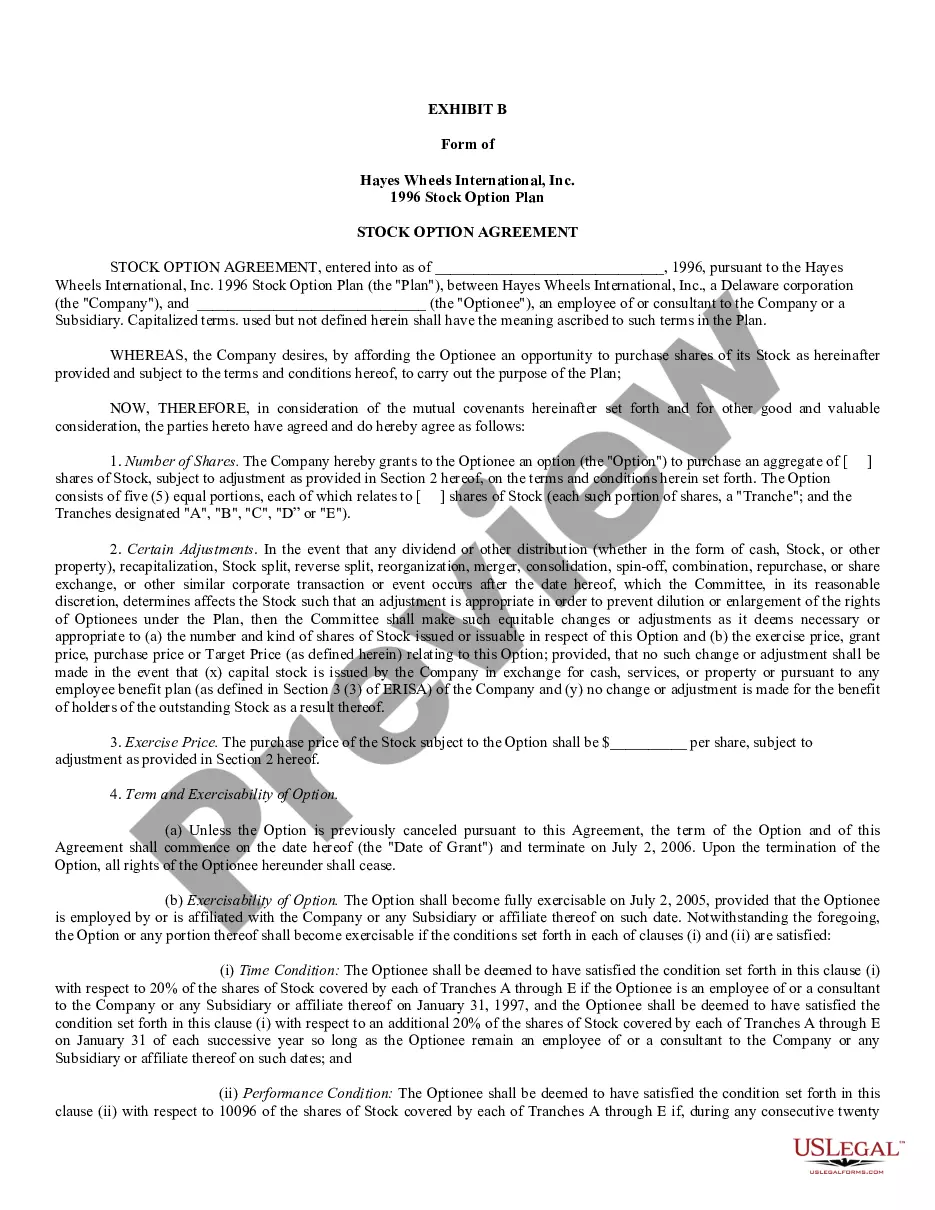
Stock Option Plan of Hayes Wheels International, Inc., which provides for grant of Incentive Stock Options and Nonqualified Stock Options
Understanding this form
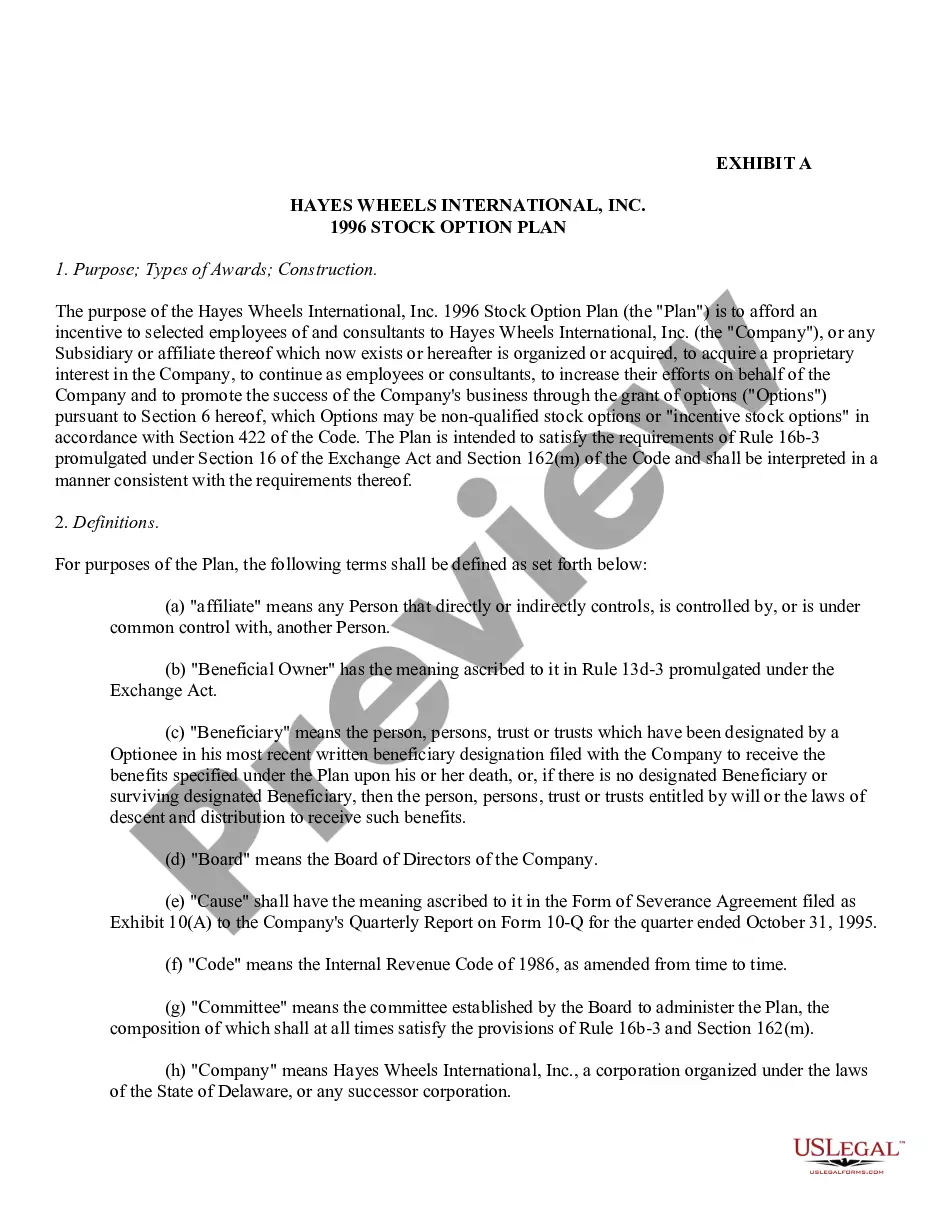
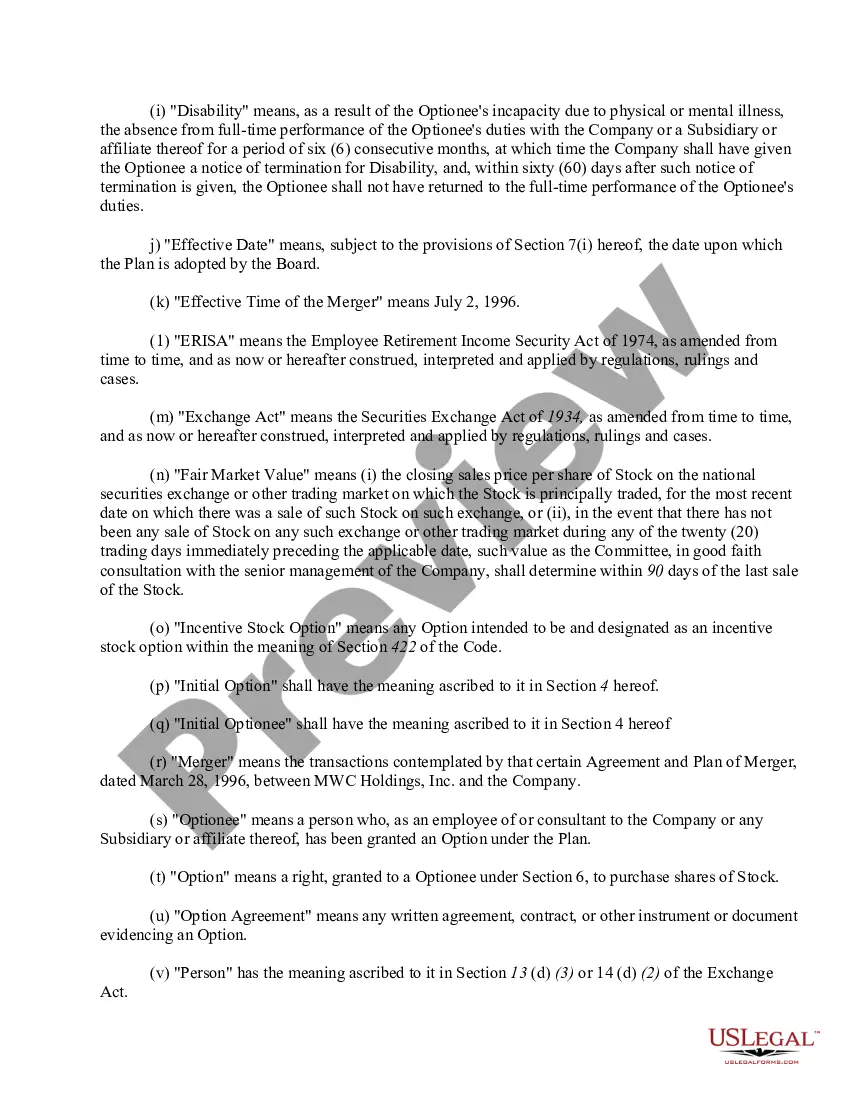
The Stock Option Plan of Hayes Wheels International, Inc. is a legal document designed to offer incentives to employees and consultants through the granting of stock options. This plan allows participants to acquire shares of company stock at a predetermined price, which can either be classified as Incentive Stock Options or Non-qualified Stock Options. This form is distinct from other stock options as it includes specific time and performance conditions associated with each grant, thereby giving participants clear guidelines on how and when they can exercise their options.
What’s included in this form
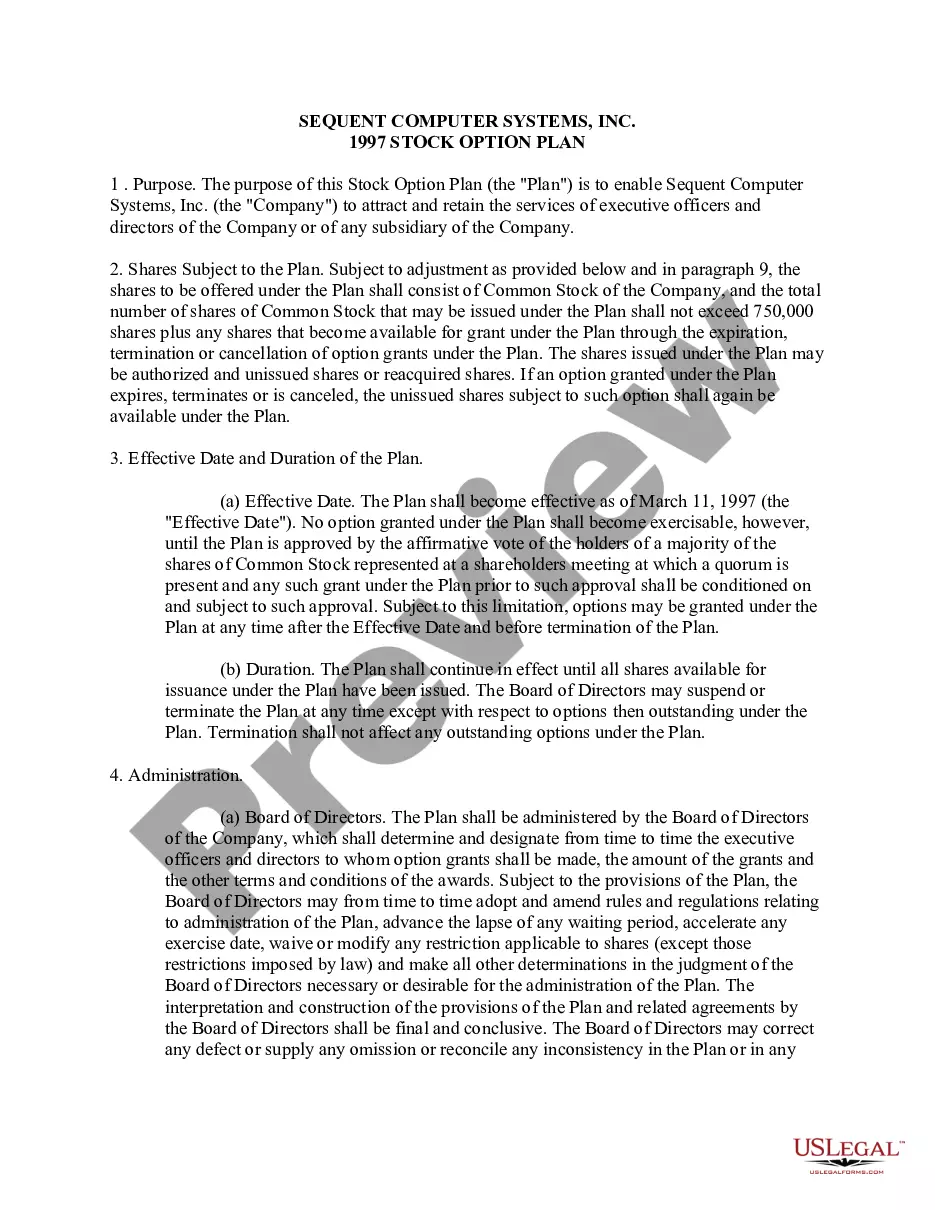
- Purpose: Outlines the goals of the stock option plan and the incentives offered to employees and consultants.
- Types of Awards: Details on Incentive Stock Options and Non-qualified Stock Options as well as initial option grants.
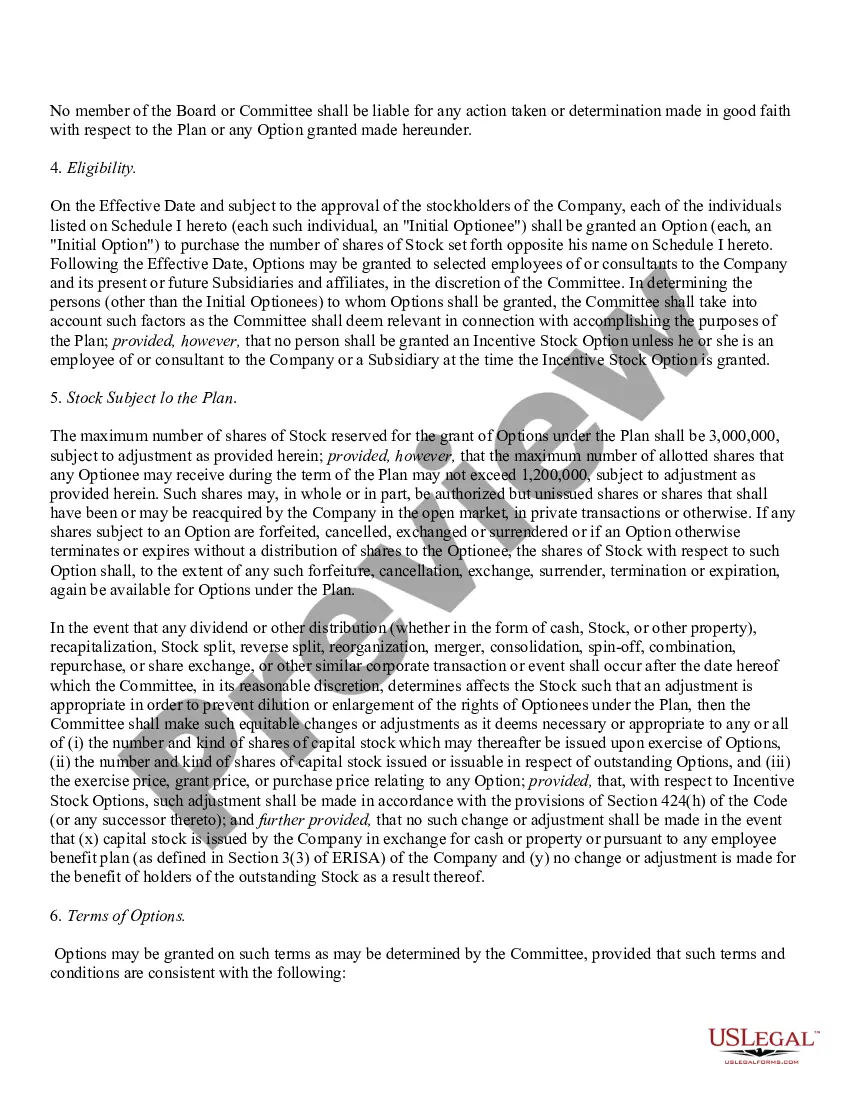
- Eligibility: Specifies who can receive options under the plan and any related requirements.
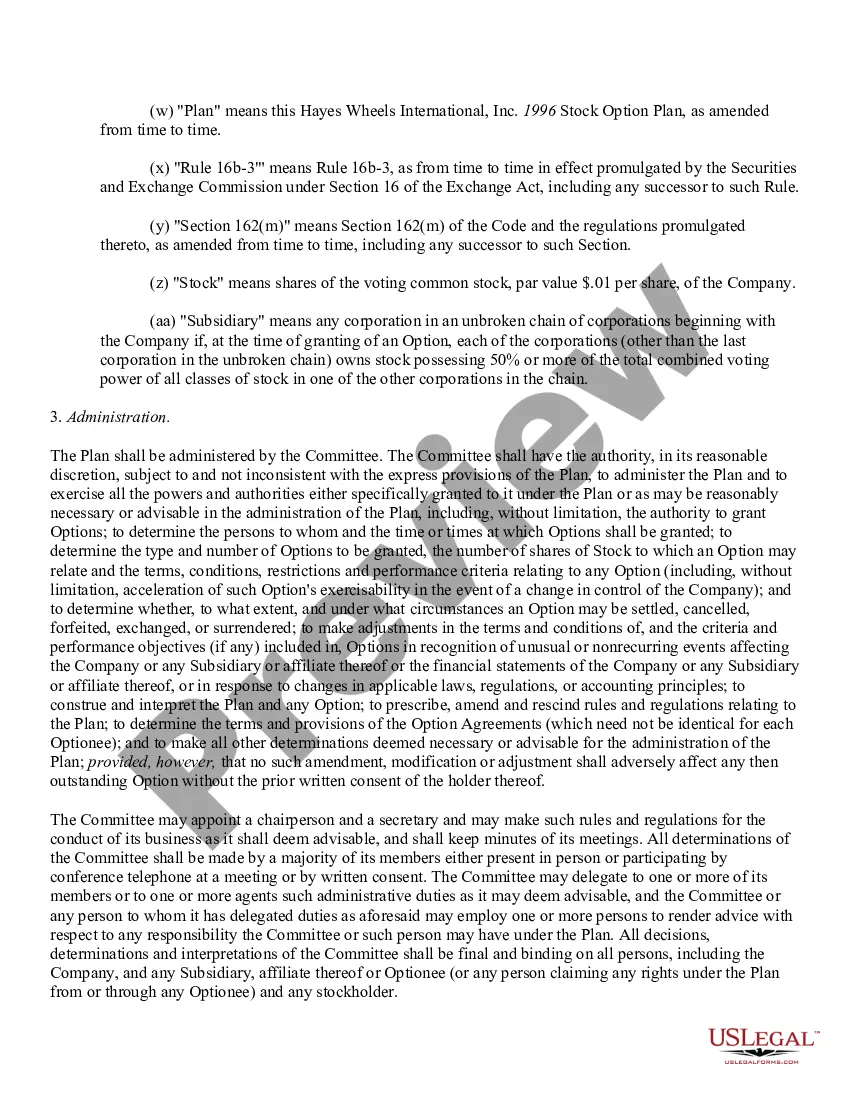
- Administration: Describes how the plan will be managed by the Committee and its powers.
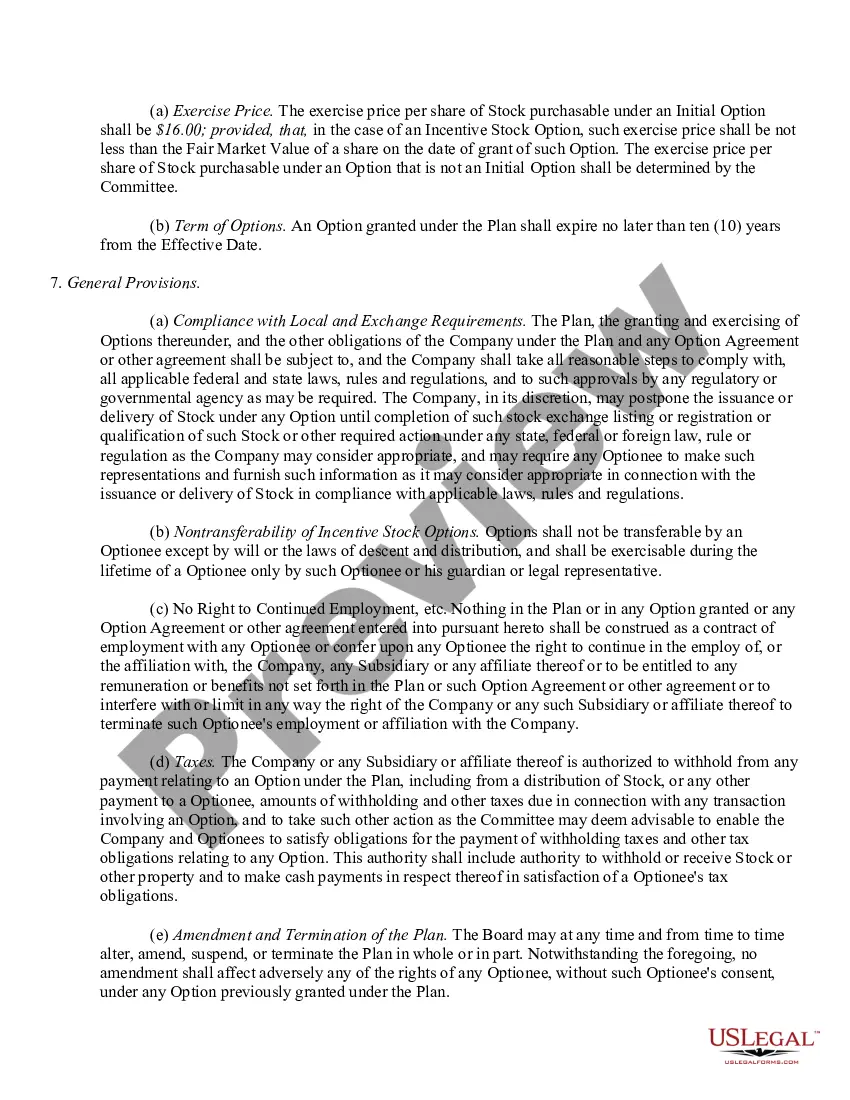
- Exercise Terms: Provides conditions regarding the exercise price and term of the options granted.
- Compliance: States the legal requirements and responsibilities for modifying the plan as necessary.


Common use cases
This form is useful for organizations looking to implement a structured stock option plan to incentivize employees and consultants. It is applicable when a company aims to align the interests of its staff with those of shareholders through potential ownership in the company. The planâs structure can assist in attracting and retaining talent by offering employees performance-linked rewards that foster commitment and productivity.
Who this form is for
- Business owners wanting to establish a stock option plan for employees.
- Human resources professionals responsible for employee compensation packages.
- Financial advisors guiding companies on employee incentive plans.
- Consultants assisting businesses in structuring equity compensation.
Steps to complete this form
- Begin by stating the purpose of the stock option plan and identifying the selected employees and consultants who will receive options.
- Specify the types of stock options being granted and detail the terms associated with each option, including exercise prices and share amounts.
- Describe the administrative structure overseeing the plan, including roles and responsibilities of the Committee.
- Include provisions for eligibility and the criteria that determine how options will be allocated.
- Ensure compliance with relevant laws by outlining regulatory considerations that may impact the execution of the plan.
Notarization requirements for this form
This form does not typically require notarization unless specified by local law. It is advised to check any state-specific regulations that may apply to stock option plans.
Get your form ready online
Our built-in tools help you complete, sign, share, and store your documents in one place.
Make edits, fill in missing information, and update formatting in US Legal Forms—just like you would in MS Word.
Download a copy, print it, send it by email, or mail it via USPS—whatever works best for your next step.
Sign and collect signatures with our SignNow integration. Send to multiple recipients, set reminders, and more. Go Premium to unlock E-Sign.
If this form requires notarization, complete it online through a secure video call—no need to meet a notary in person or wait for an appointment.
We protect your documents and personal data by following strict security and privacy standards.

Make edits, fill in missing information, and update formatting in US Legal Forms—just like you would in MS Word.

Download a copy, print it, send it by email, or mail it via USPS—whatever works best for your next step.

Sign and collect signatures with our SignNow integration. Send to multiple recipients, set reminders, and more. Go Premium to unlock E-Sign.

If this form requires notarization, complete it online through a secure video call—no need to meet a notary in person or wait for an appointment.

We protect your documents and personal data by following strict security and privacy standards.
Common mistakes
- Failing to clearly define the eligibility criteria for recipients.
- Not specifying time or performance conditions adequately, leading to confusion among participants.
- Overlooking compliance with federal or state regulations which may invalidate the plan.
- Neglecting to update the plan according to changes in tax laws or corporate structure.
Why use this form online
- Easy access and downloading of the form, allowing for quick implementation of the stock option plan.
- Editable templates ensure businesses can customize the plan to fit their specific needs.
- Reliability of attorney-drafted content ensures legal compliance and reduces the risk of errors.
- Convenience of having all necessary documentation in one place, simplifying record-keeping and management.
Legal use & context
- The plan must adhere to the U.S. Internal Revenue Code regarding stock options to ensure tax advantages.
- Options granted must comply with the Securities Exchange Act, providing protection for both the company and employees.
- The company retains the right to amend the plan as necessary, but must not adversely affect already granted options without consent.
What to keep in mind
- The Stock Option Plan helps incentivize employees through stock options.
- Eligibility is primarily for selected employees and consultants.
- Understanding performance and time conditions is crucial for effective implementation.
Looking for another form?




Form popularity
FAQ
Stock options are often issued as a part of a company's incentive program to the company's and its subsidiaries' key persons who are working on the company's projects. The purpose of the stock options is to give personnel a financial incentive to work hard to increase the company's shareholder value.
Stock Options When shares go up in value, executives can make a fortune from options. But when share prices fall, investors lose out while executives are no worse off. Indeed, some companies let executives swap old option shares for new, lower-priced shares when the company's shares fall in value.
The price at which the options may be "exercised" is usually the price of the company's stock on the date the options are granted. If the company performs well, the stock price will increase over the exercise price, giving the options value and rewarding the executive for his role in the company's success.
The grant date for your incentive stock options is the date you are given the shares. The grant date is also the date the shares are typically valued. This value often determines your exercise price. The exercise price is the price you can buy shares of stock via your option.
They offer employees an opportunity to have ownership in the company they work for and feel more connected to the business as well as to their co-workers. They are a cost-effective company benefit that can help make employment packages more attractive.
Grant price/exercise price/strike price the specified price at which your employee stock option plan says you can purchase the stock. Issue date the date the option is given to you. Market price the current price of the stock.
A stock option gives an employee the ability to buy shares of company stock at a certain price, within a certain period of time.Employees who exercise their options and sell their shares when the company's stock is trading significantly higher than the grant price have the potential to make a lot of money.
If an employee is getting a market level salary with employee stock options, they should certainly accept the deal. In that way, you have possibly less chance to lose anything. But if you are accepting stock options in exchange for a lower salary, make sure you have a good understanding with the company.
Executive stock options incentivize CEOs to preform at the highest level. These increases in compensationdriven by improved business performancewould not represent a transfer of wealth from shareholders to executives.